A cup does more than hold tea.
In a tea ceremony, the vessel shapes how the tea is experienced: how warmth reaches the hands, how aroma rises, how each sip feels. Chinese cups are designed with this in mind. Their size, shape, and material are deliberate, refined over generations to support attention rather than distraction.
Chinese teacups are often made from materials like porcelain and celadon, prized for their beauty and function. Other materials used include Yixing clay, glass, and Jianzhan, each offering unique qualities to the tea experience.
Unlike mugs, which encourage casual drinking, traditional tea cups slow the moment. They ask you to pause, to notice, and to drink with intention. In this guide, we look at four traditional Chinese cup styles, each created for a specific use within the tea ritual.
Chinese Cups for Tasting: Pinming Bei
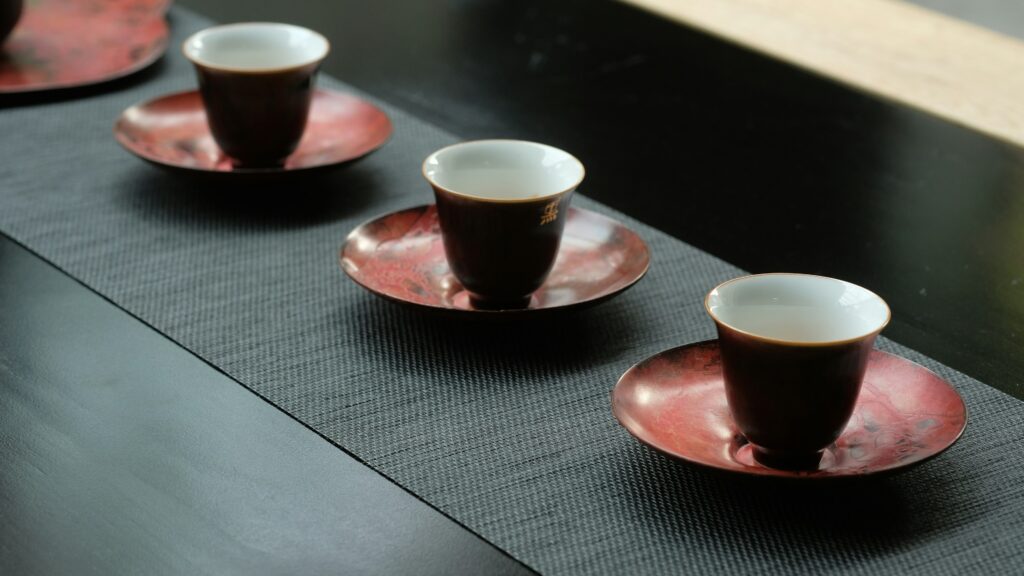
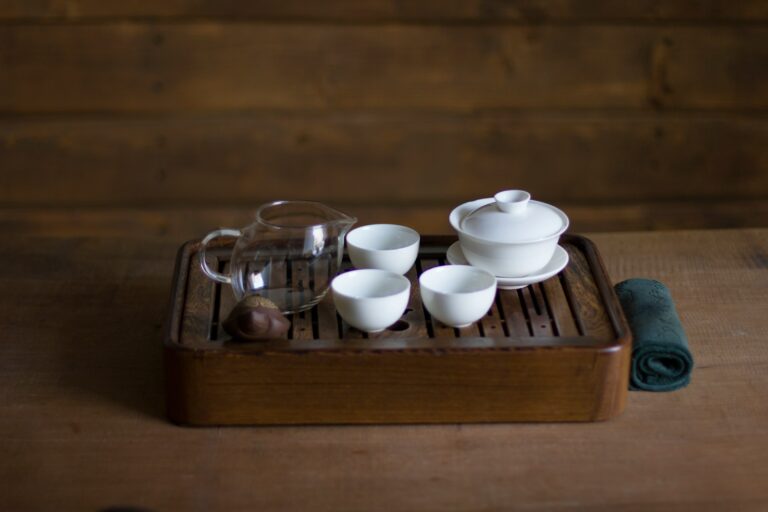
The pinming bei, or tasting cup, is central to the Gongfu tea ceremony. Small and handleless, it is designed to hold just enough tea for a focused sip or two. This scale is intentional. By limiting volume, the cup encourages attention to flavour rather than habit.
These Chinese cups are commonly used with oolong tea and pu-erh, where the character of the tea changes across multiple infusions. With each pour, the tasting cup offers a fresh perspective.
When selecting a pinming bei, material matters. Porcelain keeps the flavour clean and neutral, allowing the tea to speak clearly. Longquan celadon porcelain teacups are especially popular in Chinese tea culture for their beauty and craftsmanship. Yixing clay is another traditional material; it is porous and unglazed, making it perfect for Oolong, Pu-erh, and Black teas as it absorbs essences to enrich future brews. A thin rim and balanced weight make the cup easy to hold and comfortable to drink from. Within a tea set, the tasting cup is where the ceremony concludes quietly and deliberately.
Tea Cups for Aroma: Wenxiang Bei
Before taste, there is aroma.
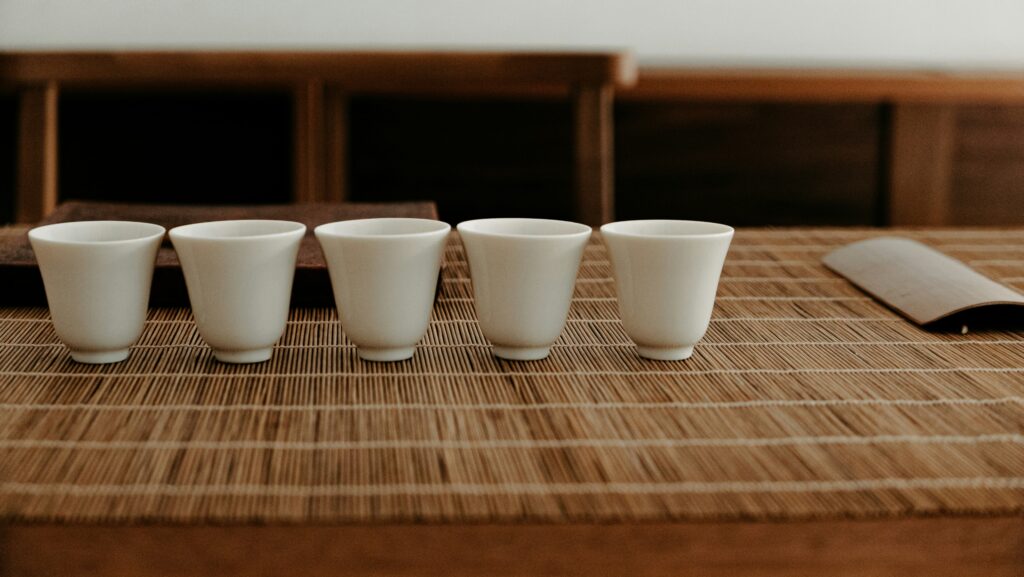
The wenxiang bei, or aroma cup, is taller and narrower than standard tea cups. Its form is designed to concentrate fragrance, capturing the volatile aromas released by freshly brewed tea. It is most often used alongside a tasting cup in a two-cup ritual.
In practice, tea is poured into the aroma cup, then covered with a tasting cup and inverted. The tea flows into the tasting cup, while the aroma cup retains the scent. The empty cup is brought to the nose before the first sip, offering a clear sense of the tea’s character.
This method is especially well-suited to aromatic teas. Porcelain is preferred, as it remains clean and does not interfere with scent. Used together, these tea cups add a sensory layer to the tea ceremony without complication.
Tea Ceremony Essentials: Gaiwan
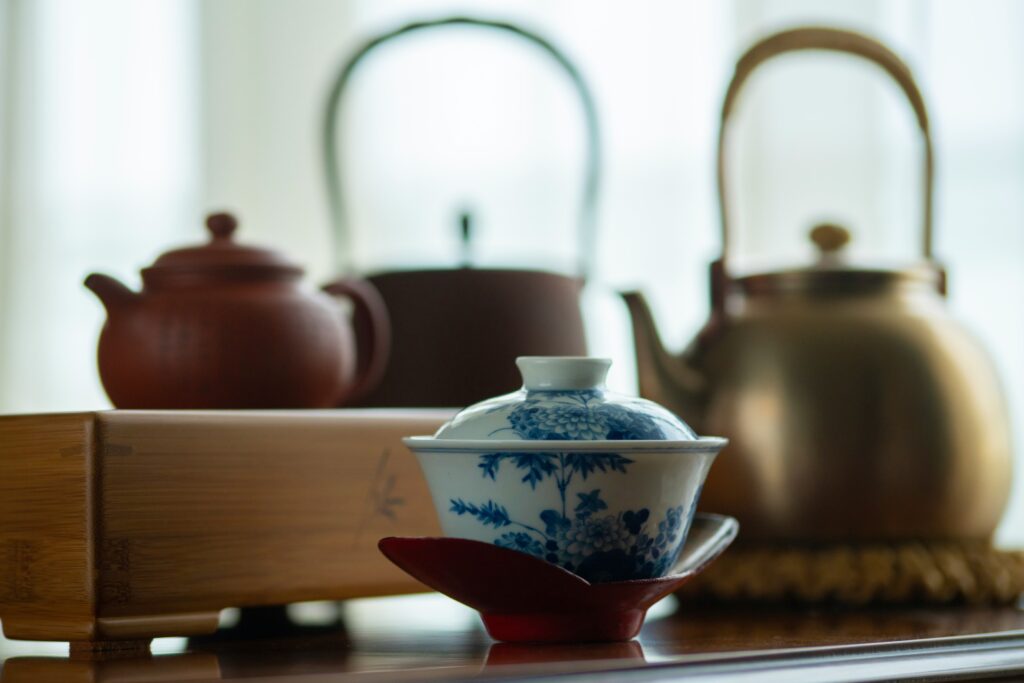
The gaiwan, or lidded bowl, is one of the most versatile tools in a tea ceremony. It functions as a brewing vessel, a strainer, and, in some cases, a cup. Its three parts: the saucer, bowl and lid, work together to give the brewer control over infusion.
Using a gaiwan is straightforward once familiar. Tea leaves are brewed in the bowl, and the lid is used to hold them back while pouring or sipping. This method allows direct observation of the leaves as they open, offering insight into quality and freshness.
Compared to mugs, the gaiwan reflects a more active approach to drinking tea. It is designed for engagement rather than convenience. Porcelain gaiwans are common because they remain neutral and are easy to clean, making them a practical starting point for building a tea set.
Everyday Tea Cups and Regional Styles
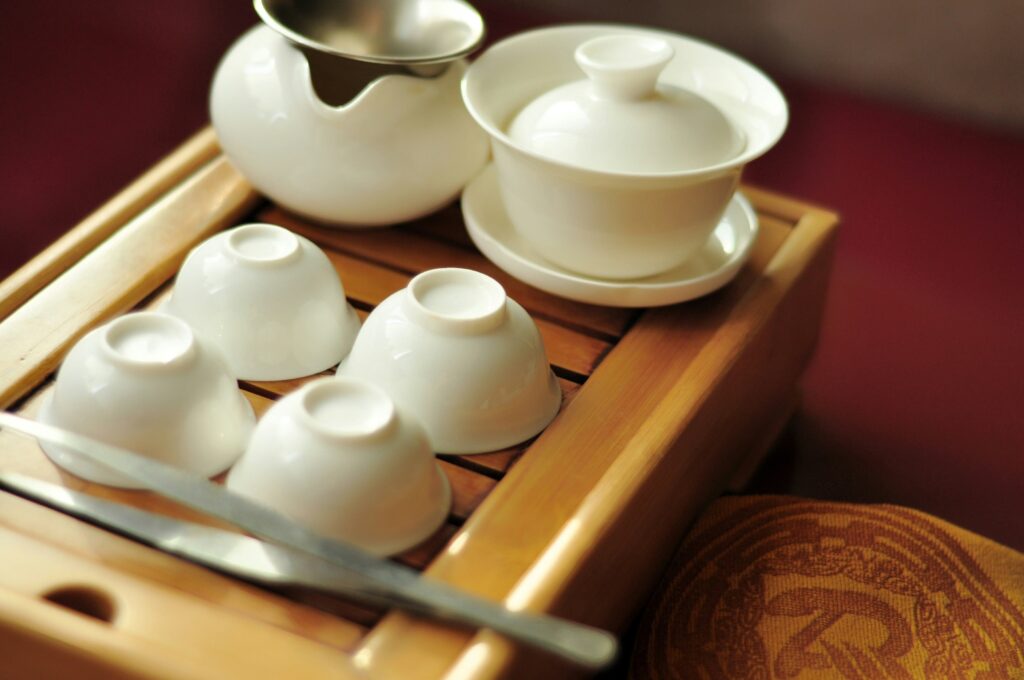
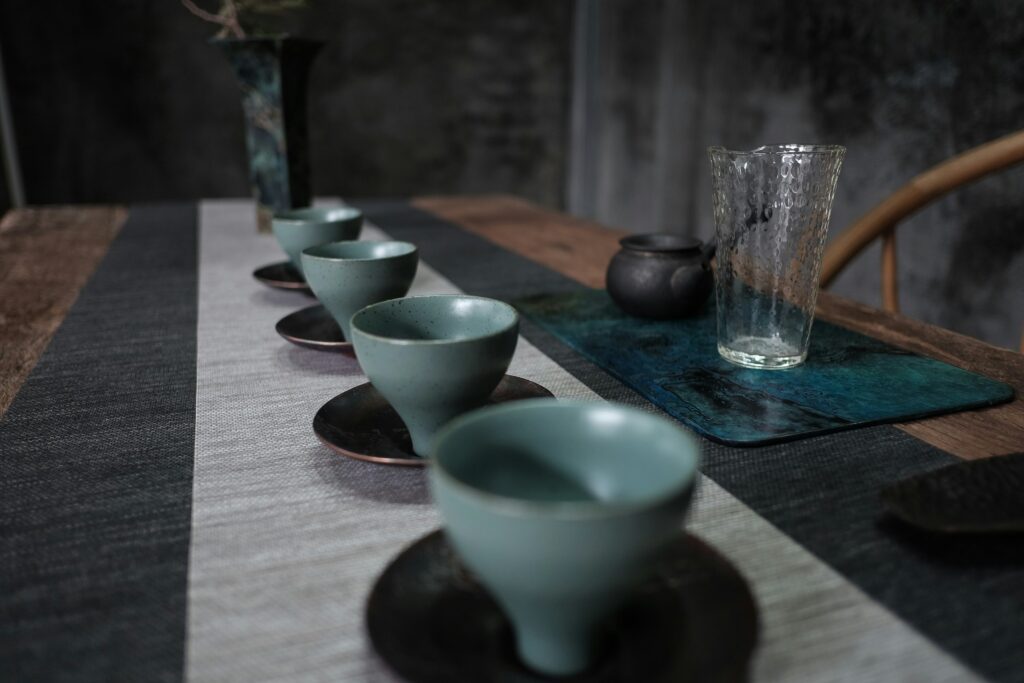
Not all Chinese cups are ceremonial. Many are designed for daily use, balancing simplicity with tradition. These tea cups are typically smaller than Western mugs and do not have handles. Their shape allows the warmth of the tea to be felt directly, encouraging slower drinking.
Regional styles bring variety. Jingdezhen cups are known for their thin walls and refined finish, while Dehua porcelain is recognised for its soft, ivory tone. Decorative motifs often draw from nature or classical symbols, adding quiet detail without overwhelming function.
These cups are easy to use, easy to select, and well suited for daily tea rituals. They bring tradition into everyday life without formality.
Tea Room by Ki-Setsu: Jingdezhen Cups
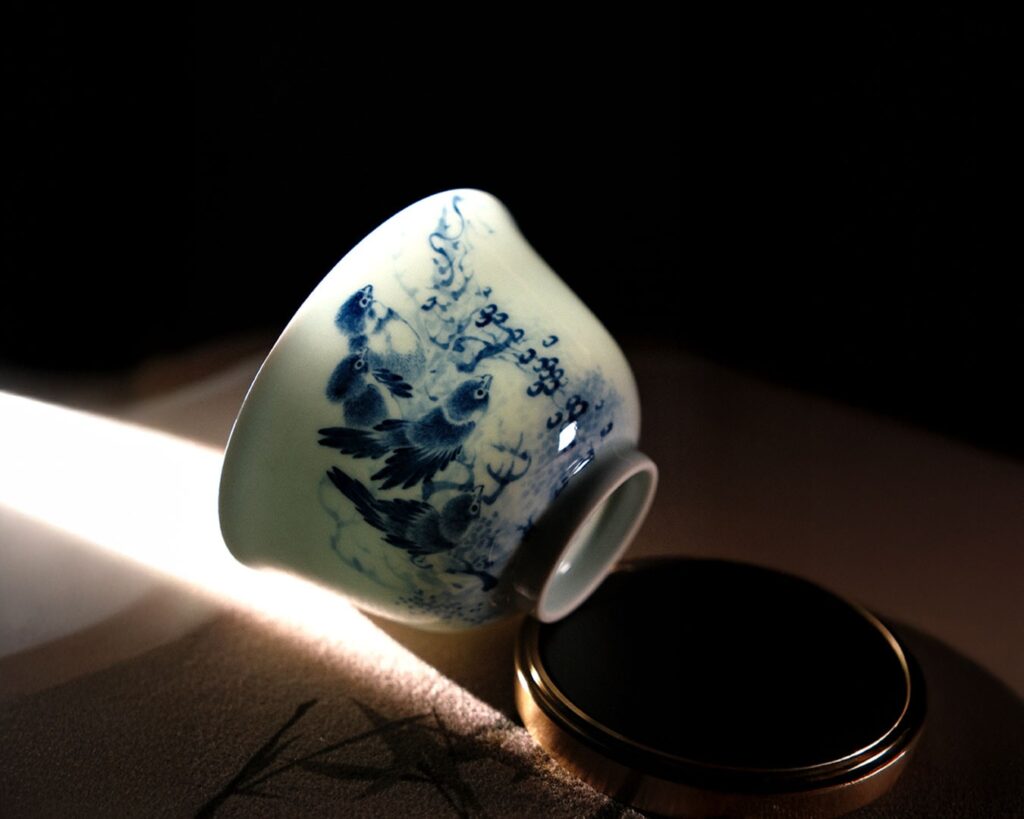
At Tea Room by Ki-setsu, we place equal importance on the leaf and the cup.
Our collection focuses on teaware from Jingdezhen, a centre of porcelain craftsmanship for centuries. These cups are shaped in traditional wood-fired kilns, where fire and ash leave subtle variations. No two pieces are identical.
Jingdezhen porcelain is valued for its strength, translucency, and clean surface, which allows the colour of the tea to be seen clearly. When you select one of these cups, you are choosing a vessel designed to support the tea rather than distract from it.
These are not decorative objects made for display or sales. They are functional tools, inspired by tradition and made to be used.
Care and How to Select the Right Cup
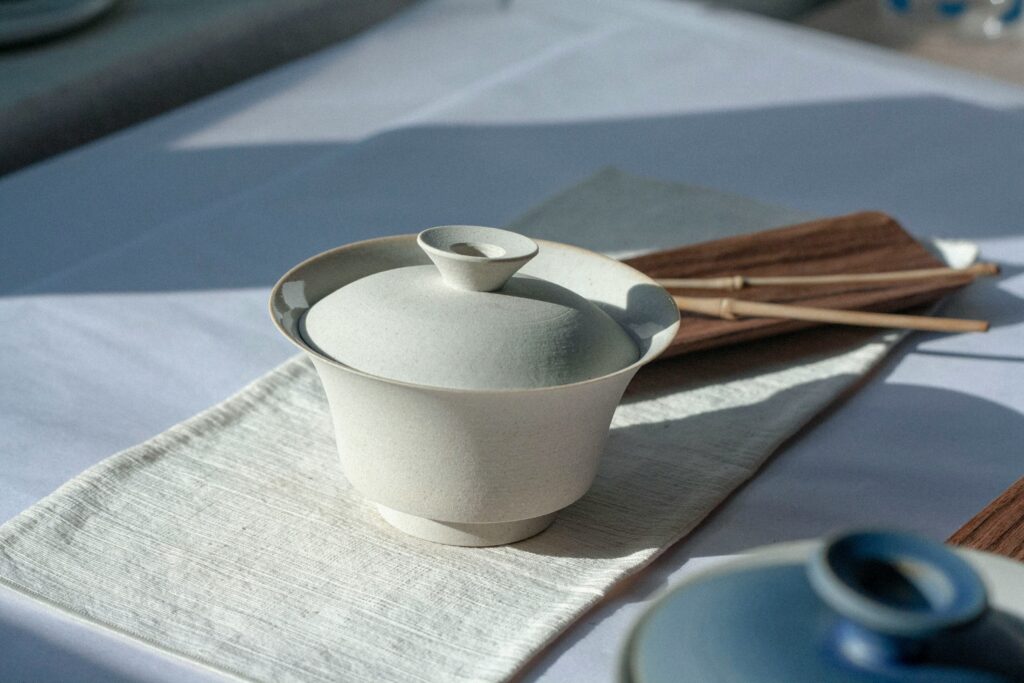
Caring for Chinese cups is simple. Rinse with hot water after use and allow them to dry fully. Avoid strong detergents, which can affect both glaze and taste. Proper care keeps the surface clean and preserves the purity of the tea.
When building a tea set, start with a few versatile pieces. A gaiwan and several tasting cups are often enough. Over time, add cups that suit your preferred teas and habits.
Select pieces that feel comfortable in the hand and balanced when lifted. The right cup should feel natural, not precious.
Conclusion
Chinese cups are not about decoration or excess. They are designed to support how tea is brewed, served, and enjoyed. Whether it is the focus of a tasting cup, the clarity of an aroma cup, or the versatility of a gaiwan, each form plays a role in the tea ceremony.
The perfect cup does not compete with the tea. It completes it.
We welcome you to explore these traditional tea cups at our private tea room and experience how the right vessel can quietly deepen the act of drinking tea, one sip at a time.