Singapore moves quickly.
The heat gathers early, the streets stay bright late, and much of the city’s hospitality is built around motion: louder rooms, faster tables, evenings arranged for display. Yet there is another kind of experience that answers the same desire for refinement in a quieter register. It does not depend on spectacle. It depends on atmosphere, attention, and the feeling that time has finally been given back.
This is where a chinese tea house in Singapore begins to matter differently.
When people hear the words “private luxury”, they often imagine exclusivity first. We think it is more useful to begin elsewhere. In tea, privacy is not about distance for its own sake. It is about protection. Protected time. Protected silence. Protected craft. A room where the leaf can be approached properly, and where the guest does not have to compete with noise, haste, or performance in order to feel the experience fully.
Private Doesn’t Mean Pretentious, It Means Protected Time
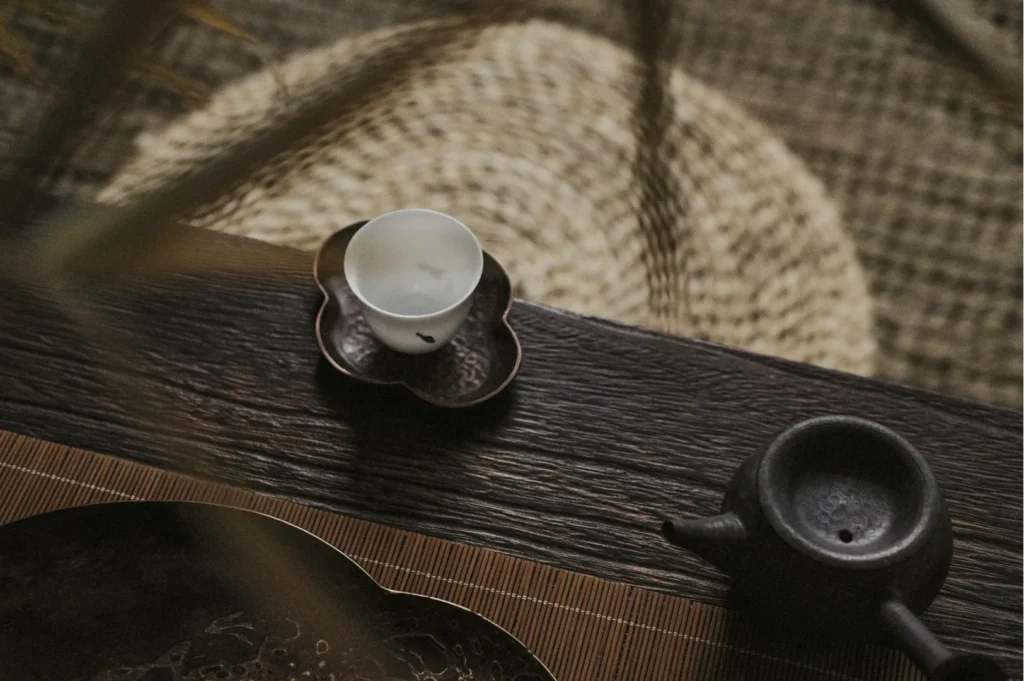
A private tea house is not an exercise in stiffness.
It is not built to make a guest feel examined, corrected, or required to know the right vocabulary. In its most thoughtful form, privacy simply removes friction. There is no need to speak over surrounding tables. No pressure to hurry because another booking is waiting. No background performance asking to be noticed more than the tea itself.
This changes the emotional shape of the room.
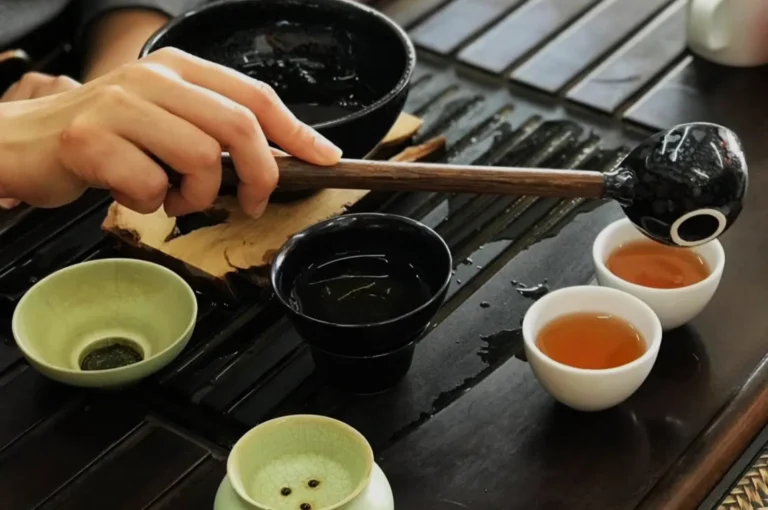
The first effect is often subtle. The shoulders lower. Speech becomes more deliberate. Guests begin to notice the smaller things: the warmth of porcelain in the hand, the first lift of fragrance from a warmed vessel, the way one infusion settles differently from the next. None of this is dramatic. That is part of its value.
Luxury, in this context, is not a matter of excess. It is discretion, warmth, and the confidence to proceed without rush. It is a host who adjusts without fanfare. It is a seat held for you without crowding. It is the rare feeling that nothing important is being forced.
The finest experiences rarely announce themselves. They simply make attention easier.
What a Private Tea House Experience Includes (The Quiet Standards)
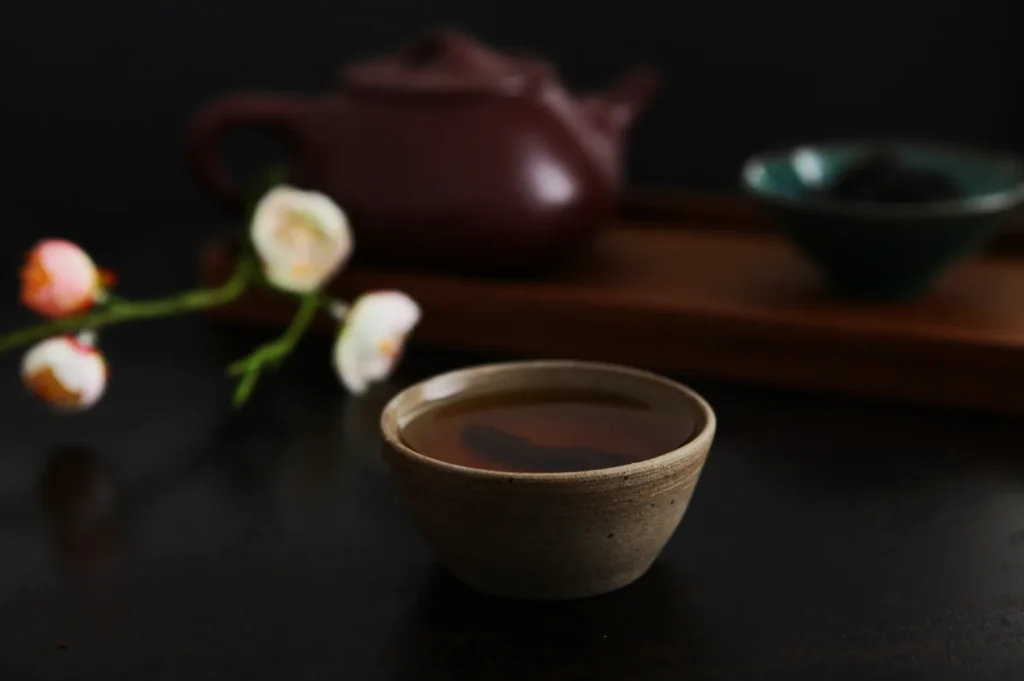
A private tea house experience is shaped by standards that may look simple from the outside, but feel unmistakable once you are inside them. The room, the host, the leaf, and the pacing all work together. Remove one, and the experience narrows. Hold them in balance, and the tea begins to reveal more than flavour alone.
Guided Gongfu Brewing (Not Self-Serve)
At the centre of a serious Chinese tea experience is guided brewing.
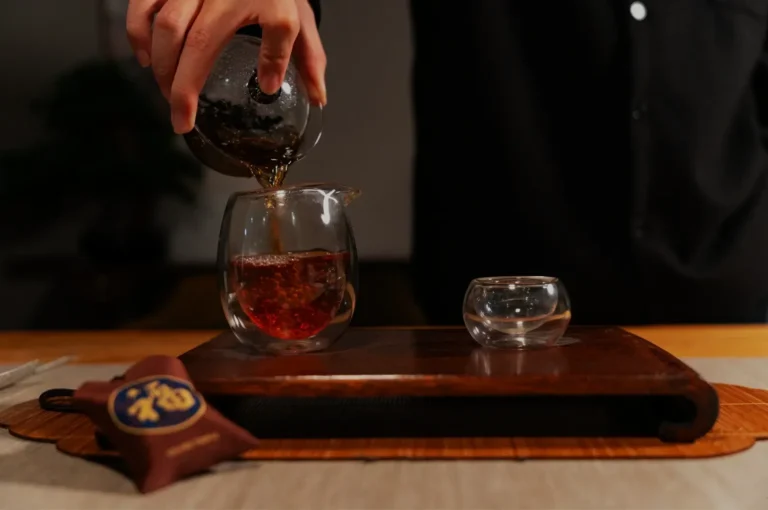
This matters because gongfu tea is not only a technique. It is a relationship to timing, vessel, and adjustment. A good host does not simply pour. They read the leaf. They notice when a tea opens quickly, when it prefers shorter infusions, when the water should cool slightly, when the next round should wait.
For the guest, this means confidence without pressure. You are not left alone to perform expertise. Nor are you given a flood of information that interrupts the cup. Instead, the host guides lightly, adjusting the session so that the tea remains articulate and the guest remains at ease.
In a proper private tea session Singapore setting, guidance is quiet. It arrives when useful, then recedes.
Limited Seating And Calm Atmosphere
A private tea house should never feel crowded.
Limited seating is not only about exclusivity. It is about preserving the conditions in which tea can be noticed properly. Too many people in a room changes the air, the sound, and the attention. Fragrance diffuses more quickly. Conversation becomes more outward than inward. The tea has to compete.
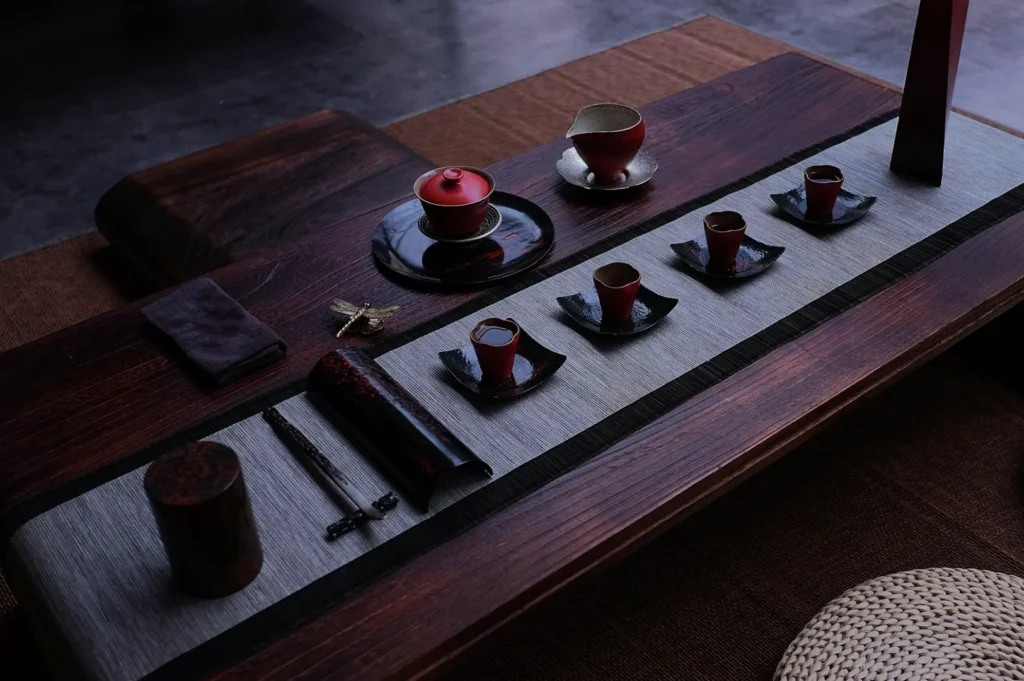
A calm atmosphere does the opposite. Soft light, measured sound, physical space between guests, and the absence of interruption all make the cup clearer. Texture seems easier to perceive. The finish lingers longer because there is room to feel it. Even silence becomes part of the service, not something awkward to be managed.
This is where many people first recognise that quiet itself can be part of a luxury tea experience Singapore offers differently from louder forms of hospitality.
Curated Leaves With Provenance (Quality You Can Taste)
A traditional tea house is not defined by having the longest menu.
It is defined by having a considered one.
Curated leaves with provenance matter because the guest should be tasting something that carries shape, season, and intention, not simply generic quality claims. In practice, this means teas selected for clarity of expression rather than for variety alone. A leaf with depth in the mouth. A finish that returns cleanly. A progression across infusions that feels alive rather than repetitive.
The point is not to overwhelm with choices. It is to choose well enough that each tea can stand on its own character. Provenance matters here not as decoration, but as context. It allows the guest to understand why one tea opens in floral lift while another settles into mineral warmth or roasted softness.
Quality, in a tea house, should always be something you can taste before it is something you are told.
Pacing That Lets Flavour Unfold
The rhythm of the session is part of the tea.
A rushed service can flatten even a fine leaf. If the cups come too quickly, the guest has no time to register what has changed. If the session drags without sensitivity, the energy of the room fades. Good pacing sits between those two errors. It lets the tea unfold naturally, infusion by infusion, without making patience feel like effort.
This is one reason private tea sessions feel so distinct. The evening is not divided into starter, main, and close. It moves with the leaf. The first infusion may introduce brightness. The next deepens structure. A later one may reveal the sweetness that was hidden at the beginning. Without time, these changes are lost.
If privacy is the setting, guidance is the craft.
Private Tea Session Vs Tea Tasting: Choosing the Feeling You Want
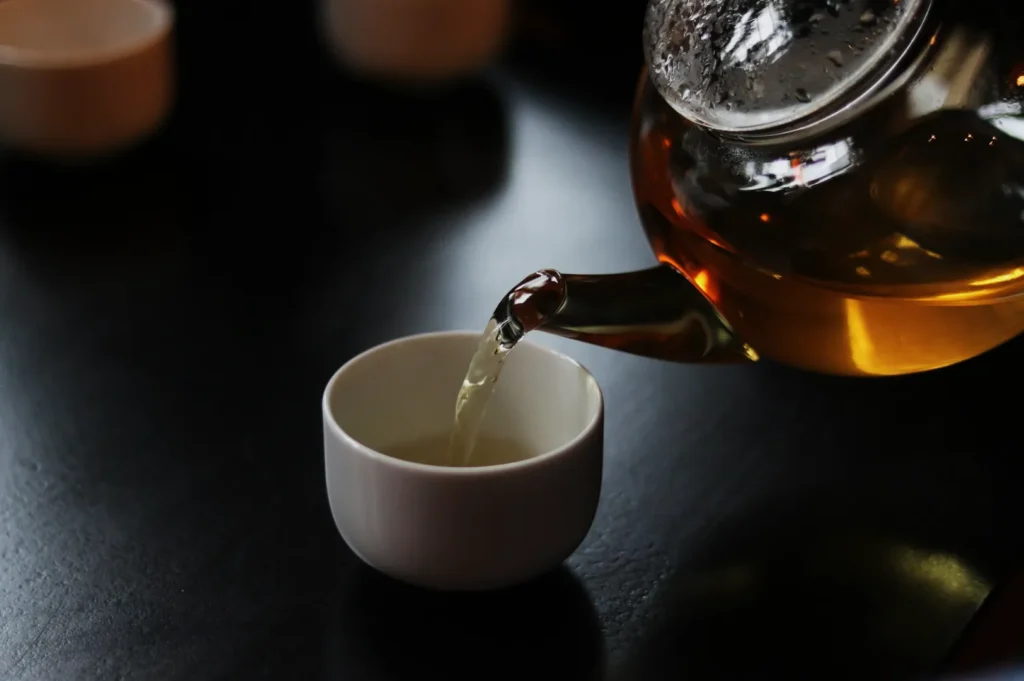
A tea tasting and a private session are not the same experience, even when the tea itself is excellent.
A tasting is often more comparative. It may be social, exploratory, and sample-led. The pleasure comes from encountering several teas, noticing contrast, and building vocabulary around what you are drinking.
A private session is more immersive. It usually allows fewer distractions, greater sensitivity to pacing, and a stronger sense of continuity. Rather than moving quickly from tea to tea, the guest is invited to settle into the rhythm of one experience fully.
If you are deciding between the two, it may help to ask what kind of evening you want.
- Choose a tasting if you want range, comparison, and a more outwardly exploratory mood.
- Choose a private session if you want depth, atmosphere, and a more continuous emotional arc.
- Choose a tasting if you enjoy sampling several expressions quickly.
- Choose a private session if you want to follow the unfolding of one or two teas with care.
- Choose a tasting for social curiosity.
- Choose a private session for protected attention.
Neither is better in principle. They simply answer different forms of desire.
Who This Experience Is For (And Who It Isn’t)
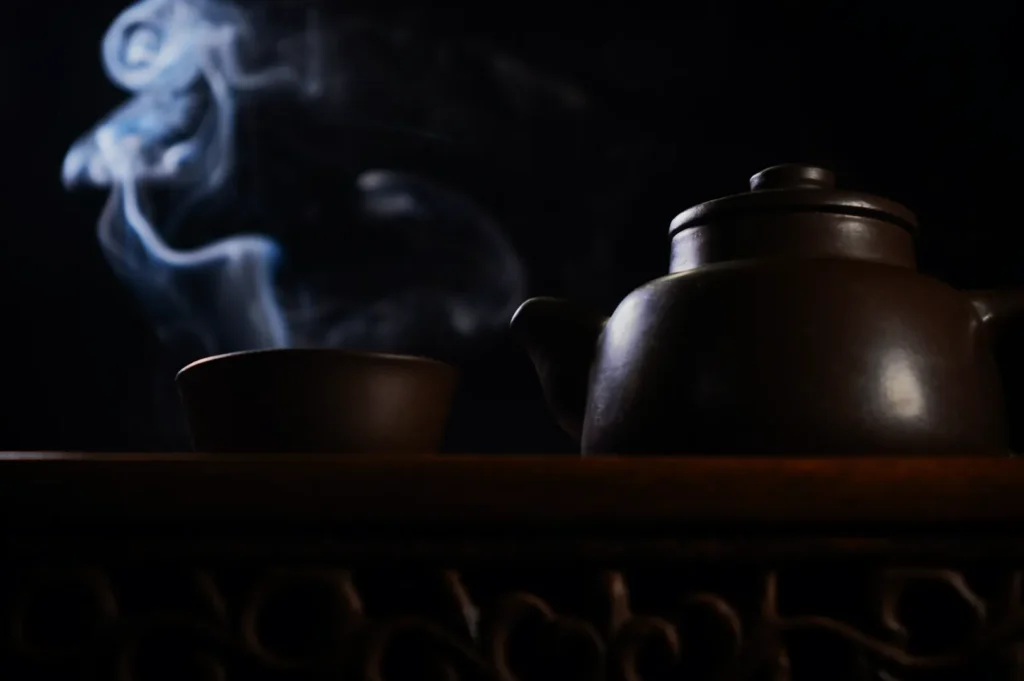
A private tea house experience is not for everyone, and that is perfectly fine.
It is for you if you are drawn to:
- quiet conversation rather than noisy social energy
- the slow unfolding of flavour across multiple infusions
- hospitality that feels personal rather than performative
- atmosphere shaped by calm, warmth, and discretion
- the sense that craft should be felt, not advertised
It is also for you if you are new to tea and want guidance without pressure. A private session can be a gentle beginning precisely because it does not ask you to prove anything.
It may not be for you if you want:
- a fast-paced social scene
- a large, crowded room
- constant novelty and stimulation
- a service built around spectacle
- the feeling of “getting through” many teas quickly
There is no virtue in forcing the wrong setting to fit the wrong mood. Tea, at its best, meets the guest where they truly are.
A Gentle Introduction at Tea Room by Ki-setsu
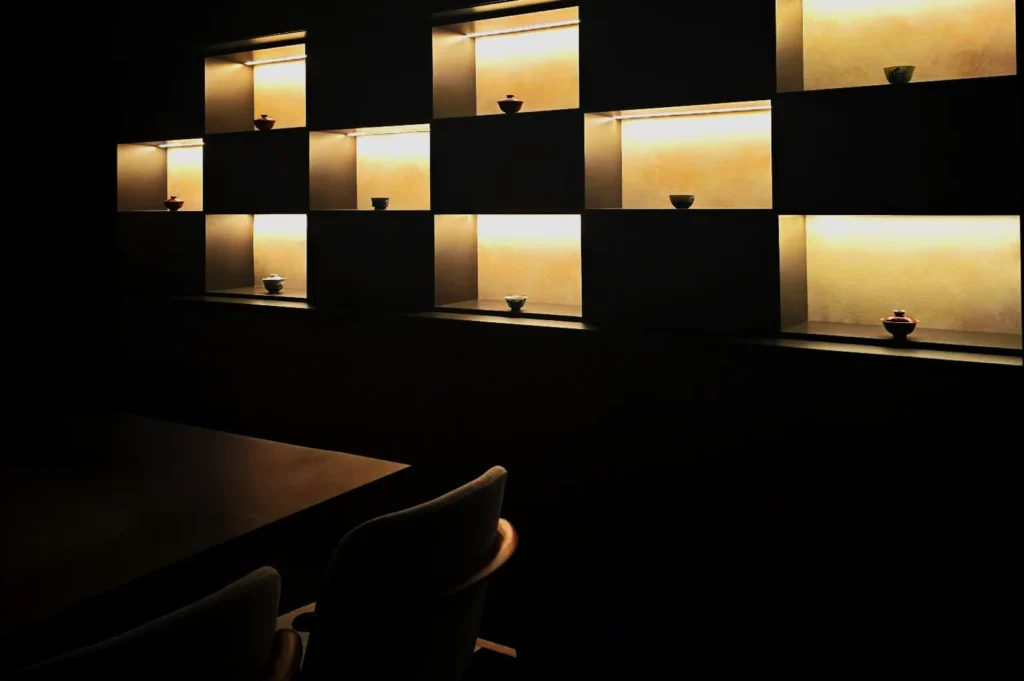
For those who want to understand more deeply what to expect at a traditional tea house, we have written about that more fully elsewhere. But the essence is simple: a private tea house should feel like a place where the leaf is protected enough to speak clearly.
At Tea Room by Ki-setsu, we have shaped our work around that belief.
We are a private Chinese tea sanctuary in Singapore, and our sessions are built around limited seating, guided ritual, and a carefully considered pace. The leaves are curated with restraint. The room is kept calm by intention. The host remains present without becoming intrusive. Guests are invited into the ritual without being made to feel they must perform understanding in order to belong.
For some, this becomes their first meaningful encounter with Chinese tea in Singapore. For others, it is a return to the kind of hospitality they had almost forgotten was possible.
How To Begin, Unhurried
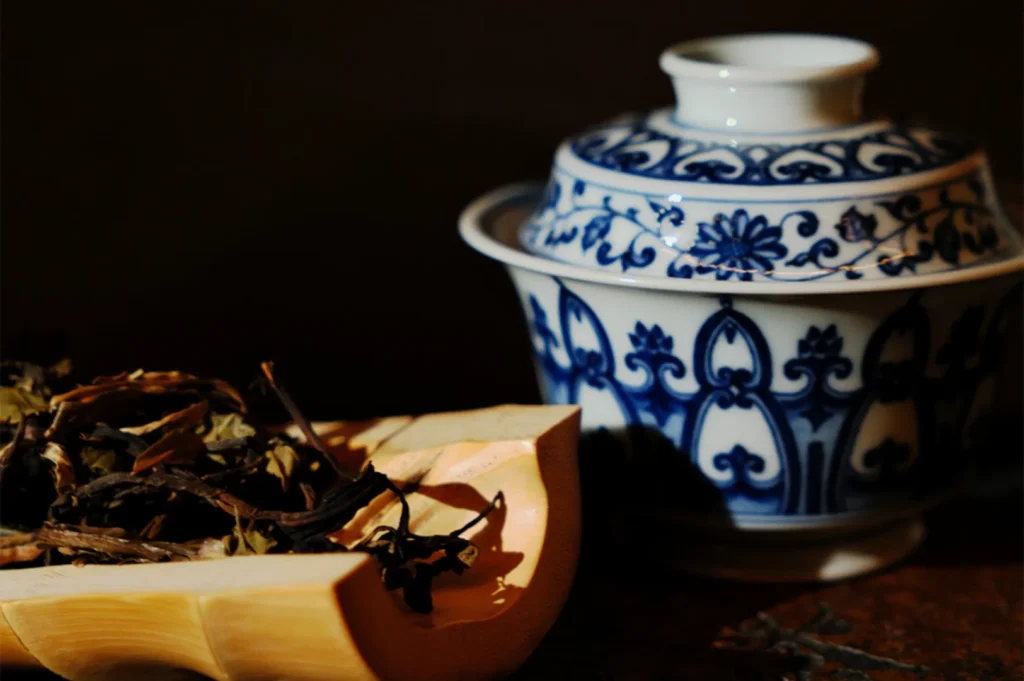
The best way to begin is simply.
Arrive unhurried. Come curious. Let the host guide the pace rather than trying to define the experience too quickly for yourself. Notice the room before the cup. Notice the cup before the flavour. Notice the aftertaste before reaching for a conclusion.
A private tea house does not ask for expertise. It asks for attention.
For those who value calm over crowds, a private tea house experience is a gentle return to attention.