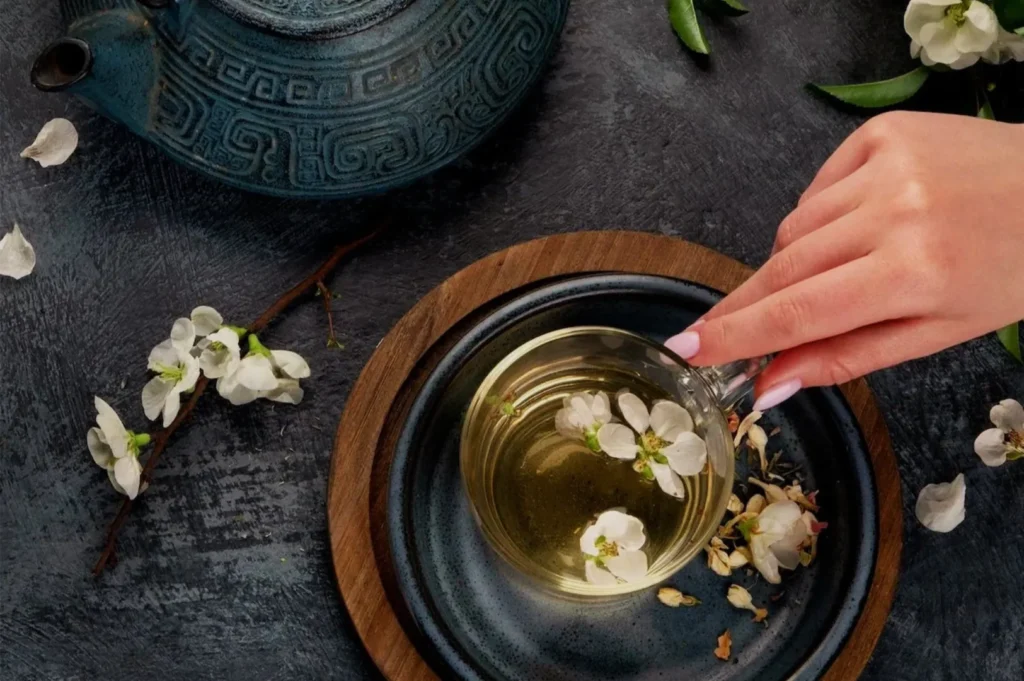
Jasmine tea has an easy relationship with wellness language.
It is floral. It is unsweetened. It feels gentle. That combination makes exaggerated claims tempting.
We prefer the quieter answer.
Traditional jasmine tea is still Camellia sinensis tea. Its composition is shaped by the tea base and by scenting with jasmine flowers. It contains polyphenols, caffeine and other compounds that have attracted scientific interest.
Interesting research is not the same thing as permission to call tea medicine.
Our complete guide to jasmine tea benefits and craft provides the broader context.
Polyphenols Come From the Tea
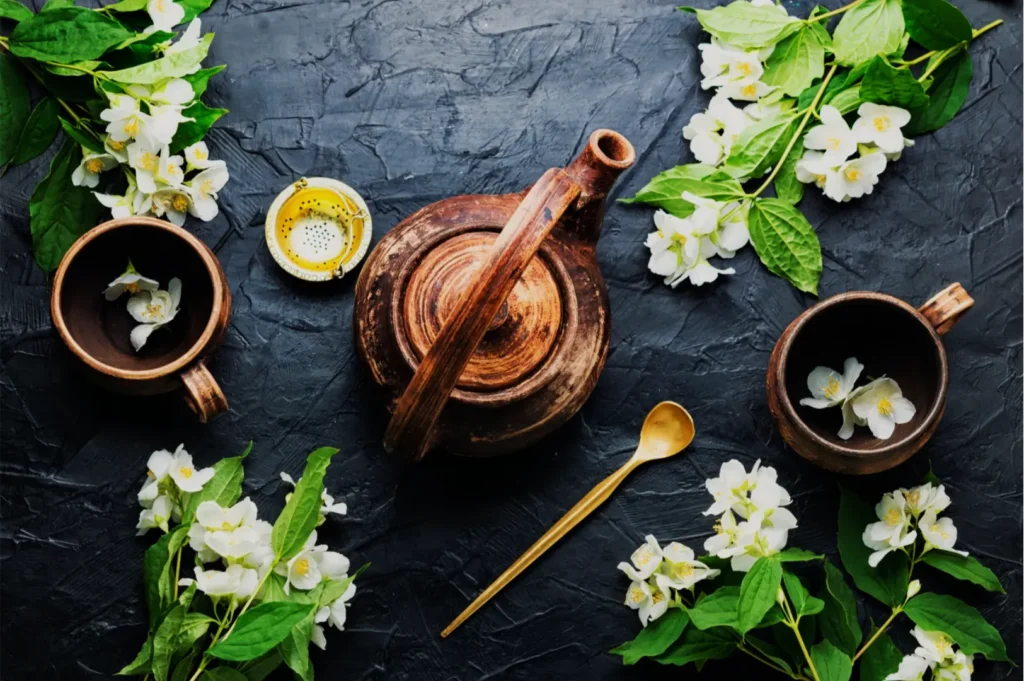
The tea base supplies many of jasmine tea’s familiar compounds.
The U.S. National Center for Complementary and Integrative Health notes that tea contains polyphenols, caffeine, amino acids and volatile compounds, while also cautioning that human evidence for many promoted health effects remains incomplete.
That is a useful standard for jasmine tea too.
We can appreciate its composition without promising an outcome.
What Does Jasmine Add?
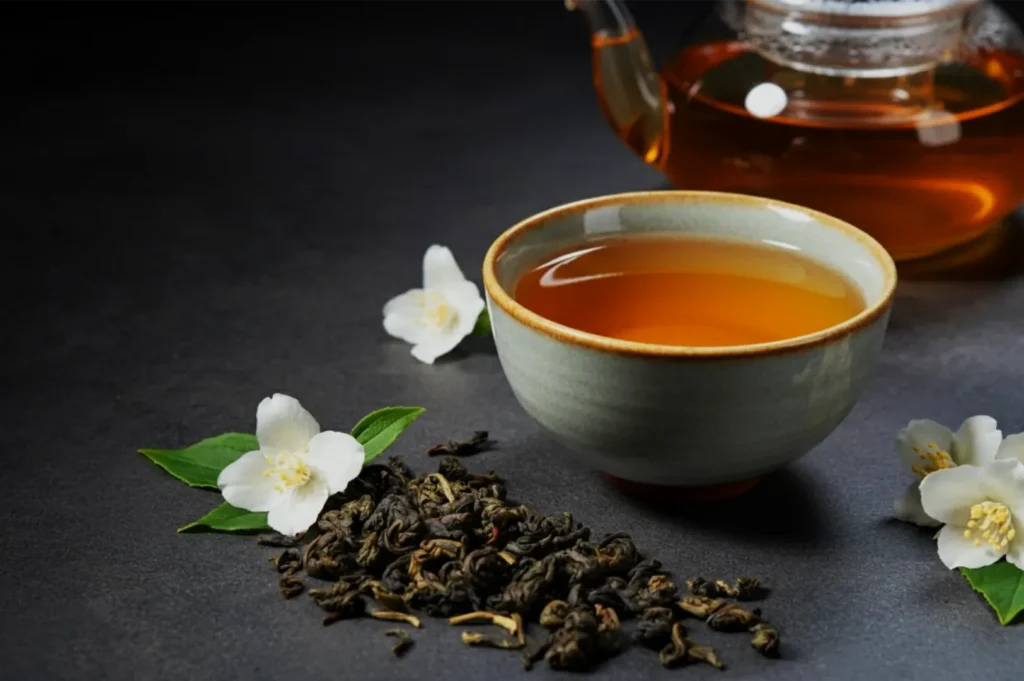
Scenting changes more than aroma.
A 2026 review of jasmine tea research covers changes to flavour compounds as well as potential antioxidant, metabolic, antibacterial and other biological activities being investigated.
Much of that research does not mean ordinary tea drinking has been proven to treat disease.
Extract studies, laboratory models and brewed tea are different things.
Tea research can deepen understanding without becoming a health promise.
A Practical Benefit: It Needs Little Added
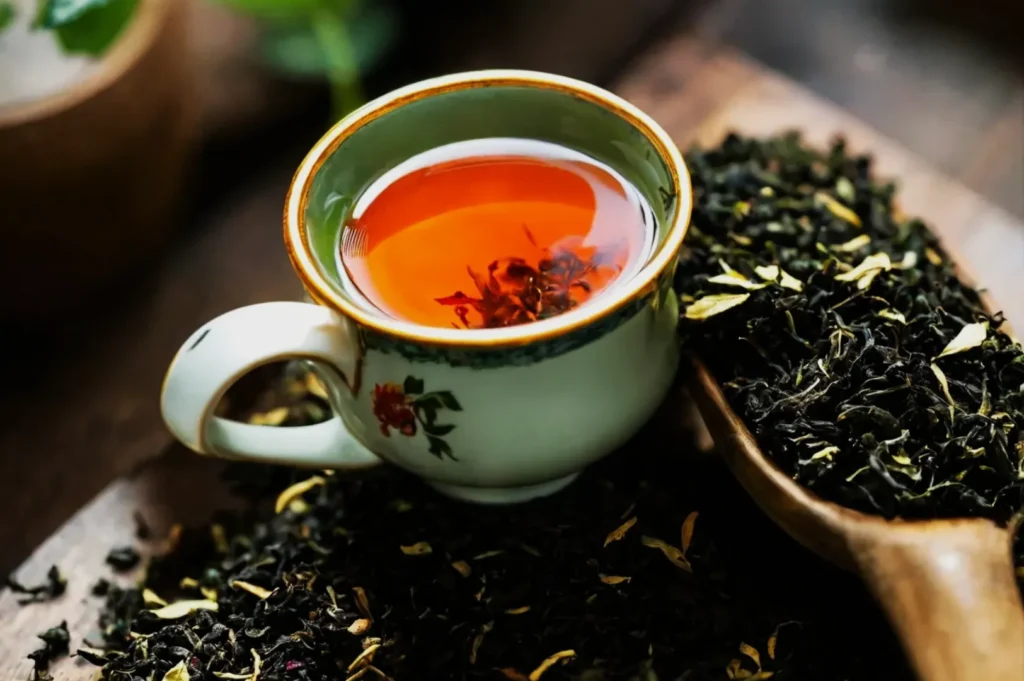
A well-made jasmine tea already has fragrance and perceived sweetness.
That gives it one everyday advantage: it can be satisfying without sugar, syrups or milk.
The aroma gives the palate something to follow.
For many people, replacing a sweetened drink with plain tea is more useful than chasing a dramatic “detox” claim.
Aroma Can Change the Experience
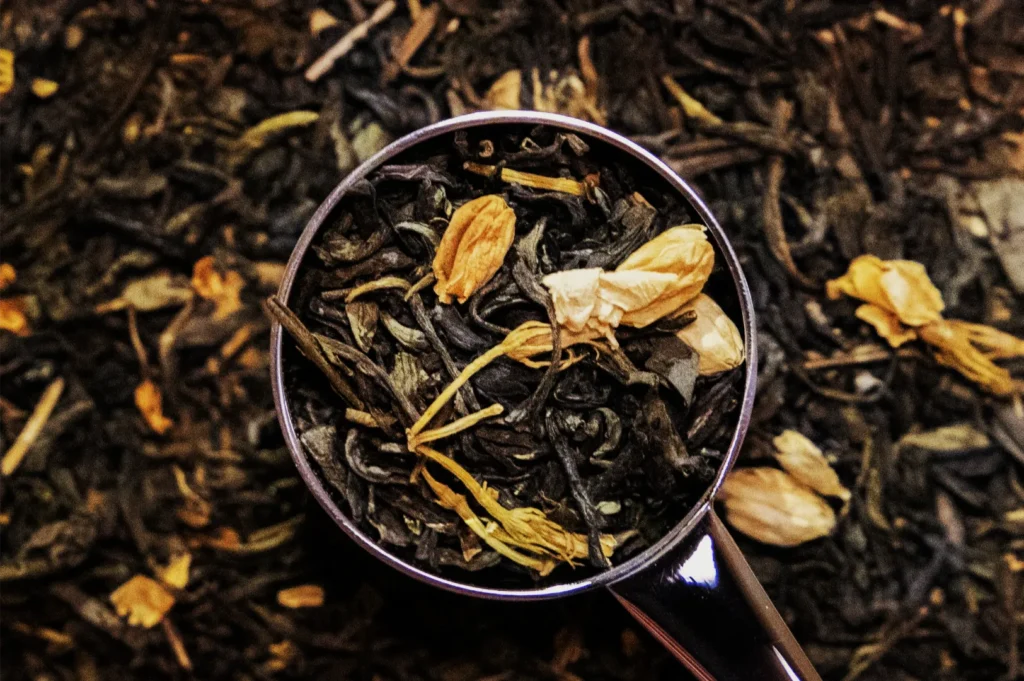
Jasmine’s fragrance is central to the appeal.
Studies have identified compounds such as linalool and methyl anthranilate among important contributors to jasmine tea aroma.
That sensory pleasure matters.
A cup people genuinely enjoy is easier to return to than something consumed only because it has been labelled “healthy.”
Tea as a Pause
At our private tea room in Singapore, tea appreciation is built around presence rather than performance.
Our current rare-tea selection is different from the jasmine teas discussed here, but the principle remains consistent: smell first, taste carefully, notice the finish and allow the session to move without hurry.
There is value in that rhythm even before health claims enter the conversation.
Sometimes the most believable benefit of tea is that it gives the day a different pace.
Final Thought
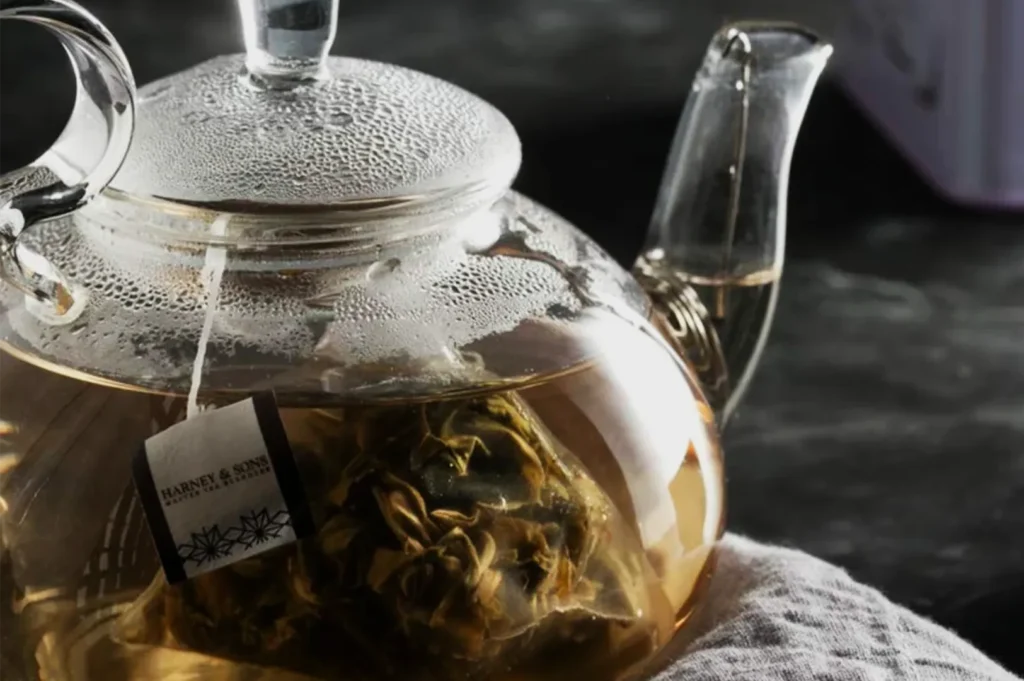
Jasmine tea contains meaningful tea compounds, and researchers continue to study its biological activity.
That deserves interest.
It does not require exaggeration.
Drink it because a good cup is fragrant, unsweetened, layered and calming to prepare. Let evidence guide any stronger claims.
Good tea has enough character without asking it to cure anything.