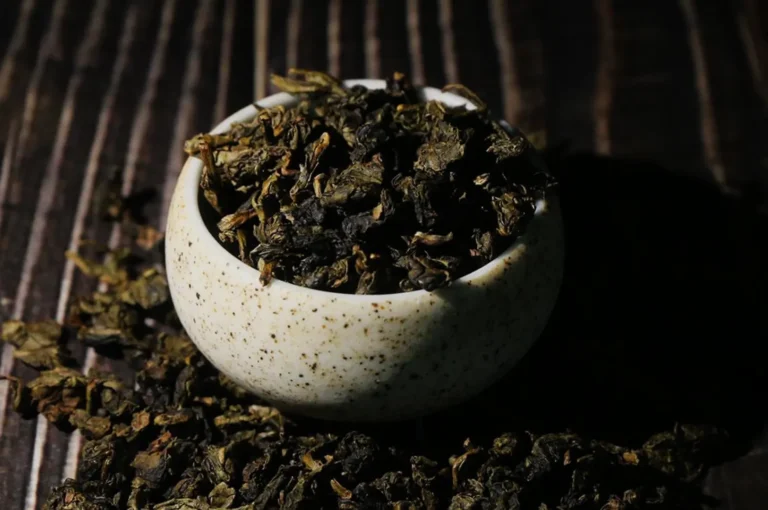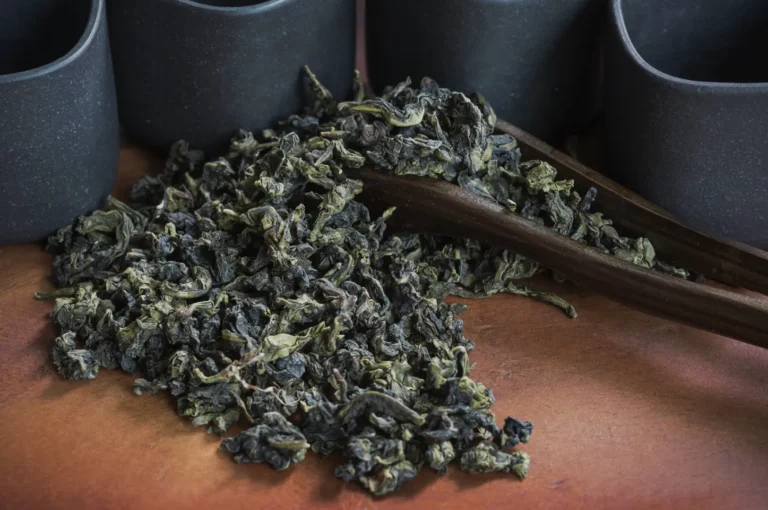

The story of rooibos tea begins in the rugged, sun-drenched Cederberg Mountains of South Africa. Here, in this specific mountainous region of Southern Africa, grows a unique plant named Aspalathus linearis. With its fine, needle-like leaves, this humble shrub holds within it a remarkable heritage and a flavour profile celebrated across the globe. For centuries, the indigenous Khoisan people have harvested this plant, understanding its soothing properties and naturally sweet character.
This red bush tea offers a fascinating bridge between ancient South African tradition and the mindful principles of Eastern tea philosophy. It is a beverage that is both rustic and refined, enjoyed for its comforting warmth when consumed hot and its refreshing clarity as an iced rooibos tea. As we explore its origins, we find a story of terroir, craftsmanship, and wellness that resonates deeply with the values we cherish in the world of fine tea.
What is Rooibos? Understanding the “Red Bush Tea” Beyond Classification
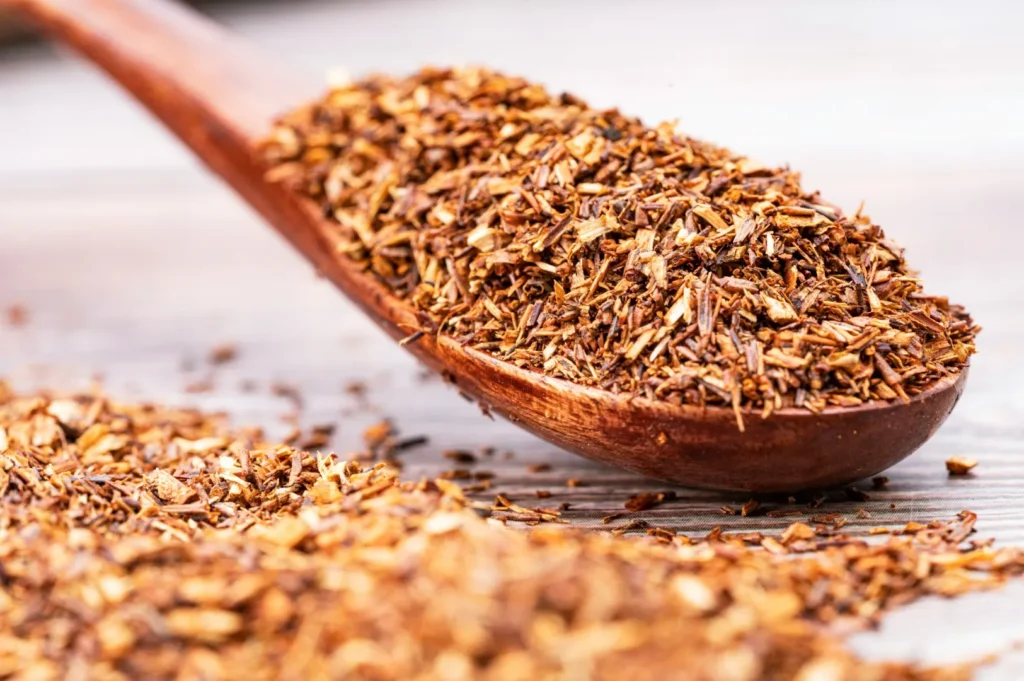
Rooibos is an herbal tea from the Aspalathus linearis shrub native to South Africa, not a true tea like green or black tea from Camellia sinensis. Called “red tea” or “red bush” for its reddish brown colour from fermentation, rooibos is naturally caffeine free and rich in health-promoting antioxidants and flavonoids. With low tannins, it allows better nutrient absorption than black or green tea.
Potential Health Benefits
Research suggests rooibos supports heart health, lowers blood sugar levels, and aids chronic conditions like diabetes. It also contains trace minerals such as calcium, magnesium, and fluoride, important for bone density. Its naturally sweet taste and low tannin content make rooibos infusion a healthy, versatile drink enjoyed worldwide.
The Terroir Story: How Geography Shapes The Red Tea’s Character
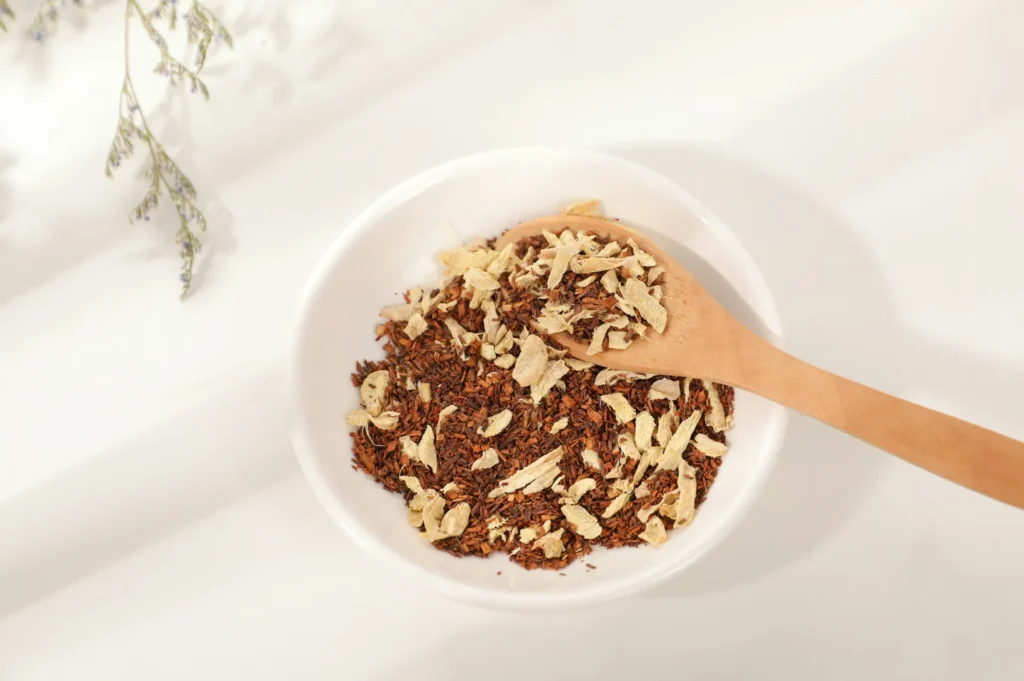
In Chinese tea philosophy, terroir shapes a tea’s character. Rooibos grows only in South Africa’s Cederberg region, where sandy, mineral-rich soil and extreme temperature shifts create a complex profile. This unique terroir yields a robust yet delicate brew with different flavors, making rooibos a treasured red bush tea. All rooibos tea originates from this limited mountainous region, adding to its value and mystique, like fine oolong reflects its mountain home.
Processing Methods: Traditional vs. Green Rooibos
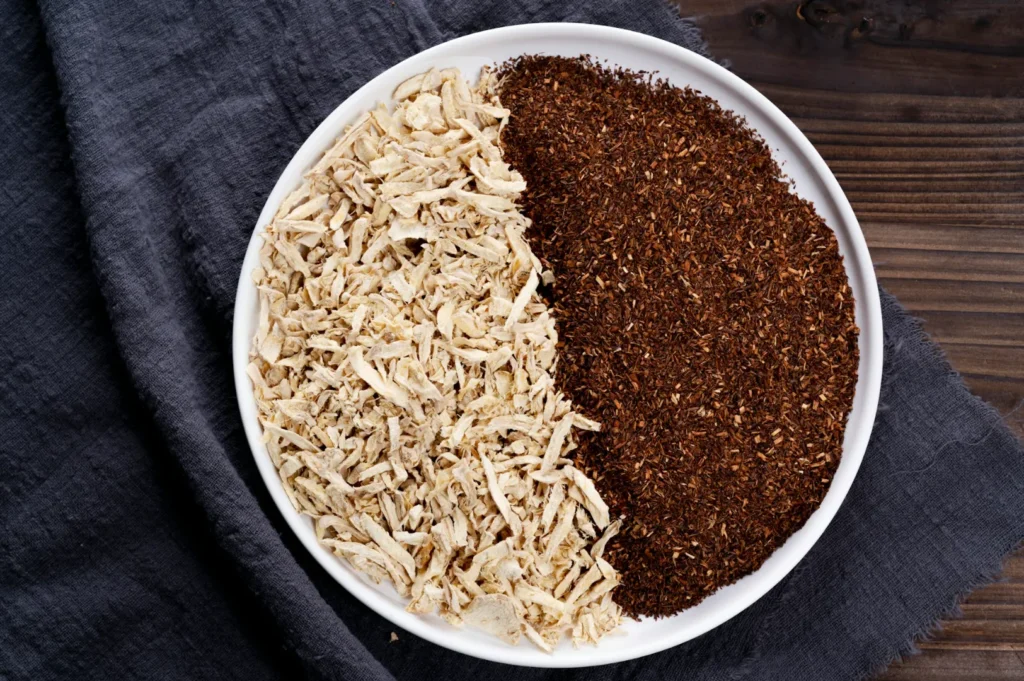
The final character of rooibos is shaped by two distinct processing methods, each drawing a parallel to the traditions of Chinese tea craftsmanship. The more common method produces traditional rooibos. After harvesting, the leaves are bruised and left to oxidise in the sun. This fermentation process, similar to that of black tea, develops the plant’s distinctive reddish brown colour, its rich, earthy aroma, and its naturally sweet taste.
Alternatively, some producers create green rooibos. In this method, the leaves are immediately dried after harvesting, using hot water or steam to halt the oxidation process, much like the preparation of green tea. This preserves more of the plant’s delicate compounds and health-promoting antioxidants, resulting in a brew with a lighter, grassier flavour. Each method offers its own potential health benefits and a unique sensory experience, allowing connoisseurs to explore the full spectrum of this remarkable bush tea.
Tasting Profile: Sweet and Earthy (and Naturally Caffeine Free)

Rooibos tea’s naturally sweet and smooth character has earned it a global following. With honey-like sweetness, earthy depth, and subtle vanilla and nut notes, it rarely needs added sugar, though a little milk complements its flavour. Delicious hot or iced, rooibos can also be cold brewed by steeping in cold water for 6–12 hours, and creatively added to cold lemonade or hot soups.
Low in tannins, rooibos lacks bitterness, making it smooth and gentle. Many enjoy rooibos infusion with lemon, cinnamon, or honey for varied flavours. Its naturally caffeine free nature allows consumption any time without disrupting sleep.
Rooibos in the Context of Global Tea Culture

Rooted in South African heritage, rooibos has gained global appreciation as a caffeine-free alternative with a pleasant taste and notable health benefits. This appreciation parallels Chinese tea culture’s mindfulness and health focus.
Peer-reviewed studies link rooibos’s high antioxidant content to improved heart health, blood pressure regulation, and blood sugar management. It may help lower blood sugar levels and improve insulin sensitivity, benefiting those with diabetes. Rooibos tea also supports heart health by improving cholesterol levels, especially in individuals at higher risk of heart disease.
Additionally, rooibos has antispasmodic and anti-inflammatory properties that may ease digestive issues like stomach cramps and aid chronic conditions. From traditional South African brewing to modern iced rooibos tea and blends with flowers and spices, rooibos’s adaptability and universal appeal are clear.
How to Brew Rooibos with Intention (Gongfu-Inspired Approach)

Elevate rooibos brewing to a mindful ritual using quality leaves and pure water. Unlike delicate green tea, rooibos thrives with water just off the boil, extracting full flavour and antioxidants. Use a filter or tea ball to steep the leaves for 5–10 minutes or longer for a stronger brew.
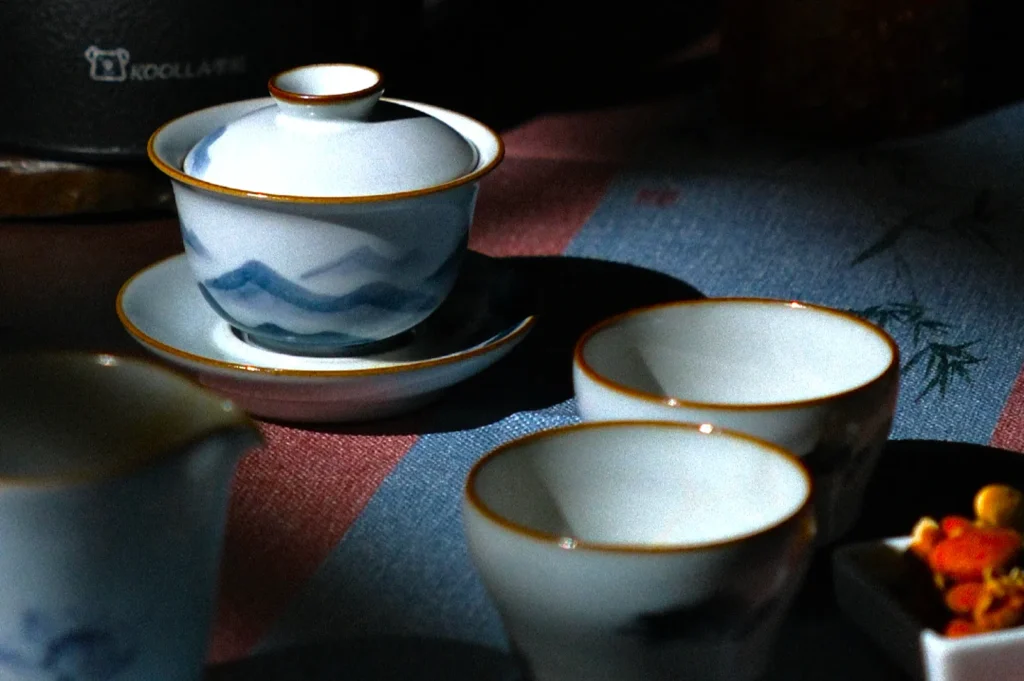
Prepare with fine teaware like a Yixing pot or porcelain cup. Appreciate the distinctive reddish brown colour and rich, earthy aroma before sipping. Rooibos can be steeped multiple times, each infusion revealing new character. This method suits both hot and iced rooibos tea.
Traditionally served plain with milk and a little sugar, rooibos tea is naturally caffeine free and can be enjoyed anytime. It offers health-promoting antioxidants and potential benefits for heart disease and blood sugar balance. Rooibos tea is generally safe for most people in moderate amounts, with no significant side effects reported for up to 6 cups daily.
Why Rooibos Deserves a Place in Your Tea Journey
Rooibos holds a unique and deserving place in any tea collection. As a naturally caffeine-free herbal tea from South Africa, it offers impressive potential health benefits, including a wealth of antioxidants and anti-inflammatory properties that support heart health and blood sugar management. While most people can safely drink rooibos daily, it is a truly beneficial addition for those seeking wellness and flavour in a single cup.
This red bush tea beautifully complements a mindful tea practice, inviting moments of quiet reflection and sensory appreciation. Its story (one of place, patience, and partnership between nature and craft) resonates with the deepest values of tea culture. We invite you to explore the world of authentic tea culture at Tea Room by Ki-setsu, where the principles of quality, craftsmanship, and intentional brewing are honoured across all tea traditions. To learn more, visit us at https://tearoom.com.sg/.