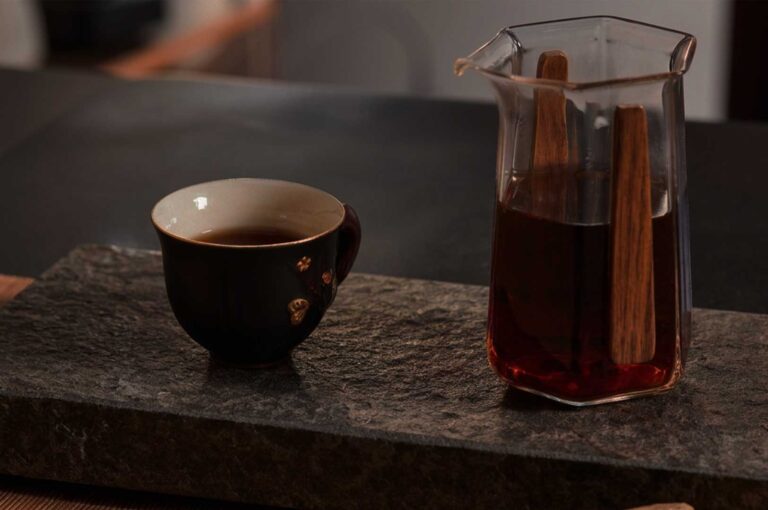
The name Shai Hong can sound unfamiliar even to people who drink Chinese tea regularly.
It becomes easier once we separate its two parts.
Shai means sun drying. Hong refers to red tea, the Chinese classification generally called black tea in English.
Put them together and the name reveals something important about how the tea is made.
Shai Hong is not a new tea colour. It is a black tea distinguished by its drying method.
For a broader introduction, our Shai Hong tea guide covers its Yunnan identity, flavour, brewing and ageing.
Why Is It Called Red Tea?
Chinese and English tea classifications use different colour conventions.
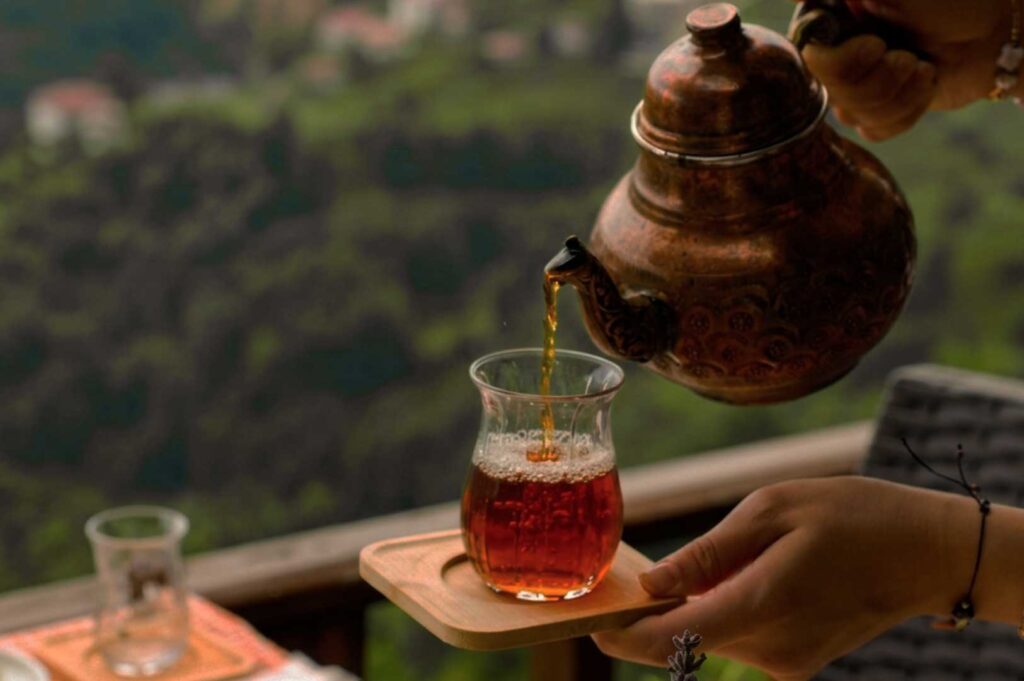
In China, hong cha refers to the reddish liquor associated with oxidised tea. English-speaking tea culture commonly calls this black tea, referring more to the dark appearance of processed leaves.
UNESCO recognises black tea as one of China’s six basic tea categories, alongside green, yellow, white, oolong and dark tea. Read UNESCO’s Chinese tea classification.
Shai Hong belongs to black tea, not to dark tea simply because its dry leaves may appear dark.
What Makes Shai Hong Different?
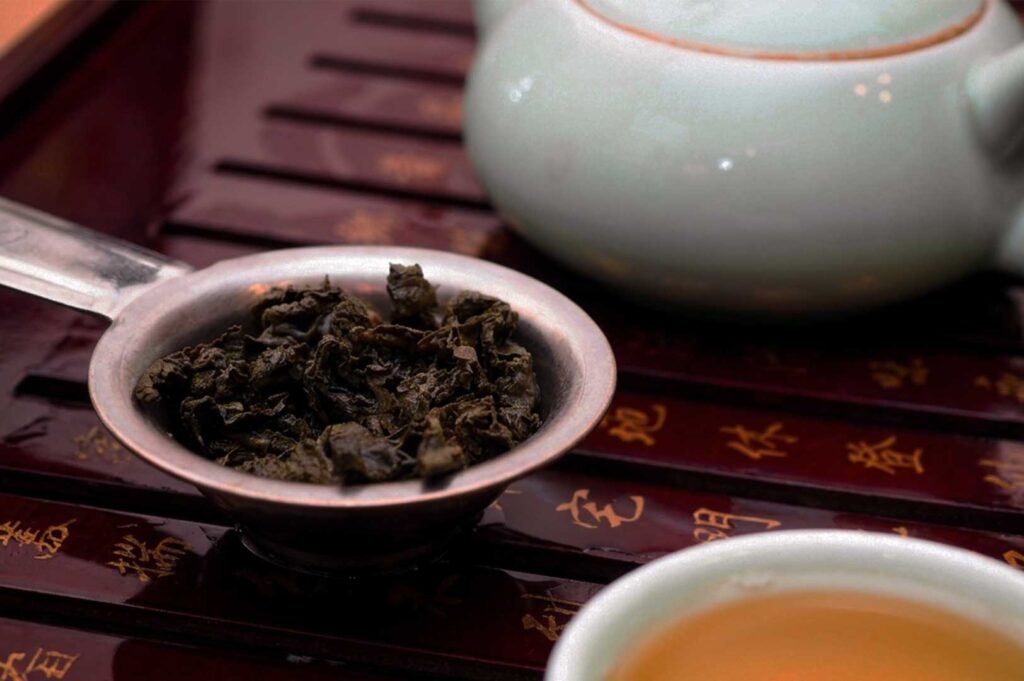
The crucial detail is the final drying.
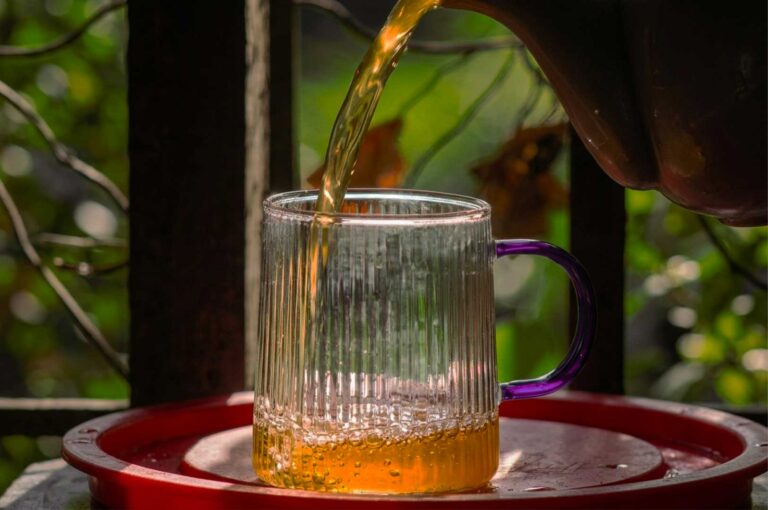
Traditional Shai Hong is associated with using natural sunlight to remove moisture from the oxidised leaves.
A 2024 published Shai Hong product standard identifies withering, rolling, oxidation and sun drying among its production stages.
The standard applies to a particular producer’s products, rather than defining every Shai Hong made in Yunnan. Still, it provides a useful documented example of the processing identity.
Is Shai Hong Always Made From Ancient Trees?
No.
This is a common misunderstanding.
Shai Hong describes a processing style. Ancient-tree material describes the source of the leaves.
The two can occur together, but neither proves the other.
A scientific study of Yunnan sun-dried black tea investigated biochemical composition and quality, helping establish Shai Hong as a legitimate subject of tea-processing research rather than merely a marketing expression.
The question should be whether the tea’s origin and material can be substantiated.
Why This Matters to Chinese Tea Drinkers
Understanding Shai Hong teaches a larger lesson.
Tea categories are not determined by one romantic image of their production. The processing steps matter, and so does the order in which they occur.
At Tea Room by Ki-setsu, our collection includes Shai Hong among other rare Chinese teas. We approach each tea through its own identity rather than assuming that one category tells the whole story.
The more precisely we describe tea, the more freedom we have to appreciate it.
Final Thought
So, what is Shai Hong?
It is a sun-dried style of Chinese black tea, particularly associated with Yunnan.
Its interest begins with an ordinary word: sunlight.
But its value lies in how that drying step interacts with everything that came before it.
The name introduces the method. The cup must still justify the tea.