Within a Chinese tea ceremony, the act of serving tea carries meaning beyond refreshment. A cup placed carefully into another’s hands becomes a gesture of gratitude, acknowledgement, and care. Whether performed on a wedding day or in a quiet Gongfu setting, the ceremony is shaped by traditional etiquette, shared attention, and the thoughtful use of tea cups.
Across centuries, this ritual has remained a way to connect family members, honour elders, and mark important transitions. At the centre of it all is the cup: simple in form, but significant in purpose.
Chinese Tea Ceremony in the Wedding Tradition
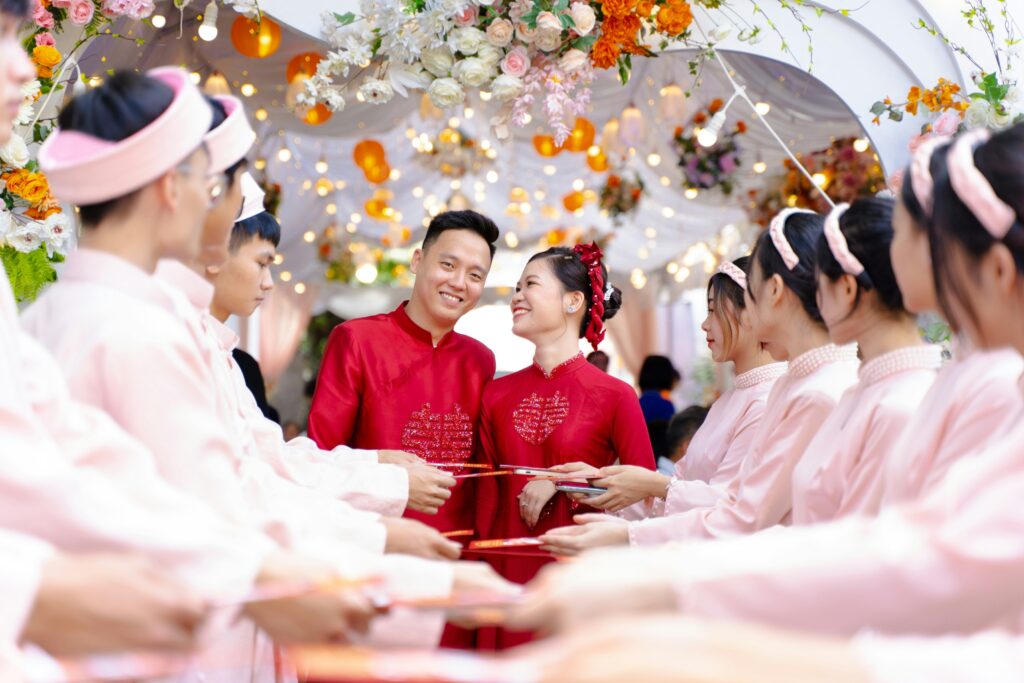
The Chinese wedding tradition of serving tea can be traced back to the Tang Dynasty, when tea ceremonies became part of formal family rites. Traditionally, this ceremony marks the moment the bride and groom formally acknowledge their parents and elders as a married couple.
The process follows a strict rule based on seniority. The couple first serves tea to the groom’s parents, followed by the bride’s parents. From there, they continue in order: bride’s grandparents, groom’s grandparents, uncles, aunts, and other relatives, including older cousins. Each person receives one cup, served with both hands.
This structure reflects traditional etiquette rooted in respect and hierarchy. It also determines how many people will be involved, which is an important consideration when planning the ceremony.
Tea Preparation for a Wedding Tea Ceremony
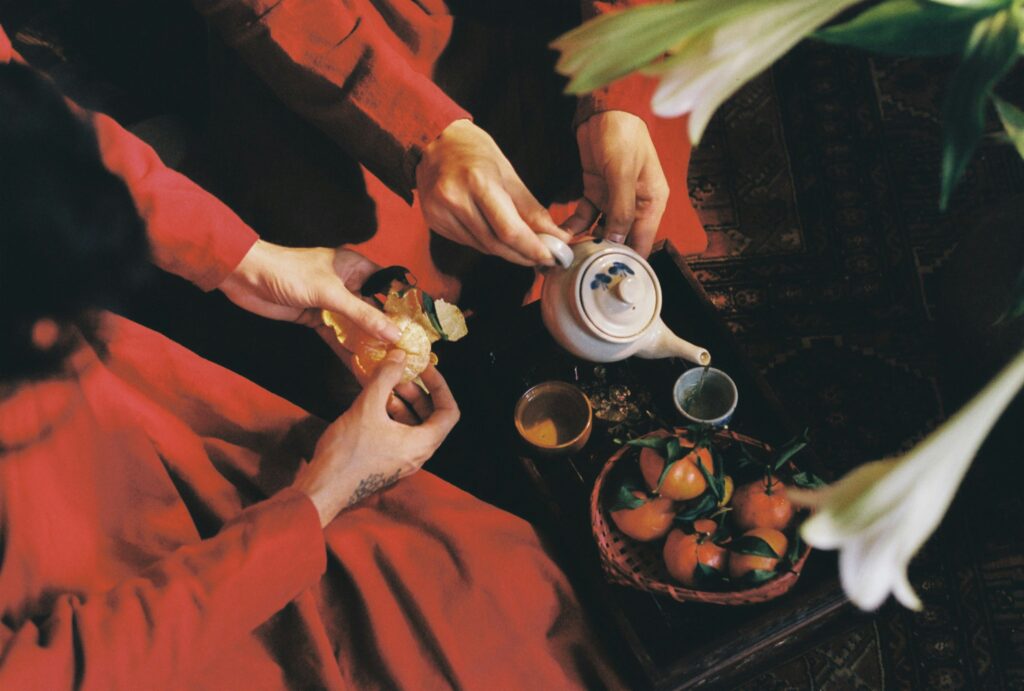
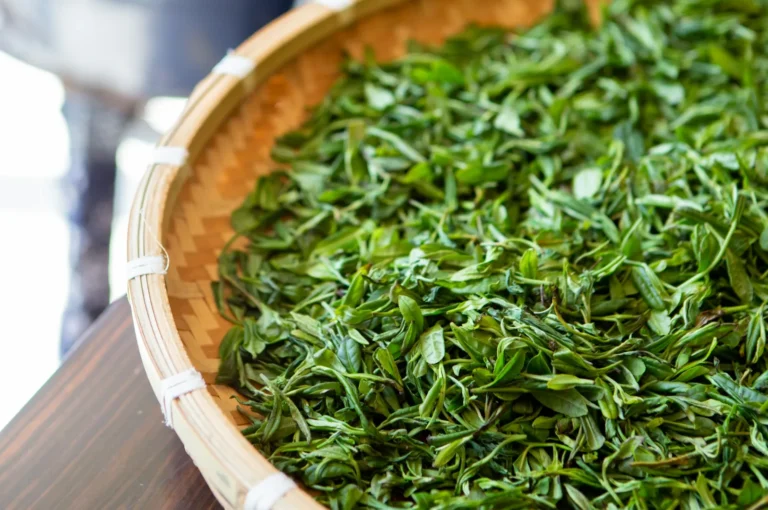
Tea preparation during a wedding ceremony is handled with care and intention. Traditionally, green tea or a light oolong is used, as these teas are considered clean, balanced, and suitable for celebration.
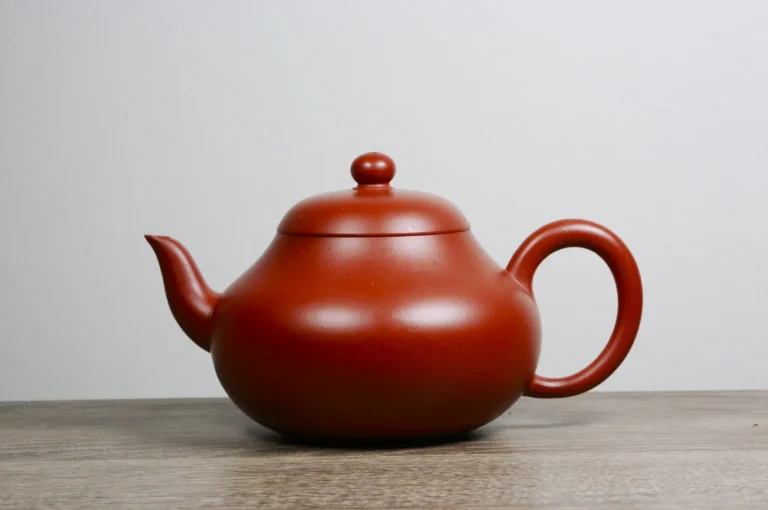
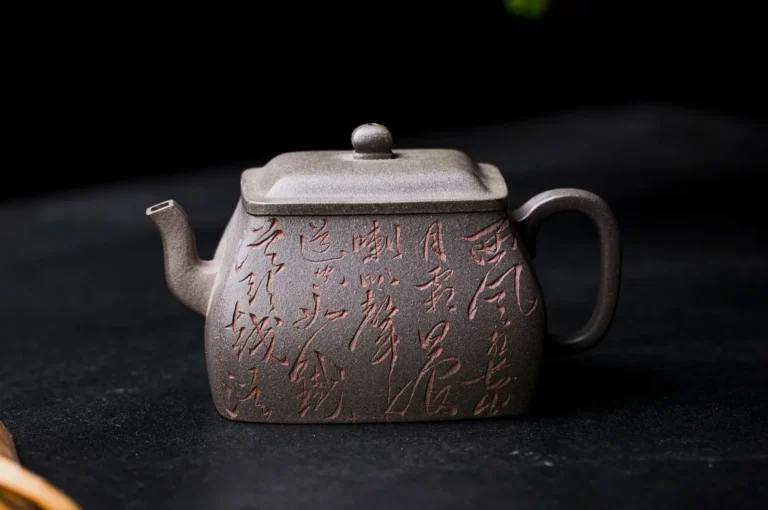
Symbolic ingredients are often added. Lotus seeds represent fertility and continuity, while red dates symbolise sweetness and good fortune. The tea pot is filled with boiling water, and the tea is prepared fresh for each round of serving.
Each elder is offered a fresh cup. After one round is complete, the next round begins with newly prepared tea. Bridesmaids or a close friend may assist with the preparation, ensuring the flow remains smooth and respectful.
The Tea Cups Used in a Tea Ceremony
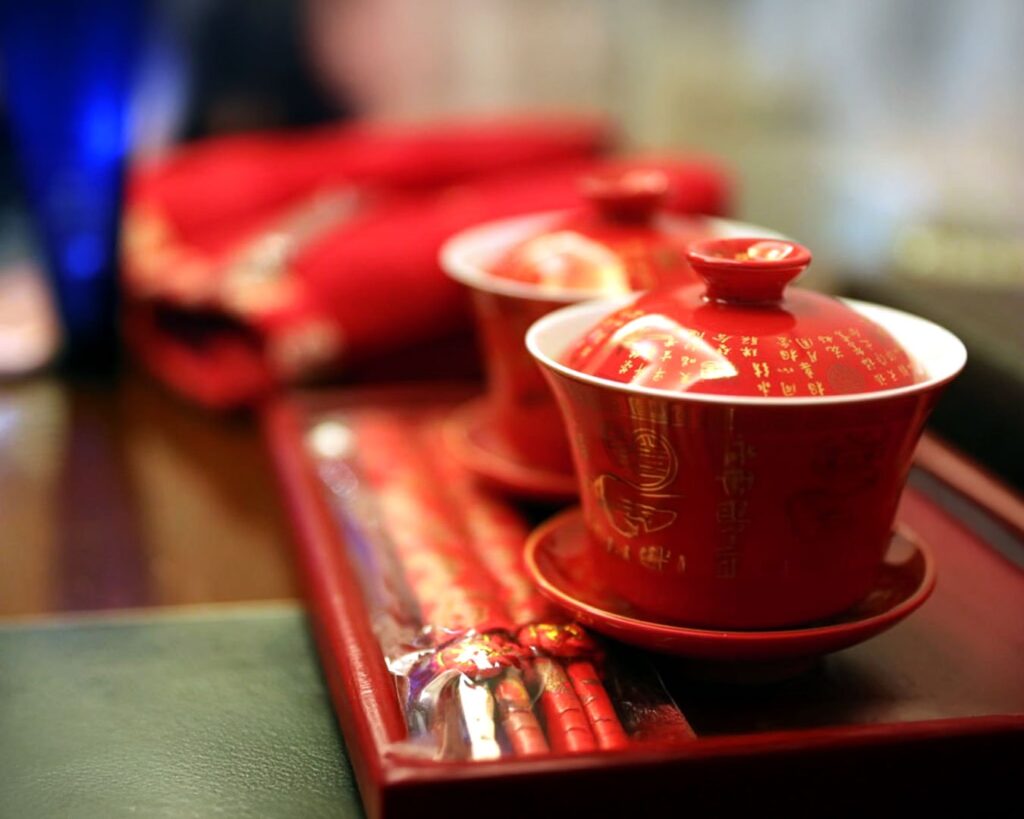
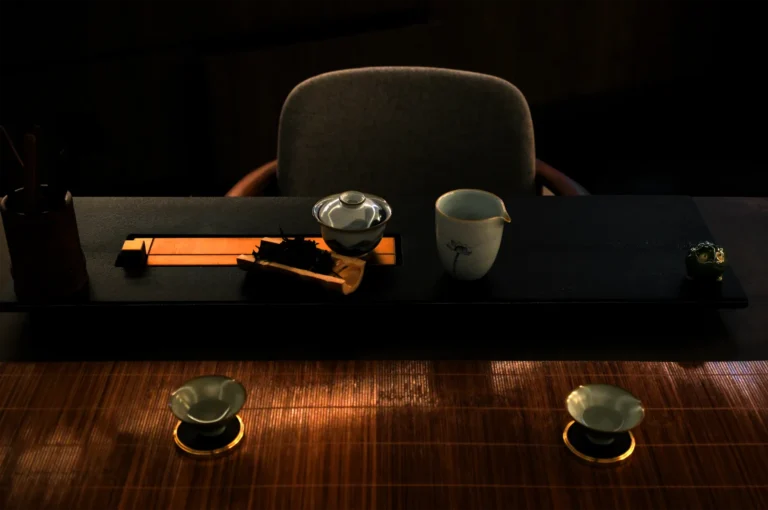
Tea cups play a central role in the ceremony. They are not decorative objects, but functional tools designed to support the act of offering tea. For those interested in understanding the forms and materials behind these vessels, our visual guide to chinese tea cups used in traditional ceremonies explores the most common styles and their purposes.
Matching cups are commonly used, often made from china or porcelain. Their size allows the tea to be served warm and consumed in a few calm sips. Using consistent tea cups ensures that each family member is treated with equal respect.
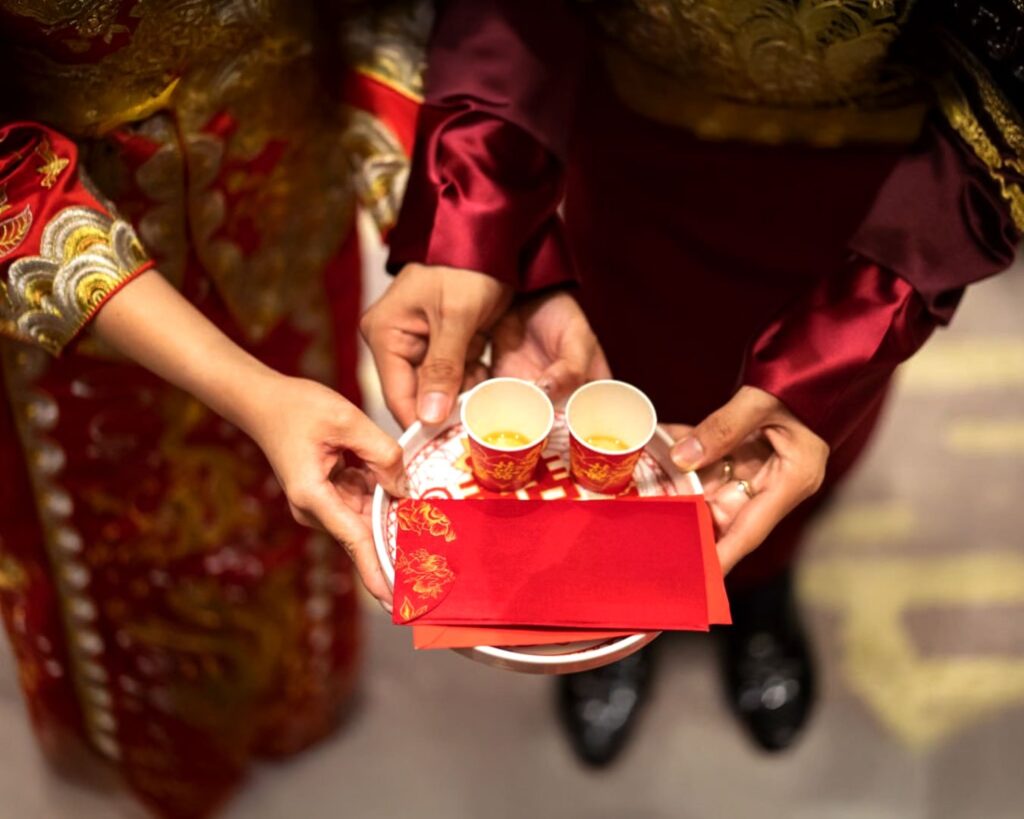
After the tea is received, elders typically offer well wishes to the bride and groom. Gifts may follow, including red envelopes or gold jewelry, both symbols of blessing and prosperity.
Chinese Tea Ceremony Setting and Attire
The setting for the wedding tea ceremony is usually the family home, arranged to create a calm and respectful environment. Chairs are prepared for parents, grandparents, and older relatives. In some traditions, two pillows are placed on the floor for the couple to kneel on during offering tea.
Attire is carefully chosen. The bride often wears a red dress, sometimes a shapely dress inspired by traditional styles. The groom may wear a red tie or traditional clothing. Red is used throughout the ceremony to represent happiness, celebration, and continuity.
A wedding photographer is often present to document the ceremony, as these moments hold deep meaning for both families.
Tea Ceremony Beyond the Wedding Day
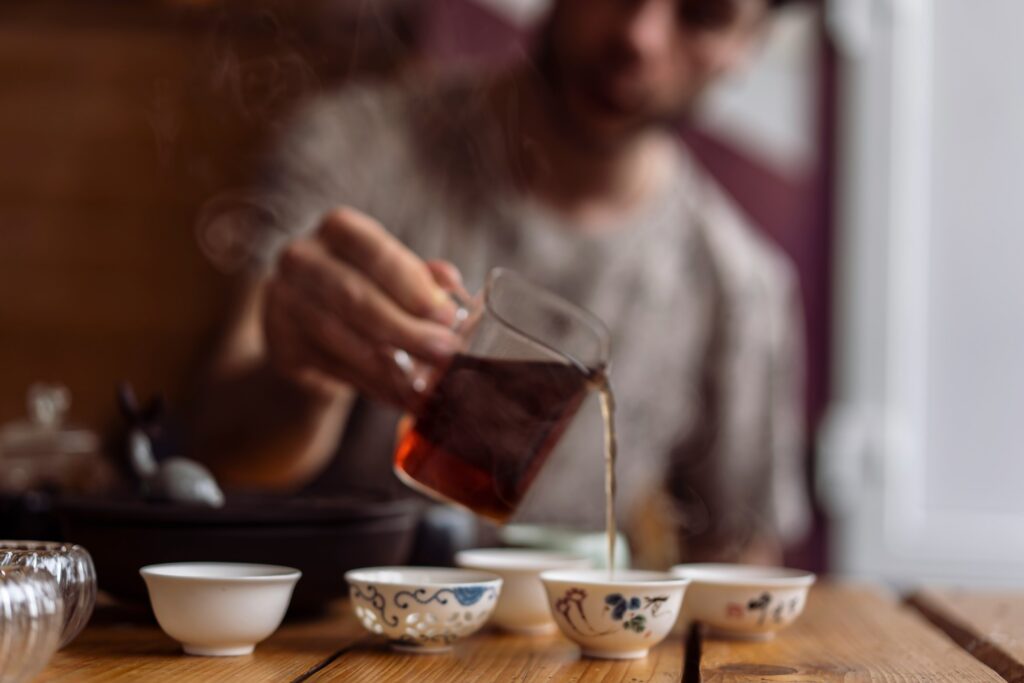
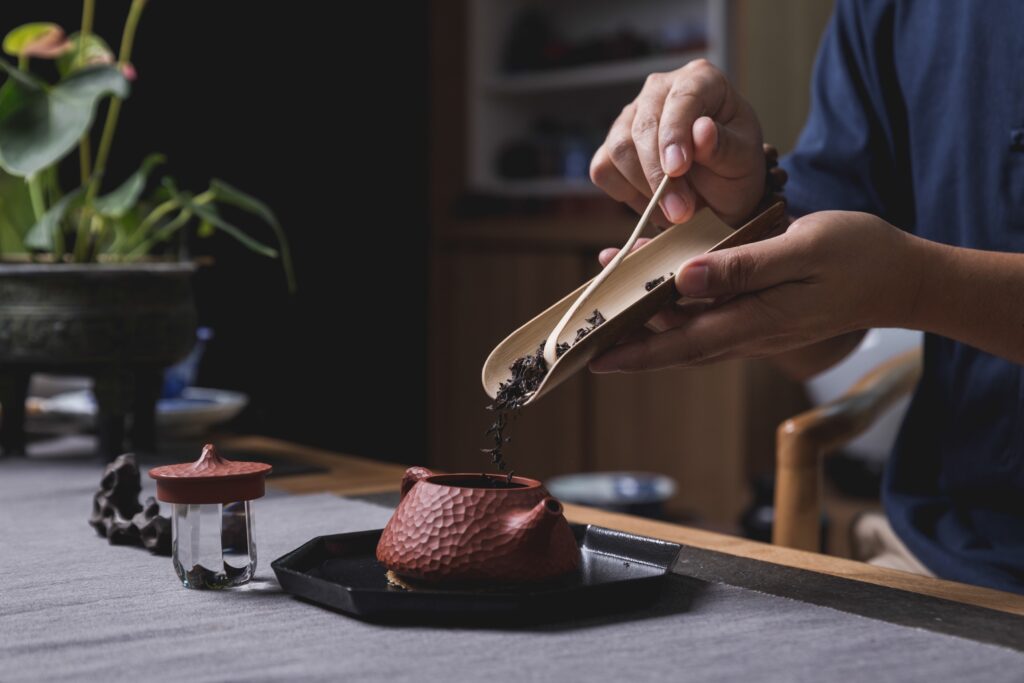
Outside of weddings, the tea ceremony continues in a quieter form through Gongfu tea practice. Here, the focus shifts from family hierarchy to mindful preparation and appreciation of Chinese tea.
Tea cups are held carefully, often with three fingers, allowing the drinker to feel the warmth without touching the rim. Guests drink slowly, observing colour, aroma, and flavour. Offering tea and receiving tea with both hands remains a sign of mutual respect between host and guest.
In this context, the tea ceremony becomes less formal, but no less meaningful.
Chinese Culture and the Meaning of Offering Tea
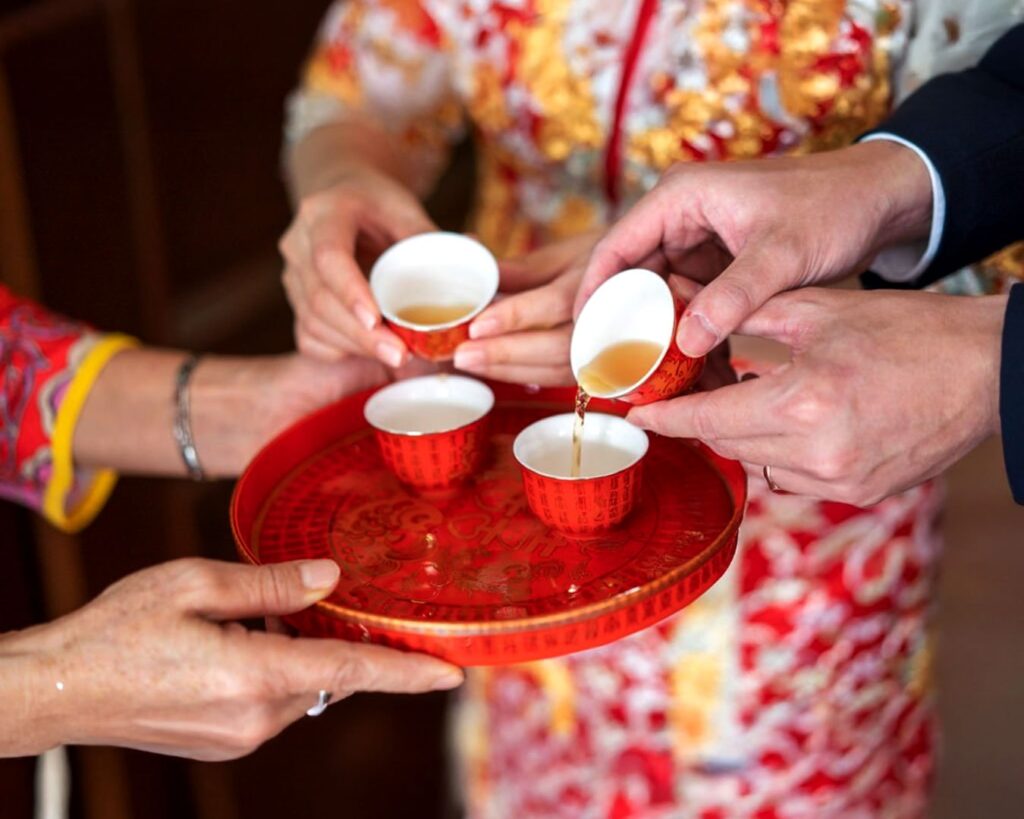
In Chinese culture, tea represents purity, stability, and respect. Offering tea is a way to acknowledge relationships—between parents and children, between two families, and between host and guest.
During a wedding, the ceremony formally unites two families. By serving tea to both the bride’s family and the groom’s family, the couple expresses gratitude for care received and commitment to shared responsibility.
While modern weddings may adapt certain elements, the essence of the ceremony remains unchanged.
Conclusion
The role of the cup in a Chinese tea ceremony is both practical and symbolic. In a wedding, it becomes a vessel for honouring parents, grandparents, and extended family. In Gongfu practice, it supports mindful drinking and appreciation of tea.
Across both settings, the cup reminds us that how tea is served matters as much as the tea itself. Through tradition, care, and attention, the ceremony transforms a simple act into a meaningful exchange.
At Tea Room by Ki-Setsu, we honour these traditions by hosting tea ceremonies that respect both heritage and presence. We welcome you to experience how a well-prepared cup can carry history, respect, and connection one pour at a time.