Legend whispers of a travelling scholar whose life was miraculously saved by a simple cup of tea. So profound was this restorative brew that the emperor himself rewarded the miraculous tea trees by draping them in resplendent crimson garments. Thus began the enduring legend of Da Hong Pao, or Big Red Robe tea. Hailing from the misty peaks of Wuyi Mountain in China, this revered brew has captivated tea lovers across the world for centuries. As the most prestigious oolong in existence, it represents a journey into the very pinnacle of exceptional quality and mystique. To sip this tea is to taste history itself.
How Da Hong Pao Won Its Red Robe
The origins of this magnificent brew trace back to the Ming Dynasty, intertwining fate, faith, and the healing power of nature. A travelling scholar, en route to the capital for the all-important imperial examinations, fell gravely ill as he passed through the rugged terrain. He collapsed near the gates of Tianxin Temple, weak and unable to continue. A compassionate monk found him and quickly prepared a restorative brew, using special leaves harvested from the ancient tea trees growing on the temple’s rocky cliffs.
Almost miraculously, the infusion restored the young man’s health. Revitalised, he continued his journey and ultimately won first place in the examinations, securing a high official position. When the emperor later heard the remarkable story of the scholar’s survival, he was deeply moved. Wanting to honour the miraculous tea trees that had saved a brilliant mind, the emperor ordered that a magnificent red robe be draped over their branches. From that day forth, the leaves were known as Big Red Robe, forever cementing the sacred connection between the temple, the monk, and the precious tea that changed history.
Wuyi Rock Tea: The Mother Trees That Created a King
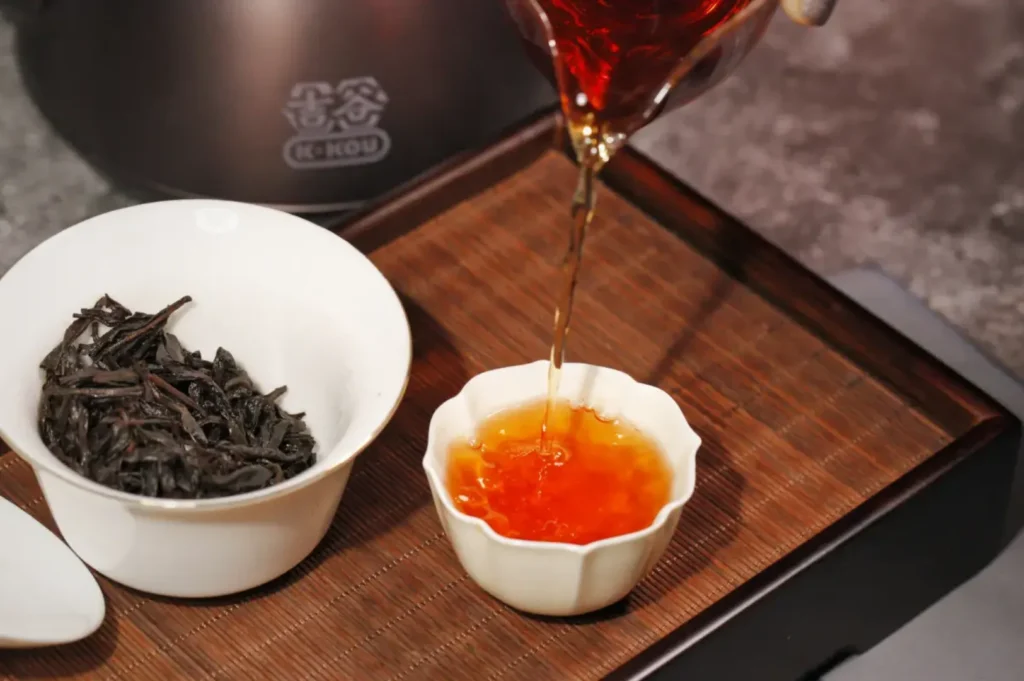
The majesty of this wuyi rock tea comes from six ancient mother trees growing on the rocky cliffs near Tianxin Temple in Fujian Province. These venerable bushes were the sole source of authentic Big Red Robe for centuries and now hold protected status as a vital cultural and natural heritage.
Due to their age and value, production from these mother trees has ceased, with only tiny quantities ever picked. The rarity of these leaves led to auctions reaching millions of dollars for just grams. This history shaped the region into a pilgrimage site for tea lovers. Today, master growers propagate genetically identical descendants from the mother trees, preserving the royal legacy while safeguarding the originals.
Da Hong Pao: From Emperor to Mao Zedong
Beyond its mythical beginnings, the prestige of Da Hong Pao is firmly anchored in the factual history of China. By direct imperial order, it was designated as an exclusive tribute tea during the Qing Dynasty. This meant that the entirety of the harvest was reserved solely for the emperor and his royal court, marking the beginning of its long reign as a beverage exclusively for the most important figures in the nation.
Even as empires fell and eras shifted, the reverence for this great brew remained absolute. Perhaps the most famous modern testament to its value occurred when Chairman Mao Zedong presented a mere 200 grams of the tea to visiting US President Richard Nixon as a diplomatic gift. When Nixon privately questioned the small size of the gift, he was informed that this offering represented exactly half of China’s entire annual harvest from the mother trees. This historic exchange cemented its enduring status as the undisputed king of teas, a cultural treasure that effortlessly transcended political changes and time periods.
Wuyi Rock Tea: Understanding Yan Yun
The secret to this legendary oolong lies inextricably in the terroir of Wuyi Mountain. Located in the misty expanses of northern Fujian, this rocky region produces exceptional tea due to a unique geographical phenomenon. Connoisseurs refer to this defining characteristic as “yan yun,” or rock essence. It is the distinct mineral character absorbed by the tea trees grown directly among the craggy, mineral-rich cliffs of the origin.
The environment here is unlike anywhere else. Pure mountain water flows over sheer stones, carrying vital minerals down to the shallow, sandy soil where the roots take hold. This constant nourishment, combined with the structural body of the soil and the gorge’s shaded, humid microclimate, works in perfect harmony to create the distinctive, lingering profile of authentic wuyi rock tea. It is this unmistakable yan yun—a hauntingly beautiful harmony of stone, moss, and mist—that categorically separates true Da Hong Pao tea leaves from imitations grown in standard plantation soils.
Big Red Robe Tea: Recognizing Quality and Craftsmanship
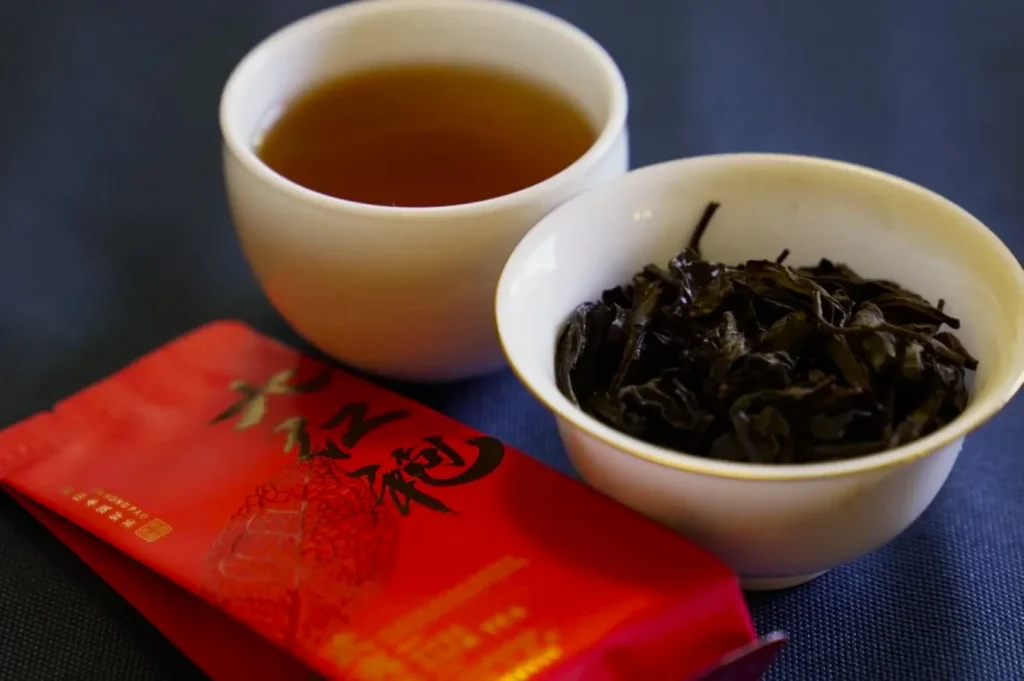
Navigating the modern market for Big Red Robe requires a discerning palate and a basic understanding of quality tiers. Today, authentic Da Hong Pao represents a highly specific category with incredibly strict production standards. However, commercial versions widely available on the broad market are frequently a blended product, mixing leaves from a range of different sources to mimic the original profile.
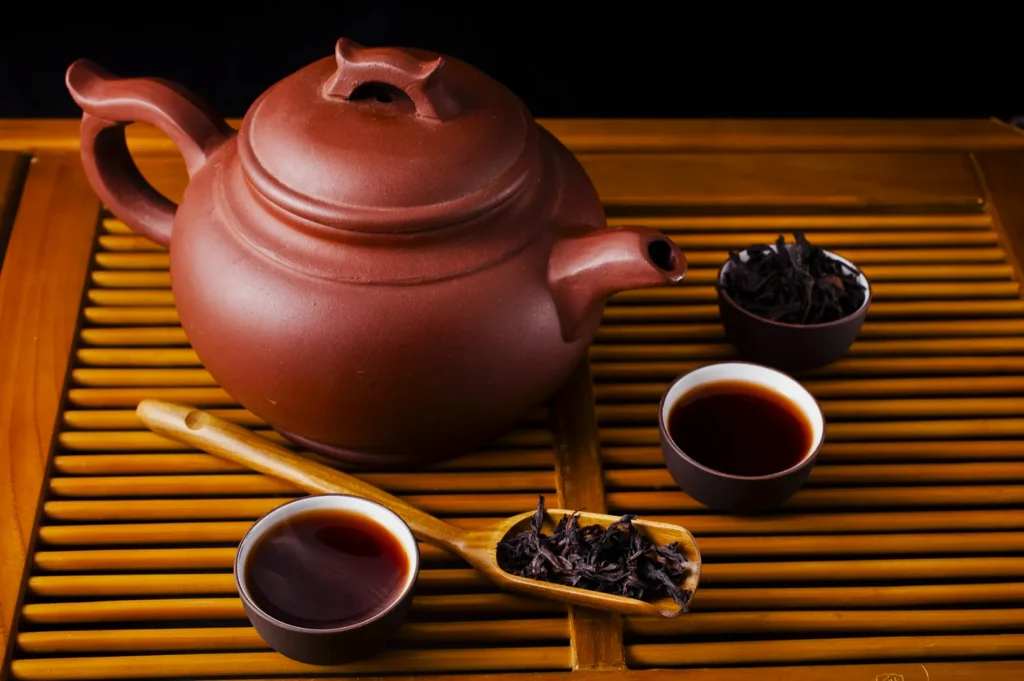
True Wuyi rock tea demands strong, masterful craftsmanship. The production of these leaves is notoriously complex, requiring rigorous charcoal roasting techniques passed down through generations of tea masters. When evaluating quality, one must look past the name and focus on the leaf’s appearance and aroma. Genuine leaves should appear dark, twisted, and slightly frosted, never brittle or burnt. By learning to identify the telltale signs of traditional charcoal roasting and the presence of authentic mineral depth, tea lovers can confidently order genuine Da Hong Pao, ensuring they experience the true artistry of the region rather than a mass-produced blend.
How to Taste Da Hong Pao: Notes of Orchid and Roasted Spice
Tasting Big Red Robe is a rich sensory experience that unfolds with each steep. Key points to enjoy this tea include:
Initial Flavor: Expect a deep, roasted richness from the traditional charcoal firing.
Floral Notes: Delicate orchid fragrance emerges, lingering elegantly on the breath.
Subtle Hints: Warm spice flavors gradually appear on the palate.
Finish: A mellow, lasting sweetness rounds out the experience.
To fully appreciate Da Hong Pao’s complexity, keep these tips in mind:
Use freshly boiled water that has just settled; avoid continuously boiling water to preserve delicate oils and orchid notes.
The first brew highlights roasted warmth and the mineral “yan yun” character.
By the third and fourth steeps, floral and sweet notes bloom beautifully.
Later infusions yield a soft, honeyed brew that is soothing and mellow.
Each steep reveals new dimensions of flavor and fragrance, making drinking Da Hong Pao a continuously evolving journey.
Experience Authentic Chinese Tea at Tea Room by Ki-setsu
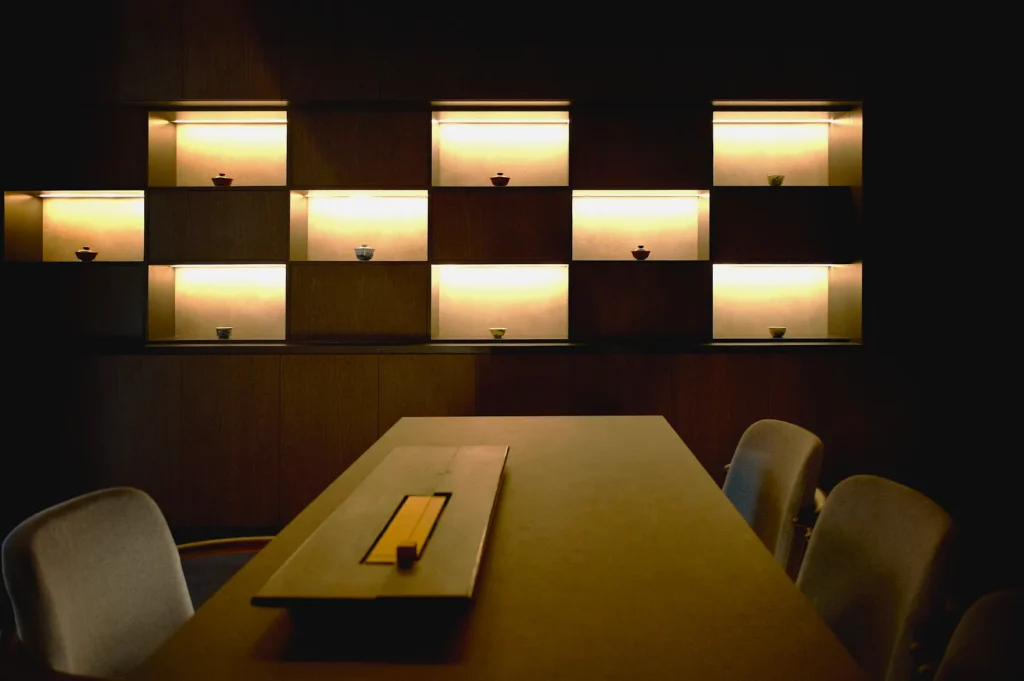
Nestled in Singapore, Tea Room by Ki-setsu invites you to embark on an exclusive journey into the heart of authentic Chinese tea culture, where Da Hong Pao is honored with the reverence and precision it truly deserves. Whether you are a dedicated student of tea or simply someone who appreciates the artistry behind every cup, our carefully guided sessions offer a private space for deep exploration and connection. This experience transcends exclusivity: it celebrates a collective passion for time-honored craftsmanship. We warmly welcome you to join us, steep by steep, and write your own chapter in the enduring legacy of this extraordinary tea.
Conclusion: A Living Legend That Continues to Inspire
It is no surprise that Da Hong Pao has definitively earned its place as China’s most celebrated oolong tea. Beyond the weight of its rich history and the emperor rewarded legend, its enduring appeal resonates deeply with tea lovers worldwide. Authentic Big Red Robe embodies the pinnacle of traditional Chinese tea culture: a flawless blend of nature’s unique terroir, centuries-old craftsmanship, and human artistry. This exquisite wuyi rock tea opens a gateway to a sensory experience marked by floral notes, roasted spice, and the distinctive mineral yan yun that only the ancient mother trees of Wuyi Mountain can produce. We invite you to brew a cup, steep by steep, and discover firsthand why Da Hong Pao continues to captivate palates and inspire reverence across the globe.