For every tea lover, there comes a moment of quiet contemplation before a beautiful Zisha teapot. Which clay suits which tea? The choices can feel overwhelming: the deep lustre of purple clay, the fiery hue of red clay, or the gentle warmth of yellow clay. Alongside clay types, the various shapes, each with its own history and purpose, add another layer of complexity.
At Tea Room by Ki-setsu, we guide our guests with simple, intuitive wisdom grounded in centuries of practice from the tea houses of Jiangsu province, the renowned home of genuine Yixing clay in China. For those seeking a deeper understanding of craftsmanship and clay classification, our zisha teapot Singapore complete Yixing clay guide explores the nuances of authenticity, mineral composition, and traditional firing techniques. Selecting the right Zisha teapot is essential for brewing tea that fully reveals its character and enhances your tea drinking experience, allowing you to truly enjoy and drink tea as it was meant to be savored.
The Sacred Rule of Zisha Teapot Devotion

Before exploring the nuances of clay, we must embrace the fundamental principle of Zisha devotion: one handmade teapot, one type of tea, forever. This is not a rule born of elitism, but of a deep understanding of the material itself. The porous nature of Yixing clay allows it to breathe, and with each brewing session, it absorbs the tea oils and aromatic compounds of the leaves. Over time, the clay teapot develops a flavour “memory,” becoming a vessel perfectly seasoned to enhance a specific category of tea.
Mixing tea types, such as brewing a smoky Lapsang Souchong after a floral Tie Guan Yin, confuses this seasoning process. It is like using the same grinder for coffee beans and peppercorns; the resulting flavour is muddled and impure. By committing one pot to one tea, we transform our tea drinking experience from a casual habit into a meditative gong fu cha ritual. This is where a simple vessel becomes a lifelong partner for dedicated tea lovers.
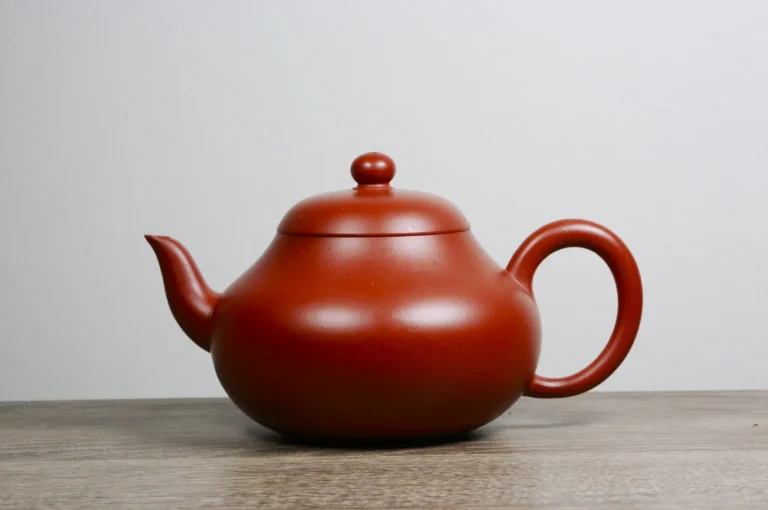
Hong Ni (Red Clay Teapot): For Oolong Tea That Dances
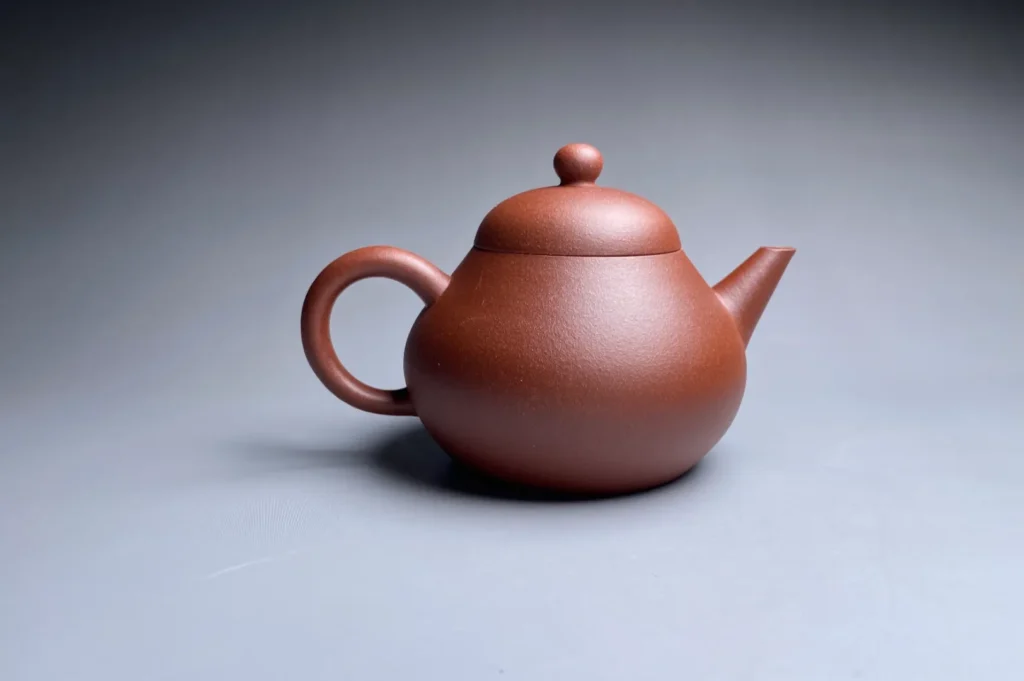
Among the Yixing Zisha teapots, Hong Ni (and its rarer cousin, Zhu Ni) is often the most prized. This unique clay demands the highest firing temperature, often exceeding 1200°C. The intense firing process creates a dense structure with the lowest porosity, resulting in exceptional heat retention that is perfect for coaxing out high-frequency aromatics from oolong tea. Its dense surface seems to amplify and project fragrance, making it the perfect pairing for high-aroma oolongs like Tie Guan Yin and Dancong, as well as other lightly oxidised teas.
The transformation is remarkable. A well-seasoned Hong Ni teapot can enhance the most delicate floral notes, turning hints of orchid, jasmine, and stone fruit into a vibrant, expressive bouquet. The mineral composition of genuine Yixing clay interacts with the tea liquor, softening any potential astringency while preserving the brightness and clarity of the brew. A sensory journey unfolds with each infusion: the first may release a honeyed sweetness, the second brings forth white florals, and the third reveals the tea’s full, complex character. A good Hong Ni pot can elevate even a modest oolong tea, making it sing. Understanding these properties is a key part of elevating Singapore’s tea drinking experience.
Zi Ni (Purple Clay): For Pu Erh Tea That Grounds

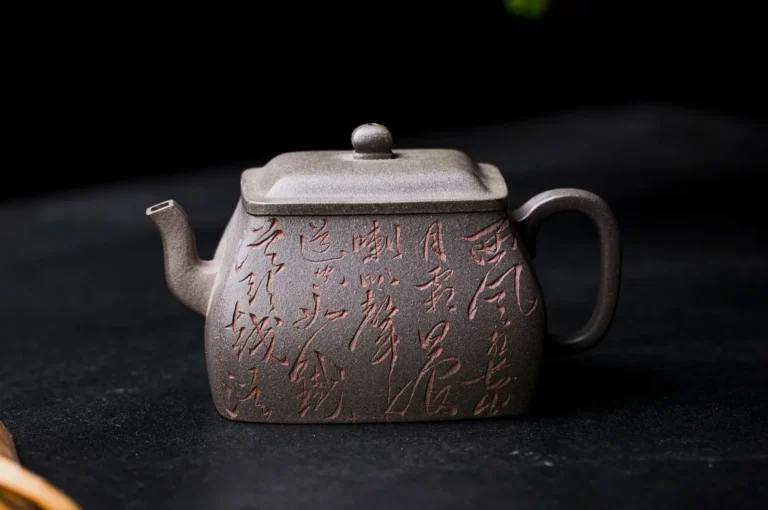
Zi Ni, or purple clay, is the classic and most common Yixing clay, prized for its medium density and balanced heat retention. Its unique double-pore structure allows the pot to breathe beautifully. Produced in the greatest quantity, it’s accessible for tea lovers building collections. Ideal for aged and ripe Pu Erh (Shou), as well as dark teas like Liu Bao.
Zi Ni’s mineral composition, rich in iron oxide, smooths harshness in fermented teas while preserving earthy depth. With each brewing, accumulated tea oils deepen flavors (forest floor, dried dates, aged wood) that porcelain or other clays can’t replicate. New teapots benefit from Zi Ni’s forgiving nature during seasoning, perfect for those new to gong fu cha. Round teapots suit rolled Pu Erh leaves, allowing full unfurling and flavor release.
Duan Ni (Yellow Clay): For Green Tea and More Delicate Teas That Whisper
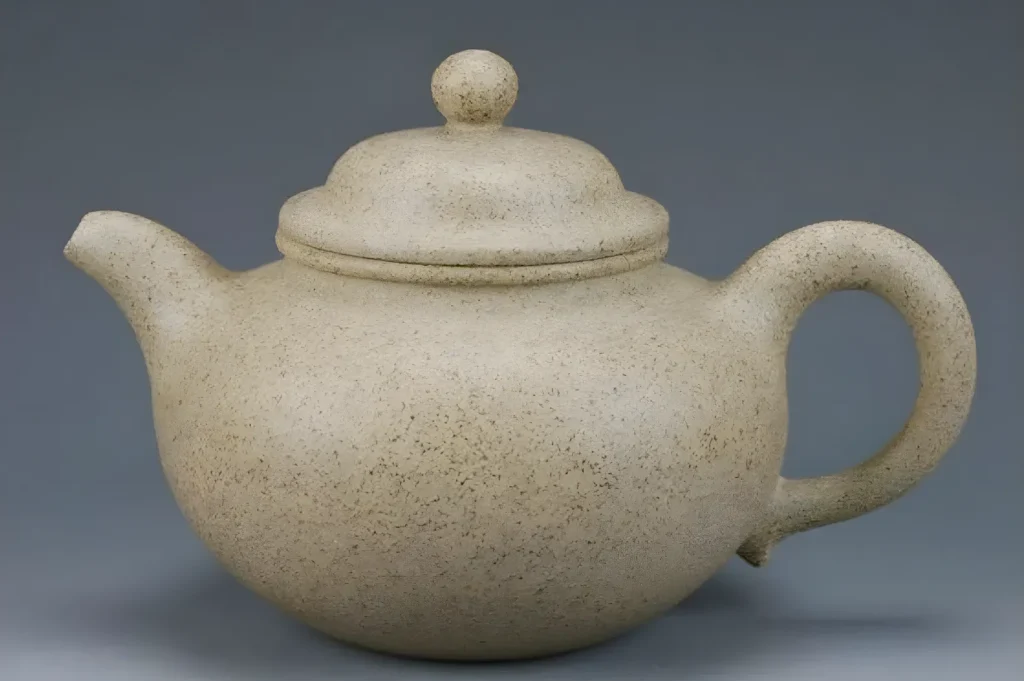
Duan Ni, the lightest and most porous variety of Yixing Zisha clay, is fired at around 1100°C, which allows for quick heat dissipation and excellent breathability. This makes it ideal for brewing green tea, white teas, lightly roasted oolongs, and some delicate herbal teas. The clay’s pale yellow to warm beige hue softens gracefully over time, developing a gentle patina that enhances the tea brewing experience. Qing Shui Ni, a prized sub-variety of Duan Ni, shares these excellent qualities.
Due to its high porosity, it is important not to leave tea liquor in the pot for extended periods to avoid bitterness absorption. Using warm water or boiling water carefully helps preserve the subtle flavors of lighter teas. When caring for your Duan Ni teapot, gently clean it with a soft cloth after each use and avoid detergents to maintain its delicate seasoning.
Shape Matters: How Black Tea and Form Meet
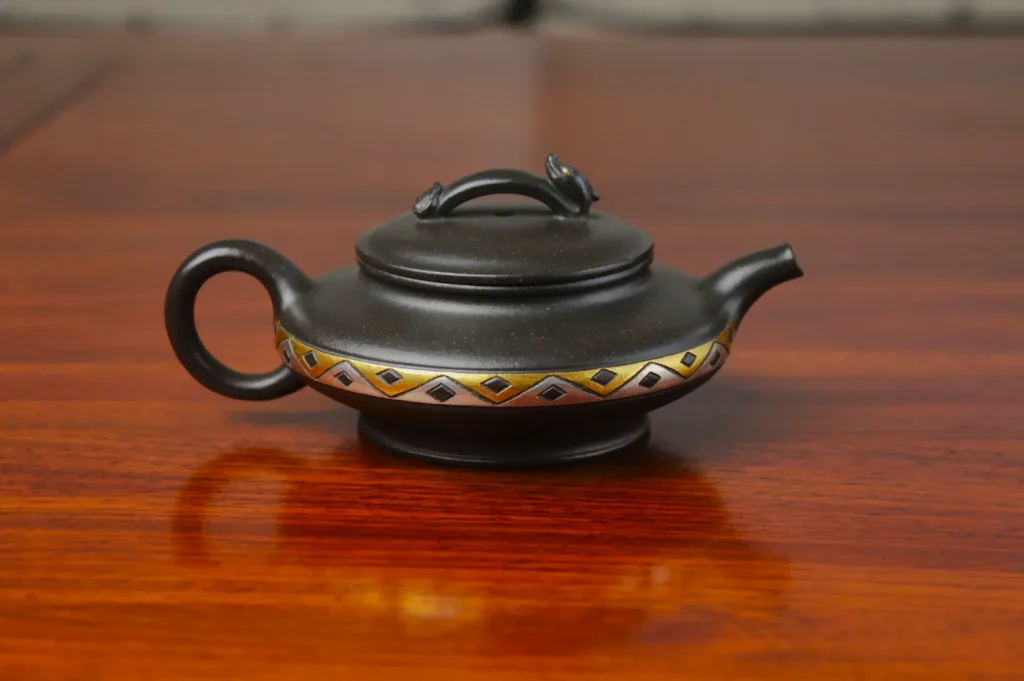
Beyond the clay type, the shape of your Yixing teapot profoundly affects the final flavour. The physics are simple yet crucial: a tall body versus a wide body changes how tea leaves interact with hot water and how much surface area of the brew is exposed to air.
Round teapots are ideal for tightly rolled oolongs and ball-shaped leaves. The curved interior creates a gentle circulation as you pour, allowing the leaves to unfurl naturally without crowding. Heat distributes evenly, ensuring a balanced extraction. Wide, flat-bodied pots are perfect for black tea and other large-leaf teas. The greater surface area allows the hot water to cool slightly faster, preventing over-extraction and bitterness. The leaves can spread out horizontally, maximising their contact with the water.
Tall, narrow forms are well-suited for vertical-leaf teas like some green tea varieties. The principle here is that the “tea dances in space”; a taller pot creates a vertical flow that keeps the leaves suspended and moving. Even the lid matters. For critical temperature control with delicate teas, some practitioners brew with the lid separately. For maximum heat retention with robust teas, the lid stays on. Different shapes serve different brewing philosophies.
Size Wisdom: Finding Your New Tea Ritual’s Perfect Capacity

The size of your teapot dramatically impacts your brewing results, especially in gong fu cha, where multiple short infusions progressively reveal a tea’s character. A small teapot, typically between 80-120ml, is ideal for solo practice or for sharing with one other person. This is the sweet spot for achieving flavour concentration, maintaining temperature throughout the session, and forcing your attention onto each precious infusion. A small teapot made from higher quality clay will always outperform a larger teapot made of merely good clay.
A medium capacity pot of 150-200ml is perfect for sharing among two or three people, allowing everyone to enjoy multiple infusions without rushing. A larger teapot, over 250ml, is better suited for casual gatherings, though many tea masters argue that the intimacy and control of gong fu brewing are lost at this scale. The general wisdom holds true: smaller is often better. The temperature drops more slowly, the flavour concentrates more intensely, and a closer relationship develops between you, the tea, and your vessel.
Your First Teapot Decision
For those just beginning this wonderful journey, we offer this advice: start with a Zi Ni pot paired with the tea you love most—the one you drink weekly, the one whose character you know intimately. This purple clay type is forgiving of learning curves while teaching you the fundamental lessons of how an Yixing clay teapot and tea enter into a dialogue. Build your collection slowly from there. Let each clay teapot earn its place in your ritual through devoted use, not rushed acquisition.
The most important factors are choosing genuine Yixing clay from the Yixing region, finding a shape appropriate for your preferred type of tea, and selecting a capacity that matches your daily practice. Be wary of the red flag of suspiciously low prices or vendors who cannot explain the clay’s origins. At Tea Room by Ki-setsu, we understand that choosing your Zisha is choosing your practice. Every pot in our collection represents this philosophy: curated not for variety’s sake, but for the depth and joy each unique piece brings to Singapore’s most discerning tea lovers.
Visit our website to book a private tea session that is like no other.