By Tea Room by Ki-setsu Editorial Team
Jasmine tea should smell like jasmine.
That does not mean jasmine should be the only thing you can taste.
A thoughtful cup carries two voices. There is the floral fragrance absorbed during scenting, and underneath it, the texture and flavour of the tea base.
The best jasmine tea tastes floral without making the tea itself disappear.
Our jasmine tea taste and aroma guide explains the wider category. Here, we focus entirely on reading the cup.
First: The Fragrance
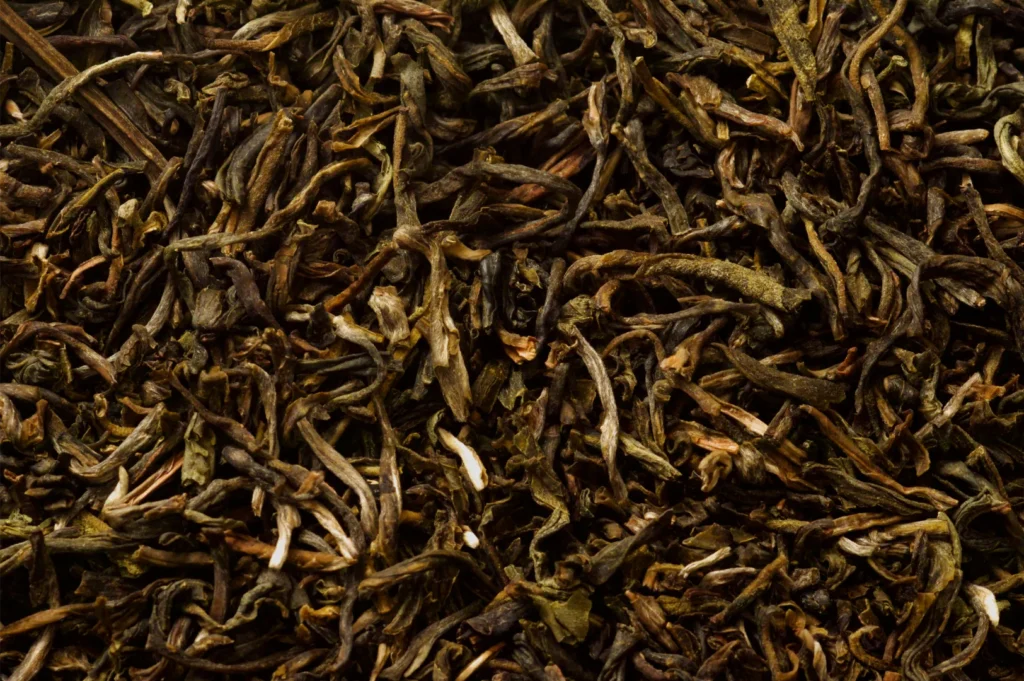
Fresh jasmine tea can feel immediately floral.
Research analysing dozens of jasmine teas has identified key aromatic compounds associated with floral, sweet, green and fresh impressions.
But volume is not the same as elegance.
A fragrance that overwhelms everything may impress on the first inhale and exhaust the palate by the second cup.
Look for clarity rather than loudness.
Then: The Tea Beneath It
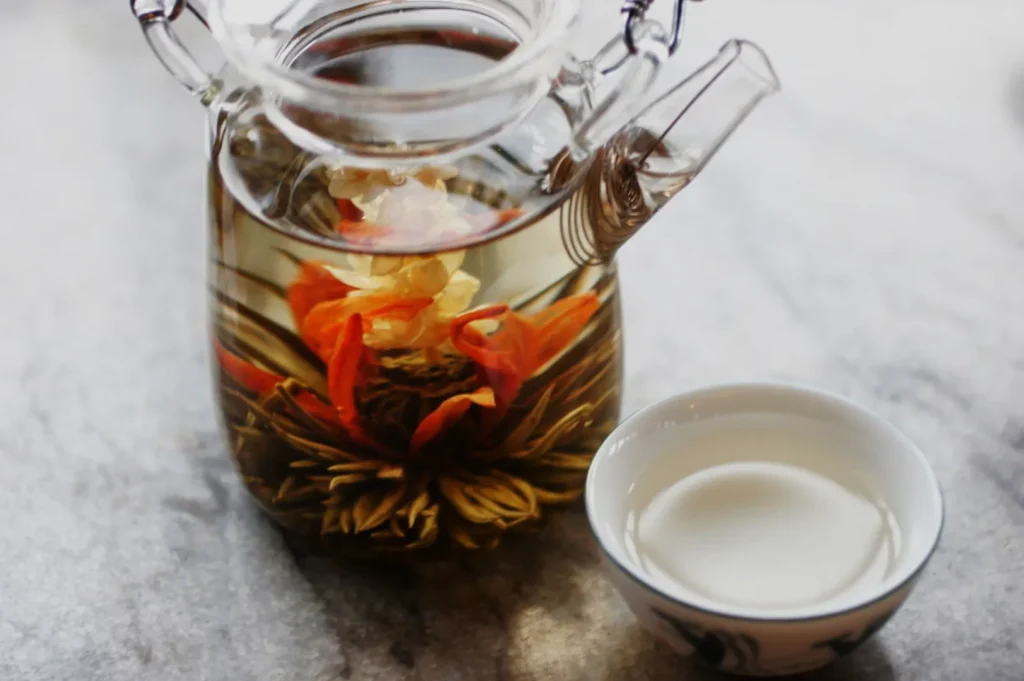
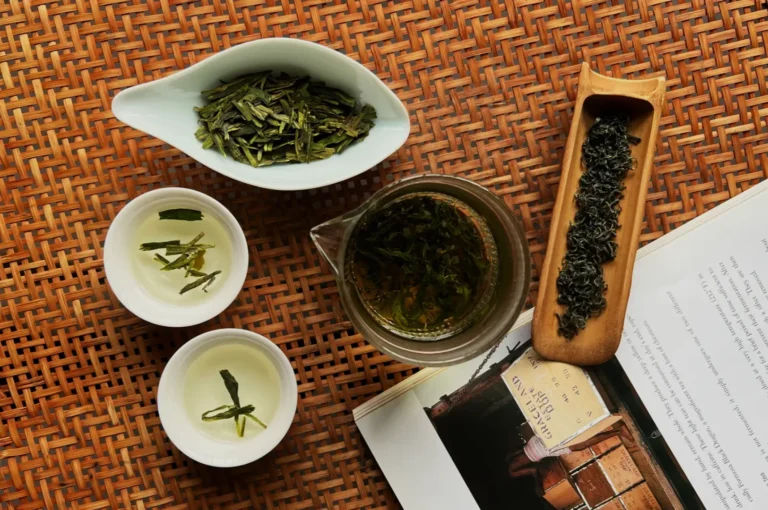
With a green tea base, jasmine tea may feel fresh, gently vegetal, sweet or lightly brisk.
Different base teas change the structure.
This is why “floral” is only half a tasting note.
The question is whether the jasmine and tea move together.
Good jasmine tea should have a centre, not only a perfume.
Sweetness Without Sugar
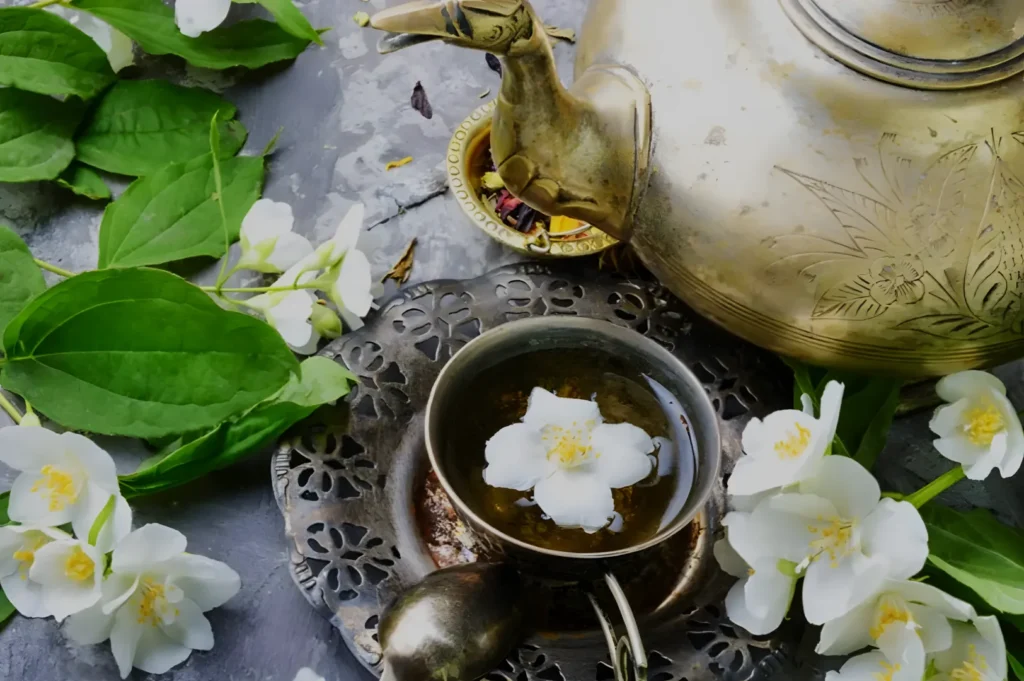
Jasmine tea can seem naturally sweet.
Part of this impression comes from aroma. Floral and fruity scents influence how we perceive the cup before sweetness even reaches the tongue.
Recent research on the scenting process also observed increases in soluble sugars and free amino acids alongside reductions in some astringent compounds after scenting.
The result can feel softer and more rounded than the unscented base.
Freshness Matters
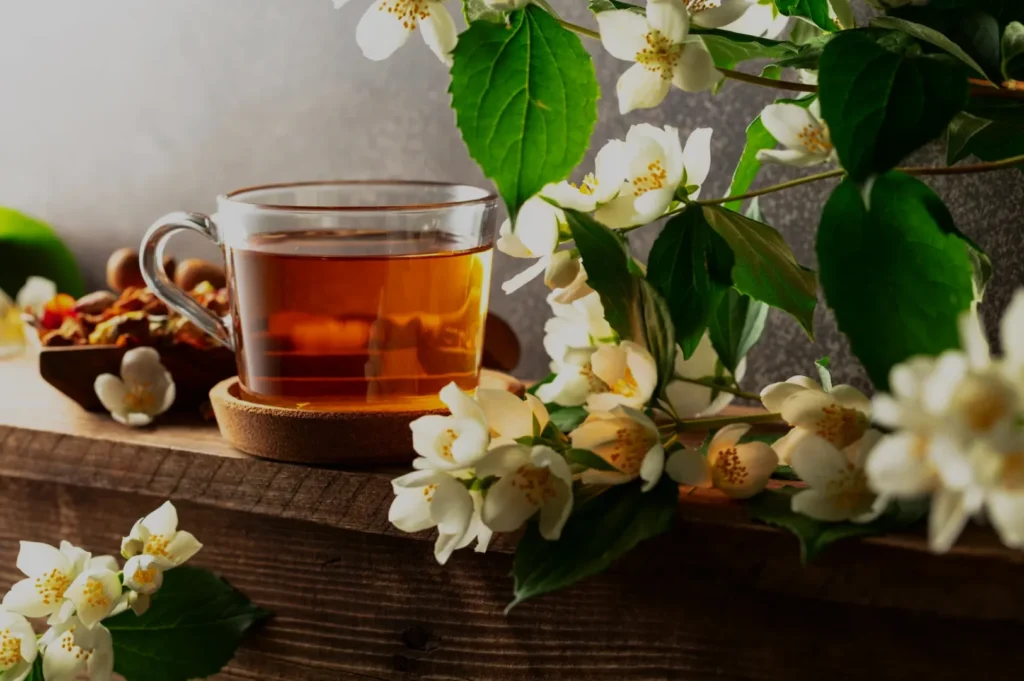
Fine jasmine tea is often described as fresh.
Here, “fresh” does not simply mean recently packaged.
It can mean the aroma feels clean, lifted and alive rather than stale, dusty or heavy. Research on jasmine tea sensory quality has treated freshness and persistence as important aspects of aroma quality.
What Does Poor Jasmine Tea Taste Like?
Warning signs can include:
- fragrance that feels harsh or one-dimensional
- stale or dusty floral notes
- bitterness overwhelming the aroma
- almost no flavour beneath the scent
- fragrance vanishing immediately after the first infusion
Research into repeated brewing has found that aroma durability itself can help distinguish jasmine tea quality.
A beautiful first cup is good.
A tea that remains composed is better.
How We Like to Read a Floral Tea
At a Chinese tea house in Singapore centred on private tea appreciation, we approach aroma as one part of a larger structure.
Smell the dry leaf. Smell the warmed leaf. Notice the first infusion. Then wait.
Does sweetness remain after swallowing? Does the fragrance return through the nose? Does the base tea still have texture?
This method applies whether the tea in front of us is floral, aged, mountain-grown or deeply roasted.
Aroma gets our attention. Finish tells us whether the tea deserves it.
Final Thought
Jasmine tea can taste floral, fresh, sweet, green and gently brisk.
It can also taste too perfumed when the balance is wrong.
The useful distinction is simple.
Do not ask only whether the tea smells strongly of jasmine.
Ask whether the jasmine has become part of the tea.