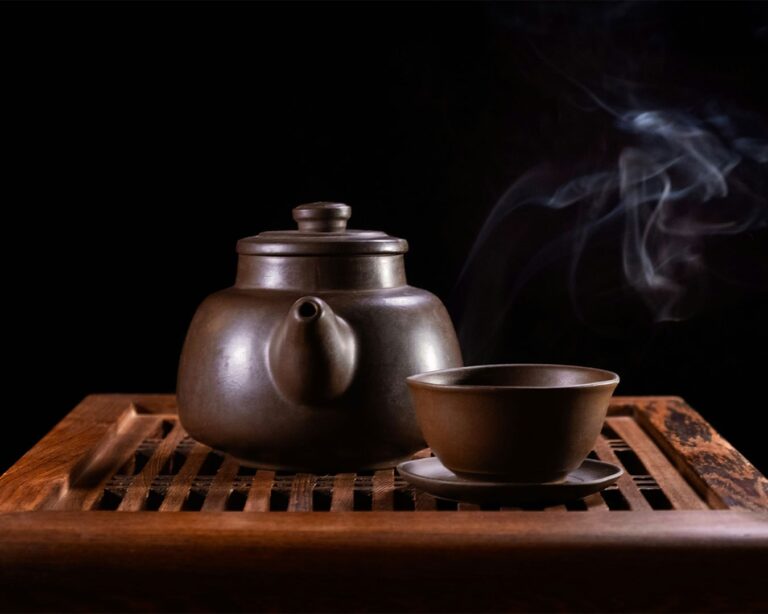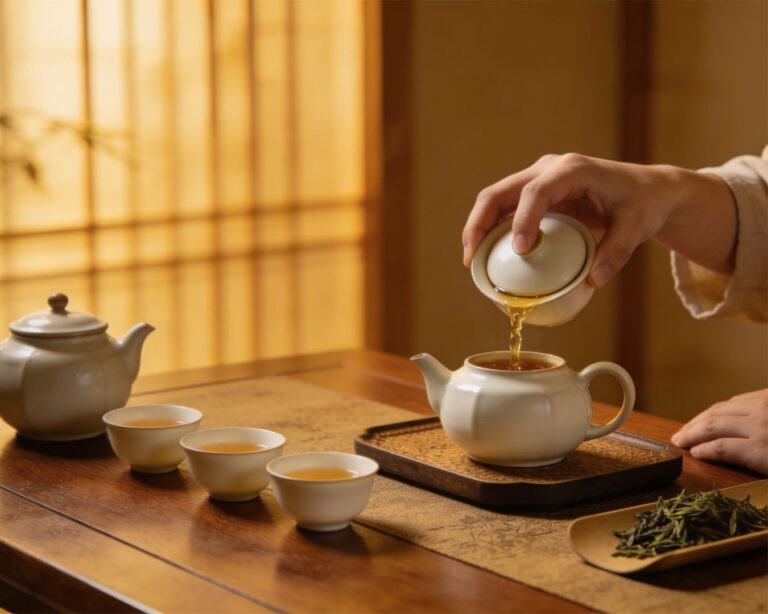
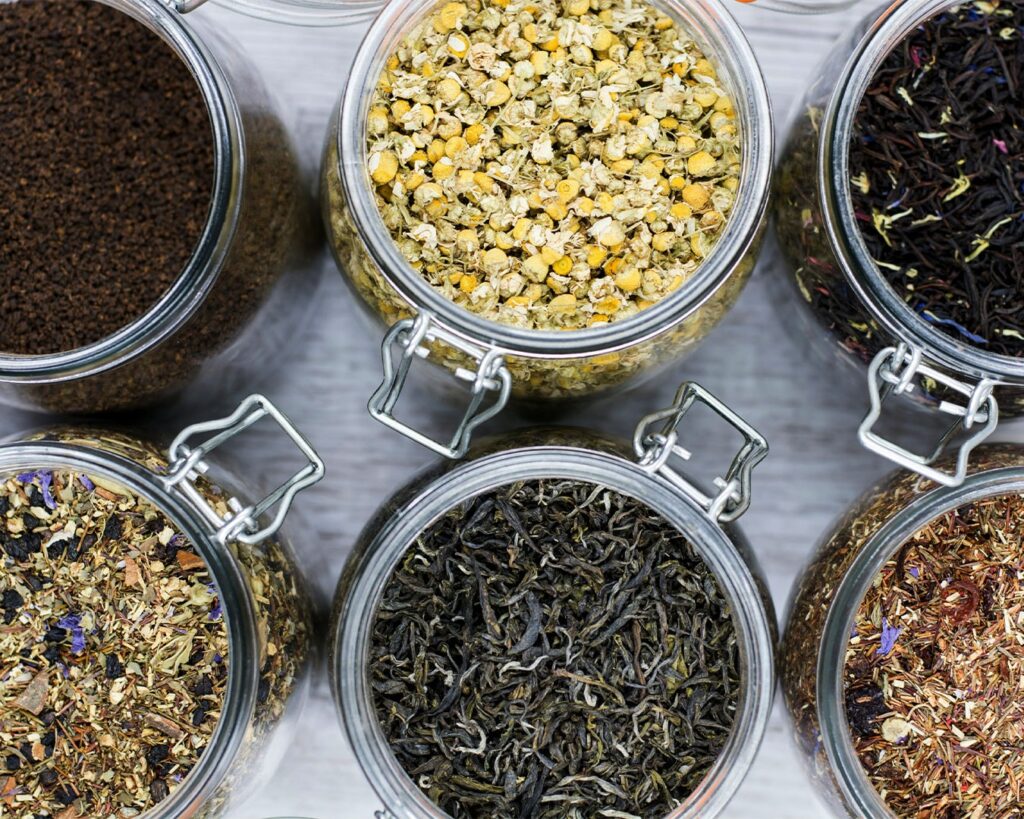
It is a source of quiet wonder how one humble plant (the camellia sinensis) can create an entire spectrum of chinese tea varieties. From the palest silver to the deepest ebony, the journey of each leaf is a story of transformation. This metamorphosis is guided by a single, powerful force: oxidation. Like time sculpting stone, the degree of oxidation a tea leaf undergoes determines its colour, aroma, and taste, creating the vast world of types of chinese tea, including green and black tea.
At Tea Room by Ki-Setsu, our curation of traditional chinese teas is a celebration of this artistry. Within our sanctuary, we invite you to explore how craftsmanship and nature conspire to produce an infinite palette of flavours, all rooted in the quiet philosophy of chinese tea artistry. The journey through these chinese tea varieties is one of discovery, revealing the profound beauty hidden within the humble tea plant. From the misty hills of Yiwu Mountain in Yunnan Province, each region contributes unique characteristics to these celebrated teas.
White Tea – 0-5% Oxidation
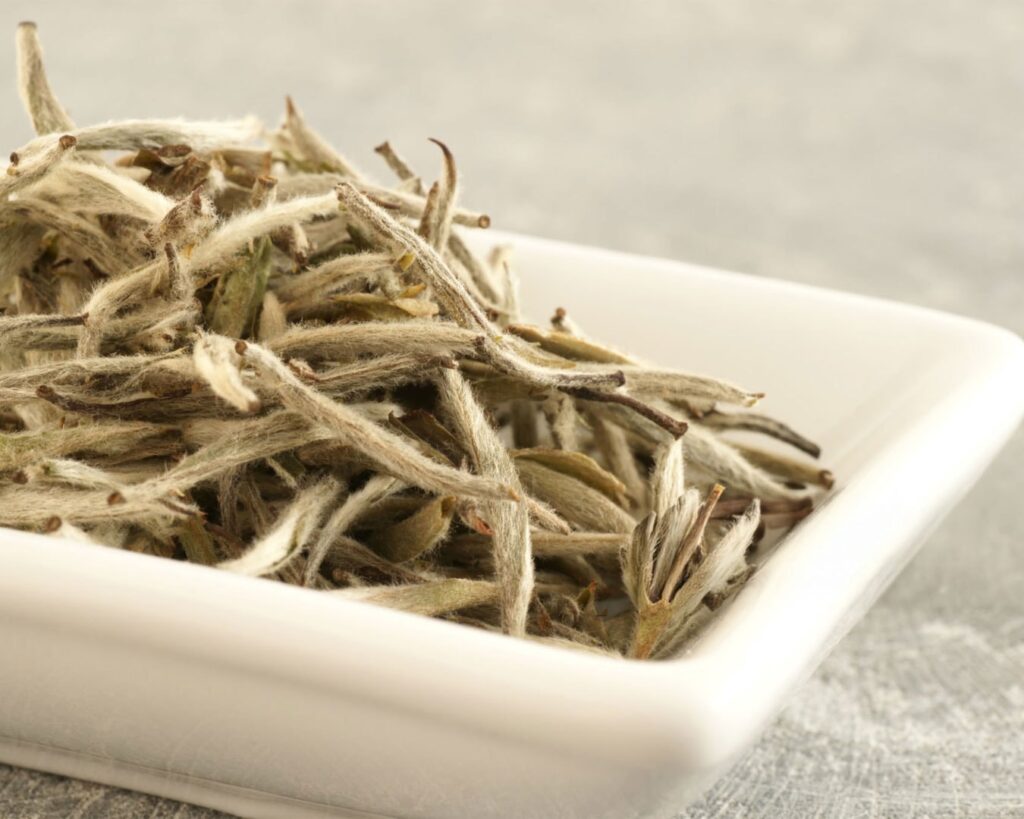
White tea is the closest one can get to the leaf’s natural essence. The processing is minimal, an act of reverence that honours the tea’s innate purity. The tea leaves dry naturally, like petals scattered in the spring sunlight, allowing for only the slightest oxidation. This variety is often composed of delicate, unopened buds still covered in fine, silvery hairs; symbols of a new beginning.
Two of the most celebrated styles, Silver Needle and White Peony, embody this gentle character. Silver Needle consists purely of buds, offering a subtle, naturally sweet taste with a clean finish. White Peony includes both buds and young leaves, introducing a slightly fuller body with notes of melon and cucumber. The flavour profile is a whisper of light flavor, a fresh taste that is both delicate and bright. When brewing white tea, it is essential to use cooler hot water (around 75-80°C) to protect its delicate nature and unlock its subtle sweetness and potential health benefits.
Green Tea – 5-15% Oxidation
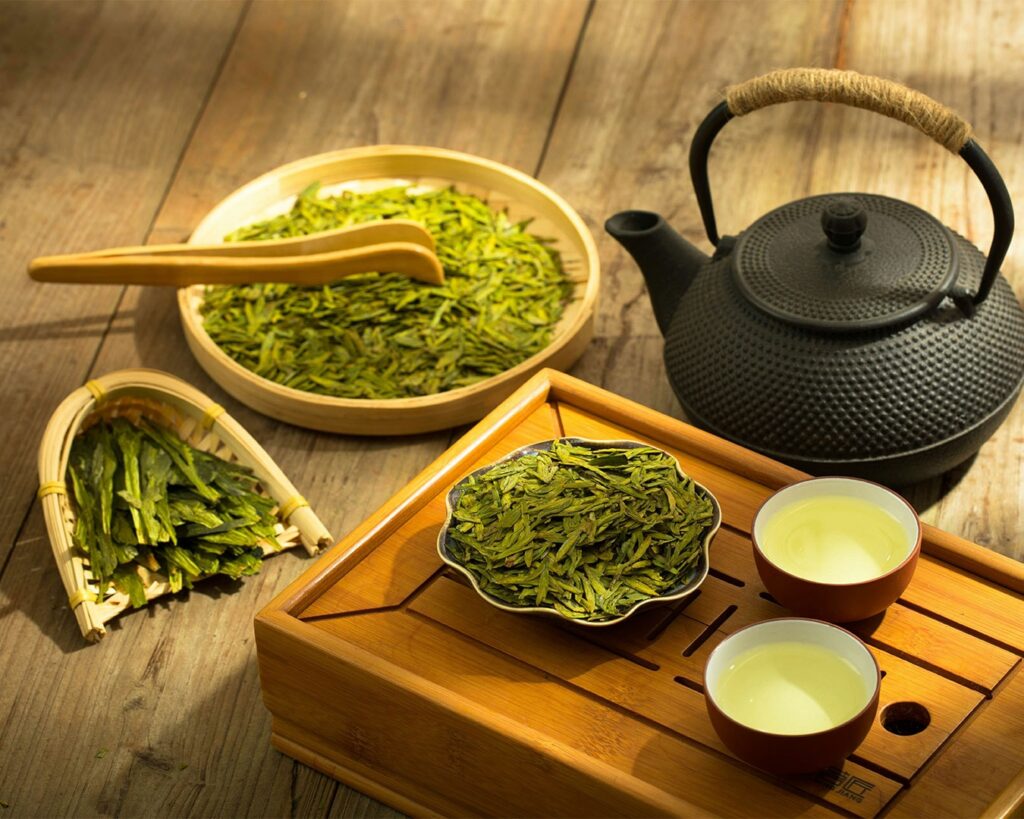
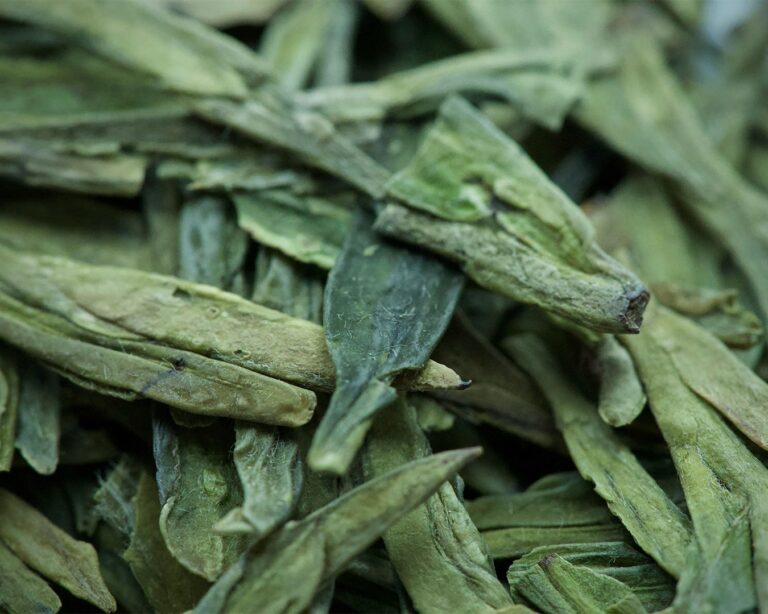
To experience chinese green tea is to taste the vibrancy of spring captured in a cup. The crucial step in its creation is to stop oxidation entirely through the application of heat. This process, known as “kill-green,” preserves the leaf’s verdant colour and its fresh, lively character. Traditional Chinese methods, such as pan-firing or steaming, are conducted with a reverence for tradition, ensuring the tea’s soul remains intact.
One of the most poetic examples is Dragon Well tea (longjing) from the hills surrounding Hangzhou. Its flat, jade-green leaves produce a liquor with a sweet taste and a distinctive chestnut aroma. The preparation of green tea is a ritual in itself; using plain water at a precise temperature (around 80°C) is key to avoiding bitterness and coaxing out its fresh taste and bright taste. To sip a well-brewed dragon well is to enjoy one of the most beloved chinese tea varieties, rich in history and potential health benefits.
Yellow Tea – 15-25% Oxidation
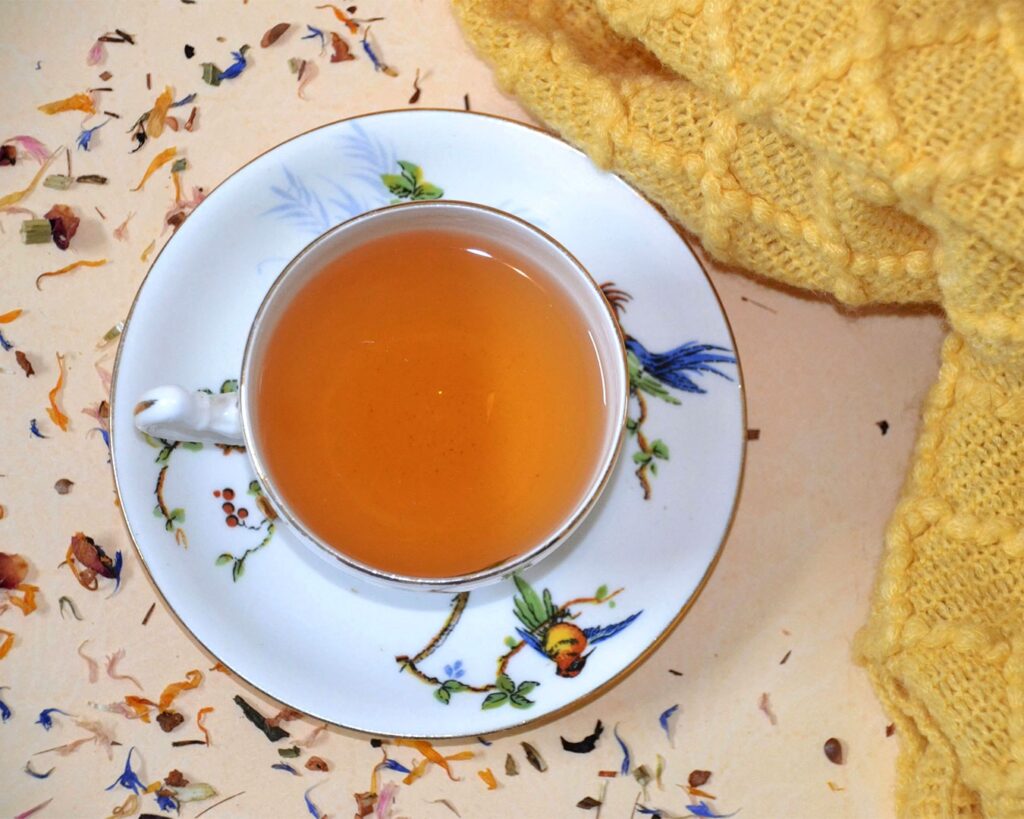
Yellow tea (huángchá) is a variety of imperial whispers, one of the rarest and most refined of all chinese tea varieties. Its creation involves a unique process called “sealed yellowing” (menhuang), where the still-damp leaves are gently smothered, allowing them to slightly oxidized in a slow, controlled manner. This alchemical transformation mellows the grassy notes found in green tea, producing a remarkably smooth and gentle brew.
Its historical significance in Imperial China, where it was often reserved for the emperor, contributes to its air of exclusivity. During the sealed yellowing, beneficial fungi can sometimes develop, known as golden flowers, which add to the tea’s unique complexity. The resulting flavour is a soft, mellow character that is both sweet and clean, inviting a moment of quiet contemplation with every sip.
Oolong Tea – 25-70% Oxidation
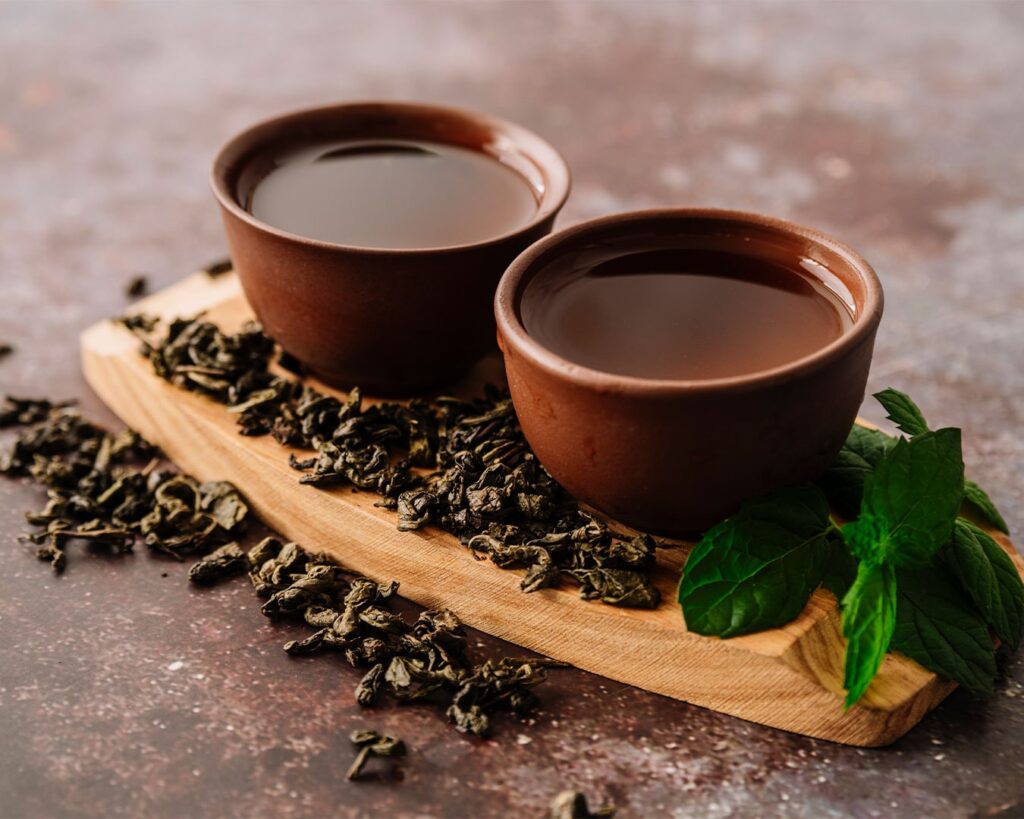
Oolong tea is the most complex and artistically demanding of the chinese tea varieties. As a semi oxidized tea, it occupies the vast spectrum between green and red teas. Here, the tea leaves undergo a series of carefully controlled steps (withering, shaking, and roasting) like a dancer finding a perfect, precarious balance. This intricate process can be manipulated to produce teas with vastly different characters.
The regional expressions of oolong are remarkable. From the rocky cliffs of the Wuyi Mountains, we get the dark, mineral-rich Da Hong Pao. From Fujian Province, the bright, floral Tie Guan Yin (or guan yin) emerges. These famous chinese teas are known for their ability to evolve over multiple infusions. The first steep might reveal a bright, floral aroma, while subsequent steeps unfold into a deeper, sweet flavor. Each pour is a new chapter in the tea’s story, making oolong one of the most rewarding famous types of tea to explore. To understand how oolong embodies balance in Chinese philosophy, explore the deeper meaning of Chinese Cha.
Red/Black Tea – 85-100% Oxidation
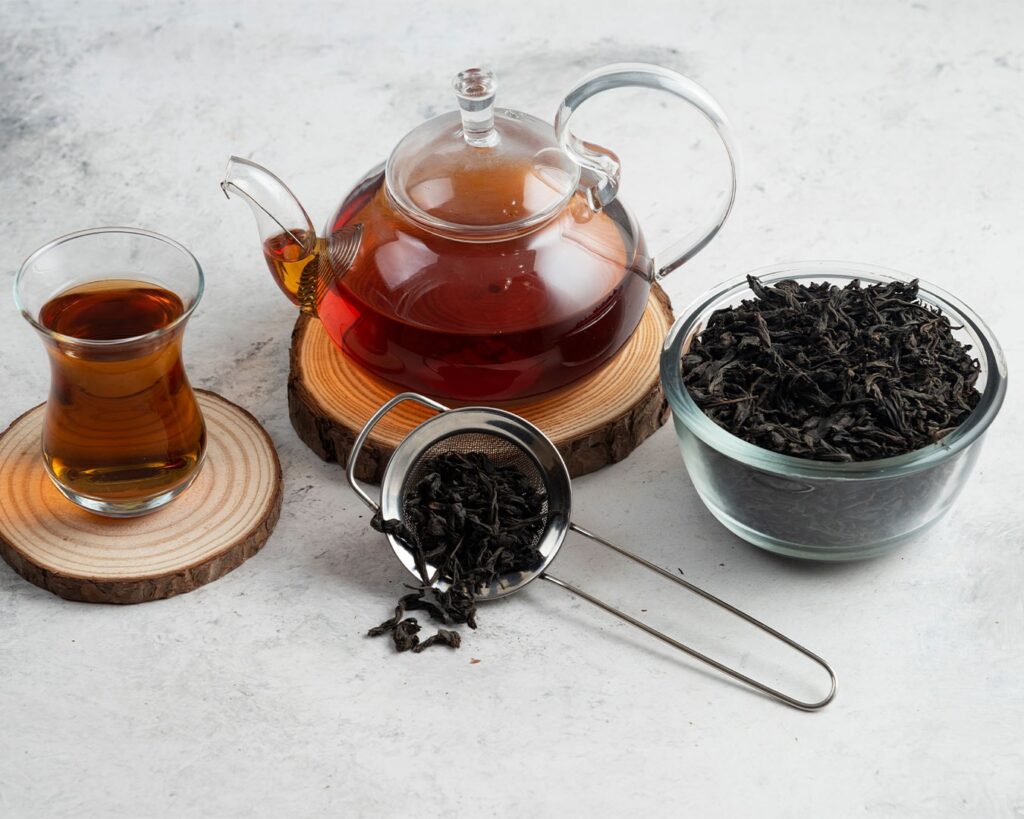
In the West, this category is known as black tea, but in China, it is called red tea (hongcha). The name refers not to the leaf, but to the warm, glowing amber of the brewed liquor. These chinese black teas are defined by the complete transformation of the fully oxidized leaves. The process breaks down the cell walls, allowing enzymes to create the deep, rich flavours and dark colours characteristic of this category.
A classic example is Lapsang Souchong from the Wuyi Mountains, a tea with a rich history and a distinctive smoky aroma derived from being dried over pine fires. Unlike many of their Western counterparts, chinese black teas tend to be less astringent and more nuanced, often revealing notes of cocoa, sweet potato, or dried fruit. They offer a comforting, warming embrace and a deep, sweet flavor, making for a profoundly satisfying cup and one of the most appreciated chinese tea varieties.
Dark Tea – Post-Fermentation
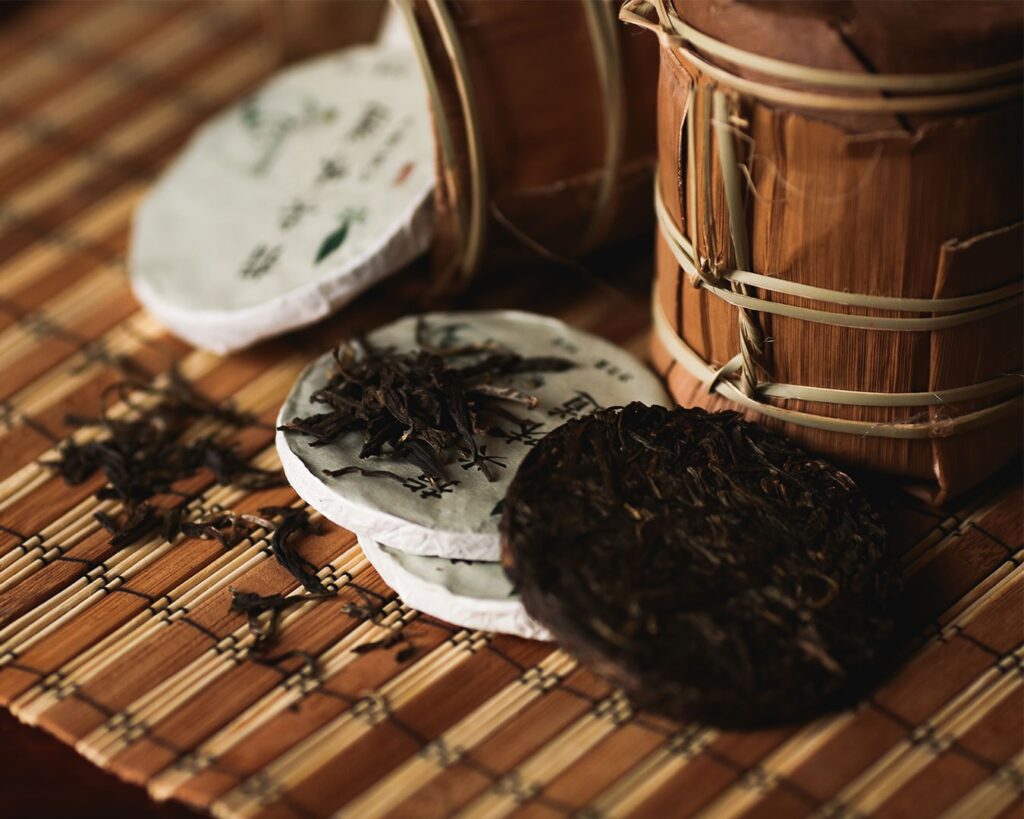
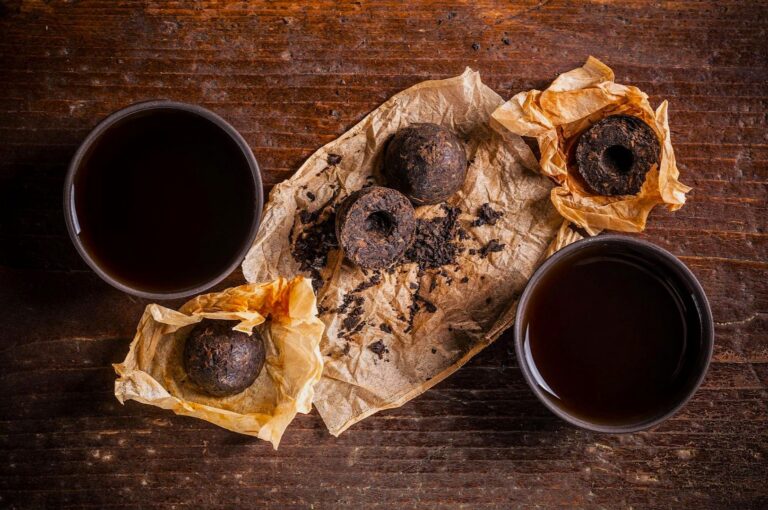
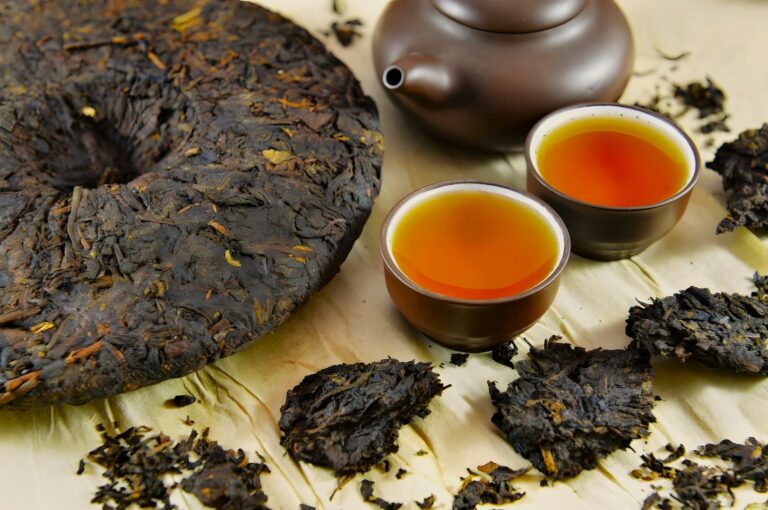
Dark tea represents a journey beyond oxidation into the realm of fermentation. These are living teas, shaped by time and microbial activity. This unique fermentation process allows the leaves to breathe and age, developing a complexity that no other tea can replicate. The most famous dark tea is pu erh tea from Yunnan Province.
Pu erh comes in two main forms: raw pu erh, which ages naturally over decades, and ripe pu erh, which undergoes an accelerated fermentation to mimic the aging process. Both offer a smooth, earthy depth. Another fascinating dark tea is Fu brick tea, which is famous for the golden flowers (a beneficial bacteria) that bloom within it during fermentation. Like fine wine, these aged teas evolve, gaining value and character as they mature. To drink these chinese tea varieties is to taste earthy wisdom and warming complexity.
Jasmine Tea – The Scented Addition
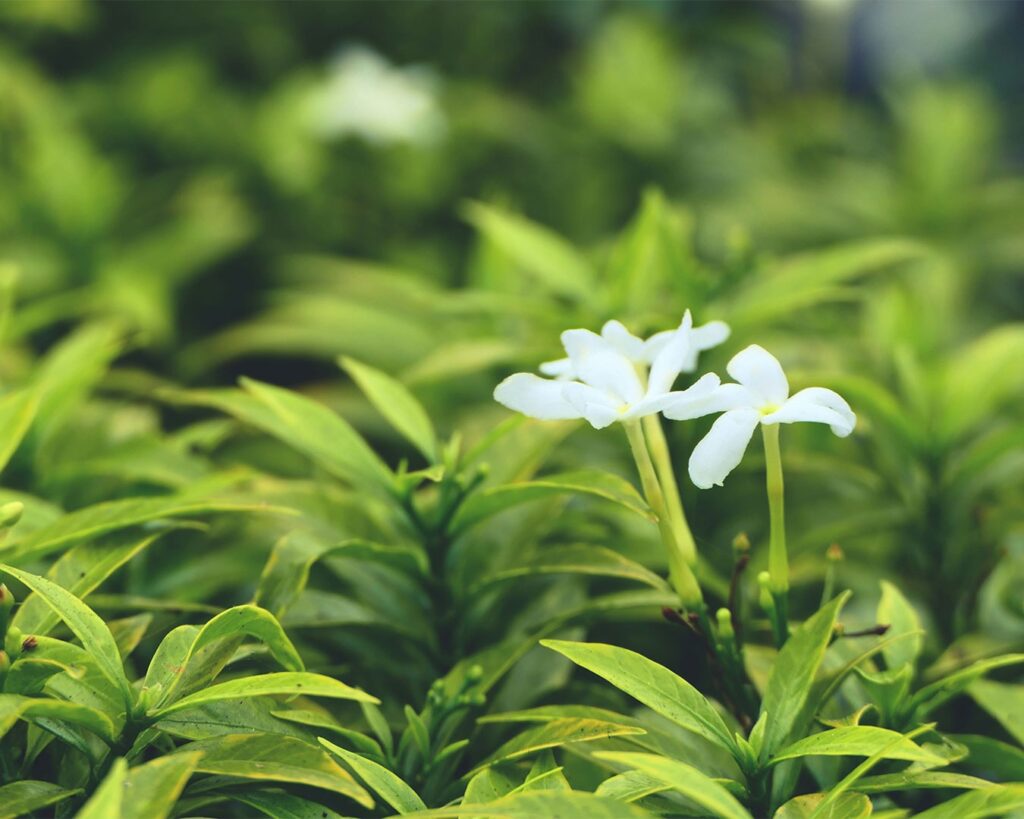
Finally, we arrive at a beloved seventh category among tea varieties: jasmine tea. Here, blossoms meet leaves in a fragrant union. The process is one of poetry in motion, where layers of fresh tea leaves are interspersed with just-bloomed jasmine flowers overnight. As the flowers open in the cool night air, the tea naturally absorbs their heady, intoxicating scent.
This process is repeated several times to achieve a deep, natural perfume. The base is usually a high-quality green tea, although white tea or oolong can also be used. What distinguishes authentic jasmine tea is the purity of its scent; there are no added oils or artificial flavours, only the pure essence of the flower. It is a testament to the artistry of combining two of nature’s most beautiful gifts into one harmonious cup.
Conclusion
From one humble camellia sinensis plant, an infinite spectrum of flavour, aroma, and colour unfolds. The transformative power of oxidation and human craftsmanship gives us the vast world of chinese tea varieties. From the whisper of white tea to the earthy depth of dark tea, each of the types of chinese tea offers a unique sensory journey. The art of tea production in China, rooted in centuries of tradition, honours this potential, creating an array of traditional chinese teas that captivate tea lovers around the world.
We invite you to explore these other teas and discover their stories at Tea Room by Ki-Setsu. In the refined serenity of our private tea sanctuary in Singapore, you can pause, savour, and find the tea type that speaks to your soul. The journey to understanding chinese tea varieties begins with a single, perfect taste.