The Quiet Craft Behind White Tea’s Lightness
A beautiful leaf does not need to be forced. It only needs to be guided.
The delicacy of white tea begins here—in restraint. Its character is not shaped through intervention, but through careful allowance. If you have ever wondered how white tea is made, the answer lies in an unhurried sequence of withering and drying, where time, air, and gentle heat do most of the work.
In this guide, we explore these steps in detail, the subtle decisions that shape them, and how each choice is reflected in the aroma, flavour, and texture you experience in the cup.
Fundamentally, white tea is defined by minimal processing, relying simply on withering and drying the leaf, with little to no deliberate rolling or intensive firing. To explore how this gentle approach supports your well-being, we invite you to read White tea benefits: what research suggests, and what to expect in the cup.
White Tea in One Minute: What “Minimal Processing” Really Means
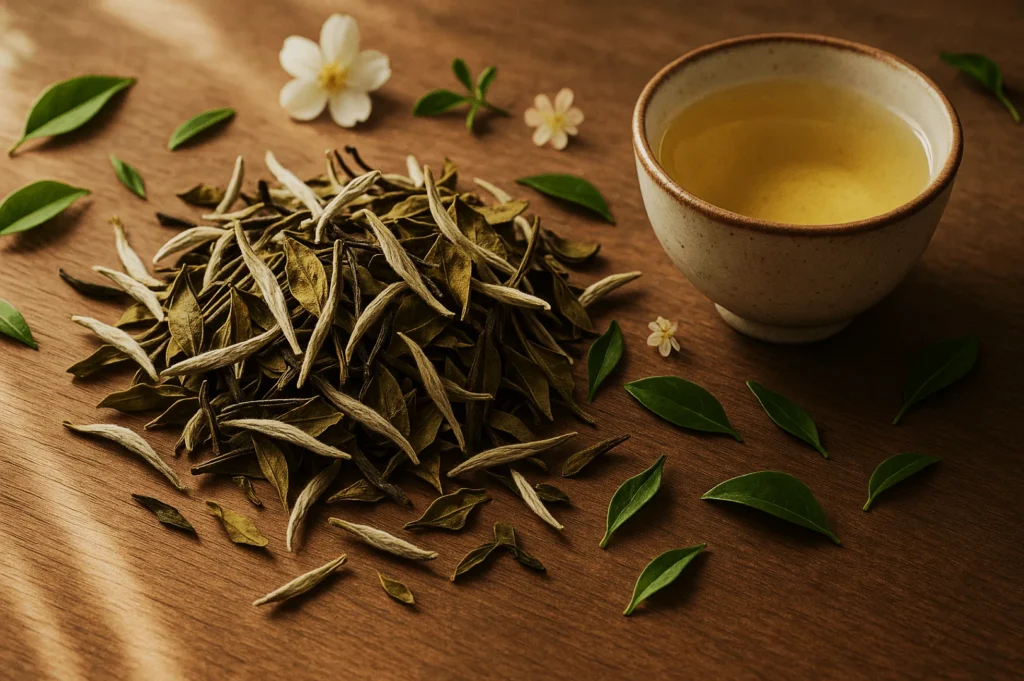
The aim of the white tea maker is simple in principle, yet exacting in practice: to reduce moisture while preserving the leaf’s natural structure.
When we describe white tea as “minimally oxidised,” we are referring to a slow, natural transformation. The leaf is not bruised or shaped to accelerate change. Instead, it breathes. Enzymatic browning unfolds gradually, guided by environment rather than force.
To understand this more clearly, it helps to consider contrast. Green tea is quickly heated to halt oxidation. Oolong is gently bruised to encourage partial oxidation. Black tea is fully oxidised, its leaves rolled and worked to deepen flavour. White tea steps away from all of this. It allows the leaf to remain largely undisturbed.
What results is not an absence of process, but a refinement of it.
Key takeaway
- White tea is minimally processed, but not unprocessed
- Time, air, and gentle heat shape the leaf
- Withering defines aroma and texture
- Drying stabilises the tea for storage and ageing
Step-by-Step: How White Tea Is Made
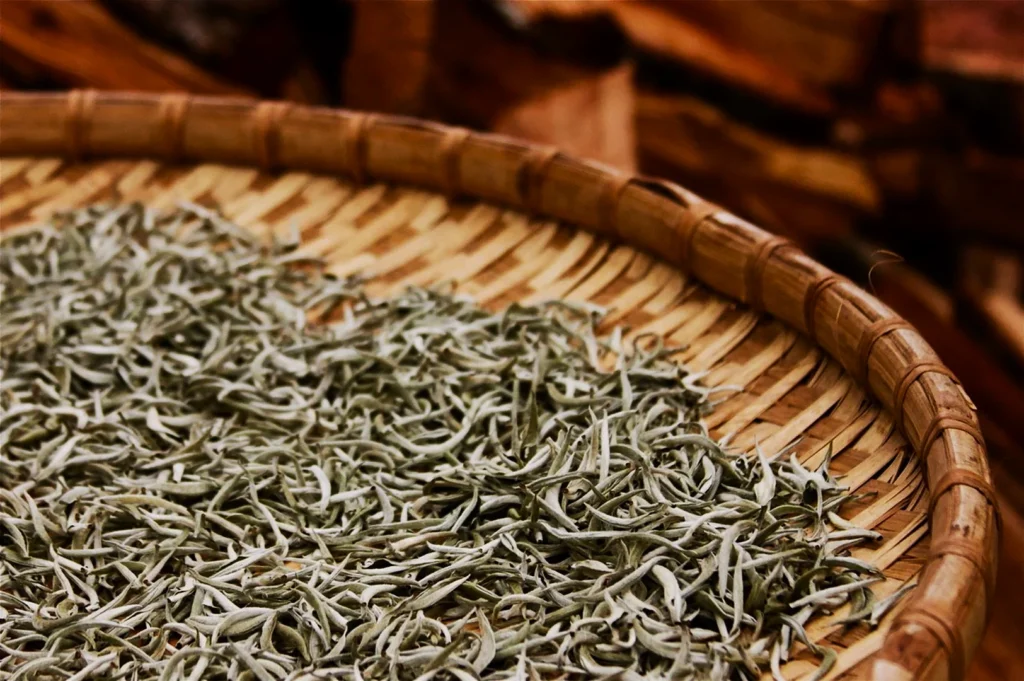
Plucking: What is picked, and why it matters?
The story begins in early spring, often in the misty landscapes associated with Fujian white tea. Here, the plucking standard determines the tea’s direction long before it reaches the cup.
Unopened buds yield a tea of softness and clarity. A bud with one or two leaves introduces balance: floral notes layered with gentle depth. Larger, mature leaves create a fuller, more grounded profile.
These choices shape the familiar expressions of Silver Needle, White Peony, and Shou Mei. The difference is not simply grade. It is intention.
Sorting and gentle handling: Protecting the leaf
From the moment the leaf is picked, handling becomes part of the craft. The leaves are carefully sorted by hand, with damaged pieces removed.
This is not merely aesthetic. Bruising the leaf accelerates oxidation in ways that can cloud the final profile. A clean, clear cup begins with preserving the integrity of the leaf itself.
Withering: The heart of white tea
Withering is where white tea begins to reveal itself.
Fresh leaves are spread thinly and left to rest. Moisture slowly evaporates. The leaves soften, becoming more pliable. At the same time, the sharper green notes recede, allowing gentler aromatics to emerge.
There is no single pace. A shorter wither may retain a brighter, fresher character. A longer wither deepens sweetness and texture. The maker adjusts according to the leaf, the air, and the quiet signals that develop over time.
Drying: Fixing the character
Once the desired level of withering is reached, the leaves are dried to stabilise them.
This step requires precision. Too much heat can flatten the tea, muting its higher notes. Too little leaves residual moisture, which may lead to dullness over time.
Drying does not create the tea’s character. It preserves it.
Resting and storage: The quiet finishing step
Even after drying, the tea continues to settle.
A short resting period allows the aromatics to harmonise. A freshly made tea may feel bright and slightly sharp. With time, the profile softens. The sweetness becomes more integrated, and the cup feels more complete.
Deep Dive: Withering (Indoor vs Sun Withering)
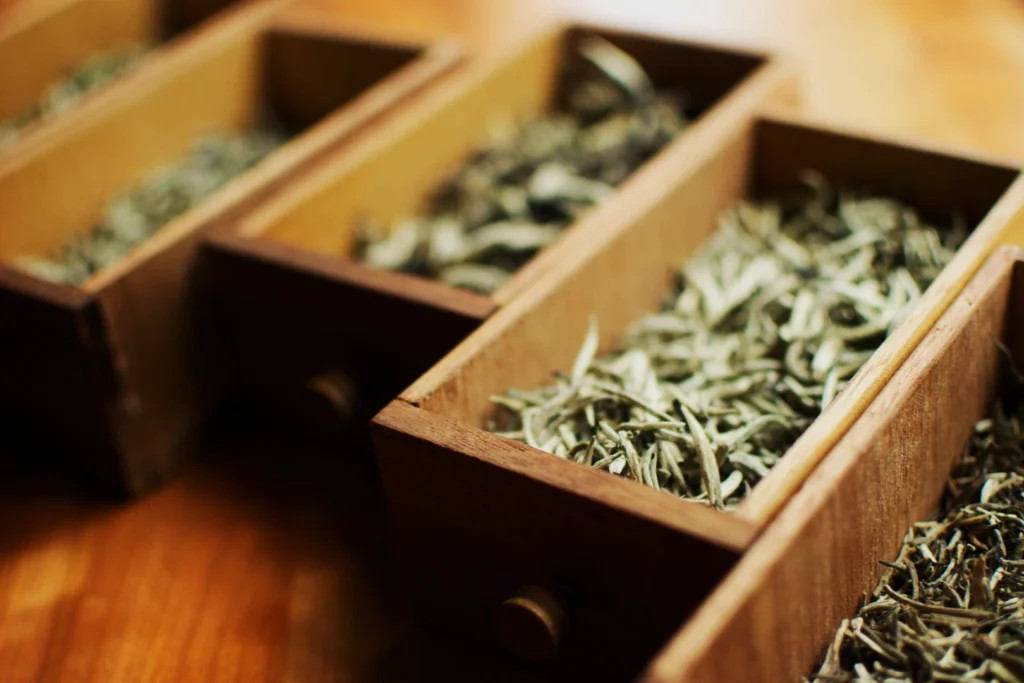
Indoor withering
Indoor withering takes place in controlled, shaded environments. Leaves are spread across bamboo trays, where airflow and humidity are carefully managed.
The result is often a tea with clarity: clean floral notes, a light texture, and a quiet, steady sweetness.
Sun withering
Sun withering introduces a different dimension. The leaves are briefly exposed to soft sunlight before continuing their wither indoors.
This gentle warmth can deepen the tea’s character, bringing out notes of honey or soft fruit. Yet it also introduces uncertainty. Weather shifts quickly, and the margin for error is narrow.
It is a method that depends as much on judgement as on conditions.
The variables that change everything
The maker works with a set of shifting variables:
- Leaf thickness: Buds retain moisture longer than mature leaves
- Airflow and humidity: Moving air supports even withering
- Temperature and light: Warmer conditions accelerate change
- Time: Extended withering develops depth and sweetness
Each batch requires adjustment. No two days are identical.
What can go wrong
Without careful attention, the process can falter.
A rushed wither may leave the tea thin, with sharp, green edges. Excess humidity can cause the leaves to lose clarity, developing dull or heavy notes. The balance lies in allowing enough time, without allowing the leaf to stagnate.
Deep Dive: Drying (Air, Sun, and Gentle Heat)
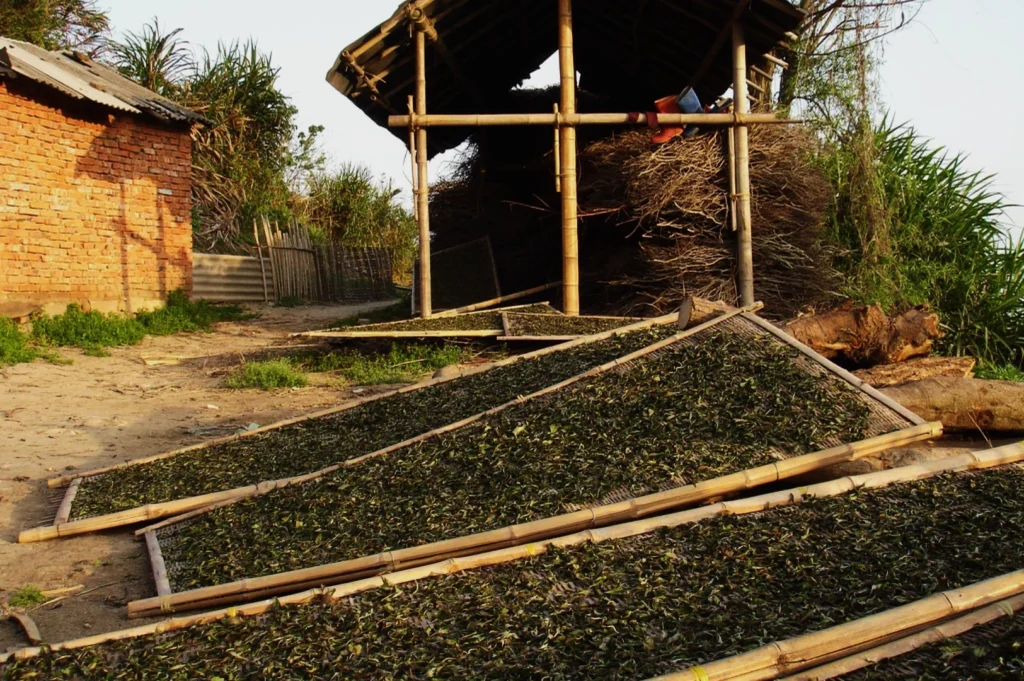
Why drying is not roasting
White tea is not roasted in the way many oolong teas are. The purpose of drying is preservation, not transformation.
The heat applied is gentle. It stabilises the leaf without introducing heavy, toasted flavours.
Common drying approaches
In regions known for white tea production, such as Fuding and Zhenghe, makers use a range of techniques.
Sun drying offers softness and natural warmth, but depends entirely on weather. Low-temperature heat drying provides greater consistency. Many artisans combine both, beginning with sunlight and finishing with controlled indoor heat.
How drying affects the cup
The drying stage leaves a lasting impression.
A well-dried tea retains its aromatic lift. The liquor feels smooth, almost gliding across the palate. Sweetness appears more clearly, not as an added note, but as something drawn out gently from the leaf.
Improper drying, by contrast, can mute these qualities, leaving the tea flat or uneven.
Why White Tea Stays So Delicate (The “No Forcing” Philosophy)
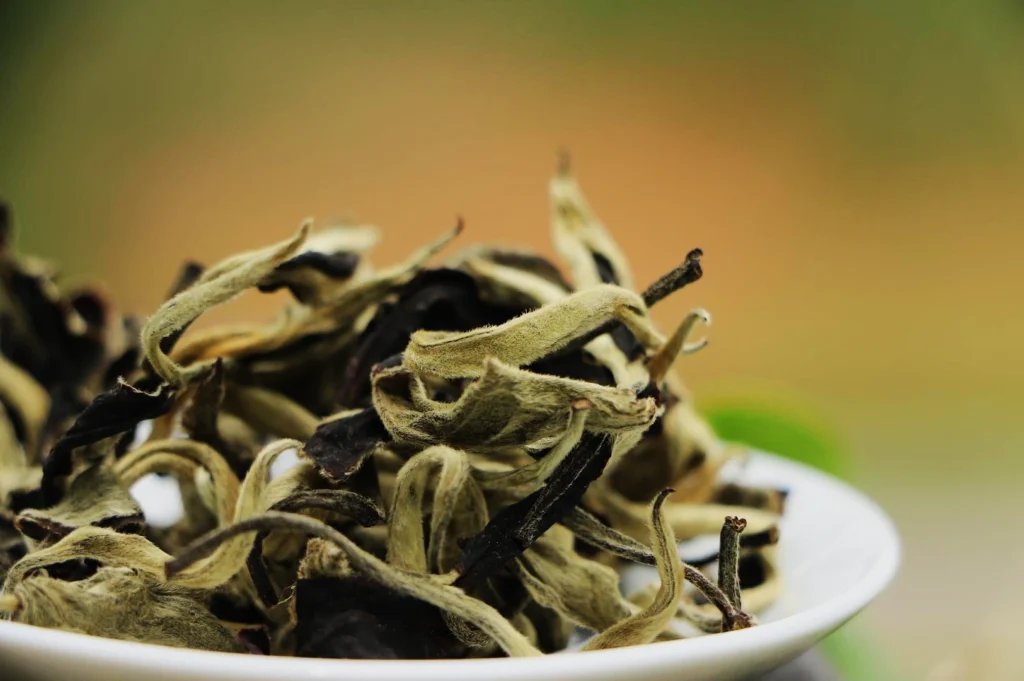
White tea remains delicate because it is never pushed beyond its natural pace.
Without rolling or heavy handling, the leaves stay largely intact. Oxidation progresses slowly, preserving clarity. Without high heat, the most delicate aromatics remain present, rather than being burned away.
This restraint creates a tea that feels open rather than constructed. In the cup, you may notice white florals, soft hay, or a light sweetness that recalls melon or fresh grain. In some harvests, a hint of honey or almond skin appears—never imposed, always emerging.
From Process to Style: One Method, Three Expressions
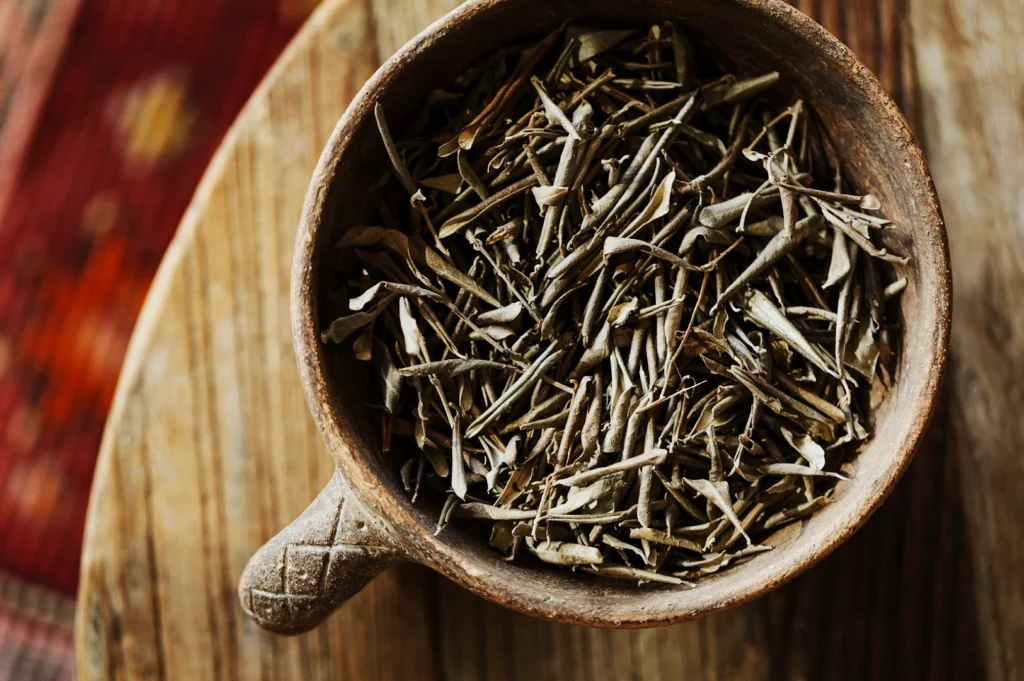
The steps of how white tea is made remain consistent. Yet the plucking standard shapes three distinct expressions.
Silver Needle: buds and precision
Made entirely from early spring buds, Silver Needle offers clarity and lift. The aroma is fine and focused. The body is light, yet smooth. Its sweetness lingers quietly.
White Peony: balance in form
With both buds and leaves, White Peony brings structure. Floral notes are supported by a gentle depth. The cup feels more rounded, more complete.
Shou Mei: depth through maturity
Shou Mei, made from larger leaves, carries warmth. The flavours move toward dried fruit and soft wood. The texture is fuller, and the tea is forgiving in how it is brewed.
Each reflects the same method. Only the leaf has changed.
Fresh vs Aged White Tea: What Changes Over Time
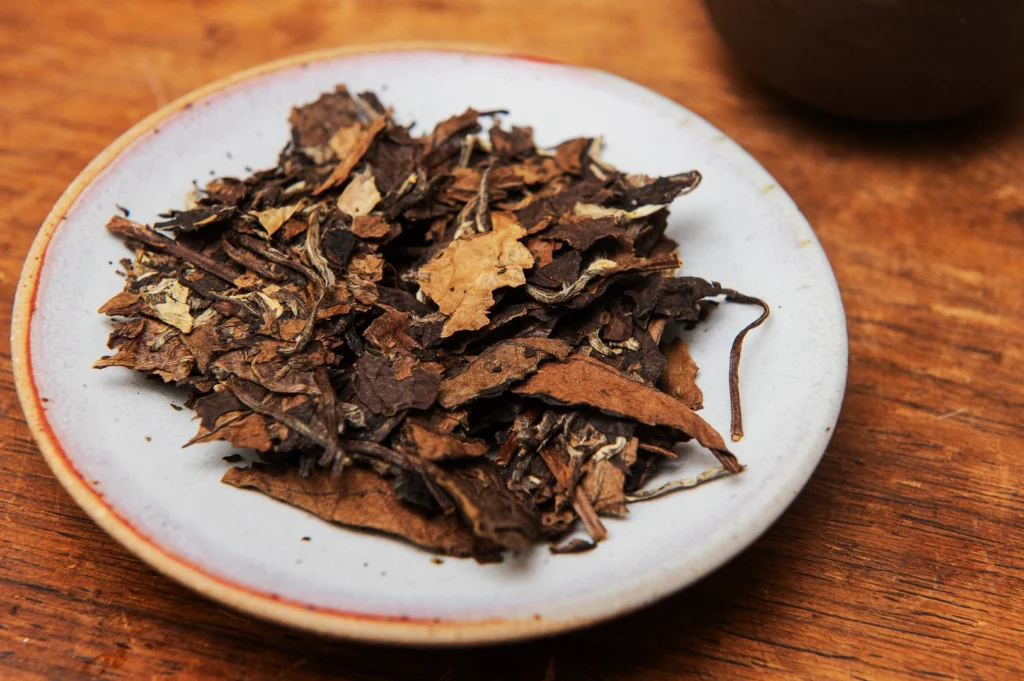
White tea continues to evolve when stored well.
Fresh tea often feels bright, with clear floral and lightly green notes. Over time, these sharper edges soften. Sweetness deepens. The profile becomes warmer, with hints of dried fruit or gentle herbal tones.
The texture also shifts, often becoming thicker and more rounded.
These changes are not guaranteed. Ageing depends on stability: dry conditions, clean storage, and protection from odours. When these are present, time becomes part of the craft.
A Craft Best Understood Slowly
White tea is shaped not by intervention, but by attention. Withering and drying do not impose character: they reveal it. What you taste in the cup is the result of small decisions, made carefully and without haste.
To understand this fully is to experience it. The difference between a bud and a leaf, a shorter wither and a longer one, a touch of sunlight or its absence; these are subtle shifts, but they are felt.
We warmly invite you to visit us at Tea Room by Ki-setsu, a quiet Chinese tea house sanctuary in Singapore, where you can book a private tea session. Sit with us, and taste exactly how these subtle variations in plucking and processing shape the beauty in your cup, side by side.