A good white tea does not begin in the cup. It begins at the moment of harvest: what is chosen, and what is left behind. Within white tea types, this single decision shapes everything that follows: flavour, texture, aroma, and even how the
In this guide, we explore three of the most recognised styles: Silver Needle, White Peony, and Shou Mei. Each carries its own rhythm. Each asks to be brewed, and understood, a little differently.
For the full guide, read White Tea: The Ultimate Guide to the Most Delicate Tea With Exceptional Health Benefits.
At a Glance: Comparison Table
To begin your journey, here is a quick reference guide comparing the three primary white tea types side by side.
| Type (English + Chinese) | Plucking Standard | Appearance (Dry Leaf + Liquor) | Aroma & Taste | Body & Texture | Best For | Best Brewing Style |
| Silver Needle (Baihao Yinzhen, 白毫银针) | Pure, unopened buds only | Silvery-white, fuzzy buds; pale ivory liquor | Honeydew, fresh hay, delicate floral sweetness | Thick, syrupy, exceptionally smooth | Quiet contemplation, refined tasting | Gongfu |
| White Peony (Bai Mudan, 白牡丹) | One bud with one or two tender leaves | Mix of silver buds and green/brown leaves; golden liquor | Autumn leaves, melon, warm floral notes | Medium-bodied, rounded, and crisp | Daily luxury, afternoon tea | Gongfu or Western |
| Shou Mei (寿眉) | Larger leaves with few or no buds | Broad, multi-coloured autumn leaves; deep amber liquor | Earthy, autumn woods, baked fruit, subtle spice | Full-bodied, rich, warming | Evening comfort, easy drinking | Western, Grandpa, or Gongfu |
White Tea Basics
What truly defines white tea is not the plant itself, but rather its graceful, minimalist processing. Unlike green tea which is fired to halt oxidation, or black tea which is fully oxidised, white tea undergoes only two primary steps: withering and drying. The leaves are simply laid out to wither naturally in the sun or controlled indoor environments, before being gently dried. This gentle touch preserves the leaf’s natural state.
Because the processing is so minimal, the leaf grade completely transforms the experience. A tea made entirely of tender, unopened spring buds will taste vastly different from a tea made of larger, mature leaves that have bathed in the summer sun.
Additionally, white tea possesses a remarkable ability to age. While fresh white tea offers bright, crisp, and floral notes, an aged white tea will gradually darken, developing profound notes of jujube, medicinal herbs, and warm spice.
Type 1: Silver Needle (Baihao Yinzhen, 白毫银针)
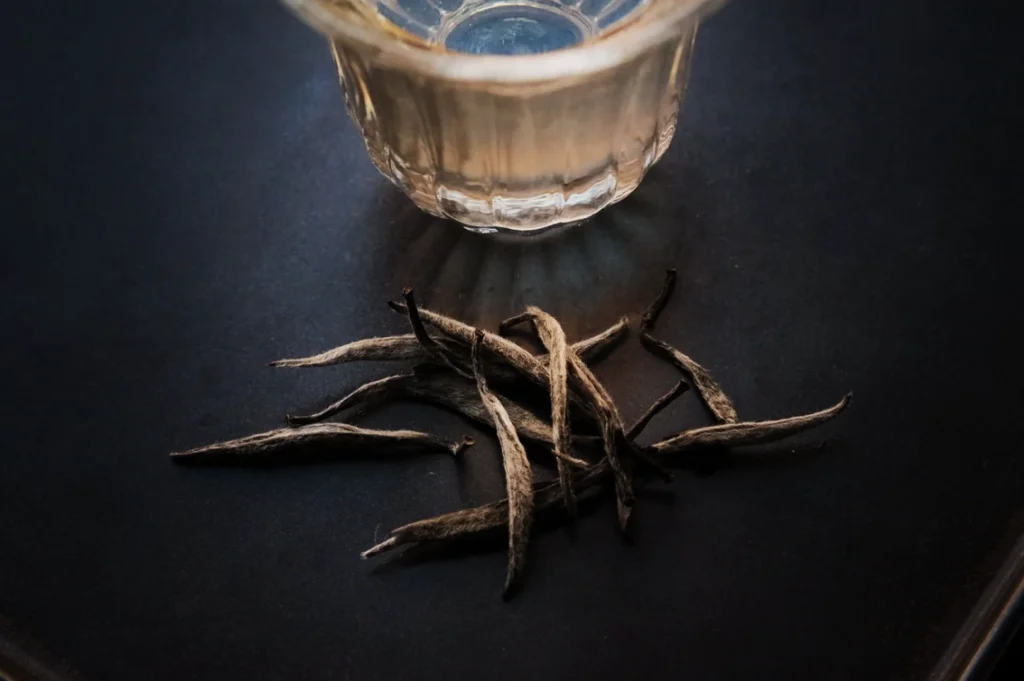
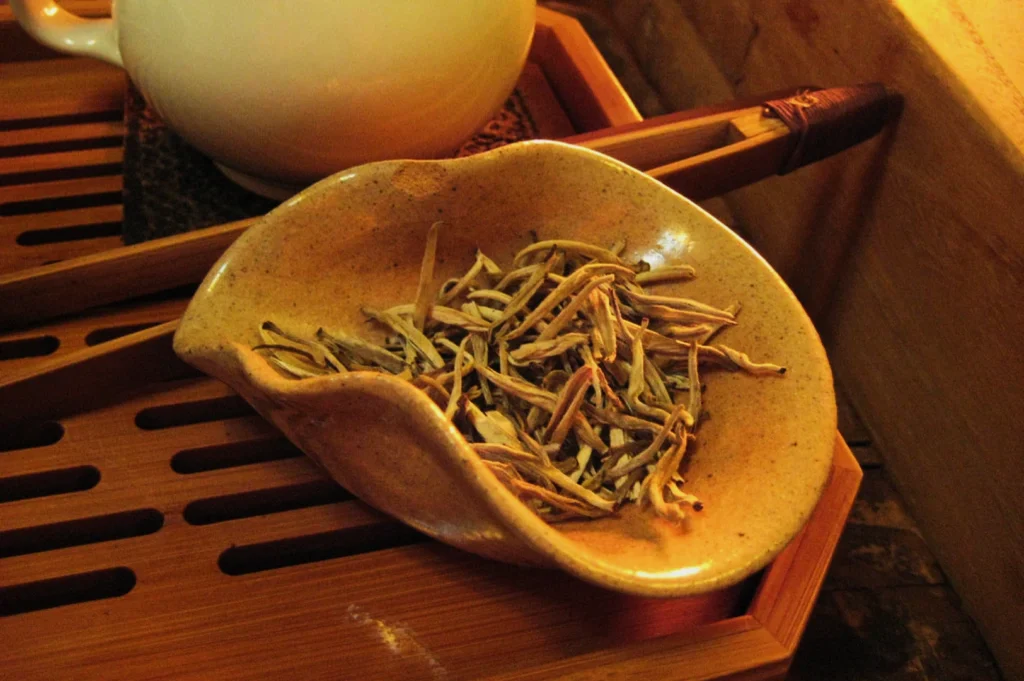
Silver Needle, known traditionally as Baihao Yinzhen, is the most prized and delicate of all white tea types. It is crafted exclusively from the plump, unopened leaf buds of the tea plant, harvested during a brief window in early spring.
To create Silver Needle, artisans must carefully pluck the buds by hand, ensuring the delicate silvery fuzz (trichomes) remains intact. When purchasing, look for thick, uniform buds covered in this downy white hair, with a pale, vibrant appearance devoid of broken leaves or stems.
The flavour profile of Baihao Yinzhen is a masterclass in subtlety. It offers whispering notes of honeydew melon, cucumber, and fresh hay, followed by a lingering, nectar-like sweetness. It is designed for the patient tea drinker who appreciates nuance, quiet moments, and a thick, syrupy mouthfeel.
A common misconception is that Silver Needle is flavourless. In truth, its flavour is highly concentrated but delicate; it requires mindful brewing and a quiet palate to fully savour. It responds best to gentle brewing with slightly cooler water, allowing its sweet amino acids to shine without drawing out any astringency.
Type 2: White Peony (Bai Mudan, 白牡丹)
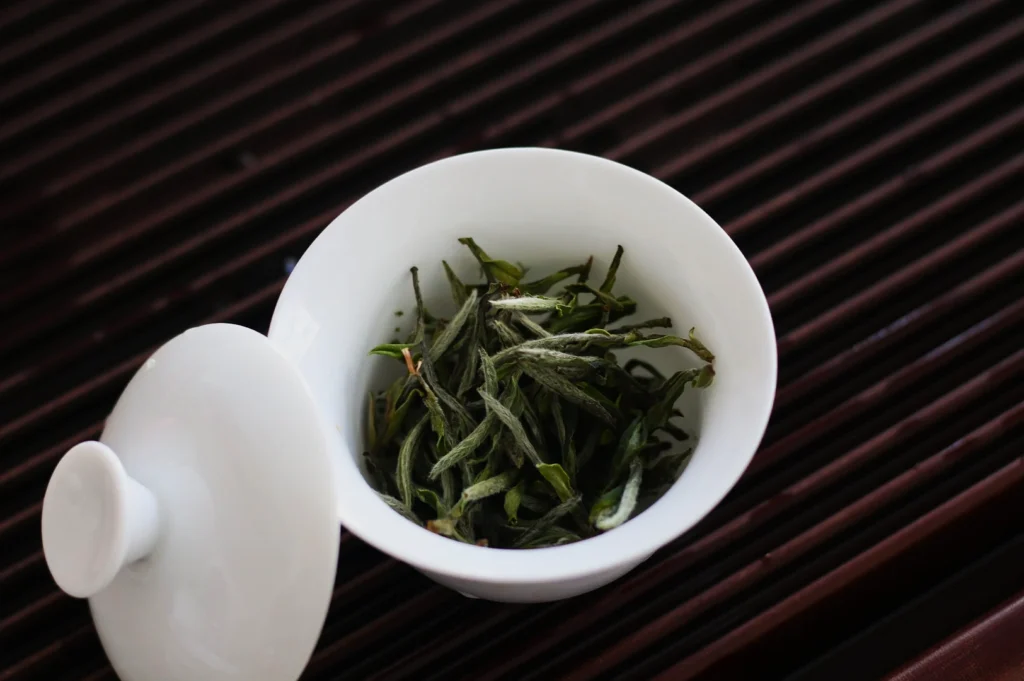
White Peony, or Bai Mudan, strikes a beautiful balance between the supreme delicacy of buds and the robust flavour of mature leaves. Its plucking standard typically consists of one central bud flanked by one or two newly unfurled leaves.
This inclusion of the leaf is exactly why it tastes different from Silver Needle. The leaves introduce deeper, slightly more oxidised notes to the cup, yielding a golden liquor that is more expressive and aromatic. When buying White Peony, you should look for a vibrant mix of downy buds and multi-coloured leaves ranging from sage green to warm brown.
Its flavour profile is remarkably satisfying, bridging the gap when considering Silver Needle vs White Peony. It delivers the floral, honeyed top notes of the buds alongside the warmer, nutty, and baked-fruit notes of the leaves.
Bai Mudan is incredibly versatile, making it the perfect choice for a daily luxury or an elevated afternoon tea. Its brewing flexibility means it is forgiving enough for a casual mug, yet complex enough to reward careful, multiple steepings.
Type 3: Shou Mei (寿眉)
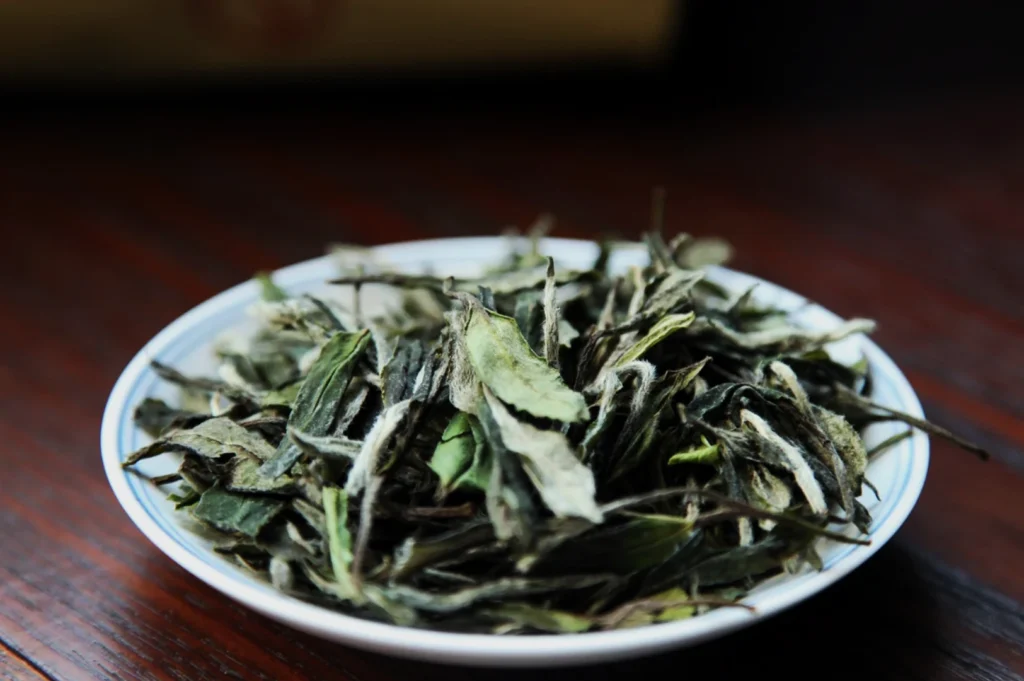
Shou Mei white tea translates to “Longevity Eyebrow,” named for its broad, sweeping leaves. It is harvested later in the year, utilising larger, more mature leaves with very few, if any, buds.
Because it lacks the prized spring buds, Shou Mei can sometimes be underrated by novice drinkers. However, seasoned tea lovers cherish it for its comforting depth and rustic charm. When purchasing, expect to see large, whole leaves in a beautiful mosaic of autumnal colours: ochre, deep green, and brown.
The flavour profile of Shou Mei is earthy, grounding, and sweet. It frequently offers notes of fallen leaves, baked apples, and a touch of wild honey.
Shou Mei is also the most popular candidate for ageing. As an aged Shou Mei matures, its leaves turn a uniform dark brown, and the liquor transforms into a deep ruby red, developing highly sought-after notes of date, camphor, and warm wood. It is best for evening relaxation and pairs wonderfully with food.
Silver Needle vs White Peony vs Shou Mei: How to Choose
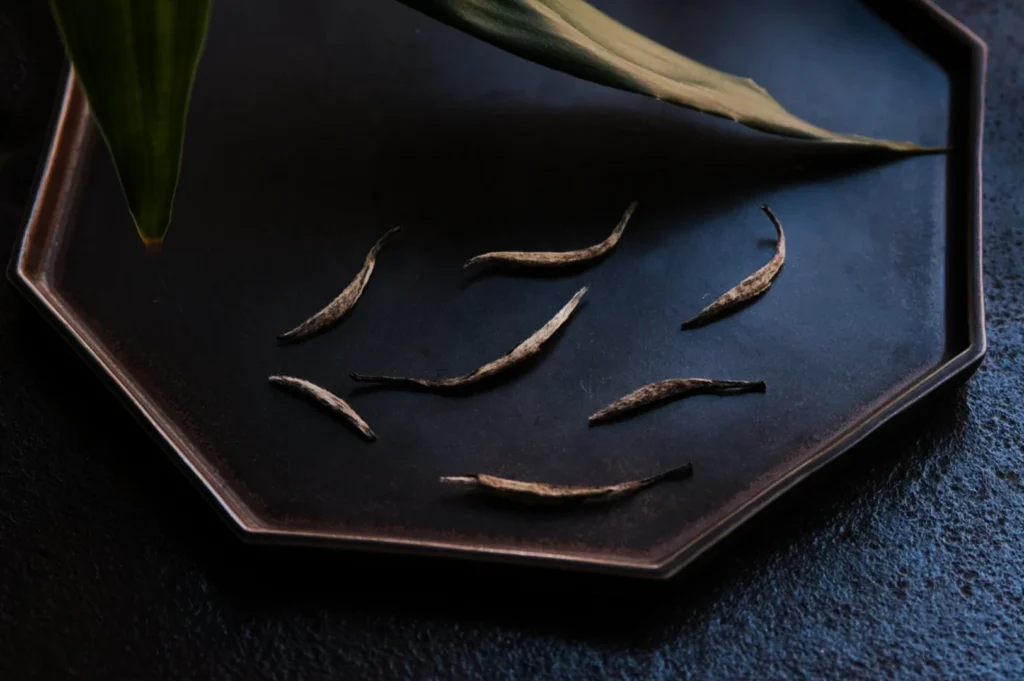
Choosing between these white tea types is less about hierarchy, and more about intention.
If you are drawn to light, floral teas that reveal themselves slowly, Silver Needle offers a quiet clarity. For those who prefer balance (a tea that moves gently between notes) White Peony provides a natural middle ground. And if warmth, depth, and ease are what you seek, Shou Mei settles into the role effortlessly.
Occasion also matters. A focused tasting session may suit Silver Needle, where attention can be given to each infusion. White Peony fits easily into daily rituals, adapting to both quiet mornings and unhurried afternoons. Shou Mei, with its forgiving nature, accompanies longer, more relaxed moments.
Price often reflects the effort behind the leaf. Bud-only teas like Baihao Yinzhen require careful harvesting and yield less, which explains their higher cost. Teas with more leaves, such as Bai Mudan and Shou Mei, are more abundant and therefore more accessible.
Brewing style is another consideration. Silver Needle benefits from precision, while White Peony offers flexibility. Shou Mei, perhaps the most forgiving, allows for a wider range of approaches without losing its character.
Brewing Recommendations
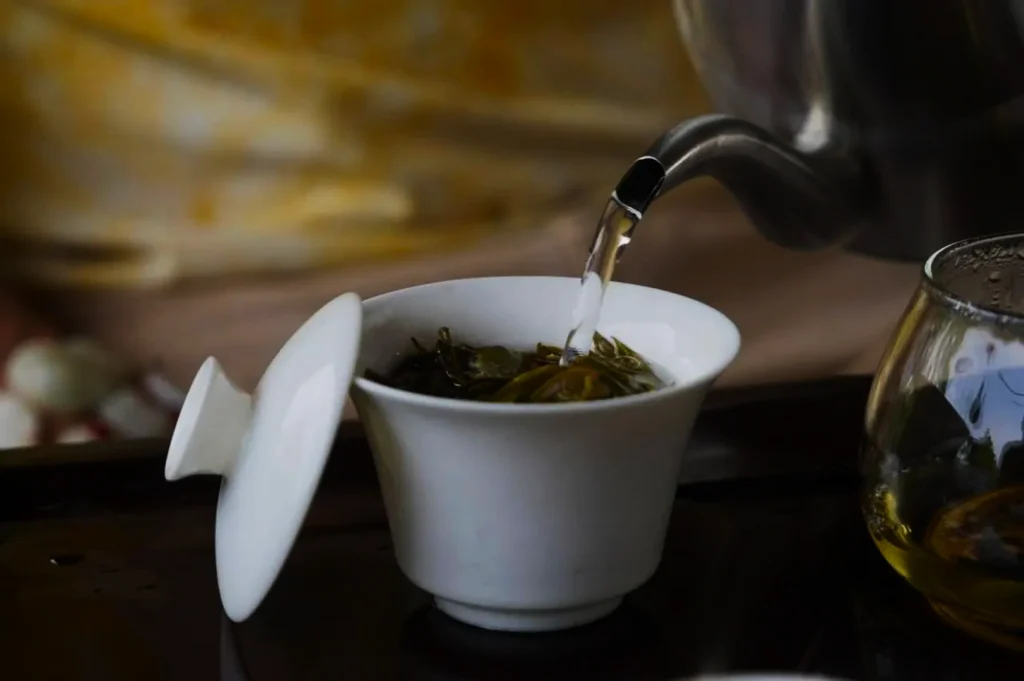
To honour the craftsmanship of these teas, the right preparation is essential. Note on water quality: Always use filtered, spring, or soft water. Hard tap water will mute the delicate flavours of any white tea.
Gongfu Parameters:
- Silver Needle: 85°C to 90°C. Use 4 to 5 grams per 100ml porcelain gaiwan. Steep for 20 seconds, adding 5 seconds for each subsequent brew.
- White Peony: 90°C to 95°C. Use 5 grams per 100ml gaiwan. Steep for 15 seconds, adding 5 seconds for each subsequent brew.
- Shou Mei (Fresh or Aged): 95°C to 100°C. Use 5 to 6 grams per 100ml gaiwan or clay teapot. Steep for 10 to 15 seconds, adding 5 seconds for each subsequent brew.
Common Mistakes To Avoid:
- Using water that is too hot for buds: Boiling water can scald Silver Needle, making it taste flat.
- Not using enough leaf: White tea is voluminous and fluffy. Weighing your tea (rather than using a teaspoon) ensures you use enough leaves for a flavourful cup.
- Rushing the steep: Silver Needle’s thick buds take time to hydrate. Do not be afraid to let Western-style infusions sit a little longer to coax out the sweetness.
A Quiet Comparison, Best Understood in the Cup
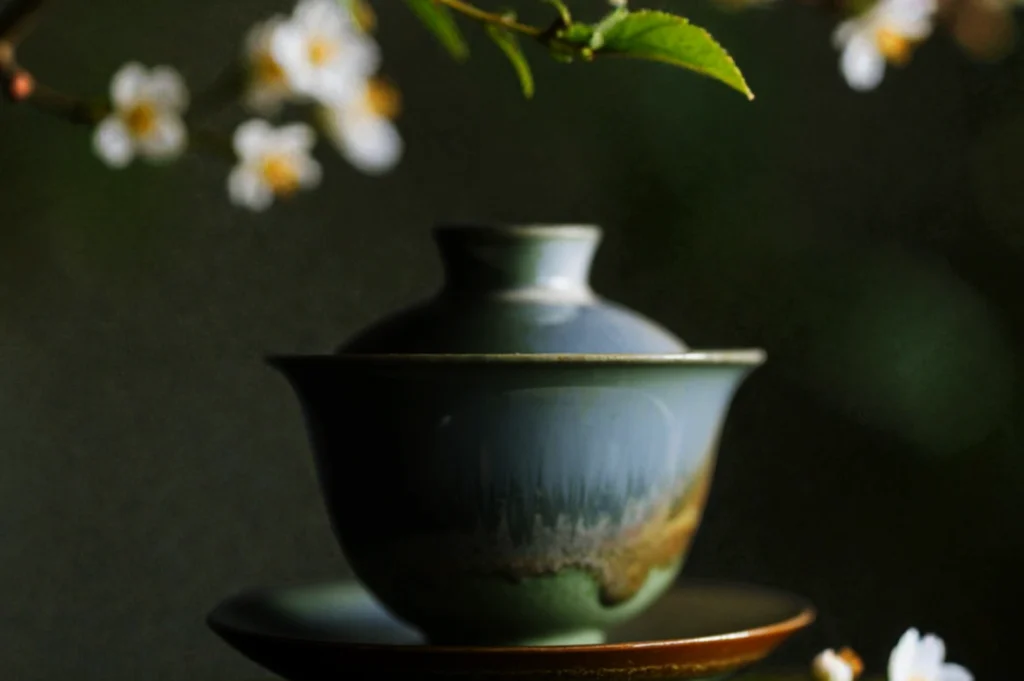
Each of these teas begins with the same plant, yet arrives in the cup with a different presence. Silver Needle offers clarity in its most restrained form, revealing itself slowly through softness and light. White Peony brings a gentle balance, where floral notes and subtle sweetness move in quiet harmony. Shou Mei settles deeper, with warmth and depth that unfold steadily over time. Understanding these differences is not about choosing the “best” tea, but recognising what suits the moment, the mood, and the pace you wish to keep.
If you’d like to experience these distinctions more fully, we warmly invite you to join us for a private tea session at Tea Room by Ki-setsu, where each tea is prepared with care, and each cup is given the time it deserves.