Why White Tea Feels “Gentle” (But Still Awake)?
A good tea does not rush the senses; it arrives softly and stays. When we steep a pale, shimmering infusion of spring buds, the experience is often one of quiet clarity rather than a sudden jolt. It is a common observation among tea lovers that white tea can feel remarkably alerting, yet it does so without feeling harsh or frantic.
At the heart of this sensation is a beautiful botanical balance. Tea contains both caffeine and L-theanine, and it is the delicate interplay between these two compounds that shapes the feeling in your cup. In this guide, we will explore what caffeine and L-theanine do, why white tea can feel so calm, and how leaf type, origin, and brewing adjustments change the intensity of your brew. We will also share insights on when to drink it and who might wish to exercise caution.
Please note that this is not medical advice, and individual responses to tea will always vary. To understand more about the elegance of white tea, including its broader characteristics, we invite you to explore our foundational guide. Understanding the caffeine in white tea is simply about learning to tune the leaf to your own daily rhythm.
The “Calm Energy” Explained in 60 Seconds
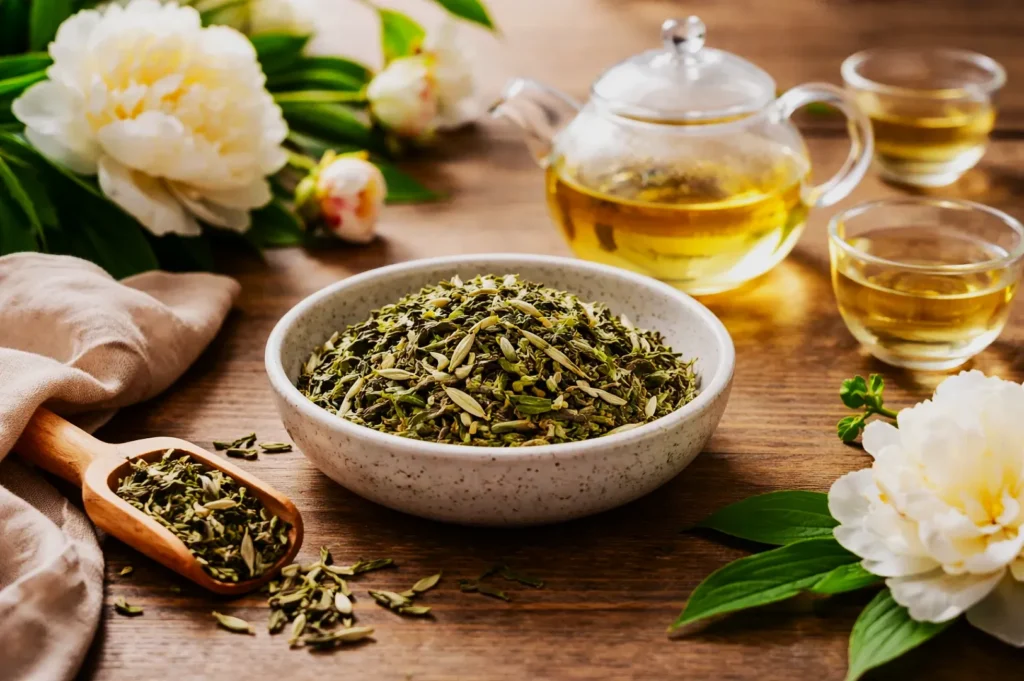
To understand the calm energy that tea provides, we must look at how its natural compounds work together. Caffeine supports physical and mental alertness, while L-theanine is widely associated with a smoother, steadier, and more grounded feel. Together, they tend to offer a more balanced and sustained stimulation than caffeine alone.
- White tea can still contain meaningful caffeine. It is a myth that its delicate flavour equals an absence of stimulation.
- Bud-heavy teas often feel more vivid. Spring buds naturally hold higher concentrations of protective compounds, including caffeine.
- Longer steeps and hotter water extract more caffeine. You are always in control of the intensity through your brewing parameters.
- Food, sleep, and personal sensitivity change the outcome. How you feel after a cup of tea depends as much on your body as it does on the leaf.
Tea Chemistry: What Are Caffeine and L-Theanine?
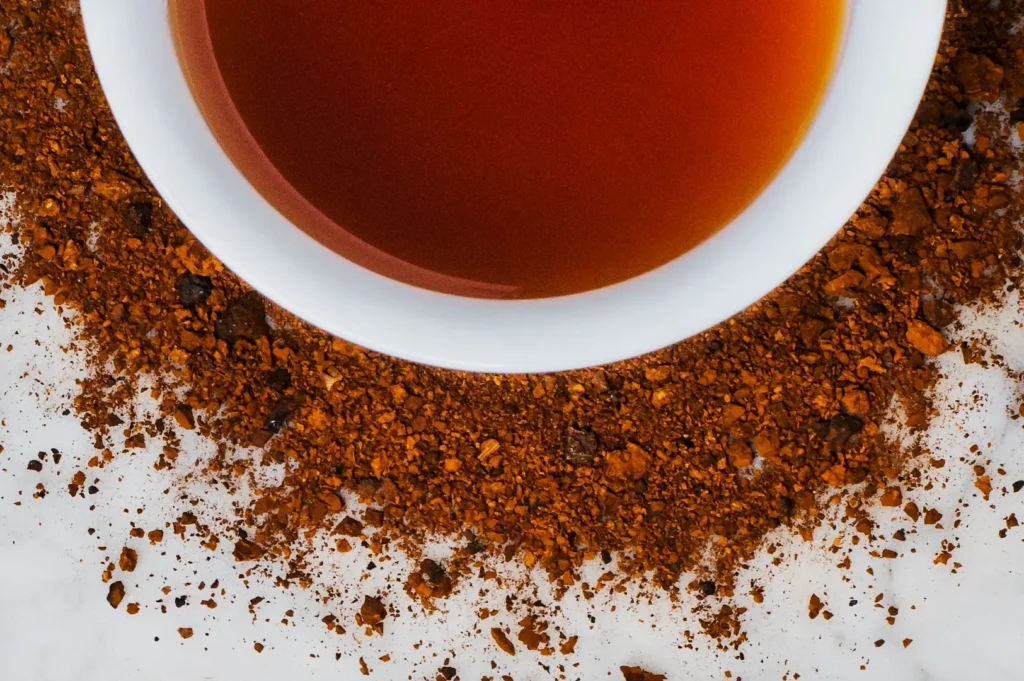
Caffeine (what it is, how it tends to feel)
Caffeine is a naturally occurring compound found within the leaves of the Camellia sinensis plant, acting as a natural defence mechanism for the growing shoots. In the cup, the felt experience of caffeine is familiar to most: it provides a sense of alertness and focus. For sensitive drinkers, however, heavy extraction can sometimes result in a jittery or restless feeling. Compared to other beverages, the caffeine in tea tends to unfold more gradually, but it remains a primary source of stimulation.
L-theanine (why it is discussed in tea)
L-theanine is a unique amino acid naturally found in tea. It is often celebrated for its ability to provide softer edges to the drinking experience. Some research suggests that L-theanine in tea may be associated with a state of calm focus, relaxing the mind without inducing drowsiness. It is often reported that this amino acid helps to round out the sharper, more demanding edges of caffeine.
Why the combination matters?
The true magic lies in how these two elements interact, creating a practical sensation we often call “balanced stimulation.” Instead of a sharp spike and subsequent crash, the combination tends to offer a gentle, sustained lift. However, the exact balance depends heavily on the specific leaf, your brewing technique, your dose, and your personal sensitivity.
Does White Tea Have Less Caffeine? The Myth and the Reality
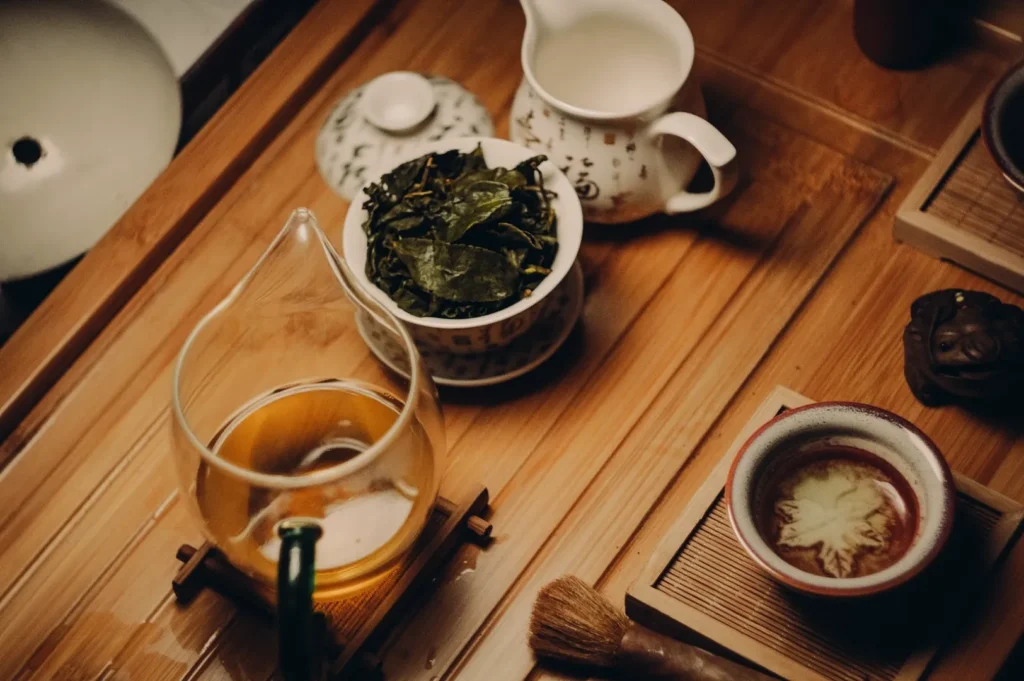
There is a persistent and common belief that “white tea is low in caffeine because it is delicate.” This is an elegant idea, but it is factually incorrect. Processing style does not automatically dictate the caffeine content of a tea. Because white tea is minimally oxidised and gently dried, it retains much of the natural chemical profile of the fresh leaf.
The reality is that the level of caffeine in white tea depends on factors that occur long before and after the tea is made. The most crucial factors include whether the tea is composed of tender buds or mature leaves, the sheer quantity of leaf used in your vessel, the temperature of your water, and the length of your steep. A heavily dosed, deeply steeped silver needle can easily be as stimulating as a breakfast black tea.
The Five “Dials”: What Changes Caffeine and L-Theanine in the Cup
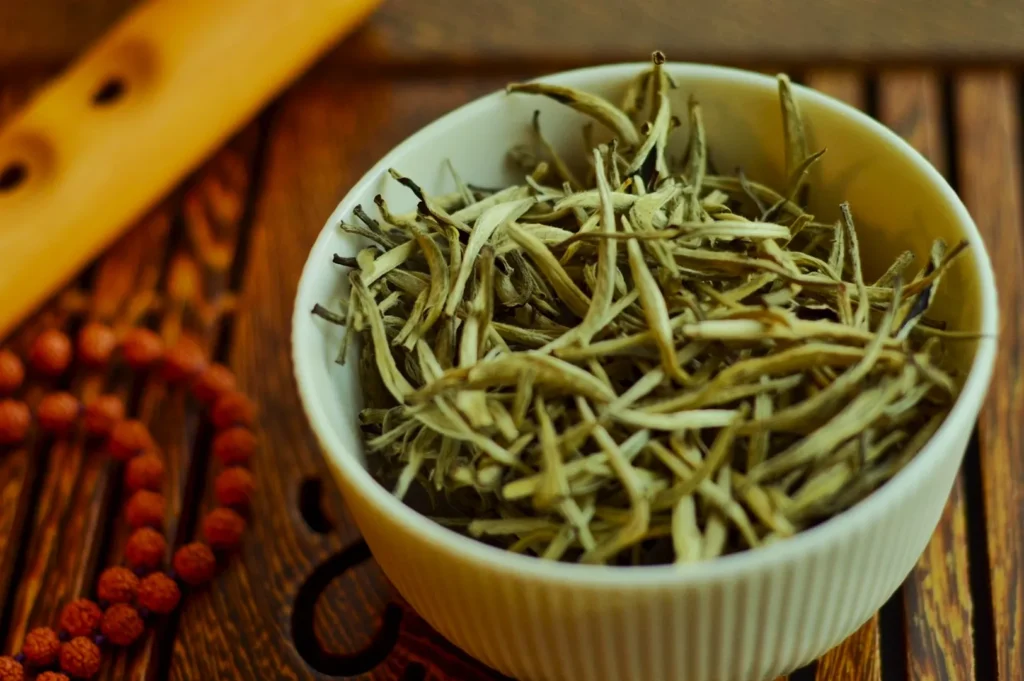
You are not a passive recipient of whatever is in the leaf. Through mindful brewing, you can adjust the experience.
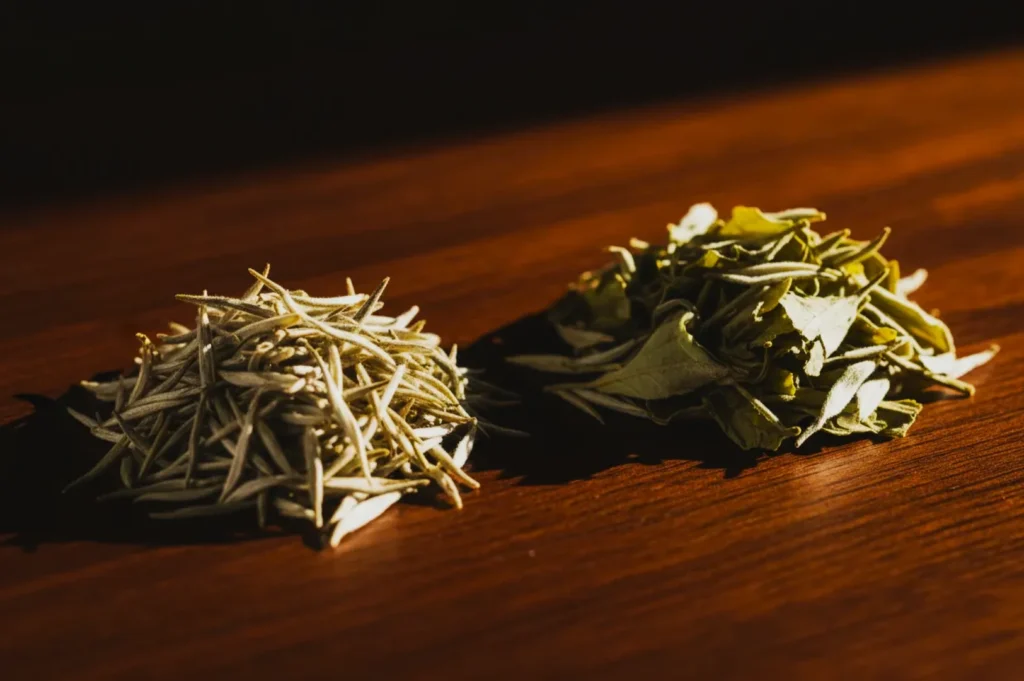
#1 Leaf Material: Buds vs Larger Leaves
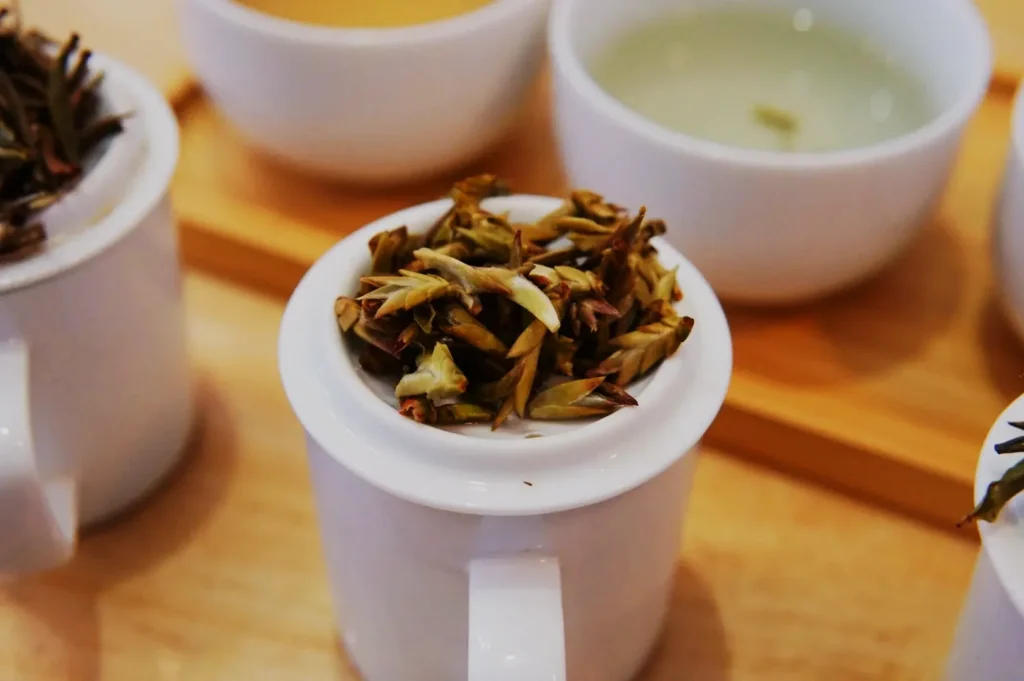
The plant directs its energy and protective compounds to its newest growth. Therefore, bud-heavy teas can feel much more potent per gram. Conversely, leaf-forward styles harvested later in the season tend to feel rounder, softer, and more forgiving on the nervous system.
#2 Origin and Season
Terroir and timing leave their mark. Teas from traditional origins, such as the mist-shrouded mountains of Fujian, carry a specific chemical signature based on their soil and climate. Early spring plucks are rich in amino acids and caffeine, often tasting fresher and feeling more lifted in the body, whereas autumn harvests feel more grounded.
#3 Brewing Temperature
Temperature is your primary dial. Hotter water extracts compounds, including caffeine and tannins, much more quickly. For a gentler cup, you might use water in the mid to high 70s°C, while you might push towards the mid 90s°C to coax out the deeper, richer notes of a mature leaf style.
#4 Time and Number of Steeps
Time in the water dictates the strength of the brew. Longer steeps will naturally increase the overall extraction. This is why multiple short, rhythmic infusions often feel much smoother and more controlled than one single, long steep in a large teapot.
#5 Dose and Vessel Size
The ratio of leaf to water is critical. Using more leaf per millilitre of water will undeniably increase the intensity of both the flavour and the stimulation. Small gongfu vessels concentrate the aroma, the texture, and the energetic effects into a highly focused experience.
White Tea Styles and How They Tend to Feel (Practical, Not Absolute)
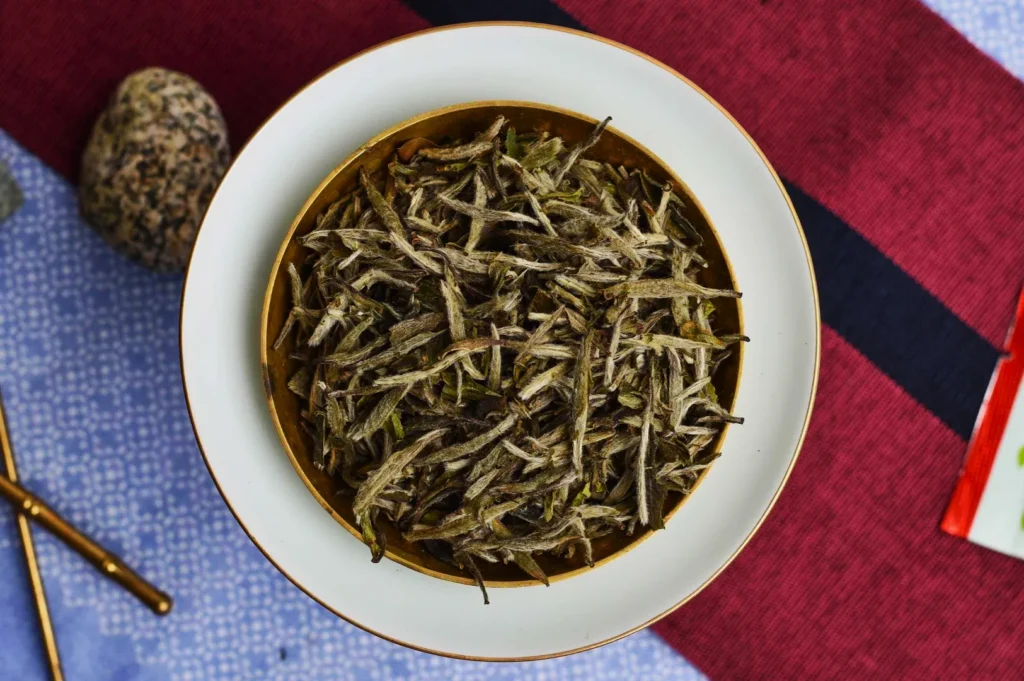
Silver Needle (bud-only)
Crafted entirely from early spring buds, Silver Needle is often described as clean, bright, and highly focused. Because of its concentration of natural compounds, it is an exceptional white tea for focus, providing a gentle but distinct mental clarity that rewards quiet concentration.
White Peony (buds and leaves)
By incorporating both the silver bud and one or two young leaves, White Peony strikes a beautiful harmony. It often feels balanced, rounded, and easy to drink. It provides a steady, daytime calm that is less pointed than a pure bud tea, making it a wonderful companion for a busy afternoon.
Shou Mei (leaf-forward)
Harvested slightly later with larger, broader leaves, Shou Mei is often deeper, warmer, and much more forgiving. It tends to carry a softer energetic footprint, making it highly suitable for slower afternoons when you seek comfort rather than intense mental sharpness.
Aged white tea (what may change)
As white tea ages, its internal chemistry slowly transforms. An aged white tea often presents softer edges and a warmer, medicinal sweetness. Many drinkers find the energetic feeling to be more grounding and settling, though the quality of the storage environment plays a vital role in this evolution.
When to Drink White Tea: A Calm, Real-World Timing Guide

Understanding the best time to drink white tea is about matching the leaf to your daily rhythm.
Morning (clear focus)
For a bright, focused start to the day, reach for a bud-heavy Silver Needle. Using slightly warmer water and a generous dose will provide a clean, steady lift that clears the mind without the abrupt jolt of darker, heavier brews.
Early afternoon (steady energy)
When the afternoon lulls approach, White Peony is an excellent choice. Brewed lightly in a gongfu vessel or a simple glass pitcher, it offers a steady, rounded energy that gently sustains your momentum through the remainder of your tasks.
Late afternoon (if you are caffeine-sensitive)
If you are sensitive to stimulation as evening approaches, pivot to a leaf-forward Shou Mei. To keep the cup gentle, use shorter steeps, lower the water temperature slightly, and enjoy fewer infusions so as not to extract the deepest layers of the leaf.
Evening (gentle caution)
We must set realistic expectations: tea still contains caffeine. If you choose to drink tea in the evening, do so with gentle caution. We suggest a very low dose of aged white tea brewed softly, or shifting your timing earlier. For those who are highly sensitive, herbal non-tea alternatives may be the best choice for the late evening.
Who Should Be More Careful?
Tea is a gentle companion, but it is important to listen to your own body. Caffeine sensitivity varies significantly from person to person. What feels like a mild, comforting cup to one individual may feel overly alerting to another.
If you are pregnant, actively managing anxiety, or currently taking specific medications, we warmly recommend checking with a clinician or healthcare provider regarding your caffeine intake. Tea should always be an invitation to well-being, never a source of unease. Approach your cup with mindfulness and adjust your brewing to suit your personal boundaries.
A Calm Invitation to Taste
Ultimately, the sensation you experience in your cup is a dialogue between the leaf and the maker. The delicate balance of the tea, your mindful brewing choices, and your personal sensitivity all shape the final experience.
To truly understand how a bud differs from a leaf, or how a fresh spring harvest compares to an aged treasure, one must experience them in the cup. We warmly invite you to taste these different white tea styles side by side in a private, guided session at Tea Room by Ki-setsu, where we can explore the quiet elegance of tea together.