Almost every first-time visitor experiences a brief moment of quiet hesitation when they finally sit down at the tea table. You might wonder where to rest your hands, how to properly hold the delicate porcelain cup, or whether the silence is meant to be filled with conversation. It is incredibly common to feel unsure about when to speak or exactly what to say when the host pours your first infusion.
We want to reframe this entire experience for you right from the start. Good tea room etiquette is not about flawless performance, rigid rules, or strict memorisation. Instead, it is simply about creating mutual comfort and showing gentle consideration for the space, the host, and the leaves. In this guide, we offer a modern, straightforward approach to feeling completely at ease. You will learn how to navigate the subtle rhythms of a modern tea service with calm confidence, allowing you to focus entirely on the warmth in your cup.
What Tea Etiquette Really Means In A Modern Tea Room
If you search for guidance online, you will likely find intimidating lists detailing strict historical rules. However, practical etiquette in a modern tea room Singapore setting is beautifully softer and far more forgiving than a highly formal, traditional ceremony. The goal is to cultivate a serene environment where the tea can be fully appreciated without the heavy burden of anxiety.
To feel comfortable, you only need to embrace three simple, guiding principles. First, move gently. Treat the space with a soft touch, avoiding loud noises or sudden, rushed movements that break the calm atmosphere. Second, follow your host’s rhythm. The practitioner pouring your tea will naturally set the pace of the session, so you can simply relax and mirror their unhurried timing. Third, stay curious. You do not need to be an expert to belong at the table. A genuine willingness to learn, observe, and savour the flavours is always more deeply respected than pretending to know everything about the harvest.
Before You Arrive: Small Choices That Prevent Awkwardness
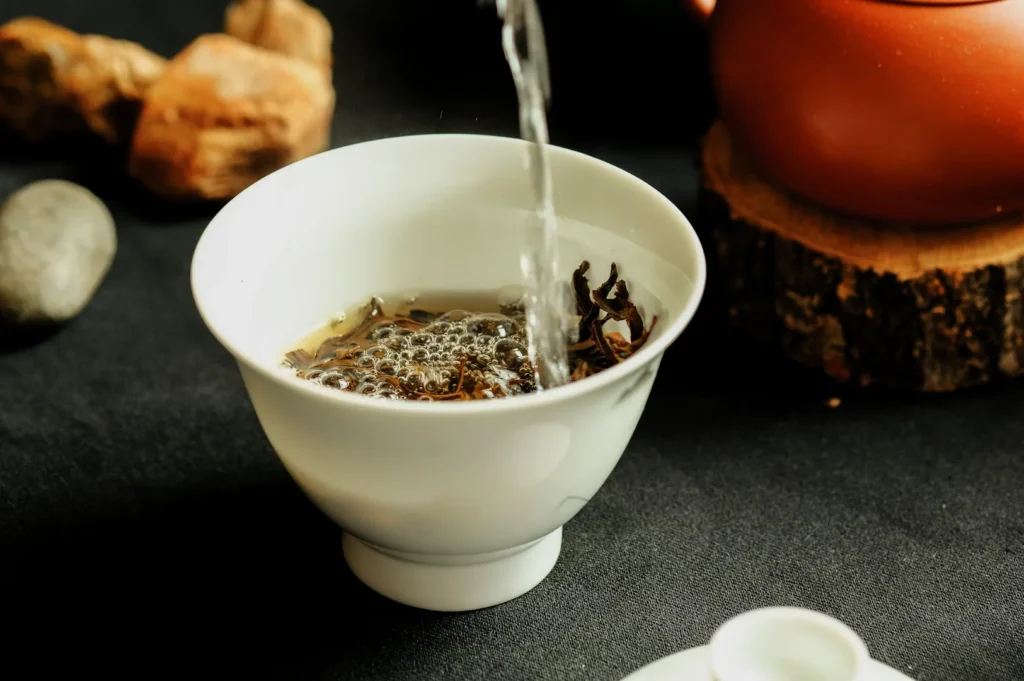
The foundation of good tea etiquette Singapore practitioners appreciate begins long before you actually walk through the wooden doors. Making a few mindful choices at home helps protect the delicate sensory environment for both yourself and anyone else in the sanctuary. Preparing properly removes the majority of the subtle awkwardness that first-time guests often feel.
Keep these practical, gentle guidelines in mind as you get ready for your visit:
- Avoid wearing perfume or cologne: Strong fragrances will easily overpower the delicate, natural aroma of the tea leaves.
- Arrive punctually: The quiet pacing of a tea session is entirely disrupted if a guest rushes in late and breathless.
- Eat a light meal beforehand: Tasting strong tea on a completely empty stomach can sometimes cause lightheadedness or mild discomfort.
- Silence your devices entirely: A ringing phone shatters the serene atmosphere, so leave it tucked away in your bag.
- Prepare one simple preference or question: Knowing whether you usually prefer floral or roasted flavours gives your host a helpful starting point.
When You Enter: Greeting, Seating, And The Pace Of The Room
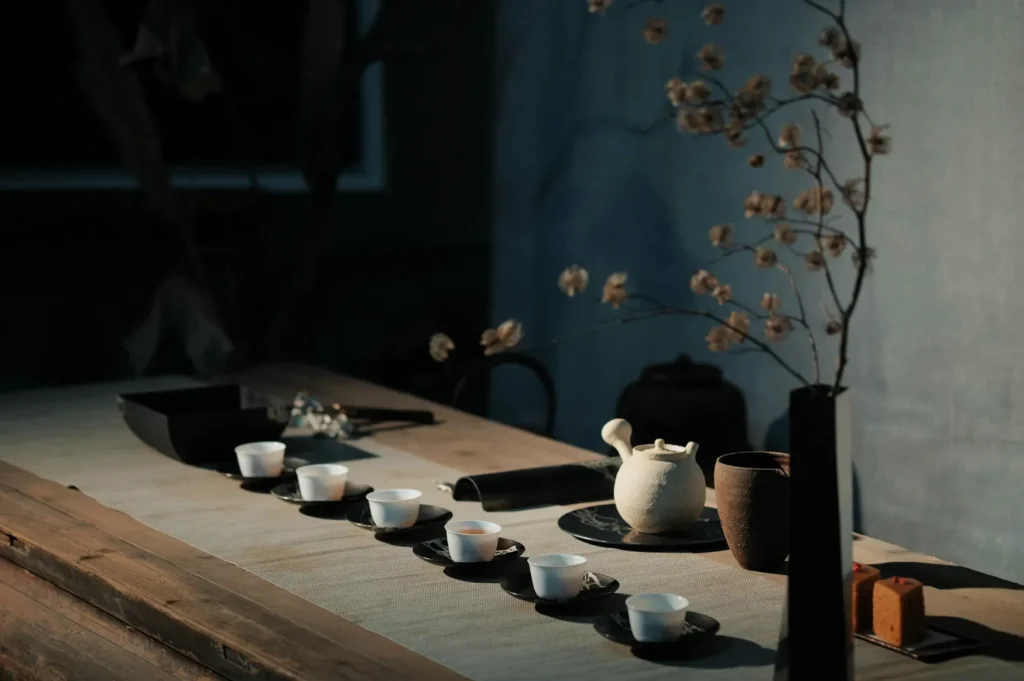
Greeting Without Overthinking
Stepping into a quiet sanctuary from the busy city streets can feel like a sudden, dramatic transition. When you are welcomed by your host, there is absolutely no need to perform a deep, formal bow unless it feels culturally natural to you. A warm, genuine smile and a soft, quiet greeting are entirely sufficient and deeply appreciated. Let your host gently guide you toward the tea table, following their lead as you transition into this calmer environment.
Where To Put Your Things
Clutter is the natural enemy of a peaceful mind. When you reach your seat, avoid placing your phone, keys, sunglasses, or large bags directly onto the tea table. The wooden surface is a dedicated, respected stage reserved solely for the teaware and the leaves. Keep your personal belongings tucked neatly in your bag, and place them on the floor beside your chair or in the designated storage baskets provided by your host.
Reading The Room’s Pace
Once you are seated, take a deep, slow breath to help lower your heart rate. Notice the volume of the ambient music and the soft tone of your host’s voice. This is your immediate cue to lower your own speaking volume. If you are exploring tea shops in Singapore worth visiting when you want something quieter, observing and matching this deliberate, gentle pacing ensures you immediately harmonise with the peaceful energy of the room.
What To Do With Your Hands, Your Cup, And Your Words
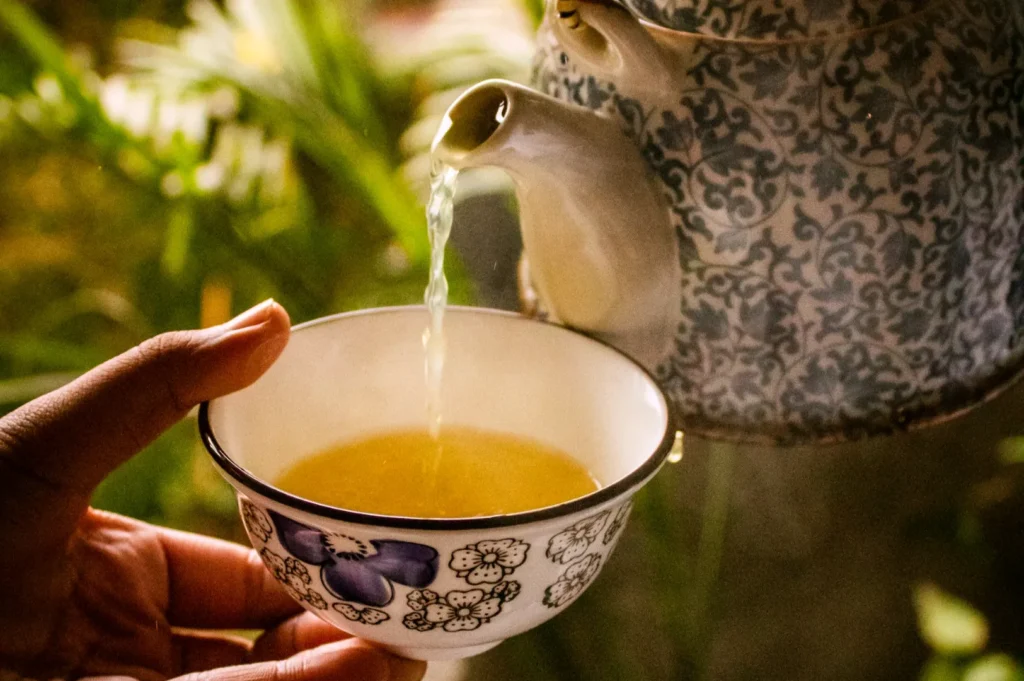
Holding The Cup Naturally
One of the most common worries is how to properly hold the small, handle-less porcelain tasting cups. Simply let your fingers behave naturally. Rest your thumb near the top rim of the cup and support the bottom gently with your index and middle fingers. There is no need to dramatically extend your pinky finger or grip the delicate porcelain tightly. If the cup feels slightly too warm for your fingers, simply let it rest on the table for another moment.
Smelling, Sipping, And Pausing
When the host pours your tea, do not rush to swallow it immediately. First, lift the cup close to your face and gently inhale the rising steam to appreciate the aroma. Take a small, measured sip, allowing the warm liquid to lightly coat your palate before swallowing. It is perfectly acceptable, and even encouraged, to gently slurp the tea to cool it and aerate the flavours. Set the empty cup back down softly, pausing to notice the lingering aftertaste.
How To Answer “How Is It?” Without Trying Too Hard
Eventually, your host will warmly ask you how you are enjoying the infusion. You do not need to invent complex tasting notes or use intimidating terminology to be polite. Good tea room etiquette simply requires an honest, sensory response. It is perfectly fine to focus on how the tea physically feels rather than naming specific fruits or flowers.
Here are a few simple, gracious phrases you can comfortably use:
- “It feels incredibly warming and comforting.”
- “The aroma is surprisingly sweet, almost like honey.”
- “I really enjoy how smooth the texture feels.”
- “It has a beautiful, lingering aftertaste.”
Tea Room Etiquette Do’s And Don’ts
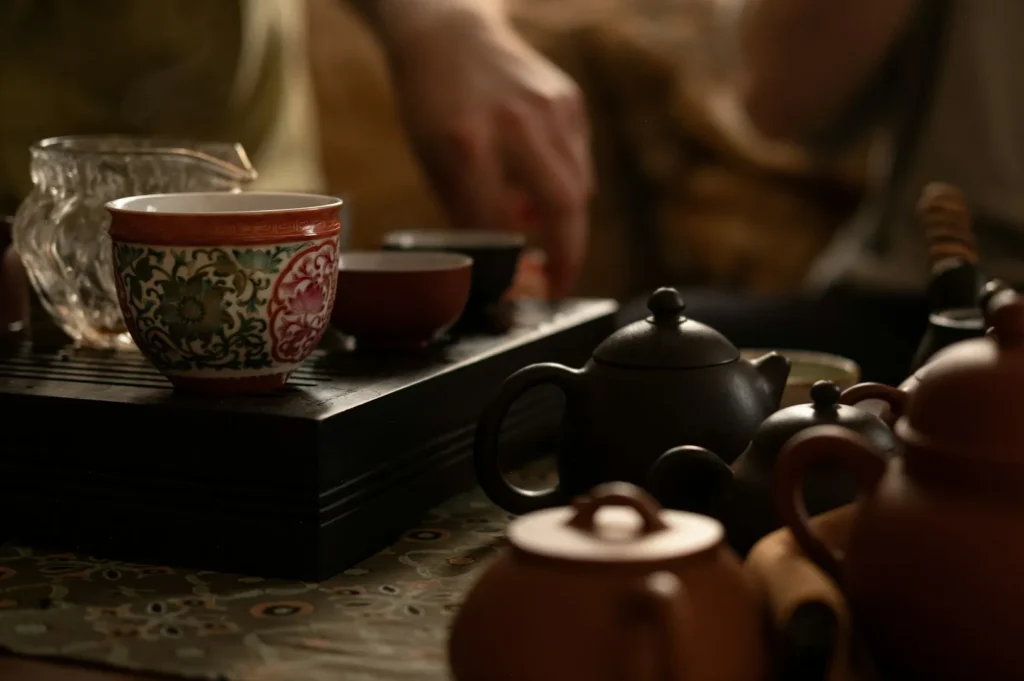
Do
Navigating a tea session becomes wonderfully effortless when you focus on presence and consideration. The best guests are simply those who are genuinely engaged in the moment.
- Do accept the tea with a gentle nod or a soft “thank you” when the host pours your cup.
- Do ask questions about the leaves, the origin, or the teaware if you are feeling genuinely curious.
- Do take your time drinking. There is never a rush to empty your cup quickly.
- Do notice the scent of the empty cup after you finish a sip, as sweet aromas often cling to the porcelain.
- Do sip quietly and mindfully, allowing the subtle warmth to help you relax.
Don’t
While modern tea spaces are forgiving, a few specific actions can unintentionally disrupt the careful harmony of the table. Avoiding these habits ensures the focus remains on the craft.
- Don’t touch or rearrange the teaware on the host’s tray. The arrangement is highly intentional.
- Don’t treat the session like a loud cocktail bar. Keep your conversation thoughtful and your volume modest.
- Don’t wear strong perfumes or scented hand creams, as they ruin the botanical experience.
- Don’t stress about strict chinese tea ceremony etiquette. You are there to enjoy, not to perform.
Don’t feel pressured to drink every single drop if you have had enough caffeine.
If You Make A Mistake, Here’s How To Recover Gracefully
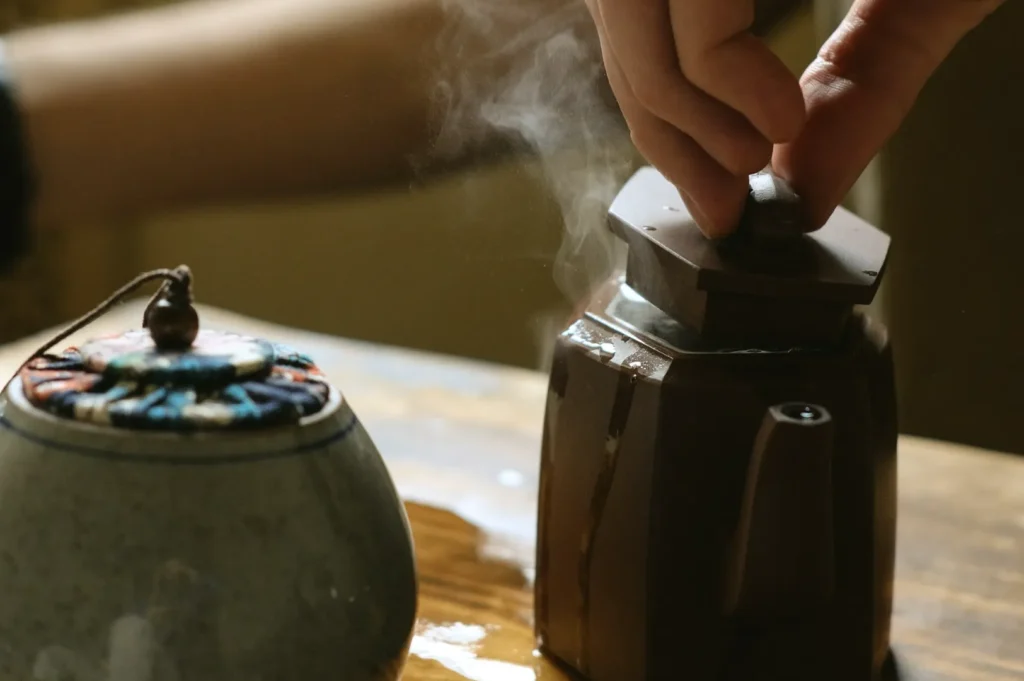
Even the most experienced tea drinkers occasionally drop a lid, spill a few drops of water, or speak a little too loudly during a quiet moment. If a minor accident happens, there is absolutely no need to panic or offer prolonged, dramatic apologies.
First, simply pause and acknowledge the moment calmly. Second, offer a brief, polite apology to your host. Finally, let the host handle the cleanup, as they are completely accustomed to managing the teaware. For instance, if you accidentally spill some tea on the table, just say, “I am so sorry, I spilled a little.” Your host will seamlessly wipe it away with a tea towel. If you realise you have been speaking too loudly, just take a slow breath, lower your volume, and let the quiet rhythm of the room return naturally.
The Point Of Etiquette Is Comfort, Not Performance
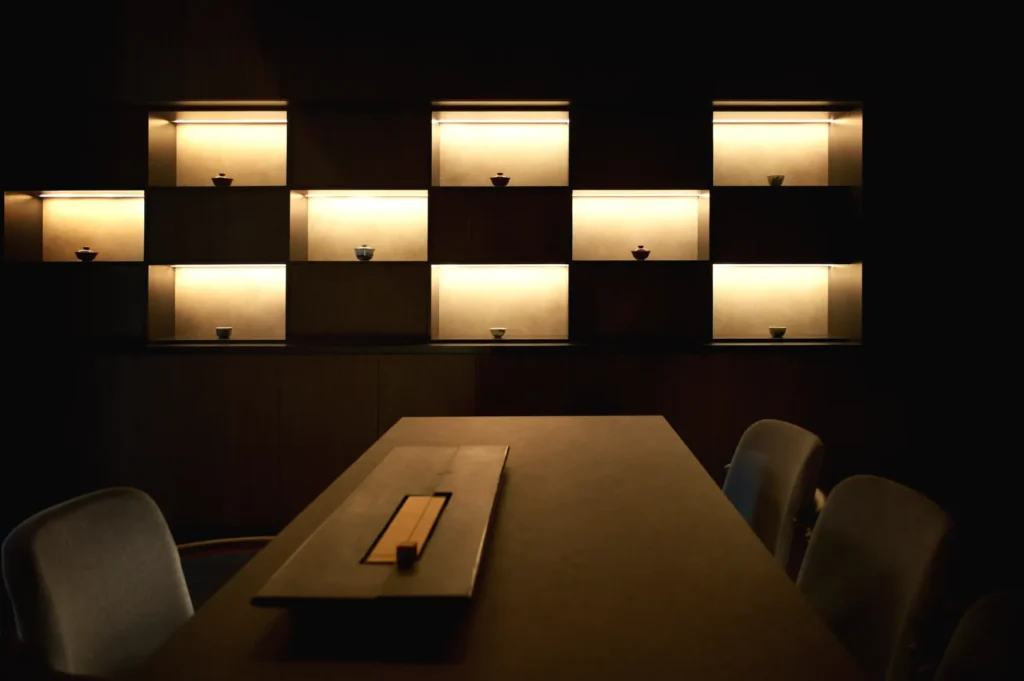
Ultimately, understanding tea room etiquette is about removing anxiety so that you can fully immerse yourself in the present moment. The soft lighting, the warmed cups, and the quiet pauses are all designed to offer you a profound sense of ease. When you let go of the pressure to perform and simply embrace consideration for the space, the entire experience transforms into a deeply restorative ritual. We warmly invite you to leave the noise of the city behind and experience this gracious hospitality for yourself at Tea Room by Ki-setsu, where every pour is an invitation to slow down.