Singapore knows how to fill an evening.
There are bars dressed in amber light, lounges built around movement, and tables set for nights that begin with brightness and rise into noise. Glass catches the light. Ice settles into crystal. Conversation spills outward. The city is skilled at offering spectacle. But there is another kind of evening, one that does not need to become louder in order to feel memorable. It simply asks to be felt more fully.
At Tea Room by Ki-setsu, we have always believed that luxury, in its older and quieter sense, is not built on excess. It is built on attention. It is found in pacing, in atmosphere, in the confidence to let a moment deepen without pushing it forward. This is why a private tea session can feel so compelling as an alternative to cocktails. Instead of alcohol’s quick brightness, you are offered aromatic steam, warmed porcelain, and leaves that reveal themselves slowly across the evening. Instead of a room driven by noise, you enter one shaped by stillness, fragrance, and the quiet theatre of the pour.
For those in Singapore seeking a more intimate, sensory, and composed way to gather than at casual tea shops in Singapore, a private tea session offers something increasingly rare: a room where conversation can breathe, where time is not fractured, and where elegance is carried by restraint rather than display.
Why Tea Changes the Shape of an Evening
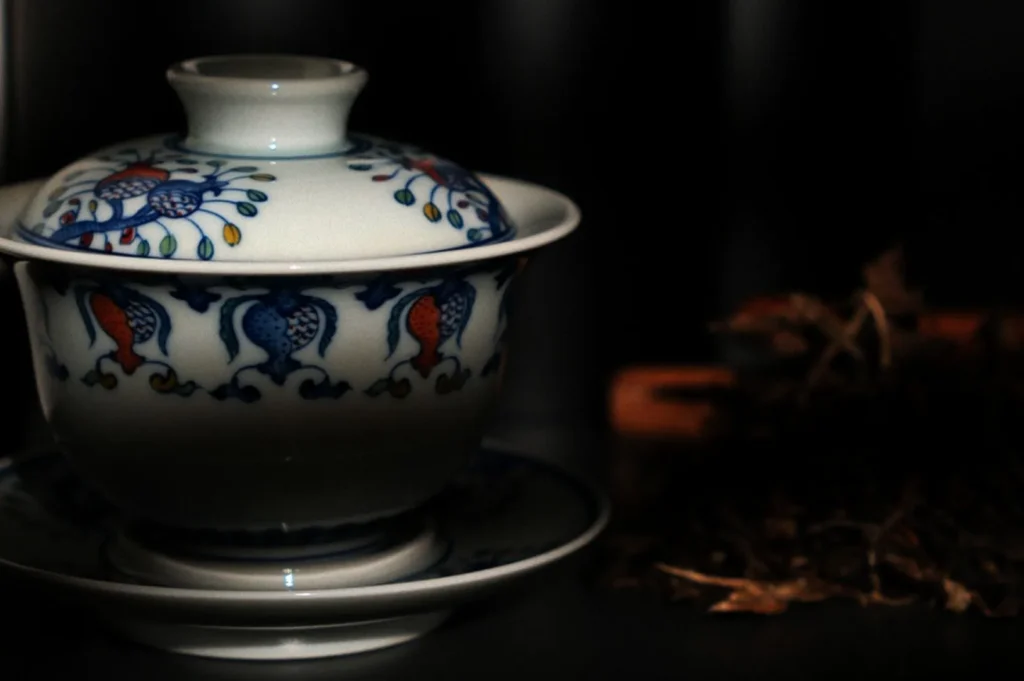
Tea has its own kind of theatre, but it never arrives all at once.
A cocktail is often experienced as a finished gesture. It is mixed, served, admired, and consumed in a single arc. Tea moves differently. It begins with heat. Water warms the vessel. Dry leaf begins to loosen its fragrance. The first pour is only an introduction. The second and third often tell a different story entirely.
This is part of what makes tea so well suited to an evening gathering. It creates movement without hurry. It gives the night a structure that feels natural rather than imposed. A private tea session does not flatten time. It gives it texture.
That texture changes the room. The first cups invite attention. The middle of the session often brings more depth and slower conversation. By the end, the atmosphere has softened. Guests are no longer merely seated together. They have entered the same rhythm.
Tea is also quietly inclusive. Everyone at the table is invited into the same sensory experience. There is no division between those who drink and those who abstain. There is only the shared act of noticing.
That shared noticing is one of tea’s quiet luxuries.
What We Create in a Private Tea Session
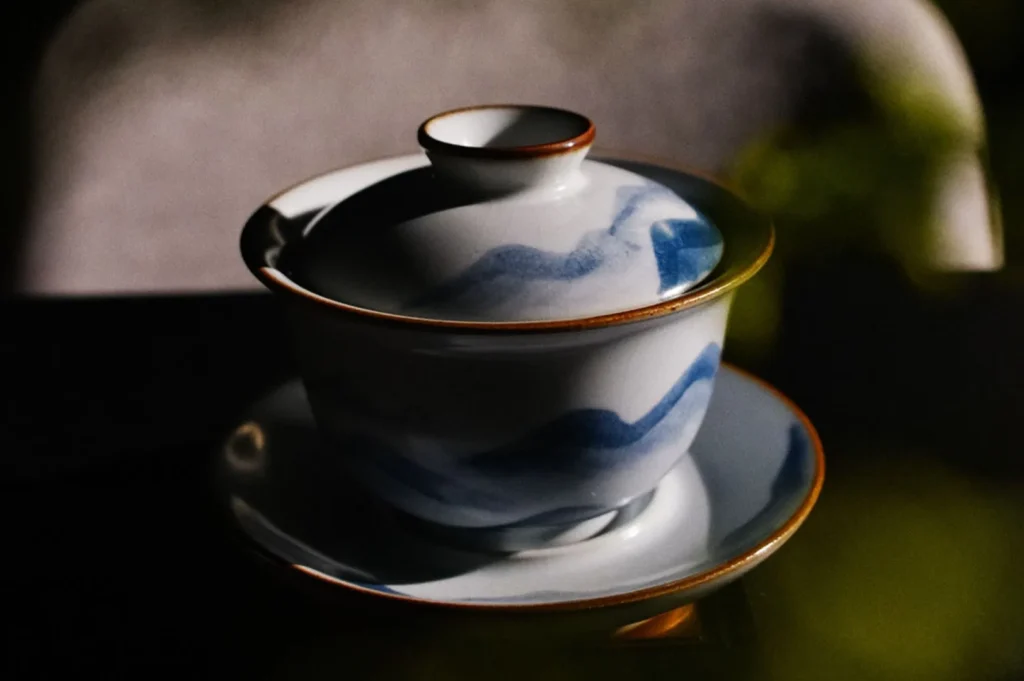
When guests join us at the Tea Room by Ki-setsu, we do not simply prepare tea. We prepare the conditions in which tea can be felt properly.
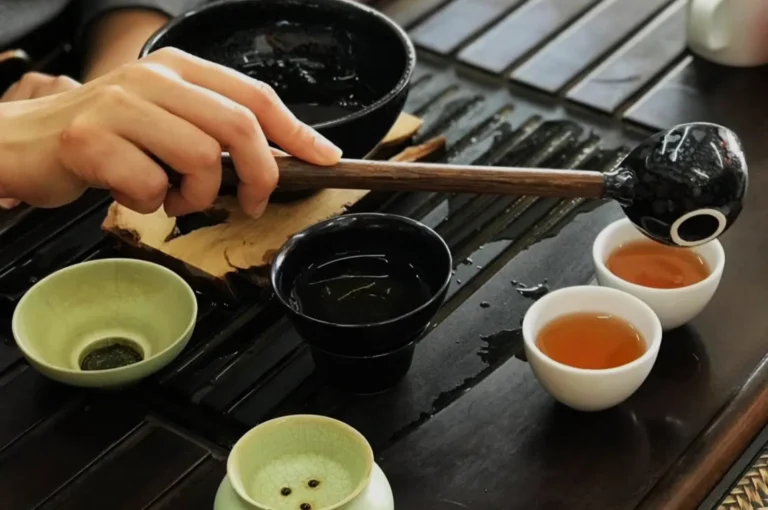
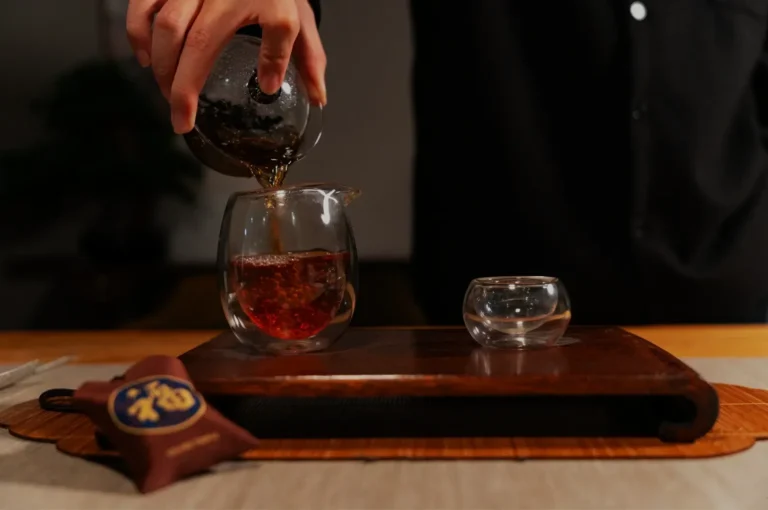
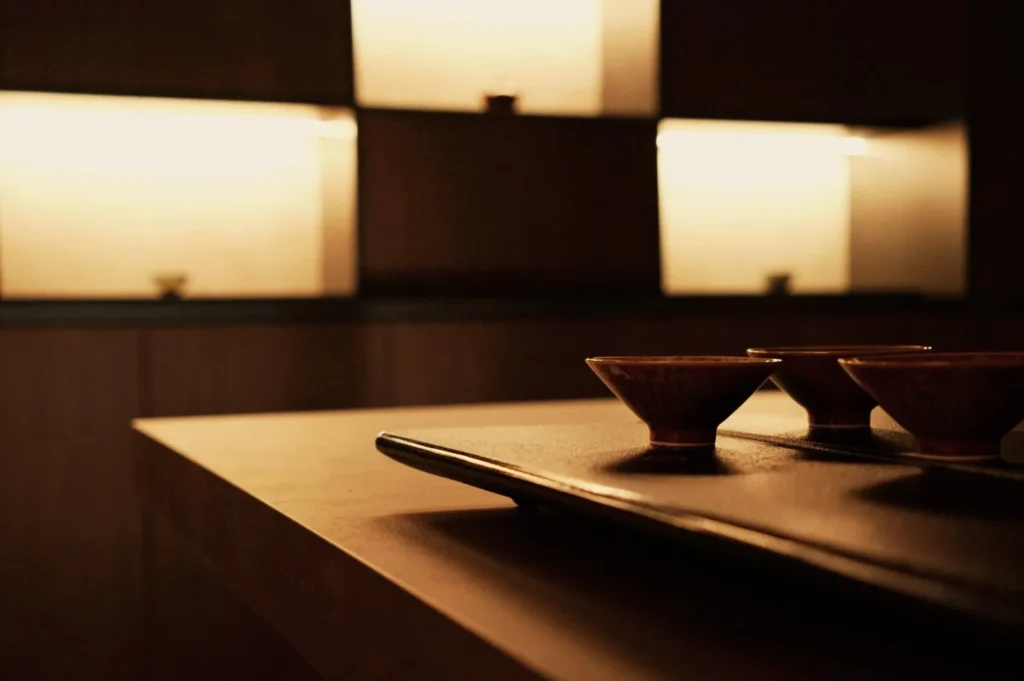
The light is softened because harshness narrows the senses. The room is quiet enough that small sounds matter: the lid settling against the gaiwan, the stream of tea moving into the fairness cup, the pause before the first sip. We host by reservation only, in intimate sessions, so the experience can remain attentive and unhurried.
Nothing is designed to overwhelm. The point is not performance. The point is presence.
We usually begin with a gentle orientation to the evening: which Yunnan teas will be tasted, how each one may open across the infusions, and how best to approach the cups in front of you without rushing to define them too quickly. Some guests arrive already familiar with Chinese tea. Others are completely new to it. Both are welcomed in the same way.
We do not ask guests to know the right words. We simply invite them to notice what is already there: fragrance, texture, warmth, finish. Often that is enough.
A Guided Tea Flight Through Yunnan
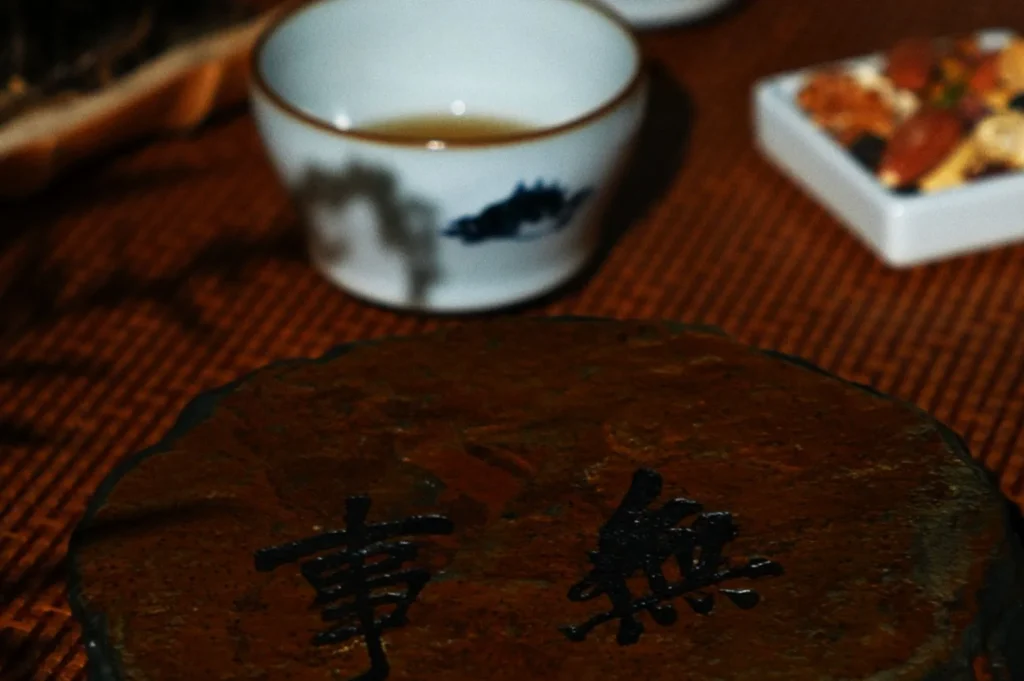
At Tea Room by Ki-setsu, the evening is not built around variety for its own sake. We do not move from green tea to oolong to white tea simply to create contrast. Instead, we stay within a more focused landscape and allow the differences to emerge from origin, age, structure, and the way each tea behaves in water.
This is part of what makes the experience feel so absorbing. The contrast is subtler, but often more rewarding.
A private tea session may move through three teas, or through a carefully chosen progression of infusions from one or two exceptional leaves, depending on the shape of the evening. What matters is not quantity, but movement. A tea with lifted clarity may open the session. A more structured and commanding tea may anchor the centre. A softer, more settling liquor may close the evening with warmth that lingers.
Opening Tea: Clarity and First Attention
We often begin with a tea that opens the senses cleanly and brings the table into focus. Depending on the session, this may be something like Bing Dao or Yi Bang, where the first infusions can feel refined, articulate, and quietly luminous.
The opening tea matters because it teaches the room how to listen. Guests begin to notice the difference between flavour and aftertaste, between aroma in the cup and texture across the palate. This is often the moment when the outside world begins to recede.
Middle Tea: Structure and Presence
The centre of the session usually carries more force. This is where teas such as Lao Ban Zhang, Huazhu Liang Zhi, or Wan Gong can become especially compelling, depending on what we wish to show that evening.
These teas do not simply feel stronger. They create a different kind of attention. The body of the liquor becomes more present. The finish lengthens. The energy at the table changes. Conversation often grows quieter, not out of formality, but because the tea naturally asks for more concentration.
This is where many guests begin to understand that tea can hold a room in the way a serious wine or spirit might, yet with a very different effect. It sharpens perception rather than blurring it.
Closing Tea: Warmth That Settles
A good closing tea does not end the evening abruptly. It lets it settle.
Sometimes this means a deeper, more grounding tea that softens the edges of the session. At other times, it may mean concluding with Gu Shu Hong Cha, whose warmth can feel especially comforting at the close of the night.
What matters most is the impression it leaves behind. Not loud. Not theatrical. Just lasting enough to change the texture of the silence that follows.
The Role of Food
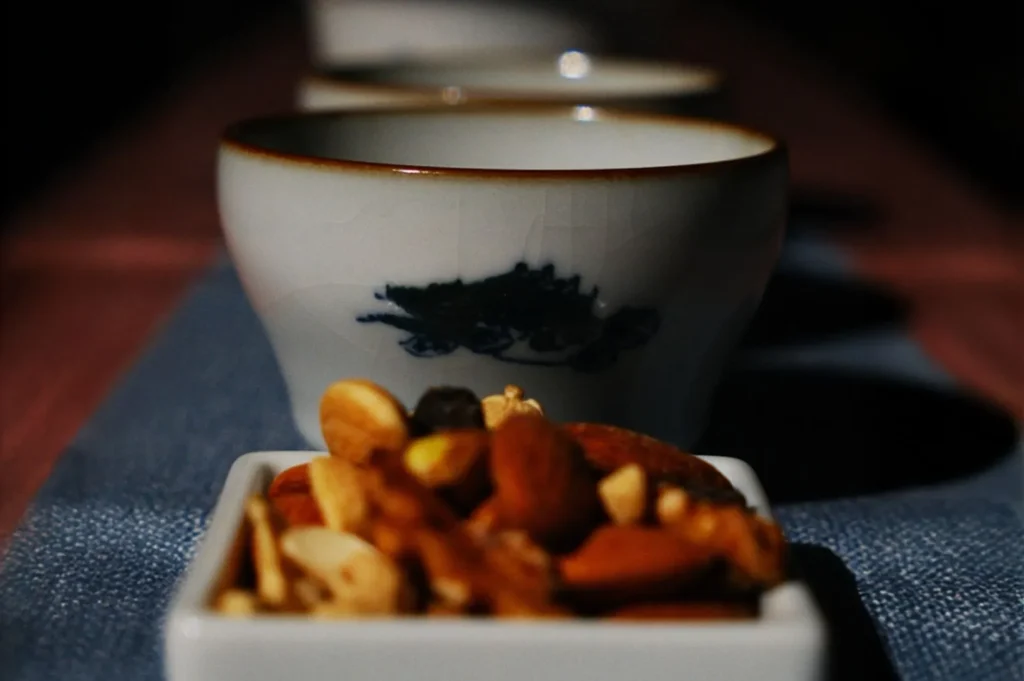
In a private tea session, food should support rather than compete. We do not think of tea the way a cocktail bar might think of pairing, where contrast and intensity are often the point. Tea asks for more restraint. When small accompaniments are offered, they are chosen for balance: a light sweetness, a clean texture, something that steadies the palate without interfering with the leaf.
The point is not to distract from the tea. It is to leave room for it.
This is one of the reasons a tea session feels so different from a conventional night out. The senses are not pushed in every direction. They are arranged.
Guided, Not Performed
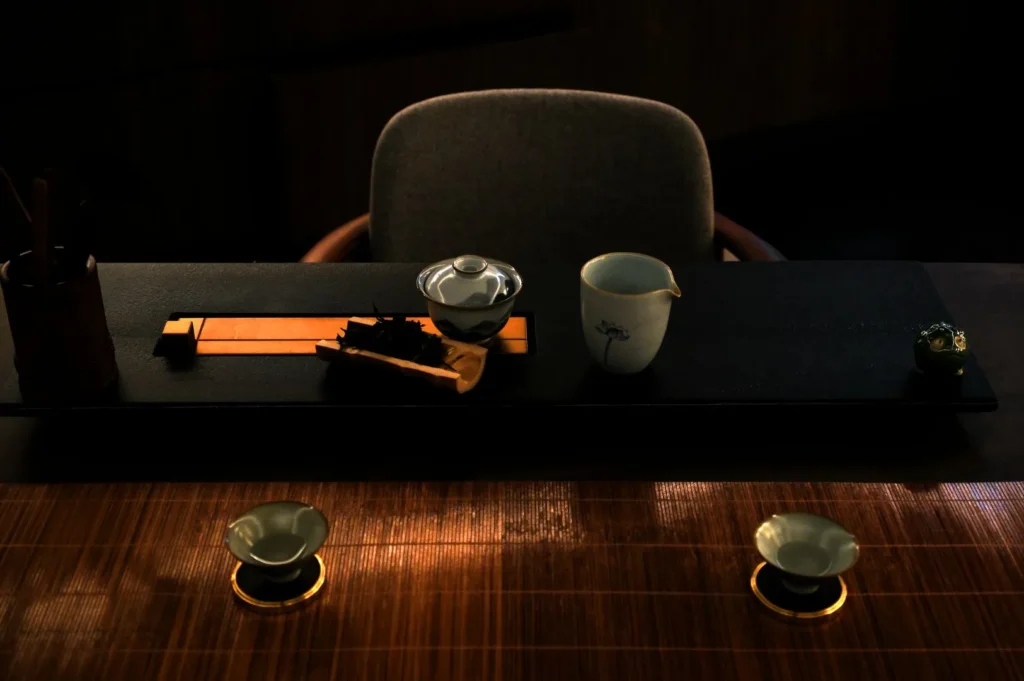
Many guests arrive with the same quiet concern: that they will need to know something in advance, or recognise something precise in order to participate properly. They do not.
At Tea Room by Ki-setsu, we guide rather than instruct. We may ask what a guest notices in the aroma, or whether the second infusion feels broader than the first. We may speak about texture, warmth, or the way a tea returns at the back of the throat. But there is no expectation that anyone must describe the tea in a particular way.
Tea is sensory before it is technical.
When guests are given permission to trust their own response, the session becomes more personal, more memorable, and far more natural.
Why This Feels Like Luxury
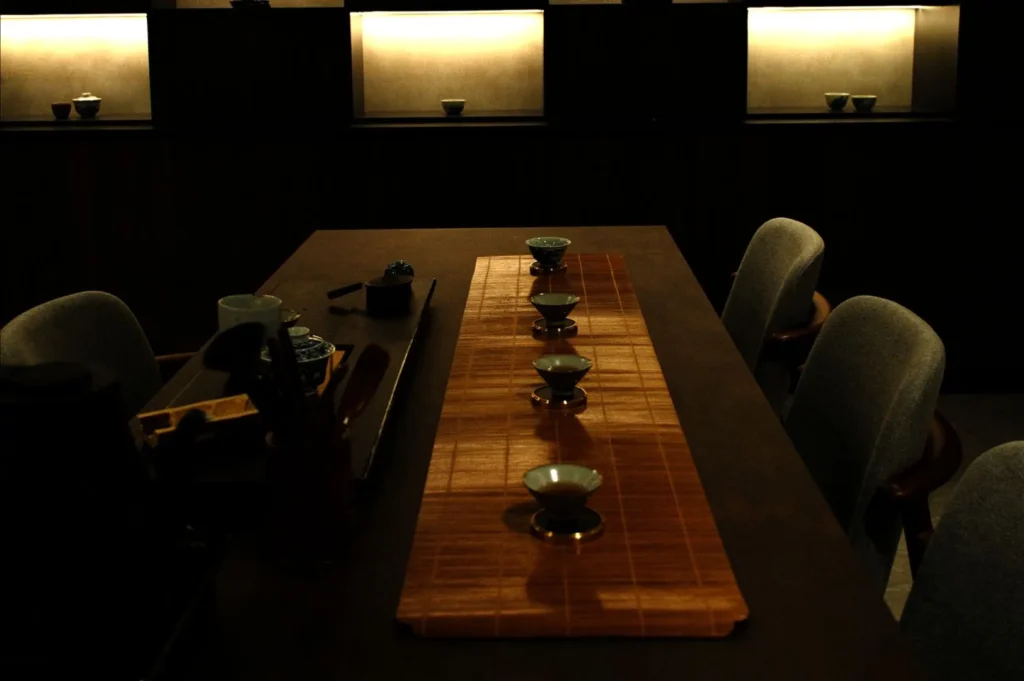
Luxury is often mistaken for abundance, but abundance is easy. Attention is rarer.
A private tea session feels luxurious because it protects what is increasingly difficult to find: uninterrupted time, sensory clarity, and the freedom to experience something subtle without apology. The cups are small, the pours are brief, the gestures are measured, and yet the evening feels full. Perhaps fuller because of that restraint.
Tea does not ask to dominate the evening. It asks to shape it with care.
In a city as fast and layered as Singapore, that kind of experience can feel quietly radical.
A Different Kind of Night in Singapore
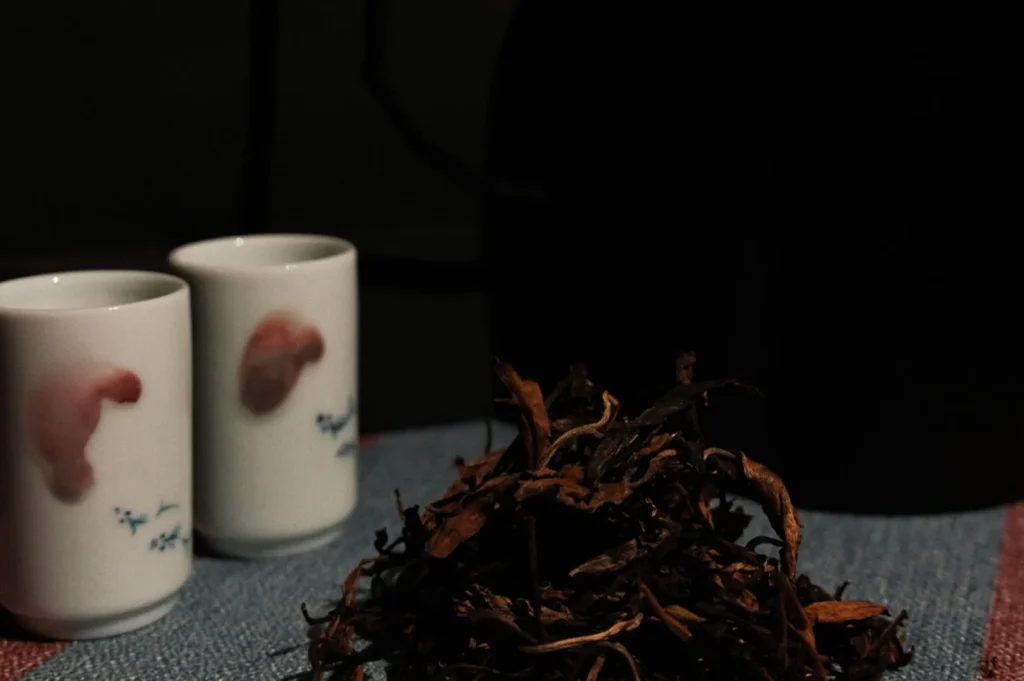
For those drawn to elegance but not excess, and to atmosphere without spectacle, tea offers another way to gather. It creates a room in which fragrance matters, pacing matters, and presence matters. It allows an evening to deepen instead of simply extending.
At Tea Room by Ki-setsu, our private tea sessions are designed for guests who want that kind of night: slower, more sensory, more intentional, and more restorative than what the city usually offers after dark.
A cocktail may begin an evening.
A tea session can change its entire character.