Longjing is one of those teas whose shape is also an argument.
The leaves lie flat, slim, and quietly composed, as though the tea has already been arranged into its own explanation. Yet that shape is not decorative. It is the visible result of labour: heat, timing, pressure, and hand memory repeated over and over until the leaf is transformed without losing itself.
This is why how longjing tea is made matters so much. Dragon Well is not only harvested. It is finished through craft. The difference between an ordinary green tea and a compelling Longjing often sits not in the bush but in what happens next: the wok, the pan-fire, the gradual flattening of the leaf and the precise stopping of oxidation at exactly the right moment.
At Tea Room by Ki-setsu, we think this is where much of Longjing’s dignity resides. Its chestnut warmth, smooth texture, and poised finish all depend on the intelligence of the hand behind it. Understanding that hand changes the way the tea is tasted.
For readers seeking the broader cultural picture, our Dragon Well guide for Singapore readers offers a fuller introduction. Here, we stay with the making.
Longjing Begins as Green Tea, But Not as Dragon Well
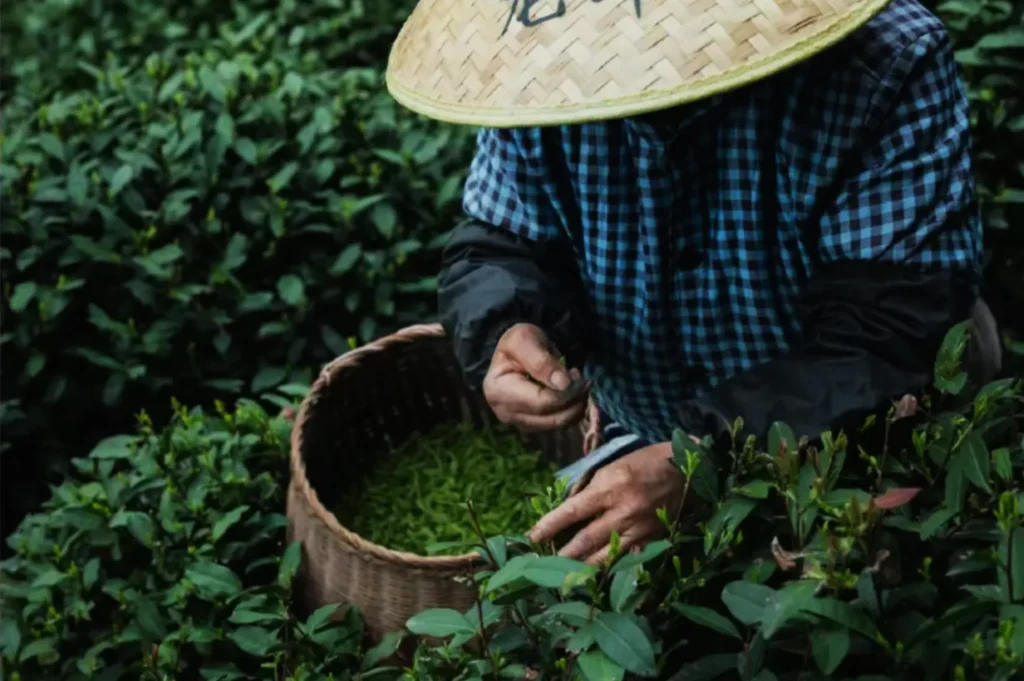
Before firing, the leaves are simply leaves.
Tender spring growth has potential, but not yet identity. What makes the leaf recognisably Longjing is not only when it was picked, but how it is handled in the hours that follow. This is the crucial thing about dragon well tea processing. The tea’s signature flavour is not waiting passively inside the leaf, fully formed. It has to be coaxed into being.
That coaxes requires speed, but not haste.
The leaves must be pan-fired soon enough to prevent oxidation from shifting them away from green tea freshness. Yet they must be handled gently enough that the resulting cup does not become merely “green” in a generic sense. The tea maker is preserving freshness while also building warmth, sweetness, and shape. Those goals can pull against one another. Craft is what keeps them aligned.
The Wok as an Instrument
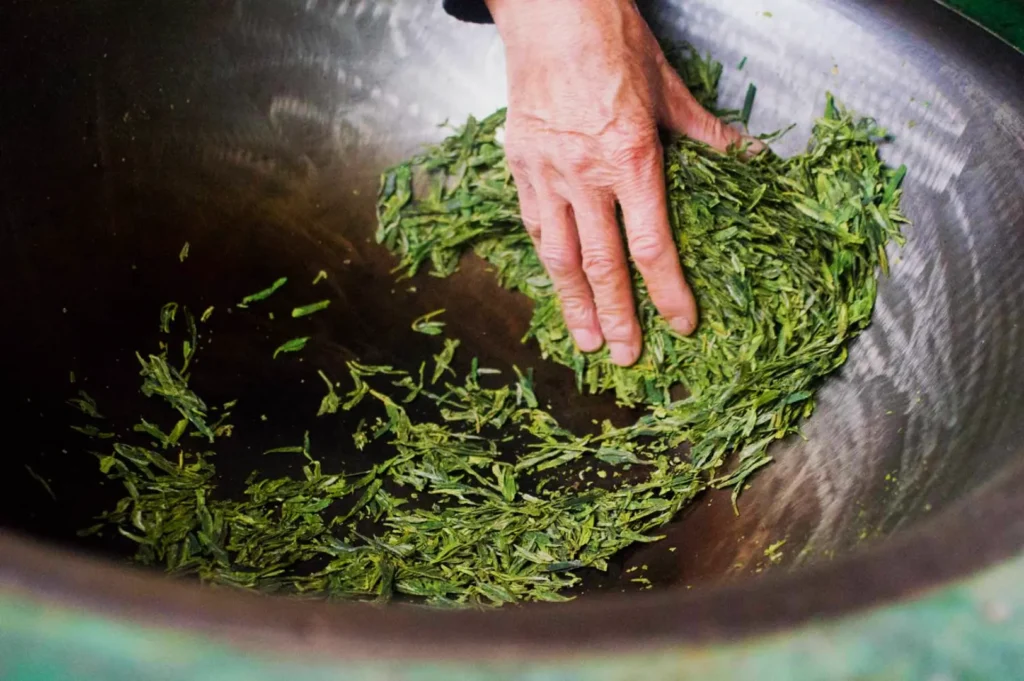
Longjing is a pan fired green tea and that phrase can sound simpler than it is.
A wok is not just a hot surface. In skilled hands, it becomes an instrument of precision. The temperature must be high enough to halt oxidation, but not so high that the leaf scorches. The movement must be steady but not so forceful that tenderness is lost. The tea maker uses fingers, palm, pressure and motion to guide the leaf through different stages, each one affecting the final flavour.
This is where hand fired longjing tea differs so clearly from mechanised approximations.
Machines can imitate shape. They are much less convincing at producing nuance. Good Longjing depends on a very fine balance between preserving the leaf’s spring freshness and introducing its characteristic chestnut warmth. That balance is made, not merely harvested.
A Dragon Well leaf is shaped by heat, but refined by judgment.
Why the Flat Shape Matters
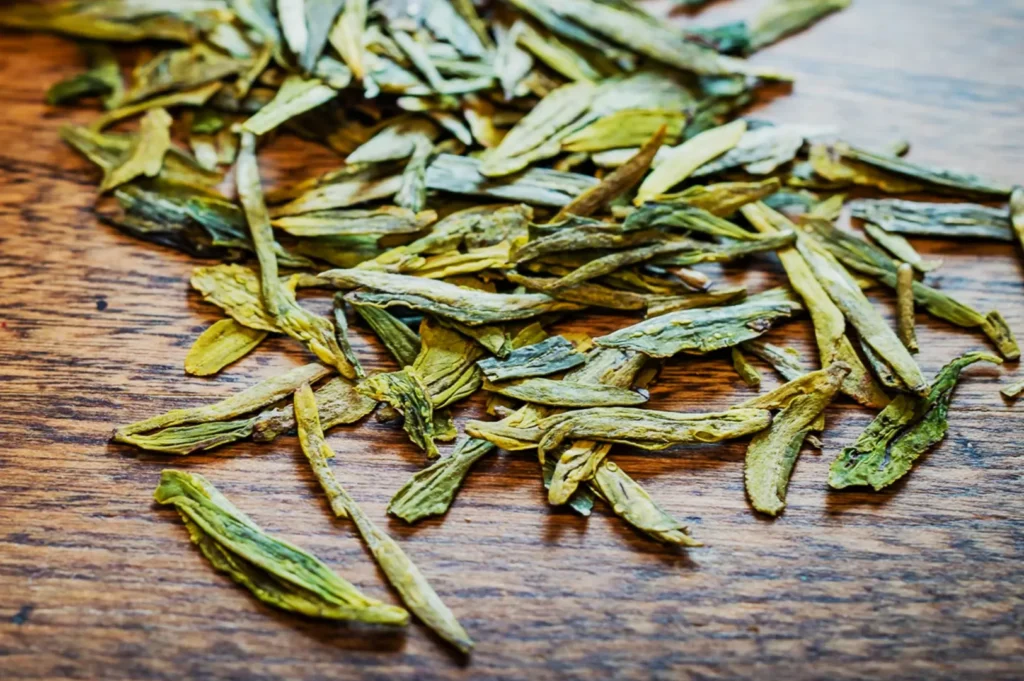
Longjing’s flat profile is one of its most recognisable features but it should not be mistaken for a visual flourish.
Flattening the leaf changes the way it dries, the way heat moves through it, and the way the final tea releases aroma in the cup. The pressing motion against the wok is part of what gives Dragon Well its distinctive tactile and aromatic personality. A leaf that is shaped too crudely may look flattened without carrying the same elegance in the cup. A leaf that is handled with too little confidence may remain uneven and less expressive.
This is one reason longjing tea craftsmanship cannot be reduced to aesthetics. The tea’s form and flavour are inseparable.
When the shaping is done well, the leaf looks composed and brews with unusual poise. The chestnut note emerges gently. The liquor feels cleaner. The finish carries more grace.
The Stages of Hand-Firing
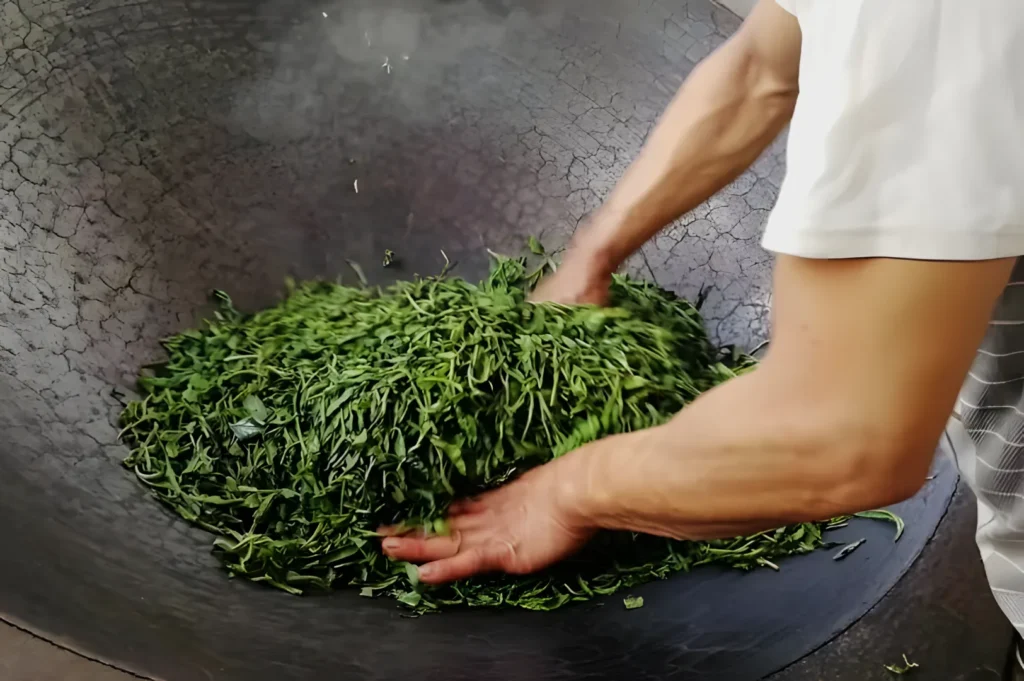
Although individual methods vary, Longjing hand-firing generally moves through several stages rather than one continuous gesture.
At first, the leaves are introduced to enough heat to begin fixing the green character. Later, the handling changes, pressing more, shaping more, reducing moisture while guiding the leaf into its flat, elegant form. As the firing continues, the tea maker has to read the leaf by touch, sound, and smell. This is not a process that can be managed by timer alone.
What they are reading includes:
- moisture level
- softness or resistance in the leaf
- the changing aroma as heat deepens
- how much pressure the leaf can still take
- when to stop before the tea loses life
This is why hand-firing remains so difficult to replace fully. The tea is changing in real time, and the maker is changing with it.
How Craft Changes the Taste
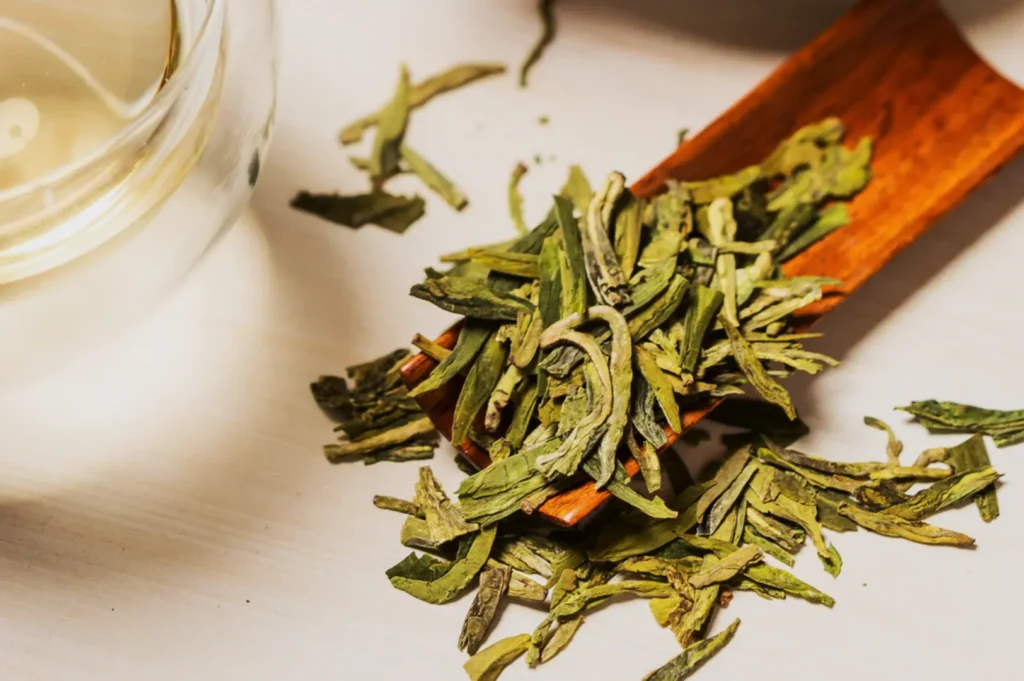
The most obvious gift of hand-firing is Longjing’s chestnut warmth.
But the influence runs deeper than one flavour note. The process also shapes:
- how smooth the liquor feels
- how the vegetal freshness is moderated
- whether the tea tastes vivid or merely raw
- whether the finish feels polished or abrupt
- whether the tea remains sweet without becoming thin
A poorly handled Longjing may still look attractive enough, but the cup often tells the truth. The chestnut note may feel blunt, or the tea may taste greener than it should without the balancing warmth that firing is meant to create. Sometimes the tea will feel dull rather than lively. Sometimes it becomes rough in the finish.
Good firing leaves the tea with both freshness and composure. That is the true craft.
Why Hand Skill Still Matters
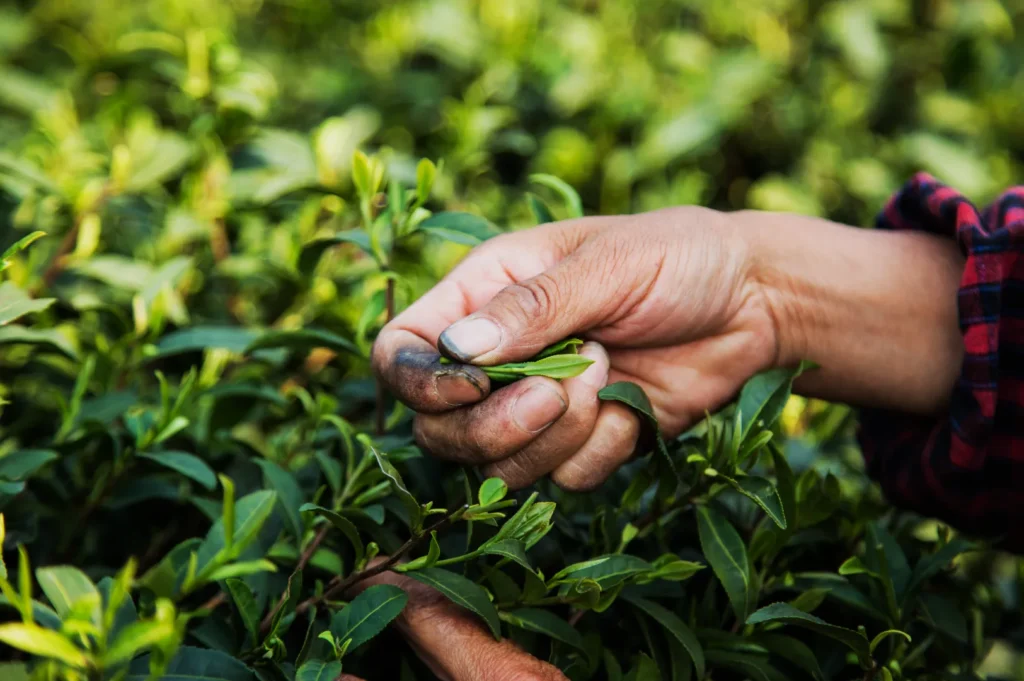
There are many products in the world that survive mechanisation without losing too much soul. Longjing is not one of the easiest examples.
This is not nostalgia speaking. It is simply that the tea’s identity depends so heavily on touch. Hand-firing allows for subtle adjustment from batch to batch, harvest to harvest, and even minute to minute in the wok. The leaf is never exactly the same twice. The weather is never exactly the same. The maker’s response must therefore remain living.
This is why craft still matters, even in a modern market where efficiency has become an argument in itself. Efficiency can preserve volume. It does not always preserve intimacy between leaf and process.
At Tea Room by Ki-setsu, we think this intimacy is one of the reasons Dragon Well continues to feel distinct even among famous green teas. The hand remains in the cup.
Reading Craft Through the Cup
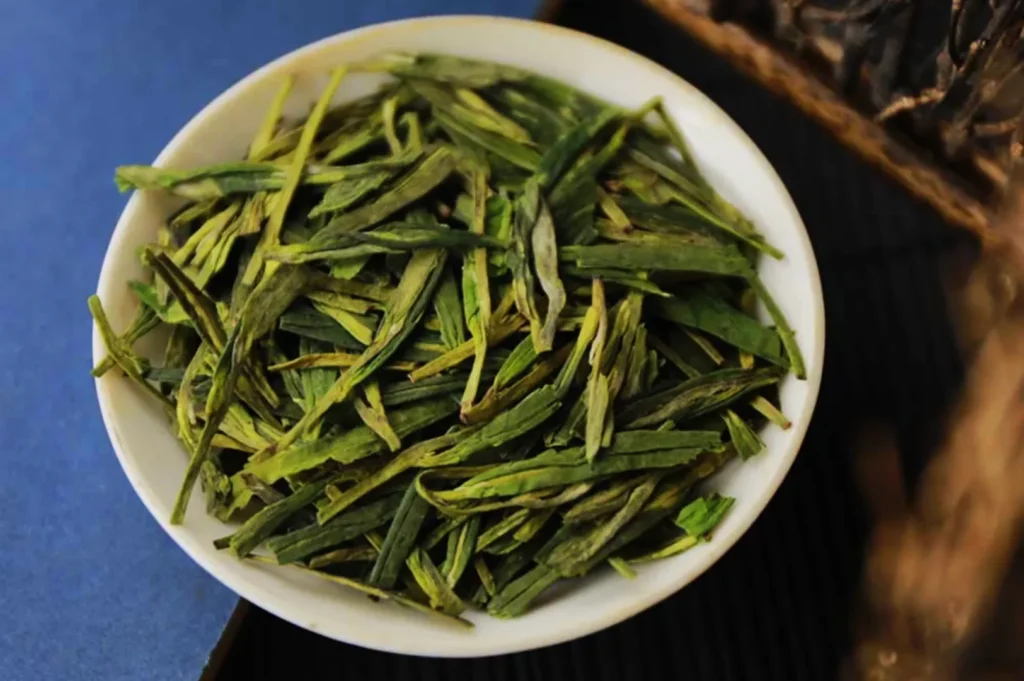
You do not need to see the wok in order to taste the work.
A well-made Longjing often shows its craft through:
- a balanced chestnut note rather than a burnt one
- a smooth, composed texture
- freshness held in proportion
- an aroma that feels warm and alive
- a finish that lingers without harshness
These qualities do not prove everything, but they reveal a great deal. The tea maker’s judgment becomes visible in what the tea avoids as much as in what it expresses. No rough edge. No pushed roast. No panic in the cup.
That quiet control is one of the most beautiful things about Dragon Well.
Why Craft Matters to the Drinker
It is possible to admire craftsmanship abstractly, but tea invites something more intimate.
When you understand how much of Longjing’s identity depends on firing, the cup becomes easier to read. You begin to notice not only chestnut warmth, but restraint. Not only shape, but intention. Not only freshness, but the precise way freshness was preserved without becoming crude.
This makes the tea more moving, not less.
At Tea Room by Ki-setsu, we think this is one of the deepest pleasures of Chinese tea. Craft is never merely technical. It is sensory. It travels all the way from the hand to the mouth, and the drinker receives it even before they fully understand how.
That is why hand-firing still matters. Because the tea still knows the difference.