Longjing tea is usually introduced warm.
That makes sense. Dragon Well tea has a quiet warmth in its character: a soft roasted fragrance, a pale green liquor, and a finish that often feels calm rather than sharp.
But in Singapore, where the air is warm almost all year, Longjing can also be understood another way. Cold brewed, it becomes softer, rounder, and more immediately refreshing. The cup loses some of the heat-led sharpness and reveals a gentler sweetness.
Cold brew Longjing tea is not a shortcut. It is a different way of listening to the leaf.
For readers who want the broader health and wellness context, we have written a health and wellness guide to Long Jing tea. This article stays with the cold cup: how cold brewing changes Dragon Well tea, why it suits Singapore, and how to approach it without turning the ritual into a trend.
What Is Cold Brew Longjing Tea?
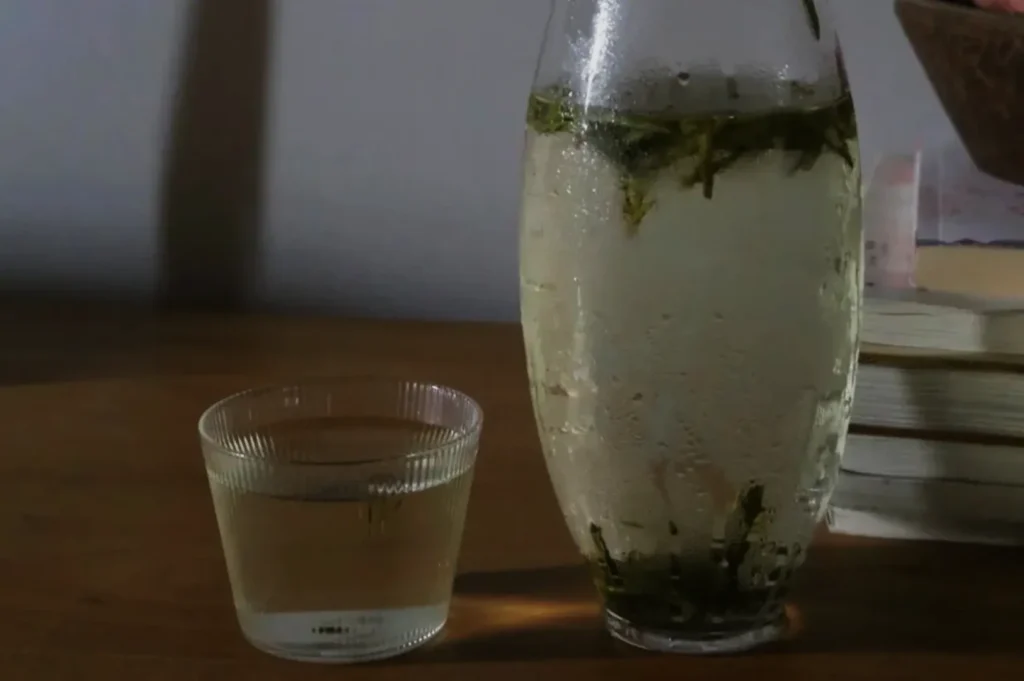
Cold brew Longjing tea is made by steeping Dragon Well tea leaves in cool or cold water for a longer period of time.
Instead of using hot water to open the leaf quickly, cold brewing allows the tea to release flavour slowly. The result is usually lighter in bitterness, softer in texture, and more refreshing in the mouth.
A recent Food Chemistry study on cold-brewed green tea found that cold-brewed green tea develops its aroma, taste, and colour gradually at low temperature. That gradual development is exactly what makes cold brew interesting. It is not only cold tea. It is tea shaped by patience.
Longjing responds well to this because it already carries restraint. Cold water does not force the leaf. It lets the quieter notes appear.
Why Cold Brew Suits Longjing
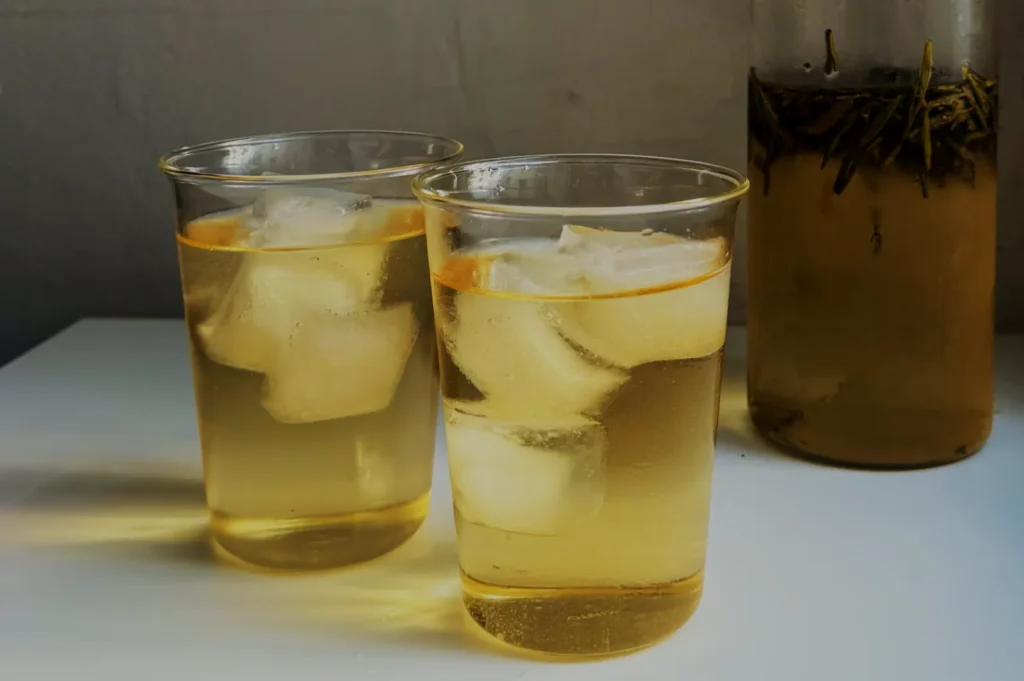
Some teas need heat to show their depth. Longjing can still benefit from warmth, especially when we want its roasted note, body, and layered infusions.
But cold brewing highlights another side of Dragon Well tea.
It softens the greener edge. It reduces harshness. It brings forward a clean sweetness and a smooth, almost glassy texture. The familiar chestnut-like note may become less pronounced, while the refreshing vegetal clarity becomes easier to notice.
Hot Longjing feels composed. Cold brew Longjing feels composed and cool.
In Singapore’s humidity, this matters. Many people want tea that refreshes without becoming sugary, heavy, or perfumed. Cold brew Longjing offers that middle path.
It is quiet, but not plain.
Cold Brewing and Bitterness
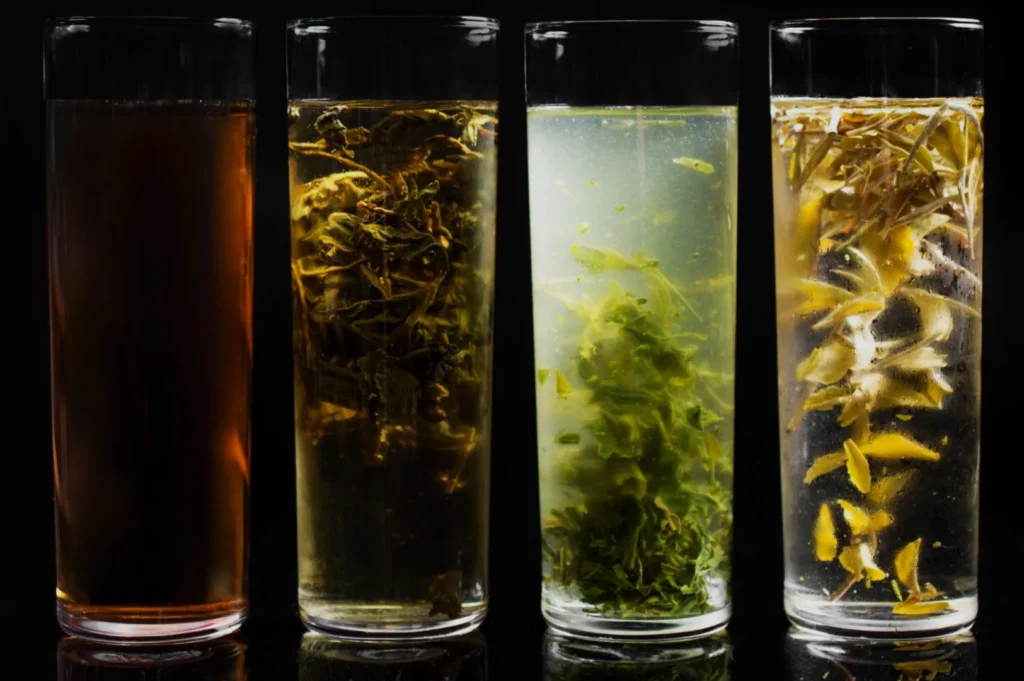
One reason people enjoy cold brew green tea is the lower bitterness.
Hot water extracts quickly. It draws out aroma and structure, but it can also pull bitterness and astringency forward if the tea is brewed too long or too hot.
Cold water is slower. The cup becomes more forgiving.
A JIRCAS paper on cold-water brewed green tea notes that cold-water brewed sencha has less bitterness and astringency than hot-water brewed sencha because some compounds, including EGCG and caffeine, are harder to extract in cold water. While Longjing is not sencha, the principle helps explain why cold-brewed green tea can feel softer.
This does not mean cold brew is always “better.” It means it has a different emphasis.
Hot brewing shows structure. Cold brewing shows ease.
Does Cold Brew Longjing Still Have Caffeine?
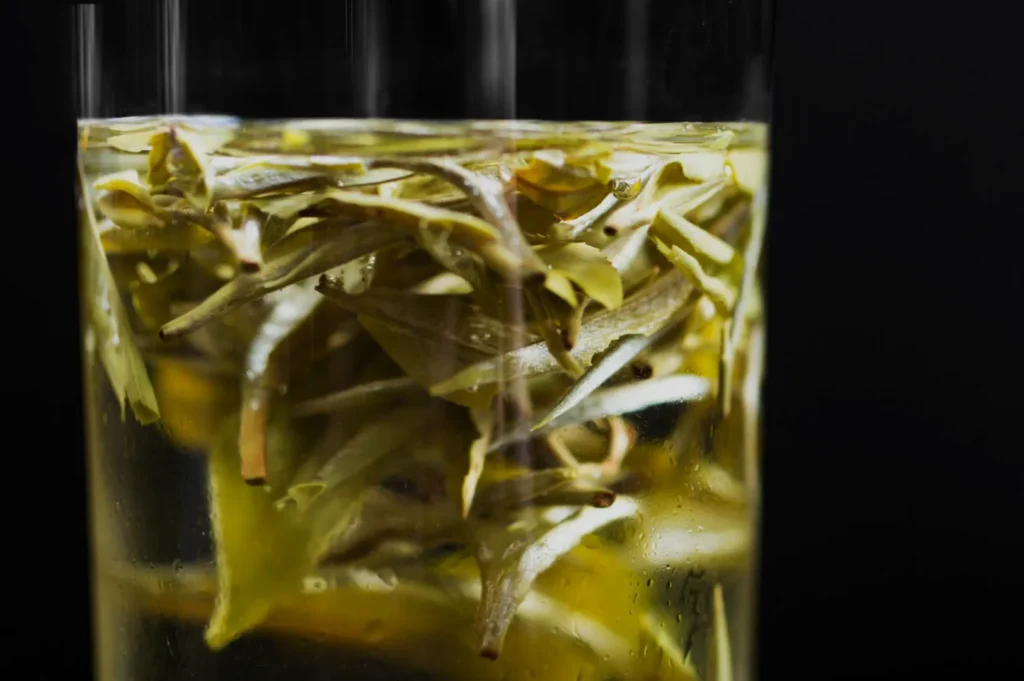
Yes. Cold brew Longjing tea still contains caffeine.
However, caffeine extraction changes with temperature and time. A PubMed-indexed study on cold-water tea steeping found that caffeine and catechins in cold-water tea increased with longer steeping, but their extraction rates were lower than with hot-water steeping.
In practical terms, this means cold brew Longjing may feel gentler, but it should not be treated as caffeine-free.
Those who are sensitive to caffeine should still drink it earlier in the day or in moderate amounts. A tea can feel soft and still affect sleep.
Cold does not cancel caffeine. It simply changes how the tea unfolds.
How to Make Cold Brew Longjing Tea
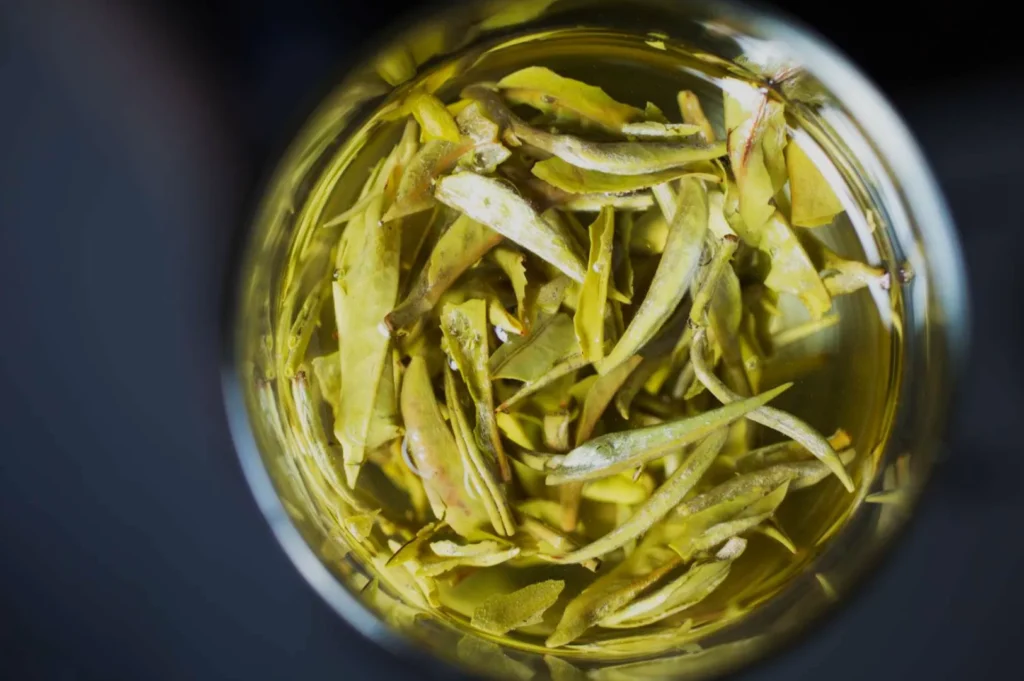
Cold brew Longjing should be simple.
Use clean, cool water and good-quality leaves. Place the tea in a glass bottle or covered vessel. Refrigerate it while it steeps. Taste it after a few hours, then adjust based on preference.
As a gentle starting point, use around 3 to 5 grams of Longjing tea for 500 ml of water. Steep in the fridge for 3 to 6 hours. If you prefer a fuller taste, use slightly more leaf or extend the steeping time.
Avoid overcomplicating the process. Cold brew should still respect the tea. It does not need fruit, syrup, or decoration to become interesting.
The first time, taste it plain.
What Should Cold Brew Longjing Taste Like?
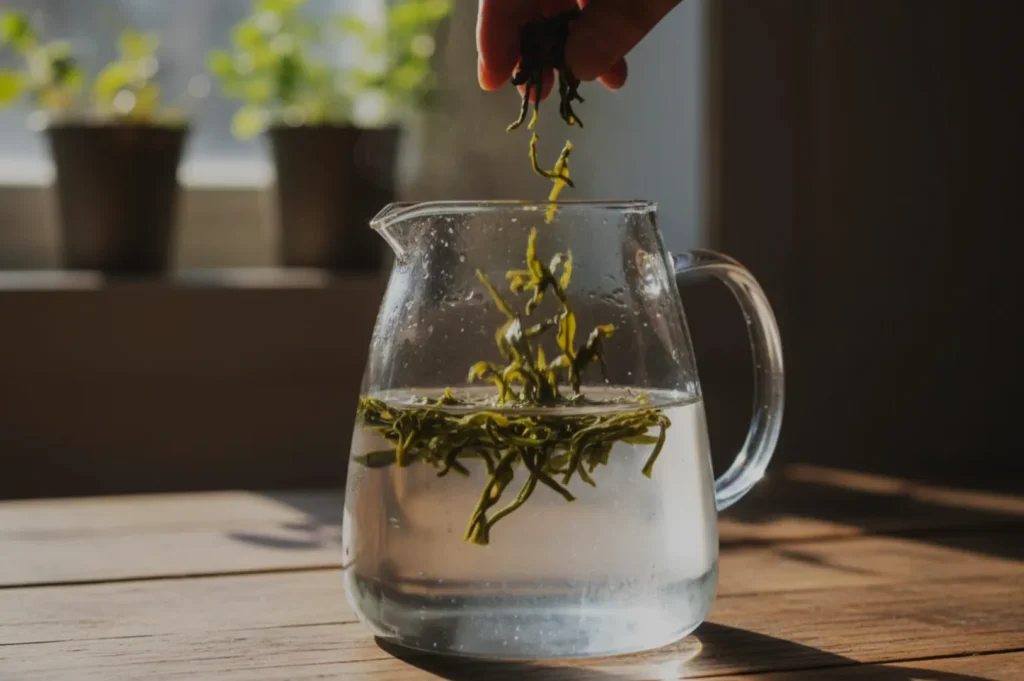
A good cold brew Longjing should feel clear.
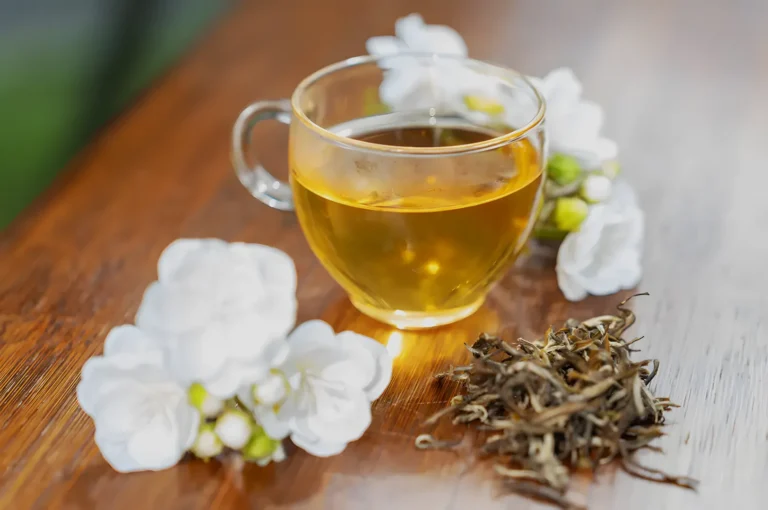
The liquor may be pale green to light yellow. The aroma is often quieter than hot-brewed Longjing, but it can still carry fresh vegetal notes, soft sweetness, and a clean finish.
The texture is important. Cold brew Longjing should feel smooth and cooling, without the rough dryness that sometimes appears in poorly brewed green tea.
If it tastes too thin, use more leaf next time. If it tastes too flat, steep longer. If it tastes stale, check the quality and freshness of the leaves.
Longjing is subtle. Cold brewing makes that subtlety even more apparent.
When to Drink Cold Brew Longjing in Singapore
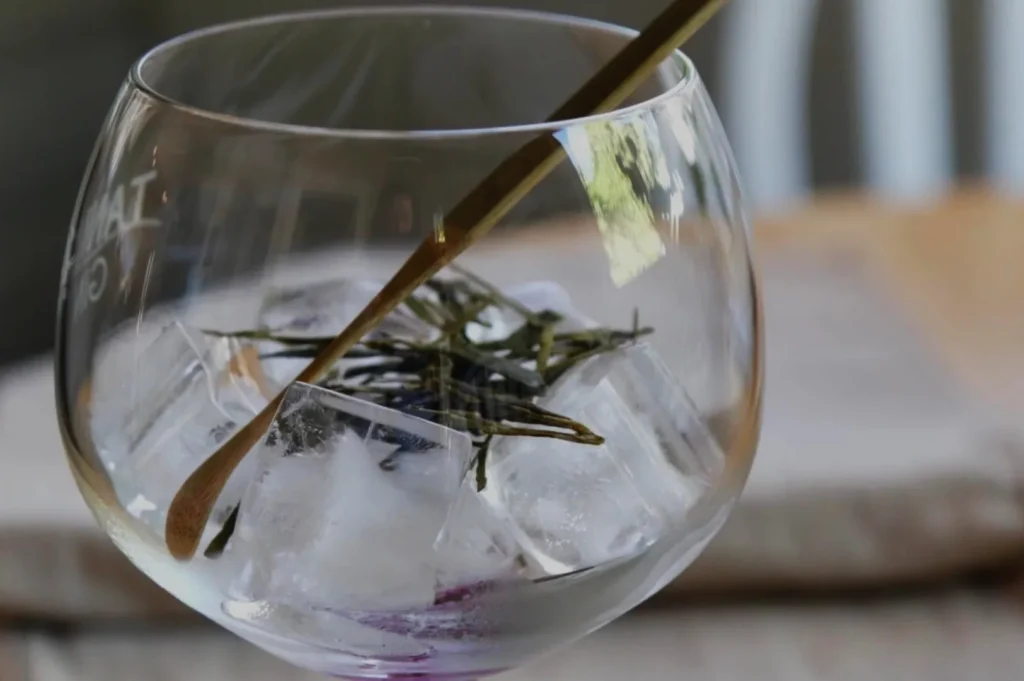
Cold brew Longjing suits the warmer hours of the day.
It works well in the late morning, after lunch, or during a slow afternoon when you want refreshment without sweetness. It can also be a thoughtful alternative to bottled drinks, especially for those who prefer a cleaner finish.
At Tea Room by Ki-setsu, we see cold brew not as a replacement for hot tea, but as another seasonal expression. Singapore may not have the same climate rhythm as Hangzhou, but our weather teaches its own kind of tea logic.
Some days ask for warmth. Some days ask for cool clarity.
What to Avoid
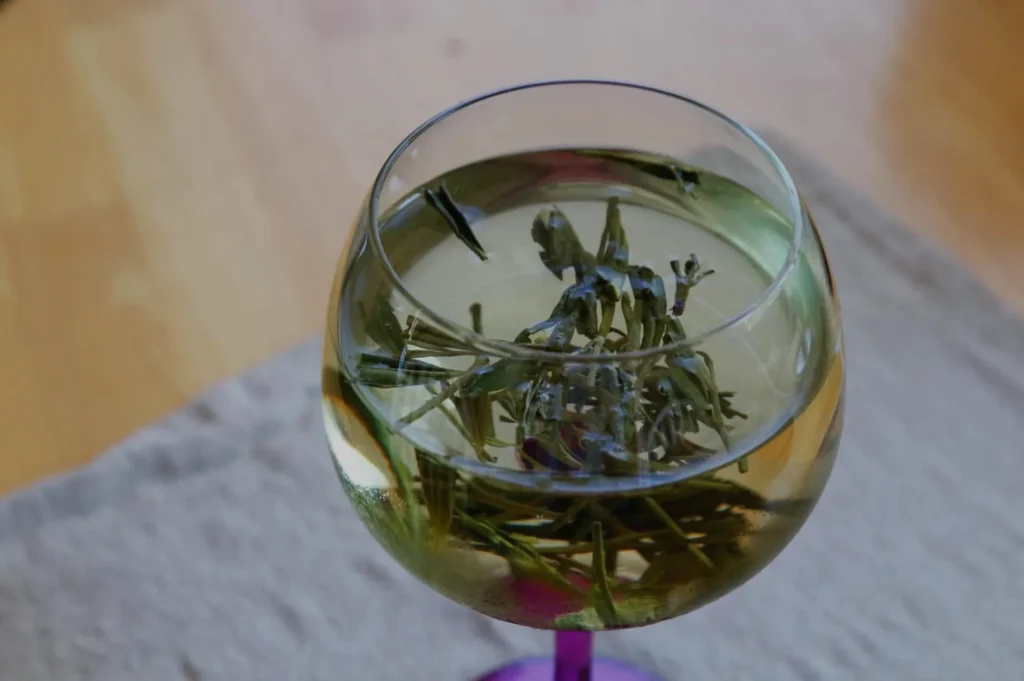
Do not treat cold brew Longjing as a dumping ground for leftover leaves.
Poor tea rarely becomes better just because it is cold. Cold brewing may soften bitterness, but it cannot create depth where there is none.
Avoid leaving the tea at room temperature for too long. Use a clean vessel, steep in the refrigerator, and drink it while it still tastes fresh.
Avoid adding too many extras before understanding the tea plain. Citrus, honey, mint, and fruit may be pleasant, but they can also hide the leaf.
Longjing does not need to be disguised to be refreshing.
Final Thought
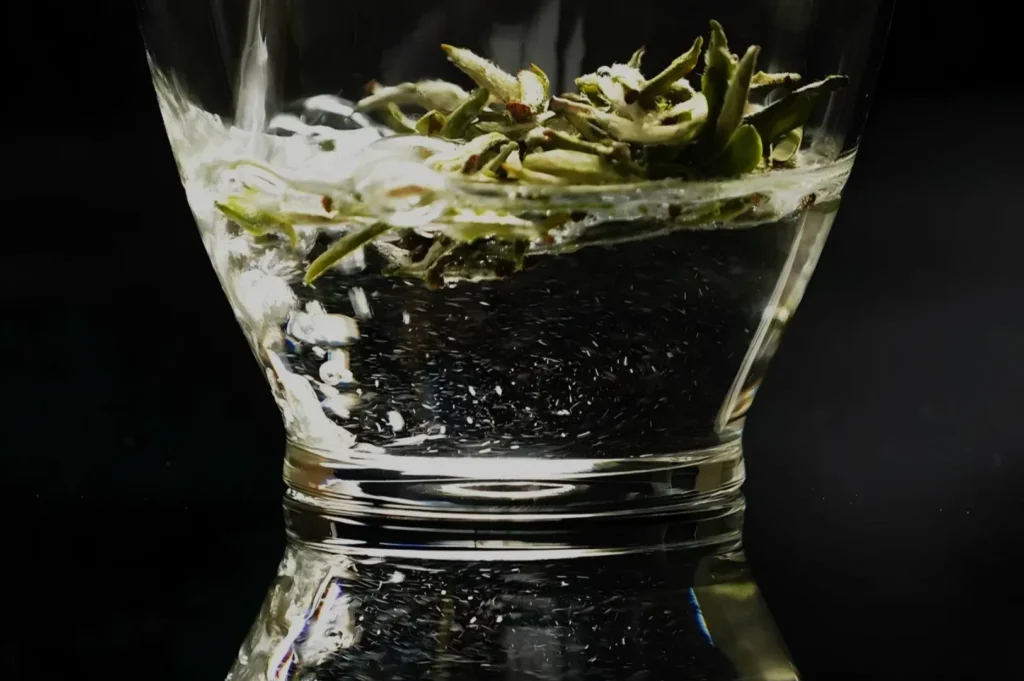
Cold brew Longjing tea offers a softer way to drink Dragon Well in Singapore.
It is refreshing without being loud, gentle without being empty, and practical without losing its sense of ritual. The cooler temperature changes the way the tea speaks, but it does not remove its character.
Hot Longjing asks us to slow down through warmth. Cold brew Longjing asks us to slow down through clarity.
Both have their place.
For those beginning with Chinese green tea, cold brew Longjing can be a graceful entry point: clean, quiet, and easy to return to on a warm Singapore afternoon.