Ask what jasmine tea is and the obvious answer seems to be tea with jasmine flowers.
That is correct, but incomplete.
The important part is what happens between the two.
Chinese jasmine tea is traditionally made by allowing finished tea leaves to absorb aroma released by fresh jasmine blossoms. The flowers create the fragrance, but the tea base still determines much of the body, bitterness, sweetness and caffeine.
Jasmine is the scent. Tea is the structure beneath it.
For the complete overview, our jasmine tea guide explores its taste, origin, brewing and quality in greater depth.
Jasmine Tea Is a Scented Tea
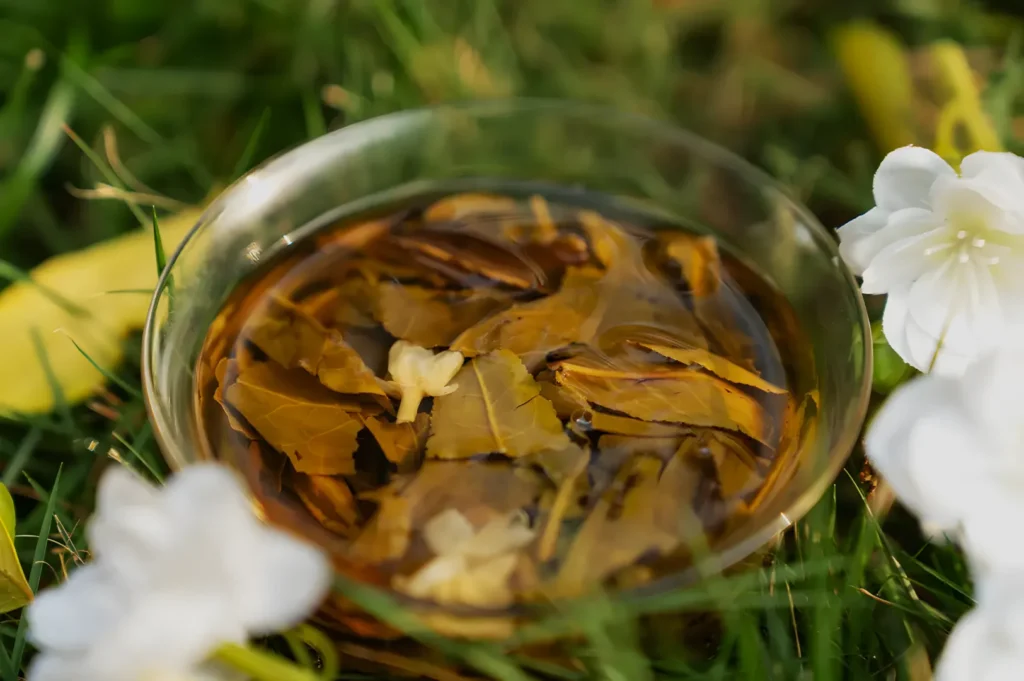
Jasmine tea is generally classed as a flower-scented or reprocessed tea rather than a seventh basic tea category.
China’s national jasmine tea standard identifies jasmine tea as tea produced through scenting, while UNESCO places flower-scented teas alongside products derived from China’s six main tea categories.
This is why the term tells us something about processing, but not necessarily the exact base leaf.
Green tea is most common. Jasmine-scented black, white and oolong teas also exist.
Where Do the Flowers Come In?
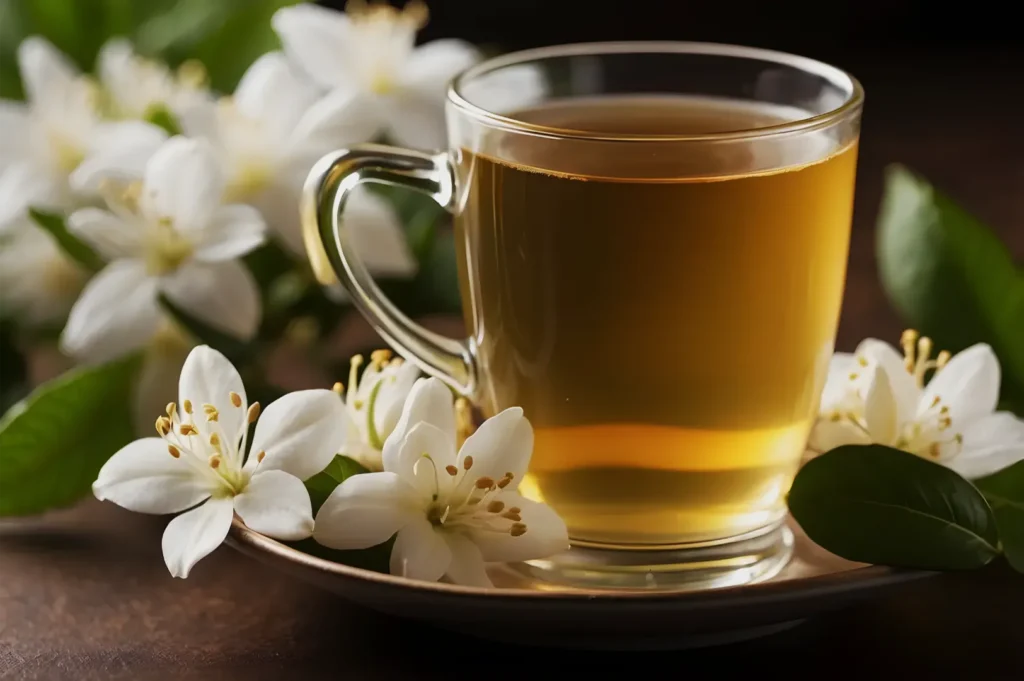
Fresh jasmine blossoms are introduced after the base tea has already been made.
The flowers release volatile aromatic compounds as they open. Tea leaves absorb part of that fragrance. Depending on the style and quality target, the tea may be scented several times.
A scientific review describes this as a combination of physical adsorption, chemical change and sensory interaction between jasmine and tea.
So the process is not simply scattering dried flowers into tea.
Are the Jasmine Flowers Still in the Finished Tea?
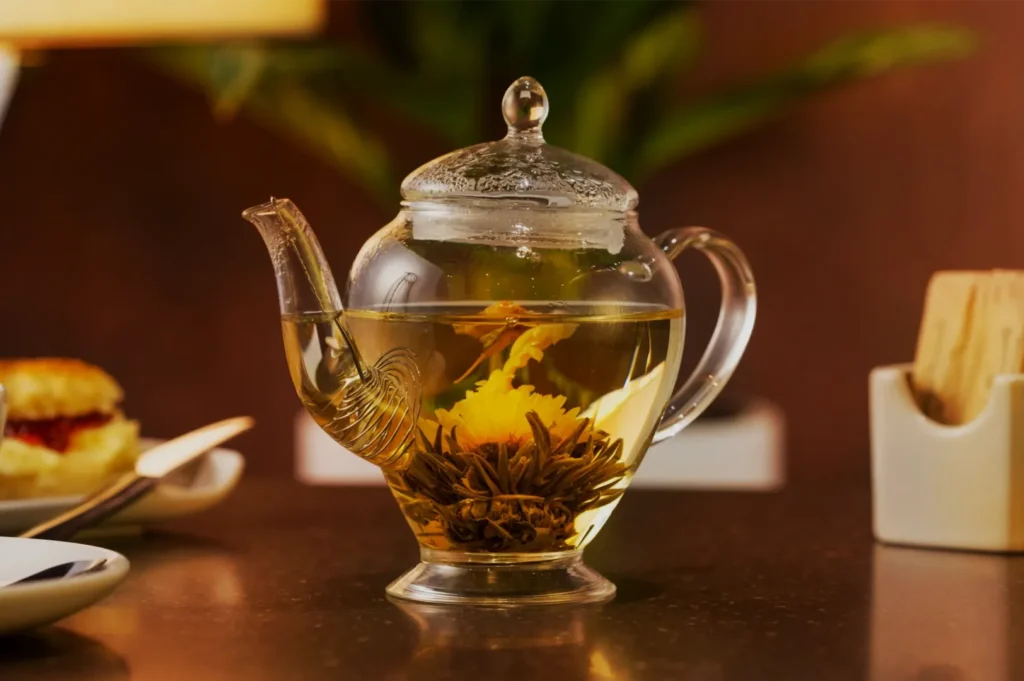
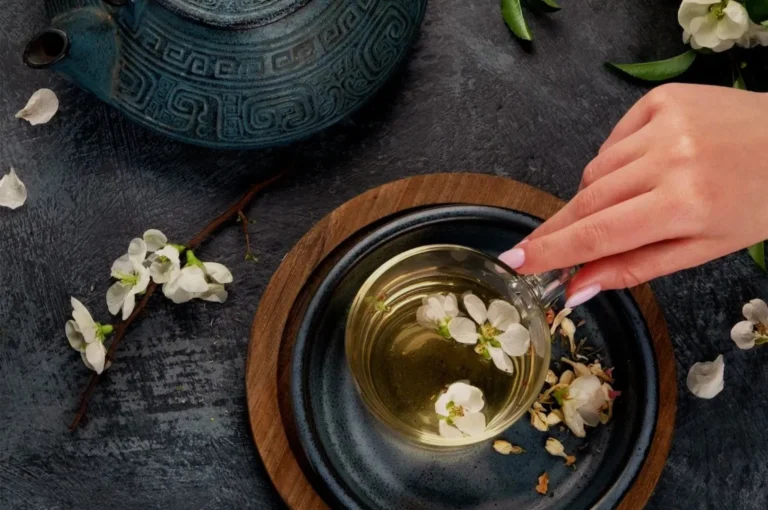
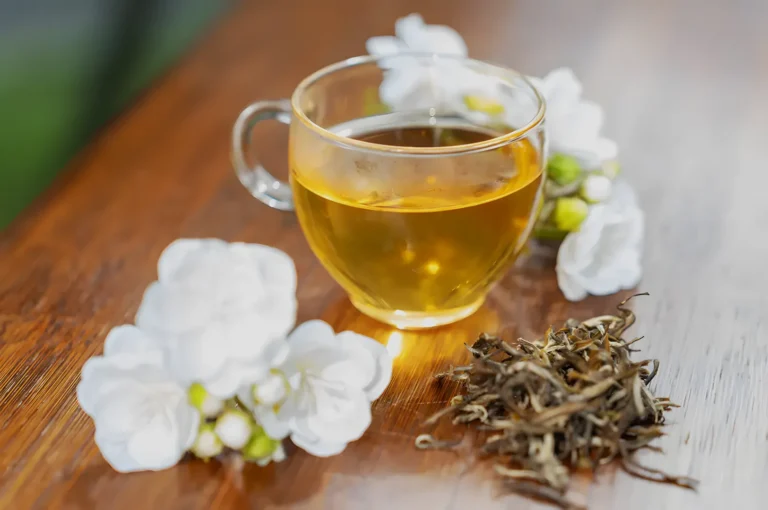
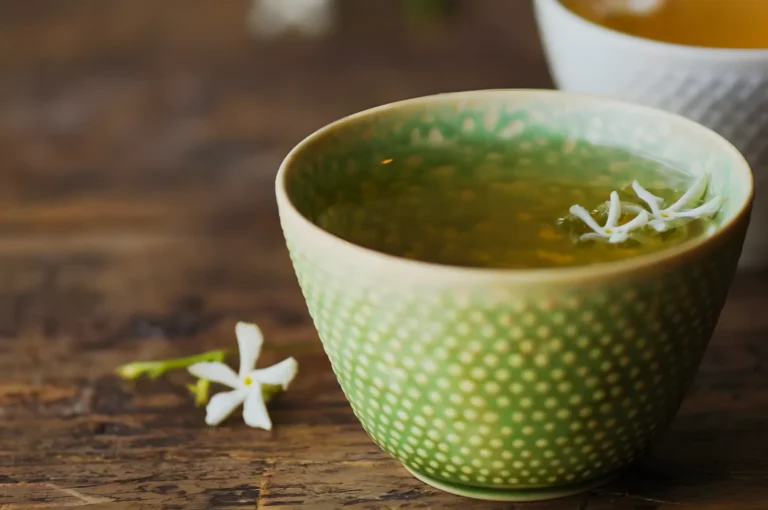
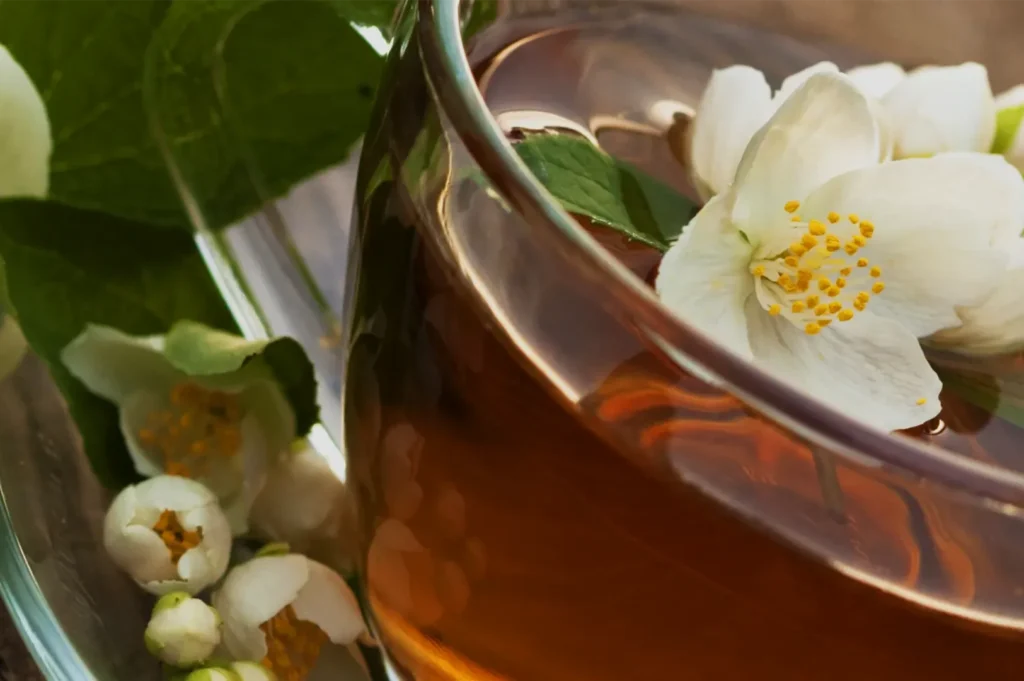
Sometimes you will see flowers or petals.
Their presence is not proof of superior scenting.
Traditional production can involve separating spent flowers from the tea after fragrance has transferred. Visible flowers may be included for appearance, but the real question is whether the tea itself has absorbed the aroma gracefully.
A beautiful jasmine tea does not need petals in the cup to prove that flowers were there.
Is Jasmine Tea Herbal Tea?
Usually, no.
Traditional Chinese jasmine tea contains Camellia sinensis leaves, which means it is true tea and generally contains caffeine.
An infusion made only from jasmine flowers is an herbal infusion.
The plant most closely associated with traditional jasmine scenting is Jasminum sambac, an accepted jasmine species documented by Kew Science.
These two drinks may share a flower, but they are not structurally the same.
Why This Distinction Matters
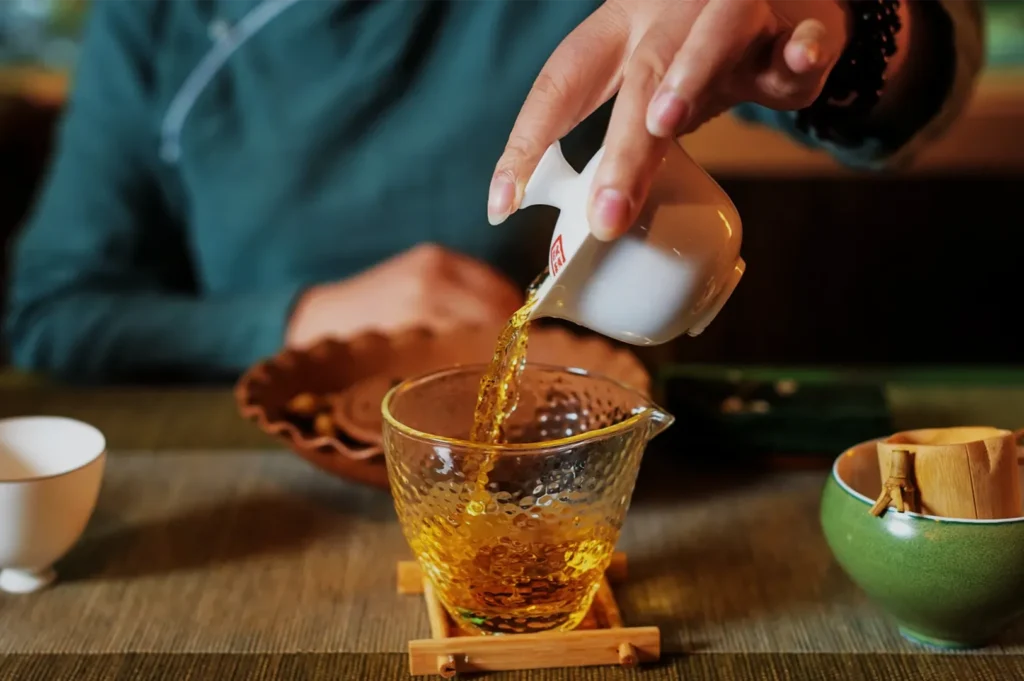
Understanding jasmine tea changes how you taste it.
Instead of asking only whether the flowers smell pleasant, notice what the base contributes.
Is there fresh green clarity underneath? Chestnut? Soft vegetal sweetness? Briskness? Does the floral fragrance integrate with the liquor, or does it dominate everything?
This is the kind of distinction we value at Chinese tea Singapore at Tea Room by Ki-setsu. Our current collection centres on rare premium teas rather than trying to represent every category, but the discipline of tea appreciation remains the same: begin with what the leaf actually is.
Final Thought
Jasmine tea is not simply flowers added to hot water.
It is tea that has been deliberately introduced to fragrance.
The flower creates the first impression. The quality of the tea decides whether that impression has depth.