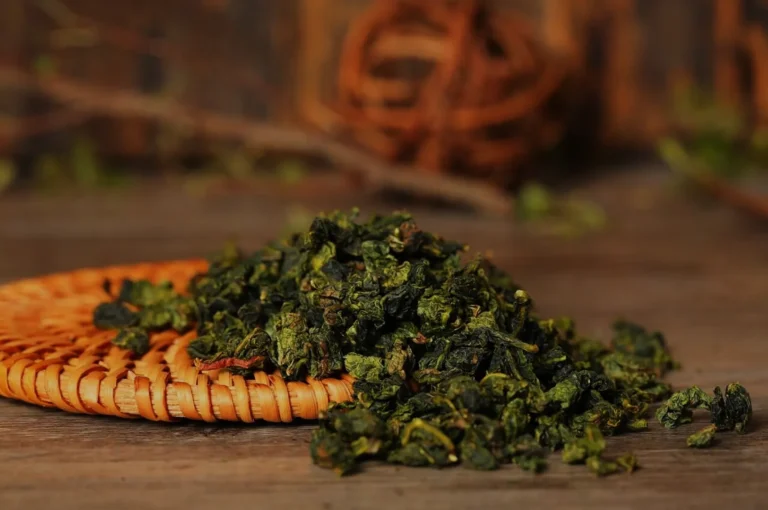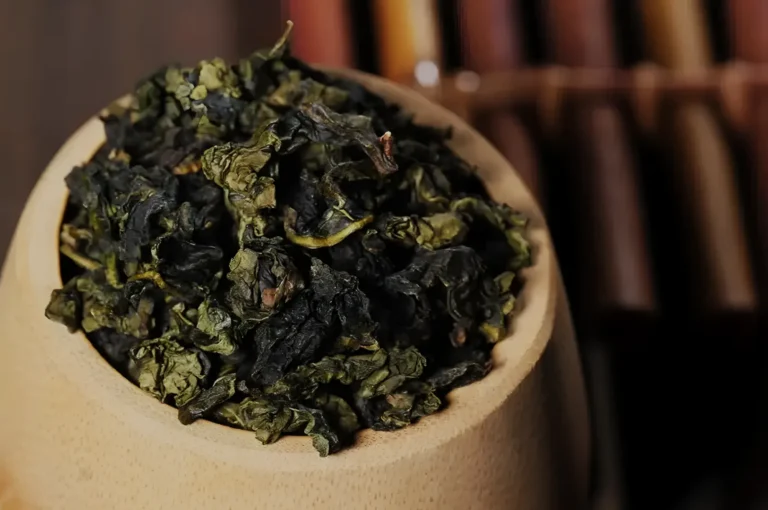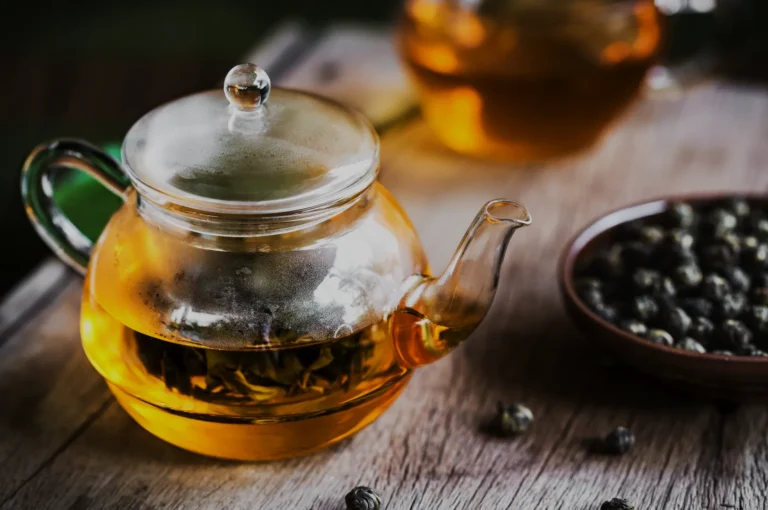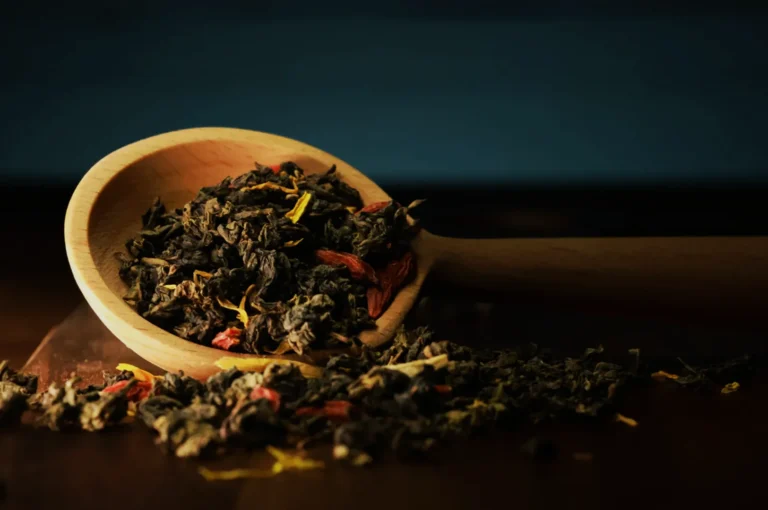
Oolong tea is often described through flavour first.
Floral. Roasted. Creamy. Mineral. Smooth.
But for many daily tea drinkers, another question arrives quietly behind the tasting notes: does oolong tea have caffeine?
Yes, it does.
Oolong tea comes from Camellia sinensis, the same plant as green tea, black tea, white tea, and Pu-erh. It is not an herbal infusion. It naturally contains caffeine, though the way that caffeine feels can be different from coffee, matcha, or a strong black tea.
Oolong tea is caffeinated, but its energy often feels more measured than forceful.
For readers who want the wider foundation, we have written an oolong tea guide for taste and daily rhythm. This article focuses on caffeine: how it works, what changes its strength, and when to drink oolong with care.
Does Oolong Tea Have Caffeine?
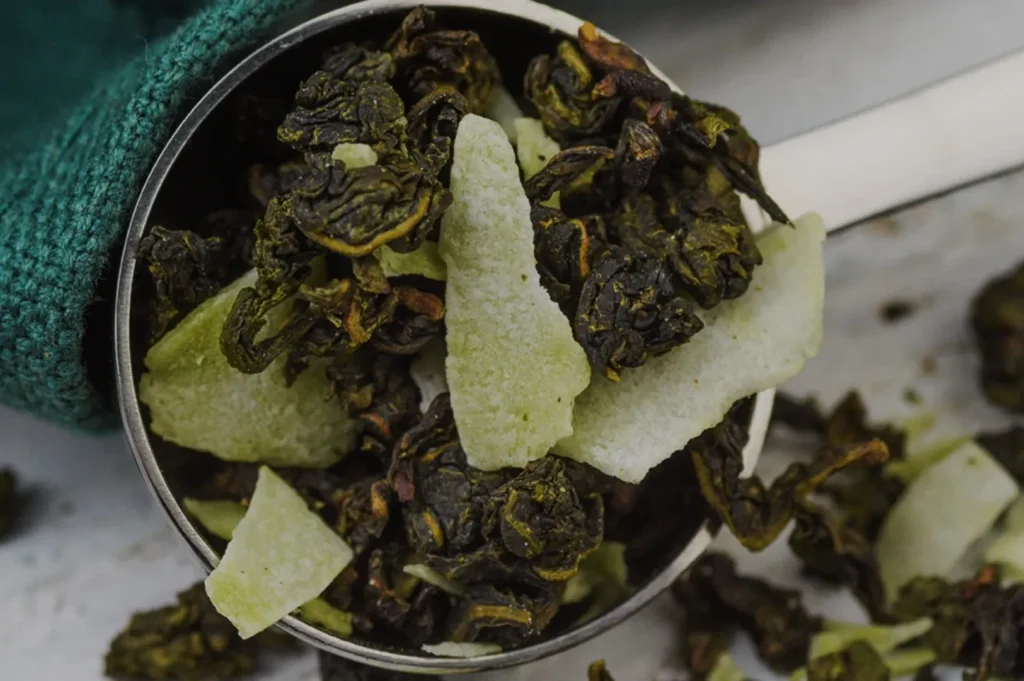
Yes. Oolong tea contains caffeine because it is made from true tea leaves.
This matters because many people casually divide drinks into “coffee” and “non-coffee,” then assume tea is always mild. That is not quite right.
The Better Health Channel’s caffeine guide explains that caffeine stimulates the brain and nervous system, and that it is found in coffee, tea, soft drinks, energy drinks, and chocolate.
Oolong may feel gentler than coffee, but it still belongs in the caffeine conversation.
A light cup may feel soft and clear. A strong gongfu-style session, especially with generous leaf and repeated infusions, may feel much more active.
Is Oolong Tea High in Caffeine?
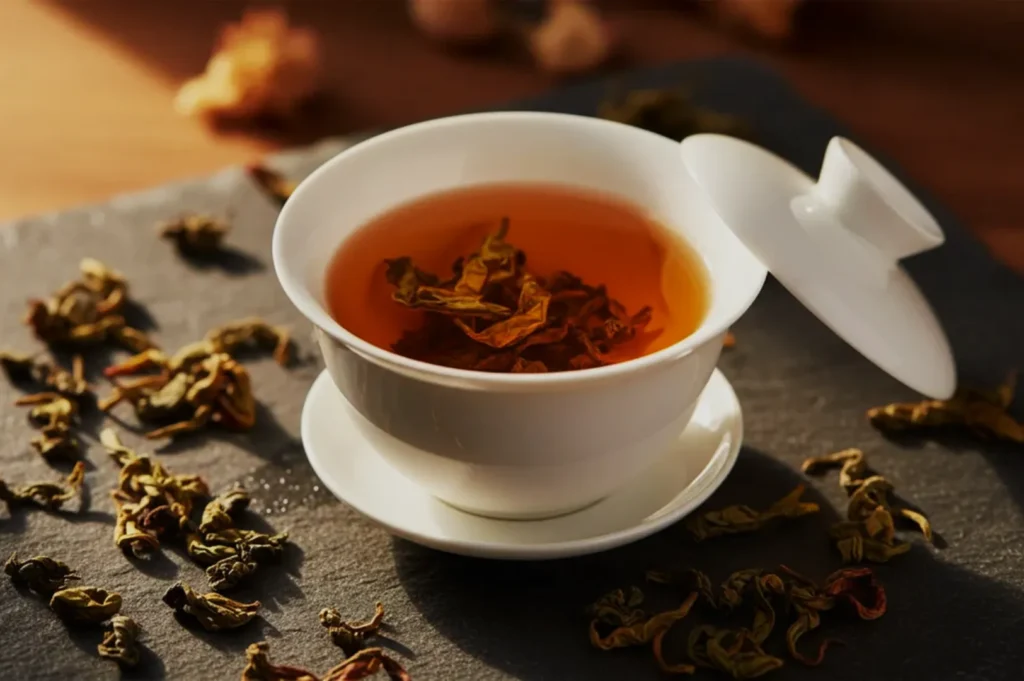
Oolong tea is usually moderate in caffeine, but there is no single fixed number that applies to every cup.
The caffeine level can change depending on:
- the tea cultivar
- the age and part of the leaf used
- oxidation and roast
- leaf amount
- water temperature
- steeping time
- number of infusions
- brewing vessel
This is why simple caffeine charts can be useful, but never complete. A lightly brewed oolong in a large cup may feel very gentle. A concentrated oolong session in a small gaiwan may feel stronger than expected.
The caffeine in oolong is not only in the leaf. It is also in the way the leaf is brewed.
Why Oolong Energy Can Feel Different from Coffee
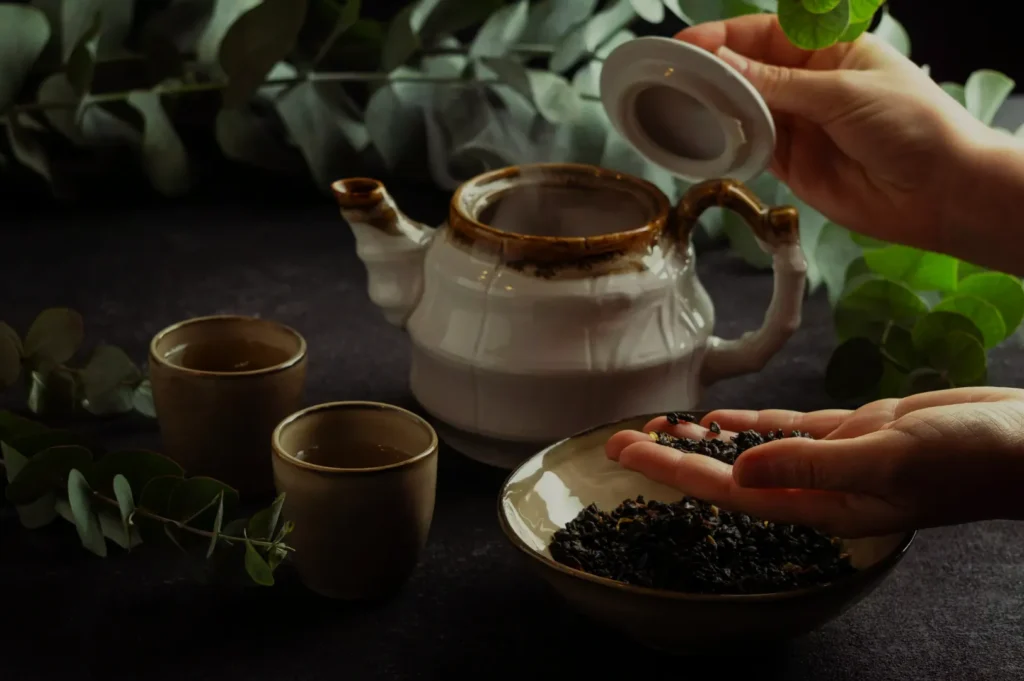
Coffee tends to arrive quickly.
It often feels direct, strong, and immediate. Some people enjoy that. Others find it too sharp, especially when taken on an empty stomach or during a stressful day.
Oolong usually enters more quietly. The caffeine is present, but the experience is shaped by the tea’s aroma, texture, warmth, and pace. A roasted oolong may feel grounding. A floral oolong may feel bright. A mineral oolong may feel steady and structured.
This is not because oolong has no effect. It is because tea gives the body more than caffeine alone.
At Tea Room by Ki-setsu, we often find that guests describe oolong energy through words like clear, warm, steady, or calm. That does not make it weak. It makes it different.
How Much Caffeine Is Too Much?
Caffeine tolerance is personal.
The U.S. Food and Drug Administration states that for most people, caffeine can be part of a healthy diet, but too much may have negative effects. The FDA also notes that around 400 milligrams a day is an amount not generally associated with dangerous effects for most adults.
The European Food Safety Authority gives similar safety context, noting that single doses up to 200 mg of caffeine from all sources do not raise safety concerns for the general healthy adult population.
These figures are useful, but they should not become a target.
Some people feel restless after far less. Others can drink more without obvious discomfort.
Caffeine guidance is a ceiling, not an invitation to reach it.
When Should You Drink Oolong Tea?
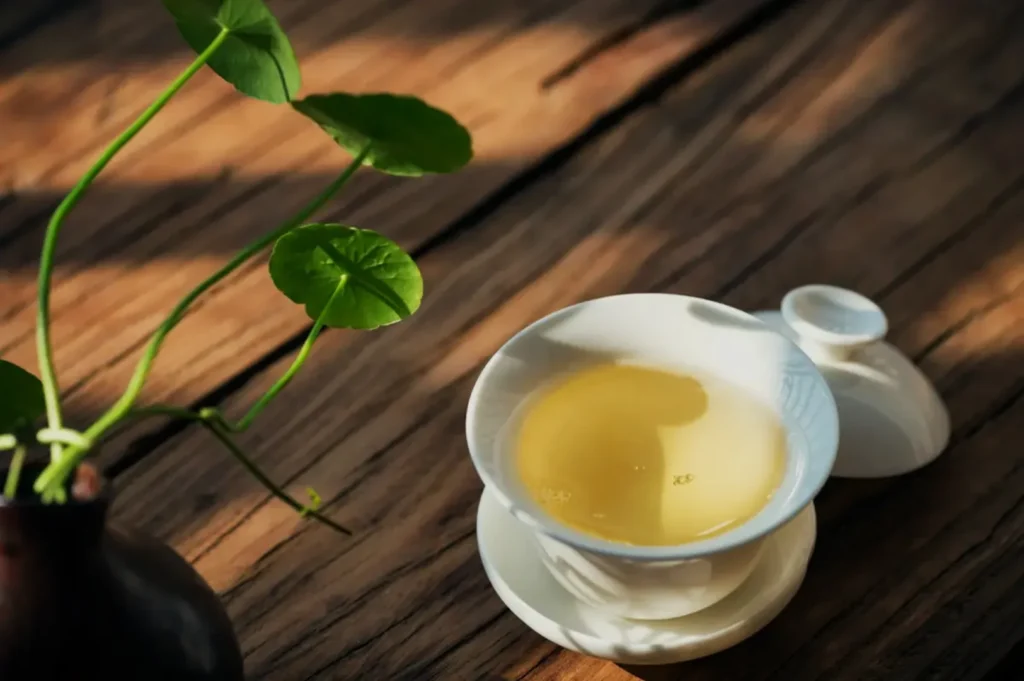
For most people, oolong is best enjoyed in the morning, late morning, or early afternoon.
Morning oolong can feel clearer and softer than coffee. After lunch, roasted oolong can feel especially suitable because it brings warmth and structure to the palate.
Evening is more personal.
If you are sensitive to caffeine, avoid oolong late in the day. Even if the tea tastes gentle, caffeine may still affect sleep. This is especially true for stronger brews, repeated infusions, or darker oolongs prepared with more leaf.
A practical rule is simple: if oolong keeps you awake once, believe the body the next time.
Which Oolong Feels Most Gentle?
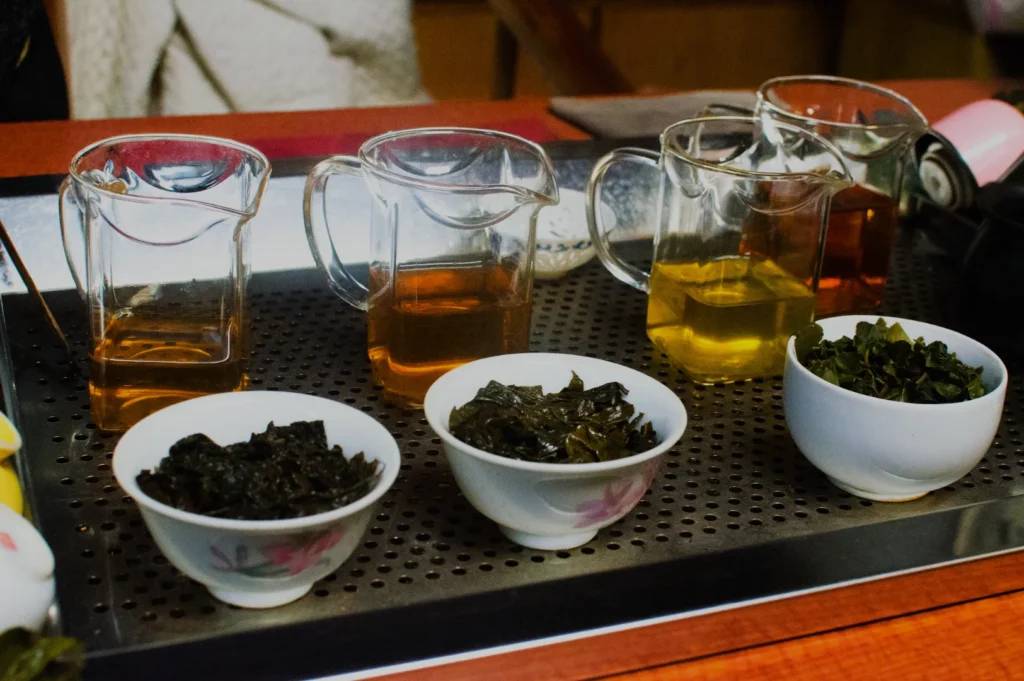
A tea setup with several glass teapots containing different colors of tea and two bowls of loose tea leaves.
There is no perfect answer, but some patterns can help.
A lighter brew of a floral oolong may feel softer than a strong roasted session. A shorter infusion may feel gentler than a long steep. Less leaf usually means a milder cup.
But style alone does not decide everything. A lightly oxidised oolong can still contain caffeine. A roasted oolong can feel smooth while still being stimulating.
If you want a gentler oolong session, begin with less leaf, shorter steeps, and earlier timing.
Do not judge the tea only by the first sip. Notice how you feel one hour later.
Who Should Drink Oolong More Carefully?
Some drinkers should be more cautious with oolong caffeine.
This includes people who are very caffeine-sensitive, pregnant or breastfeeding individuals, those with anxiety or sleep problems, and anyone managing medical conditions or medications that may be affected by caffeine.
This does not mean oolong must be avoided by everyone in these groups. It means the decision should be more thoughtful. When in doubt, ask a qualified healthcare professional.
Tea culture should never require ignoring the body.
How to Enjoy Oolong Without Overdoing It
The simplest way is to let the tea remain moderate.
Drink it earlier in the day. Avoid brewing every session too strong. Notice whether certain oolongs feel more stimulating than others. Keep track of other caffeine sources, including coffee, matcha, chocolate, and energy drinks.
If you want the ritual but less stimulation, make the cup lighter. Use fewer leaves. Shorten the infusion. Stop before the tea begins to feel sharp in the body.
Good oolong does not need to be pushed to be meaningful.
Final Thought
Oolong tea contains caffeine, but caffeine should not be the only way we understand it.
Its energy can feel softer than coffee, more structured than many green teas, and more textured than a simple stimulant. It can help bring clarity to the day, especially when brewed and timed with care.
But like all caffeinated tea, it asks for awareness.
The right cup should leave you alert, not unsettled. Clear, not restless. Present, not pushed.
For those building a daily Chinese tea rhythm, oolong offers a composed form of energy: enough to return the mind to attention, but still gentle enough to remain tea.