Oolong tea is often described as the tea between green and black.
That is true, but it is also too simple.
Oolong is not a compromise. It is a category with its own confidence. Some oolongs are light, floral, and almost creamy. Others are roasted, mineral, deep, and quietly intense. A good oolong can feel like spring flowers, warm stone, ripe fruit, toasted grain, or a long finish that refuses to leave quickly.
Oolong tea matters because it does not fit neatly into one easy label.
At Tea Room by Ki-setsu, our approach to Chinese tea Singapore begins with this kind of attention. Tea is not only a drink. It is leaf, craft, water, vessel, patience, and the willingness to notice what changes in the cup.
What Is Oolong Tea?
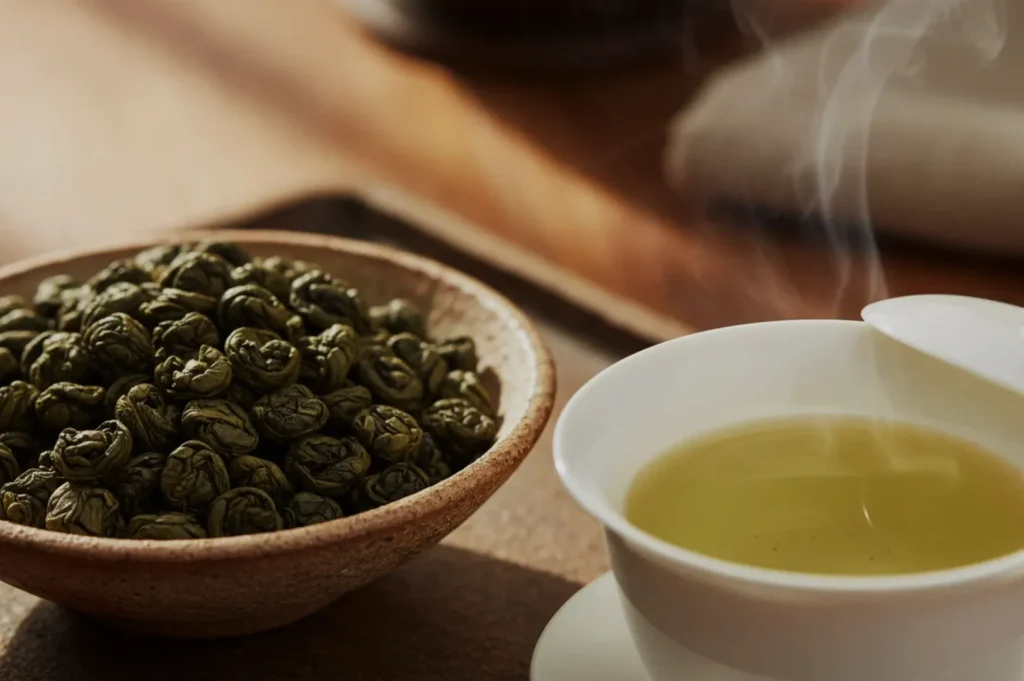
Oolong tea is a partially oxidised tea made from the Camellia sinensis plant.
Oxidation is one of the main processes that separates different types of true tea. Green tea is minimally oxidised. Black tea is fully oxidised. Oolong sits between them, but that middle ground is wide.
The Linus Pauling Institute at Oregon State University explains that oolong teas are allowed to oxidise more than white or green teas, but for less time than black teas, before they are heated and dried. This is why oolong can carry the freshness of green tea and the depth of black tea, depending on how it is made.
That range is the beauty of oolong.
A lightly oxidised oolong may taste floral and soft. A more heavily oxidised or roasted oolong may taste deeper, warmer, and more mineral.
What Does Oolong Tea Taste Like?
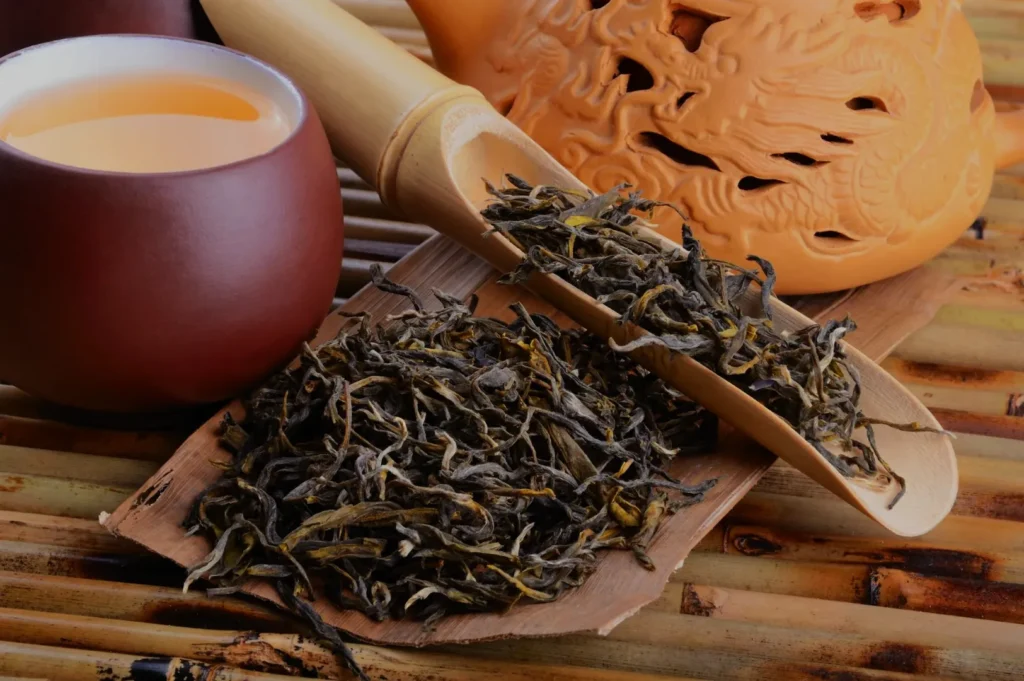
There is no single oolong taste.
This is the first thing beginners should know. If someone tells you oolong tastes one way, they have probably only met one kind of oolong.
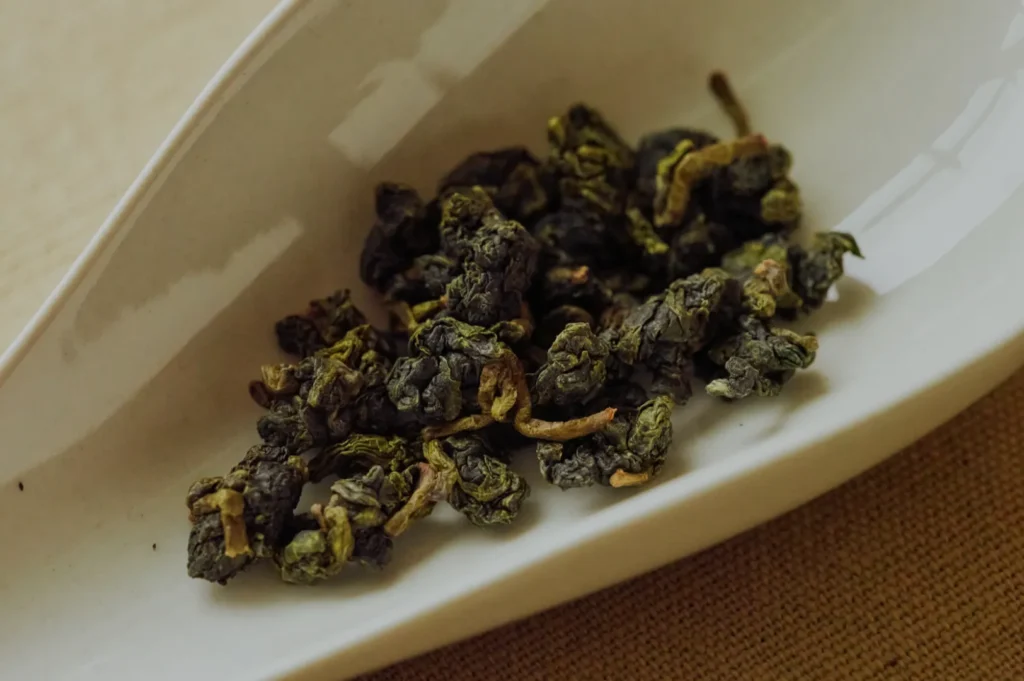
Light oolongs can taste floral, creamy, fresh, and gently sweet. Tie Guan Yin, for example, is often associated with orchid-like fragrance and a smooth body.
Roasted oolongs can feel warmer. They may carry notes of toasted grain, honey, nuts, charcoal, dried fruit, or warm minerals.
Wuyi rock teas are often described through their mineral character. Phoenix Dan Cong can be famously aromatic, sometimes carrying notes that remind drinkers of fruit, flowers, or honey.
Oolong tea is not one flavour. It is a spectrum of texture, aroma, roast, and finish.
Main Types of Oolong Tea
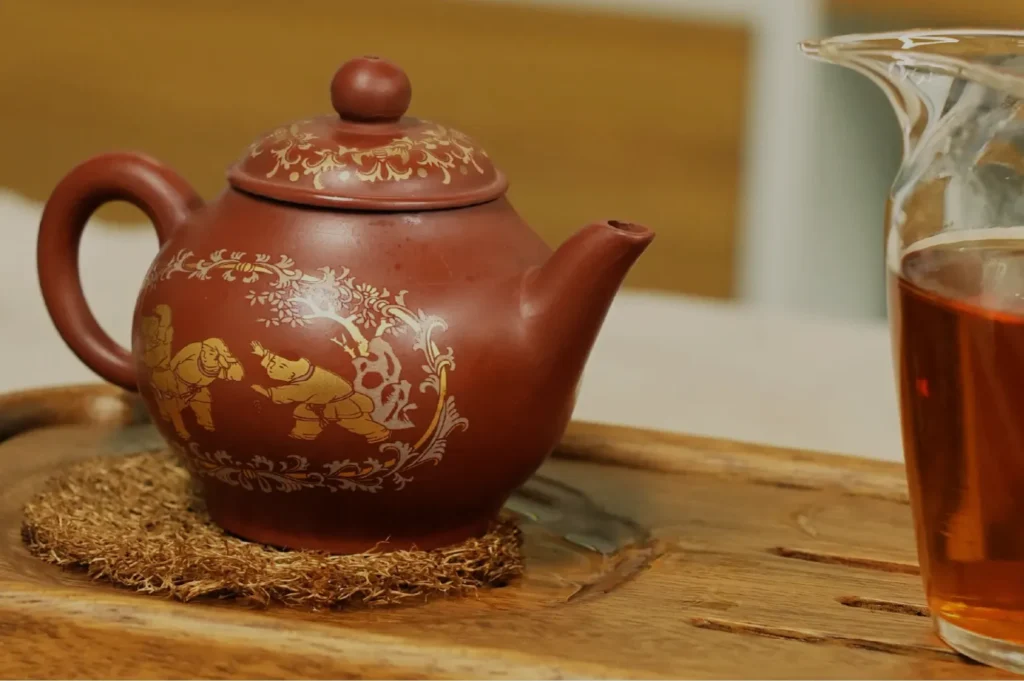
For beginners, it helps to think of oolong in families rather than memorising every name.
Tie Guan Yin
Tie Guan Yin is one of the most recognised Chinese oolongs. Modern styles are often lighter, greener, and floral, though traditional roasted versions can feel deeper and more rounded.
Wuyi Rock Tea
Wuyi oolongs come from Fujian’s Wuyi Mountains. They are known for roast, structure, and mineral character. Da Hong Pao belongs to this family, but Wuyi tea is much larger than one famous name.
Phoenix Dan Cong
Phoenix Dan Cong comes from Guangdong and is admired for its intense aroma. Some styles are named after fragrance profiles, which already tells us how expressive these teas can be.
Taiwanese Oolong
Taiwanese oolongs can range from light and fragrant high mountain teas to darker, roasted styles. Many are valued for smooth texture, sweetness, and aromatic clarity.
Oolong Tea Benefits, Without Overpromising
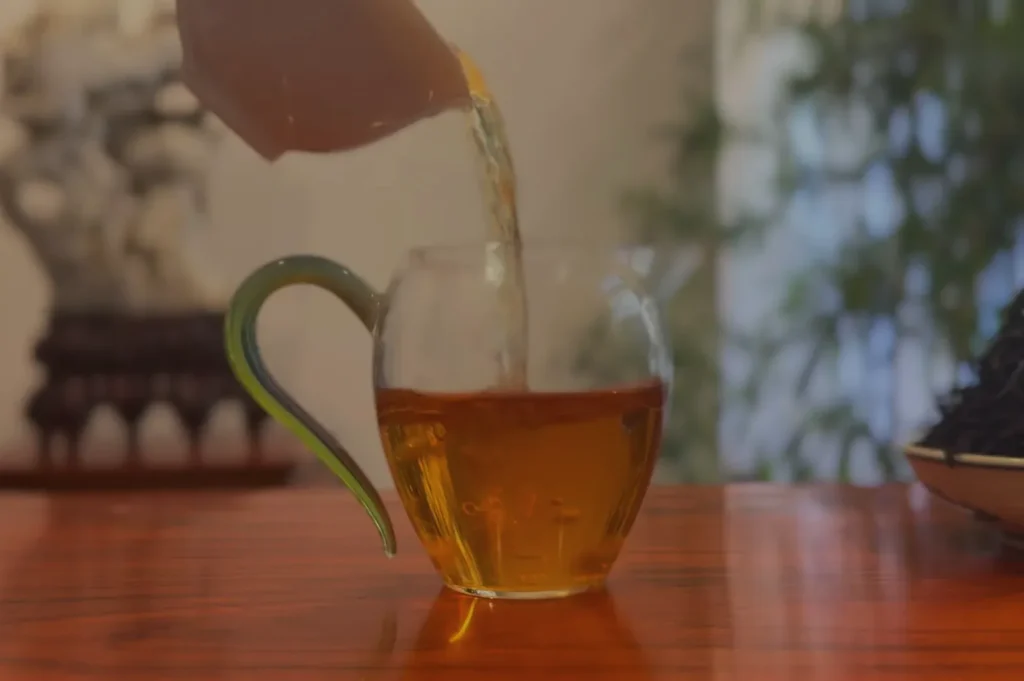
Oolong tea is often discussed for wellness because it contains tea polyphenols, caffeine, and other natural compounds found in true tea.
The Harvard T.H. Chan School of Public Health notes that traditional teas contain polyphenols, and that polyphenol content can vary widely between teas. A ScienceDirect mini-review on oolong and black tea polyphenols also discusses the characteristic polyphenols found in oolong tea and black tea.
But tea should not be sold as a cure.
Oolong may support a thoughtful daily rhythm. It can offer a gentler alternative to sugary drinks, provide calm alertness, and create a small ritual of pause. These things matter, but they should be understood honestly.
The benefit of oolong tea is not only what it contains. It is also how it asks us to slow down.
Does Oolong Tea Have Caffeine?
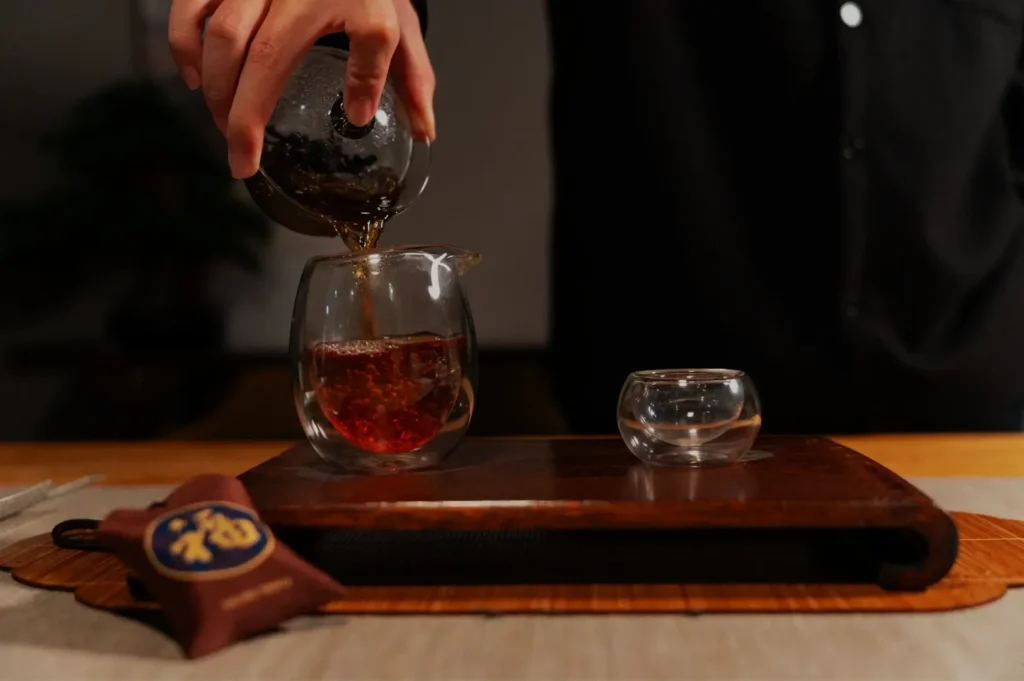
Yes. Oolong tea contains caffeine.
The amount depends on the leaf, processing, water temperature, brewing time, and how much tea is used. A light cup may feel soft and easy. A strong gongfu-style session may feel more stimulating.
This is why oolong is not always “mild.” Some oolongs can feel gentle. Others can feel active and warming.
If you are caffeine-sensitive, drink oolong earlier in the day. If you are new to tea, begin with lighter infusions before moving into stronger sessions.
Tea should support attention, not disturb the body.
How to Brew Oolong Tea
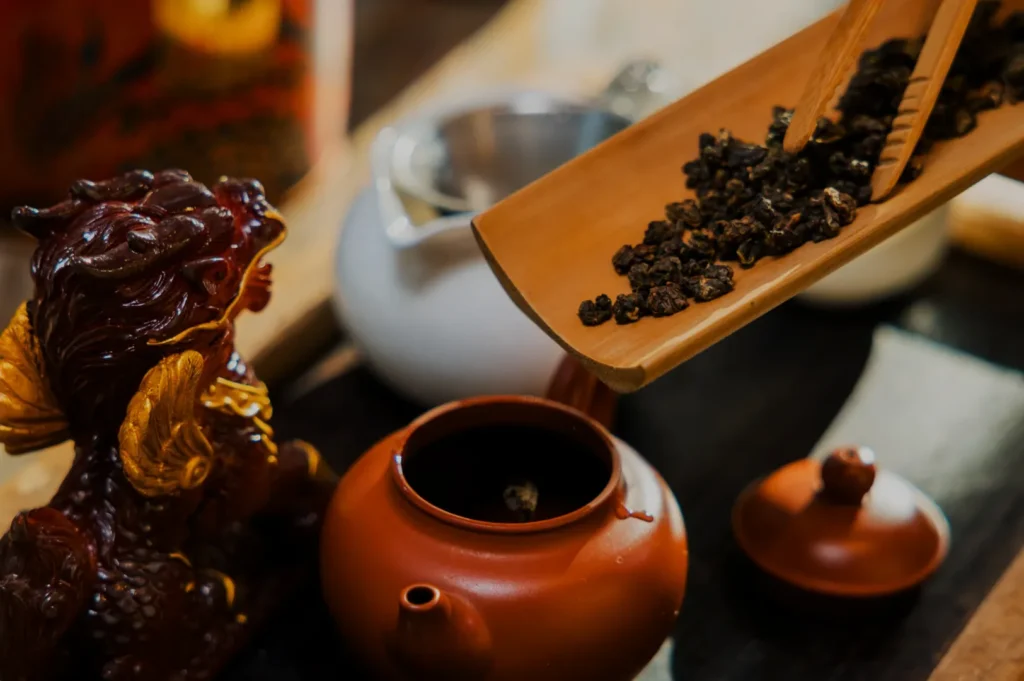
Oolong tea responds well to multiple infusions.
This is one of the pleasures of the category. The first brew may introduce the aroma. The second may show body. Later brews may reveal sweetness, minerals, roast, or a cleaner finish.
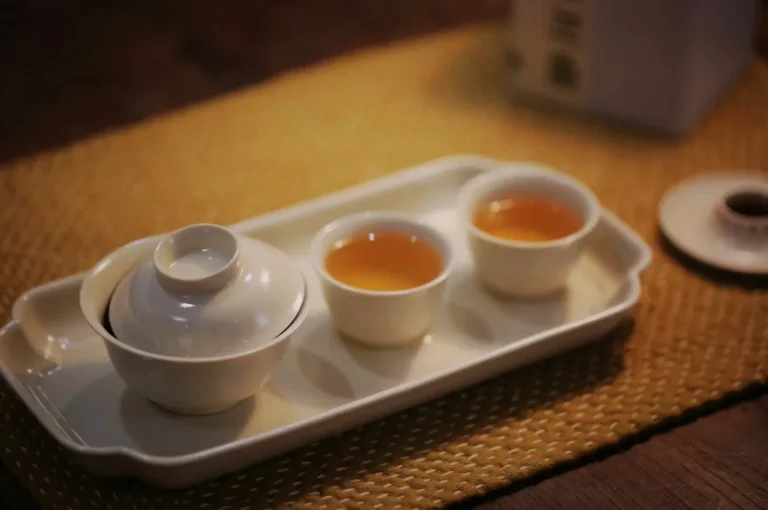
A simple beginner method is to use a small teapot or gaiwan, warm water below boiling for lighter oolongs, and hotter water for darker roasted styles. Use short infusions and taste as you go.
Do not worry too much about perfection at the beginning.
A good oolong teaches through repetition. The more you brew, the more you understand how leaf amount, water temperature, and time shape the cup.
How to Choose Your First Oolong Tea
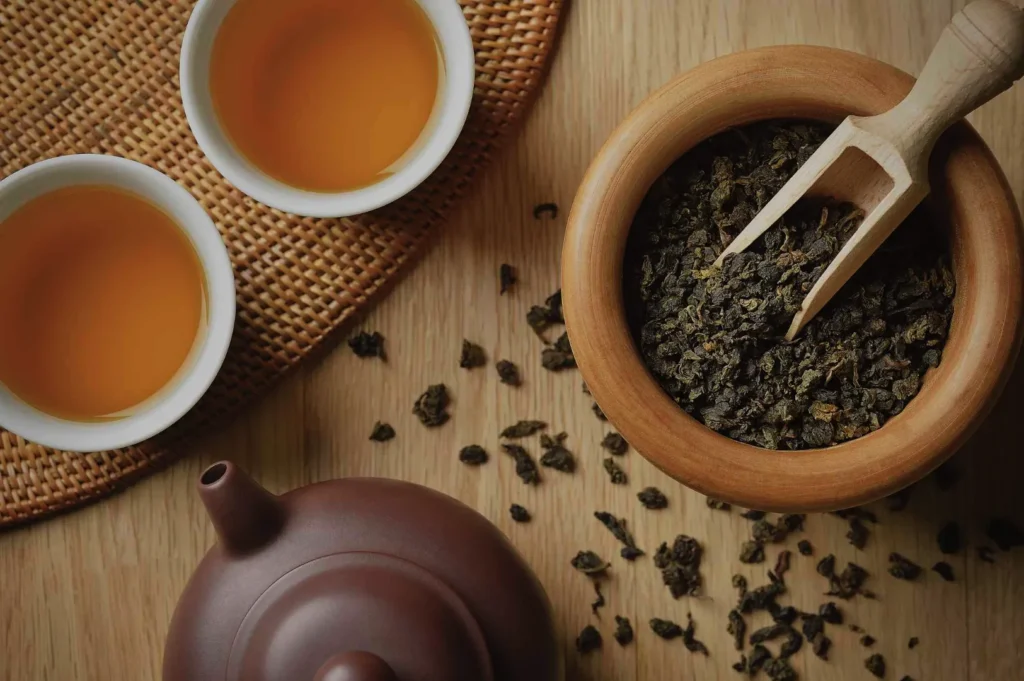
Start with the kind of flavour you already enjoy.
If you like floral teas, begin with a lighter Tie Guan Yin or Taiwanese high mountain oolong.
If you like roasted notes, choose a roasted oolong or a Wuyi-style tea.
If you like aromatic, expressive teas, Phoenix Dan Cong may be interesting.
If you are unsure, begin with a guided tasting rather than guessing from names alone. Oolong is easier to understand when tasted side by side.
At Tea Room by Ki-setsu, we often find that comparison opens the category. A guest may think they dislike oolong, only to realise they dislike one style of oolong. Another cup changes the conversation.
Who Is Oolong Tea For?
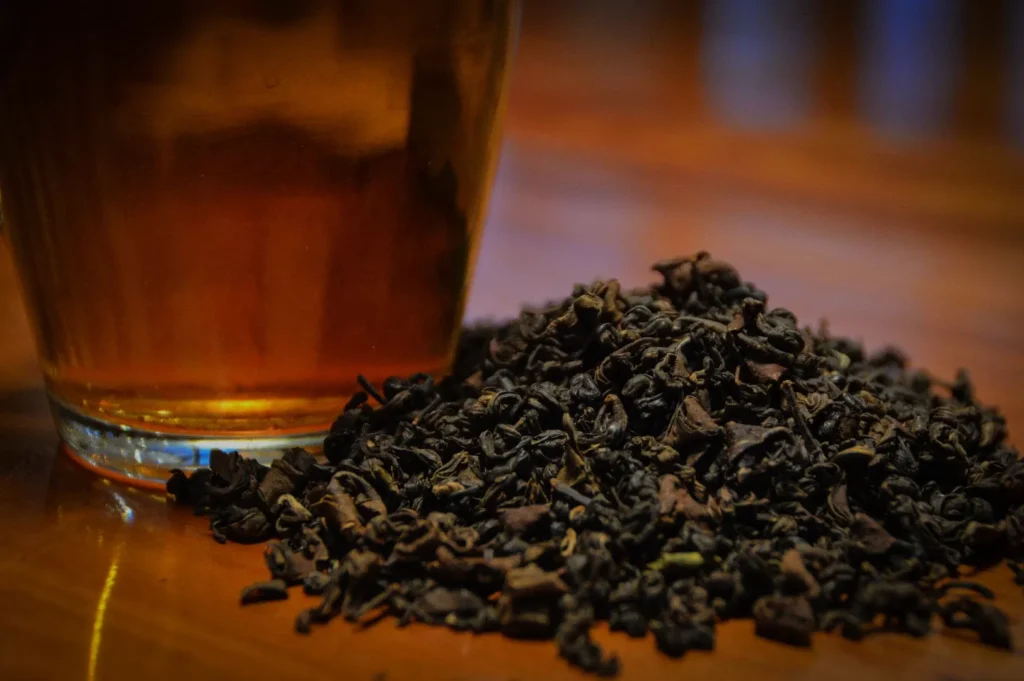
Oolong tea is especially rewarding for drinkers who enjoy complexity but do not want heaviness.
It suits people who like fragrance, texture, and gradual change. It also suits those who want a tea that can move between quiet daily drinking and more focused appreciation.
A light oolong can feel graceful in the afternoon. A roasted oolong can feel grounding after a meal. A mineral Wuyi tea can feel almost contemplative, especially when brewed slowly.
Oolong is for the drinker who does not need tea to be loud before it becomes interesting.
Final Thought
Oolong tea is difficult to reduce, and that is exactly why it is worth understanding.
It is partially oxidised, but never partial in character. It can be floral, roasted, creamy, mineral, bright, deep, soft, or structured. It can welcome beginners and still hold the attention of serious tea drinkers.
The best oolong tea is not always the most famous one. It is the one that teaches your palate to notice more.
For those beginning their journey into Chinese tea, oolong offers a generous path: not fixed, not rushed, but open to change across every infusion.