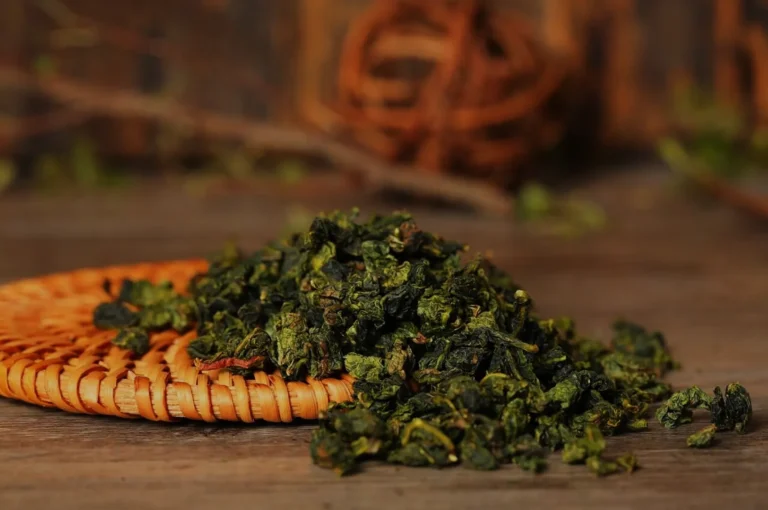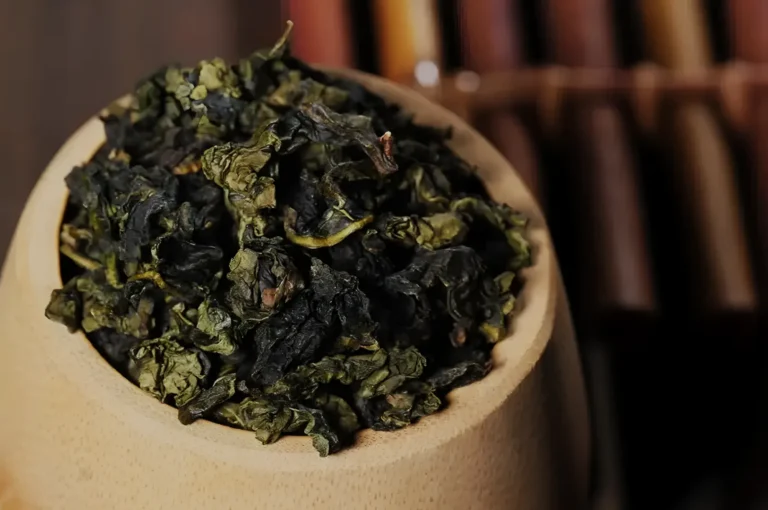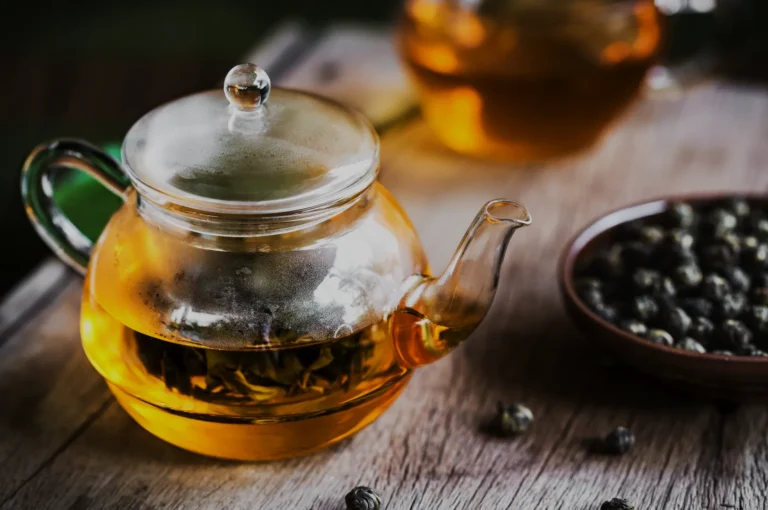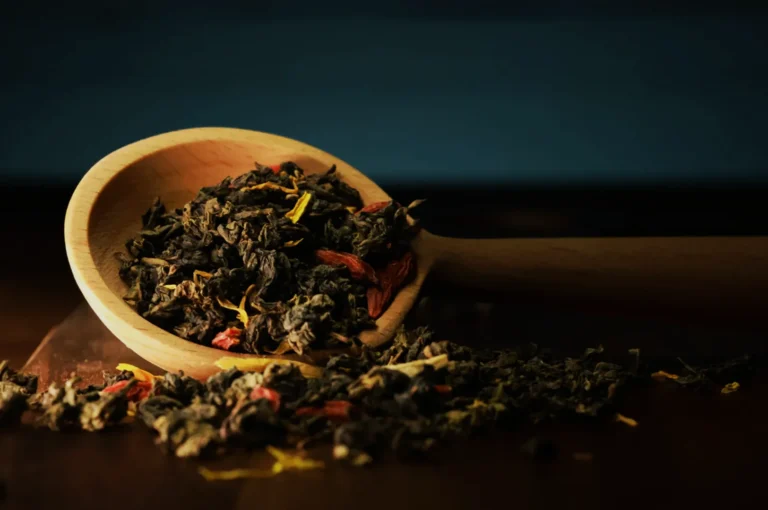
Oolong tea is not one tea.
It is a family of teas that can feel floral, roasted, creamy, mineral, fruity, dark, bright, soft, or structured. This is why oolong can be generous to beginners and still quietly demanding for experienced drinkers.
The difficulty is not that oolong is confusing. The difficulty is that oolong has range.
To understand oolong tea, it helps to begin with its major families rather than memorising every name.
For readers who want the wider foundation, we have written a comprehensive oolong tea guide. This article introduces the main types of oolong tea and how each style tends to behave in the cup.
Tie Guan Yin: Floral, Smooth and Famous for a Reason
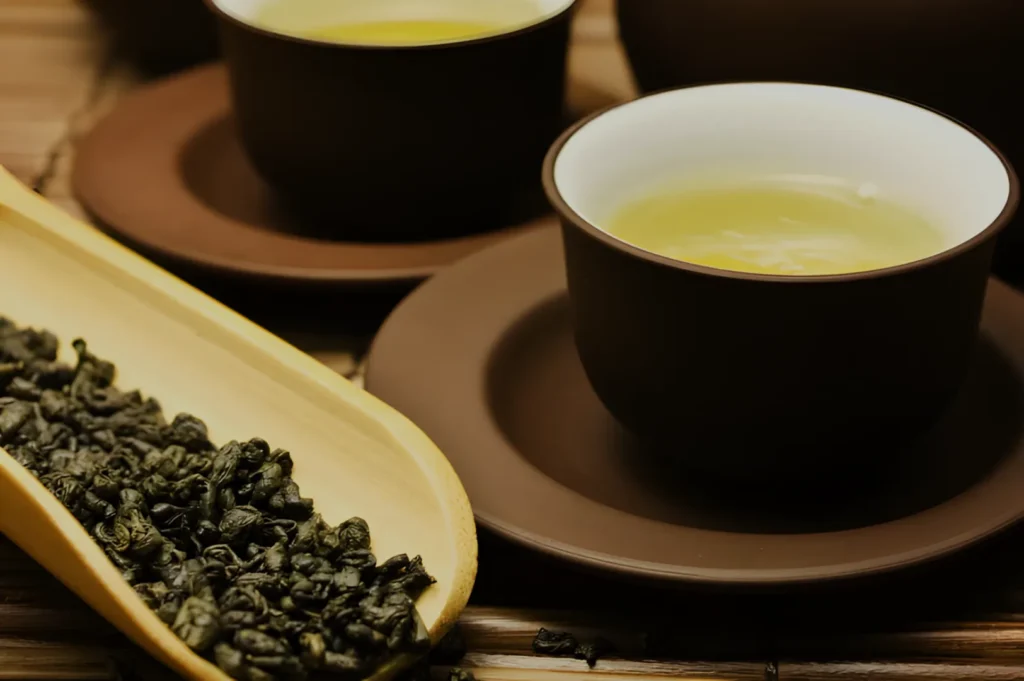
Tie Guan Yin is one of the most recognised Chinese oolongs.
It is strongly associated with Anxi in Fujian province. A Fujian Provincial People’s Government article on national intangible cultural heritage oolong processing notes that the oolong tea processing technique, specifically Tieguanyin tea, is centred in Anxi county, Quanzhou city.
Modern Tie Guan Yin is often light, green, floral, and smooth. Many drinkers associate it with orchid-like fragrance, a clean liquor, and a rounded mouthfeel. Traditional roasted Tie Guan Yin, however, can feel deeper, warmer, and more settled.
This is why Tie Guan Yin can surprise beginners. One version may feel bright and fragrant. Another may feel roasted and calm.
Neither is wrong. They simply show different interpretations of the same famous tea.
Tie Guan Yin is often the easiest doorway into oolong because it gives fragrance without too much heaviness.
Wuyi Rock Tea: Roast, Mineral and Structure
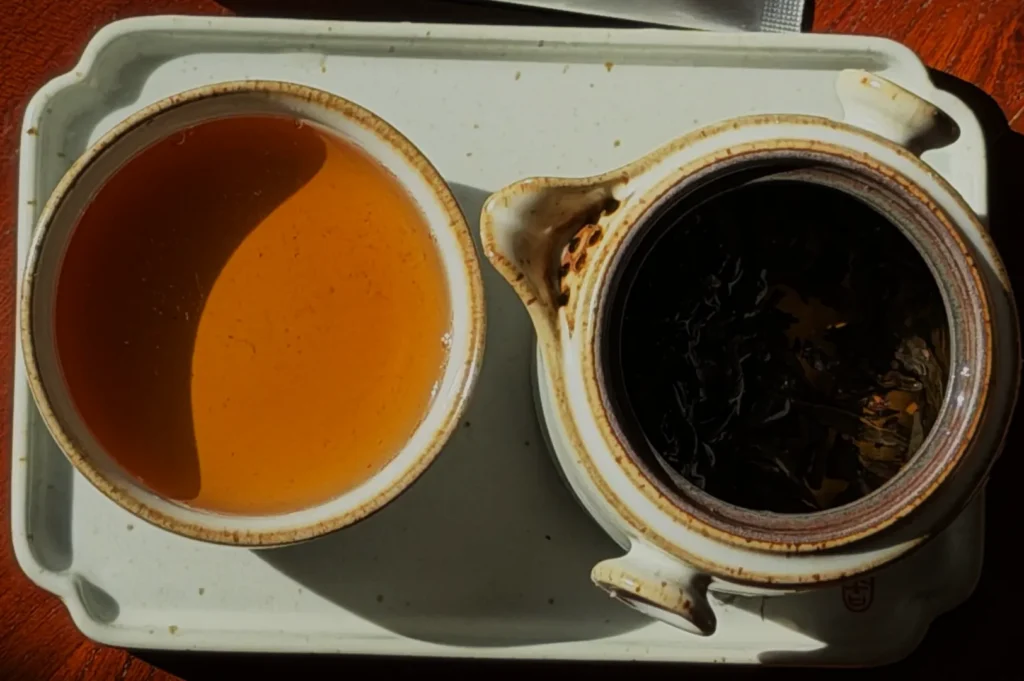
Wuyi rock tea comes from the Wuyi Mountains in Fujian.
This family is often known for roast, mineral character, and a quality sometimes translated as “rock rhyme.” The term can sound abstract, but in the cup it often means structure: a firm, stony, lingering presence beneath the aroma.
A Fujian Provincial People’s Government page on Wuyi rock tea craftsmanship describes Wuyishan as the birthplace of rock tea and connects the tea’s character to mineral-rich soil and misty mountain conditions.
Da Hong Pao belongs to this family, but Wuyi rock tea is much larger than Da Hong Pao alone. Shui Xian, Rou Gui, Tie Luo Han, Bai Ji Guan, and other names also appear within this world.
Wuyi teas are often suited to drinkers who want depth rather than perfume alone. They can feel warm, roasted, woody, mineral, or quietly powerful.
If Tie Guan Yin is often graceful, Wuyi rock tea is often grounded.
Phoenix Dan Cong: Aromatic, Expressive and Difficult to Simplify
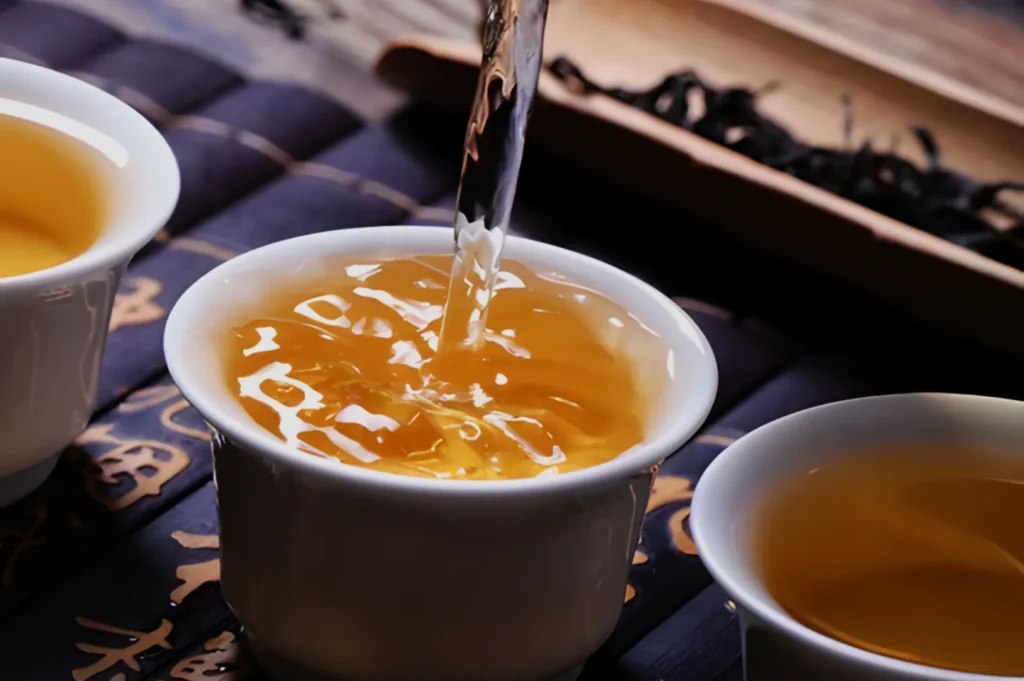
Phoenix Dan Cong comes from Guangdong, especially the Phoenix Mountain area near Chaozhou.
This is one of the most aromatic oolong families. Some Dan Cong teas are known for fragrance profiles that suggest honey, orchid, almond, gardenia, ginger flower, or fruit. These aromas should come from the leaf itself, not added flavouring.
A China National Intellectual Property Administration document on Fenghuang Dancong tea describes it as a variety of oolong tea with a natural floral aroma, golden-brown liquor, and a sweet, refreshing finish.
Phoenix Dan Cong can be thrilling, but it can also be unforgiving. Brewed carelessly, it may become sharp or bitter. Brewed well, it can feel intensely fragrant, elegant, and alive.
At Tea Room by Ki-setsu, we see Dan Cong as a tea that teaches precision. It rewards careful water, short infusions, and close attention.
Phoenix Dan Cong is not a quiet tea. It is a tea that asks to be handled with respect.
Taiwanese High Mountain Oolong: Clear, Creamy and Lifted
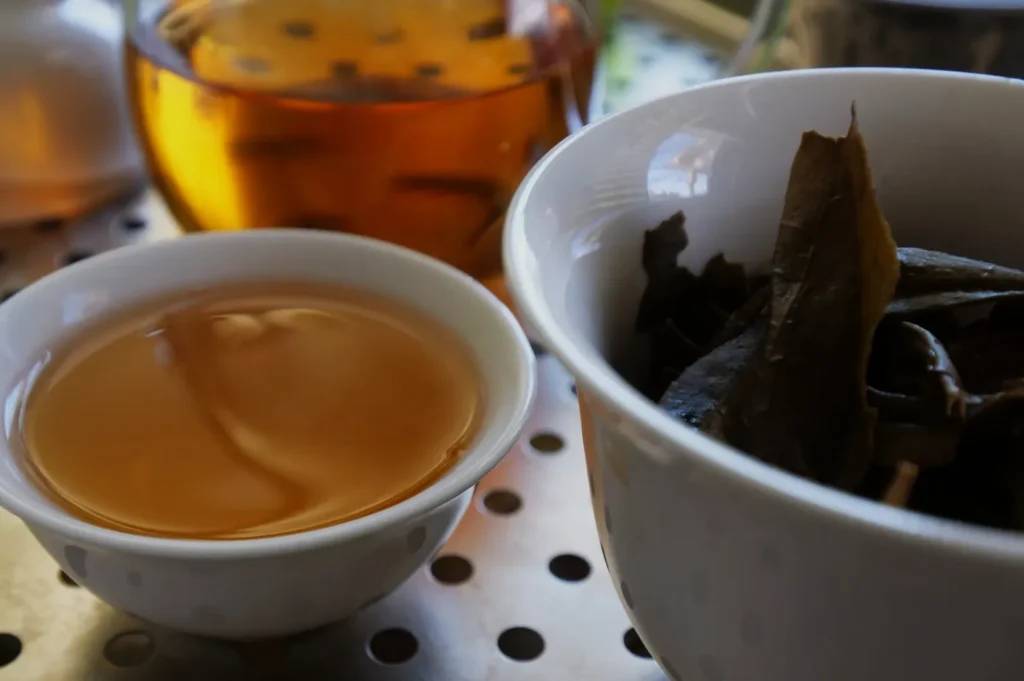
Taiwanese oolongs have their own important place in the oolong world.
High mountain oolongs are often admired for clarity, fragrance, smooth body, and a cooling sense of lift. Many are lightly oxidised and ball-rolled, giving the leaves time to open across several infusions.
Taiwan’s Tea Research and Extension Station lists High-mountain Oolong tea as a lightly fermented tea in the partially fermented category, placed under fragrant ball-shaped oolong tea.
For beginners, Taiwanese high mountain oolong can feel approachable because it is often clean and elegant. It may carry floral notes, creamy texture, and a gentle sweetness that lingers without heaviness.
It suits drinkers who enjoy refinement, softness, and quiet aromatic detail.
Dong Ding Oolong: Roast, Balance and Comfort
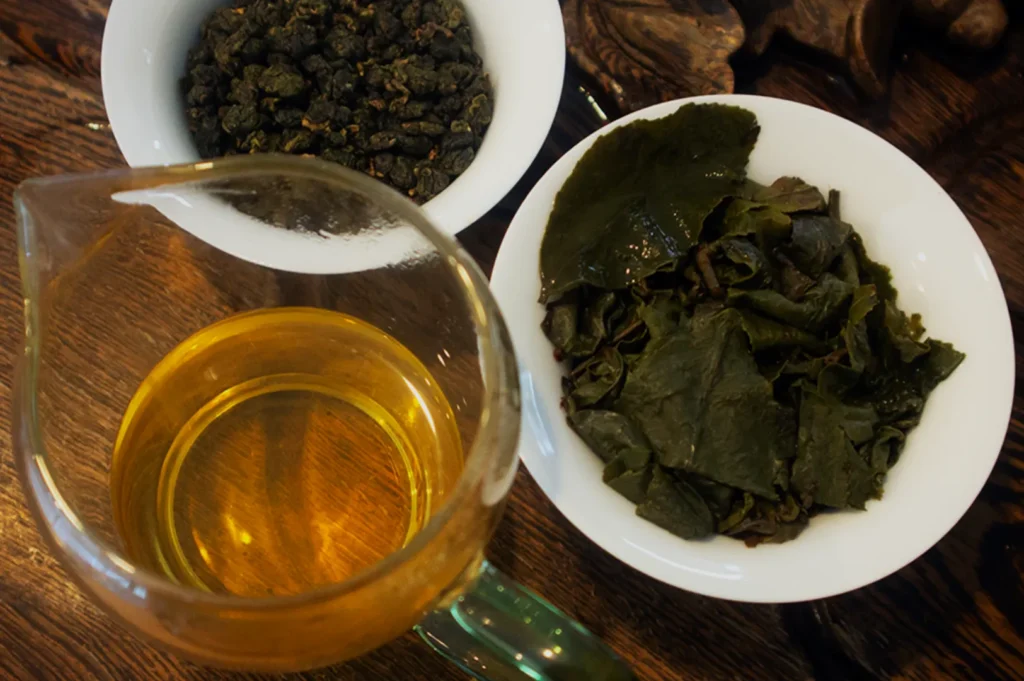
Dong Ding, often associated with Taiwan, is another oolong style worth knowing.
It is commonly more roasted than many high mountain oolongs, though roast levels vary. A good Dong Ding can feel balanced, warm, nutty, and gently sweet. It has enough roast to feel comforting, but not so much that the leaf disappears.
This makes Dong Ding a thoughtful bridge between lighter floral oolongs and darker roasted teas.
For someone who finds green oolongs too bright but Wuyi rock tea too intense, Dong Ding may feel like a middle path.
Oriental Beauty: Honeyed, Fruity and Distinctive
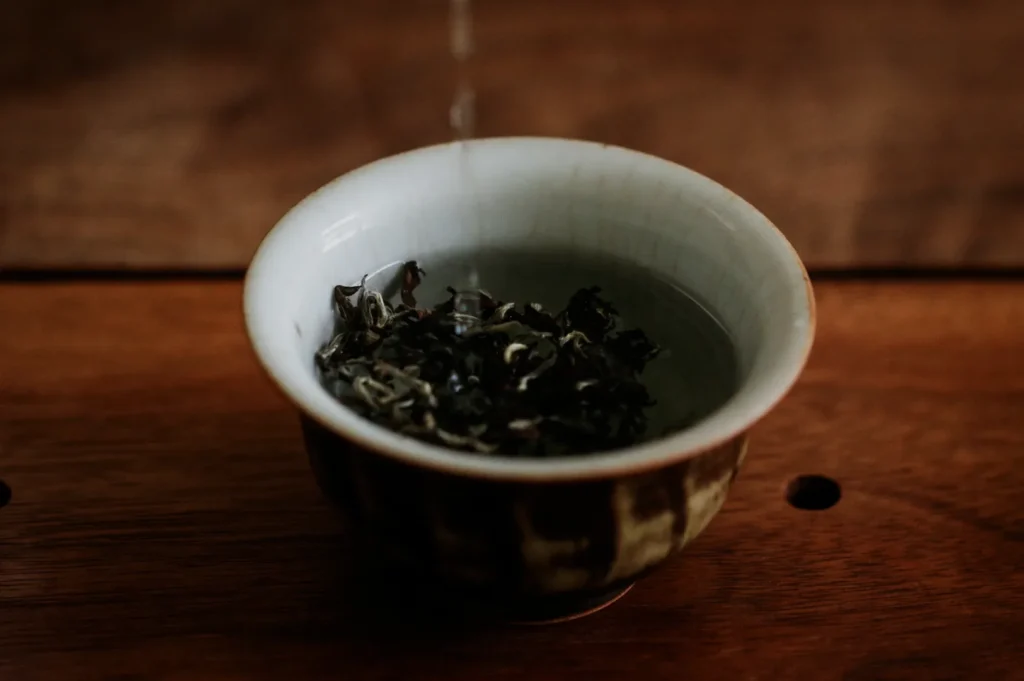
Oriental Beauty is another Taiwanese tea often discussed within the oolong family.
It is usually more oxidised than many green oolongs and is known for honeyed, fruity, muscat-like notes. Its character is closely linked to insect-bitten leaves, which can help create its distinctive aroma and sweetness.
This tea can feel closer to black tea in mood, but it retains an oolong-like complexity.
It is a good reminder that oolong is not only floral or roasted. It can also be honeyed, ripe, and quietly luxurious.
Which Type of Oolong Should Beginners Try First?
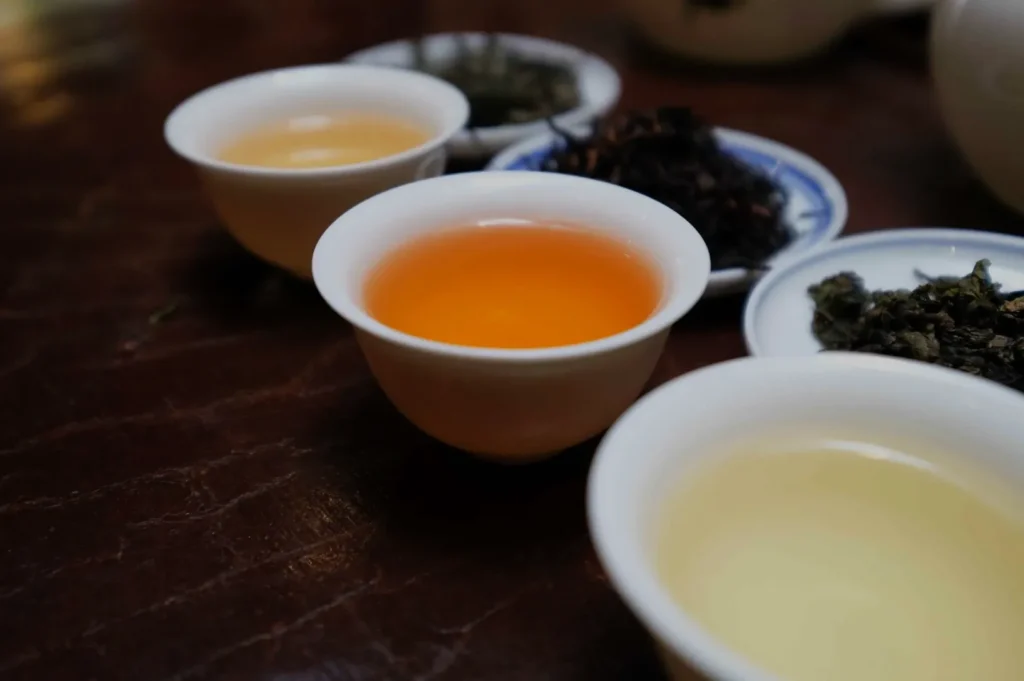
There is no single correct first oolong.
Choose Tie Guan Yin if you want something floral, smooth, and easy to approach.
Choose Taiwanese high mountain oolong if you want clarity, creaminess, and lift.
Choose Dong Ding if you want warmth and balance.
Choose Wuyi rock tea if you want roast, minerals, and structure.
Choose Phoenix Dan Cong if you want fragrance and intensity.
Choose Oriental Beauty if you want honeyed sweetness and fruit.
The best starting point is not the most famous name. It is the tea that matches the kind of experience you are ready for.
Final Thought
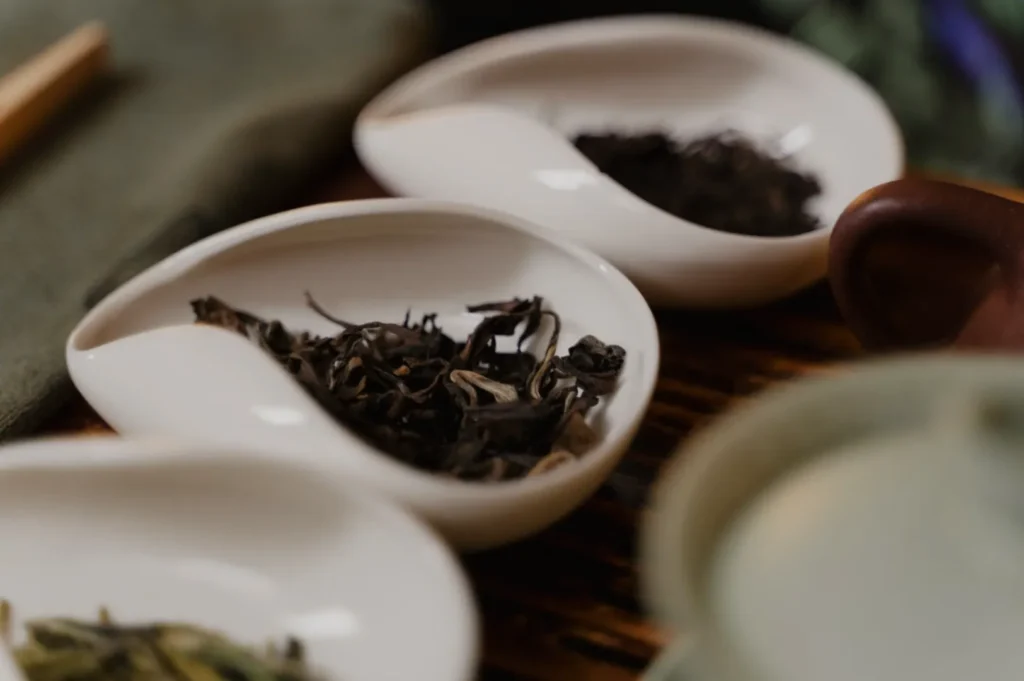
The major types of oolong tea show how wide one category can become.
Tie Guan Yin may be floral and smooth. Wuyi rock tea may be mineral and roasted. Phoenix Dan Cong may be aromatic and expressive. Taiwanese high mountain oolong may be creamy and lifted. Dong Ding may be warm and balanced. Oriental Beauty may be honeyed and ripe.
Oolong tea is not difficult because it lacks identity. It is difficult because it has many identities.
For those beginning their Chinese tea journey, that range is not something to fear. It is the invitation. Across each cup, oolong gives the drinker another way to understand leaf, land, craft, and time.