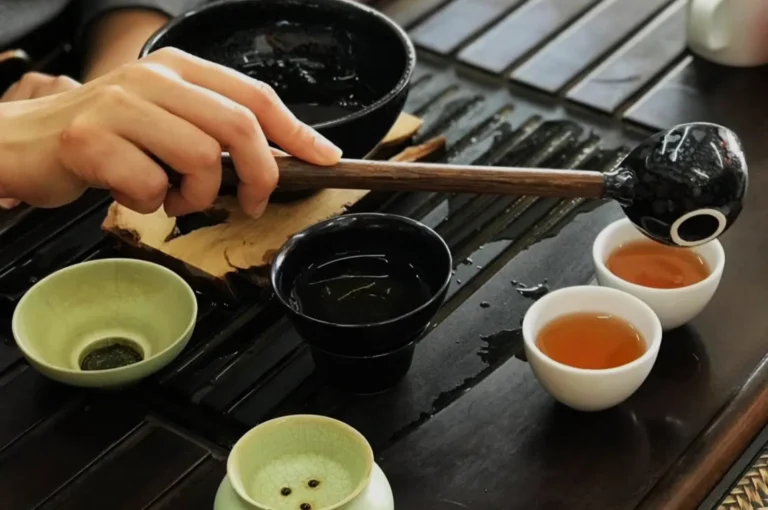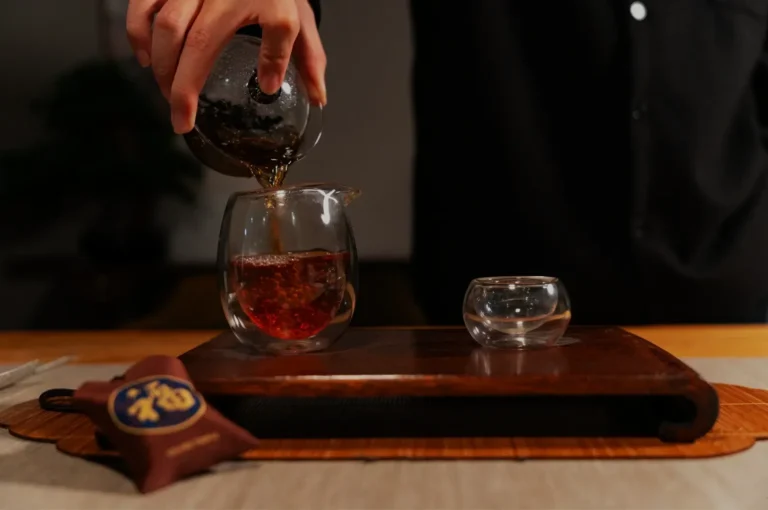
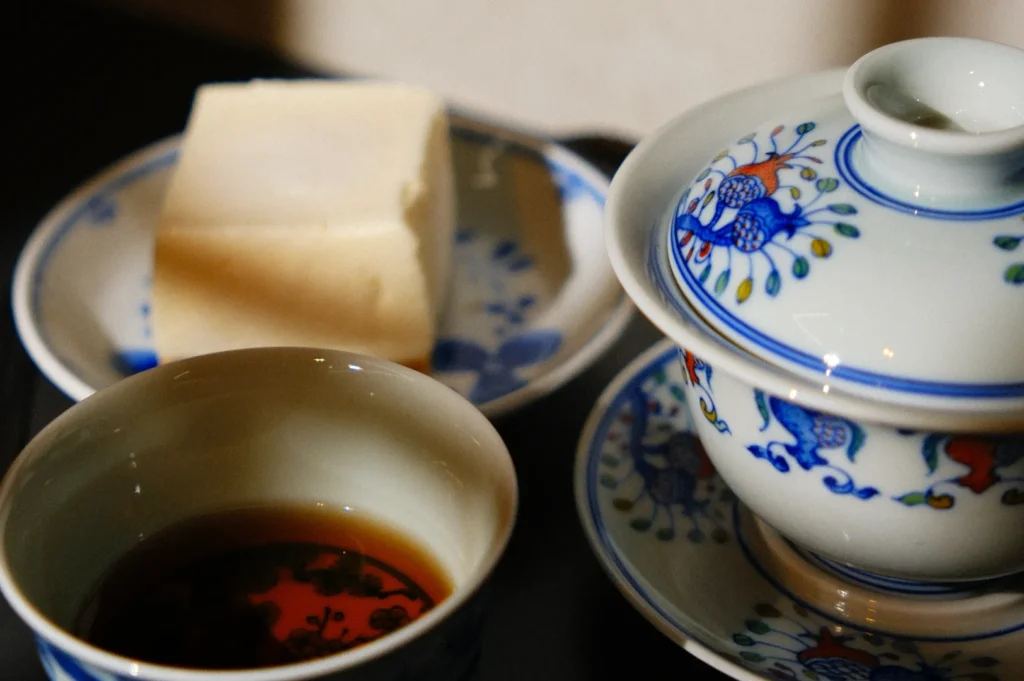
Dessert is one of the easiest things to pair badly with tea.
Sweetness can flatten aroma. Butter can coat the palate. Fruit can sharpen the tongue in ways that make a fine tea feel thinner or rougher than it really is. This is why dessert pairing needs more restraint than people often expect. The goal is not to make the table feel richer. The goal is to let the tea remain clear, graceful, and fully itself even after the bite.
At Tea Room by Ki-setsu, we think of dessert pairing as a practice of proportion. A well-chosen sweet should soften or support the cup, never dominate it. The most elegant dessert pairings are rarely the most indulgent ones. They are the ones that leave the tea room to speak.
For a broader foundation on flavour, texture, and pacing, see our full guide to pairing tea with food and mood. Here, we stay with sweetness: cakes, pastries, bean sweets, fruit desserts, and the quieter logic that helps tea and dessert meet well.
Why Dessert Is One of the Hardest Things to Pair with Tea
Tea is often more delicate than dessert.
Even a richly structured tea can be easily pushed aside by sugar, cream, butter, or glossy fruit fillings. A dessert may taste balanced on its own and still overwhelm the cup entirely. This is especially true when the tea relies on fragrance, softness, aftertaste, or a light roasted warmth rather than immediate force.
Dessert pairing is therefore less about luxury and more about control. Sugar weight matters. Texture matters. Acidity matters. The right tea does not need to mimic the dessert. It needs to restore shape after the bite. A good dessert tea pairing guide begins with one quiet rule: if the second sip tastes weaker than the first, the dessert is too loud.
The Best Tea Pairings by Dessert Style
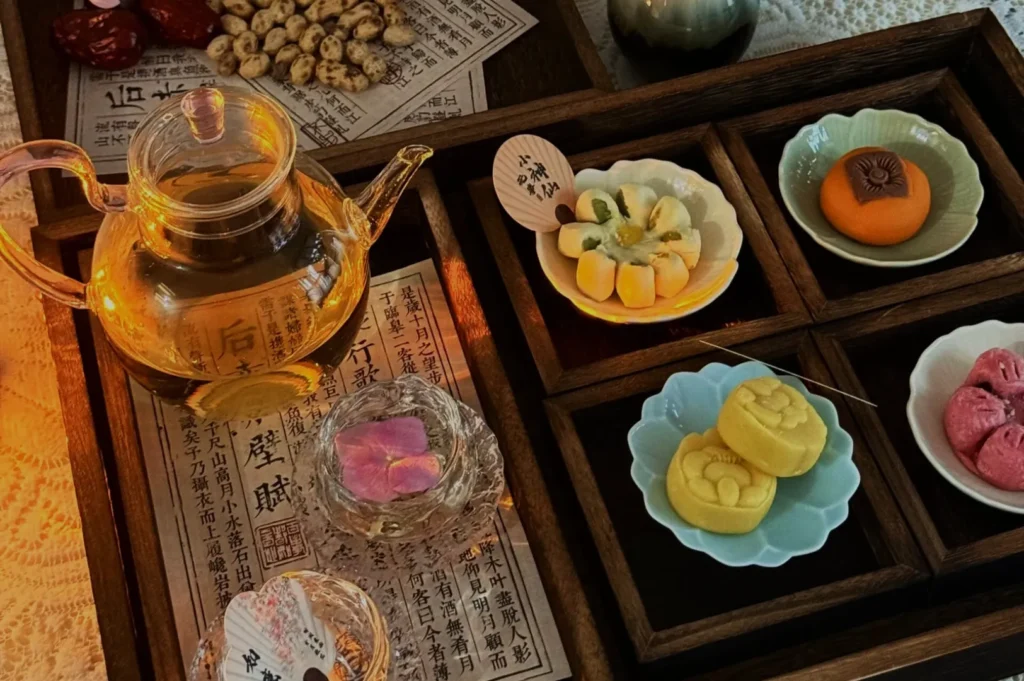
Sponge Cakes and Soft Tea Cakes
Sponge cakes are among the easiest desserts to pair well.
Their crumb is light, their sweetness is usually moderate, and they do not coat the mouth too heavily. This gives the tea enough space to remain expressive. A floral oolong, a more lifted black tea, or a clean white tea often works beautifully here. The tea can rise through the soft texture of the cake and leave the palate refreshed rather than weighed down.
This is where tea and cake pairing becomes intuitive. The tea does not need to fight the dessert. It simply lifts it. Plain sponge, chiffon, castella, and lightly flavoured butter cakes all tend to work better than cakes with thick frostings or dense creams. If there is fruit involved, it should be gentle rather than sharp.
Butter Pastries and Short Crusts
Butter changes everything.
A pastry may not seem especially sweet, yet still feel heavier than a cake because fat lingers more insistently than sugar. This is where lighter teas often disappear. A soft floral tea may seem beautiful at first and then lose its outline completely after one bite of croissant, tart shell, or butter pastry.
For pastries, choose teas with enough shape to clear the richness. Roasted oolongs often work well. Certain black teas with warmth and body can also carry these pairings beautifully. What tea goes with pastries depends less on the filling than on how much butter is sitting in the structure itself. A modest tart with restrained fruit may be easier than a laminated pastry that leaves oil on the palate. The tea should restore freshness, not merely accompany richness.
Bean Sweets and Gentle Confections
Bean sweets are some of the most graceful companions a Chinese tea can have.
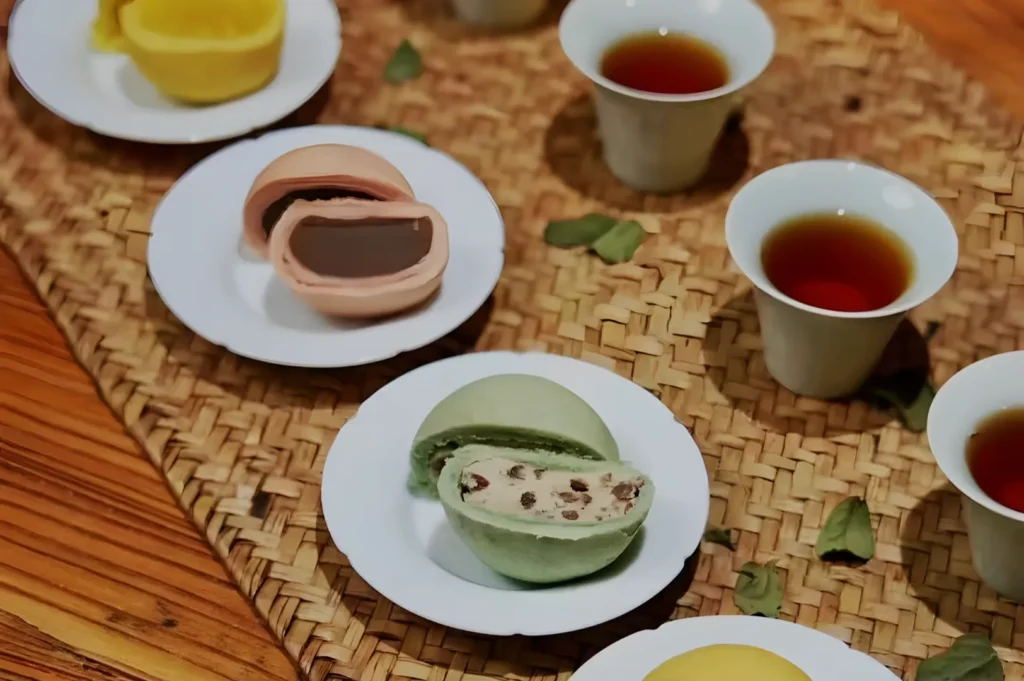
Mung bean cakes, lotus seed pastries, red bean sweets, and similar confections often carry a lower, softer sweetness than Western desserts. Their textures are smooth, calm, and measured. This gives the tea room to show aroma and finish without being forced into competition.
At Tea Room by Ki-setsu, we often find that these quieter sweets are among the most satisfying dessert pairings because they feel culturally aligned with the tea. A delicate oolong may seem more floral beside mung bean. A warmer black tea may seem rounder beside lotus paste. These sweets do not try to overwhelm. They settle. When dessert remains gentle, the tea can deepen instead of retreating.
Fruit Tarts and Light Fruit Desserts
Fruit can be beautiful with tea, but it asks for caution.
The problem is not fruit itself. It is acidity. A pear tart, melon dessert, or softly baked apple pastry may pair elegantly with tea because the fruit remains mellow and the sugar is often contained. Citrus-heavy desserts, sharp berry fillings, or tart glazes are more difficult. They can make the tea feel flatter, harsher, or shorter than it truly is.
The safest fruit desserts are those that emphasise softness and fragrance over tang. Pear, stone fruit, and cooked apple are often much easier to pair than lemon, passionfruit, or highly acidic berries. A floral tea can be lovely with gentle fruit, but only when the dessert is not too bright. Fruit should open the tea, not cut through it.
Dry Biscuits, Butter Cookies, and Small Bites
Sometimes the best dessert pairing is not really a dessert course at all.
A small butter cookie, a dry biscuit, a sable, or a lightly sweet tea biscuit can work beautifully because portion size remains modest. The tea has enough room to recover between bites. This is often more elegant than serving a large plated dessert, which may ask too much of the palate.
These pairings work especially well when the tea has enough body to soften the dryness of the biscuit. Black teas and roasted oolongs are often excellent here. Crisp sweets also give a pleasant contrast to the warmth of the cup. The tea restores moisture and finish, while the bite provides a little texture and sweetness without excess. Some of the best tea with dessert pairings are the smallest ones.
A Simple Way to Choose the Best Tea with Dessert
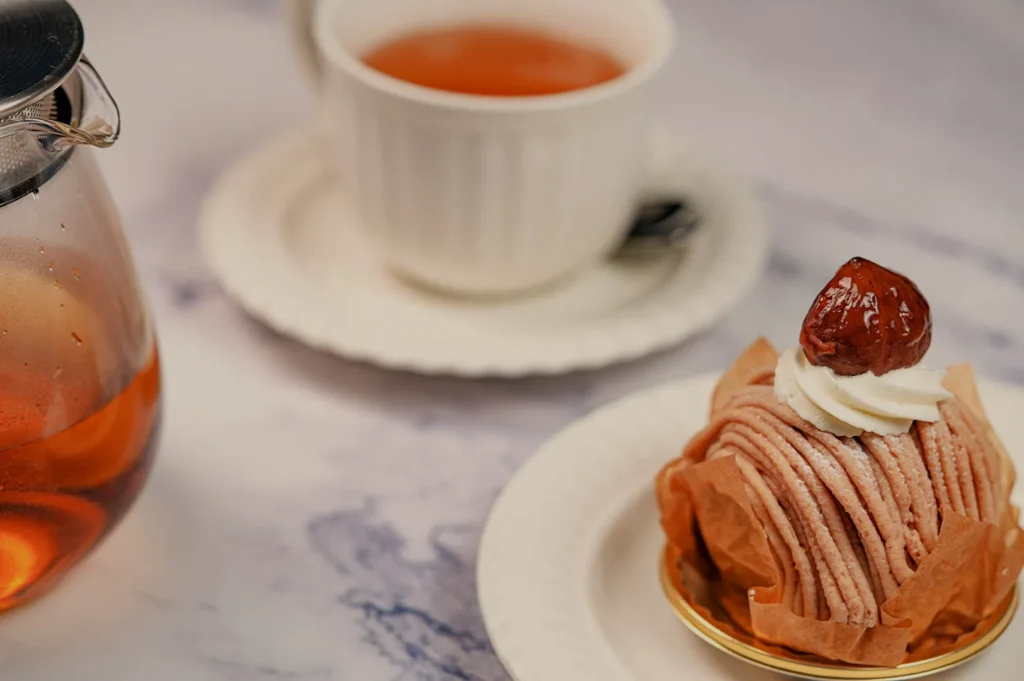
If you want a practical method, begin here.
First, measure the dessert by sweetness and weight. Ask whether it is airy, buttery, creamy, dense, or acidic. These qualities matter more than the dessert’s prestige or complexity.
Second, decide what the tea should do. Should it clear richness? Soften dryness? Support floral notes? Add warmth to something mild? A pairing works best when the tea has a clear role.
Third, test the second sip, not the first. The first sip tells you little. The second sip tells you whether the dessert respected the cup. If the tea feels cleaner, rounder, or more articulate, the pairing is working. If it feels thin, bitter, or shortened, the dessert is too dominant.
The best tea with dessert is not always the sweetest tea. It is the tea that leaves the palate more alive after the bite.
Common Dessert Pairing Mistakes
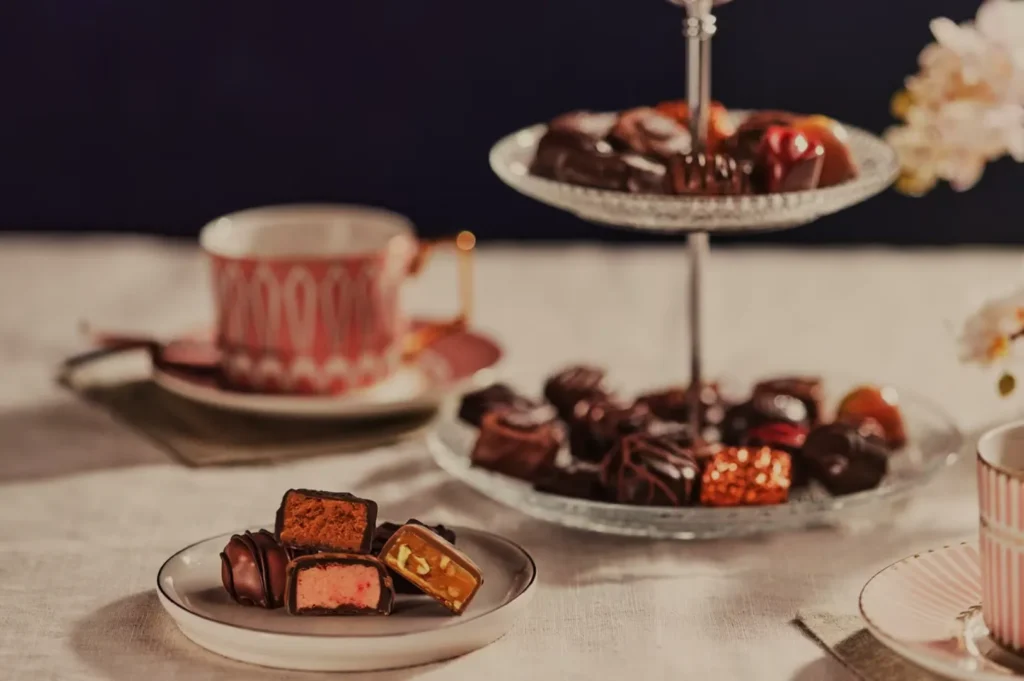
One common mistake is choosing desserts that are sweeter than the tea can carry. This makes even a beautiful tea taste faint or rough.
Another is pairing delicate tea with buttery or creamy pastry. The dessert may not seem overwhelming on the plate, but it can still cover the tea entirely in the mouth. Highly acidic fruit desserts also cause trouble, especially when paired with subtle or floral teas.
Many people also assume chocolate logic applies to every dessert. It does not. The tea that works with dark chocolate may be completely wrong for sponge cake or bean sweets. And finally, too many sweets in one sitting will dull the palate no matter how refined they are. One or two well-chosen desserts usually create a better pairing than abundance.
Choose Desserts That Leave the Tea Room to Speak
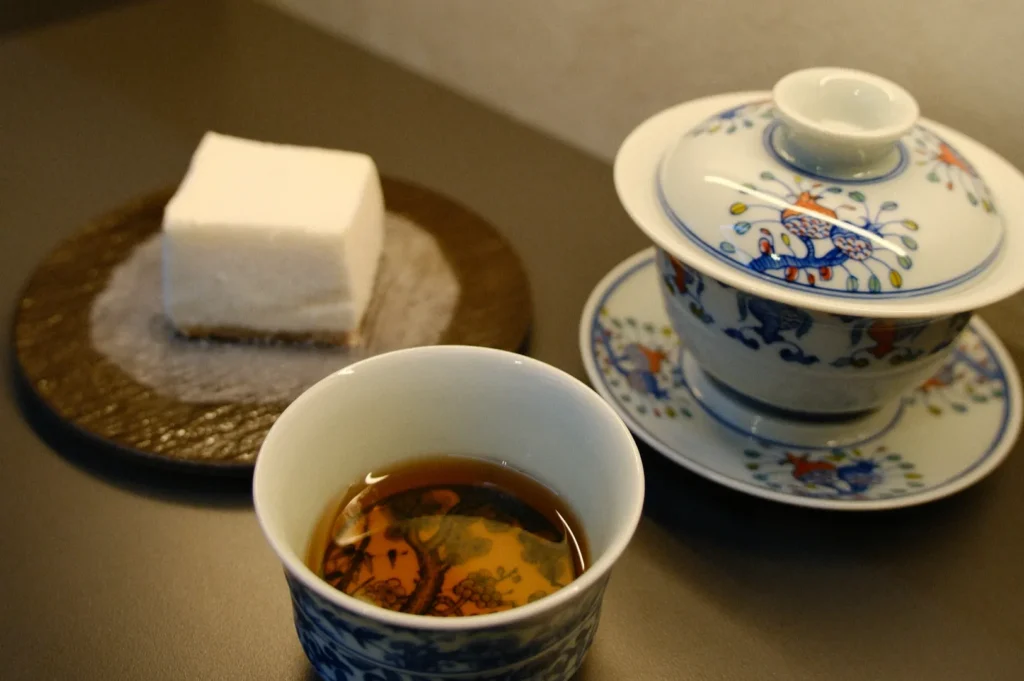
The finest dessert pairings feel almost quiet.
They do not announce themselves as clever. They simply allow the tea to remain clear, fragrant, and complete after sweetness has entered the table. At Tea Room by Ki-setsu, we believe dessert should never be treated as the final word over the cup. It should be the gentlest possible companion.
A refined pairing is not the one that tastes richest. It is the one that lets both tea and dessert remain distinct, graceful, and worth returning to.