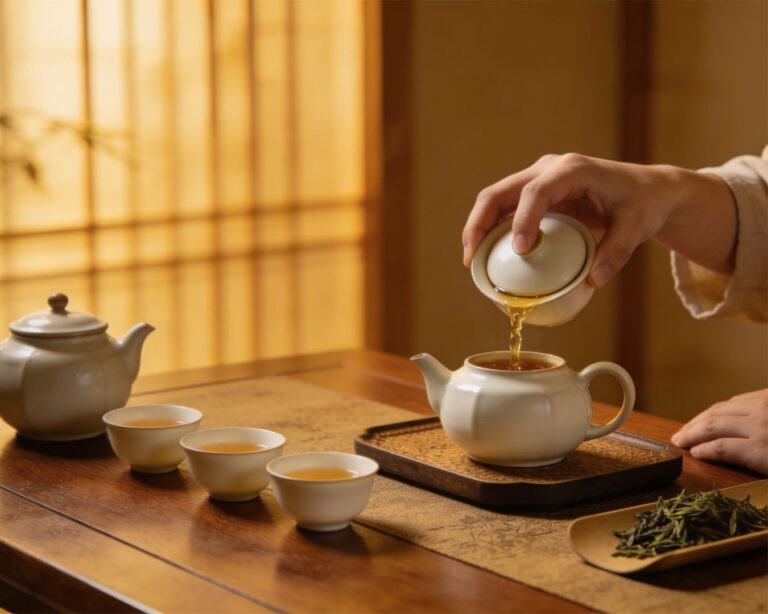
There is a moment of stillness when hot water meets tea leaves. A quiet exchange, where something dormant begins to open.
In that moment, the chinese teapot is not merely a container. It is a collaborator. It holds heat, guides the pour, and shapes the infusion. The curve of the spout, the weight of the clay, the way the lid settles: all influence how tea is brewed and how it is experienced. The right teapot does more than prepare tea; it creates the conditions for attention.
At Tea Room by Ki-Setsu, we see ourselves as guardians of this tradition. To hold a handmade teapot is to hold centuries of accumulated knowledge of earth, fire, and human artistry. In this guide, we invite you to explore the history of the Chinese teapot, understand its different types, and learn how to choose a vessel that becomes a true companion in your tea practice.
The Soul of Chinese Tea Culture – Why the Chinese Teapot Matters
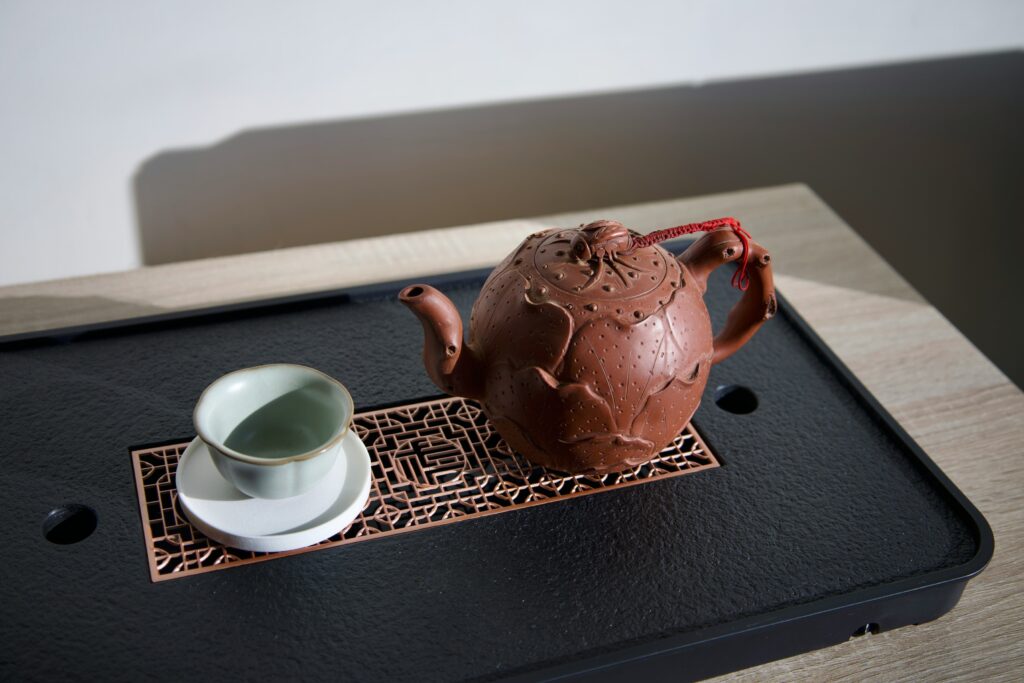
The story of the chinese teapot is inseparable from the history of tea itself. As tea culture evolved particularly during the Ming and Qing dynasties, loose-leaf brewing replaced powdered cakes. This shift demanded a vessel that allowed tea leaves to unfurl freely, releasing aroma and flavour with clarity.
From this change emerged a guiding principle: the vessel exists to honour the leaf.
In gong fu cha, teapot selection is not incidental. It is foundational. Serious tea drinkers speak of yang hu (养壶), or “raising a pot.” Through repeated use, unglazed clay teapots absorb the essence of the tea, developing a patina that reflects time and care. The density of the clay, the shape of the pot, the fit of the lid and the angle of the spout all affect temperature, fragrance, and how flavour is extracted.
Here, utility and artistry are inseparable. The teapot is both tool and teacher.
The Essential Types of Chinese Teapots
To explore different types of Chinese teapots is to move through materials shaped by earth and fire, each offering a distinct dialogue with tea.
Yixing Teapot Tradition: Purple Clay and Zisha Craft
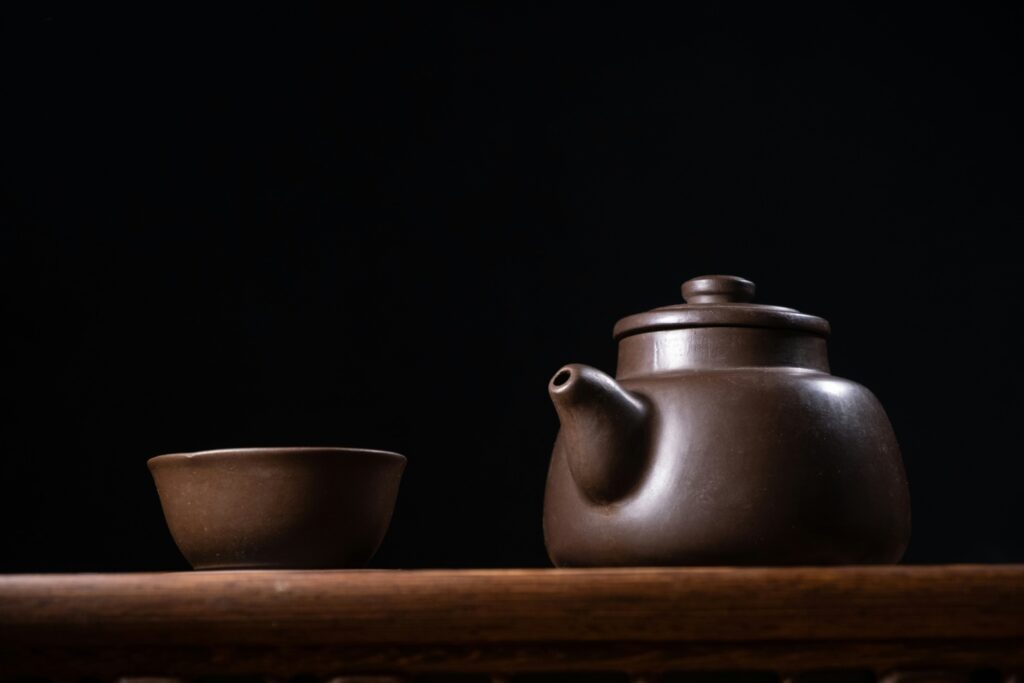
Yixing Teapot & Yixing Clay
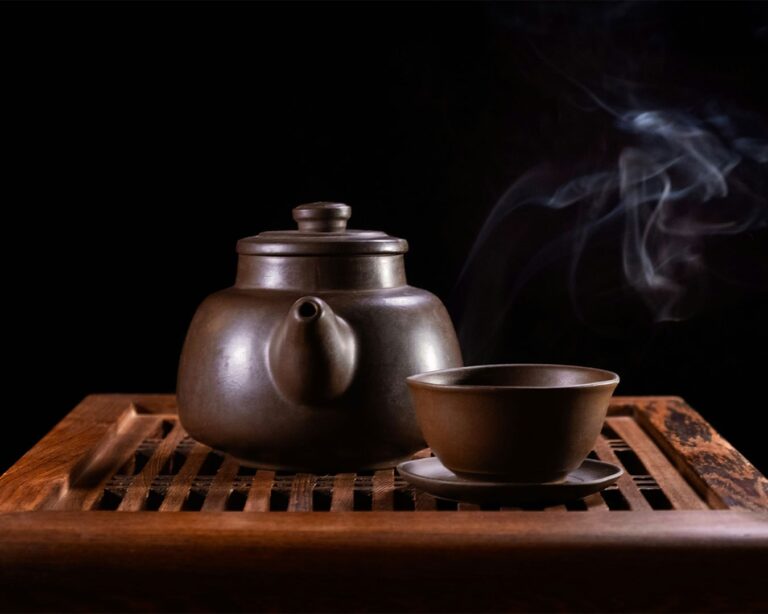
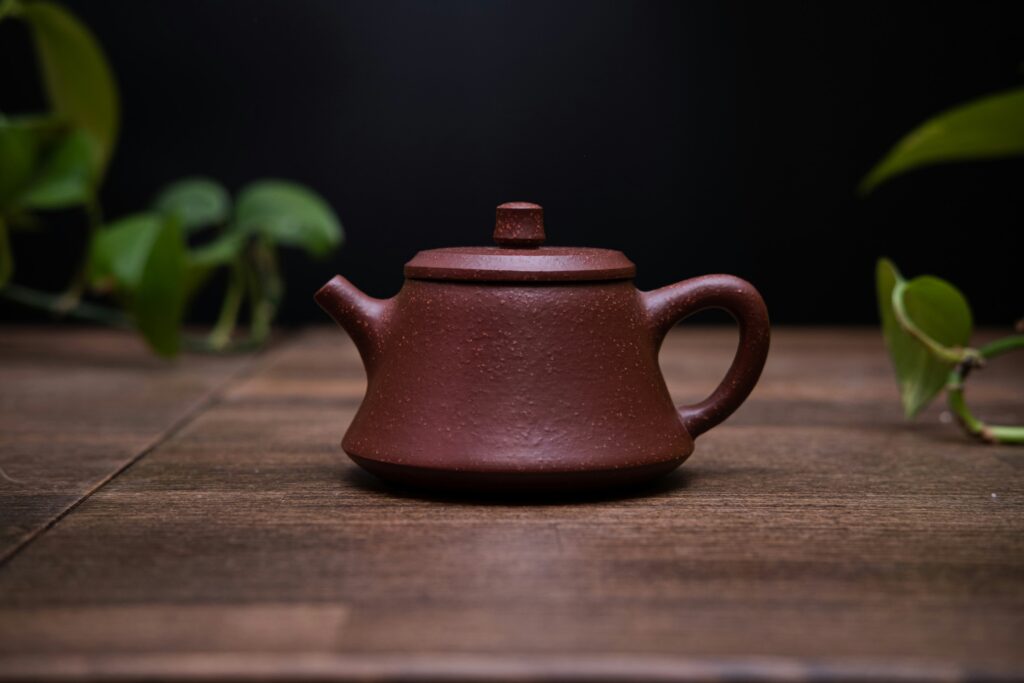
The Yixing teapot is among the most revered forms in Chinese tea culture. Originating from the Yixing region of Jiangsu Province, these teapots are crafted from yixing clay, often called purple sand or zisha clay.
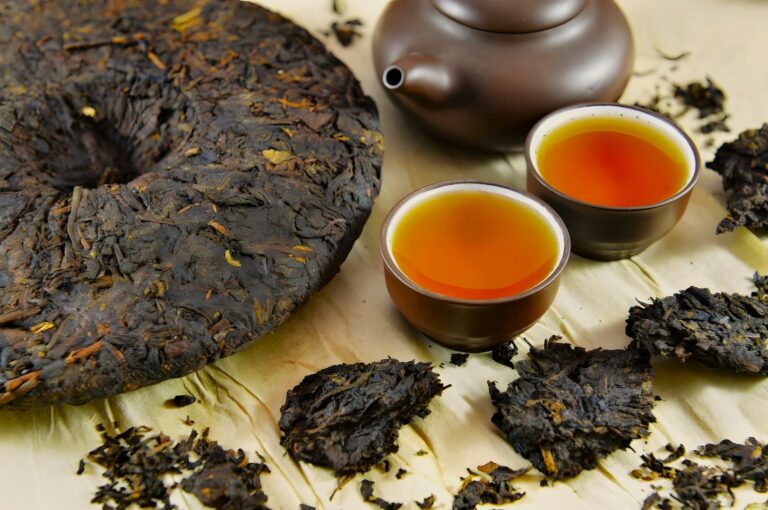
This earth clay is rich in quartz, mica, and iron. When high fired, it becomes dense yet porous, allowing the pot to breathe. Unlike porcelain teapots, a Yixing pot interacts with tea. Its microscopic pores absorb tea oils over time, softening bitterness and enhancing depth—particularly in strong tea such as pu erh, aged oolong, or black tea.
Because the clay remembers what it holds, tradition dictates dedicating one zisha teapot to one tea type. A well-made pot is hand-formed rather than wheel-thrown, often shaped with wooden tools. Signs of quality include balance in the hand, a clean pour from the spout, and a lid that seals perfectly.
Over time, a Yixing teapot develops a subtle sheen: a record of use, patience, and care. These are not decorative objects, but vessels with a unique history, shaped by both artisan and owner.
Porcelain Teapots: Clarity, Colour, and Precision
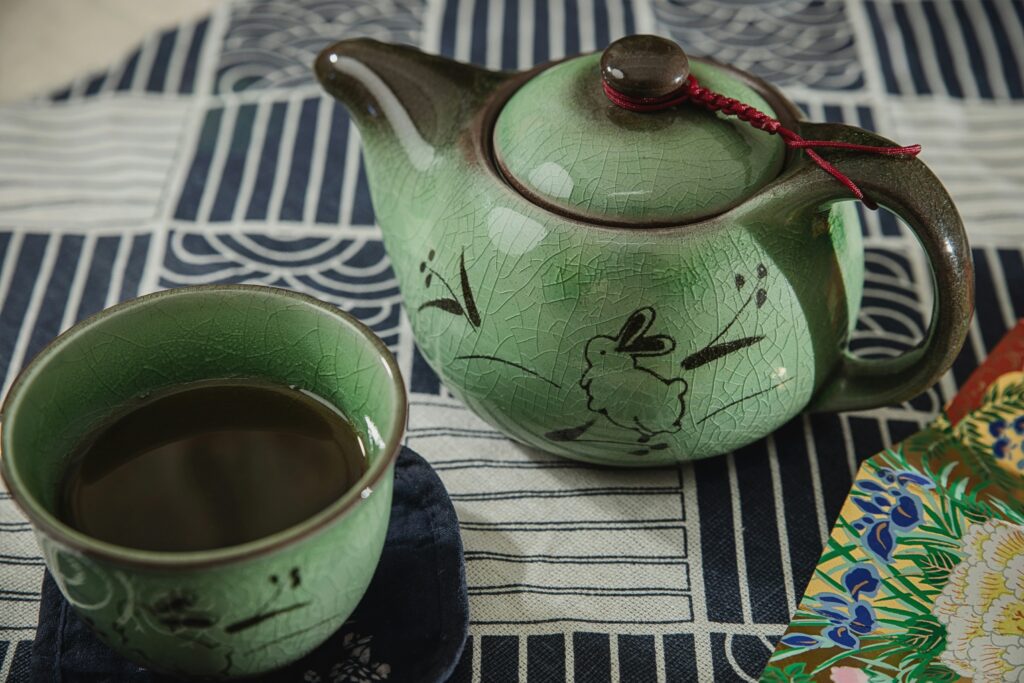
Porcelain Teapots & High-Fired Elegance
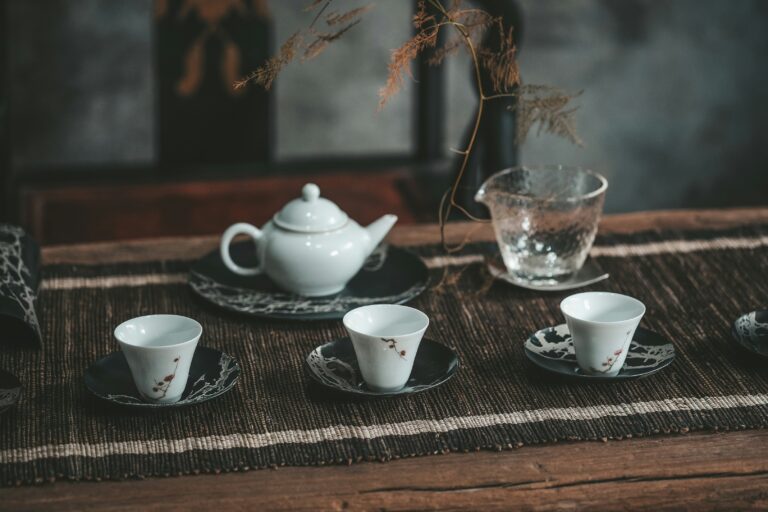
If clay speaks of earth, porcelain teapots speak of refinement. Developed to extraordinary levels in China (particularly in Jingdezhen) porcelain is high fired, smooth, and non-porous.
Because porcelain does not absorb aroma or flavour, it offers a clean expression of tea. This makes it ideal for green tea, white tea, and floral oolongs, where clarity matters. Porcelain teapots also handle low or high temperatures well, cooling more quickly than clay and preventing delicate leaves from stewing.
Whether decorated in blue-and-white designs from the Qing Dynasty or finished in a single monochrome glaze, porcelain teapots add visual calm to the tea ceremony. They are especially well suited to tasting sessions, entertaining guests or brewing multiple teas in one sitting.
Brewing Tea with a Gaiwan: Control and Versatility
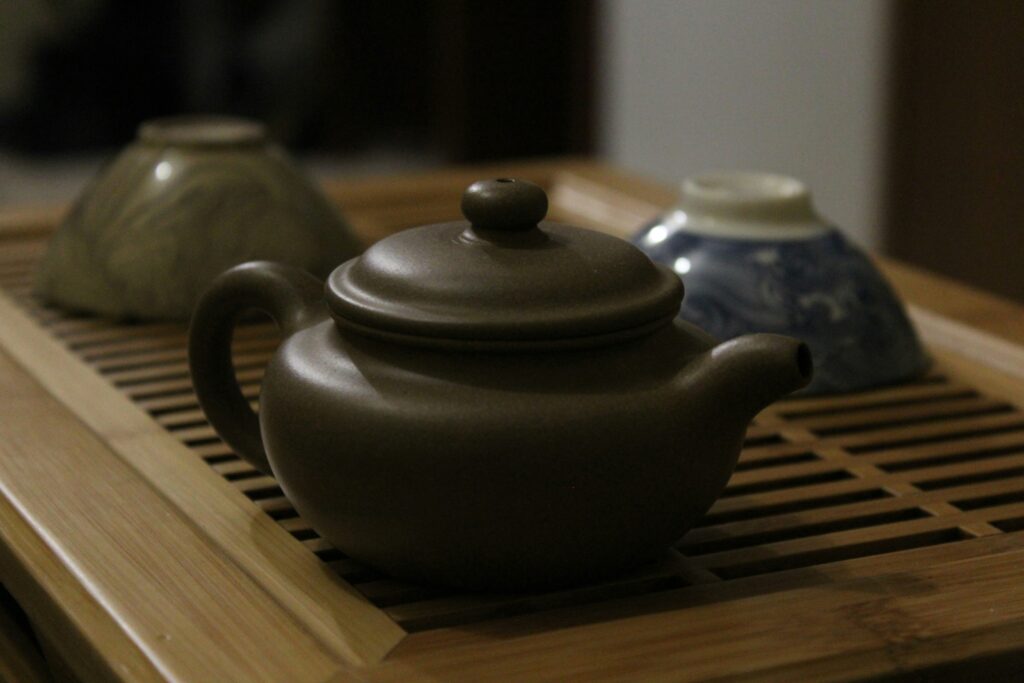
Gaiwan, Lid, and Precision
The gaiwan (a bowl, lid and saucer) is not a teapot in form, but it functions as one in practice. Favoured by tea professionals, it offers complete control over brewing tea.
The lid acts as a strainer, the bowl allows direct contact with tea leaves, and the open form makes it easy to adjust infusion time. A gaiwan works beautifully for almost any tea, from green to pu erh, and is especially useful when tasting new teas.
Mastery takes practice. The angle of the lid, the steadiness of the pour, the awareness of heat, all are part of the learning. For those who enjoy precision, the gaiwan remains one of the most versatile tools in the tea world.
How to Choose Your Chinese Teapot
Begin with the tea you most enjoy. Dark, aged teas such as pu erh or roasted oolongs benefit from a Yixing or other Chinese clay teapots. Lighter teas are better served by porcelain or a gaiwan. Consider scale: a small pot for a single cup and quiet contemplation, or a larger teapot for sharing tea with many guests.
Examine craftsmanship closely. Does the pot feel balanced? Does the spout pour cleanly without dripping? Does the lid sit securely? These details matter in daily use.
We often suggest starting with one versatile piece such as a quality gaiwan or a neutral clay teapot and building slowly. At Tea Room by Ki-Setsu, we curate vessels from trusted artisans, ensuring each piece honours the tradition it comes from.
Caring for Your Chinese Teapot
For Yixing and other unglazed clay teapots, rinse only with hot water. Never use soap. Allow the pot to air dry fully, with the lid off. Dedicate it to one tea family to keep flavours clean.
Porcelain teapots and gaiwans are more forgiving but still require gentle handling. Avoid sudden temperature changes, and take care with delicate rims and lids.
Over time, clay teapots develop patina. This soft sheen is not wear, but memory.
The Chinese Teapot at Tea Room by Ki-Setsu
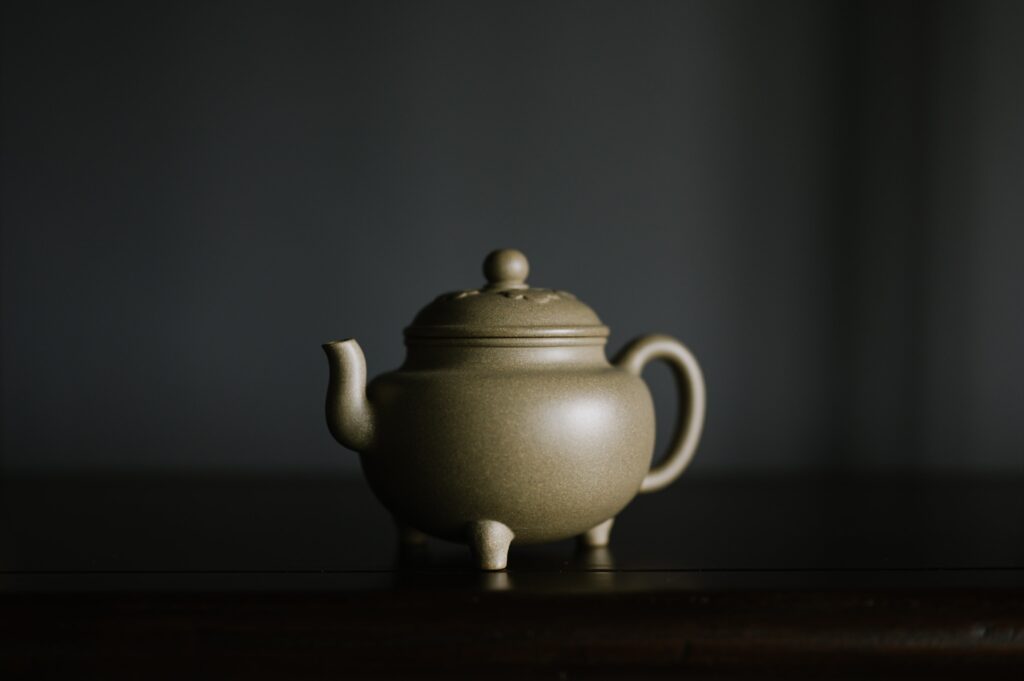
Within our private tea sanctuary, teapots are chosen with intention, reflecting the rich tradition of Chinese tea culture. Different teas call for different vessels. Dense pu erh is often steeped in a flat Yixing pot crafted from the unique mud of the Yixing region, while fragrant high-mountain teas may rest in elegant porcelain teapots. Our collection showcases various designs, blending traditional craftsmanship with contemporary artistry.
We feature both antique and modern artisan pieces, sourced from the Jingdezhen, Yixing region and beyond. Some are available for collectors while others remain in service, fulfilling their purpose through use. Here, the teapot is not merely display; it is a vessel for practice and the art of steeping tea.
Conclusion
The Chinese teapot is a bridge between past and present, embodying centuries of knowledge in its clay and form. Choosing the right vessel is not merely an acquisition but an invitation to engage in the traditional art of tea making, creating the perfect conditions for tea to steep and reveal its full flavor.
Whether you prefer a humble gaiwan or a treasured purple clay pot, the right teapot profoundly influences how you drink tea and experience its aroma and taste. For example, a Yixing teapot enhances the depth of strong teas through its porous clay, while porcelain teapots offer clarity for delicate brews. Paired with carefully selected teacups, these vessels complete the tea ritual.
We invite you to explore our curated collection at Tea Room By Ki-Setsu by booking a private session at https://tearoom.com.sg/ to experience firsthand how different teapots shape the art of steeping tea, elevating aroma, flavor, and texture.
Let your teapot be more than a tool. Let it be a companion.