Fruit seems like it should be easy with tea.
It is fresh, clean and naturally sweet. It feels lighter than pastry, less demanding than chocolate, and more innocent than savoury food. Yet fruit is often one of the quickest ways to disturb a tea. Too much perfume, too much chill, too much acidity, or too much ripeness can make the cup feel thinner, sharper, or strangely absent. A pairing that looked elegant on the plate can leave the tea with very little room to return.
At Tea Room by Ki-setsu, we think fruit and tea pairing works best when handled with real restraint. The fruit should never behave like a fragrance diffusing across the table. It should act more like a small shift in light. It should brighten the tea, or soften it, or steady it, but never replace it.
For a wider foundation on balance, aroma, and palate-building, begin with our tea pairing guide. Here, the focus is narrower: how pear, melon, citrus, and stone fruit meet Chinese teas, and why some fruits lift the cup while others quietly erase it.
Why Fruit Is One of the Most Misunderstood Pairing Partners
Fruit can seem gentle while behaving quite forcefully.
A pear may feel quiet, but still alter the tea through water content and sweetness. A slice of citrus may appear refreshing, yet sharpen the palate so quickly that the next sip loses its softness. A ripe mango may seem luxurious, but its fragrance can enter the nose before the tea has a chance to rise. This is why fruit should never be chosen only by category. Ripeness matters. Temperature matters. Perfume matters. Acidity matters.
The most successful tea and fruit pairing guide is therefore not about listing what is “healthy” or “seasonal.” It is about asking what the fruit does after it is swallowed. Does it clear the mouth? Does it cool it too much? Does it leave a trace of scent that supports the tea, or does it occupy the whole path of the next sip?
A good fruit pairing does not merely taste pleasant beside tea. It leaves the tea more legible afterward.
Five Fruit Families and What They Do to Tea
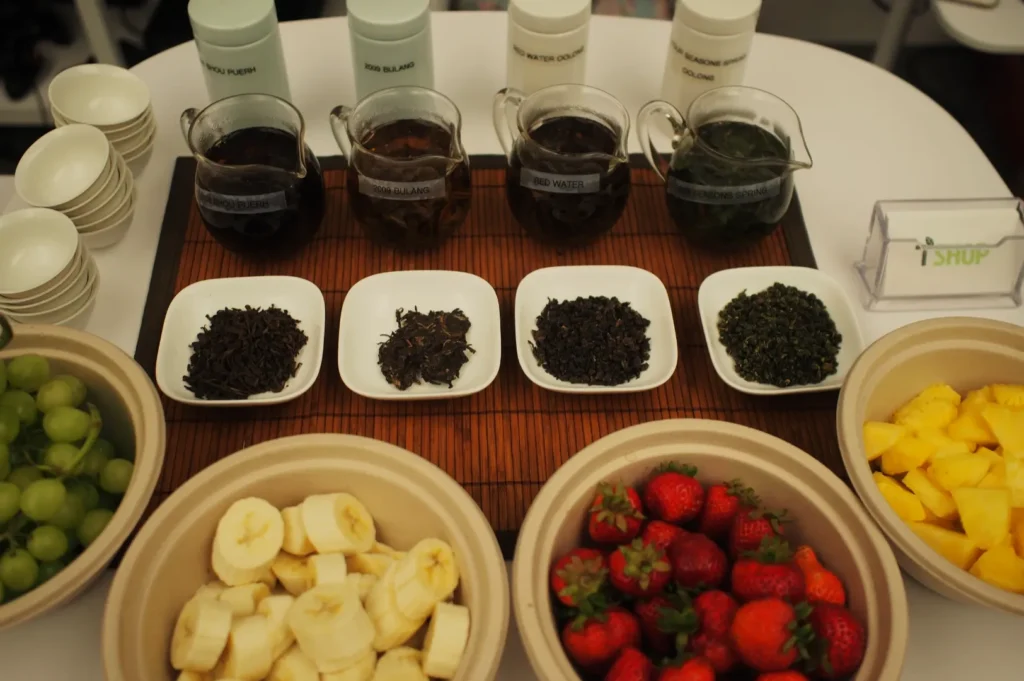
Pear: Gentle Sweetness and Soft Clarity
Pear is one of the quietest and most generous fruits at a tea table.
It is mild, low in acidity, usually modest in fragrance, and rarely aggressive in texture. Because of this, it often works beautifully with lighter Chinese teas. A good pear does not fight for the centre of attention. It gives the tea a clearer path back into the mouth. That is why pear with white tea can feel especially graceful. The fruit’s soft sweetness supports the tea without disturbing its delicacy.
Pear also works well with greener oolongs and certain calmer black teas, especially when the fruit is ripe but still composed. What matters is restraint. It should be cool rather than cold, sweet rather than sugary, fragrant rather than perfumed. Once the pear becomes overly juicy or overripe, it can begin to flatten the finish instead of lifting it.
At Tea Room by Ki-setsu, we often think of pear as one of the safest fruits precisely because it does so little theatrically. Its elegance lies in how little it asks the tea to overcome.
Melon: Water, Coolness, and Light Floral Space
Melon is a more atmospheric fruit.
Its effect on tea often comes through water and temperature as much as flavour. A good melon offers coolness, freshness, and a soft sweetness that can open space around greener teas. This is why melon with oolong can work beautifully when the tea already carries floral lift or spring-like clarity. The fruit feels airy, and the tea remains visible through that air.
But melon is more fragile as a pairing than pear. If served too cold, it can mute the tea immediately. If overripe, it becomes too aromatic and sweet. If under-ripe, it brings water without generosity. The best melon pairings are therefore delicate and measured. A few pieces are usually enough. Their role is not to become the main event, but to create a brief palate reset that lets the tea return with more openness.
This is especially useful with fresher, greener teas that respond well to lightness. A more roasted or deeper tea may feel oddly displaced beside melon, as if the fruit has taken the room in a direction the tea was never trying to enter.
Citrus: Brightness That Must Be Handled Carefully
Citrus is one of the most difficult fruits to pair well with tea.
Its brightness is immediately attractive. It promises freshness. It suggests that the cup might become more vivid. Sometimes this is true in the first second. But after that, citrus often begins to cut across the tea rather than through it. Acidity sharpens the palate quickly. Subtler tea becomes shorter. Softer teas may begin to feel hollow. Even when the pairing is not disastrous, it is rarely as quiet as it first appears.
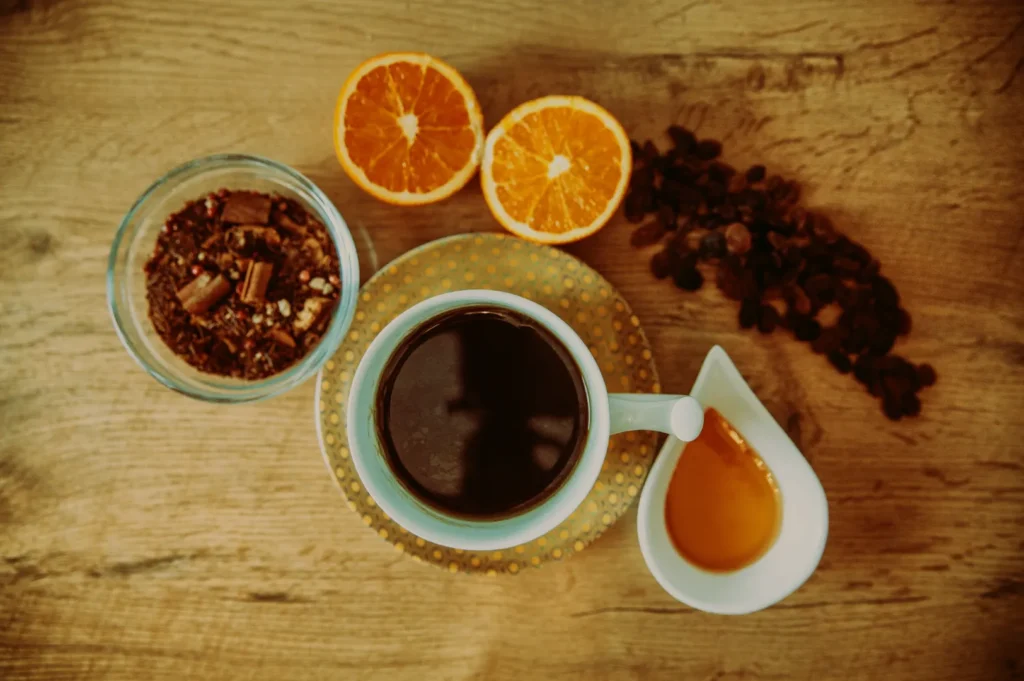
This does not mean citrus can never be used. Sweet, gentle segments in very small quantity may work when the tea has enough structure to remain present. But citrus must be handled with great care. It is not a fruit for abundance at the tea table. It is a fruit of edge, and edge can be expensive when the tea relies on softness or aftertaste.
At Tea Room by Ki-setsu, we would always choose citrus only when the tea can bear being sharpened. A highly acidic fruit may look refreshing, but refreshment and harmony are not always the same thing.
Stone Fruit: Warmth, Soft Flesh, and Gentle Fragrance
Stone fruit sits in a particularly beautiful middle register.
Peach, apricot, plum and nectarine all bring more warmth than pear and more softness than citrus. When ripe but not overdone, they can feel generous without becoming loud. This is why fruit pairing for black tea often works so well through stone fruit. A fine black tea can gather the sweetness of peach or the mellow flesh of plum and make it feel deeper rather than heavier.
The key is to avoid fruit that is too perfumed or too soft. Overripe stone fruit can quickly dominate the cup, especially if it leaves a floral fragrance hanging in the nose after the bite. But when balanced well, these fruits can be some of the loveliest companions to fuller teas. The tea adds shape to the fruit, and the fruit softens the tea’s darker warmth.
This is one of the quiet pleasures of Chinese tea with fruit. The pairing does not need to be dramatic to feel complete. A modest slice of peach and a calm black tea can often say more than an elaborate sweet course.
Tropical and Highly Perfumed Fruits: The Ones to Approach Carefully
Not every fruit belongs naturally at a tea table.
Mango, pineapple, passionfruit, lychee, and other highly perfumed or highly acidic fruits often overwhelm the cup long before the tea has had a fair chance. Their scent enters the nose quickly. Their sweetness can be dense. Their acidity, when present, can sharpen the palate too abruptly. Even when they feel beautiful as fruit, they may be poor companions to a refined tea.
This is especially true in a tea setting built on subtle aroma and finish. A tea that was elegant on its own may become almost invisible after a bite of strongly tropical fruit. The fruit remains. The tea becomes background.
At Tea Room by Ki-setsu, we tend to approach these fruits with caution. Their beauty is not the question. Their volume is. When fruit is too fragrant, the tea must work too hard simply to remain audible.
A Simple Way to Choose Fruit with Tea
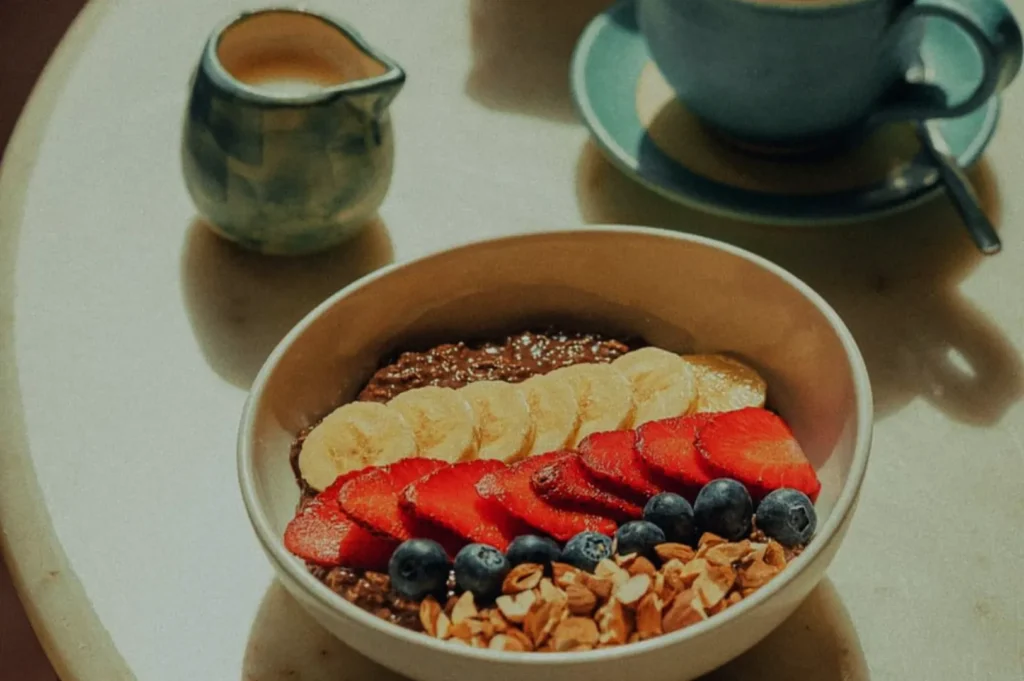
A practical approach begins with the fruit’s main force.
Is it watery, acidic, fragrant, softly sweet or dense in scent? That is more useful than beginning with the fruit’s popularity or colour. Once that is clear, ask what the tea needs preserved. Is the tea delicate and aromatic? Then it needs a fruit that gives room. Is the tea warmer and more structured? Then it may be able to carry a slightly fuller fruit.
After that, test the second sip carefully. Do not judge at the moment of contact. Let the fruit settle. Then return to the tea. The right fruit makes the tea feel calmer, clearer, or more complete. The wrong fruit makes the tea feel weaker, sharper, or shorter than it was before.
The best fruit pairing is often the fruit that leaves the least obstruction in the tea’s path.
Common Fruit Pairing Mistakes
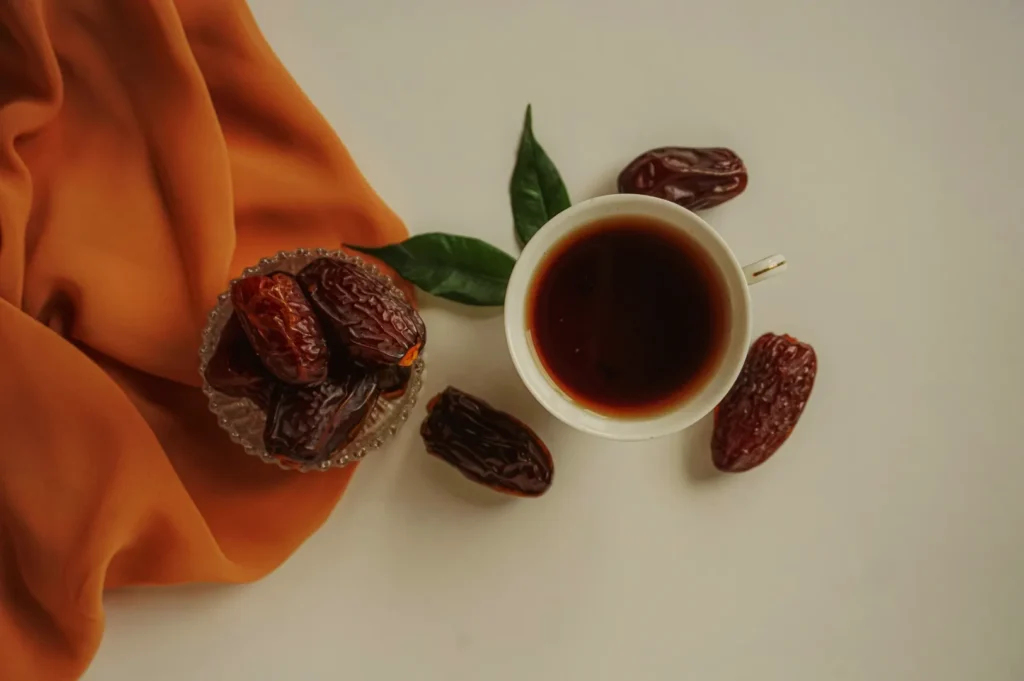
One common mistake is serving fruit too cold. This seems refreshing, but excessive chill can flatten aroma immediately.
Another is choosing fruit for colour rather than ripeness. A beautiful plate does not guarantee a good pairing. Highly perfumed fruit is another danger, especially with subtle teas. Strong fragrance often reaches the nose before the cup does. Very acidic fruit is also difficult with delicate leaves, even when the flavour seems bright and attractive in theory.
A further mistake is serving too many fruits at once. The palate loses direction, and the tea begins to feel less like a pairing partner than an afterthought. Fruit should narrow the experience, not scatter it.
Fruit Should Brighten the Tea, Not Replace It
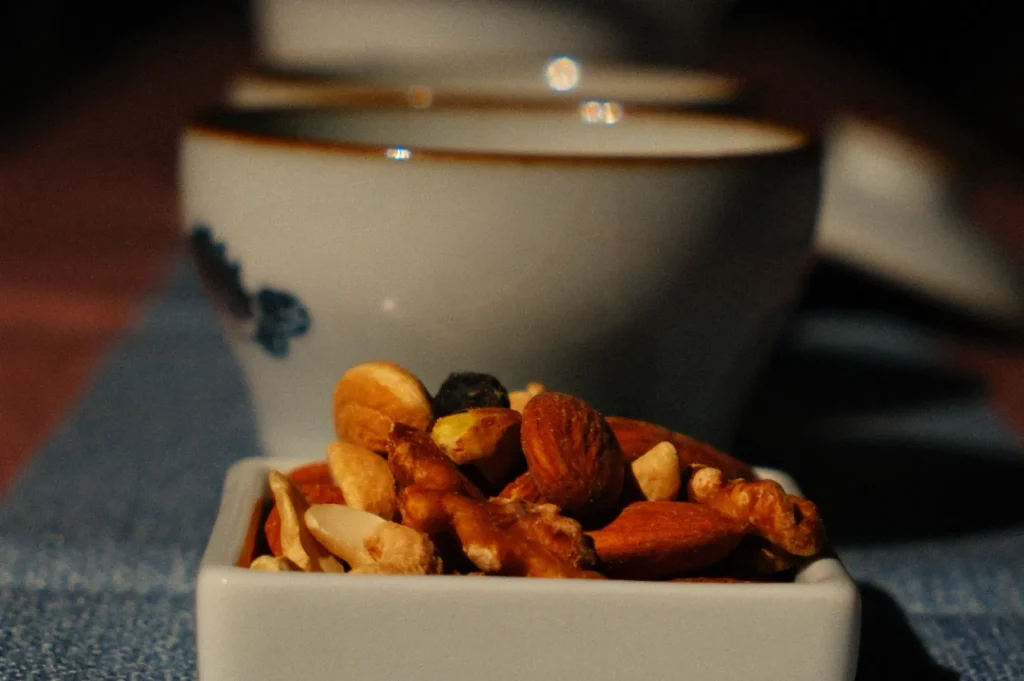
Fruit is at its best with tea when it behaves lightly.
It should feel like a small opening, not a competing centre. At Tea Room by Ki-setsu, we think the finest fruit pairings are often the gentlest ones: pear beside white tea, melon with greener oolong, stone fruit with a calm black tea. The tea remains central. The fruit gives it just enough contrast, sweetness, or coolness to deepen the experience.
Fruit should behave like light at the tea table, not perfume.