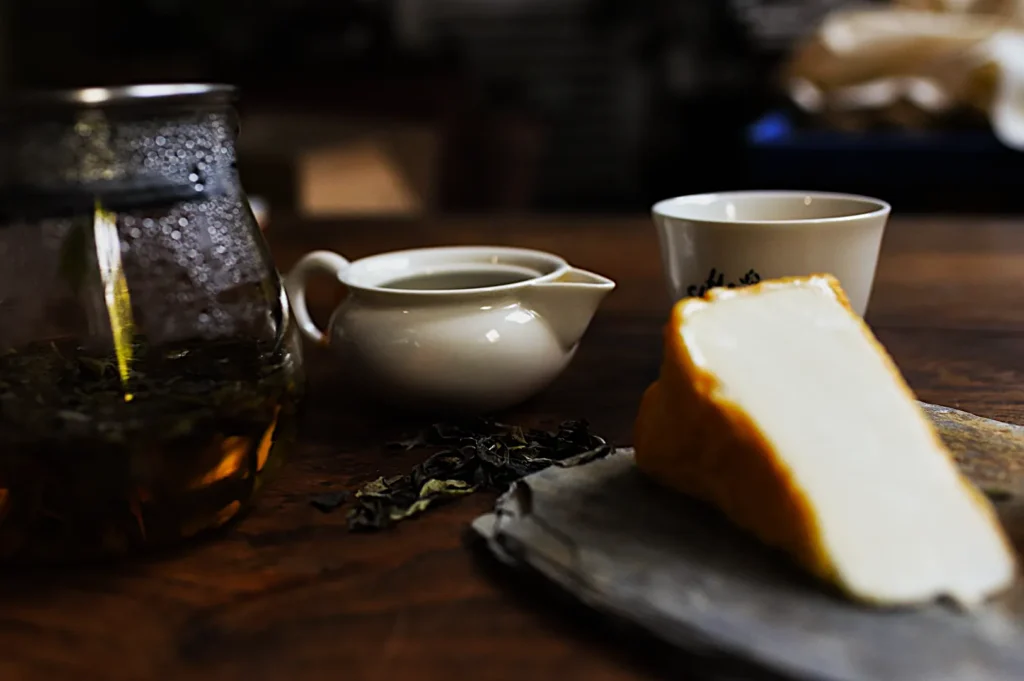
Cheese seems, at first glance, like a natural companion to tea.
Both can feel refined. Both reward slower attention. Both carry texture, aroma, and finish in ways that change from moment to moment. And yet tea and cheese pairing is far less forgiving than it appears. Cheese can deepen a tea beautifully, but it can also flatten the cup almost instantly. Salt can harden a delicate finish. Fat can blur aroma. A rind can dominate the room before the tea has a chance to rise.
At Tea Room by Ki-setsu, we think the most satisfying pairings are rarely built on richness alone. They are built on proportion. The tea should not disappear beneath the cheese, and the cheese should not be reduced to a mere accent.
For a broader foundation on balance, contrast, and structure, begin with our guide for more nuanced pairings. Here, we stay with one particularly quiet and demanding table: how tea meets cheese, and how salt, fat, creaminess, and floral lift can either support the cup or quiet it too much.
Cheese Can Deepen Tea, or Quiet It Too Much
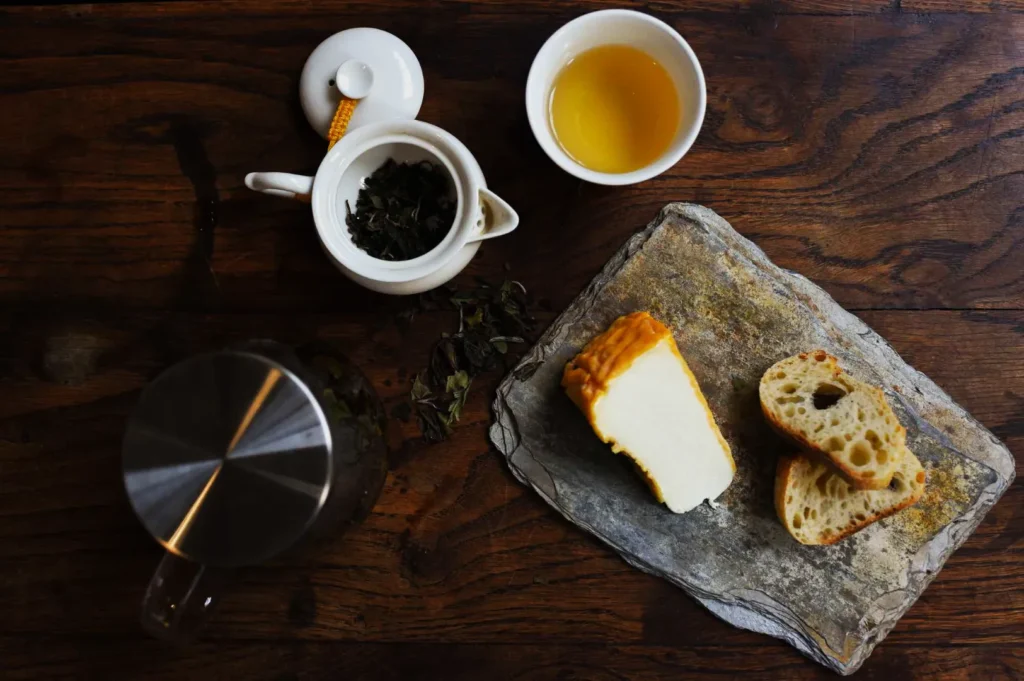
Cheese changes the mouth quickly.
Even a small piece brings salt, fat and texture into the palate all at once. Some cheeses melt gently and leave the tea more rounded. Others coat the mouth so heavily that the next sip feels dimmer than the first. This is why the best tea with cheese is not automatically the strongest tea. Strength alone is not the answer. Sometimes a forceful tea only makes the pairing feel heavier.
What matters is the direction of the cheese. Is it fresh and lactic, creamy and soft, nutty and firm, or pungent and washed with a more insistent aroma? The tea must decide whether to lift, clear, soften, or absorb. A good tea and cheese pairing does not compete for the palate. It reshapes it together.
Why Cheese Is One of Tea’s Most Demanding Pairing Partners
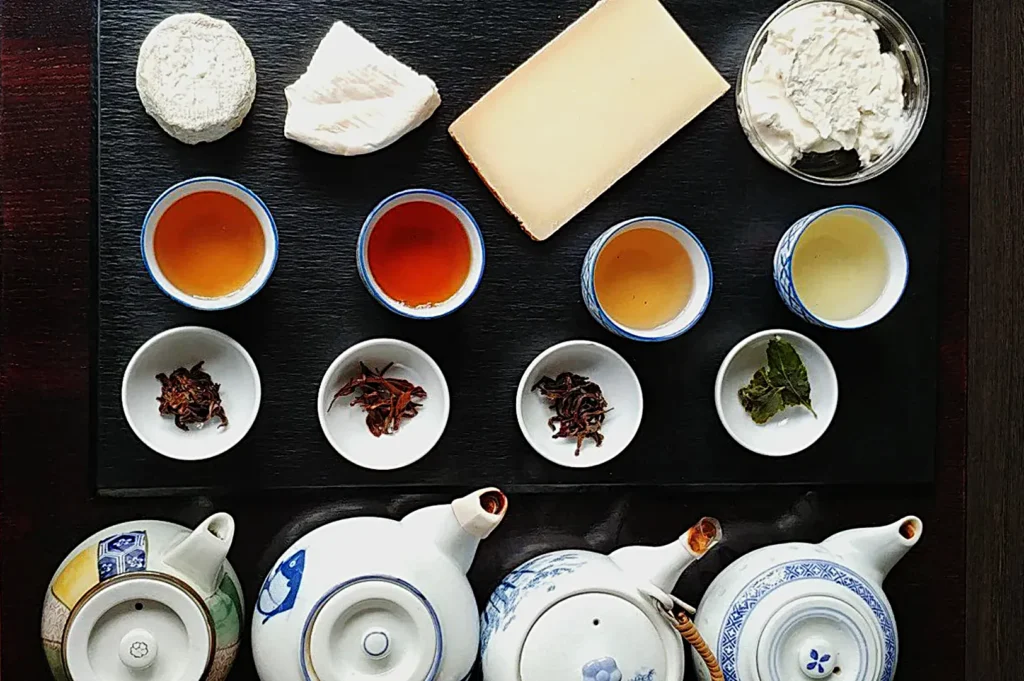
Cheese asks a great deal from tea because it combines several textures and flavours that linger.
Salt sharpens perception at first, then shortens the finish if it is too strong. Fat smooths the palate, but may also smother aromatic detail. Fermentation can add savoury beauty, or a kind of aromatic weight that blocks the tea entirely. This is what makes cheese such an interesting but exacting partner. It is not enough for the tea to “match” the flavour. It must still have room to breathe afterward.
At Tea Room by Ki-setsu, we find that Chinese tea with cheese works best when the pairing has a clear purpose. Sometimes the tea should cleanse the mouth. Sometimes it should echo the cheese’s warmth. Sometimes it should simply remain calm and coherent in the presence of salt and cream. The most refined pairings are the ones where the tea returns with greater clarity, not less.
Five Cheese Styles and What They Do to Tea
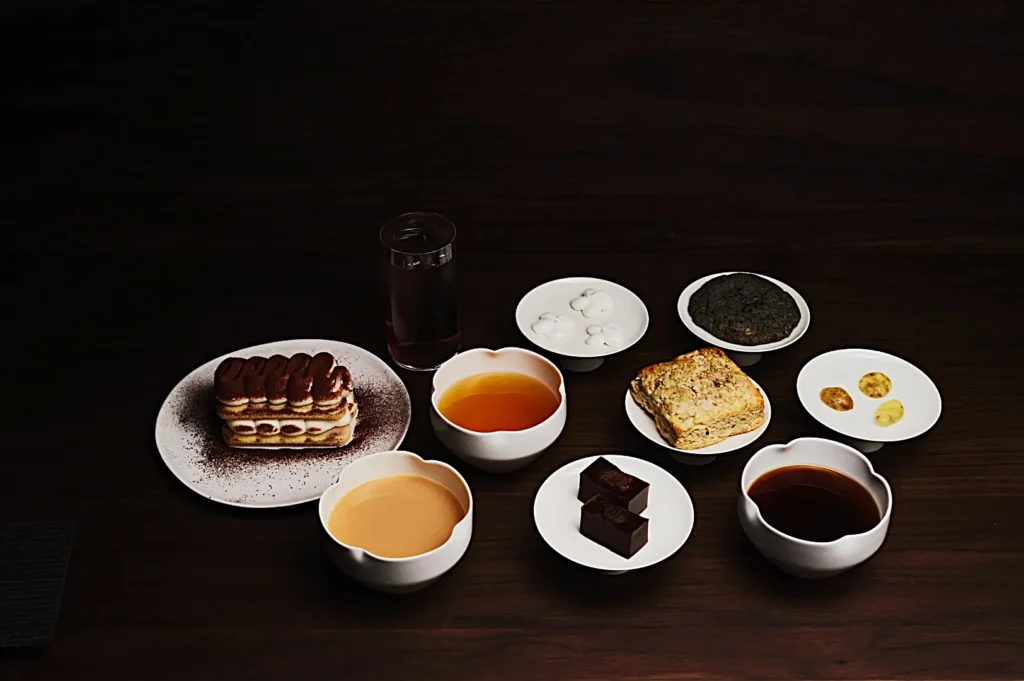
Fresh Cheeses and Clean, Green Teas
Fresh cheeses are often the easiest place to begin.
Ricotta, mozzarella, young chèvre, and other mild, clean cheeses carry moisture and softness without too much aromatic pressure. Their salt is usually gentler, and their texture remains open rather than heavy. This gives the tea a chance to respond with lightness rather than force. A greener oolong or a floral tea can work beautifully here because the cheese is not asking the tea to survive intensity. It is asking the tea to remain clear.
This is where floral tea cheese pairing can feel especially elegant. The tea’s lift stays visible, while the cheese softens the edges of the sip. The pairing works because neither one is trying to dominate. A small piece of fresh cheese can make a more delicate tea feel steadier without muting its upper notes. Fresh cheese is often most beautiful when it leaves the tea more open, not more full.
Soft Bloomy Cheeses and Floral Lift
Bloomy-rind cheeses such as Brie or Camembert bring more complexity.
Their interiors are creamy and coating, but their rinds remain much quieter than washed-rind cheeses. This makes them more pairable with tea than many people assume. The challenge is not their intensity, but their softness. A tea that is too delicate may vanish into the cream. A tea that is too severe may make the pairing feel abrupt.
A gently roasted oolong or a tea with enough floral structure can work well here. The creaminess rounds the tea, while the tea keeps the cheese from feeling too dense. When the balance is right, the pairing becomes almost seamless. The tea enters through the cream, then rises again in the finish. This is one of the places where tea and cheese pairing can feel quietly luxurious without becoming overly rich.
Nutty, Firm Cheeses and Roasted Oolong Warmth
Nutty, firmer cheeses often create the most intuitive pairings.
Comté, Gruyère, Alpine-style cheeses, and similar aged cheeses carry savoury depth, a dry firmness, and often a toasted or browned quality that sits beautifully beside roasted oolong. This is where roasted oolong cheese pairing feels especially natural. The tea does not have to cut through cream or survive a pungent rind. Instead, it echoes warmth, structure, and a certain gentle savouriness.
Salt still matters here, but the pairing is usually easier to control because the texture is drier and more contained. The tea can gather the cheese’s nuttiness and extend it into the finish. At Tea Room by Ki-setsu, we find these pairings especially satisfying because they feel composed rather than dramatic. The tea and cheese do not surprise each other. They recognise one another.
Washed-Rind and Stronger Aromatic Cheeses
Washed-rind cheeses are where tea begins to struggle.
Their aroma often enters the room before the tea does. They can be beautiful cheeses, but they ask for a great deal from the pairing. If the tea is floral or green, it usually disappears. If the tea is too soft, the rind simply occupies the entire sensory space. Only a more grounded, roasted, or darker tea has a real chance of remaining legible.
Even then, the pairing must be measured carefully. The point is not to prove that tea can stand beside every strong cheese. The point is to recognise when a cheese is more interesting than it is supportive. Some washed-rind cheeses create pairings that are intellectually intriguing, but not particularly elegant in the cup. Not every impressive cheese belongs naturally at a tea table.
Blue Cheese and Darker, Stronger Teas
Blue cheese needs the greatest caution of all.
Its salt is sharper, its fermentation more pronounced, and its finish much longer than most teas can easily absorb. A delicate tea has almost no chance here. Even many darker teas will simply be pushed into the background. Blue cheese tea pairing only begins to work when the portion is very small and the tea is calm, dark, and sufficiently structured.
This is one of the rare moments where stronger, more grounded teas can make sense, not because strength is always best, but because the cheese gives them no other choice. Even so, the pairing should feel measured rather than bold for its own sake. Blue cheese is not impossible with tea. It is simply unforgiving. When it works, it works through control.
A Simple Way to Choose the Best Tea with Cheese
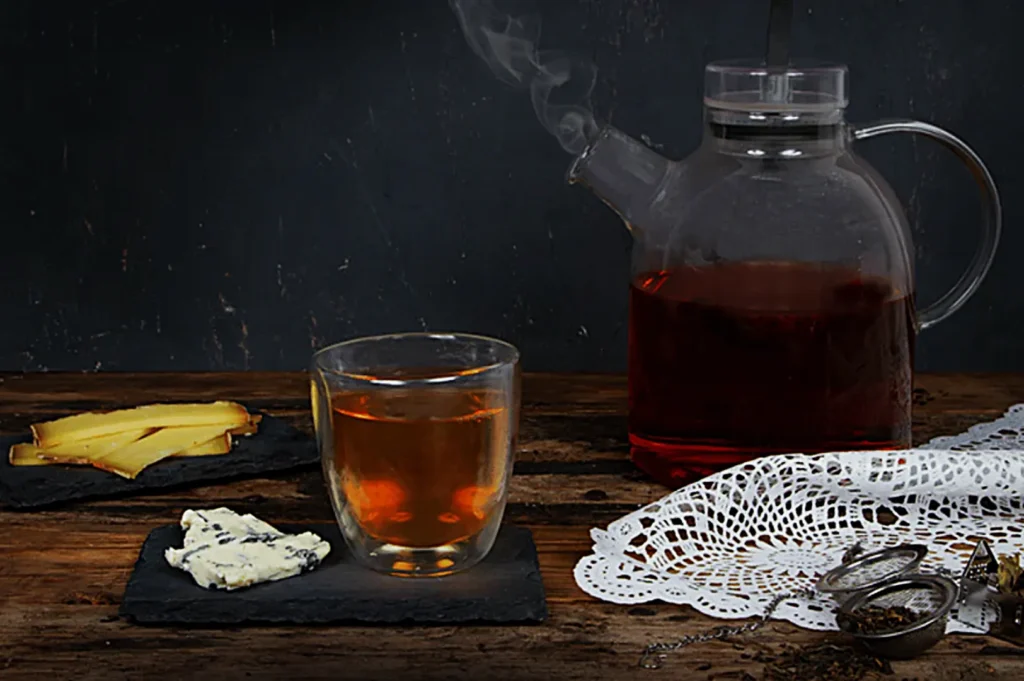
A practical approach begins with the cheese, not the tea.
Taste the cheese first and ask what its main force is. Is it salty, creamy, nutty, pungent, or soft? Then decide what the tea must do. Should it lift the cheese, clear the mouth, soften the edges, or simply hold its own? Only after that should you pour.
Then pay close attention to the second sip. The best tea with cheese is the one that still feels articulate after the bite has settled. If the tea seems dimmer, flatter, or more crowded, the pairing has gone wrong. If it comes back clearer, warmer, or more composed, the tea has found its role.
At Tea Room by Ki-setsu, we find this second sip is where the pairing tells the truth. First impressions can be seduced by richness. The second sip reveals whether the tea is still alive.
Common Tea and Cheese Pairing Mistakes
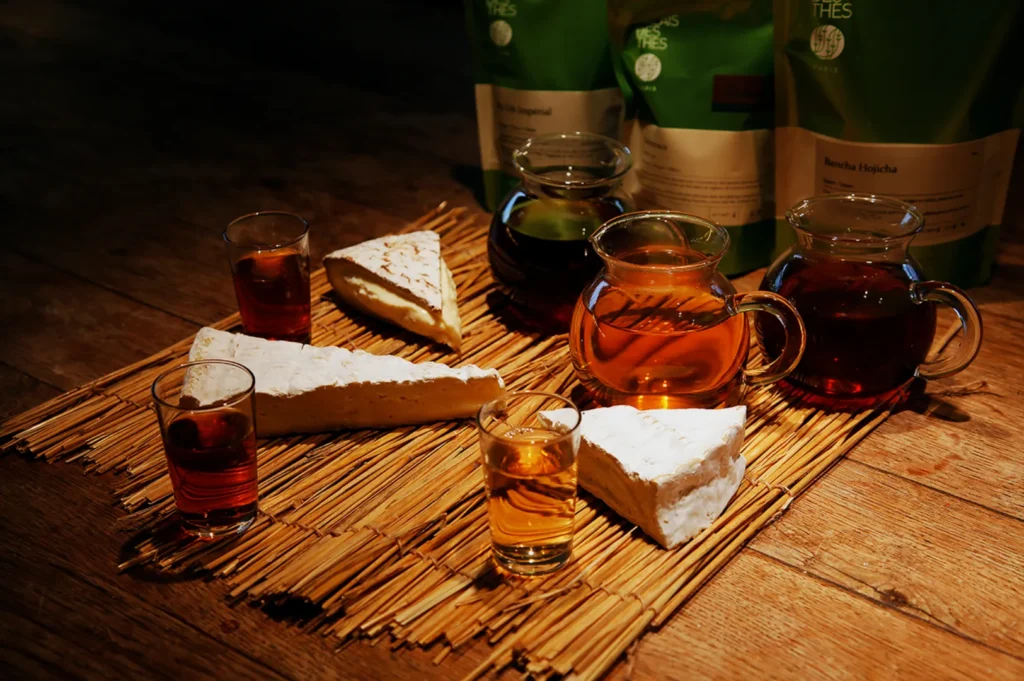
One common mistake is pairing very delicate tea with very salty cheese. The tea loses its line almost immediately.
Another is choosing tea only by strength and ignoring aroma. A strong tea may survive the cheese, but still make the pairing feel clumsy. Serving too much cheese at once is another problem. Fat accumulates. The palate dulls. The tea becomes harder to hear with every bite.
Pungent rind cheeses with floral teas are another frequent mismatch. So is treating blue cheese as though it automatically belongs with anything dark or strong. Cheese pairing demands more care than that. It is not a contest of intensity. It is a question of whether the tea can still move.
Pair Cheese with Tea That Can Still Breathe
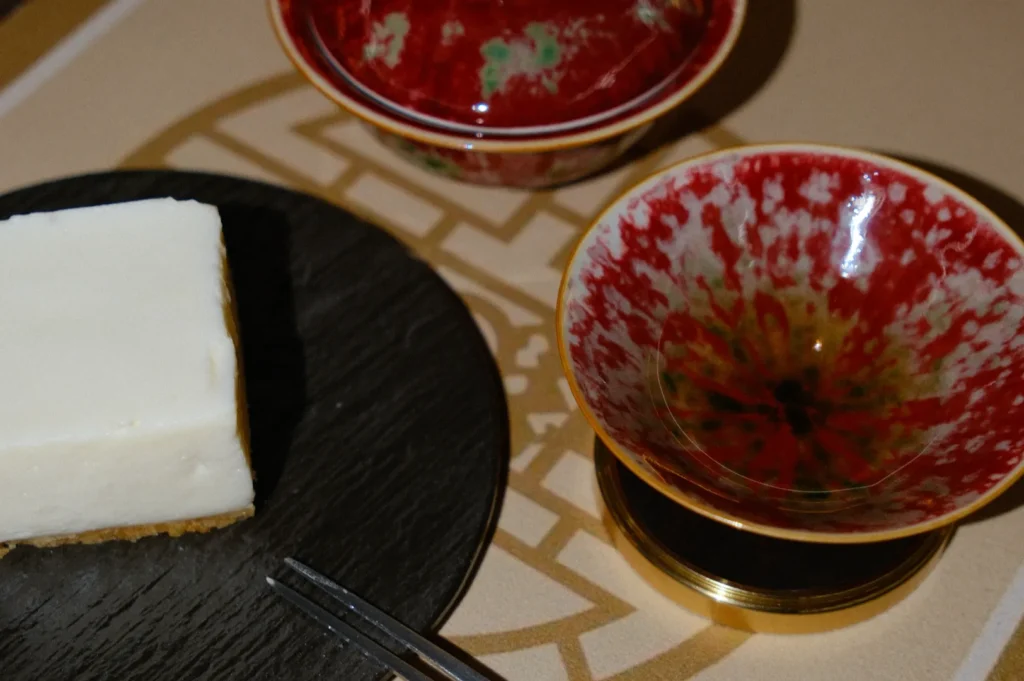
Cheese can be one of tea’s most beautiful companions when handled with restraint.
At Tea Room by Ki-setsu, we believe the finest pairings are not the richest ones, but the clearest ones. The tea should still have breath, shape, and finish after the cheese has passed. The cheese should feel more distinct, not heavier. A refined tea and cheese pairing is not about indulgence alone. It is about knowing how much room the tea needs in order to return gracefully.