Introduction – Why Brewing Method Matters for Da Hong Pao
To hold authentic Da Hong Pao tea is to hold a piece of history. As one of the most expensive tea varieties in the world, this legendary Wuyi rock tea deserves a preparation method that honours its profound character. Da Hong Pao is a type of oolong tea produced in the Wuyi Mountains of Fujian Province, China, renowned for its Chinese heritage and deep association with Fujian Province’s tradition of crafting exceptional oolong teas. To truly appreciate the leaf before it meets water, one must first understand the legend and imperial heritage behind Da Hong Pao, a story rooted deeply in the cliffs of Wuyi.
Authentic Da Hong Pao from the Wuyi Mountains can command thousands of dollars, a price tag that reflects its rarity, masterful production, and rich legacy. The tea is primarily derived from the original mother plants, which are highly protected and no longer harvested, making any tea from these plants extremely valuable. The way you brew Da Hong Pao directly impacts its taste, aroma, and the overall experience. A rushed, careless approach will yield a flat, one-dimensional cup, masking the layers of complexity within the leaves.
This guide will introduce the gongfu-style preparation, a method designed to reveal the full potential of this Big Red Robe tea across six to eight distinct infusions, transforming a simple drink into an exceptional journey of flavour.
Understanding Da Hong Pao Tea’s Character
Da Hong Pao, a Wuyi oolong, is known for its unique yan yun or “rock rhyme,” a mineral essence from the rocky cliffs where it grows. This heavily oxidized tea offers a complex flavor profile with earthy notes, hints of stone fruit, brown sugar, molasses, roasted depth, orchid fragrance, and subtle tobacco. Its velvety smooth body features mild sandalwood notes and a balanced profile. The true greatness of Da Hong Pao unfolds across multiple steepings, with taste varying by fermentation and brewing methods, making each session unique.
It is this evolving experience that also shapes the health-promoting effects traditionally linked to Da Hong Pao, reinforcing its place in both tea culture and holistic practice.
Essential Tools & Setup
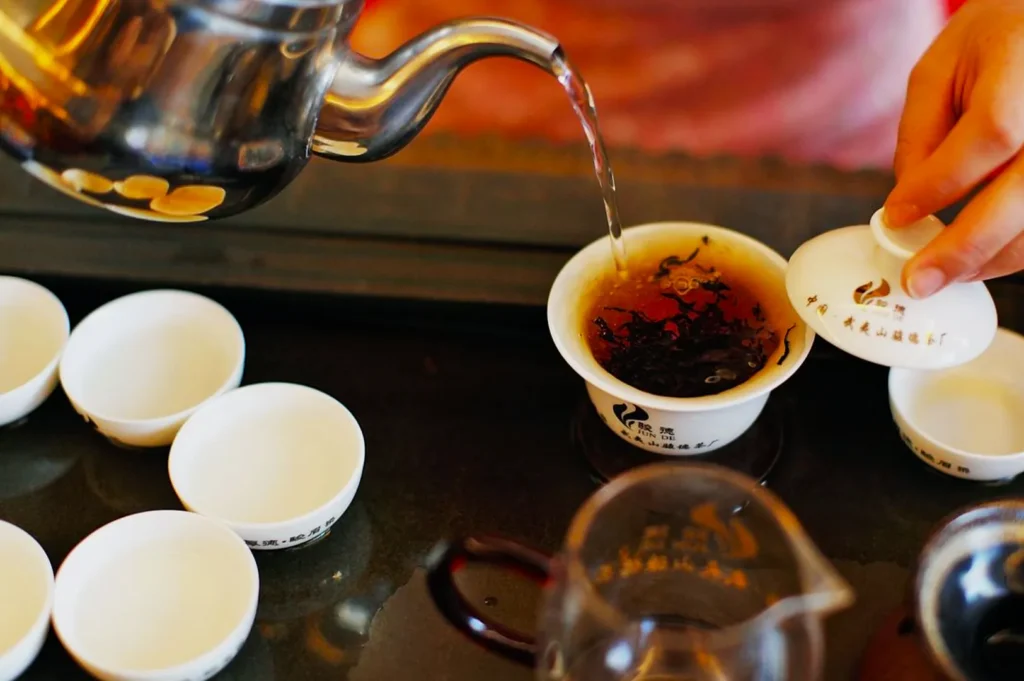
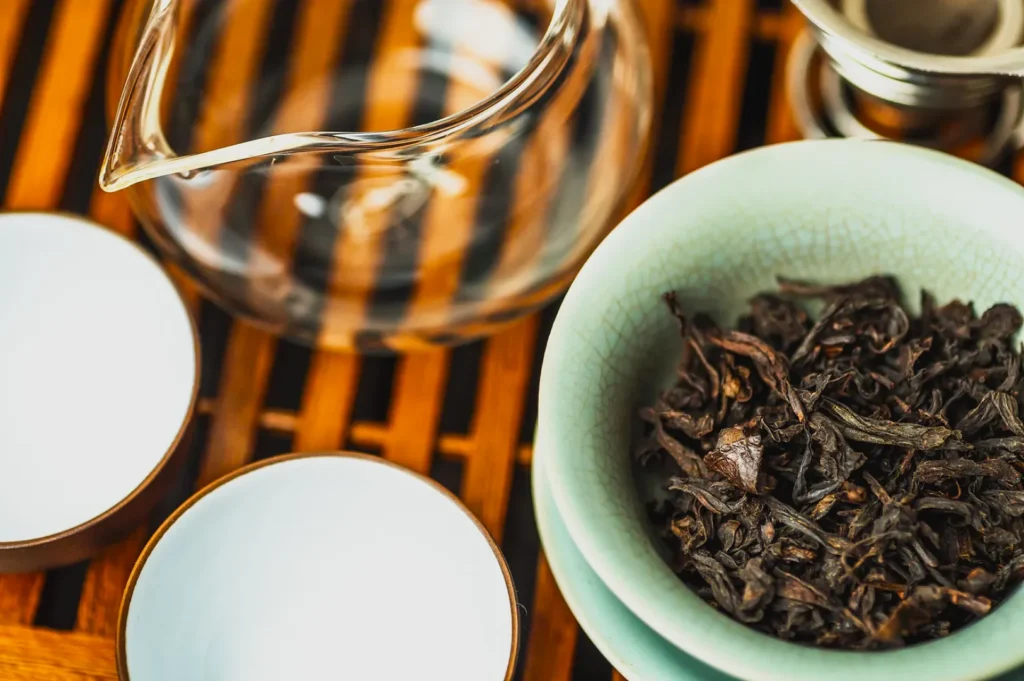
To brew Da Hong Pao using the gongfu method effectively, you will need the following tools and setup:
Preheat your vessel: Always rinse your teapot or gaiwan with hot water before brewing. This ensures even temperature distribution and maximizes flavor extraction.
Choose the right vessel:
Yixing clay teapot: Traditional choice; its porous clay absorbs tea oils over time, enhancing flavor with each use.
Porcelain gaiwan: A lidded bowl that allows you to observe the leaves and control the pour precisely. Always cover with the lid during steeping to trap heat and aroma for a richer brew.
Measure your tea: Use 5-7 grams of loose-leaf Da Hong Pao for a 100-150ml vessel.
Use high-quality water: Purified or spring water is essential to preserve the delicate notes of the tea. Avoid tap water as chlorine can interfere with flavor.
Additional tools:
A strainer to catch small leaf particles.
A gong dao bei (fair cup) to ensure consistent servings.
Small tasting cups for appreciating aroma and flavor.
Following this setup will help you unlock the full character of Da Hong Pao in your brewing experience.
Tip: When pouring water into the gaiwan, pour along the inner wall rather than directly onto the leaves to help keep the tea soup clear.
The Gongfu Method Step-by-Step
Learning how to brew Da Hong Pao using the gongfu method is simple and rewarding. Each step helps unlock the full flavor of this famous Wuyi rock tea.
Step 1 – Preheat the Teapot
Start by preheating your teapot or gaiwan with hot purified water. Let it sit for about 30 seconds, then discard the water. This keeps the brewing temperature stable and wakes the vessel.
Step 2 – Add Loose Leaf Tea
Add 5-7 grams of Da Hong Pao tea leaves to the preheated vessel. Notice the dark, twisted leaves with a rich roasted aroma typical of authentic Da Hong Pao.
Step 3 – Rinse the Leaves
Pour boiling water (95-100°C) over the leaves to fill the vessel, then quickly pour out the water after 5 seconds. This rinse awakens the leaves and removes any dust.
Step 4 – First Infusion
Refill with hot water and steep for 20-30 seconds. Pour the brewed tea into a fairness cup using a strainer, then serve into tasting cups. This ensures consistent flavor for all tea drinkers.
Step 5 – Subsequent Infusions
For each next infusion, add 10-15 seconds to the steeping time. Quality Da Hong Pao oolong can yield 6-8 infusions, each revealing new layers of flavor. Always pour out all the tea after steeping to avoid over-extraction.
Tasting Notes Across Infusions
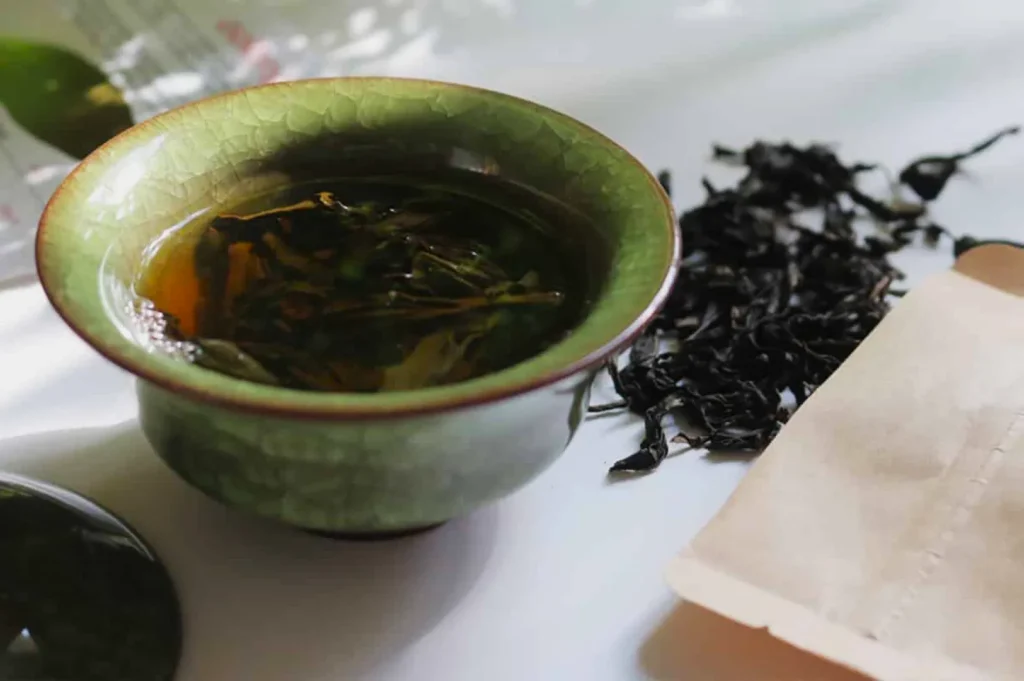
Da Hong Pao’s flavor, aroma, and color evolve beautifully with each steeping, revealing the tea’s complex character.
Infusions 1-3: Bright and floral, featuring fresh orchid notes and light mineral undertones. These early brews offer subtle sweetness and gentle roasted flavors, creating a clean and refreshing cup.
Infusions 4-6: The tea develops a fuller body with richer, deeper flavors such as notes of tobacco, dark chocolate, and roasted nuts. The distinctive mineral yan yun intensifies, while floral aromas give way to warm, complex scents.
Infusions 7 and beyond: Roasted notes mellow out, allowing the natural sweetness to shine through. The finish is smooth, long-lasting, and comforting, leaving a pleasant aftertaste.
Regular tea drinking of Da Hong Pao aids digestion, stimulates bile flow, and calms the nervous system, contributing to its reputation as a healthful Chinese tea.
Common Mistakes & How to Avoid Them
Brewing a tea of this quality can feel intimidating, but avoiding a few common pitfalls will ensure a beautiful result.
Over-steeping: This is the most common mistake. Leaving the tea leaves in hot water for too long will extract too many tannins and create a bitter, astringent brew. Be mindful of your timing, especially in the first few infusions.
Wrong Water Temperature: While delicate green teas require cooler water, this heavily roasted oolong needs hot water (95-100°C) to fully open up and release its complex flavours. Water that is too cool will result in a weak, underwhelming infusion.
Poor Water Quality: Using tap water can mask the delicate, mineral notes of the tea. Always use purified or spring water for the best results.
Using Too Few Leaves: The gongfu method relies on a high leaf-to-water ratio. Using too little tea will produce a thin, flavourless cup.
Not Rinsing the Leaves: The initial quick rinse is an essential step that awakens the leaves and prepares them for the first proper steep. Skipping it can lead to a less vibrant first infusion.
Pairing Da Hong Pao with Food
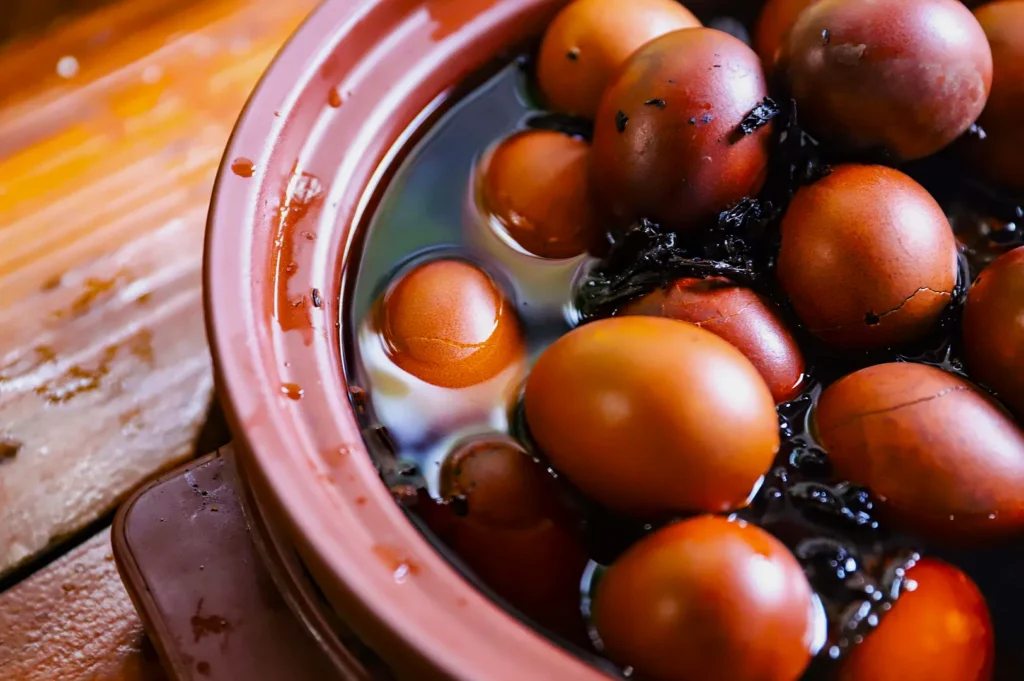
In Chinese tea culture, Da Hong Pao is often enjoyed after a meal, as it is believed to aid the stomach and promote healthy digestion. Its robust character stands up well to rich foods, making it an excellent companion for roasted meats, aged cheeses, and even dark chocolate. The tea’s mineral and roasted notes also complement the earthy flavours of nuts and dried fruits. The health benefits and comforting nature of the drink make it a perfect conclusion to a satisfying dining experience.
The Story Behind the Most Expensive Tea
The astronomical price tag often associated with Da Hong Pao is tied directly to the six original mother trees in the Wuyi Mountains. According to legend, a scholar was cured of illness by drinking tea from four special bushes. In gratitude, the emperor draped these bushes in red robes, symbolizing honor and protection, which gave Da Hong Pao its name and legendary status. These ancient tea trees, protected by the Chinese government, are no longer harvested, making any tea from them a priceless piece of history. Authentic Da Hong Pao is made from these original bushes, and the most expensive Da Hong Pao comes from them, fetching tens of thousands of dollars for just a few grams.
There are three main types of Da Hong Pao:
Mother Tree Da Hong Pao: the most expensive, hand-crafted by tea masters.
Purebred Da Hong Pao: cultivated from cuttings of the original bushes and closest to the original tea.
Blended varieties: the majority of Da Hong Pao sold on the market are blends of several Wuyi oolong varieties.
Inferior Da Hong Pao teas are sometimes sold as authentic but are made from different types of tea plants in the Wuyi region.
Many specialty tea houses offer high-quality Da Hong Pao in addition to other tea varieties. The quality of this tea depends heavily on its terroir, the age of the bushes, and the masterful, traditional processing methods, which include a painstaking charcoal curing process. Even today, authentic tea from the core production areas commands thousands of dollars per pound.
Experience Expert Brewing at Tea Room by Ki-setsu
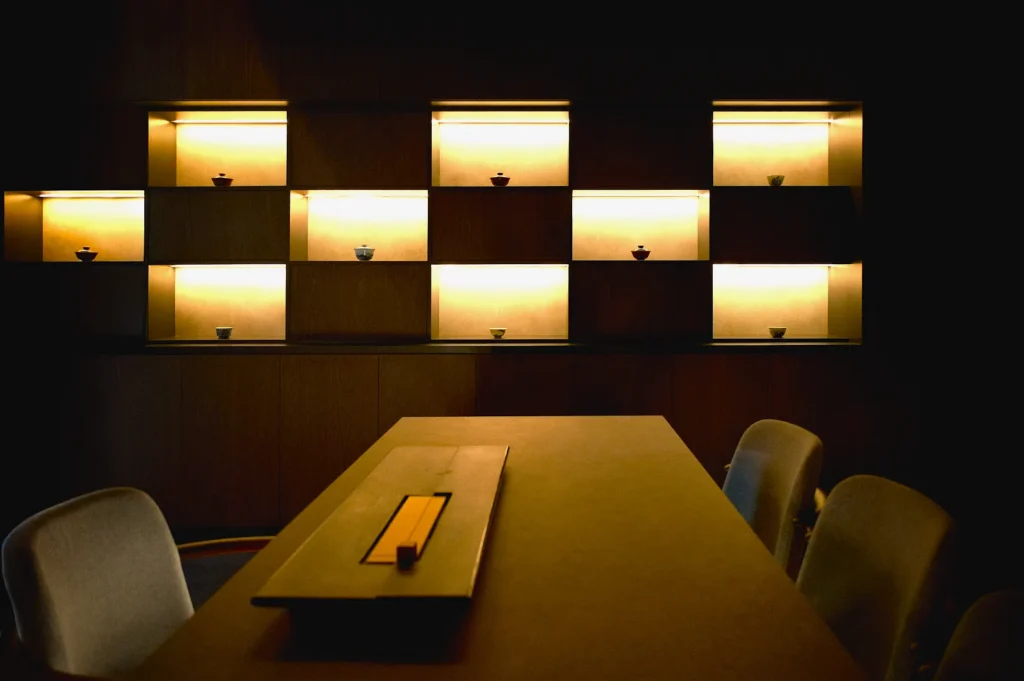
At Tea Room by Ki-setsu, Singapore’s most exclusive private Chinese tea sanctuary, our tea masters demonstrate the traditional gongfu technique with reverence and precision. Here, you can experience how authentic tea should be prepared in an intimate, guided session. Witness firsthand how a quality Wuyi rock tea transforms across multiple infusions, revealing a story in every cup. We provide access to rare, properly sourced Chinese teas from ancient tea trees seldom found elsewhere in the world. Each session reveals the artistry behind tea made with centuries of tradition.