Strong fragrance is easy to sell.
Balance is harder.
A jasmine tea can fill the room with flowers and still disappoint once it reaches the tongue. The base may be thin. The perfume may vanish. The finish may feel rough.
Good jasmine tea should survive the first impression.
Our guide to authentic flower-scented Chinese tea explains how jasmine tea is made. Here, we focus on quality.
Smell the Tea, Then Taste Past the Smell
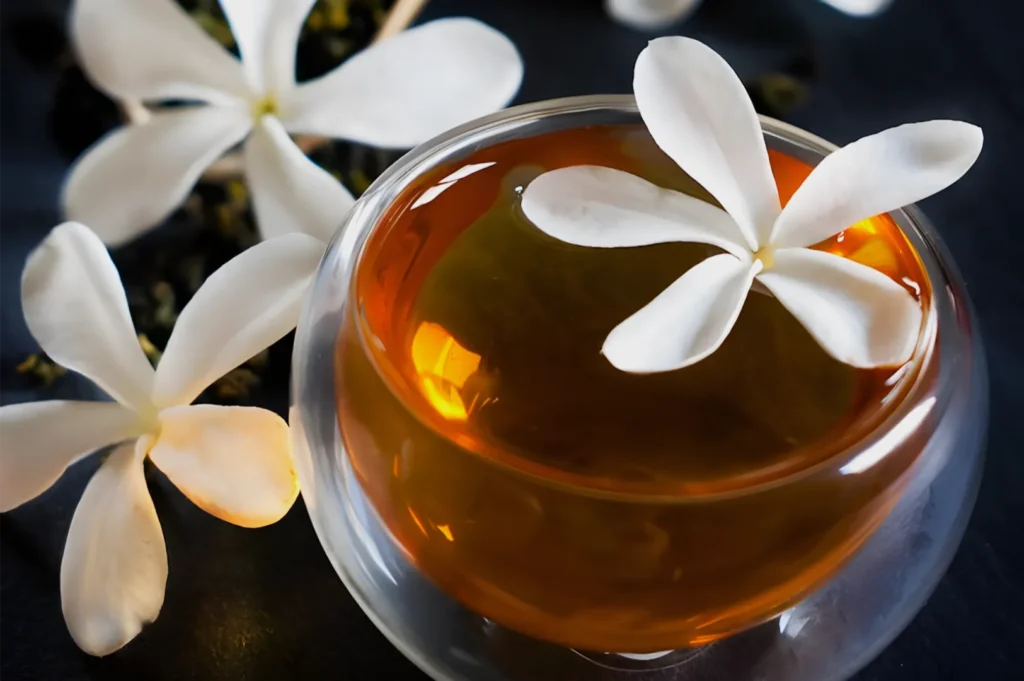
Aroma matters enormously in jasmine tea.
But research into jasmine tea quality evaluates fragrance alongside persistence, freshness and its relationship with the tea itself.
A beautiful dry-leaf aroma is only the beginning.
Does the fragrance enter the liquor?
Does it remain after swallowing?
Does the tea underneath still have body?
Look for Integration
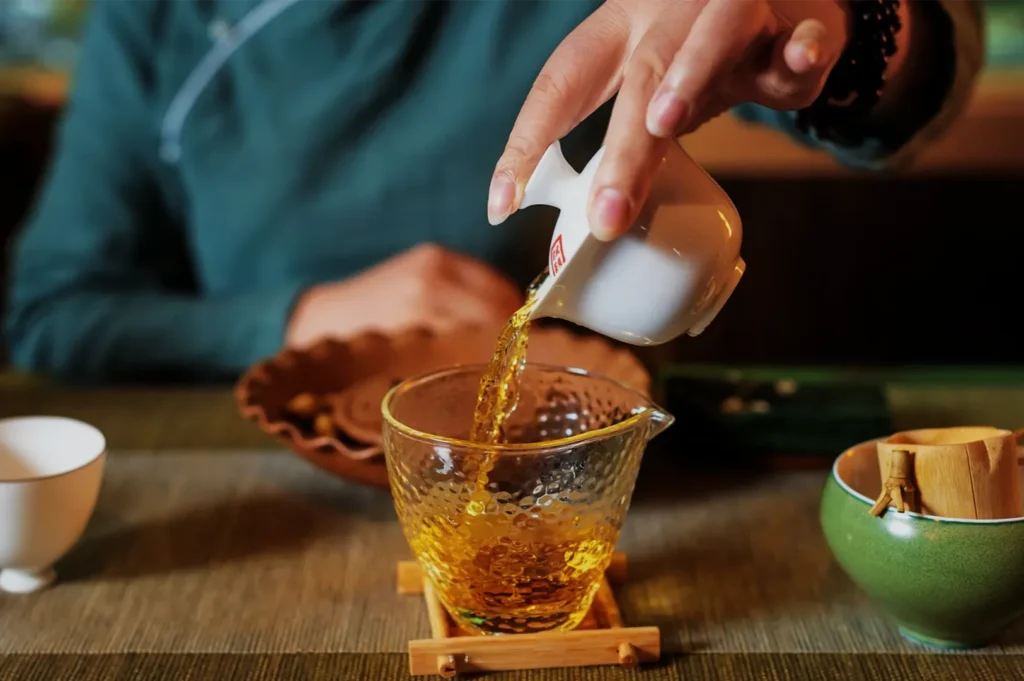
Research into jasmine scenting shows that volatile compounds from flowers transfer into the tea during processing.
This helps explain what high-quality natural scenting should feel like.
The fragrance belongs inside the tea rather than behaving like a separate layer.
When flower and leaf feel disconnected, volume cannot repair the imbalance.
Repeated Scenting Can Matter
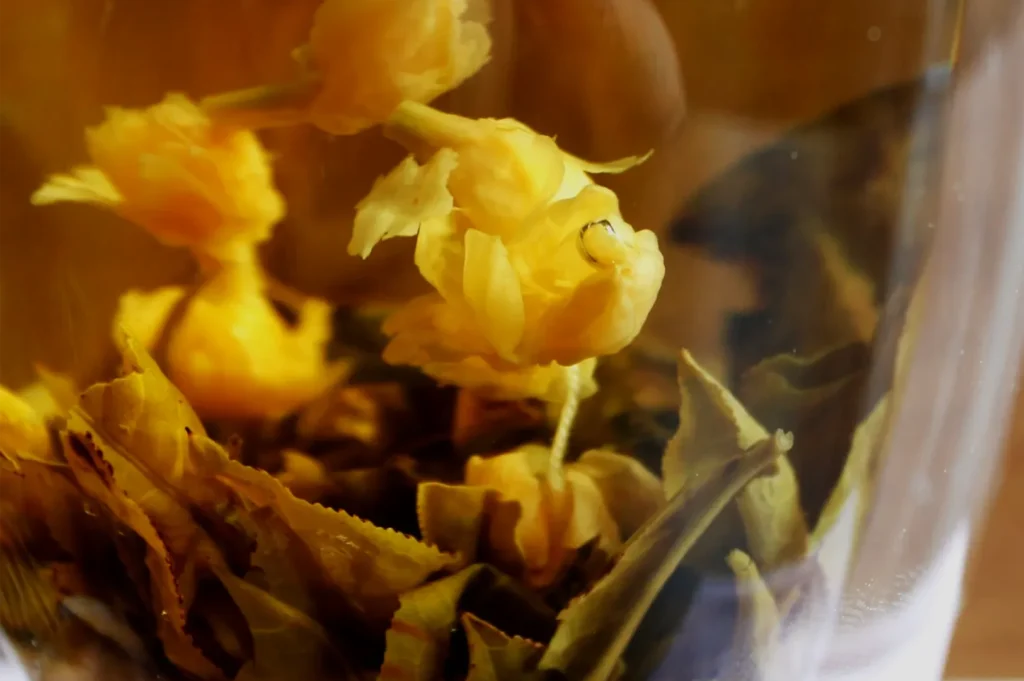
Studies have found repeated scenting can increase freshness, concentration, purity and persistence of aroma.
But more is not automatically superior.
The quality of the tea base, flowers and handling still matters.
“Scented seven times” can be useful information.
It is not a substitute for tasting.
Check the Second Infusion
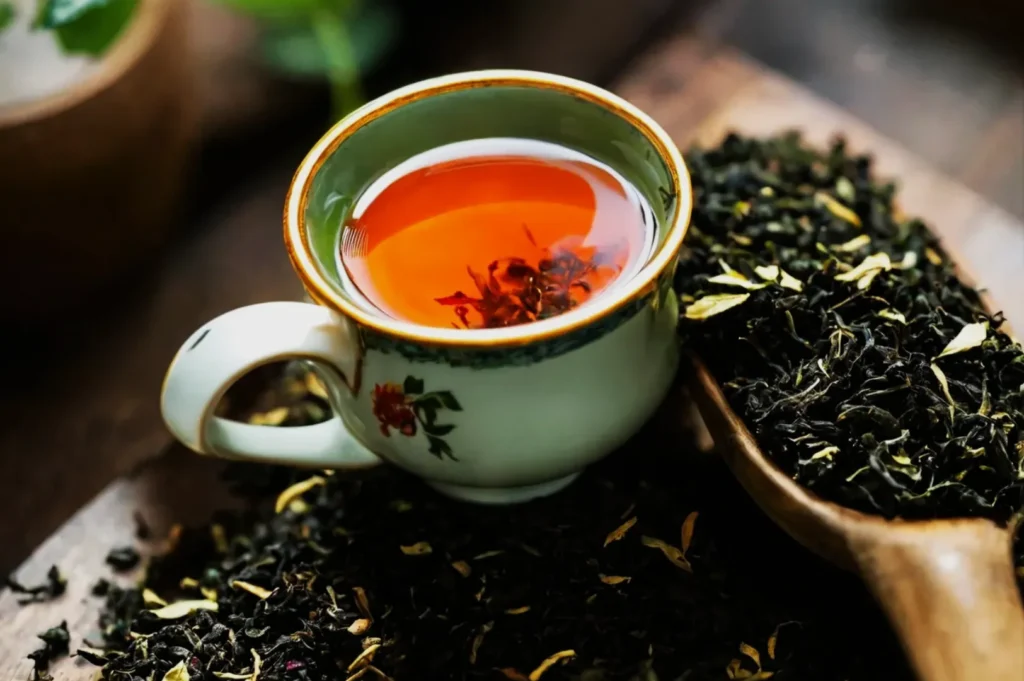
One practical test is simple.
Brew the leaves again.
A 2025 Food Chemistry study linked aroma durability across infusions with jasmine tea quality and identified compounds useful in assessing that persistence.
If all character disappears immediately, ask what impressed you in the first place.
Do Petals Mean Better Quality?
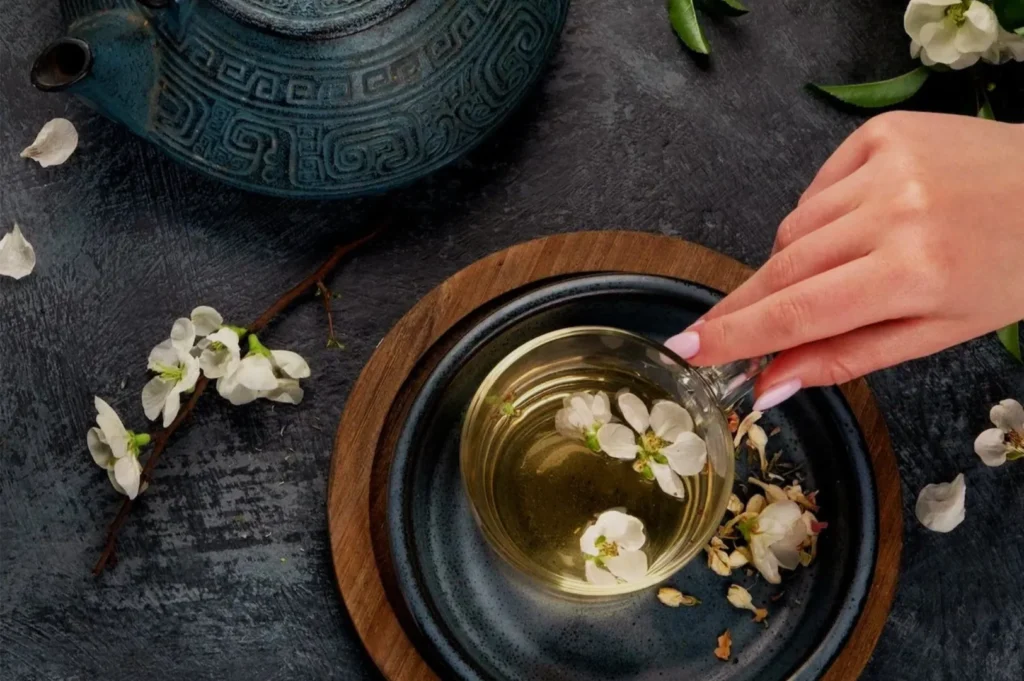
No.
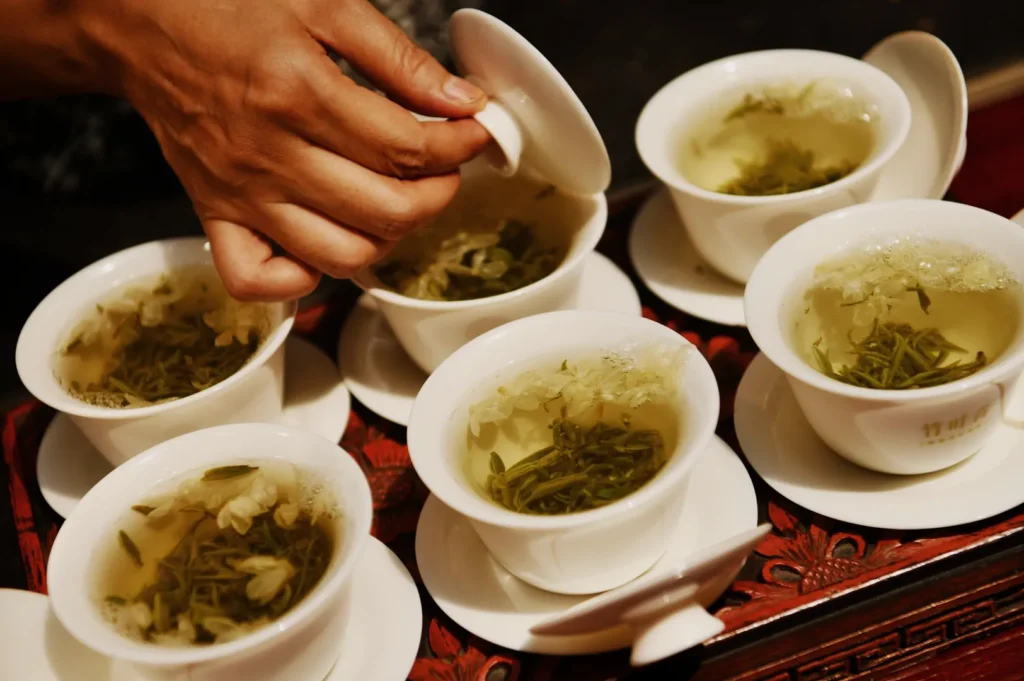
Visible petals can be attractive.
They do not prove that the tea was more carefully scented.
Traditional production often removes flowers after they have given their fragrance to the leaf.
Judge the liquor, not the decoration.
When Buying Jasmine Tea
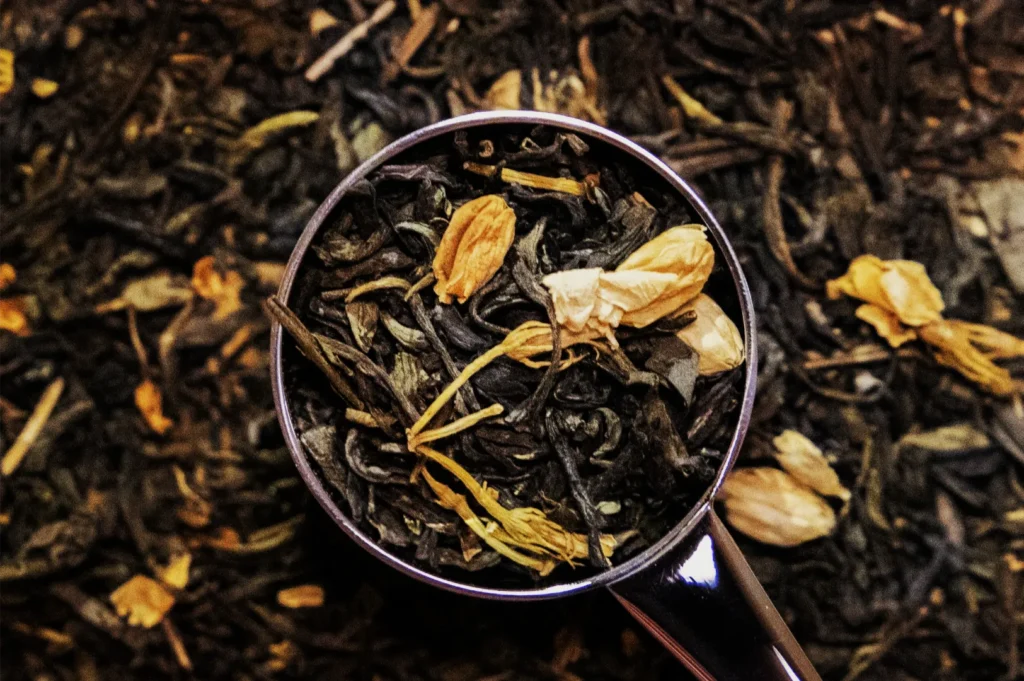
If comparing options from a Chinese tea shop Singapore readers may encounter or from an online seller, useful information includes:
- tea base
- origin
- scenting method
- harvest information where available
- storage
- brewing guidance
At Tea Room by Ki-setsu, we favour this same kind of specificity for the rare teas we curate.
Premium should explain itself through provenance and the cup.
The word “premium” is not evidence. Tea still has to perform once water arrives.
Final Thought
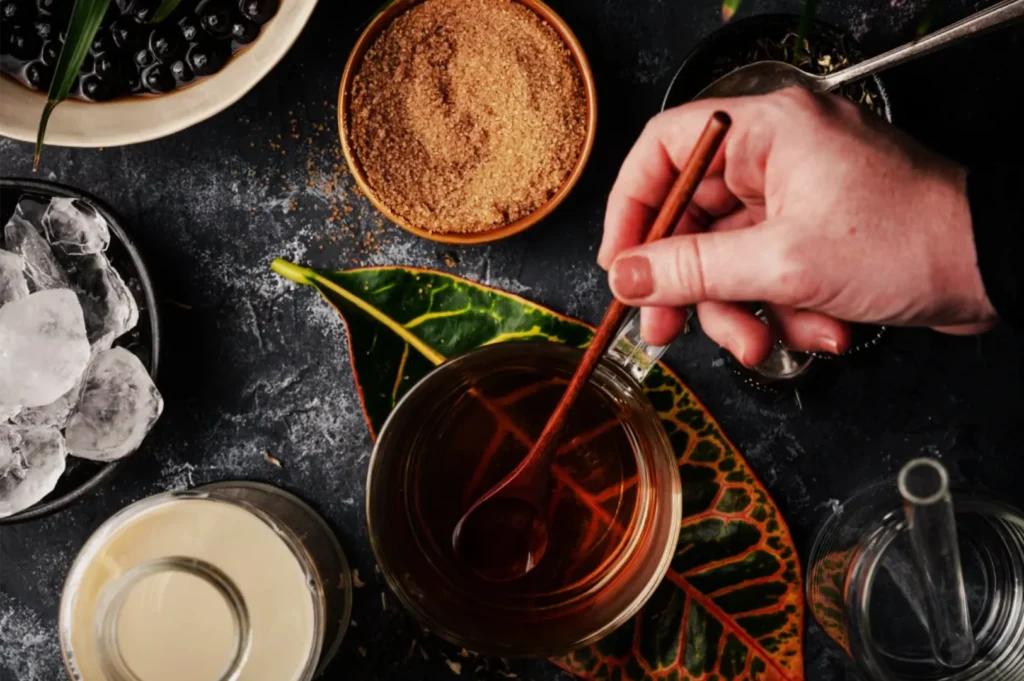
Good jasmine tea smells beautiful.
Great jasmine tea remains interesting after you stop smelling it.
Look for an aroma that feels clean and integrated, a base tea with real character, and a finish that survives beyond the first dramatic infusion.
Quiet persistence usually tells us more than loud perfume.