The first time many people see Longjing, they look for proof too quickly.
They turn the leaves over in the light, search for a famous village name, or assume that a higher price must mean a finer cup. Sometimes that instinct is understandable. Longjing is one of China’s most recognisable green teas, and its reputation attracts both sincere craft and careless imitation. But the leaf itself is more honest than the label, if you know where to look.
At Tea Room by Ki-setsu, we often find that good Longjing reveals itself through quiet coherence rather than obvious display. The leaves should look composed. The aroma should feel clean and alive. The liquor should carry clarity, not just colour. The finish should linger with grace, not disappear into flatness or bitterness.
This is why learning to recognise quality matters. Not so that every cup becomes an examination, but so that the tea can be met with greater confidence. If you are exploring Longjing tea in Singapore for the first time, or trying to judge whether a tea is truly worth returning to, a few simple cues will take you much further than prestige language ever could.
Begin With The Leaf Itself
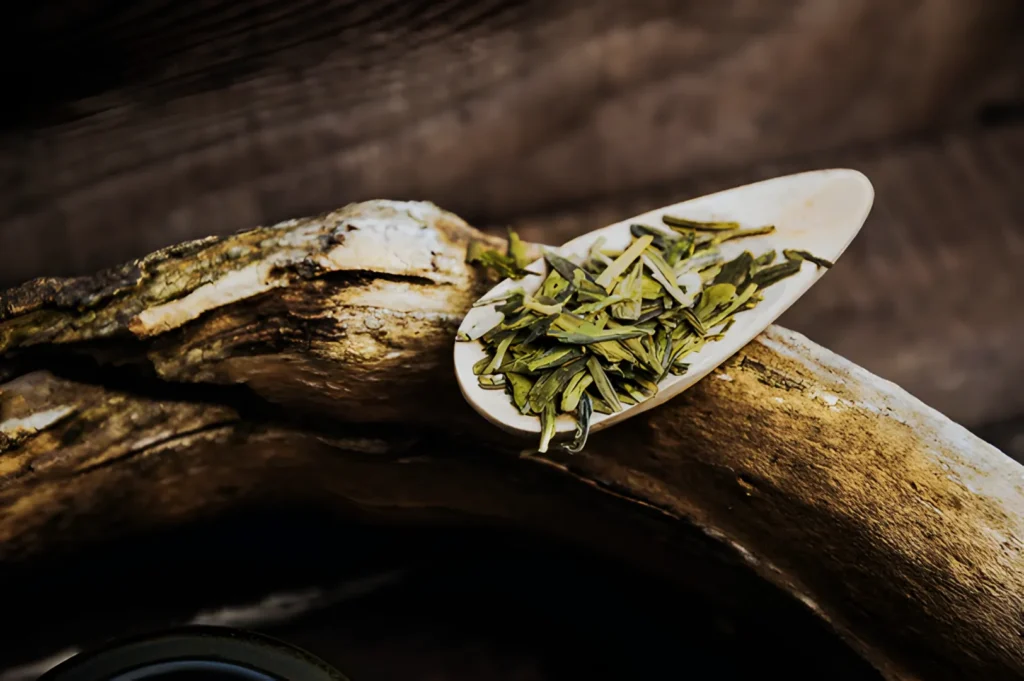
Before the water touches the tea, Longjing is already telling you a great deal.
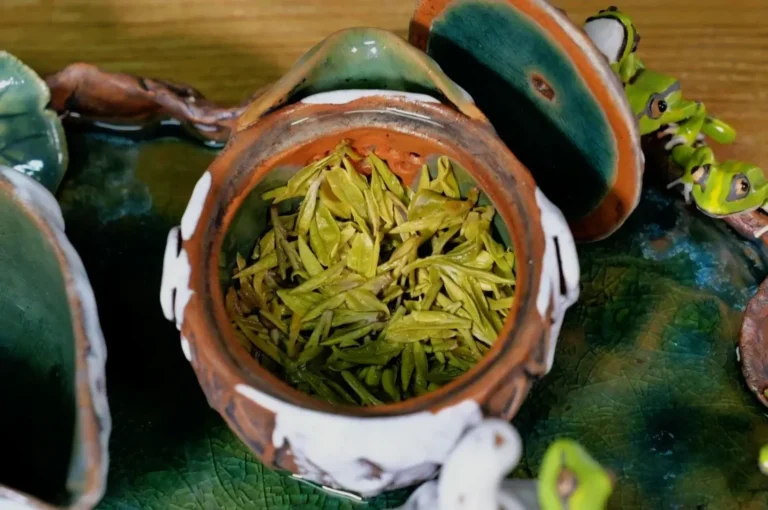
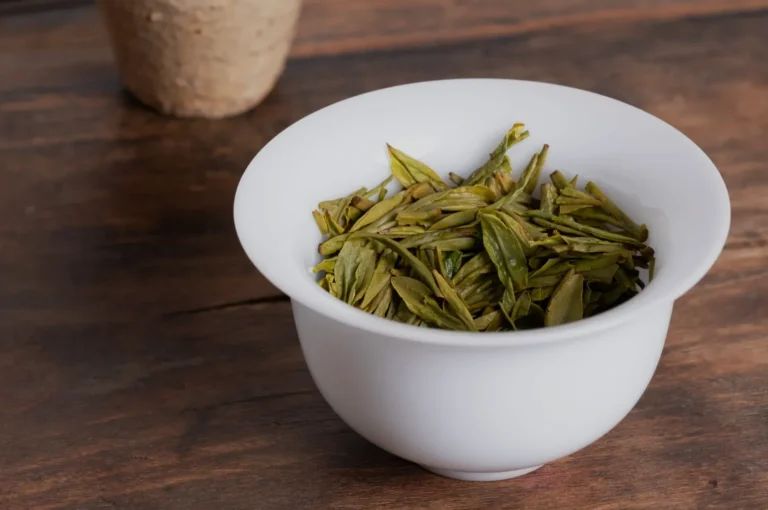
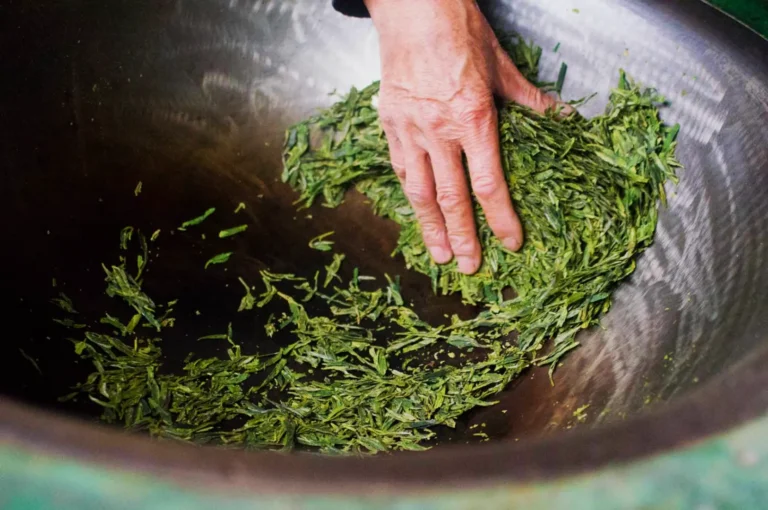
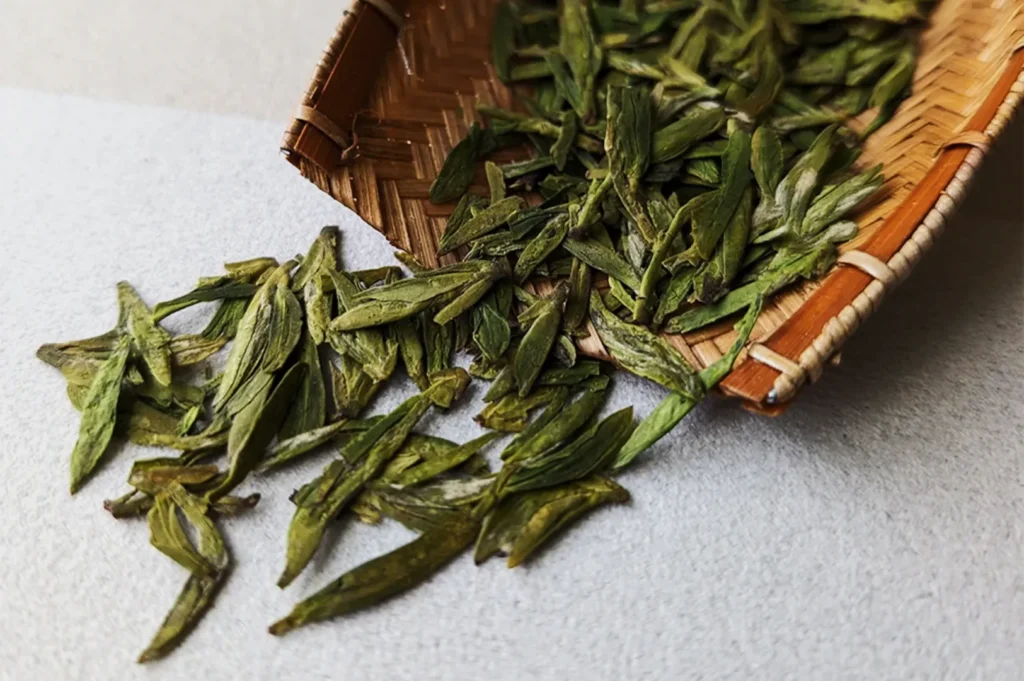
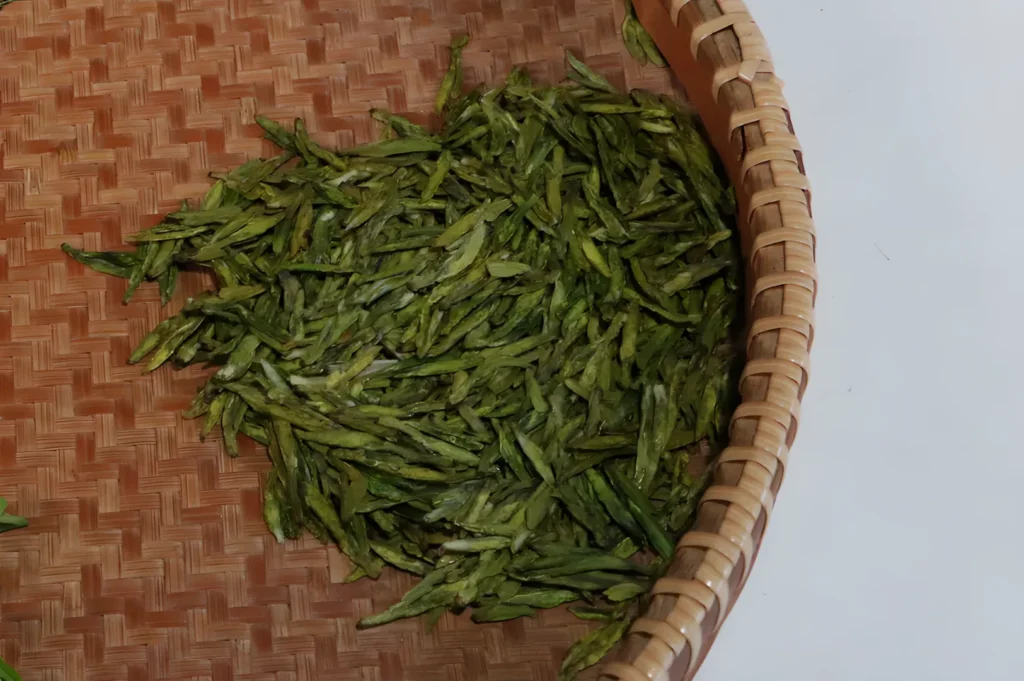
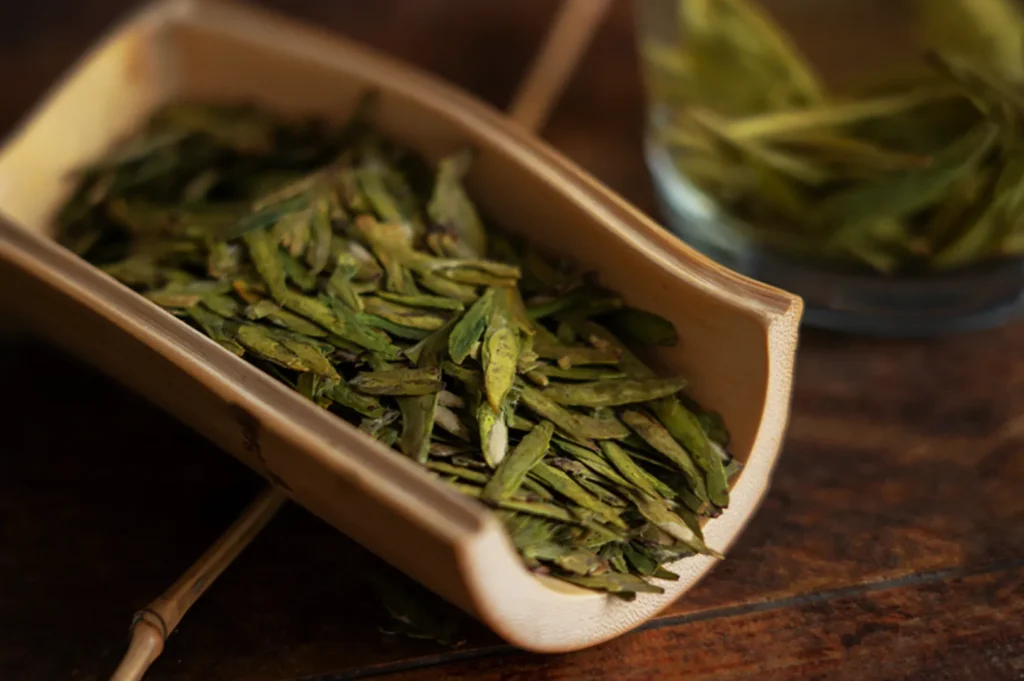
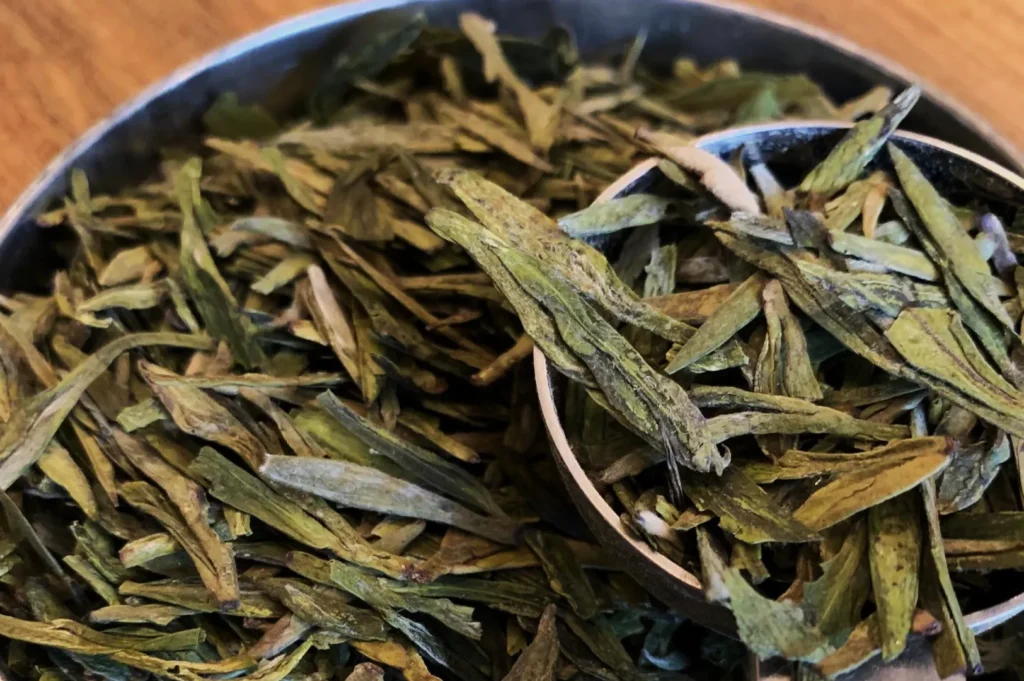
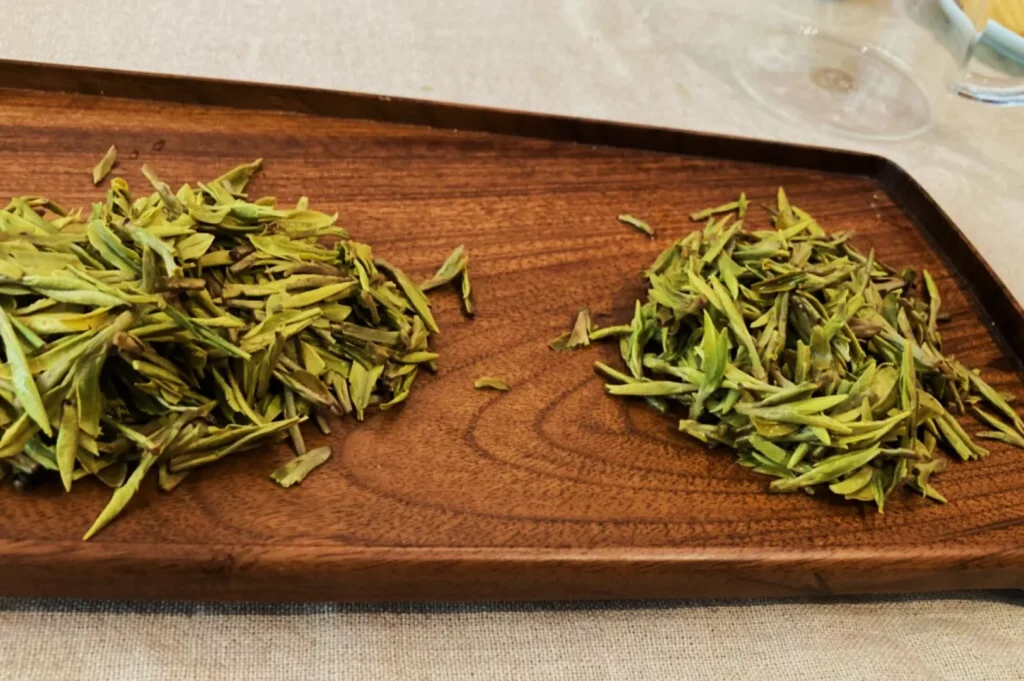
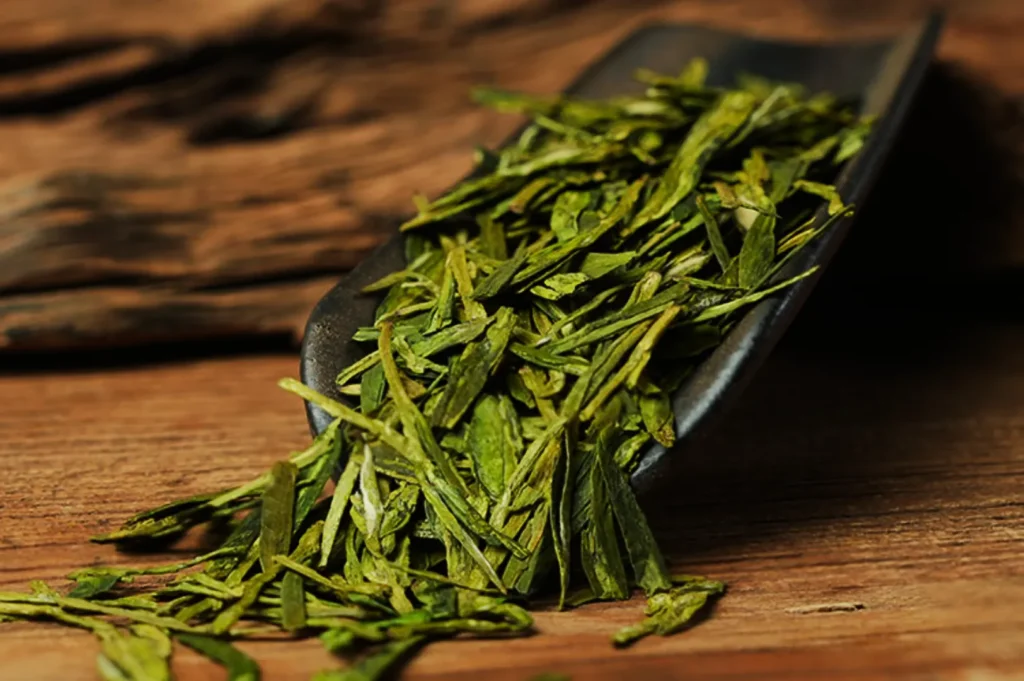
The leaves should appear flat, smooth, and relatively even in form. This is one of the most recognisable features of Dragon Well. Good leaves have been carefully shaped in the wok, pressed and turned with enough skill to create that signature blade-like profile without making them feel broken or lifeless. They should not look crumpled, twisted, or heavily fragmented.
Colour also matters, but not in the simplistic way people often assume.
A very bright, almost neon green can sometimes suggest overemphasis on visual appeal rather than natural character. Fine Longjing often appears in quieter shades: yellow-green, olive-green, or soft jade with a dry, matte vitality rather than a glossy artificial brightness. The colour should feel fresh, but not exaggerated.
The dry leaves should also feel light, intact, and carefully handled. Excessive dust at the bottom of a packet is rarely a good sign. A little breakage is not unusual, especially with shipping, but a tea that is mostly fragments has already lost part of its integrity.
Good Longjing usually looks calm before it tastes refined.
Uniformity Without Lifelessness
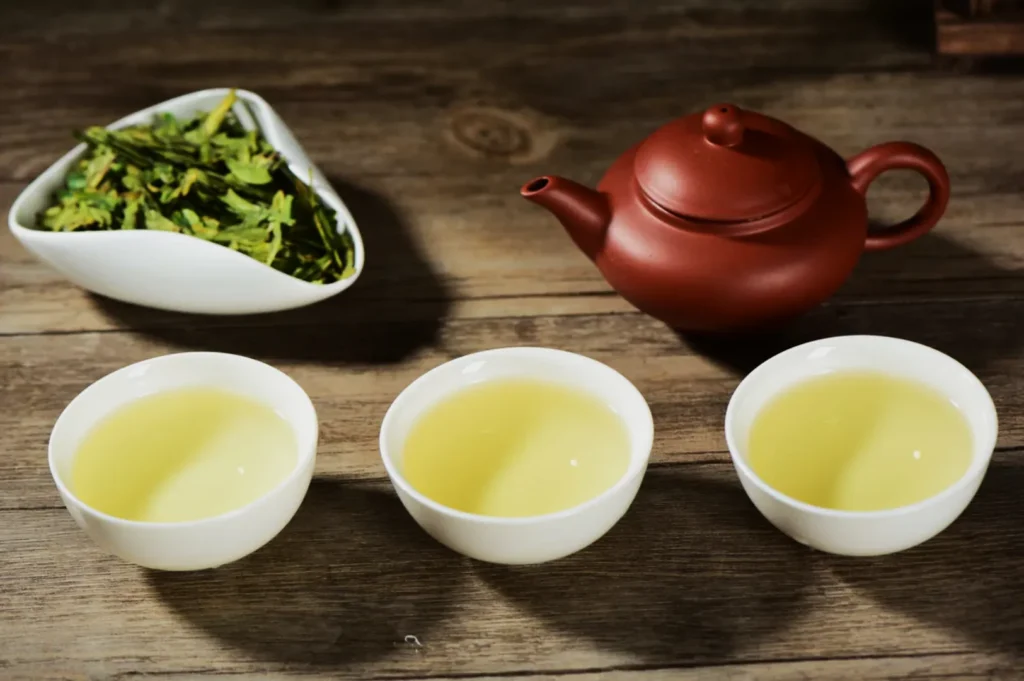
Many buyers are taught to look for uniformity, and this is partly useful. A well-sorted Longjing should show a relatively consistent shape and size, especially in higher-grade material. But perfect sameness is not the goal.
Real tea is agricultural. It should still feel like leaf, not machine-made decoration.
What you are looking for is a certain orderliness without sterility. The leaves should sit together naturally, not in a way that feels overprocessed or suspiciously cosmetic. A tea that is too mixed in size may brew unevenly. A tea that looks almost unnaturally identical may have been selected more for appearance than for drinking quality.
The best leaves hold both discipline and life.
Smell The Dry Leaf Before You Believe The Story
Longjing’s aroma should begin before the kettle is ever lifted.
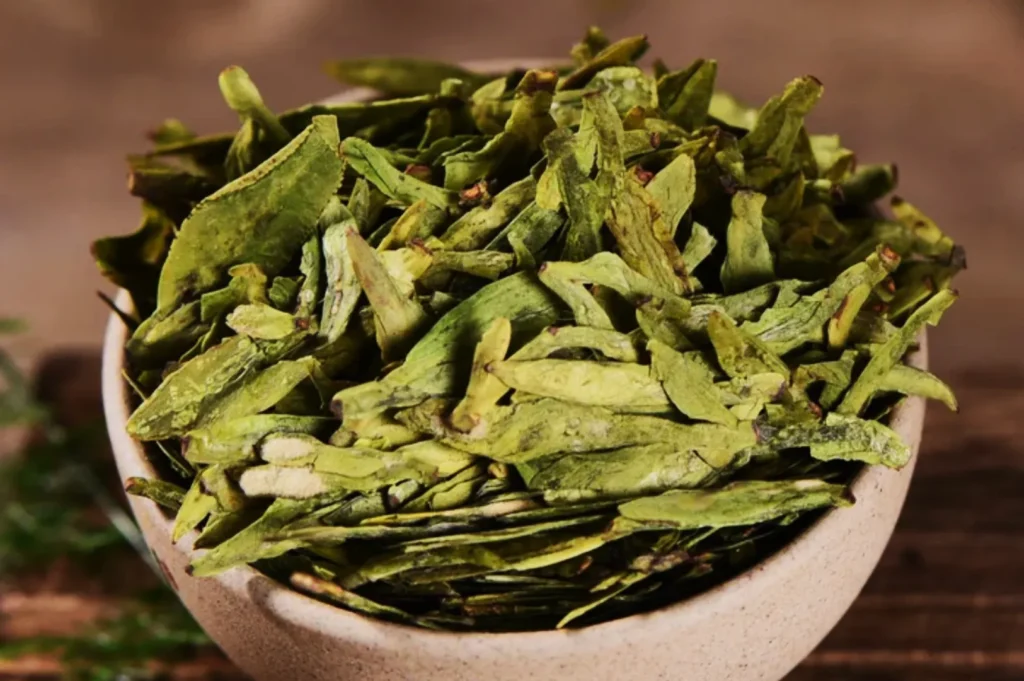
Dry leaf aroma is one of the quickest ways to test whether the tea feels alive, stale, or confused. Bring the leaves close and notice what rises first. Good Longjing often gives a warm, gentle fragrance: toasted soybean, sweet hay, chestnut, fresh greens, or a soft nuttiness that feels clean rather than heavy.
What you should not encounter is muddiness.
If the dry leaf smells flat, papery, vaguely stale, or oddly perfumed, something is already missing. Sometimes a poor tea is not aggressively unpleasant. It is simply hollow. The fragrance does not lift. It does not gather. It sits there without conviction.
That kind of dullness matters.
Longjing is not a tea that depends on loud aroma. It depends on a living one. The scent should feel quiet but present, restrained but unmistakably there.
Warmed Leaf Aroma Is Often The Real Test
Dry leaf can be informative, but warmed leaf is usually more revealing.
Once the leaves meet a warmed vessel, the tea begins to open more honestly. The fragrance should rise with greater softness and complexity. This is often where the chestnut note becomes clearer, along with gentle bean warmth, fresh vegetal lift, and the faint sweetness that sits behind them.
A good Longjing does not smell aggressive here either. It should feel rounded, composed, and clear. The chestnut character should never become burnt. The green note should never feel sharp or raw. Both should be present in balance.
If the aroma becomes grassy in a crude way, or if it gives off a cooked, tired, or storage-marked smell, the tea may be less refined than it first appeared. Warmed leaf aroma exposes weaknesses that dry appearance can hide.
This is one reason we often say that a good tea is recognised by how it opens, not merely how it looks.
The Liquor Should Carry Clarity, Not Just Colour
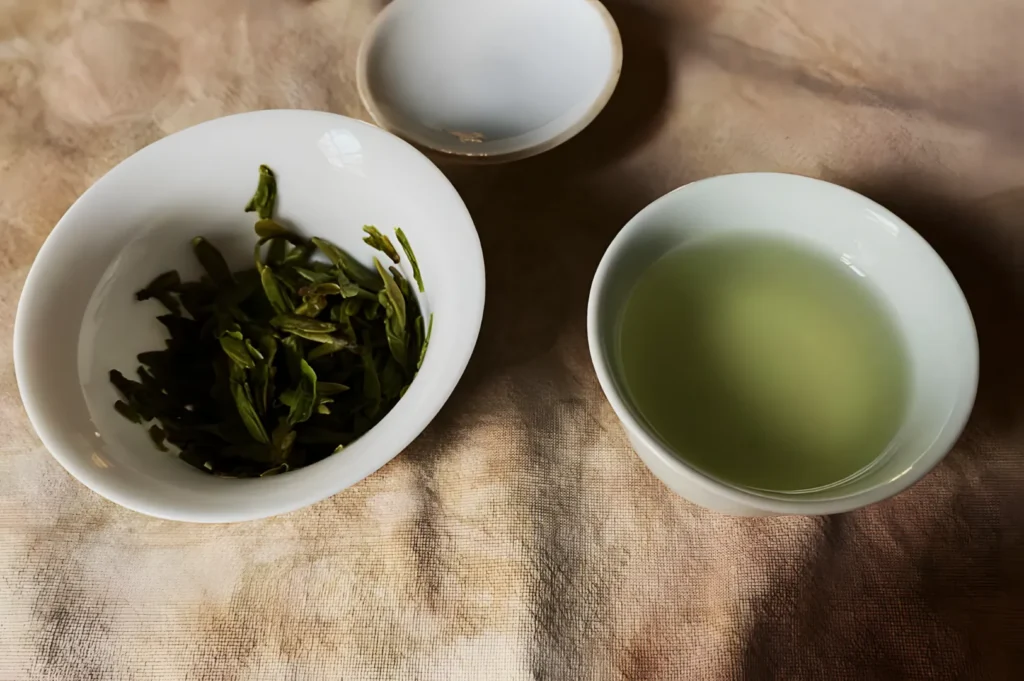
When the tea is poured, the liquor should be bright and composed.
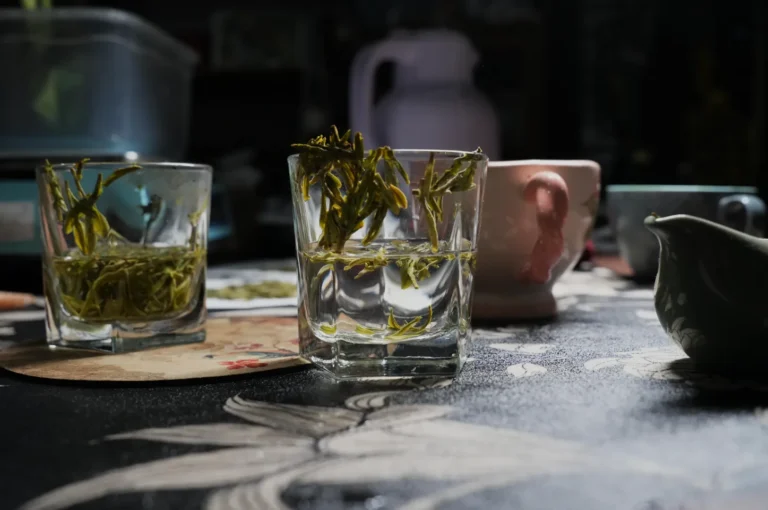
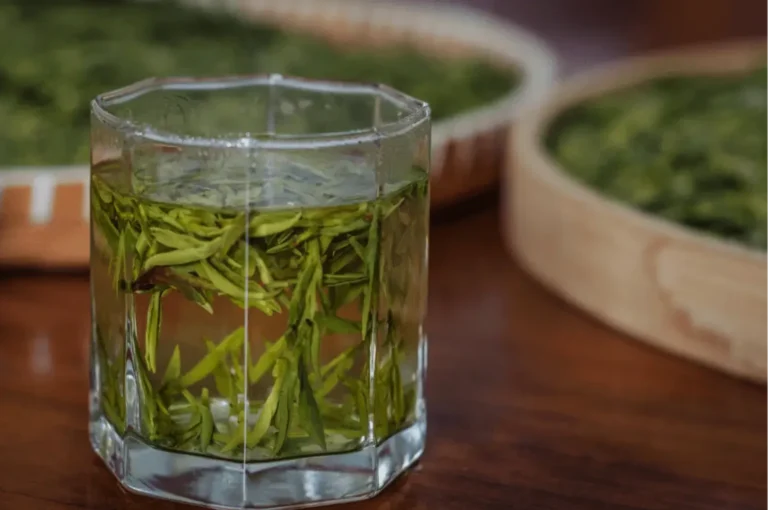
Longjing is known for a pale yellow-green cup, but the colour alone does not tell you whether the tea is good. What matters more is clarity. The liquor should look clean, lucid, and alive. A slightly deeper tone is not a problem if the tea still feels fresh and stable. What is less convincing is a liquor that seems murky, tired, or visually dull.
Clarity is often a sign that the leaf was handled well and that the cup has been brewed with enough sensitivity to preserve its structure.
The first sip should confirm that visual impression. Good Longjing often enters quietly, with warmth rather than sharpness. The chestnut note may appear first, followed by a clean vegetal freshness and a sweetness that begins to gather in the finish. The liquor should feel smooth rather than coarse, and fresh without becoming thin.
A fine Longjing does not rely on force. It relies on balance.
The Difference Between Freshness And Harshness
Some people mistake harshness for freshness, especially in green tea.
Longjing should feel fresh, certainly, but freshness is not the same as bitterness, rough grassiness, or astringency that dries the mouth too quickly. A well-made Dragon Well can carry a mild grip, particularly if brewed a little strongly, but that grip should not dominate the tea. It should resolve into sweetness or softness, not into fatigue.
This is an important distinction when judging quality.
Freshness in Longjing feels clean, spring-like and lightly structured. Harshness feels unfinished, forced, or imbalanced. One invites a second sip. The other makes you hesitate before the first is done.
Texture Tells You More Than People Realise
Texture is one of the most overlooked signs of good tea.
Longjing should feel supple enough in the mouth to carry its flavour with ease. It is not a heavy tea, but neither should it feel watery or skeletal. There should be some breadth to the liquor, some shape, some quiet persistence.
A weak tea can still smell nice. A flashy tea can still look attractive. Texture is harder to fake.
Good Longjing often has a soft, gliding quality that makes the liquor feel integrated. The sip moves cleanly across the palate, and the tea leaves behind a polished impression rather than an abrupt one. Lower-quality Longjing often feels thinner than its aroma promised, or rougher than its appearance suggested.
This is why texture is worth noticing. It tells you whether the tea is coherent from leaf to cup.
The Finish Is Where Quality Becomes Clear
A good finish is one of the finest measures of Longjing.
After the sip, something should remain. Not a dramatic sweetness, not perfume, not excessive roast. Rather, a gentle return of chestnut warmth, a soft freshness at the back of the mouth, and a clean, slightly sweet persistence that makes the tea feel complete.
This is where poorer Longjing often falls away.
The flavour may arrive nicely enough but the finish drops suddenly or turns dry and empty. The tea vanishes instead of settling. It may leave bitterness without sweetness, or greenness without grace. When that happens, the tea feels less composed, even if the first impression seemed acceptable.
The finest Longjing often reveals itself in the quiet after the swallow.
How The Leaves Behave Across Infusions
One cup is not always enough to judge a tea fairly.
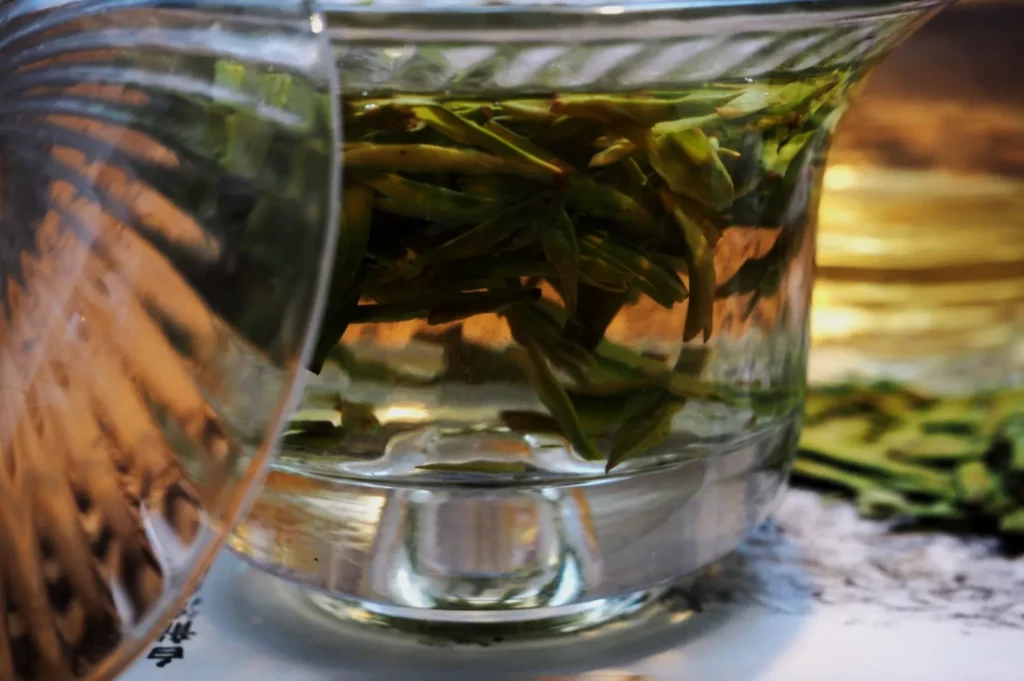
Longjing should not collapse after the first pour. While it is not a tea of endless infusions, good leaves usually maintain enough clarity and flavour to remain graceful across several rounds. The second infusion often opens more fully than the first. The third, if brewed gently, can show an even softer sweetness and a more settled body.
A tea that starts strong and then disappears quickly may still be drinkable but it is rarely the most convincing. Endurance matters because it reflects both leaf quality and craftsmanship. A tea that can continue speaking softly is often a better tea than one that makes a sharp first impression and then falls silent.
This is why time is part of evaluation.
What Usually Signals Lower Quality
A poor Longjing does not always announce itself dramatically, but several signs tend to appear together.
Be cautious if you notice:
- leaves that are heavily broken, dusty, or uneven in an untidy way
- colour that feels too bright, artificial, or strangely dull
- dry aroma that is flat, papery, stale, or perfumed
- warmed leaf that smells cooked, muddy, or lifeless
- liquor that looks cloudy or lacks brightness
- flavour that turns rough, grassy, or bitter without sweetness to balance it
- a finish that disappears too quickly or leaves only dryness behind
These do not always mean the tea is terrible. But they often mean it is less refined than the best examples of Dragon Well.
Learning To Trust The Cup
Knowing whether Longjing is good is not about memorising a rigid standard. It is about learning to recognise coherence.
The leaf should look composed.
The aroma should feel alive.
The liquor should be clear.
The texture should carry itself with ease.
The finish should remain.
When these elements gather together, the tea usually tells the truth without much persuasion.
A good Longjing does not need to impress loudly. It simply leaves no uncertainty that it has been made with care.