Singapore offers no shortage of experiences.
Menus are longer than they need to be. Spaces are branded before they are felt. Even moments of rest are often packaged as something to complete, compare, or post. It is no surprise, then, that many people arrive at tea carrying a similar uncertainty. A tea tasting in Singapore may sound appealing. So may a private tea session in Singapore. Yet the two are not always the same, and the difference matters more than the names suggest.
This is not a question of status.
It is a question of feeling.
Some evenings call for comparison, conversation, and a broad first look. Others ask for fewer teas, slower hands, and the kind of quiet that lets aroma and aftertaste arrive properly. The most helpful way to choose is not by asking which is better, but by asking what kind of attention you are hoping to give, and receive.
Start With The Feeling You’re Seeking
Before you choose a format, begin somewhere softer than labels.
Ask yourself what you want the evening to leave behind.
Perhaps you are curious and want orientation. You do not necessarily want a long ritual yet. You want to understand the shape of things, to taste a few directions, and to leave with clearer instincts than when you arrived.
Perhaps you are celebrating, but in a way that does not need noise. You want something intimate, measured, and thoughtful enough to feel meaningful without becoming theatrical.
Perhaps you are tired.
Not dramatically tired. Just full. Full of decisions, screens, movement, and the city’s constant demand for response. In that case, what you may really be looking for is not a tasting at all, but a change in tempo.
Or perhaps you want connection. A conversation that does not have to strain to rise above a room. A shared experience that draws people inward rather than outward.
There are also moments when solitude is part of the reason. Even in company, some people are seeking a gentler interior space.
When the feeling is clear, the format usually becomes clearer too.
What Is A Tea Tasting? (And What It’s Great For)
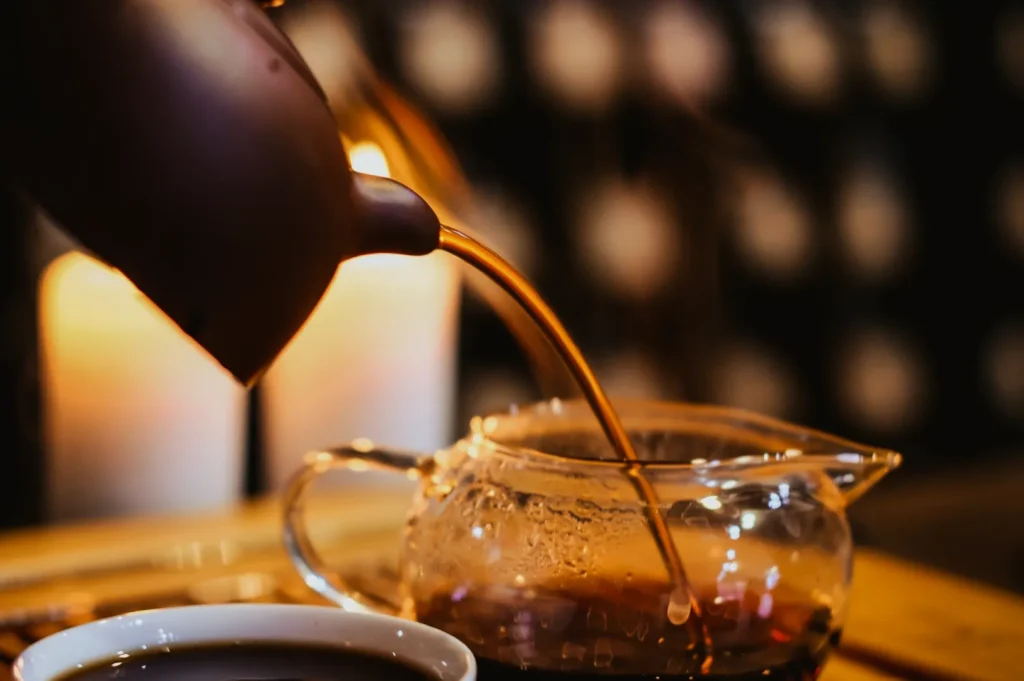
A tea tasting is often the more exploratory of the two experiences.
Its strength lies in range. You may encounter several teas in one sitting, moving across styles, oxidation levels, regions, or broad flavour families in a way that helps you recognise contrast quickly. A tasting is often conversational by design. It gives you first impressions. It helps you notice difference. It can be especially useful if you are at the beginning of your tea journey and want a wider overview without too much gravity attached to any single cup.
Because of this, tastings often carry a slightly brighter social energy. The pace may be more active. Explanations may be more direct. The value lies in orientation.
A tasting is ideal when:
- You want to compare a few teas side by side.
- You are trying to understand your preferences more quickly.
- You enjoy conversation and lively sensory discussion.
- You want an introduction rather than a deeper ritual.
- You are coming with a friend who is also curious and wants to explore together.
A good tasting still requires care. But its purpose is usually breadth before depth.
What Is A Private Tea Session? (And Why It Feels Different)
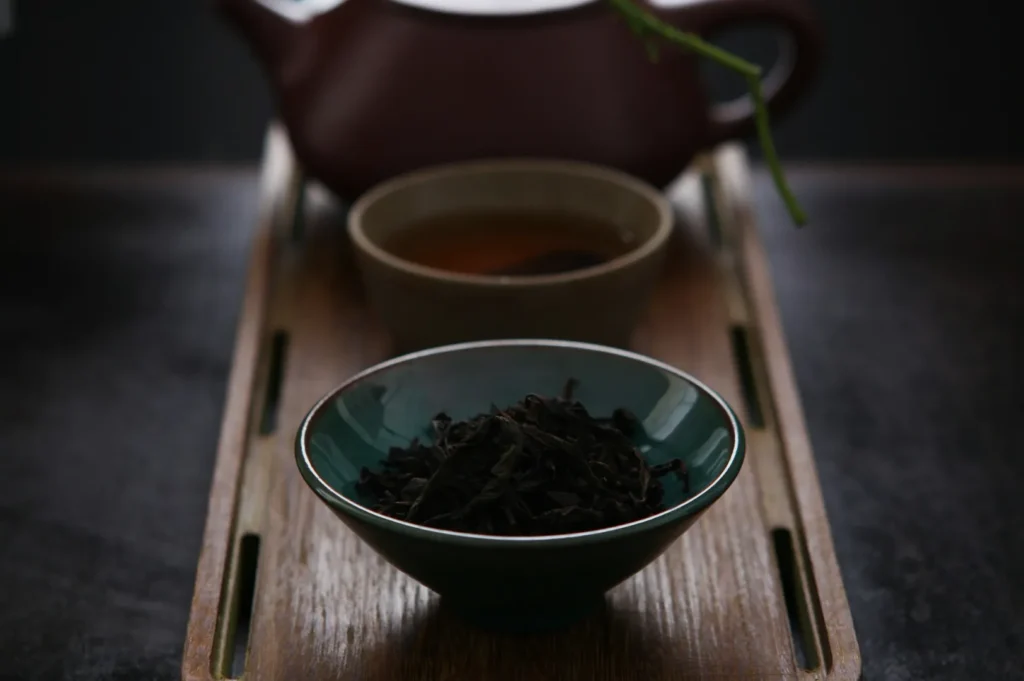
A private tea session moves in another direction.
Here, the emphasis is not on how many teas you can encounter, but on how fully one or two teas can be understood when given time. The pacing is slower. The host leads not only through explanation, but through sequencing, silence, and adjustment. In a thoughtful session, the tea is not simply presented. It is unfolded.
This often means fewer teas, but more infusions.
It also means a different atmosphere. A guided tea session does not ask you to track information too quickly or perform reactions on cue. Instead, it creates enough room for the leaf to shift across the rounds, and for you to notice those shifts without pressure. The host may alter steeping time, water, or rhythm according to the tea and the guest. What feels effortless on the surface is often the result of quiet attentiveness underneath.
A private session is ideal when:
- You want to follow the arc of a tea rather than sample many.
- You are drawn to ritual, pacing, and sensory focus.
- You value discretion and a calmer atmosphere.
- You want hosting rather than explanation alone.
- You want the evening to feel restorative, not merely informative.
This is often what people mean, whether or not they say it directly, when they speak of a more refined or more immersive tea experience.
The Real Differences (Beyond The Names)
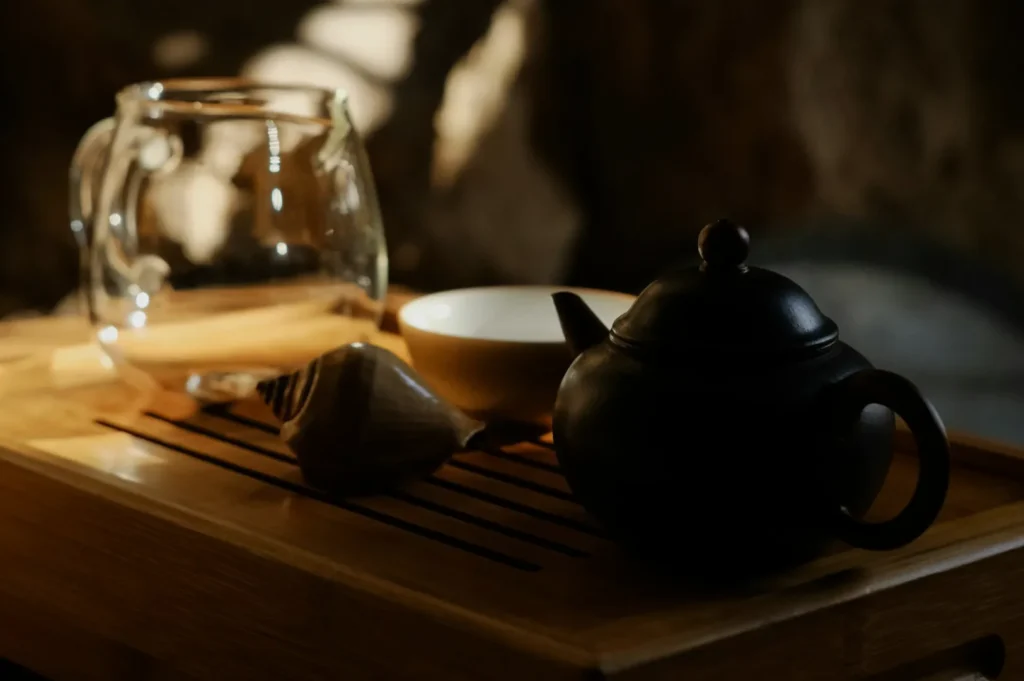
The distinction between a tasting and a private session is not merely administrative. It lives in the shape of the experience itself.
Pace: Sampling vs Unfolding
A tasting usually privileges quick recognition. One tea is followed by another before the first has fully settled. This can be useful. It sharpens contrast and makes preference easier to identify.
A session unfolds more slowly. A single tea may be allowed to move through several infusions before another is introduced, or not introduced at all. The guest is given time to feel what has changed. The tea is not reduced to a first impression.
Guidance: Instruction vs Hosting
In a tasting, guidance often takes the form of explanation. You may be told what you are drinking, what to notice, and how it differs from the next tea.
In a private session, guidance is often quieter. The host may say less, but do more. They adjust timing. They notice the pace of the guest. They decide when a tea needs another round, and when it should be left alone. This is closer to hosting than teaching.
Space: Social Energy vs Protected Quiet
A tasting can be social in a rewarding way. Its energy may include more conversation, more comparative language, and a greater sense of movement across the room.
A private tea room Singapore experience usually protects quiet more deliberately. Light, sound, pacing, and seating all contribute to that. The room feels less like an event and more like a held space.
Tea Depth: First Impression vs Layered Aftertaste
A tasting often helps you answer, “Do I like this tea?”
A session may help you answer, “What does this tea become if I stay with it?”
That difference matters. Some teas impress quickly. Others reveal their true shape only after the second or third infusion, when texture deepens, sweetness returns, or the finish begins to lengthen. In a private session, layered aftertaste has room to matter.
Purpose: Discovery vs Restoration
A tasting is often about discovery. It opens the field.
A session can also be a form of restoration. The tea is still being discovered, but the guest is also being allowed to slow down inside it. That is why some people leave a private session feeling not only informed, but quieter than when they arrived.
Choose This If… (A Gentle Decision Guide)
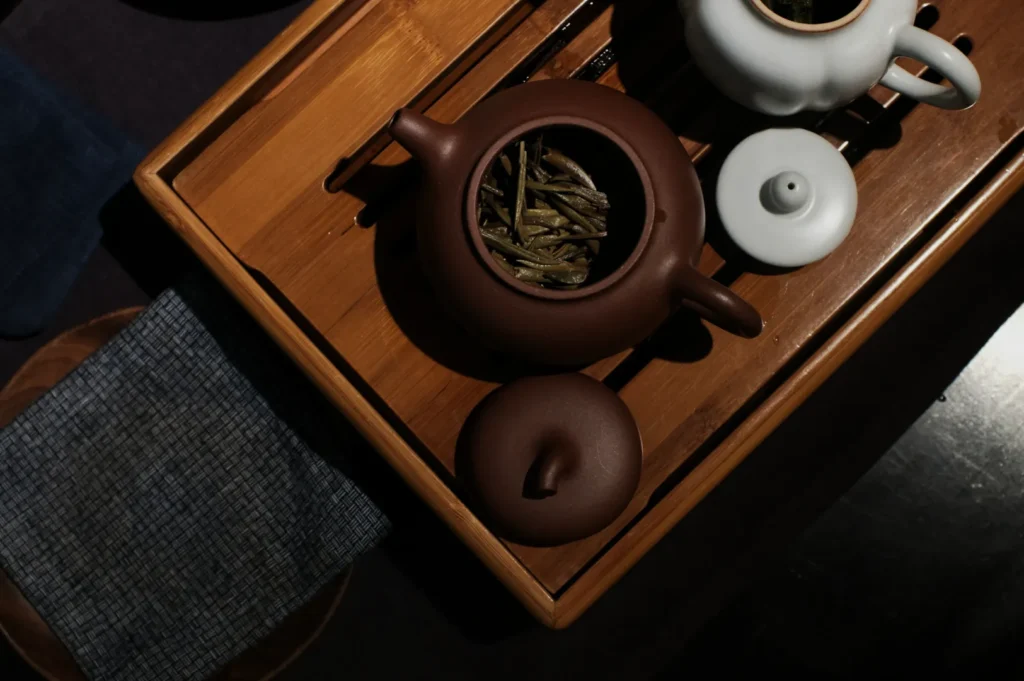
Choose a tea tasting if you want:
- A broader overview of several teas in one sitting.
- Faster contrast between styles and flavour directions.
- A more social, conversational atmosphere.
- A useful first orientation before buying tea.
- A lighter, more exploratory feeling.
Choose a private tea session if you want:
- Fewer teas and deeper attention.
- A more intimate, host-led rhythm.
- Multiple infusions that let flavour unfold gradually.
- Protected quiet and a more inward mood.
- A luxury tea experience singapore guests often describe through atmosphere as much as flavour.
There is no right choice in the abstract. There is only the choice that best suits the day, the company, and the kind of attention you are ready to give.
A Quiet Benchmark: When A Session Becomes A Traditional Tea House Experience
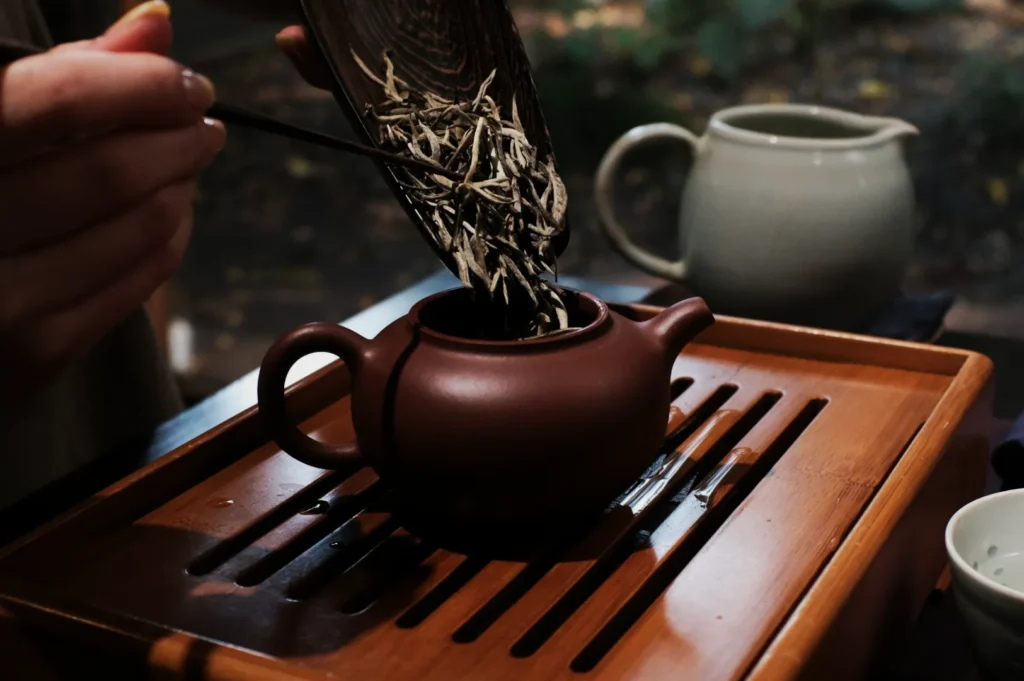
Not every private session becomes a true tea house experience.
The benchmark is not décor alone, nor the use of fine teaware, nor the fact that a room has been reserved. What changes the experience is the union of ritual, hosting, restraint, and time. When those elements are held carefully, tea stops feeling like a product being sampled and begins to feel like a practice being shared.
That is the difference between privacy as exclusivity and privacy as protection.
An immersive tea experience depends on more than access. It depends on being guided into a rhythm where the tea can actually speak. If you would like to understand immersive tea experience in the fuller sense of a traditional tea house, that framework becomes much easier to recognise once you have sat inside it.
A Gentle Introduction At Tea Room By Ki-setsu
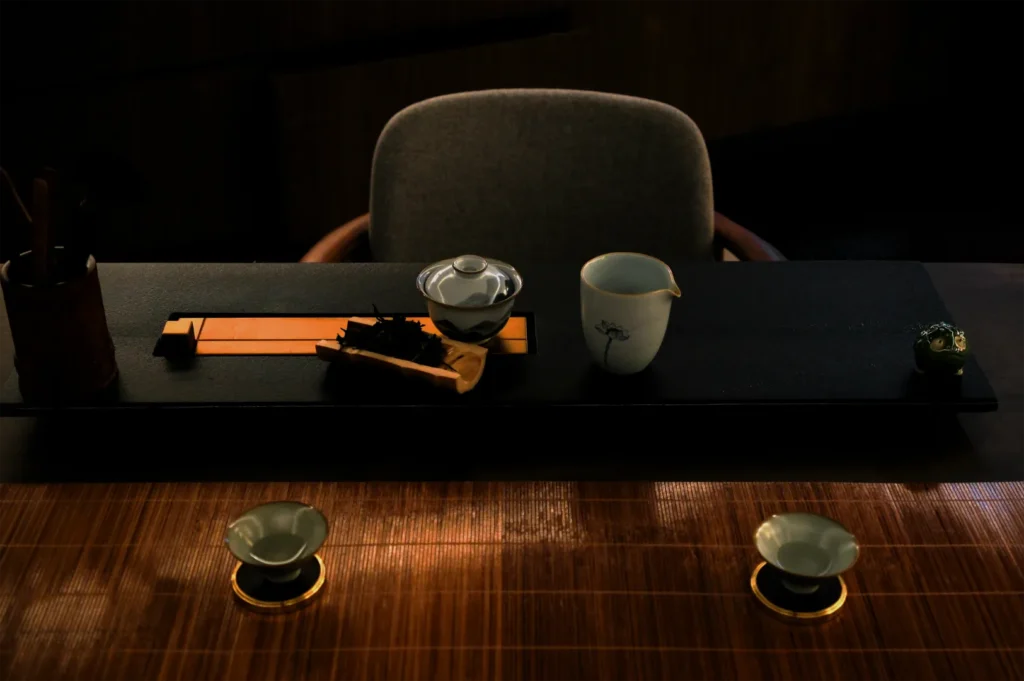
At Tea Room by Ki-setsu, we have shaped our work around the session rather than the spectacle.
We are a private Chinese tea sanctuary in Singapore, and that privacy exists not to create distance, but to preserve attention. Seats are limited because tea changes in crowded air. The pacing is guided because different leaves open at different speeds. The atmosphere remains quiet because texture, aroma, and aftertaste all become clearer when the room is not competing with them.
Guests arrive with different levels of familiarity, and that is entirely welcome. Some come to compare and clarify. Others come because they are looking for a space where tea does not need to be explained too loudly in order to be felt. In either case, the host’s role is the same: to guide with restraint, to read the room without intruding upon it, and to let the tea lead where it should.
This is why sessions often feel personal in a way that cannot be replicated by buying blind or moving too quickly through a menu. The tea is not simply presented. It is paced, protected, and shared.
Choose The Experience That Meets You Where You Are
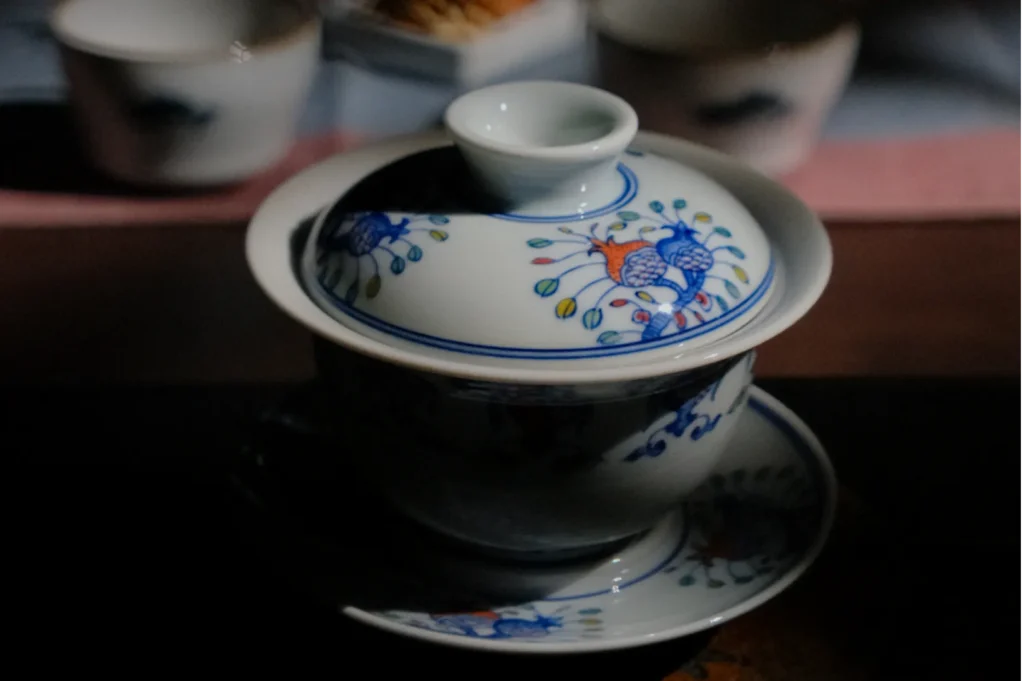
You do not need to choose the “higher” experience. You only need to choose the one that meets you honestly.
If you want variety, comparison, and a first map of the field, begin with a tasting. If you want depth, quiet, and the chance to follow a tea as it changes, choose a session. Both can be beautiful. Both can teach. The difference lies in the kind of attention you are ready to bring.
The right experience is the one that leaves you quieter than when you arrived.