Flavour is often where people begin, but it is rarely where pairing ends.
A tea may seem to match a food in theory, only to feel strangely wrong once the first bite settles. The aroma disappears. The finish shortens. The cup becomes muddier, flatter, or heavier than it was on its own. In many of these cases, the problem is not flavour at all. It is texture.
At Tea Room by Ki-setsu, we think texture is one of the quiet forces that shapes a pairing most decisively. The mouth notices it before language does. A crisp bite can sharpen a tea into clearer focus. A creamy one can soften the cup or obscure it entirely. A crumbly sweet can either become graceful beside the right tea or leave both food and tea feeling dry and incomplete. To understand tea and food texture is to understand why some pairings come alive while others lose their shape.
For a wider foundation on sweetness, balance, and pacing, see our guide to tea pairing. Here, the attention is narrower: how texture changes the cup.
Why Texture Changes the Cup So Quickly
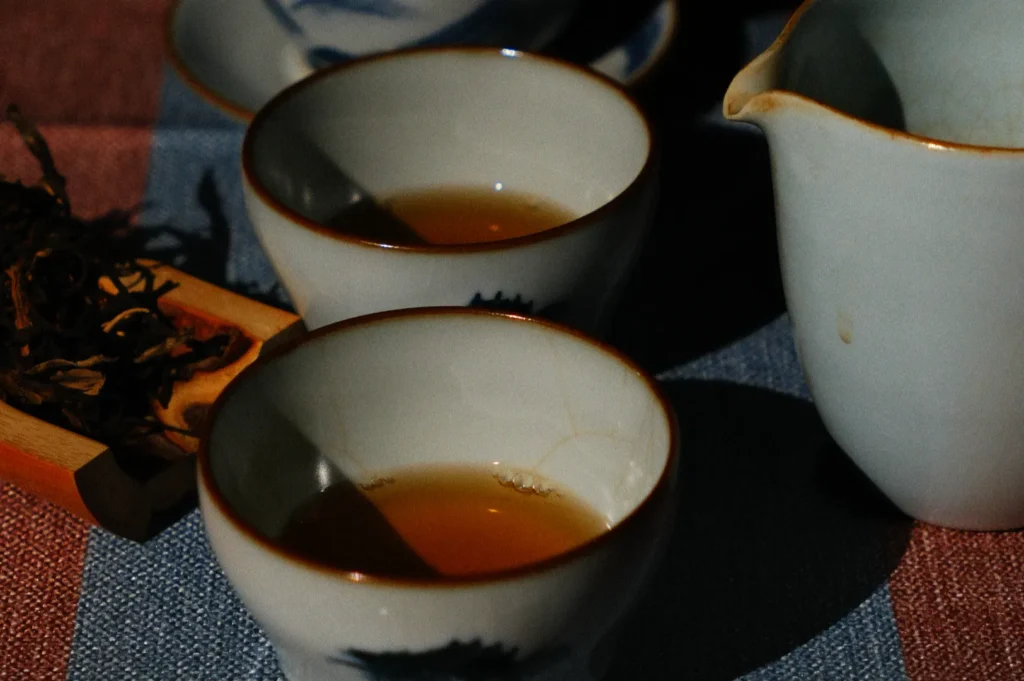
Texture affects tea faster than most people expect.
A flavour note may take a moment to register. Texture acts immediately. The moment food enters the mouth, it changes the surface the tea has to move across. Crisp textures can make a tea feel brighter and more defined. Creamy textures can soften edges, but may also blur delicacy. Soft foods can feel elegant beside tea, or make the tea seem too quiet. Roasted and oily foods may add warmth and depth, but can easily weigh the palate down.
This is why how food texture affects tea is not a secondary question. It is often the first real question. Two foods with similar sweetness can produce completely different pairings if one is airy and the other dense. Two savoury bites with similar seasoning can lead the tea in entirely different directions if one is crisp and the other oily.
A good pairing is not only about what the food tastes like. It is about what the food does to the mouth before the next sip arrives.
The Five Texture Families and What They Do to Tea
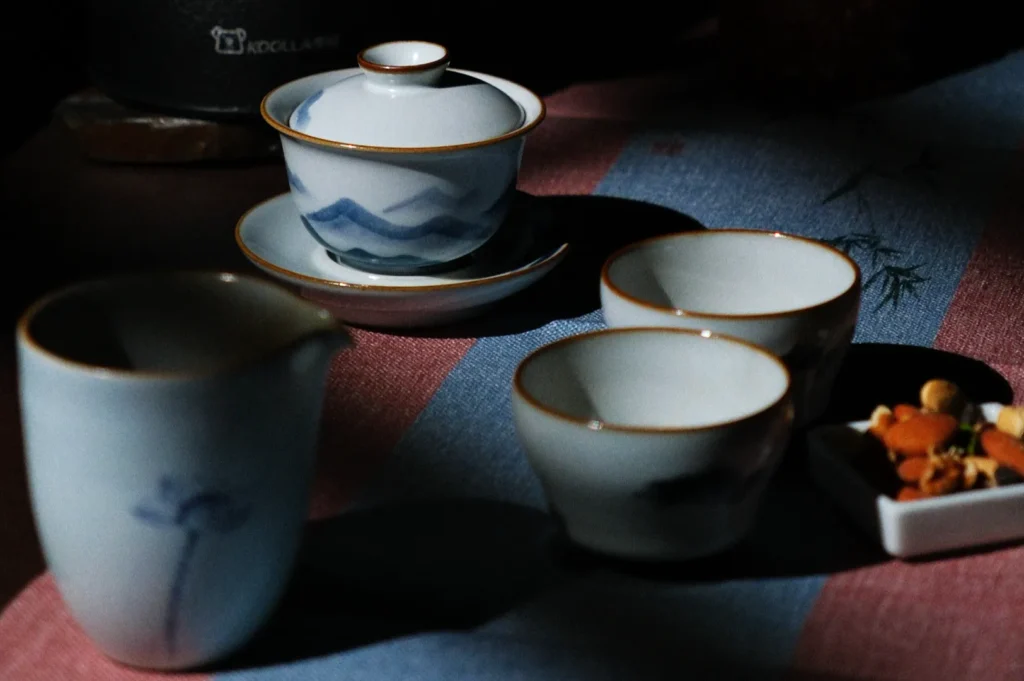
Crisp and Snappy Foods
Crisp foods often bring clarity.
A rice cracker, a thin biscuit, a delicate wafer, or the edge of a well-baked pastry can sharpen the outline of a tea beautifully. This is especially true with teas that are soft, rounded, or subtly aromatic. The snap of the food creates contrast, and that contrast can make the next sip feel more precise.
This works because crisp textures tend not to linger too heavily. They break cleanly, pass quickly, and leave the tea enough room to return. That makes them one of the most forgiving pairing structures when the seasoning is restrained.
But crisp does not automatically mean good. If the food carries too much salt, grease, or toasted intensity, the very texture that should refresh the cup can instead harden it. The tea may feel drier or shorter. Crispness helps only when the bite remains clean.
At Tea Room by Ki-setsu, we often find that crisp textures work best when the tea needs lift rather than comfort. A smoother oolong or gentler black tea can suddenly seem more alert after a crisp, quiet bite.
Creamy and Silken Foods
Creamy textures ask the tea to work harder.
Custard, soft bean fillings, milk-based sweets, silken tofu, smooth pastes, and ganache-like textures all coat the mouth. That coating can be beautiful if the tea has enough structure to move through it. If not, the tea simply disappears.
This is what makes creamy food tea pairing so delicate. Creaminess softens edges, which can be lovely for teas that are too sharp or brisk on their own. But it can also mute floral lift, blur roast, and shorten aftertaste. A tea that felt articulate before the bite may seem diffuse afterward.
The question is always the same: does the tea clear the creaminess, or does the creaminess absorb the tea?
A fuller-bodied tea, or one with enough warmth and shape, can perform beautifully here. The pairing feels rounded rather than heavy. But a tea that is already soft, airy, or quiet may not survive the encounter. Creamy textures can be generous, but they are rarely innocent. They ask for a tea with enough presence to return clearly.
Soft and Airy Foods
Soft foods are often among the easiest to pair because they do not push too hard.
Sponge cake, chiffon, steamed cakes, light buns, and airy pastries usually sit gently on the palate. They do not snap, cling, or coat in an aggressive way. If their sweetness is restrained, they can feel almost ideal beside tea. The cup remains legible. The food feels companionable rather than dominant.
These pairings often seem simple, but they are quietly elegant. The tea is allowed to keep its line. Floral notes remain visible. Texture in the cup can still be felt. A soft dessert or light pastry can make the tea seem even calmer, more graceful, more settled.
This is one reason soft and airy foods appear so often in refined tea settings. They do not ask the tea to fight. They give it room.
Still, softness alone is not enough. If the food becomes too moist, too buttery, or too sweet, the effect changes. It is not softness that matters most, but softness with restraint.
Dry, Crumbly, and Powdery Foods
Dry textures create a different challenge.
Shortbread, crumbly cookies, bean cakes, dry pastries, and sandy confections can feel pleasant at first, but they quickly reveal whether the tea has enough body to restore the mouth. Without that support, both food and tea may feel dusty, fragmented, or incomplete.
This is where tea and food texture pairing becomes especially interesting. A dry bite is not automatically a bad pairing. In fact, it can be very beautiful when the tea supplies what the food lacks: fluidity, warmth, continuity. A tea with enough body can gather a dry texture back into coherence and make the pairing feel deeply satisfying.
The wrong tea, however, leaves the whole experience feeling hollow. The food takes moisture away, and the tea fails to return it in any meaningful way. The result is a pairing that sounds gentle in theory but feels tiring in practice.
At Tea Room by Ki-setsu, we think these are some of the most revealing pairings because they show how much the tea contributes beyond flavour alone.
Roasted, Oily, and Warm Textures
Roasted and oily foods often pair best with teas that carry warmth of their own.
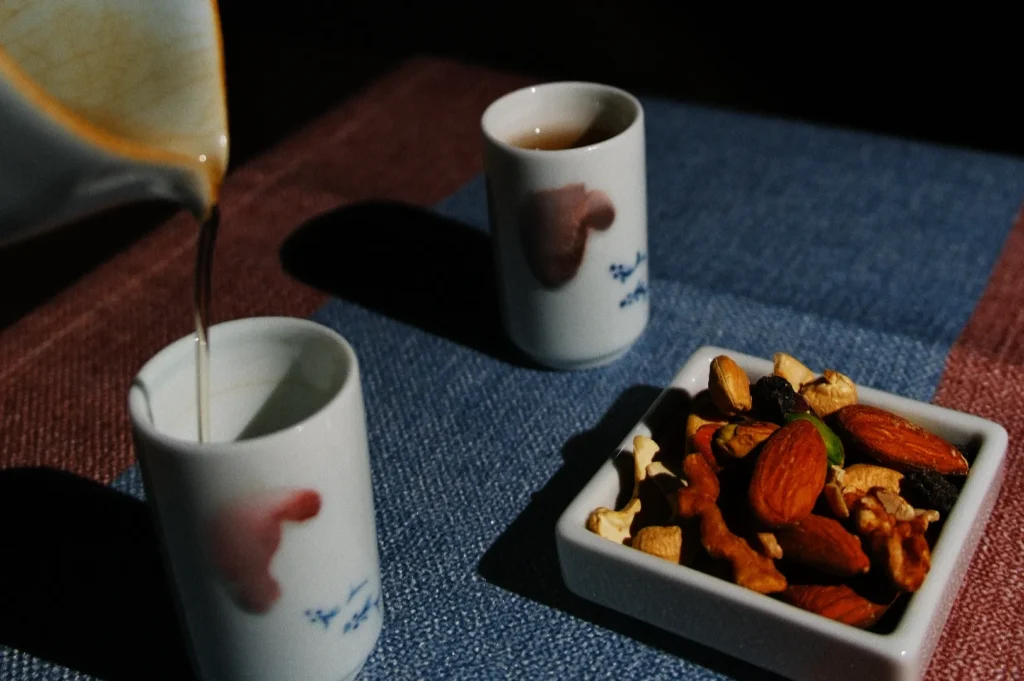
Roasted nuts, toasted pastries, pan-fried bites, browned crusts, and lightly oily savouries bring depth, but they also bring weight. A tea that is too delicate will vanish beside them. A tea with some roast, body, or warmth may absorb the richness beautifully and keep the pairing from feeling too dense.
This is where roasted food tea pairing becomes particularly satisfying. A tea with a grounded structure can meet the warmth of the food and make it feel more complete rather than heavier. The pairing works when both tea and food move in the same emotional direction, but the tea still has enough freshness to prevent the palate from becoming dull.
The danger lies in excess. Too much oil or roast can make the whole table feel tired. The tea should restore shape, not sink into the same heaviness. The best roasted pairings feel warming, but never weighed down.
A Simple Way to Pair Tea by Texture
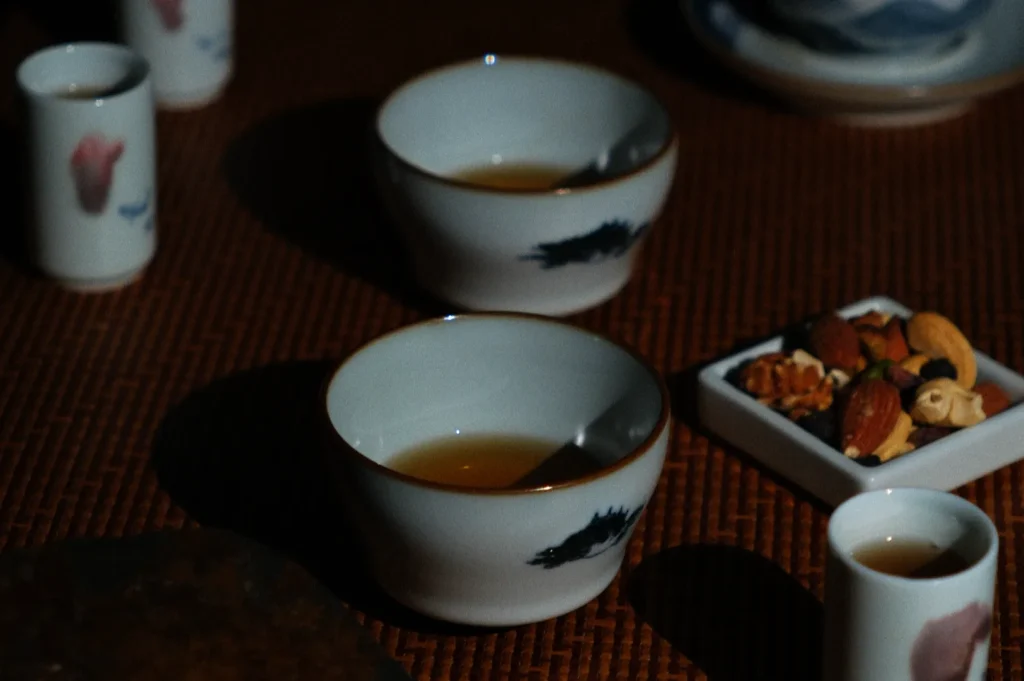
If you want a practical approach, begin with the food’s movement in the mouth.
Does it snap, melt, coat, crumble, cling, or disappear quickly? That is your first clue. Before deciding which tea suits it, understand what the food is doing physically.
Then ask what the tea needs to do in response. Should it lift? Clear? Deepen? Restore freshness? Add warmth? Soften something too severe?
Finally, taste the second sip carefully. This matters more than the first. After the texture has settled, what has happened to the tea? Has it become brighter, muddier, warmer, drier, or more complete?
Texture pairing works when the tea returns with greater clarity after the bite. If the next sip feels less articulate than the one before it, the food has taken too much space.
Pair Texture with the Tea’s Movement, Not Just Its Taste
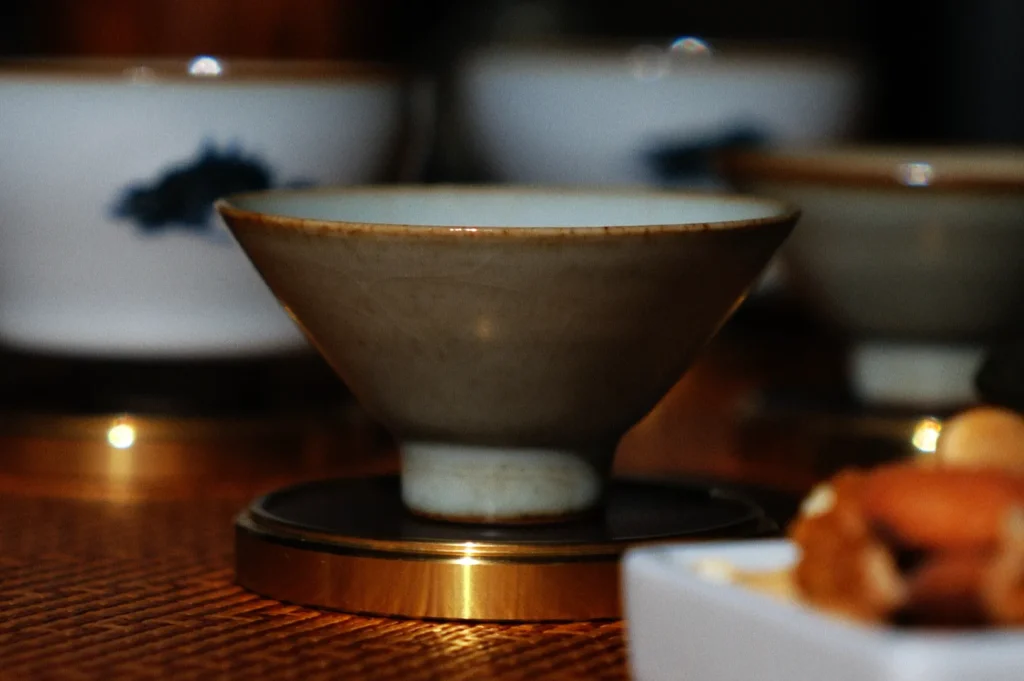
Texture is one of the quietest ways a pairing succeeds or fails. A tea can share flavour notes with a food and still feel wrong in the mouth. What matters is movement: how the food enters, how it lingers, and how the tea returns after it.
At Tea Room by Ki-setsu, we believe the best pairings often happen when food and tea improve each other’s flow across the palate. The most refined pairings are not always the most obvious ones. They are the ones that let the cup remain alive, articulate, and complete.