Dim sum is one of tea’s most natural tables, but that does not mean every tea suits every basket.
A meal of dim sum moves through softness, steam, starch, savoury filling, fried edges, sweet buns and glossy sauces in quiet succession. A single tea may seem graceful with one dish and suddenly feel too heavy, too shy or too short with the next. This is why tea and dim sum pairing deserves more attention than the old habit of simply pouring whatever happens to be on hand.
At Tea Room by Ki-setsu, we think the beauty of Chinese tea with dim sum lies in its rhythm. Tea is not there only to refresh the mouth. It also brings coherence to a table of many textures and flavours.
For a wider foundation on balance, structure, and pairing principles for tea, begin there before returning to the dim sum table. Here, the focus is narrower and more practical: how different baskets meet different teas, and how to keep the leaf clear from first pour to final bite.
Why Tea Works So Well with Dim Sum
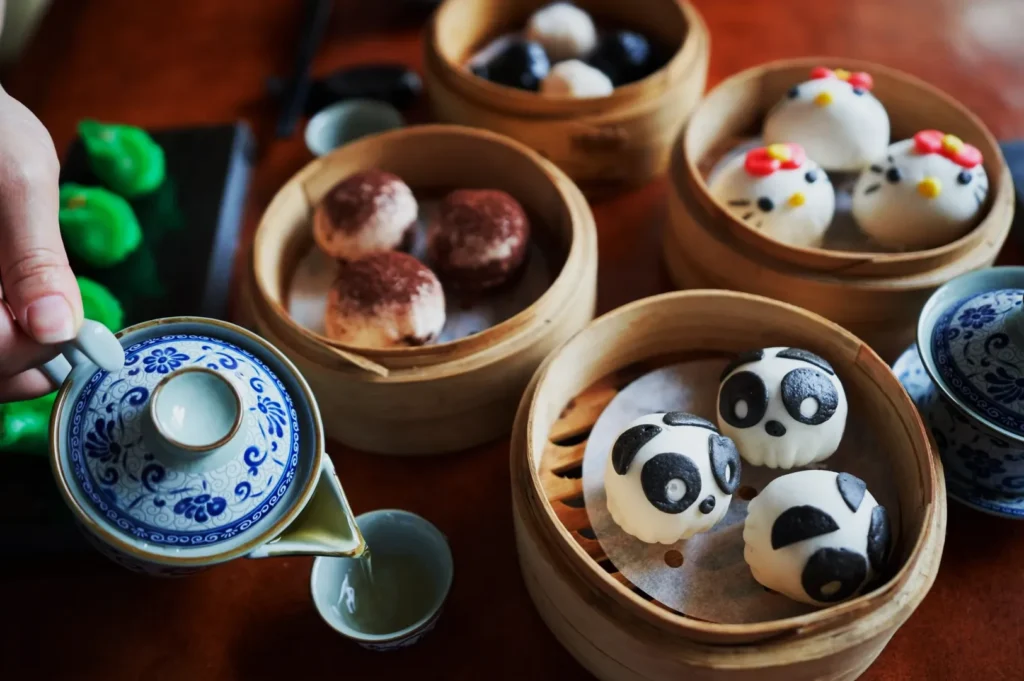
Dim sum rarely arrives as one dominant dish.
Instead, it comes in small portions with changing textures and filling styles. One basket may be translucent and delicate. The next may be soft and starchy. Another may be crisp, fried, and a little oily. This variety is exactly why tea belongs here so naturally. A well-chosen tea helps the palate recover between contrasts. It clears steam, softens fat, and restores attention after dough, shell, or filling has taken its turn.
There is also a deeper logic behind tea and dim sum pairing. Both ask for pace. Dim sum is rarely eaten in a hurry when it is enjoyed properly. A basket is opened, shared, considered. Tea moves in much the same way. It arrives, settles, and changes with each pour. This is why Chinese tea with dim sum feels more like a conversation than a pairing trick. The tea does not merely sit beside the meal. It guides the meal back into balance again and again.
How Different Dim Sum Styles Meet Different Teas
Steamed Dumplings and Clear Fillings
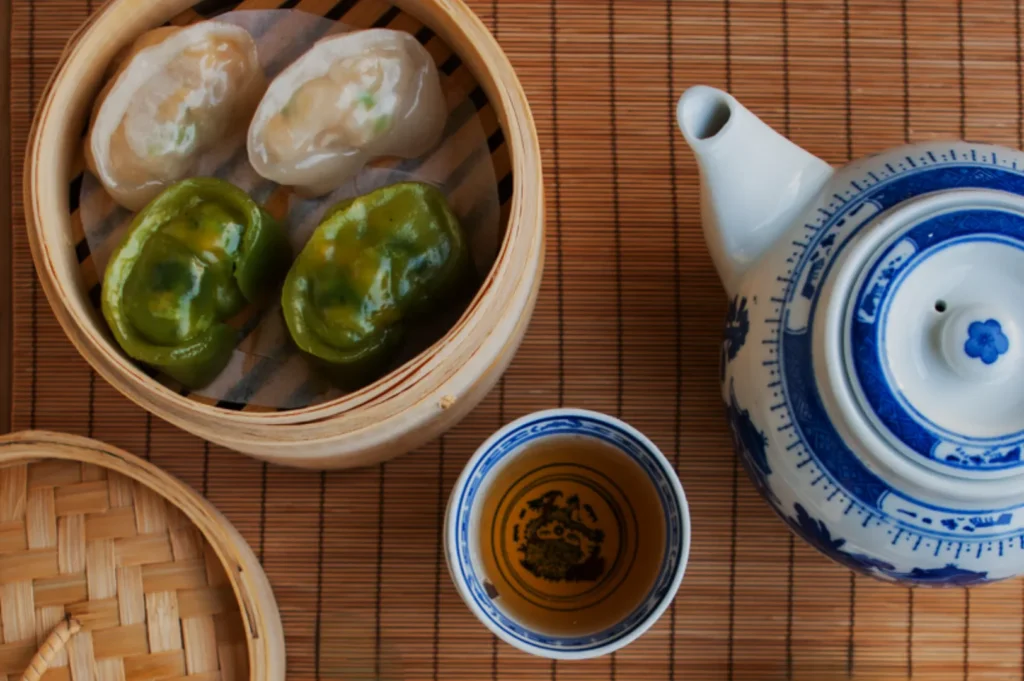
Steamed dumplings are often the easiest place to misjudge a tea.
Har gow, delicate prawn dumplings, simple seafood fillings, and lighter chicken dumplings all carry a certain translucence. The wrapper is thin. The filling is moist. The sweetness is subtle. When the tea is too dark or heavy, these details disappear very quickly. The seafood becomes blurred, and the tea begins to feel like a curtain over the basket rather than a companion to it.
Lighter oolongs often work beautifully here, especially those with floral lift or a clean, rounded body. A finer black tea can also work if it is not too heavy in the mouth. What matters is clarity. The tea should respect the freshness of the filling and the delicacy of the wrapper. A good pairing with steamed dumplings should make the second bite feel cleaner, not more crowded.
Mushroom Dumplings and Earthier Savoury Bites
Mushroom dumplings, vegetable dumplings, and earthier steamed fillings ask for a tea with a little more grounding.
The deeper savoury tone of mushroom can make very light teas seem too airy, while a gently roasted or more settled tea can bring warmth and continuity to the bite. This is where the table begins to move away from translucence and toward something more rooted. The tea can answer that shift by offering body without becoming dense.
A roasted oolong can work well here. So can a calmer, more mature tea that does not push too hard. The aim is not to overpower the earthiness of the filling, but to deepen it enough that the pairing feels coherent. At Tea Room by Ki-setsu, we often think of these pairings as quiet rather than dramatic. The tea does not need to announce itself. It only needs to meet the basket where it is.
Rice Rolls and Soft, Slippery Textures
Rice rolls are one of the most texturally specific foods on a dim sum table.
They are soft, smooth, slightly elastic, and often served with a light sauce that adds gloss and savoury sweetness at once. This means the tea must do more than match flavour. It must bring shape back to the palate. Without that, the whole pairing can feel too silky and too muted.
A tea with enough lift helps restore contour after a soft rice roll. The tea should not be sharp, but it should be clear. If the sauce is used heavily, the challenge becomes greater. The salt and sweetness of the liquid can easily flatten a delicate tea. In this case, a slightly more structured oolong or a tea with a clearer line may help keep the pairing from collapsing into softness.
Rice rolls teach an important lesson: dim sum is not only about filling. It is also about surface, slip, and the tea’s ability to redraw the mouth after the bite.
Fried Dim Sum and Crisp Savouries
Once the table turns fried, the tea must change with it.
Fried yam puffs, spring rolls, taro puffs, sesame-coated savouries, and crisp dumplings all bring oil, browned edges, and a more assertive texture. A tea that was beautiful with steamed seafood may now seem too faint. Fried food needs a tea with enough structure to clear the palate and enough warmth to keep the pairing from feeling disjointed.
This is where stronger oolongs, more robust black teas, or certain darker teas may step forward more confidently. The tea should not be heavy for its own sake, but it must be able to move through oil and restore freshness. Otherwise the crispness becomes tiring and the mouth begins to feel coated.
For readers searching for the best tea for dim sum, this is often the turning point. There is no single answer for every basket. The best tea is the one that can carry the centre of the table as it shifts from steam to fry, from delicacy to richness.
Steamed Buns and Soft, Sweet-Savoury Fillings
Steamed buns sit somewhere between savoury bite and soft comfort.
Char siu bao and other fluffy buns bring a slightly sweet dough, and that dough matters as much as the filling. The texture is airy, but the overall effect can still feel full because the bun expands across the palate. The tea therefore needs to keep the pairing from becoming too soft or too sweet.
A floral or gently roasted tea can work well depending on the filling. If the filling is more savoury, the tea may bring brightness. If the filling is sweeter, the tea may need more warmth or shape. What matters is balance between dough and centre. The mistake is to think only about the filling. With buns, the wrapper often decides the pairing more than expected.
At Tea Room by Ki-setsu, we find that buns often call for teas that can hold softness without being absorbed by it.
Lotus Paste Buns and Sweet Endings
Lotus paste buns and other sweet dim sum bring the meal toward a quieter close.
These are not quite plated desserts, but they do move the palate in that direction. Sweetness rises. Texture softens further. The tea must now remain articulate in the presence of paste, starch, and a gentler but very real sugar level. A tea that is too delicate may disappear. A tea that is too severe may feel harsh by contrast.
This is where a warmer black tea, a settled roasted oolong, or a calm aged tea can work beautifully. The tea should remain clear after the sweetness and keep the end of the meal from feeling overly heavy. The best pairings with sweet dim sum are not dramatic. They are measured enough to let the table end with grace rather than excess.
A Simple Way to Choose Tea Across a Dim Sum Table
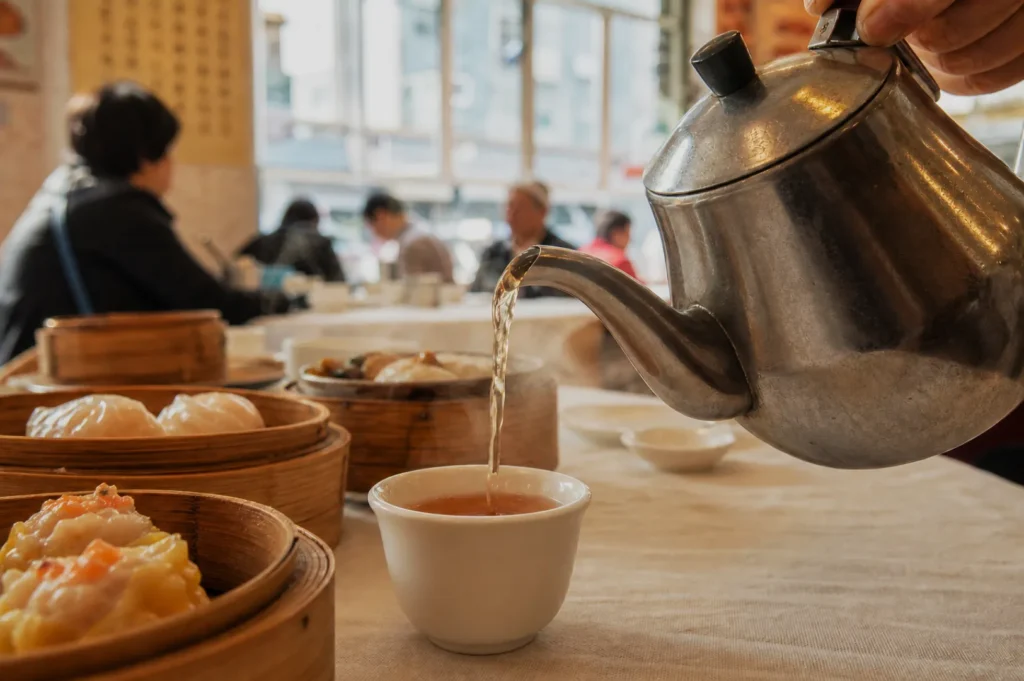
If the table holds many baskets, do not choose the tea for the first dish alone.
Begin by looking at the dominant textures. Is the meal mostly steamed and delicate, mostly soft and doughy, or moving into fried and richer territory? That gives you a better sense of the tea the table needs overall. If the meal sits mostly in the first category, a clearer, lighter tea may be right. If the centre of gravity moves toward oil, starch, or deeper savoury notes, the tea should carry more structure.
Then let the tea reset the palate between contrasts. Its role is not to match every basket perfectly. Its role is to keep the meal coherent from one basket to the next. A successful tea and dim sum pairing does not solve every bite individually. It keeps the whole table feeling spacious.
The Best Dim Sum Pairings Let the Table Feel More Spacious
Tea at a dim sum table should do more than accompany.
It should clear, steady, and connect the meal. At Tea Room by Ki-setsu, we believe the finest pairings are the ones that make even a varied table feel composed. A well-chosen tea does not dominate the baskets. It lets each one arrive with more clarity, then leaves the palate ready for the next. That is the quiet art of Chinese tea with dim sum: not force, but balance carried gently from basket to basket.