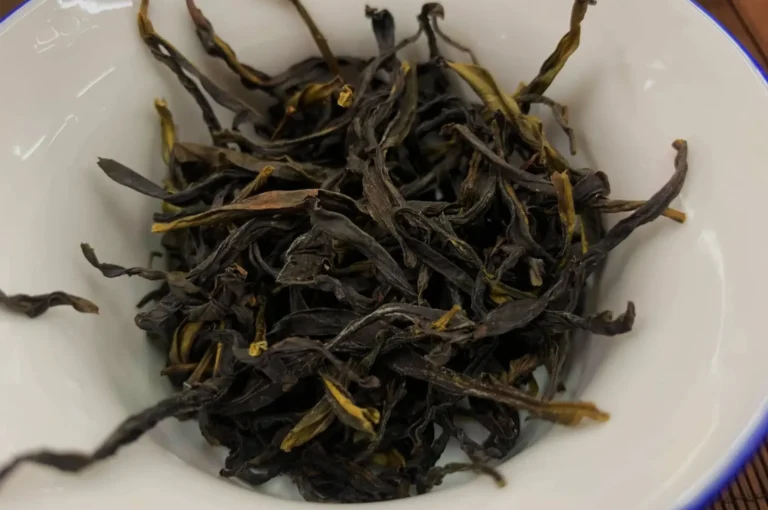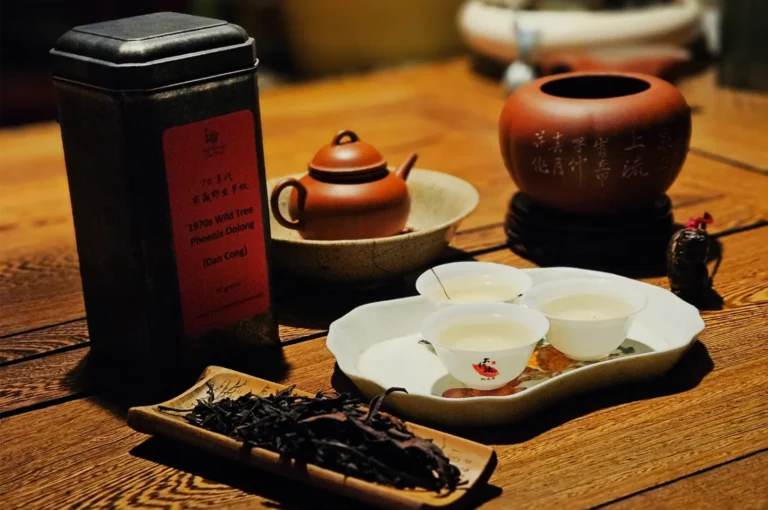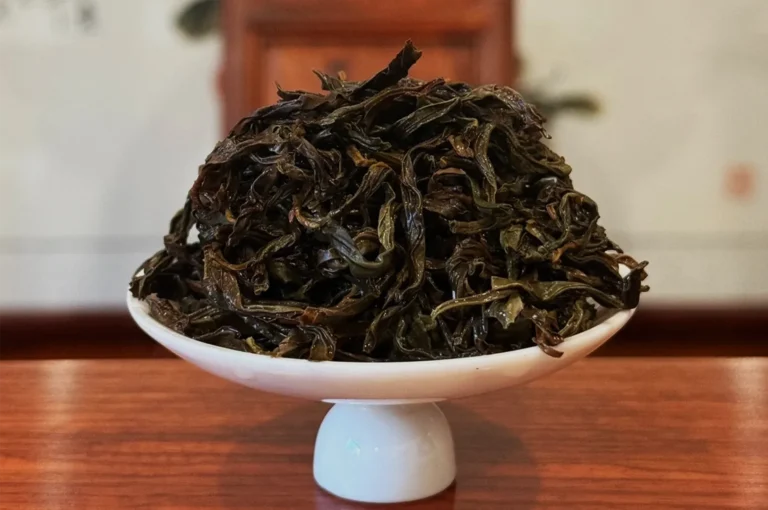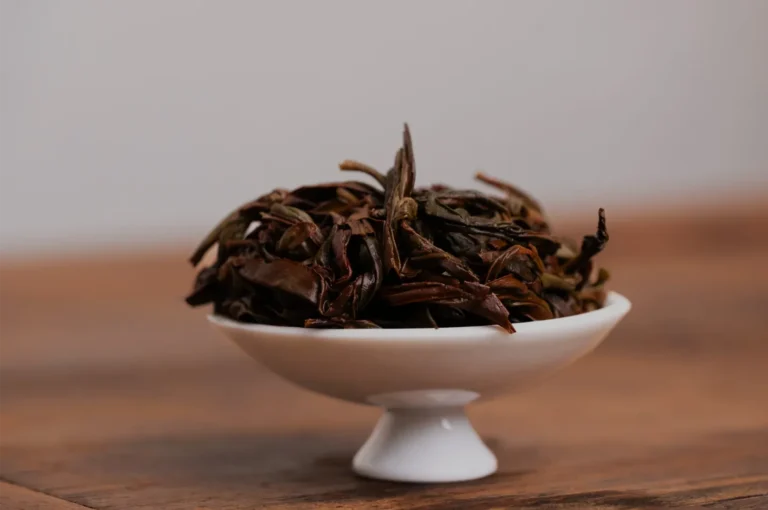
Jasmine tea can be ruined by enthusiasm.
Water too hot. Steep too long. More leaf because more must surely be better.
The result is often bitter green tea wrapped in tired flowers.
Jasmine tea needs enough heat to release fragrance, but not so much extraction that the base overwhelms it.
Our beginner’s guide to brewing jasmine tea gives the broader jasmine context. Here is the practical cup.
Start Around 80°C to 85°C
Many jasmine teas use a green tea base.
For those, slightly cooler water is a sensible starting point.
Research on green tea brewing shows that water temperature and steeping time change both extracted compounds and sensory acceptance.
If your particular jasmine tea is built on a sturdier base, it may tolerate hotter water.
Let the leaf decide.
Use Enough Leaf, Not Too Much
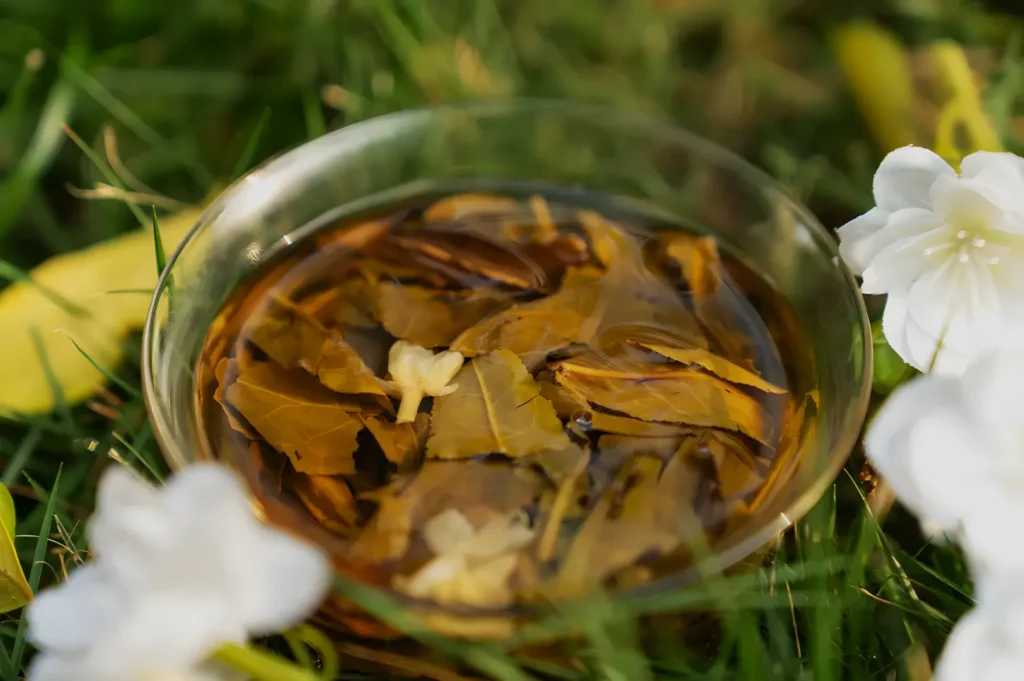
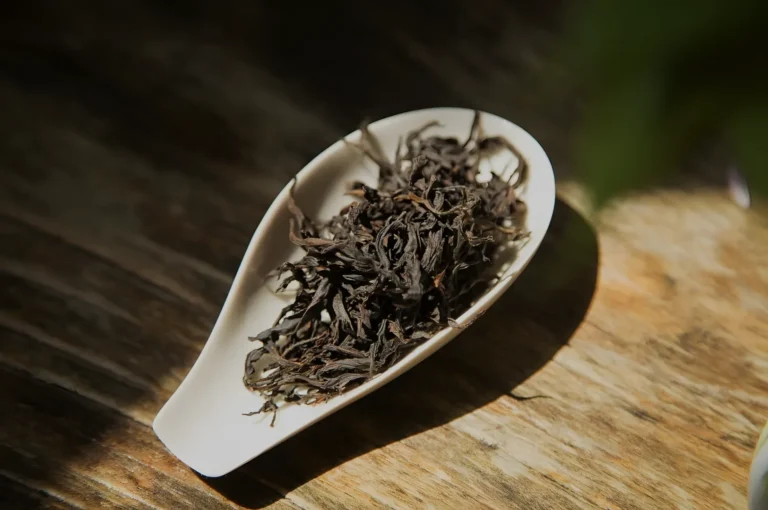
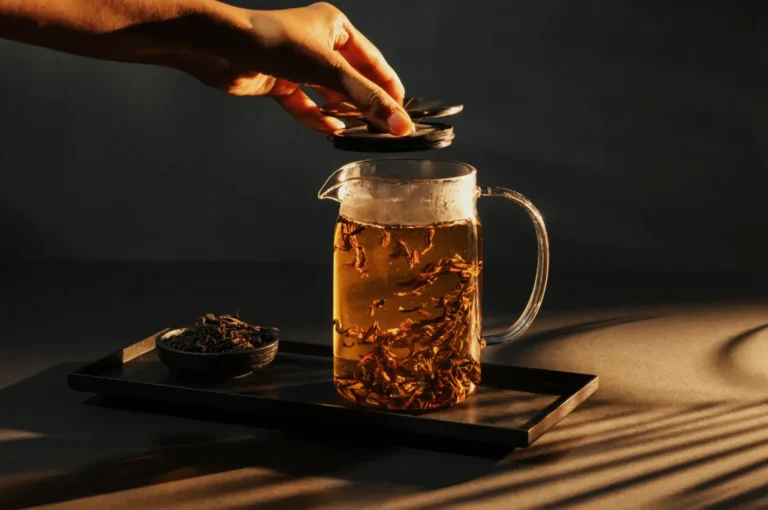
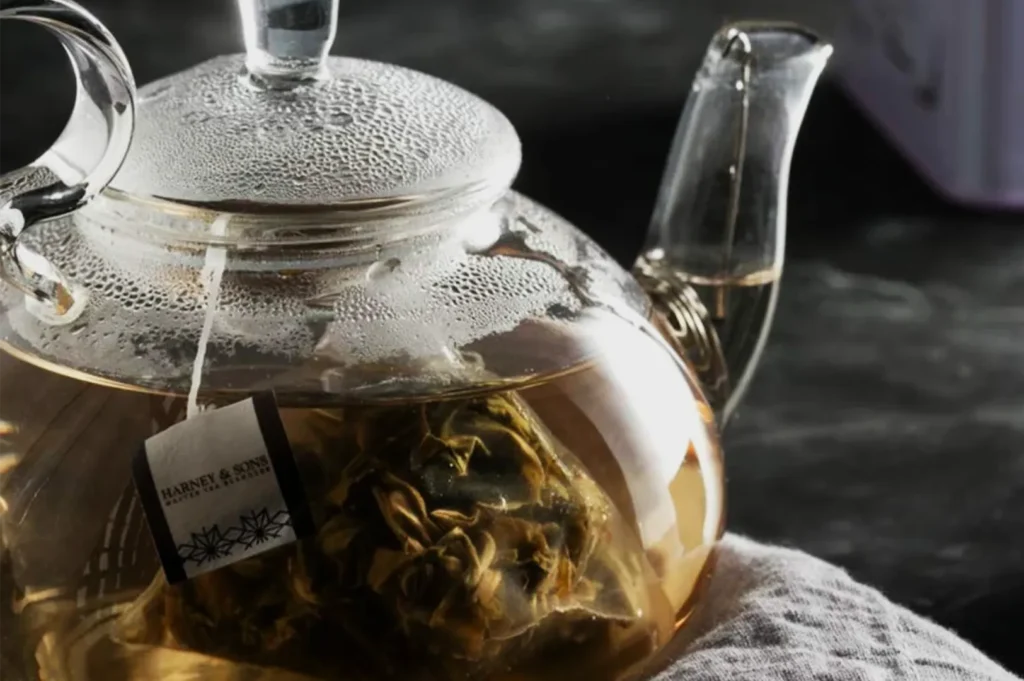
For a simple cup, begin around 2 to 3 grams of tea for 250 ml of water.
Steep for roughly two minutes, then taste.
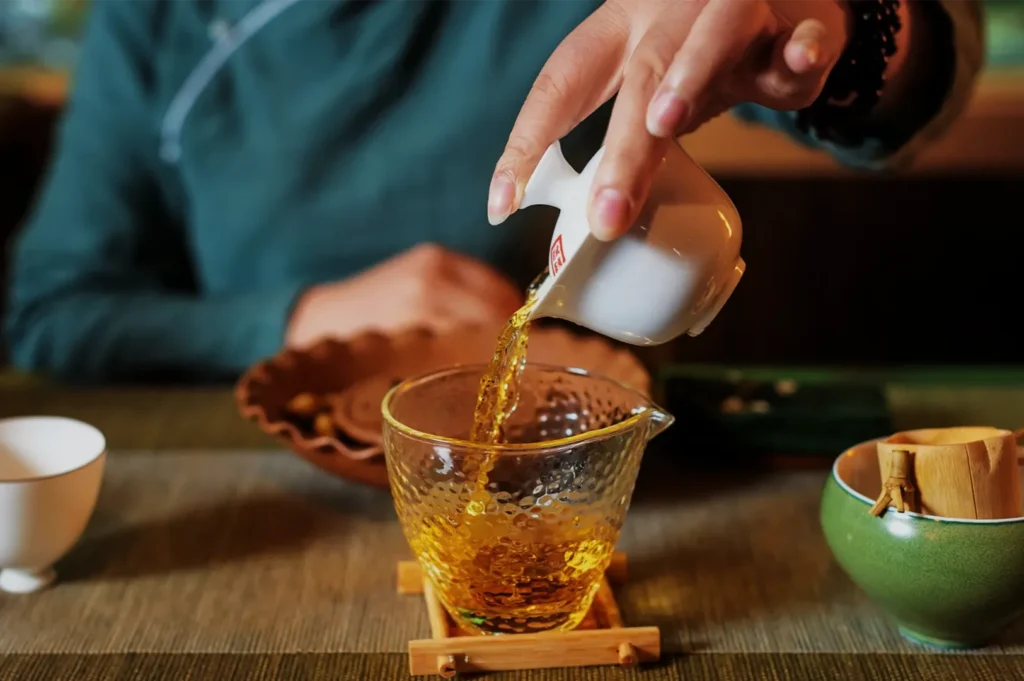
For smaller-vessel brewing, use more leaf relative to water but keep infusions shorter.
There is no honour in extracting everything at once.
Why Oversteeping Hurts
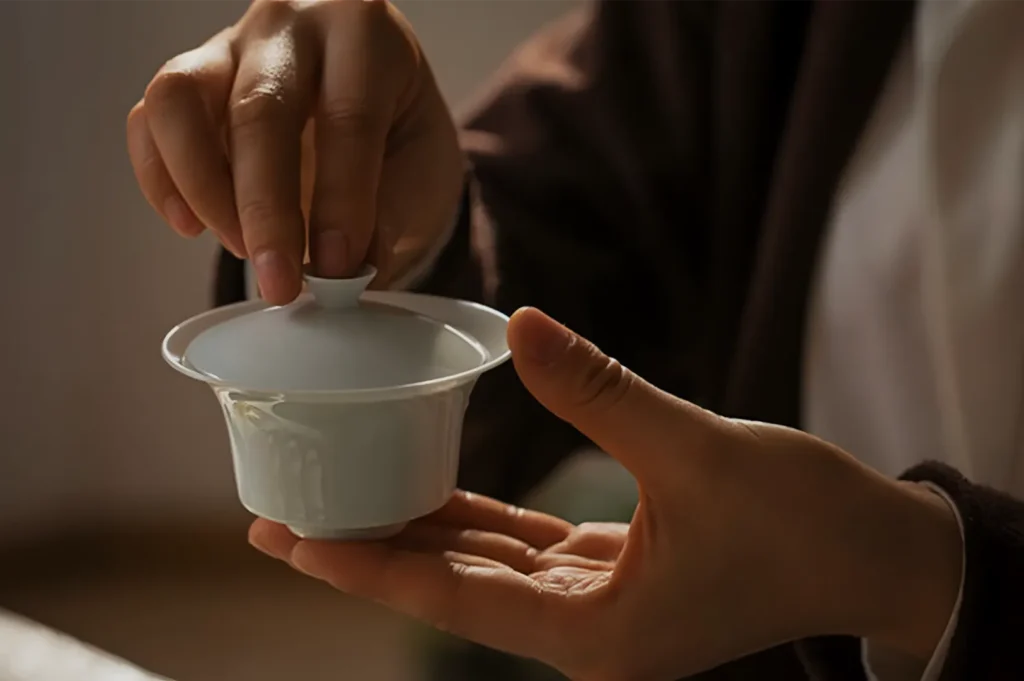
Longer and hotter brewing pulls more caffeine, catechins and other compounds from tea. Read the tea extraction study
With a delicate green base, that can bring bitterness and astringency forward.
Meanwhile, the floral aroma may stop feeling fresh.
If all you can taste is bitterness, the flowers have lost the argument.
Water Matters Too
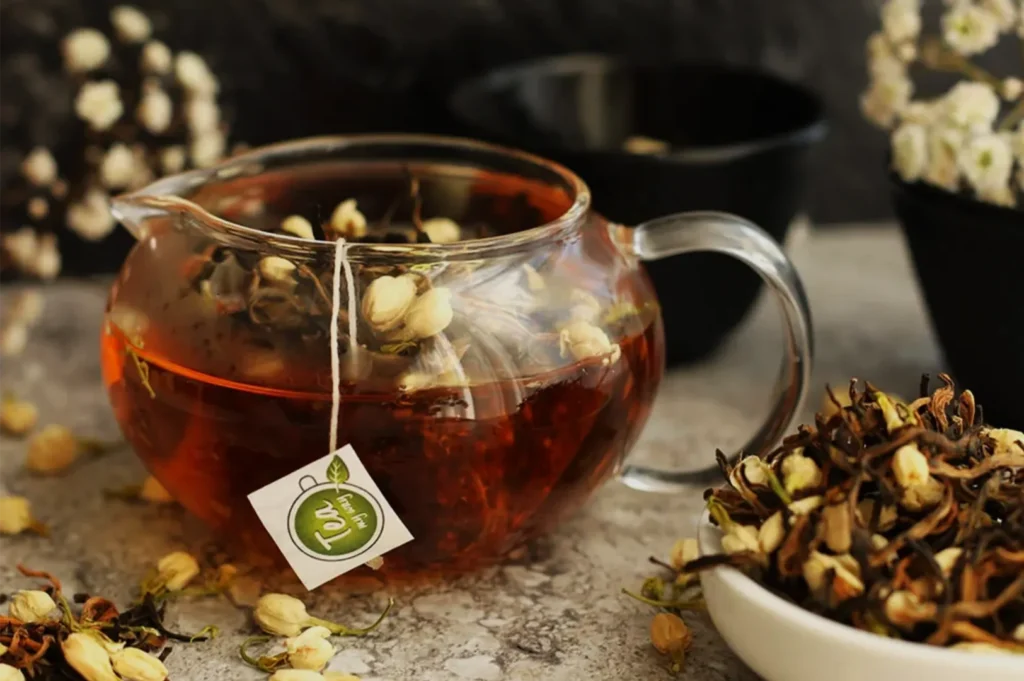
Very hard or alkaline water can alter green tea extraction and appearance.
Research on green tea infusions found increasing water hardness affected catechin yield and promoted browning under more alkaline conditions.
You do not need laboratory water.
Clean, pleasant-tasting water is enough to begin.
Can Jasmine Tea Be Reinfused?
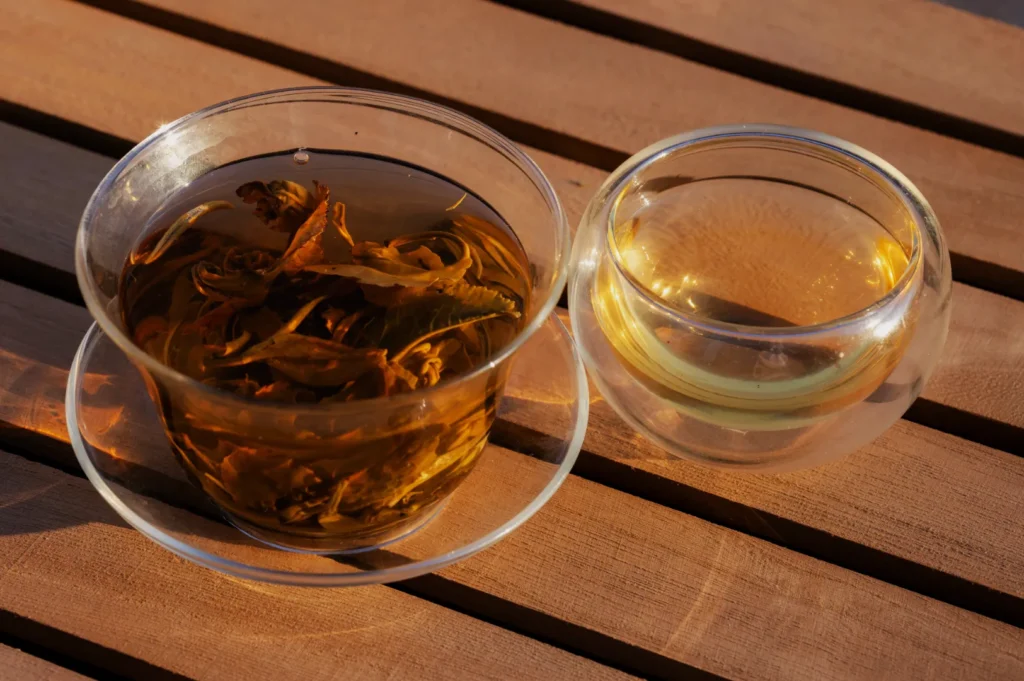
Often, yes.
Research into jasmine tea infusion durability shows that key aroma compounds evolve and decline across repeated brewing, making persistence one useful dimension of quality.
A good second cup may be softer than the first, with less overt fragrance and more base-tea character.
That change is worth noticing.
Brewing as Attention
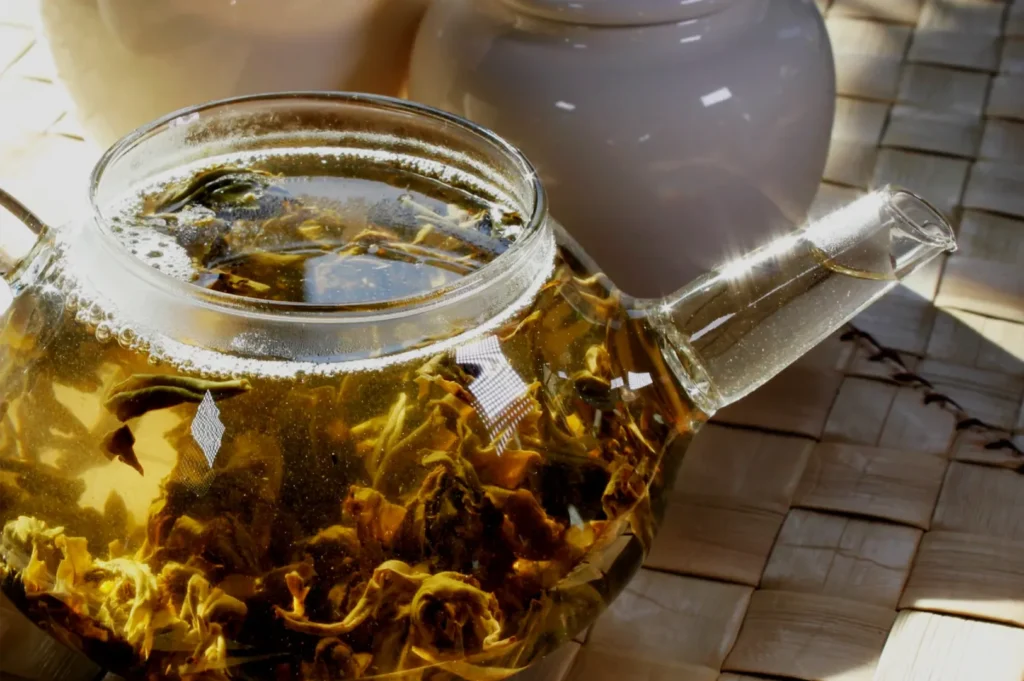
At Tea Room by Ki-setsu, private tea appreciation is built around adjustment rather than rigid recipes.
A recipe gets you to the first cup.
Attention improves the second.
If the tea is harsh, shorten the infusion. If it feels empty, add leaf. If the aroma seems closed, use slightly warmer water.
Good brewing is not obedience. It is response.
Final Thought
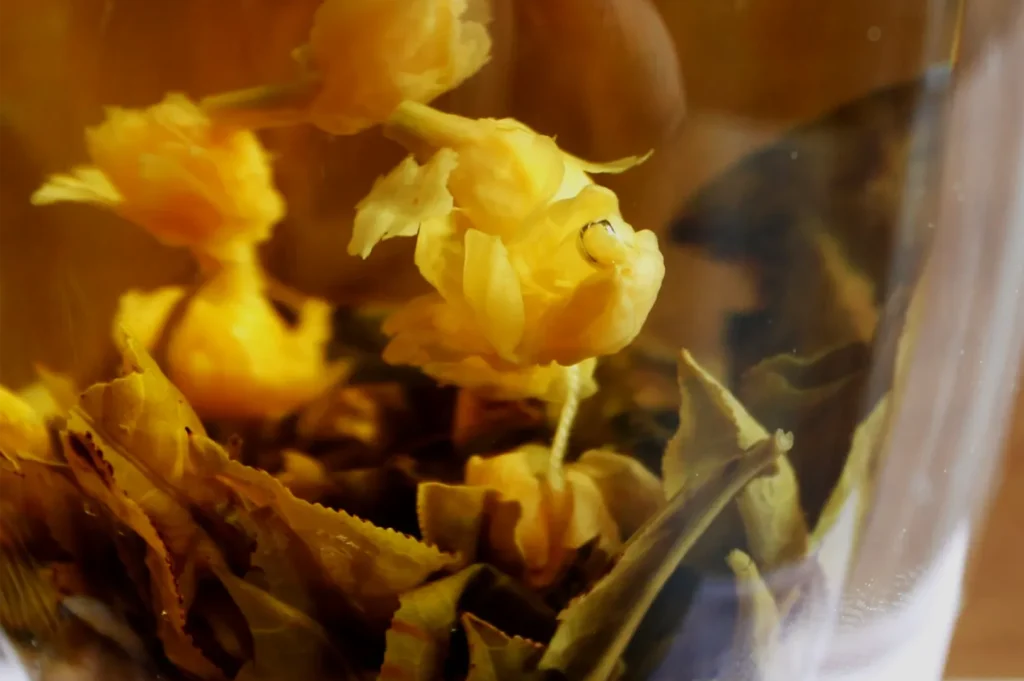
To brew jasmine tea well, begin gently.
Moderate water. Sensible leaf. Shorter steep.
Then taste.
The flowers have already done their work during scenting. Your job at the table is simply not to undo it.