There are teas that forgive haste, and there are teas that quietly reveal when they have been rushed. Longjing belongs to the latter.
Dragon Well does not ask for ceremony in the rigid sense, but it does ask for care. The leaves are delicate, the fragrance is subtle, and the sweetness arrives with restraint. When brewed well, Longjing opens with chestnut warmth, soft vegetal lift, and a clean finish that lingers without force. When brewed carelessly, it flattens quickly into bitterness or dullness, and much of its character is lost before the second sip.
At Tea Room by Ki-setsu, we think of Longjing as a tea that rewards quiet precision. Not technical obsession. Not performance. Just the kind of attention that lets the leaf unfold at its own pace. If you are new to this tea, or if past cups have felt sharper or less expressive than you hoped, brewing is often the reason.
For readers who want the wider cultural and historical context first, our complete guide to Longjing tea in Singapore offers a fuller introduction. This article stays with the cup itself, and with the simple question of how to brew Longjing so that its sweetness, texture, and grace can actually be felt.
Start With Flavour, Not Force
The easiest mistake with Longjing is to treat it like a tea that needs pushing.
Some drinkers assume that more heat, more leaf, or more time will produce a stronger and therefore better cup. With Longjing, the opposite is often true. What makes the tea beautiful is not intensity alone, but balance. It should feel clear, composed, and quietly generous. The sweetness is not loud. The aroma is not exaggerated. The pleasure lies in how everything arrives in proportion.
Longjing is often at its best when the brewing feels slightly gentler than your instincts first suggest.
This is why the goal is not simply extraction. It is shape. You are shaping what part of the tea arrives first, what remains in the middle, and what lingers after the sip.
The Three Things That Matter Most
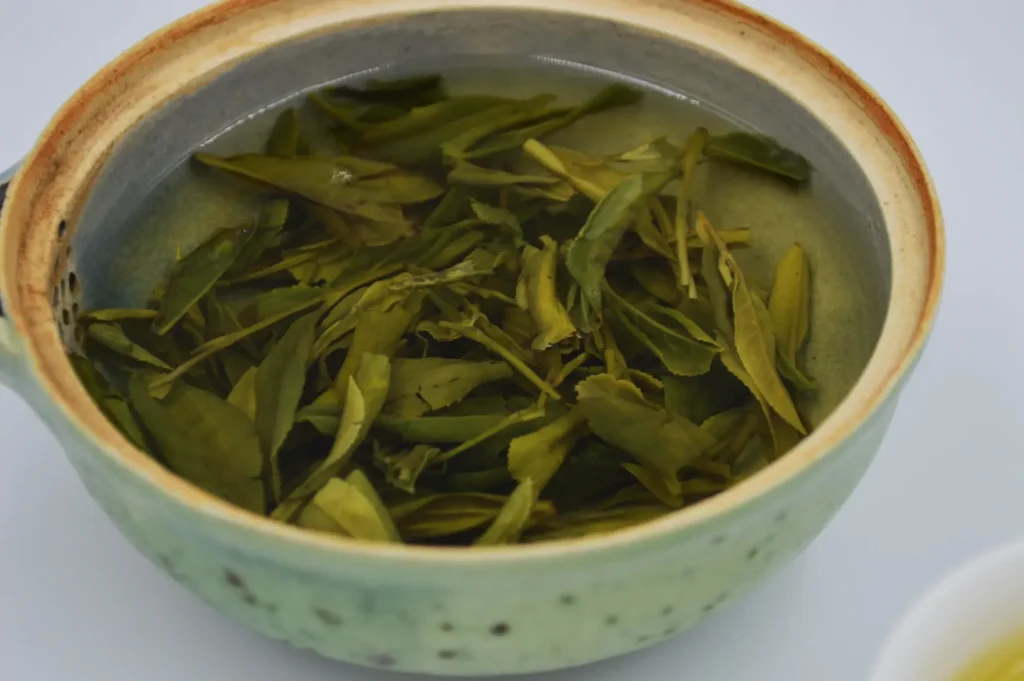
Longjing brewing becomes much simpler when reduced to three variables:
- water temperature
- leaf quantity
- steeping time
Everything else supports these.
If the water is too hot, the tea can lose sweetness and turn abruptly grassy or bitter. If the leaf is too sparse, the cup can feel weak and anonymous. If the steep runs too long, the liquor can become heavy without gaining depth.
The right balance depends partly on harvest timing and leaf tenderness, but for most drinkers, the safer path is to begin with moderation and adjust upward only if the tea feels too quiet.
Why Glass Works So Well for Longjing
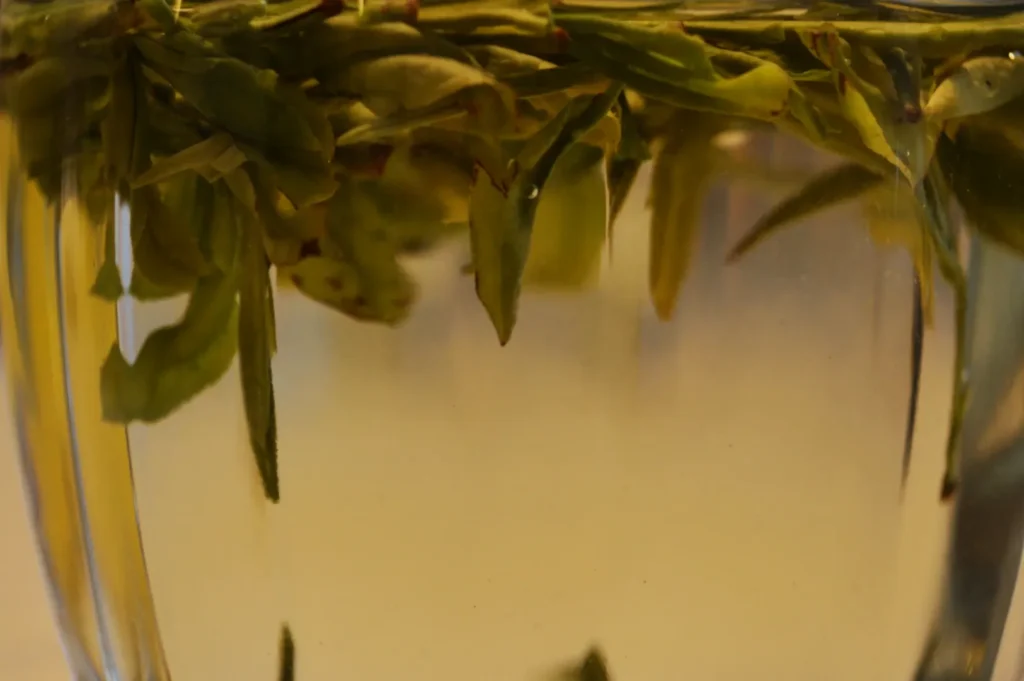
Longjing is one of the few teas that becomes more complete when it is seen as well as tasted.
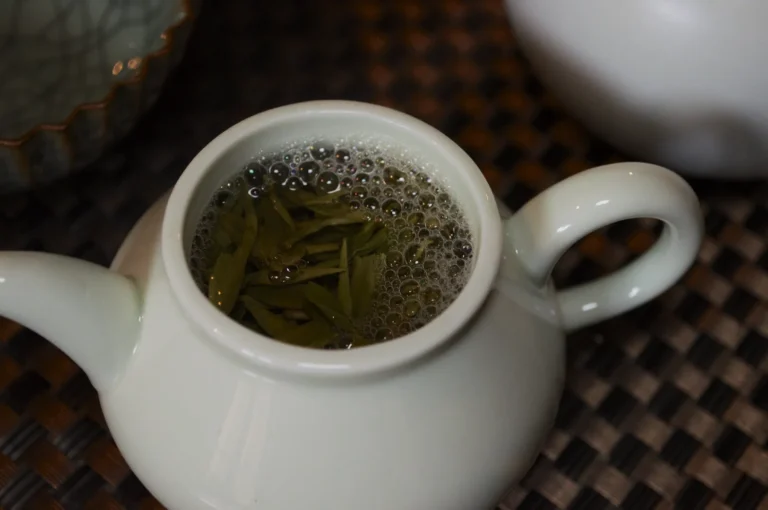
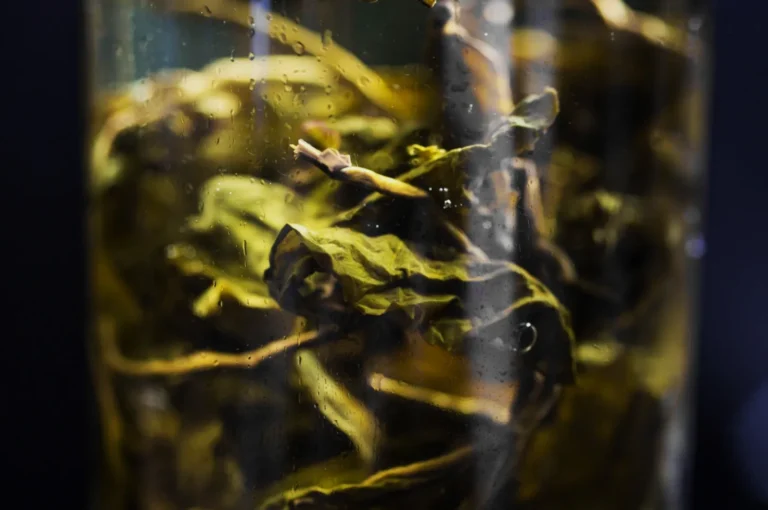
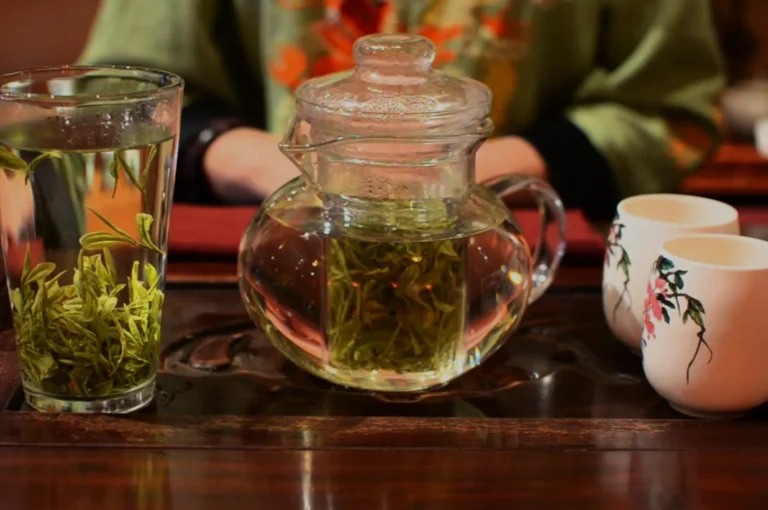
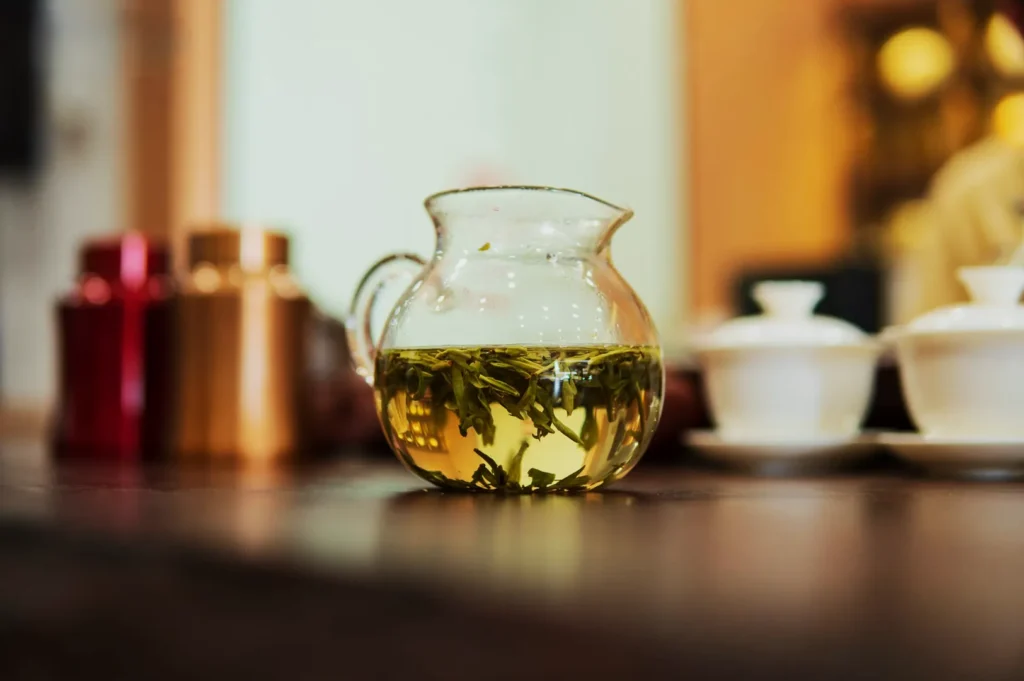
A tall glass or simple glass cup allows you to watch the leaves rise, fall, and stretch into the water. This movement is not merely visual charm. It slows the drinker down. It creates the kind of pause that makes aroma easier to notice and helps the first sip arrive with more attention.
Glass also keeps the brewing honest. It does not contribute flavour. It lets the colour remain visible. It makes it easier to judge how quickly the tea is opening.
Porcelain can also work beautifully, especially in a quieter, more traditional service. But if the goal is to understand Longjing clearly at home, glass is often the most immediate teacher.
A good Longjing in a clear glass often explains itself better than a long paragraph ever could.
Choosing the Right Water Temperature
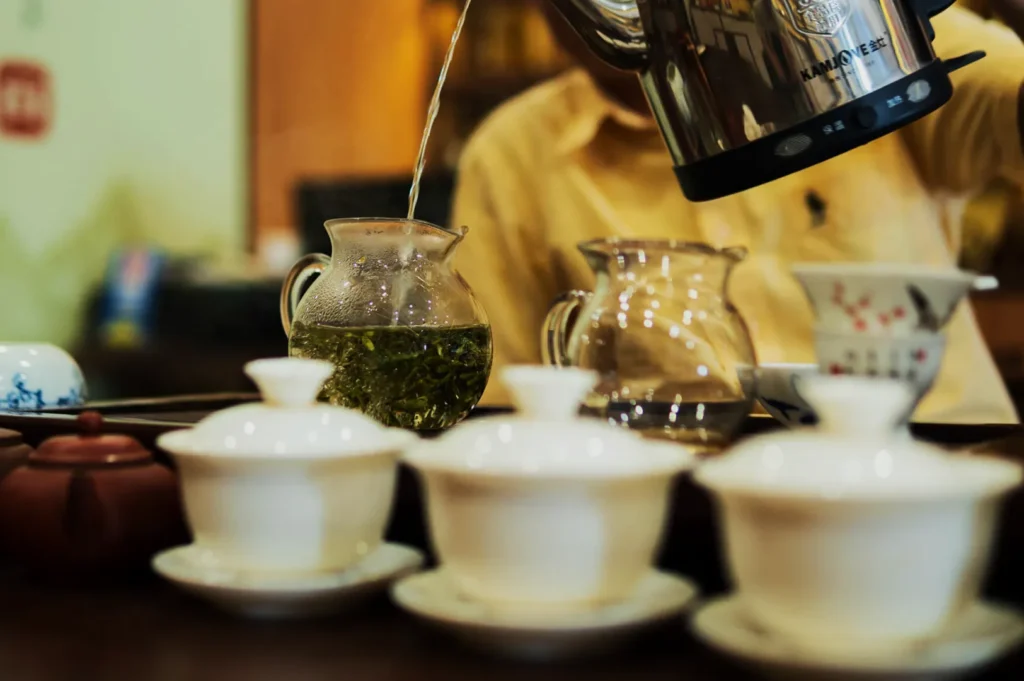
Longjing is a green tea, but that alone does not tell you enough. Some green teas can handle slightly more force. Longjing tends to prefer precision.
As a practical range, start around 75 to 85°C. That is warm enough to open the leaf, but gentle enough to protect its softer sweetness.
A few simple rules help:
- Use the lower end of the range for very tender, early spring Longjing.
- Use the slightly higher end for later harvests or leaves that feel broader and more robust.
- If the tea tastes sharply vegetal or bitter, lower the temperature.
- If it feels too quiet or thin, raise it slightly.
You do not need to chase a laboratory exactness. But you do need to avoid boiling water. That is often the quickest way to lose what makes Dragon Well distinctive in the first place.
How Much Leaf to Use
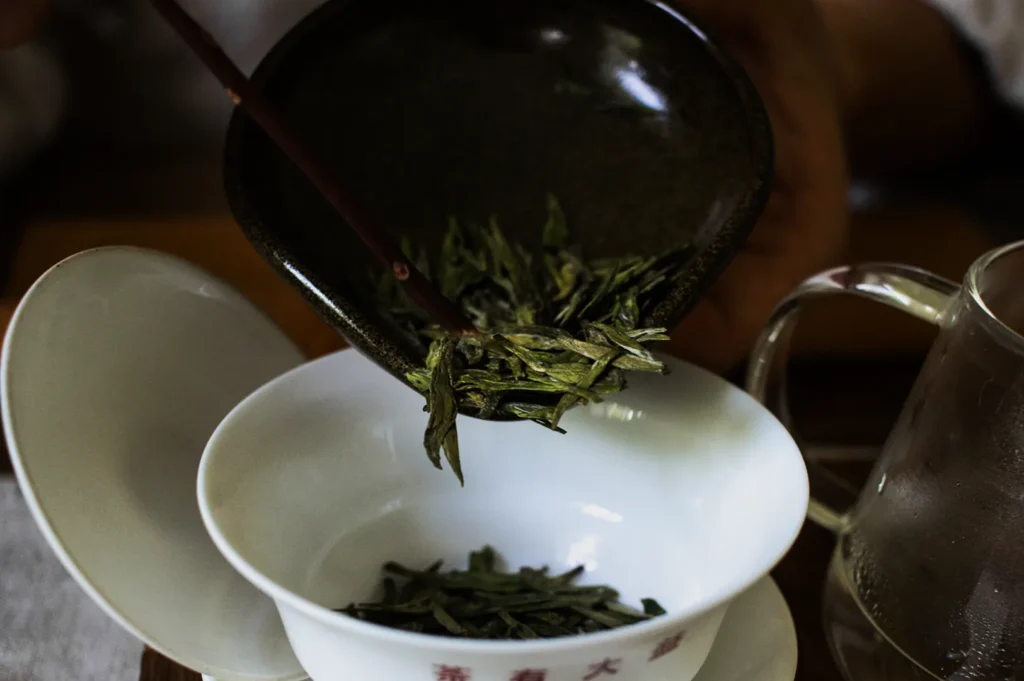
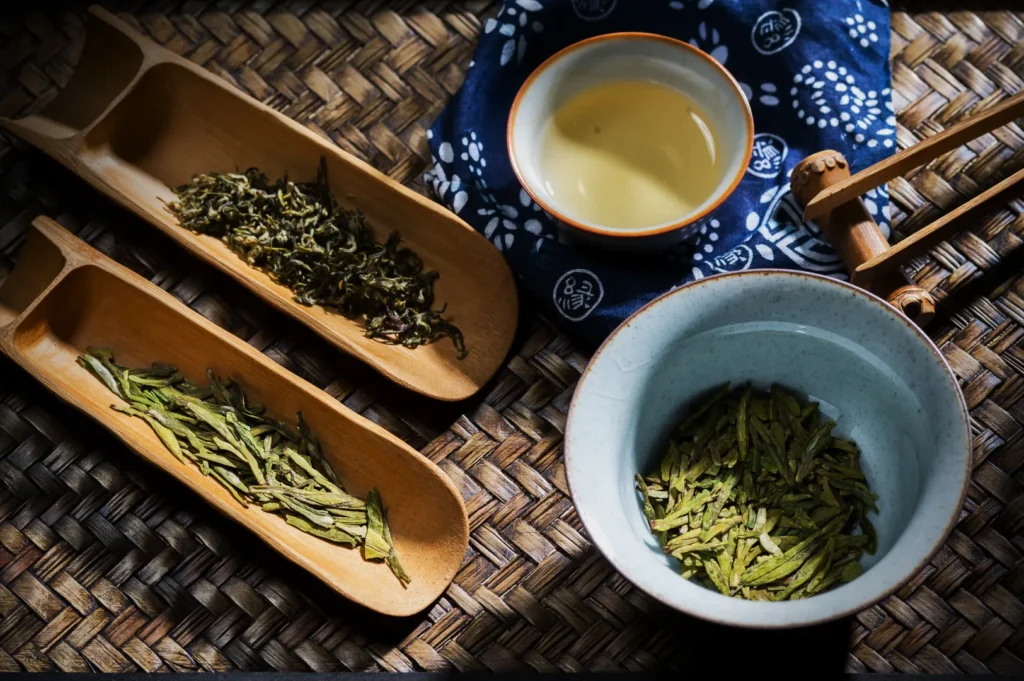
Longjing leaves are flat and light, which means they can look abundant before they have actually contributed enough to the cup. This is where beginners often under-leaf the tea.
For a tall glass of around 200 to 250ml, a practical starting point is 2.5 to 3 grams of leaf. If you do not use a scale, this usually looks like a modest layer resting at the bottom of the glass rather than a full handful.
Too little leaf produces a tea that feels anonymous. Too much can make the texture dense too quickly, especially if the water is warm. Start with enough to give the tea shape, but not so much that it becomes pressing.
A Simple Glass Brewing Method
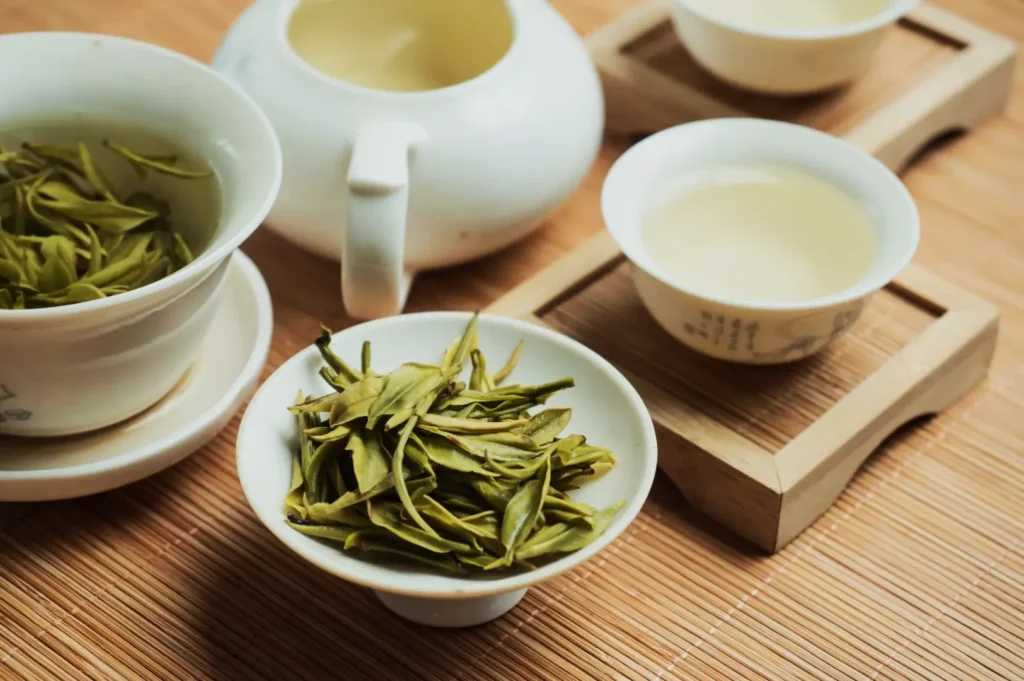
This is the easiest and most revealing way to brew Longjing at home.
What You Need
- a tall glass or simple clear cup
- fresh water
- Longjing tea leaves
- a kettle
- optional: a thermometer or variable-temperature kettle
Step 1: Warm the Glass
Rinse the glass with warm water first, then discard it. This softens the transition between vessel and liquor and helps the first aroma appear more gently.
Step 2: Add the Leaf
Place your Longjing into the empty glass. Before adding water, pause briefly and notice the dry aroma. It may suggest toasted chestnut, sweet hay, soy bean warmth, or a fresh green note.
Step 3: Pour Gently
Let the water cool to the right range, then pour it slowly down the side of the glass rather than directly onto the leaves. This helps prevent the leaf from being shocked and keeps the liquor clearer.
Step 4: Wait Briefly
Let the tea sit for around 1 to 2 minutes before the first sip. Some leaves will float, some will sink, and some will hover mid-glass. This is normal. The point is not to wait until every leaf has settled, but until the aroma begins to gather.
Step 5: Sip, Then Refill
Drink slowly from the top portion of the liquor rather than trying to finish the whole glass at once. When about one-third remains, add more warm water. This creates a softer continuation rather than a fully separate infusion.
This style of brewing is particularly suited to Longjing because it keeps the tea gentle, visual, and quietly continuous.
The Role of Water Quality
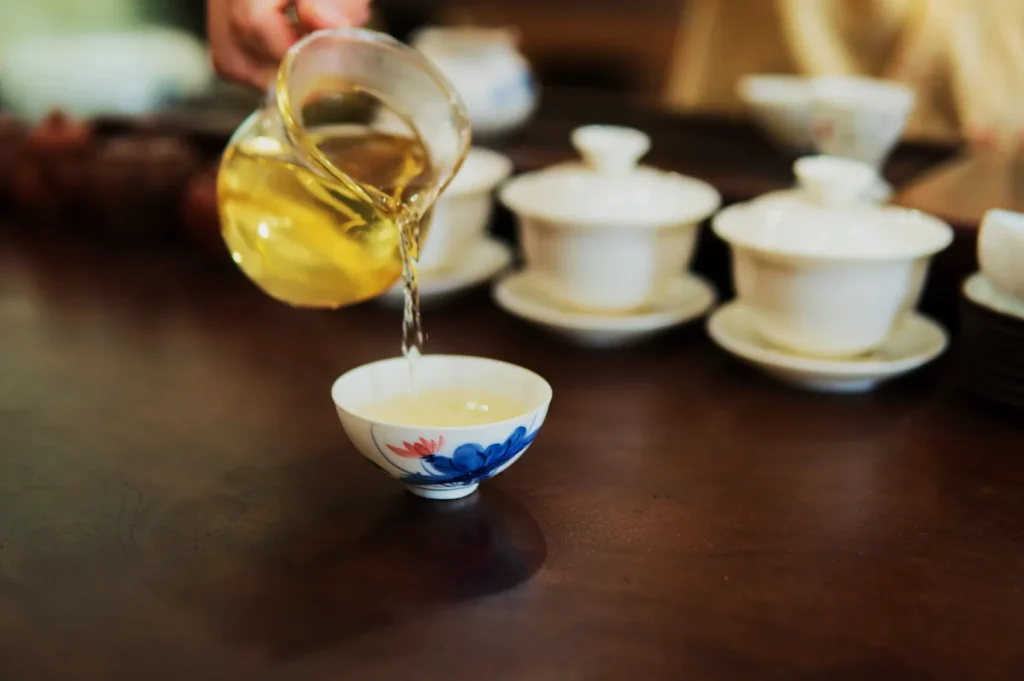
In Singapore, water quality can change the cup more than people first expect.
If the water carries a strong chlorine note or feels heavy with minerals, Longjing can lose some of its delicacy. The fragrance may flatten, and the sweetness may feel shorter. Filtered water is often a better starting point, especially for greener teas where nuance matters.
This does not mean the tea becomes impossible without specialist equipment. It simply means that if your Longjing feels quieter than it should, the water is worth checking before blaming the leaf.
Common Mistakes That Hide the Tea
Longjing is often misunderstood not because it is difficult, but because it is brewed like something else.
A few common mistakes:
- using boiling water
- leaving the tea to steep too long before the first sip
- using stale or poorly stored leaf
- brewing in a vessel with residual smell
- treating the cup as something to finish quickly rather than follow gradually
Longjing is not a tea to overpower. It is a tea to accompany.
When brewed with a little patience, it shows far more than its first appearance suggests.
A Quieter Way to Learn Dragon Well
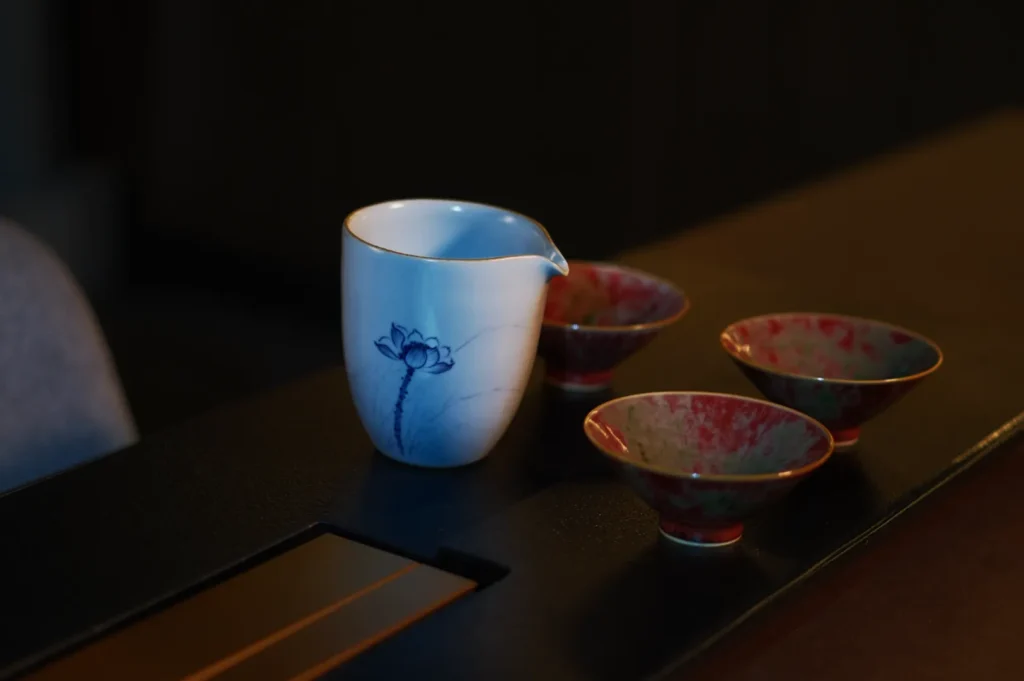
At Tea Room by Ki-setsu, we often find that Longjing becomes fully legible only when it is given the right atmosphere. The leaf itself is one part of the experience. The pacing, the vessel, the water, and the quiet around the cup matter just as much.
This is why Dragon Well can feel so different in a rushed setting and in a slower one. In one, it may seem merely pleasant. In the other, its structure, sweetness, and layered restraint begin to feel unmistakable.
Learning to brew Longjing well is not about becoming technical for its own sake. It is about allowing one of China’s most refined green teas to taste like itself.