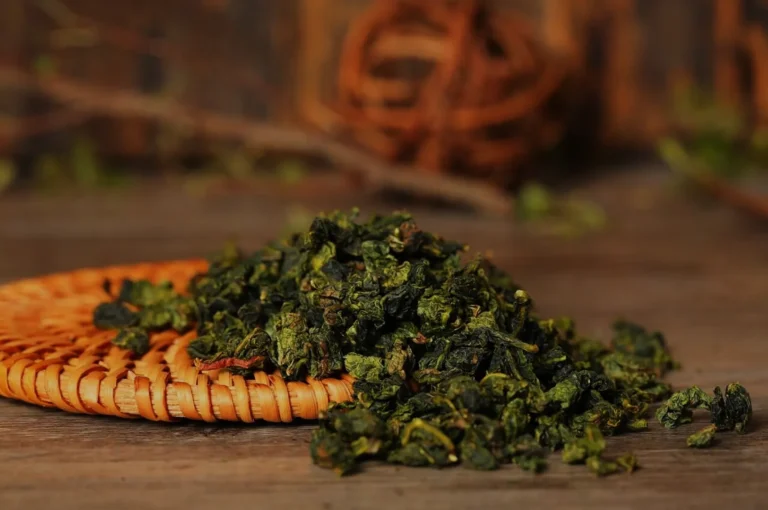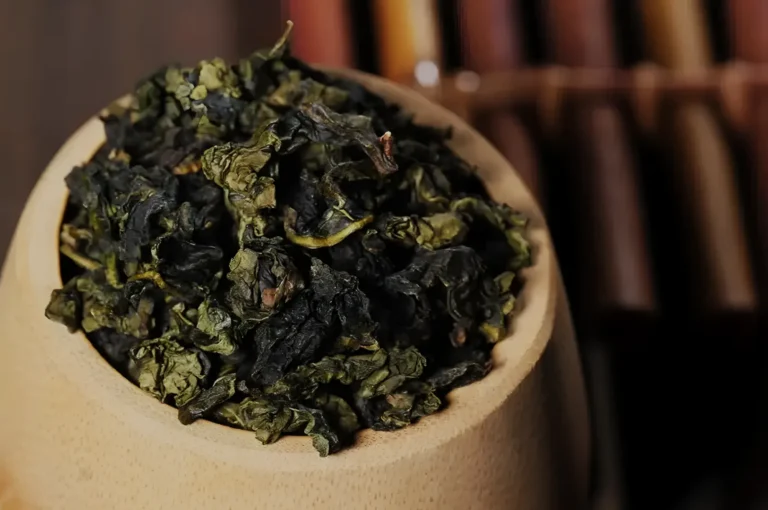
Longjing is a tea of first impressions.
Before the sip, there is the fragrance. Before the fragrance, there is the leaf itself: flat, soft green, carrying that distinctive suggestion of chestnut, bean, and early spring. This is why storage matters so much. A tea like Longjing does not fade loudly. It fades quietly. One day the cup feels bright and articulate. A little later, without any obvious mistake, the aroma has thinned and the sweetness no longer gathers in the same way.
In Singapore, where warmth and moisture are part of daily life, this happens more easily than many people expect.
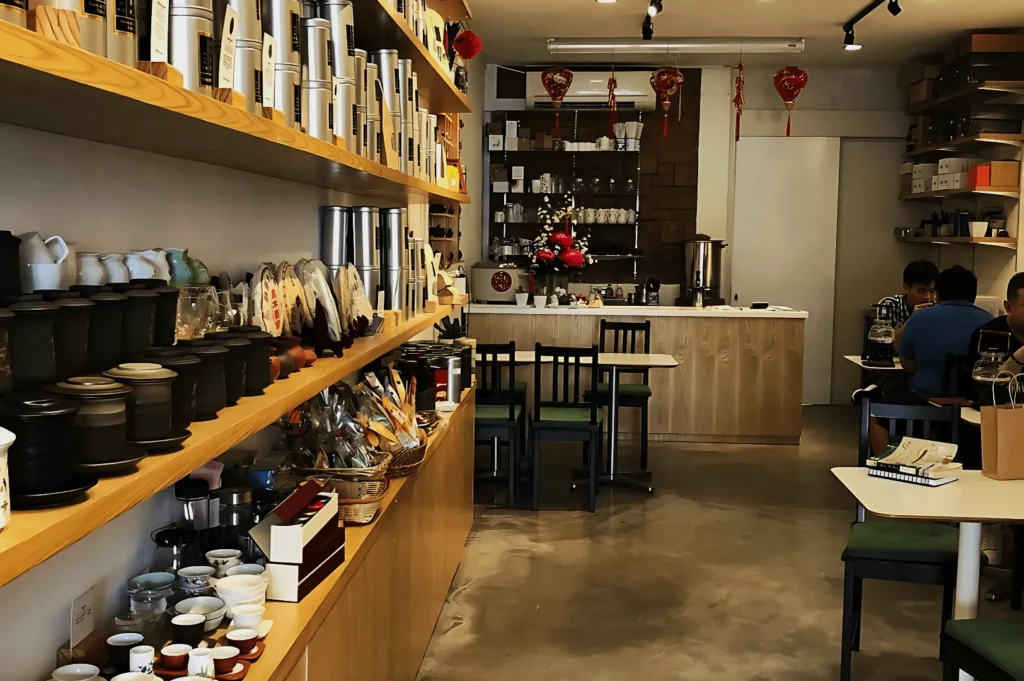
At Tea Room by Ki-setsu, we treat storage as part of the tea, not something separate from it. A well-made Dragon Well deserves to be kept with the same restraint and care with which it was fired. If you are looking for the fuller context of the tea itself, our comprehensive guide to Longjing tea in Singapore offers that wider story. Here, we stay with the practical question: how to keep Longjing clean, fragrant, and recognisably itself in a humid city.
Why Longjing Needs More Care Than You Think
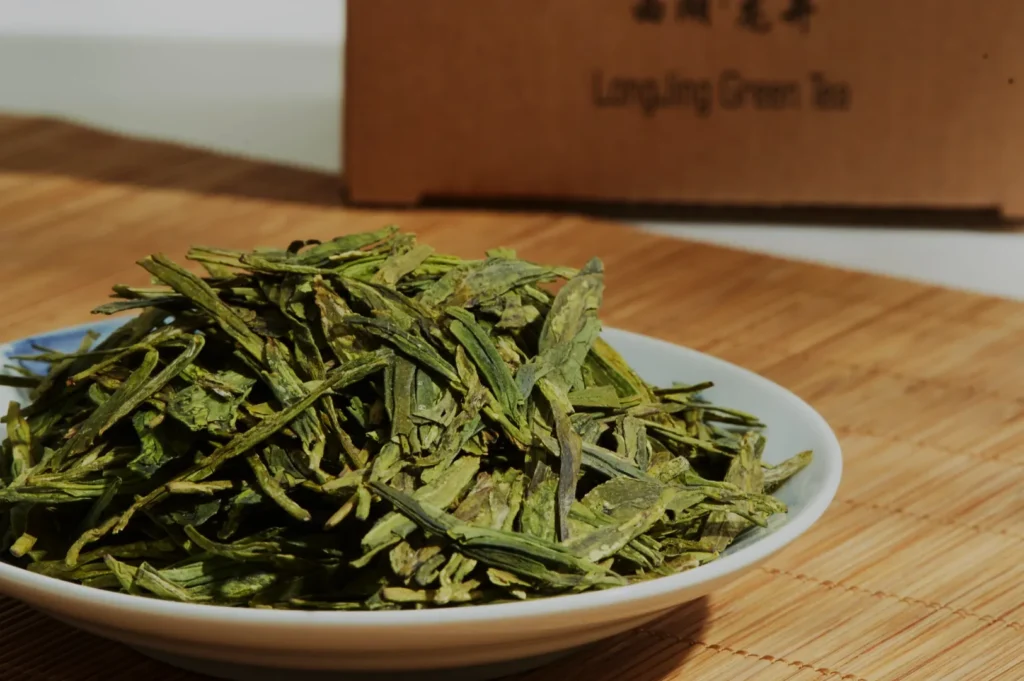
Longjing is a green tea, and green tea is less forgiving of time than darker, more heavily transformed teas.
It has been pan-fired to preserve freshness, not to prepare for long ageing. Its charm lies in the vividness of that preservation: the soft green warmth, the chestnut note, the clear finish. Those qualities are not indefinite. They are at their most beautiful when the tea has been protected from air, heat, light, and smell.
This is why a tea that seemed expensive when bought can feel disappointing a few weeks later if stored carelessly. The loss is not always dramatic. It often appears as the disappearance of nuance. The cup becomes flatter. The aroma becomes shorter. The sweetness becomes less convincing.
Longjing does not reward neglect. It rewards quiet consistency.
The Four Things That Disturb the Tea Most
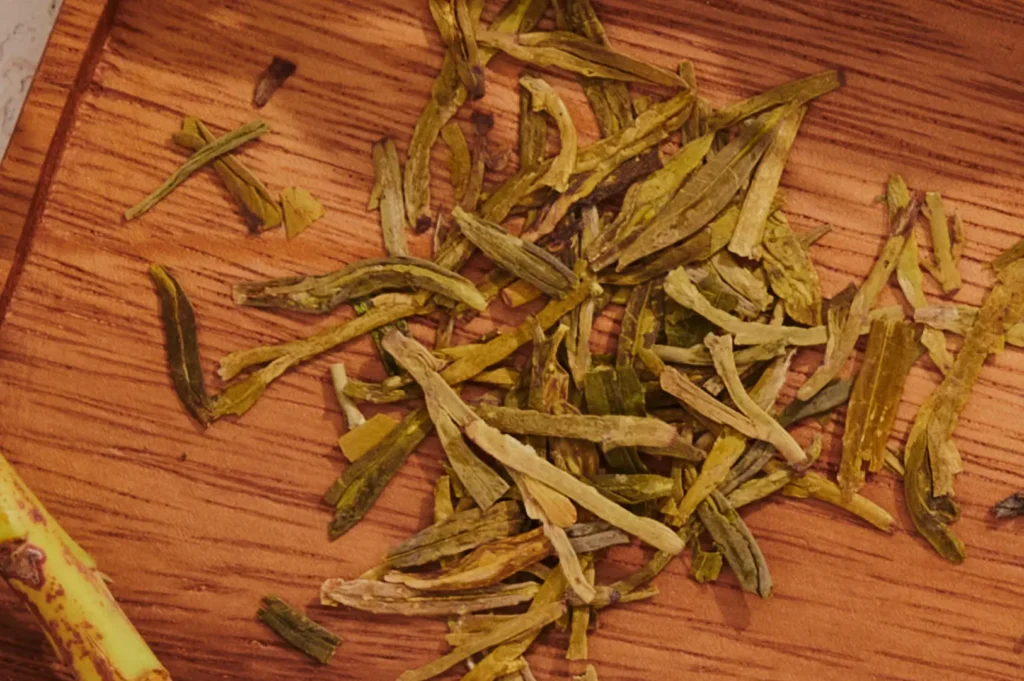
If you remember only four things, let them be these:
- moisture
- heat
- light
- odour
These are the four forces most likely to alter the tea before you are ready.
Moisture
Humidity softens the leaf and interferes with aroma. In Singapore, this is the first problem to guard against. Even if the tea does not become obviously damp, excess moisture can blur the crispness that gives Longjing its lift.
Heat
Heat accelerates decline. A warm cupboard, a shelf above an appliance, or a tin kept near a sunny window can age a green tea in the wrong direction very quickly.
Light
Direct light does not improve any part of Longjing. It weakens delicacy and can flatten both colour and fragrance over time.
Odour
This is often underestimated. Tea absorbs smell. In a Singapore home, that may mean curry paste, garlic, onion, coffee, incense, perfume, or even the scent of a newly finished cabinet. Longjing is especially vulnerable because its own fragrance is subtle.
The Best Container Is the One That Disappears
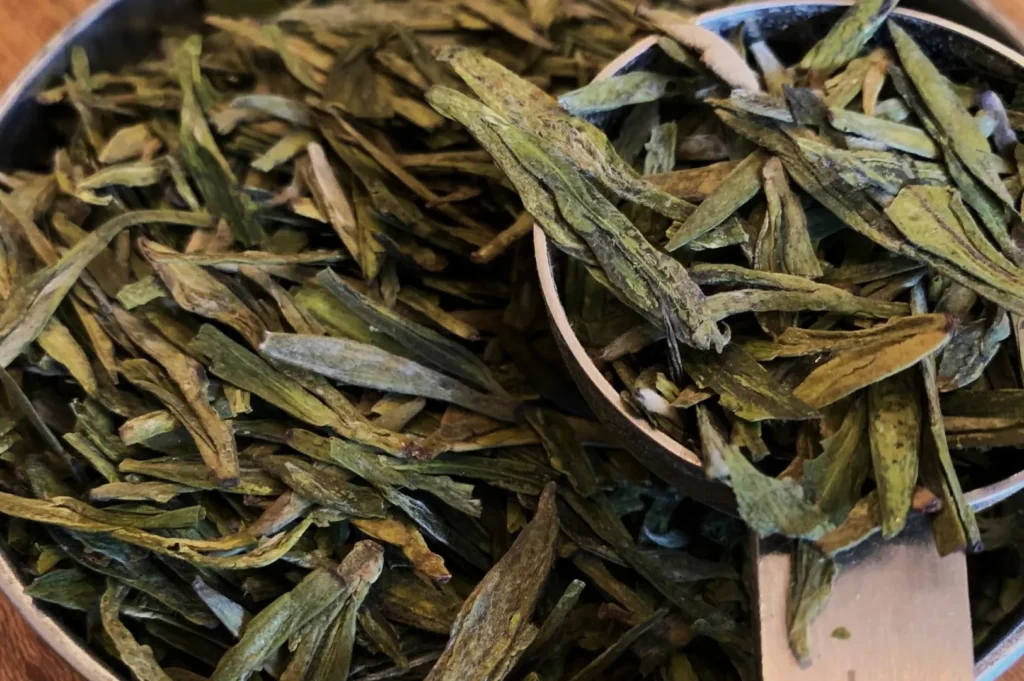
A storage container should do one thing well: disappear from the tea’s experience.
It should not contribute smell. It should not let in light. It should not allow the tea to breathe too freely. It should protect.
The best options are usually:
- airtight metal tins with clean interiors
- opaque, food-safe pouches with strong seals
- odourless ceramic jars with a reliable lid, if they truly close well
What matters is not ornament, but neutrality.
If the tin smells metallic, if the jar smells of clay or wood polish, or if the pouch smells like packaging, the tea will notice. Longjing is one of the quickest teas to reveal this kind of mistake.
We often suggest a simple test. Open the container empty and smell it deeply. If you notice anything at all beyond clean air, it is not the right place for a delicate green tea.
Why the Kitchen Is Usually the Wrong Place
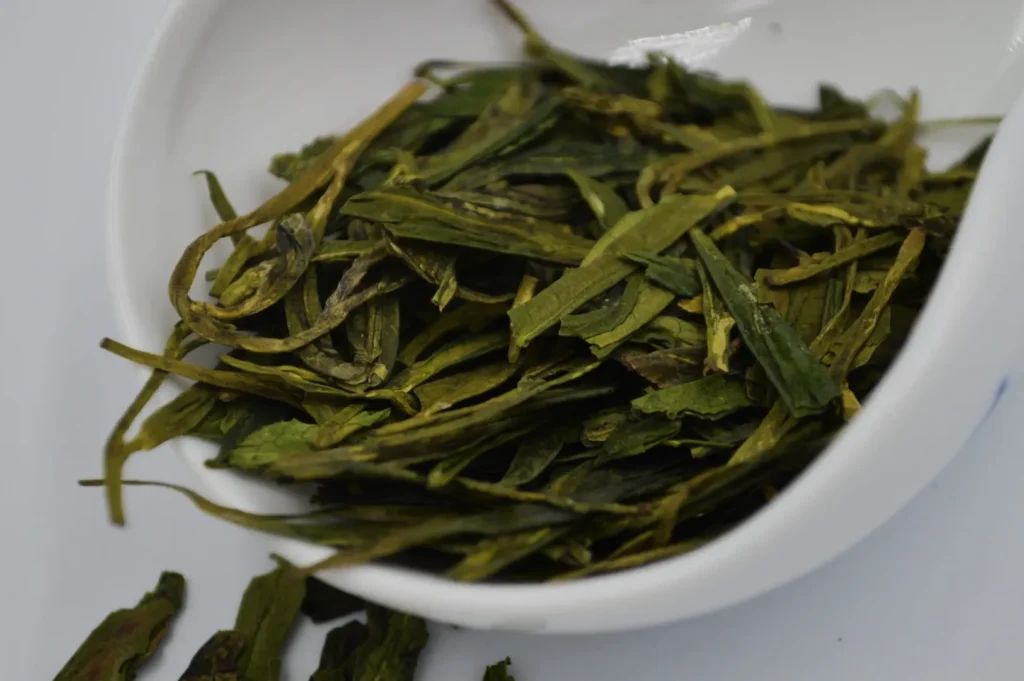
Many people keep tea where they prepare food, which is understandable. It feels practical. It is also often the least suitable place.
A kitchen carries more aroma than almost any other room. Even if the tea is sealed, those odours accumulate around the storage area over time. Oil, spice, steam, coffee, and residual warmth all work against the leaf. This is especially true in smaller apartments, where storage space is limited and every cupboard ends up doing more than one job.
Longjing needs a cleaner environment than that.
A better place is usually:
- a bedroom cabinet
- a hallway cupboard away from sun
- a dedicated drawer in a cooler room
- any enclosed space that stays dry, shaded, and free from household scents
If the room smells quiet, the tea will remain clearer.
Should You Keep Longjing in the Fridge?
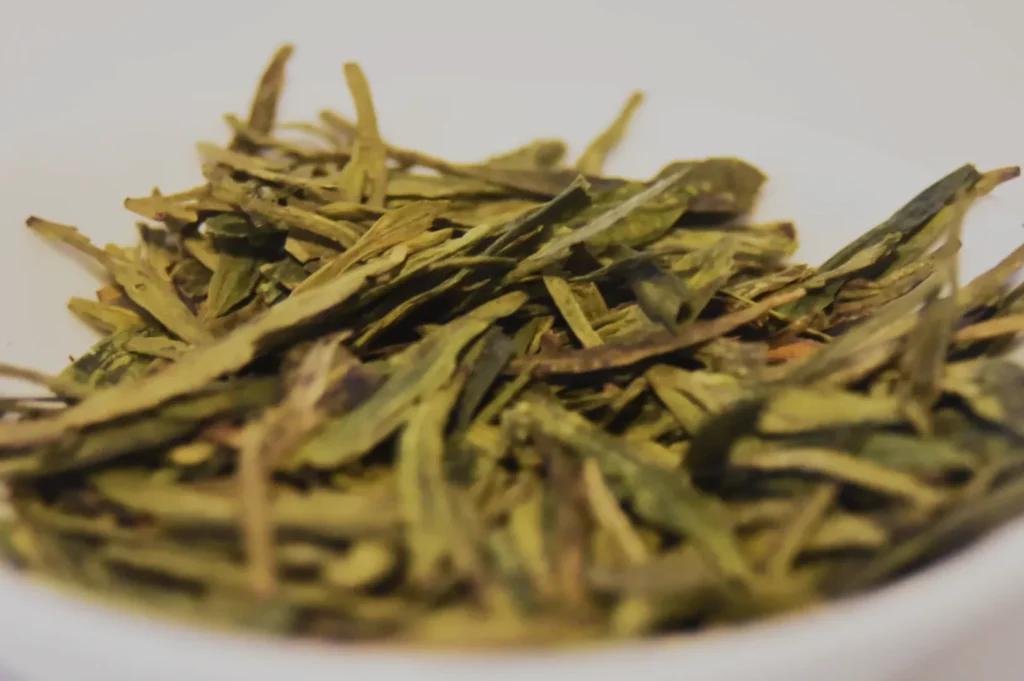
This is one of the most common questions, and the answer is: sometimes, but only with care.
Refrigeration can help preserve freshness if the tea is very well sealed and you do not plan to open it often. This works because cool temperatures slow the tea’s decline. But refrigeration also introduces new risks. Fridges are full of smells. They also create condensation if the tea is removed and opened too quickly.
If you choose to refrigerate Longjing:
- make sure it is sealed in an odour-proof, moisture-proof package
- keep it away from foods with strong smells
- remove only what you need, not the whole stock repeatedly
- allow the sealed packet to come fully to room temperature before opening
If that sounds inconvenient, it often is.
For tea that you are drinking regularly, a cool, dark cupboard in an airtight container is usually simpler and safer. Refrigeration is best reserved for unopened reserve quantities, not the daily tin.
Portioning Matters More Than Most People Expect
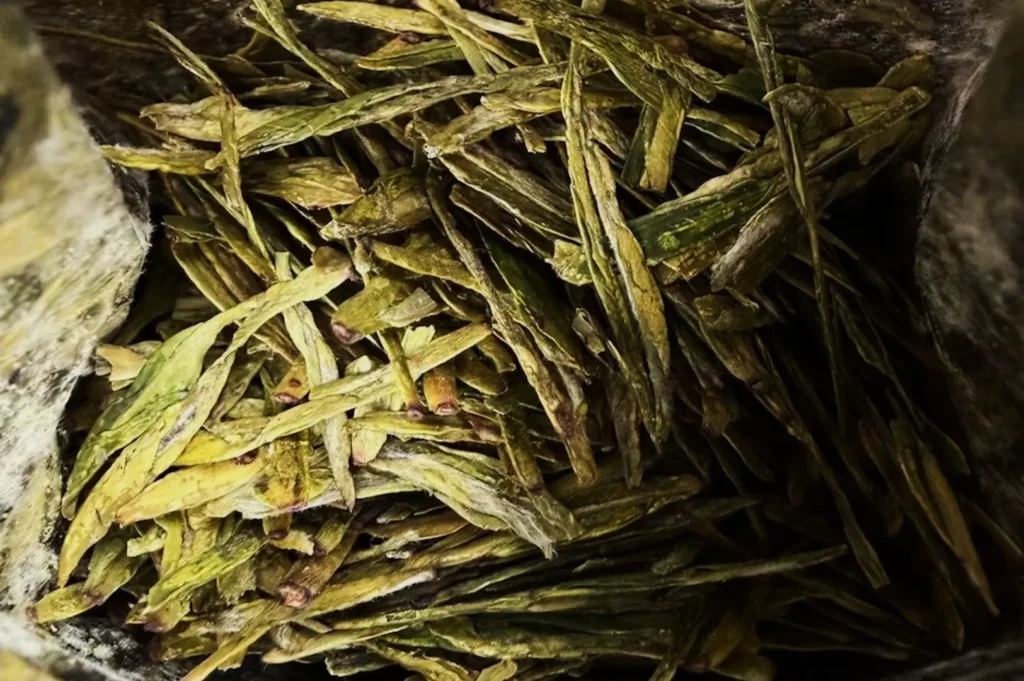
One helpful habit is to divide your Longjing into smaller portions rather than opening the same larger quantity every day.
Every time you open the container, the tea is exposed to fresh air, room humidity, and surrounding odour. This may not feel dramatic in the moment, but repeated exposure changes the cup over time. If you keep one smaller tin for current drinking and the rest sealed separately, the tea remains more stable.
This is especially useful in Singapore, where the air itself is often active.
A practical approach:
- keep a small weekly portion in one tin
- store the remaining tea sealed elsewhere
- refill only when needed
Small acts of restraint protect the leaf far better than large acts of correction later.
How to Tell If the Tea Is Losing Its Character
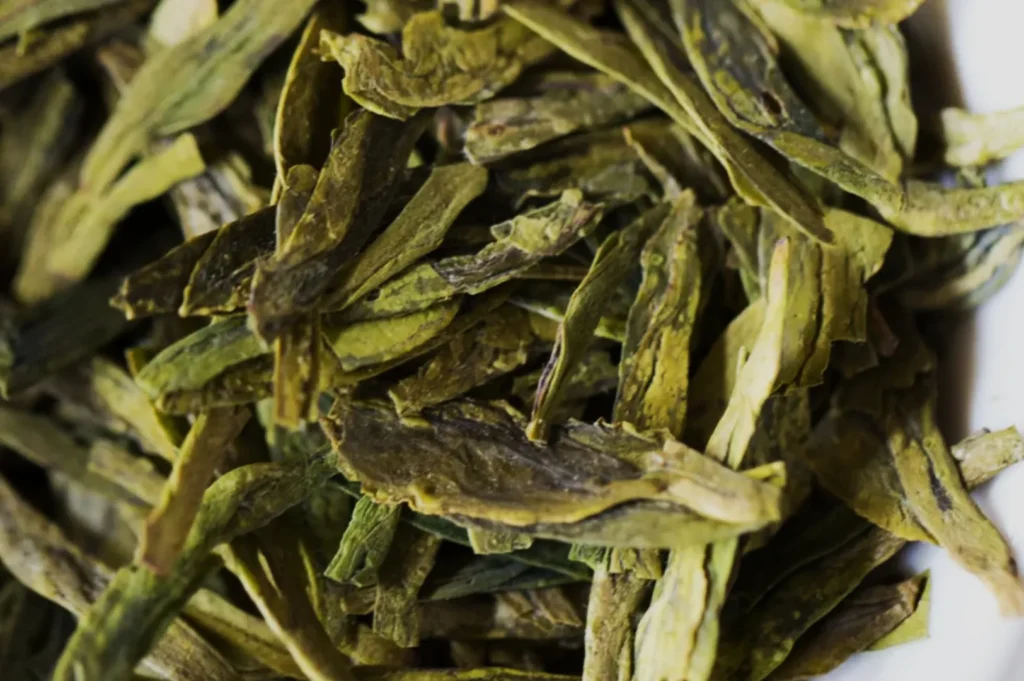
Longjing does not usually “go bad” in a dramatic way. It simply stops being itself.
You may notice:
- the chestnut note has faded
- the liquor smells less alive
- the freshness has become generic
- the finish disappears too quickly
- the cup feels flat rather than clear
This is often a sign of age, exposure, or poor storage rather than contamination.
If you notice something sharper, such as stale oil, kitchen smell, or a musty cupboard note, then the tea has likely absorbed its environment. Once that happens, it rarely returns fully to what it was.
This is why prevention matters much more than rescue.
Glass Jars, Display Shelves and Other Attractive Mistakes
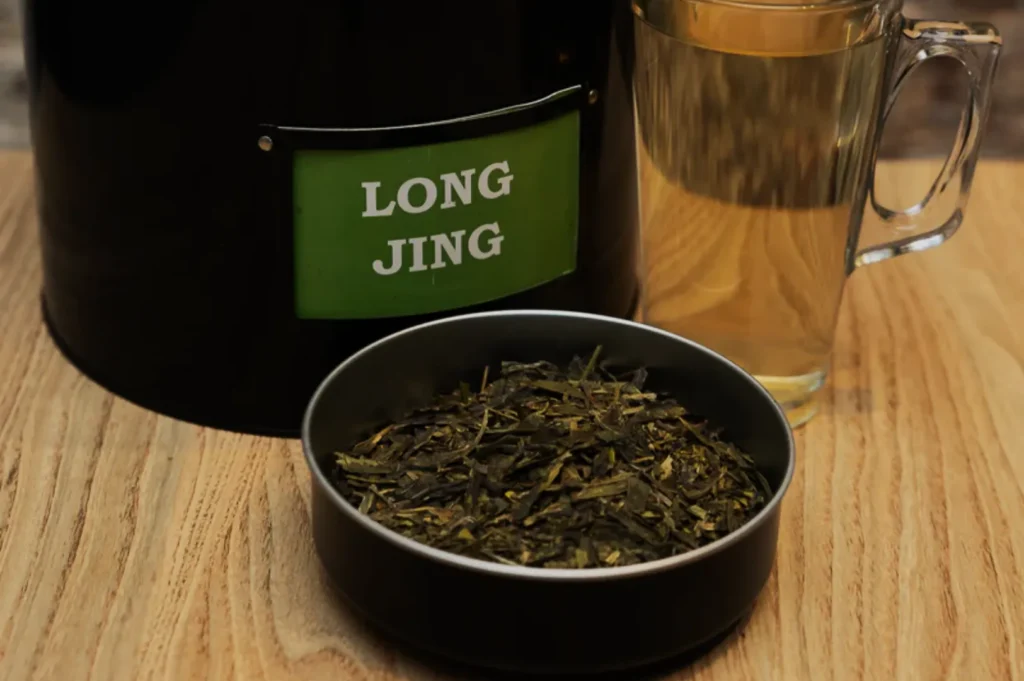
Longjing is visually beautiful and this tempts people to store it visibly.
A clear glass jar on a shelf may look elegant, especially when the leaves are fresh and beautifully shaped. But glass allows light in, and many display shelves are warmer than people realise. What looks charming for the room may be damaging for the tea.
The same applies to decorative storage boxes that are not properly sealed, or artisanal containers chosen more for atmosphere than function. A vessel may be beautiful and still wrong for a delicate tea.
At Tea Room by Ki-setsu, we value beauty deeply, but only where it serves the leaf. Storage should protect first, and adorn only incidentally.
Buying Smaller Amounts Can Be a Form of Respect
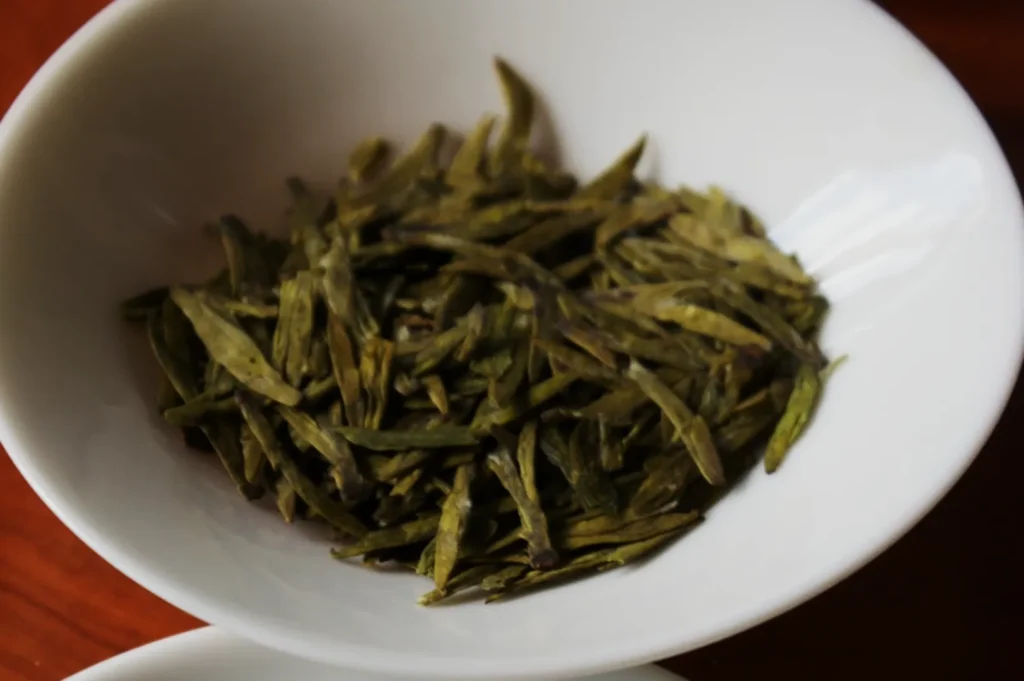
For some teas, buying in larger quantities makes sense. Longjing is often happiest when bought in amounts you can enjoy while it is still vivid.
This is not a weakness. It is part of the tea’s nature.
A smaller amount of fresh, well-kept Longjing is often far more satisfying than a large quantity that slowly loses detail in the cupboard. For many drinkers, this changes the way tea buying feels. It becomes less about stockpiling and more about staying close to the season and the tea’s present condition.
That kind of buying is not less luxurious. It is more precise.
A Quiet Routine That Works
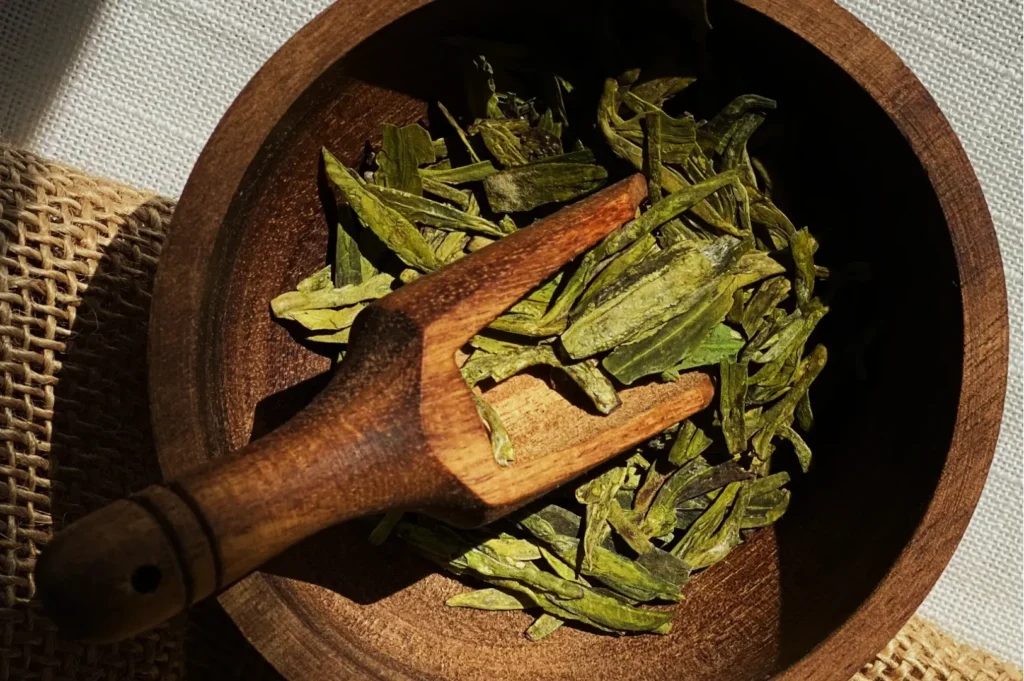
If you want one simple routine, let it be this:
- keep the tea in a clean, airtight, odourless container
- store it in a cool, dark, dry place away from the kitchen
- portion out only what you are currently drinking
- use refrigeration only for tightly sealed reserve tea
- finish the tea while it is still giving its full voice
This is enough for most homes.
Longjing does not ask for elaborate equipment. It asks for consistency, calm and an understanding that freshness is part of its beauty, not something separate from it.
Why This Matters in the Cup
A well-stored Longjing rewards you quietly.
The chestnut warmth remains clear. The aroma rises before the sip. The liquor feels composed. The finish lingers with sweetness instead of fading into something ordinary. These are not dramatic miracles. They are simply the result of not letting the tea lose itself before you brew it.
At Tea Room by Ki-setsu, we find that many of the most disappointing cups are not brewed incorrectly. They were stored inattentively. The tea had already changed long before the kettle was lifted.
So storage is not an afterthought. It is part of the ritual of care.
A good tea deserves a quiet place to remain itself.