A private tea session is not a smaller version of a meal.
It does not ask for abundance, and it rarely benefits from it. The tea remains at the centre, shaping the pace, the silence, and the order in which things are noticed. Food has a place, certainly, but that place is modest. It steadies the palate, offers texture between infusions, and gives the session a gentle sense of welcome. It should never crowd the leaf or ask the table to split its attention too many ways at once.
At Tea Room by Ki-setsu, we think the most refined tea hospitality often feels almost effortless from the guest’s side. The table is calm. The food is measured. The session unfolds in a way that allows both conversation and stillness to remain natural.
For a broader foundation on pairing tea with food, sweetness, and balance, begin with our main guide. Here, the focus is more intimate: what to serve in a private tea session, and how to let the table support the tea without disturbing its shape.
Why the Best Private Tea Session Food Pairing Feels Minimal
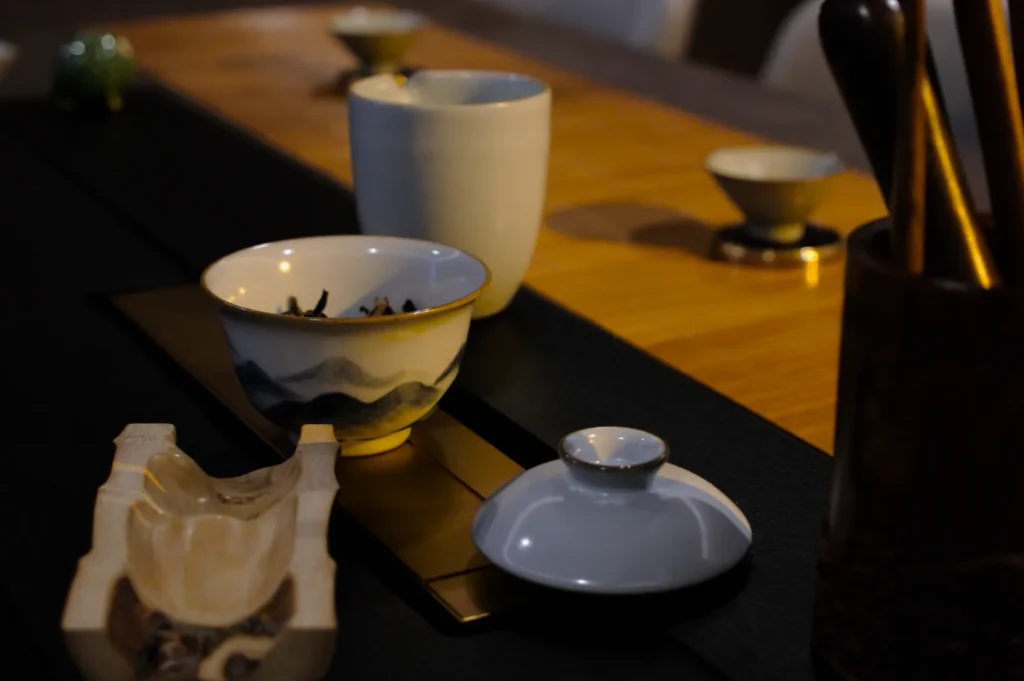
A private tea session depends on sequence.
This is why the best private tea session food pairing rarely feels generous in the usual entertaining sense. Too many items break the flow. Too many flavours stay behind in the mouth. Too many choices make the guest think about the table instead of the cup.
A quieter table does more.
A small bite between infusions can reset the palate and make the tea clearer. A second item may add a different texture. A third can support the later part of the session when the tea has deepened or softened. Beyond that, the table often begins to pull against the purpose of the tea.
Private tea hospitality is not about proving abundance. It is about creating enough room for the leaf to remain perceptible from beginning to end.
In Singapore, where meals and gatherings can easily tip toward volume, this kind of restraint can feel especially luxurious. Not because it is sparse, but because it is intentional.
The Five Principles of a Quiet Tea Table
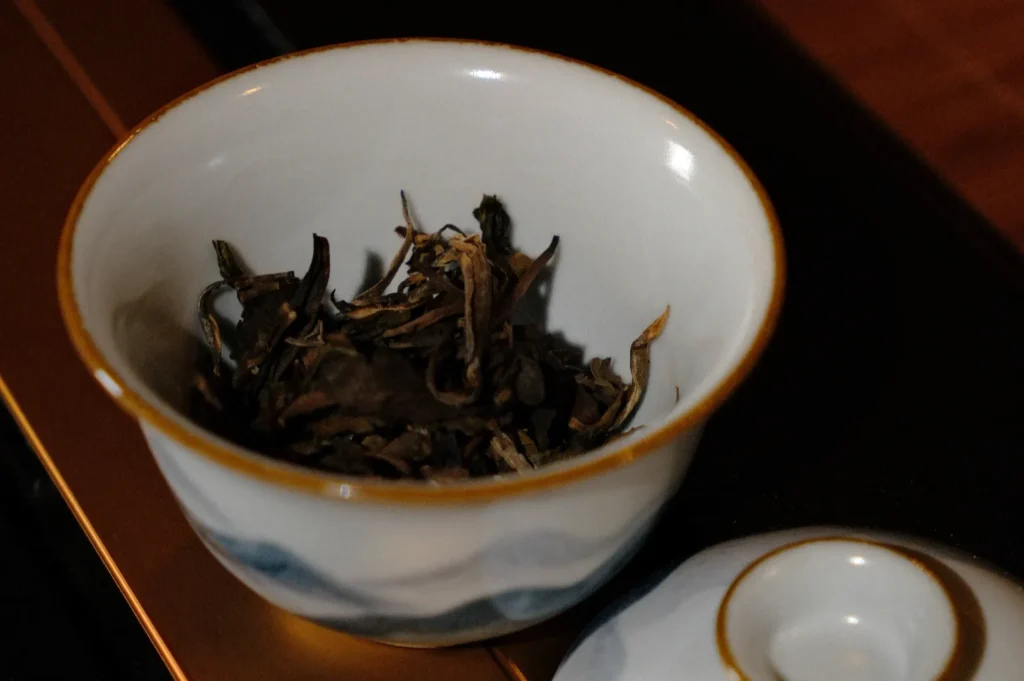
Serve Fewer Items Than You Think You Need
Most people prepare too much food when they want to host well.
This instinct is generous, but it does not serve tea particularly well. In a private tea session, two to four small items are usually enough. That may sound restrained, but it creates a table that feels composed rather than crowded. Guests do not need to navigate several sweet things, several savoury things, and a spread of competing aromas. They need a little support for the palate and enough variation to keep the session feeling thoughtful.
A limited table also helps the tea feel more intentional. Each item has a reason to be there. A crisp element may sharpen the cup. A soft or lightly sweet element may soften the transition between teas. A fresh element may restore the mouth late in the session.
When there are too many dishes, everything becomes noisier. The tea has to work too hard to remain central. The finest private tea tables often look simpler than expected, and far more settled because of it.
Choose Foods That Pause the Palate, Not Occupy It
The role of food in a tea session is not to dominate the mouth. It is to pause it.
This means choosing foods that are gentle enough to clear space for the next pour rather than leave long traces behind. Plain rice crackers, lightly roasted nuts, a restrained bean sweet, a small piece of sponge cake, or soft slices of pear often work well because they steady the palate without pulling it too far away from the tea.
By contrast, strongly flavoured savouries, sticky sweets, creamy fillings, and highly aromatic pastries tend to occupy the mouth long after the bite is gone. When that happens, the tea re-enters the palate under pressure. Aroma is muted. Finish shortens. The guest is no longer tasting tea with support. They are tasting tea through residue.
A good host thinks less about what looks impressive and more about what leaves the mouth ready. The best food in a tea session is often the food that disappears cleanly enough for the tea to return with clarity.
Let the Tea Set the Rhythm
Food should not interrupt every sip.
One of the most common mistakes in hosting is encouraging constant nibbling. This works at a casual party. It weakens a tea session. Tea has its own rhythm, especially when served across multiple infusions. The leaf opens, the liquor changes, the body settles, and the finish evolves. If guests are eating continuously, they lose the shape of that progression.
A better rhythm is to let the tea lead.
Begin with tea alone, or with only water on the table. Allow the first few infusions to establish the session. Introduce a bite when the palate needs anchoring, or when the tea has moved into a new phase. Food should feel like punctuation, not background noise.
At Tea Room by Ki-setsu, this pacing matters deeply. A private session becomes memorable when the guest feels carried by the order of things rather than surrounded by options. The host’s job is not simply to serve, but to notice when the tea is asking for quiet and when the room is ready for a small interruption.
Keep the Table Visually Quiet
The table teaches the mind how to receive the tea before the cup even rises.
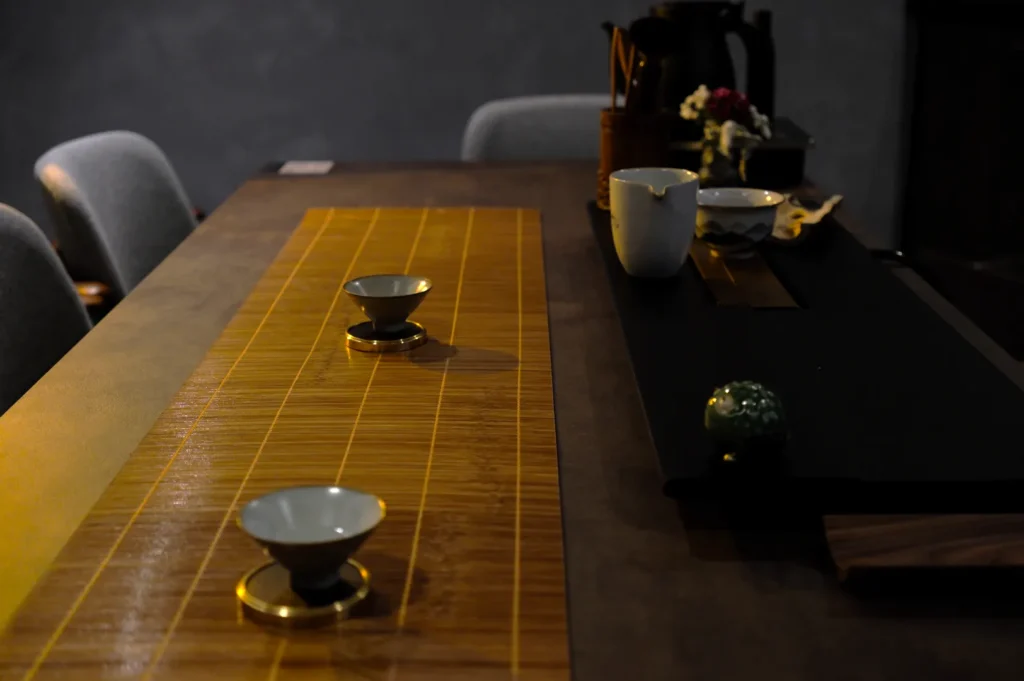
A private tea tasting Singapore guests remember rarely feels visually crowded. Too many plates, colours, decorative elements, or elaborate garnishes create unnecessary movement. They pull attention outward when the tea asks for it inward. A table with one or two small dishes, modest serving ware, and enough empty space often feels more luxurious than one arranged to impress.
This does not mean the table should be bare. It means the eye should not be forced to keep choosing where to rest. The vessel, the liquor, and the food should all sit in a calm visual relationship. Small plates. Clean lines. Gentle tones. Nothing perfumed, glossy, or overworked.
Visual restraint is part of tea hospitality. It tells the guest, before the first sip, that this is a space where detail matters and nothing needs to shout in order to be noticed.
Match the Social Energy of the Session
Food should reflect the emotional shape of the gathering.
A private tea session between two people in reflective conversation does not need the same table as a more social gathering of four or five guests. A quieter session often suits lighter, simpler bites that do not break concentration. A slightly livelier conversation may tolerate a little more structure on the table, provided the items remain restrained.
This is where hosting becomes more than menu planning. It becomes reading the room.
If the session is intimate, serve less and let the pauses remain wide. If the session is warm and conversational, a second or third item may feel supportive rather than distracting. If the session is formal, choose foods that are easy to eat cleanly and do not ask for explanation.
The most refined tea hospitality is not rigid. It is responsive. It understands that the table is part of the conversation, but should never become louder than the tea itself.
A Simple Private Tea Session Table That Works
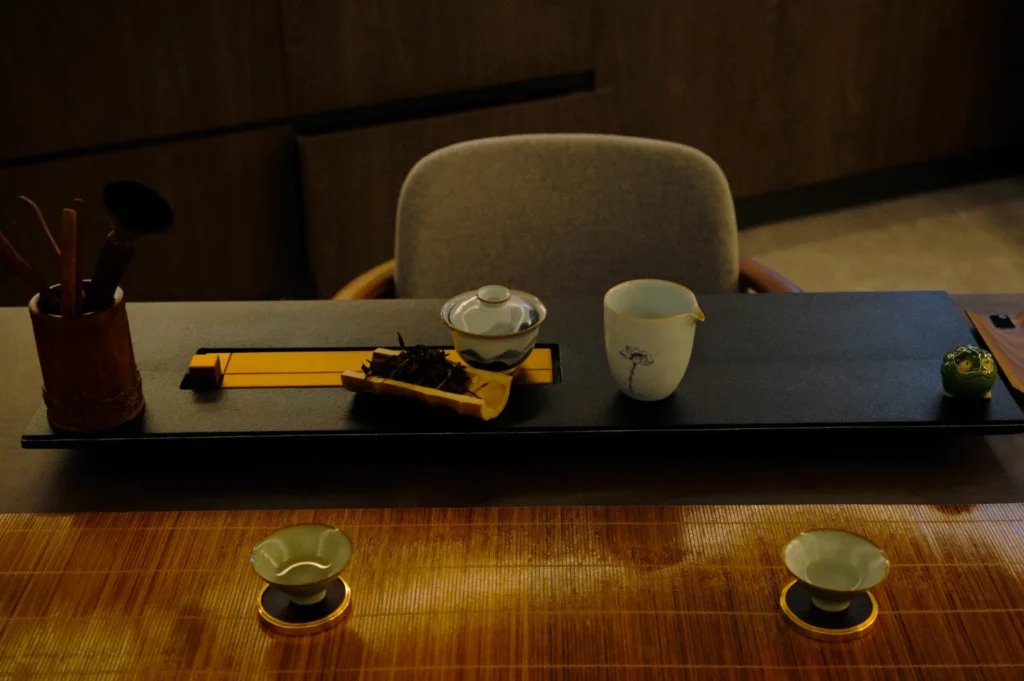
A useful private tea session table can be built from just three quiet elements.
First, include one dry, crisp element. This may be a plain rice cracker, a restrained butter biscuit, or a delicate baked wafer. Its role is to sharpen the palate lightly and create a clean pause between infusions.
Second, add one soft or lightly sweet element. A mung bean cake, a small lotus seed sweet, or a modest slice of sponge works well. This gives the session a little warmth and softness without overwhelming the tea.
Third, offer one fresh reset. Pear slices are especially good. Mild melon can also work. The fruit should be gentle, low in acidity, and not heavily perfumed.
That is enough.
The point is not variety. The point is structure. The table should feel like a quiet framework around the tea, not a competing centre of attention. When the food is measured, the tea becomes easier to notice.
Common Hosting Mistakes That Disrupt the Tea
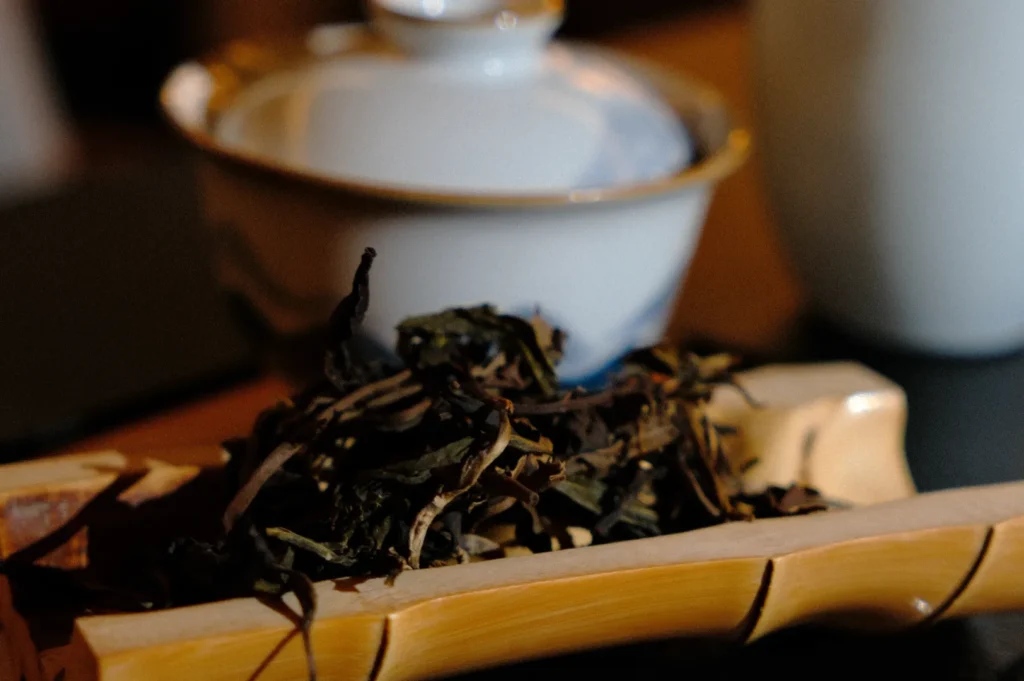
One common mistake is serving too much food.
Another is placing all the food on the table at once, which encourages constant grazing and weakens the session’s pacing. Strong scents are another problem. Garlic, spice, citrus glaze, heavy butter, or overly sweet pastries can all dominate the room before the tea has had a chance to settle.
Some hosts also treat the tea session like a party platter moment, building the table for abundance rather than clarity. This usually leads to fragmented attention and a tea that feels secondary. Others choose items that are messy, sticky, or difficult to eat gracefully, which interrupts the calm the session is meant to preserve.
A private tea session is not improved by more stimulation. It is improved by precision.
Serve the Tea First, Then Let the Table Follow
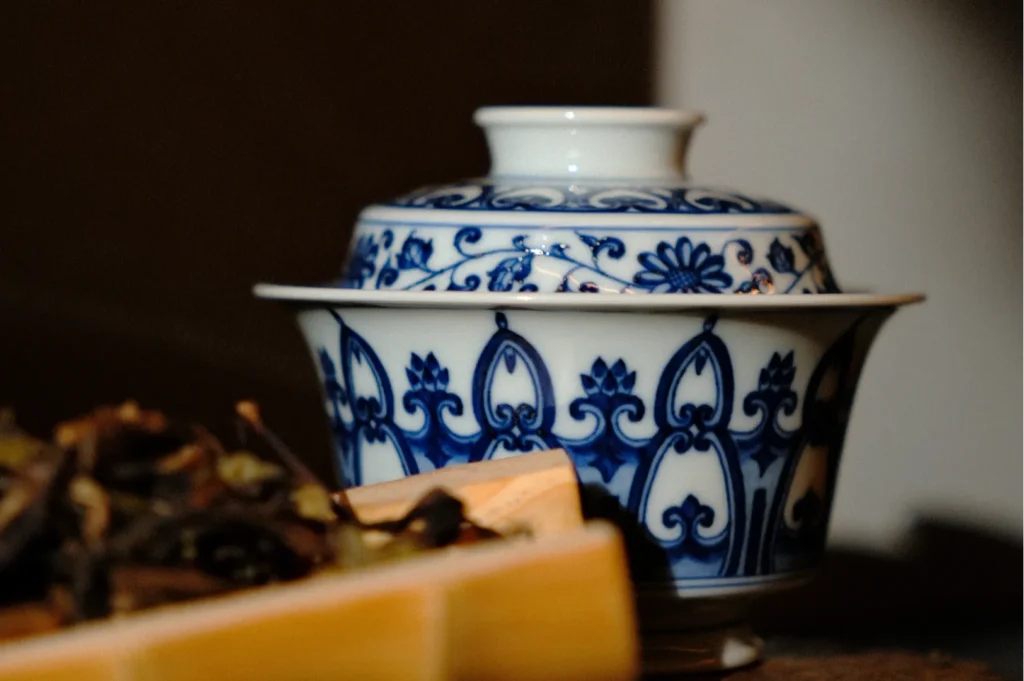
The best private tea sessions feel guided, not crowded.
The guest may remember the food, but more often they remember the feeling of ease it created around the tea. At Tea Room by Ki-setsu, we believe a quiet table is one of the great forms of hospitality. The right food does not claim the room. It supports the cup, steadies the palate, and then steps back.
Good hosting is often felt as quiet confidence rather than visible effort. Serve less than you think. Let the tea lead. Then allow the table to follow, softly.