Not all oolong asks for the same kind of attention.
Some teas rise quickly through fragrance and brightness. Others build slowly through structure, warmth, and depth. This is one reason Da Hong Pao and Tie Guan Yin are so often compared. Both are celebrated oolongs. Both are deeply rooted in Chinese tea culture. Both can be beautifully made. Yet they rarely answer the same desire in the drinker.
At Tea Room by Ki-setsu, we find the comparison becomes most useful when it is guided by palate rather than prestige. For the larger introduction to Big Red Robe itself, this **Da Hong Pao** guide offers the broader context. Here, the question is simpler: which tea fits your taste more naturally, and what exactly separates them in the cup?
Da Hong Pao Begins with Structure
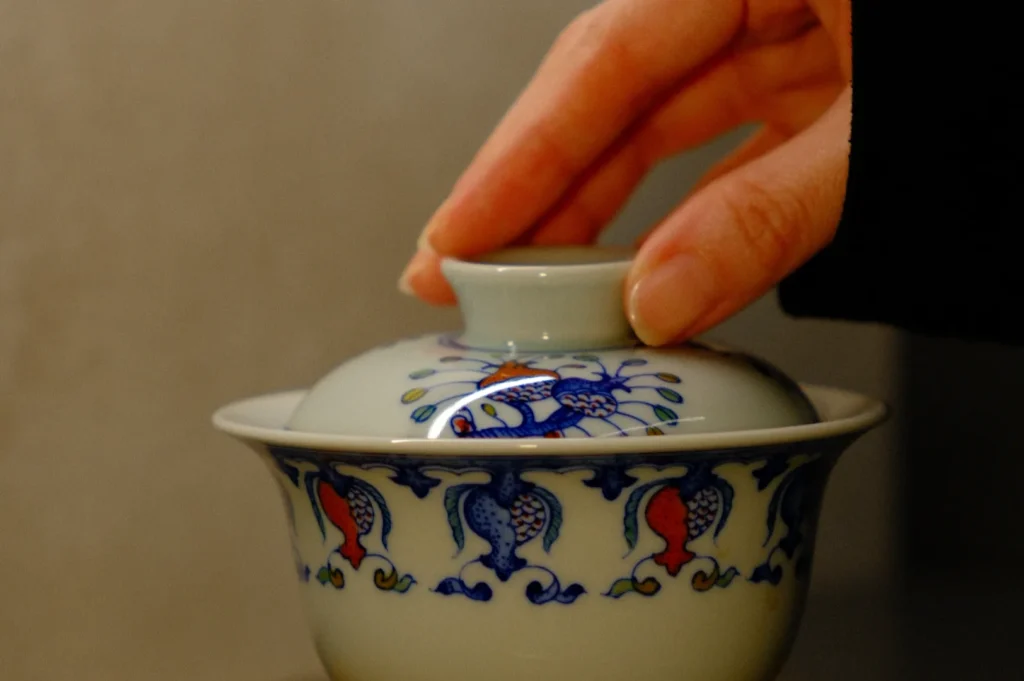
**Da Hong Pao usually feels grounded from the first sip.**
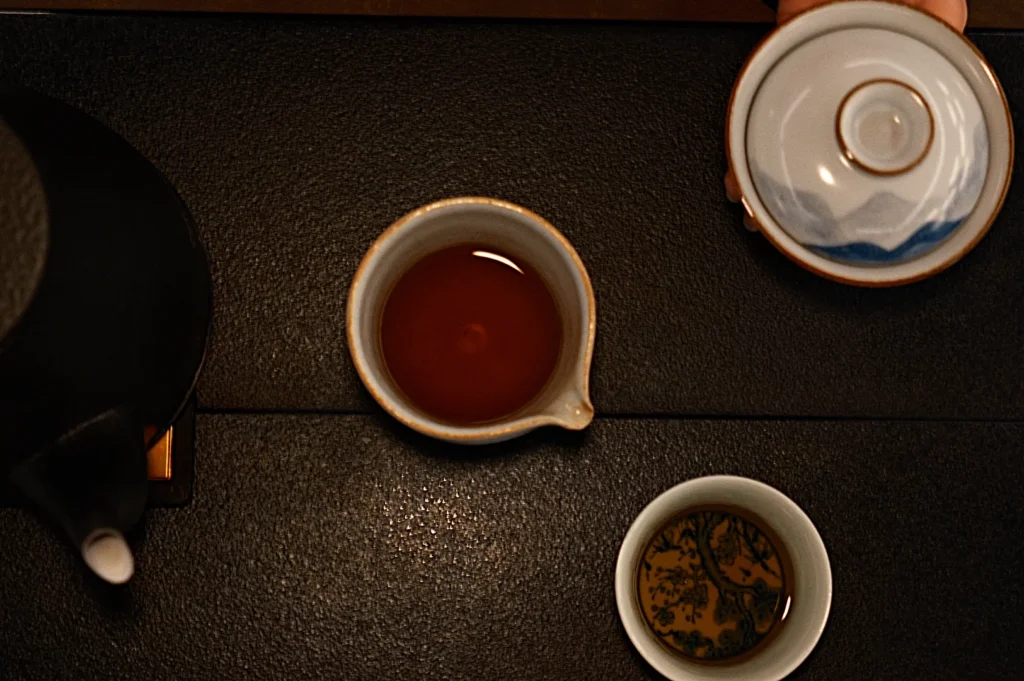
Even when it carries floral lift, it tends to return to roast, mineral depth, dry spice, and a more settled kind of presence. It does not usually rush toward perfume. Instead, it builds through warmth and architecture. The flavour often sits lower in the palate, and the finish feels anchored rather than airy.
This is part of what makes Da Hong Pao so distinctive. It is not merely roasted. It is structured. The tea feels as though it has an internal frame holding the sip together. Roast may appear first, but beneath it there is often a mineral steadiness and a quieter floral note that gives the tea breath.
At Tea Room by Ki-setsu, we often find that people who respond strongly to Da Hong Pao are not always looking for obvious fragrance. They are looking for depth, continuity, and a finish that remains long after the sip should have ended.
Da Hong Pao rarely asks to be admired quickly. It asks to be followed.
Tie Guan Yin Begins with Lift
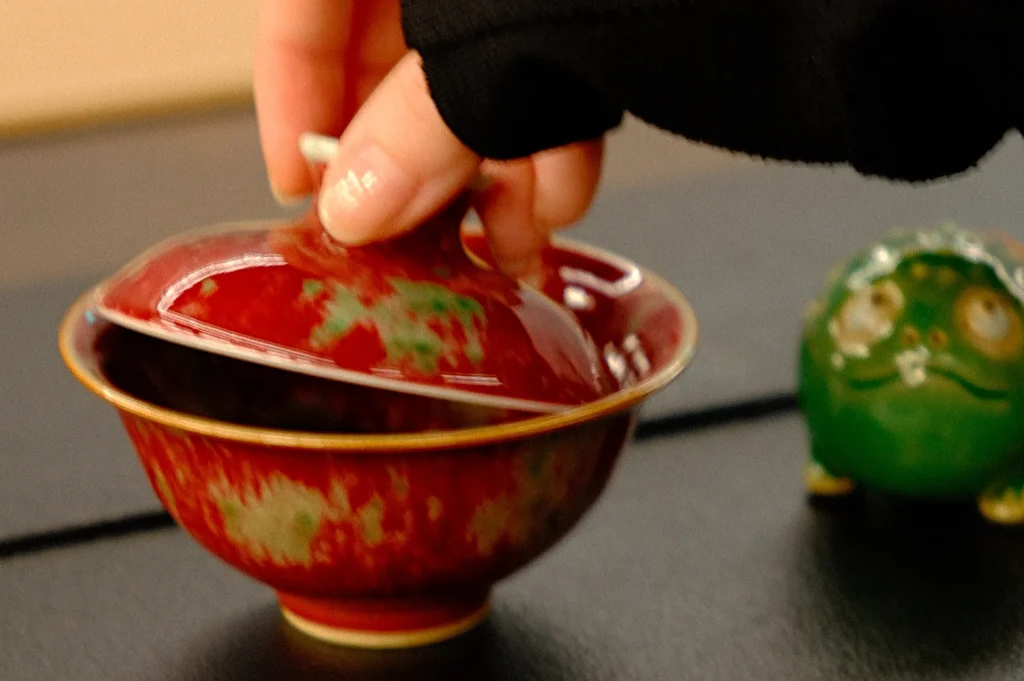
**Tie Guan Yin tends to move in the opposite direction.**
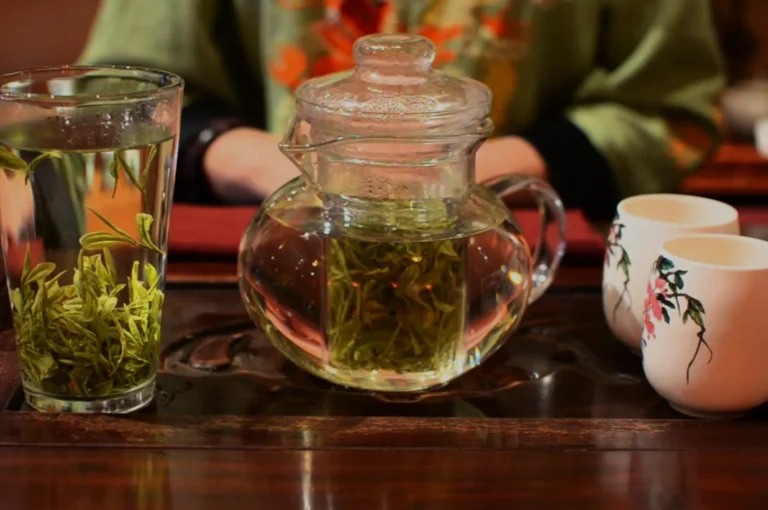
Whether greener in style or more traditionally processed, it often leads with floral fragrance, freshness, and a sense of air. Orchid, cream, spring greens, or a brighter softness may appear earlier and more clearly than in Da Hong Pao. Even when the tea has body, it usually feels more lifted than grounded.
This makes Tie Guan Yin especially appealing to drinkers who want aroma to arrive quickly and clearly. The tea can feel elegant in a more immediate way. Its character often opens upward, not downward. Where Da Hong Pao may settle into roast and rock, Tie Guan Yin may float toward floral clarity and gentler sweetness.
At Tea Room by Ki-setsu, we think of Tie Guan Yin as a tea that often makes its invitation early. It tells you where to look from the first sip. Da Hong Pao, by contrast, often reveals itself more gradually.
Roast vs Fragrance Is Only the Beginning
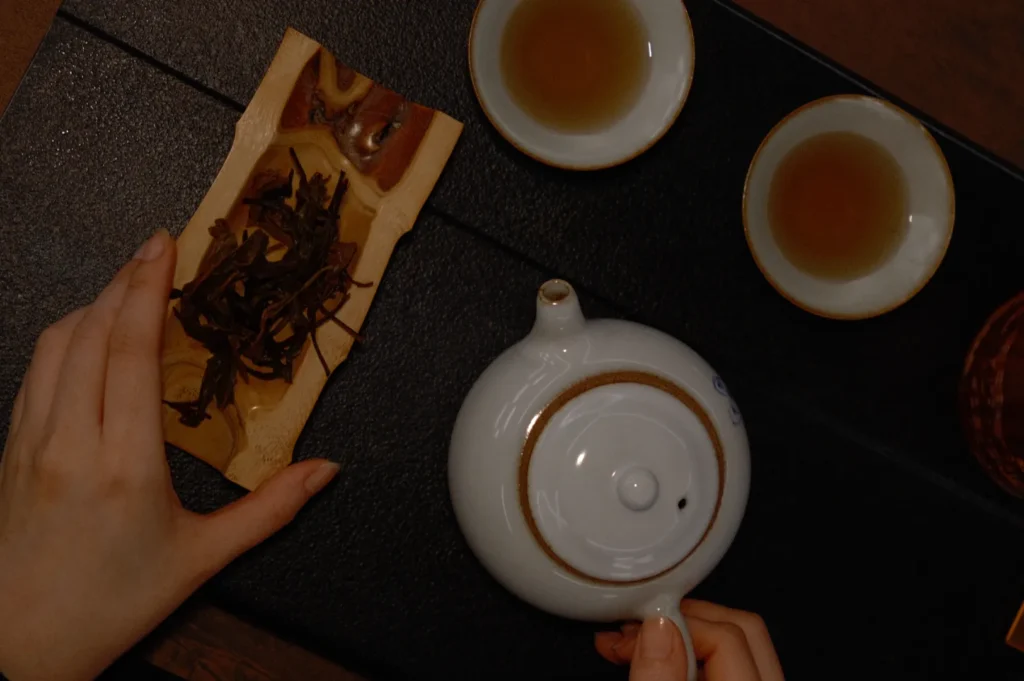
The simplest comparison is to say that Da Hong Pao is roasted and Tie Guan Yin is floral. That is true, but it is not enough.
A good Da Hong Pao is not only about roast. It may also carry orchid lift, spice, wood, and a mineral calm often associated with Wuyi rock tea. A good Tie Guan Yin is not only floral. It may also show creaminess, green freshness, softness, and a more delicate sweetness than first impressions suggest.
What separates them more meaningfully is how they hold those qualities together. Da Hong Pao often feels denser in structure, more architectural, and more mineral in finish. Tie Guan Yin often feels more lifted, fragrant, and spacious through the middle of the sip.
One tea gathers itself downward. The other opens upward.
That difference in movement is often more useful than any single flavour note.
Which Tea Feels Easier for Beginners?
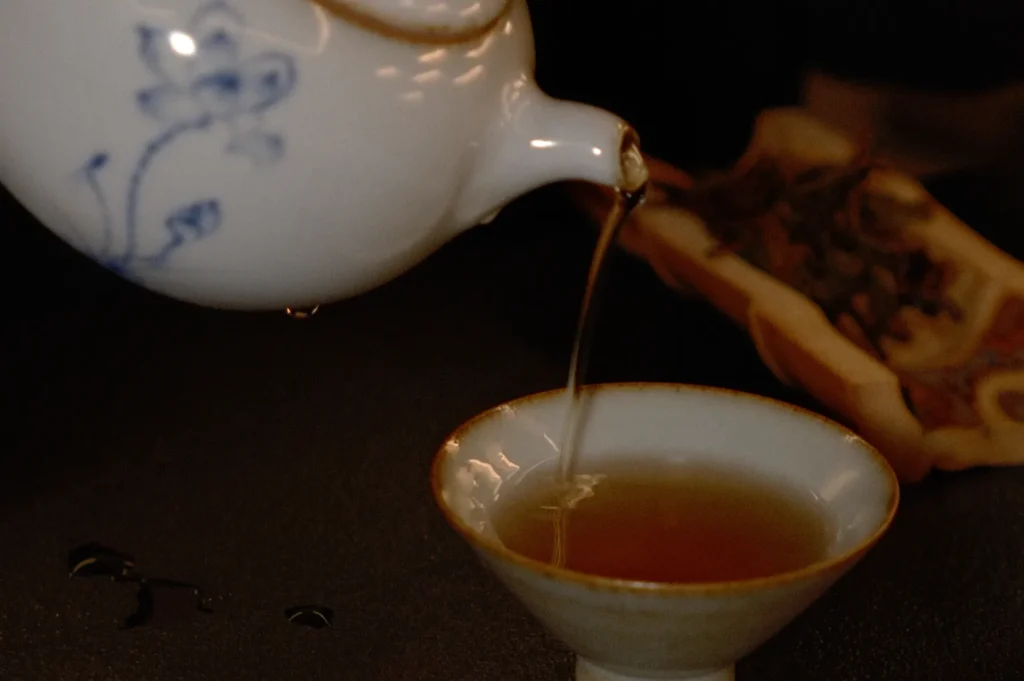
This depends less on experience than on instinct.
Some beginners respond more quickly to Tie Guan Yin because the fragrance is easy to recognise. The tea feels welcoming. Its floral character is often clear, and the entry point into appreciation seems immediate. Others feel more at home in Da Hong Pao’s warmth because it seems less perfumed, more stable, and more grounded from the start.
Neither tea is inherently more advanced. They simply ask for different forms of attention.
At Tea Room by Ki-setsu, we often notice that people who enjoy lighter aromatics, fresh florals, and a sense of lift tend to respond first to Tie Guan Yin. Those who enjoy roasted coffee, dry spice, mineral white wines, or savoury warmth often move naturally toward Da Hong Pao.
The more useful question is not which tea is easier in general. It is which tea feels more legible to you.
How They Differ in Texture
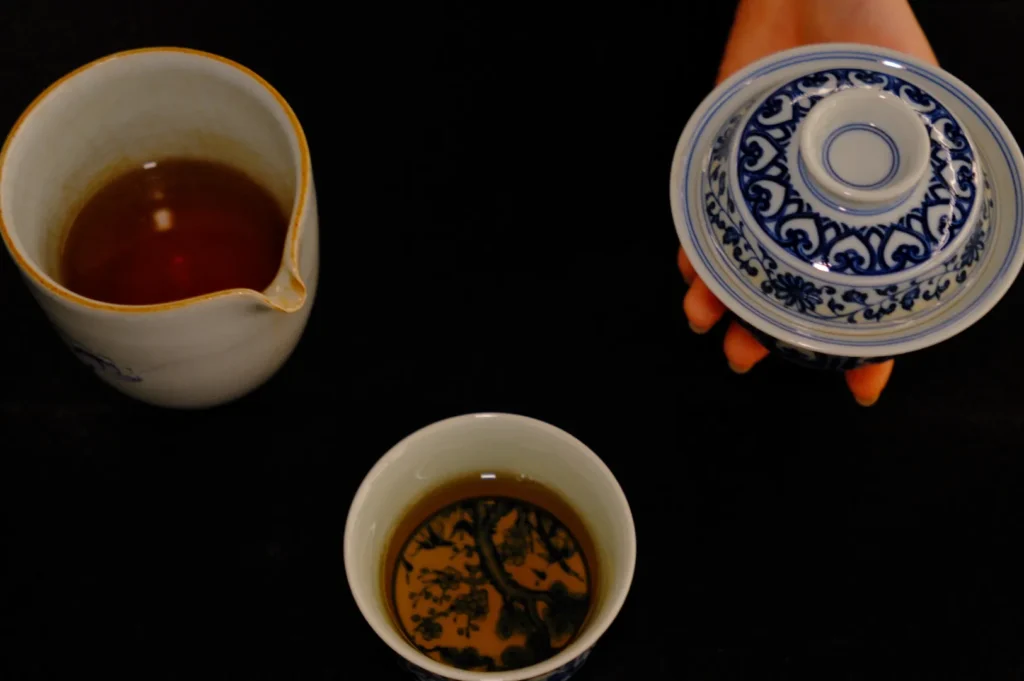
Texture is often where the distinction becomes clearer.
Da Hong Pao usually carries more visible structure in the body. Even when the liquor is elegant and controlled, it often feels slightly firmer, more grounded, and more continuous across the palate. The tea gives an impression of shape.
Tie Guan Yin may feel softer, creamier or lighter depending on style. It can move with a certain floral ease, and that can make it feel more transparent or more buoyant even when it has good body.
At Tea Room by Ki-setsu, we think this difference matters because people often choose tea by flavour alone and only later realise that texture is what keeps them returning. A drinker may admire Tie Guan Yin’s fragrance and still long for Da Hong Pao’s structure. Another may appreciate Da Hong Pao’s depth and still miss the ease of Tie Guan Yin’s floral lift.
What Changes at the Table
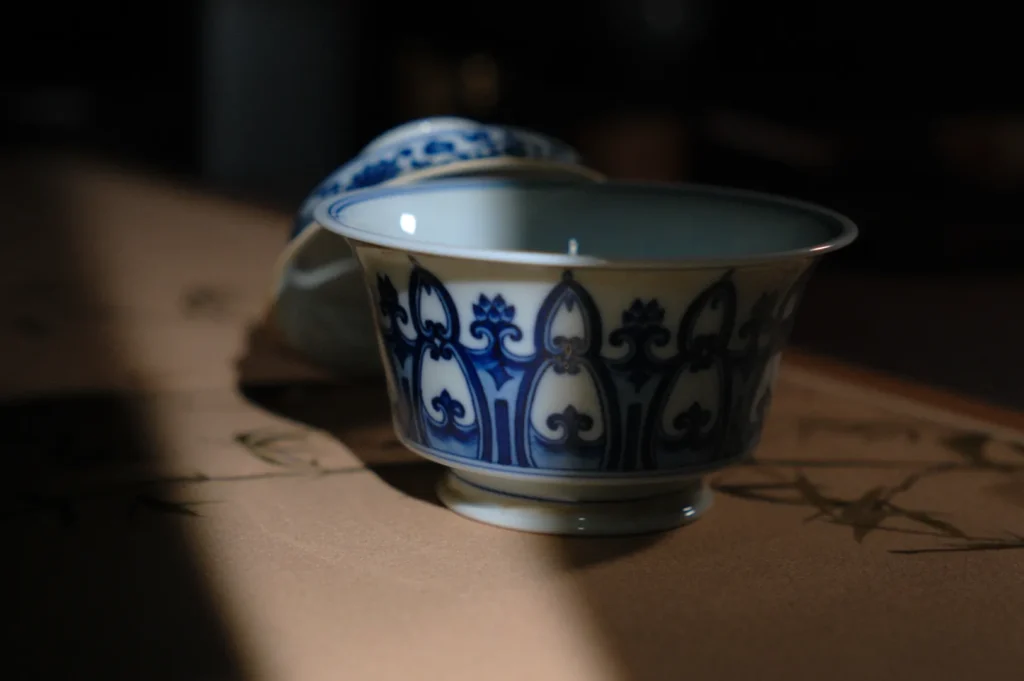
These teas also behave differently with food and atmosphere.
Da Hong Pao often pairs more naturally with foods that carry warmth, nuttiness, or gentle savoury weight. It tends to hold itself well beside bean sweets, toasted pastries, roasted nuts, or quieter savouries. Tie Guan Yin often feels more at home beside delicate sweets, mild fruit, and foods that do not interrupt its aromatic lift.
The same is true of mood. Da Hong Pao often suits slower, more reflective sessions. It rewards patience and repeated attention. Tie Guan Yin can feel more immediately social, more open in the opening pours, and more easily grasped in a shorter window.
This does not mean one tea is serious and the other casual. Both can be deeply refined. But they enter the room differently, and they shape the rhythm of tasting differently too.
Which One Should You Choose?
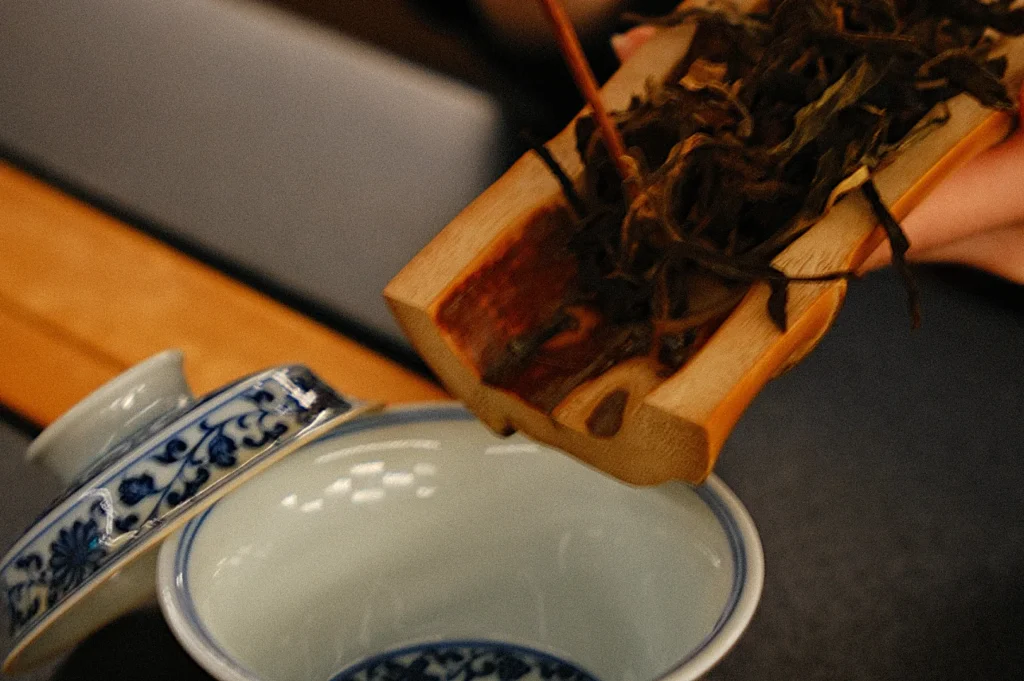
If you want a tea that unfolds through roast, mineral presence, dry spice, and a grounded finish, Da Hong Pao is likely the better fit.
If you want a tea that offers floral fragrance, freshness, and lighter lift more quickly, Tie Guan Yin may suit you more naturally.
If you are still unsure, begin with temperament rather than reputation. Ask yourself what kind of tea lingers in memory for you. Is it the tea that opens with fragrance and air, or the tea that builds through depth and return? Is it the sip that rises, or the sip that settles?
At Tea Room by Ki-setsu, we think this is the most useful comparison of all. Not which tea is more famous, more prestigious, or more admired in theory. But which tea leaves you wanting another sip for the same reason.
One does not replace the other. They answer different appetites, and they teach different forms of attention.
A Final Way to Think About the Difference
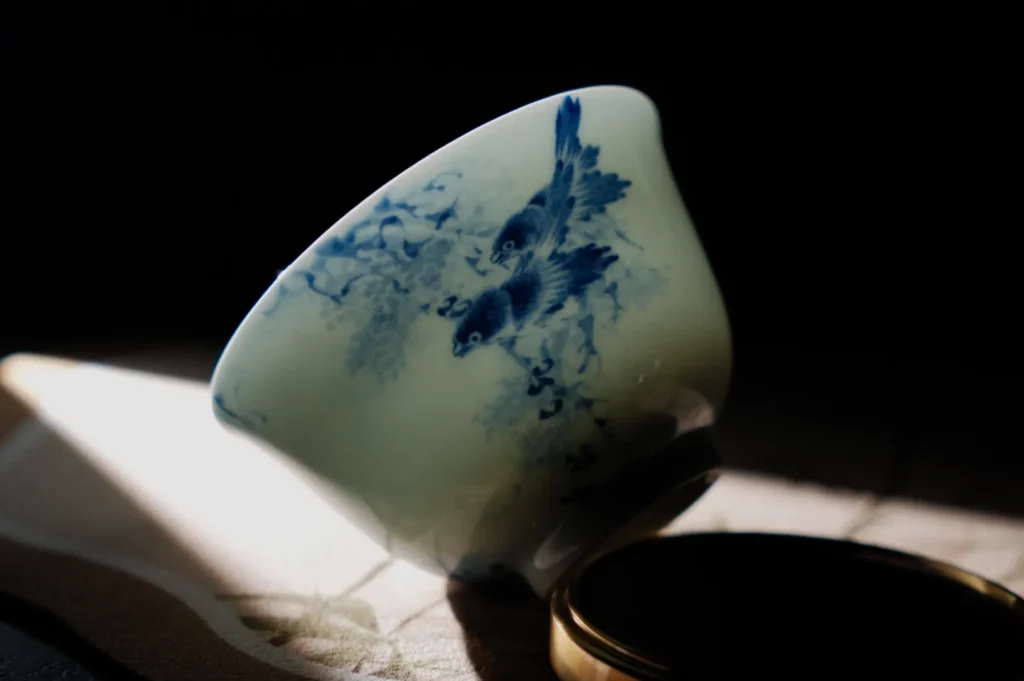
If Tie Guan Yin feels like fragrance meeting air, Da Hong Pao often feels like warmth meeting stone.
That may sound simple, but for many drinkers it is the clearest distinction. One tea is often about lift, openness, and early elegance. The other is often about structure, mineral depth, and a slower unfolding authority.
At Tea Room by Ki-setsu, we find that both belong to a serious tea life. The question is not which is superior. The question is which voice you want to hear more clearly today.