Some people approach Longjing tea with a quiet question: does it have caffeine?
The simple answer is yes. Longjing, also known as Dragon Well tea, is a green tea made from the Camellia sinensis plant. It naturally contains caffeine. But the better question is not only how much caffeine it has. The better question is how that caffeine feels in the cup.
Longjing rarely behaves like coffee. It does not usually arrive with force. It does not demand the same immediate alertness. Its energy is softer, cleaner, and more measured.
Longjing tea is not caffeine-free. But its character often feels gentler than stronger caffeinated drinks.
For readers who want the wider wellness context, we have written about how Long Jing tea supports calm daily energy. This article focuses only on caffeine: what it means, why it varies, and how to drink Longjing more thoughtfully.
Does Longjing Tea Have Caffeine?
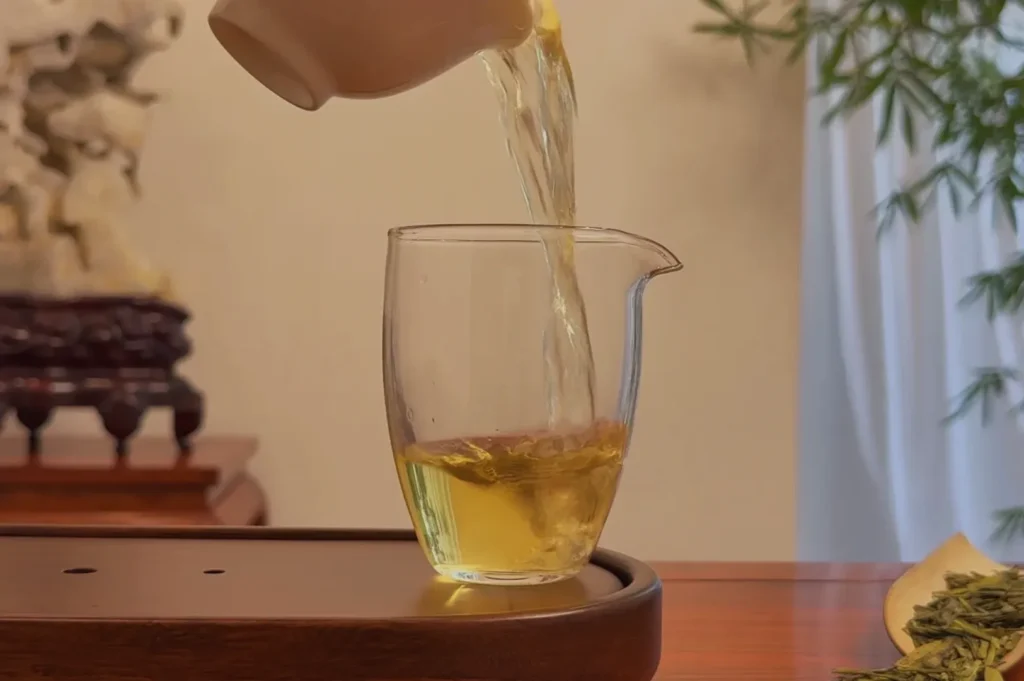
Yes. Longjing tea contains caffeine because it comes from true tea leaves, not herbs.
This is an important distinction. Herbal infusions such as chrysanthemum, peppermint, or rooibos do not come from Camellia sinensis. Longjing does. Like green tea, white tea, oolong, black tea, and Pu-erh, it naturally contains tea compounds that include caffeine.
The Linus Pauling Institute at Oregon State University notes that tea contains biologically active compounds including flavonoids, caffeine, fluoride, and theanine. That mixture matters. Tea is not simply caffeine in hot water. It is a more layered drink.
This is one reason Longjing can feel calm even when it contains caffeine.
Why Longjing Feels Different from Coffee
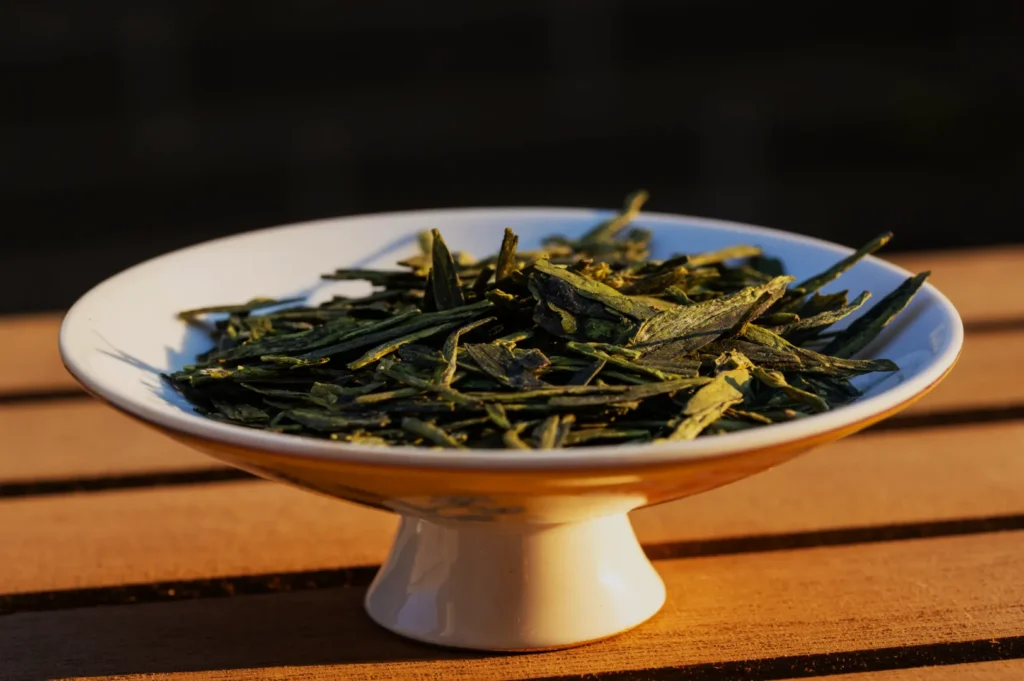
Coffee tends to be direct. Tea is usually more gradual.
A cup of coffee often gives a stronger and faster sensation of alertness. Longjing tends to feel quieter. The effect may be clearer, lighter, and less forceful, especially when the tea is brewed gently.
That does not mean Longjing is weak. It means the experience is different.
A gentle tea is not an ineffective tea. Sometimes, gentleness is the point.
At Tea Room by Ki-setsu, we often see guests describe Longjing as clean or steady. They do not always speak about energy first. They speak about clarity, warmth, and ease. The caffeine is present, but it does not dominate the experience.
What Affects Caffeine in Longjing Tea?
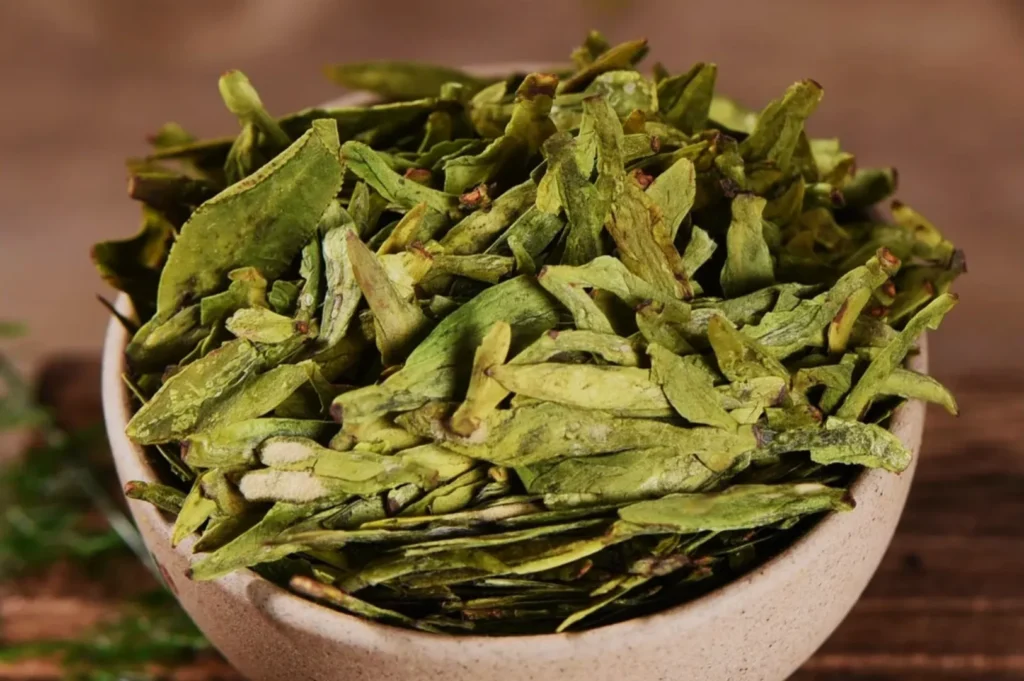
Caffeine in Longjing is not fixed. It can shift depending on several factors.
The amount of leaf matters. More leaf usually means more caffeine available for extraction.
Water temperature matters. Hotter water can draw more from the leaf, including caffeine, bitterness, and sharper vegetal notes.
Infusion time matters. A longer steep gives the water more time to extract caffeine and flavour.
Leaf grade and harvest can also matter. Tender young leaves may behave differently from later, coarser leaves. Processing, storage, and brewing style all play a role too.
This is why one cup of Longjing may feel light, while another feels more stimulating. The tea is not changing its nature. The preparation is shaping what comes forward.
Is Longjing Tea High in Caffeine?
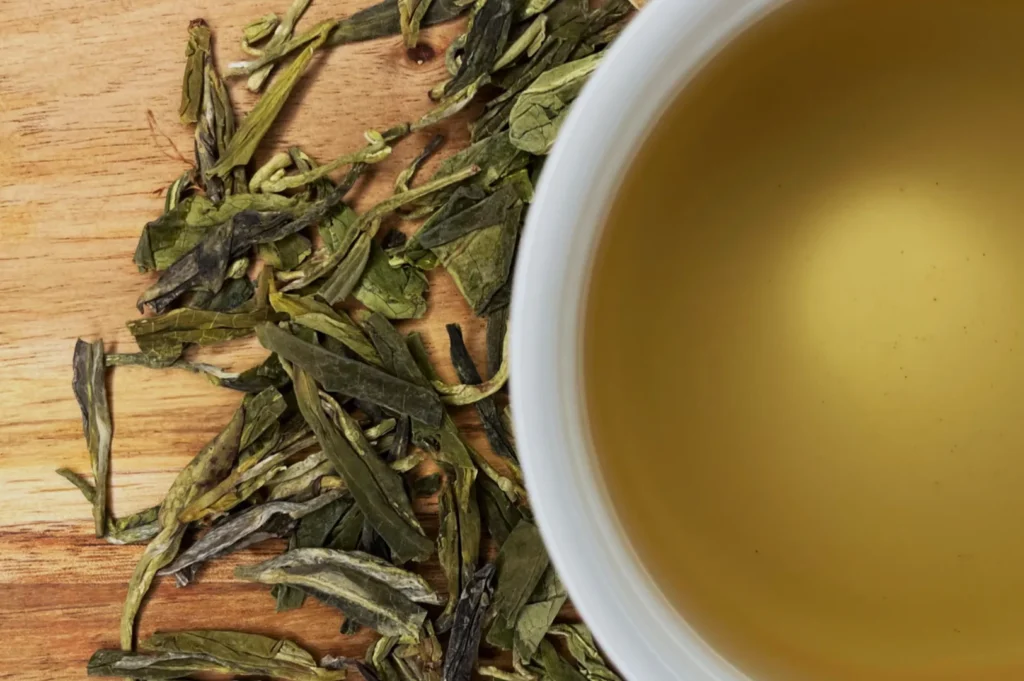
Longjing is usually not considered a high-caffeine drink in the way coffee or energy drinks are. But it should not be treated as caffeine-free either.
The U.S. Food and Drug Administration states that for most adults, 400 milligrams of caffeine a day is an amount not generally associated with dangerous effects. The same guidance also reminds us that sensitivity varies from person to person.
That second point is important.
Some people can drink tea in the evening and sleep well. Others feel the effect of caffeine after one cup in the afternoon. Body weight, medication, health conditions, stress, and personal tolerance can all change how caffeine is experienced.
Caffeine is not only about the number. It is also about the person drinking it.
When Should You Drink Longjing Tea?
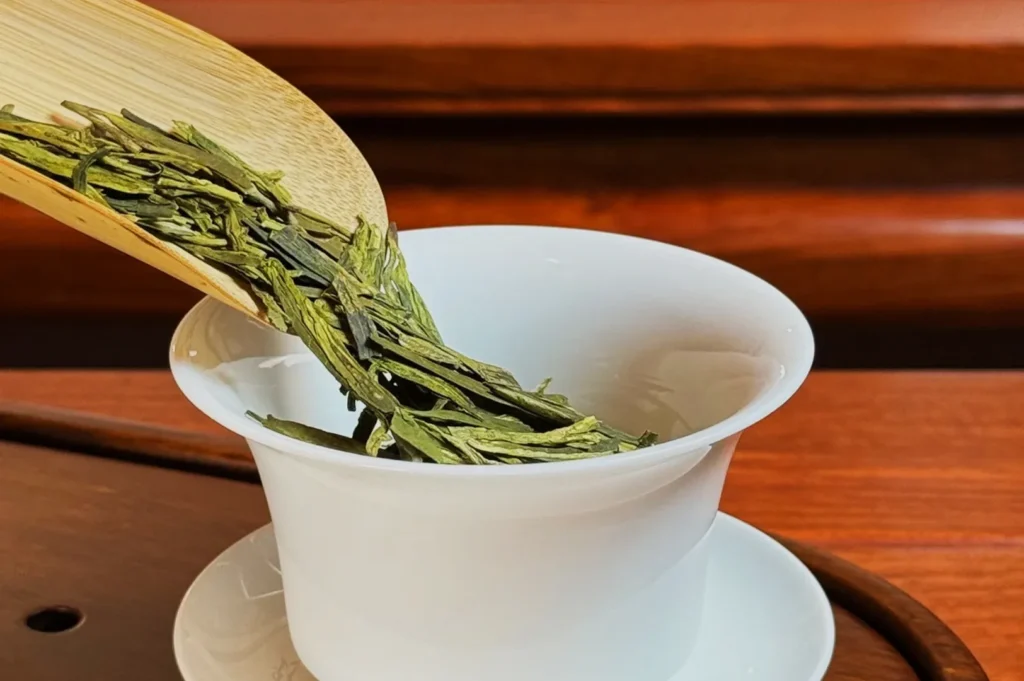
For most people, Longjing is best enjoyed earlier in the day or in the afternoon.
Morning is a natural choice if you want a clearer start without the heaviness of coffee. Midday can also work well, especially after lunch, when the mind wants brightness but not intensity.
Evening depends on the drinker. If you are sensitive to caffeine, it may be wiser to avoid Longjing late at night. A tea can feel gentle and still affect sleep.
The National Center for Complementary and Integrative Health notes that green tea contains caffeine and that concentrated green tea extracts may carry risks for some people. While a brewed cup of tea is very different from a supplement extract, the larger lesson is useful: tea should still be approached with attention, not assumption.
Who Should Be More Careful?
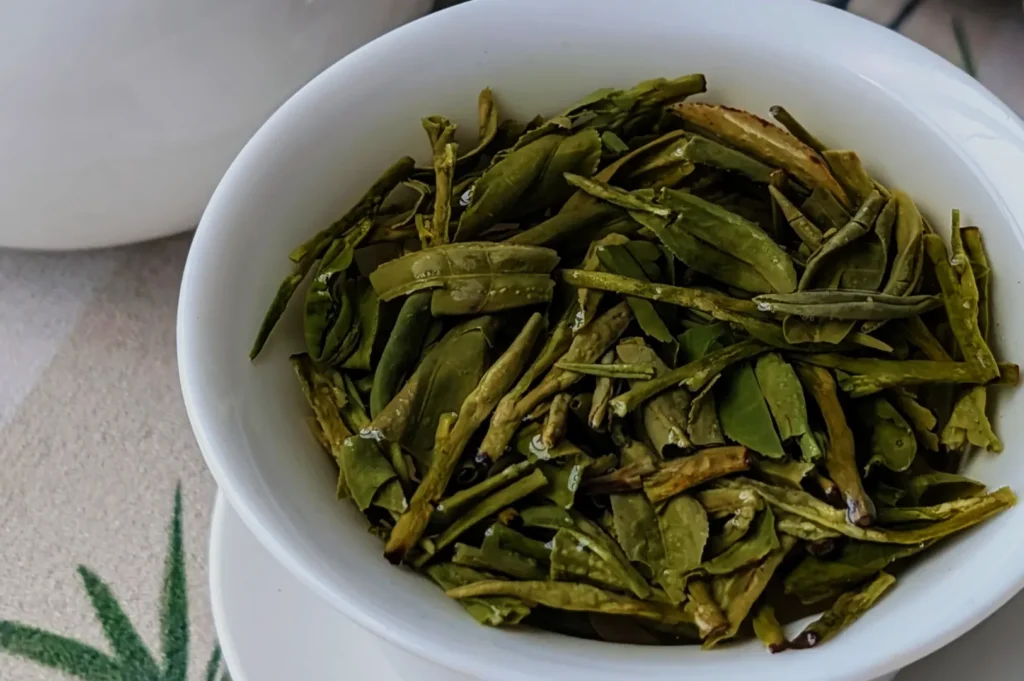
Longjing tea can be part of a calm daily rhythm, but some people should drink it more carefully.
Those who are very caffeine-sensitive may want smaller servings.
Those who experience anxiety, palpitations, or sleep disruption after caffeine should pay attention to timing.
Pregnant or breastfeeding individuals should follow medical guidance on caffeine intake.
Anyone taking medication or managing a medical condition should check with a qualified healthcare professional if unsure.
This is not meant to make Longjing sound risky. It is meant to keep the conversation honest. Good tea culture includes restraint.
How to Make Longjing Feel Gentler
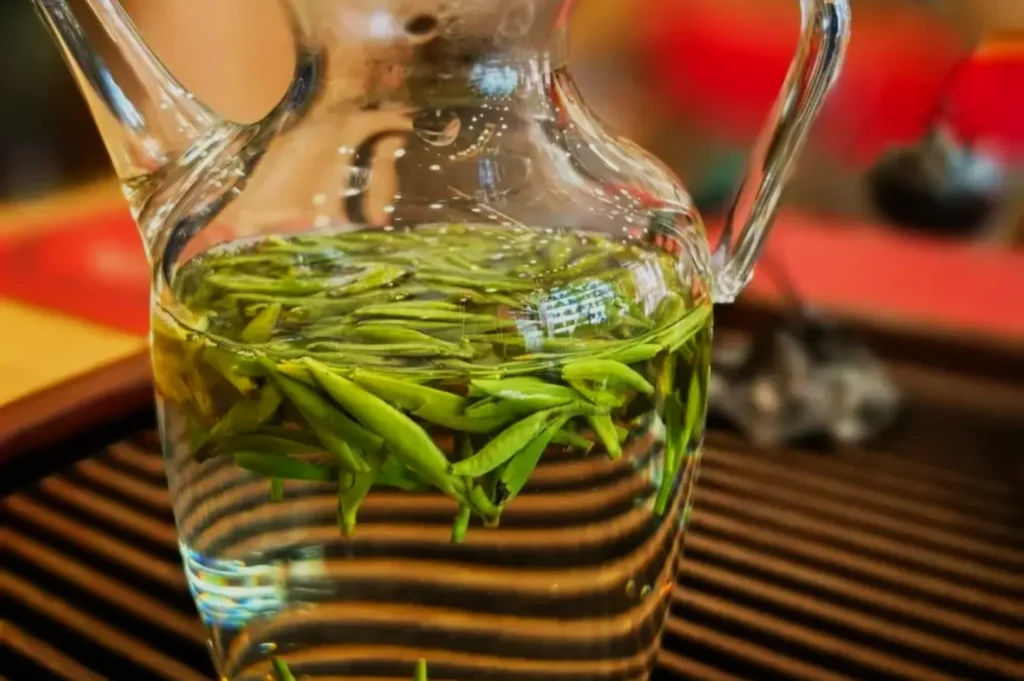
If Longjing feels too stimulating, the answer is not always to stop drinking it. Sometimes, small adjustments help.
Use slightly less leaf. Keep the infusion shorter. Avoid water that is too hot. Drink it earlier in the day. Have it after food rather than on an empty stomach.
These changes can make the cup feel softer while still allowing the tea to show its character.
At Tea Room by Ki-setsu, we often encourage guests to notice not only flavour, but also how the tea sits in the body. Does it feel sharp or smooth? Restless or clear? Thin or rounded? These observations are part of tea appreciation too.
Final Thought
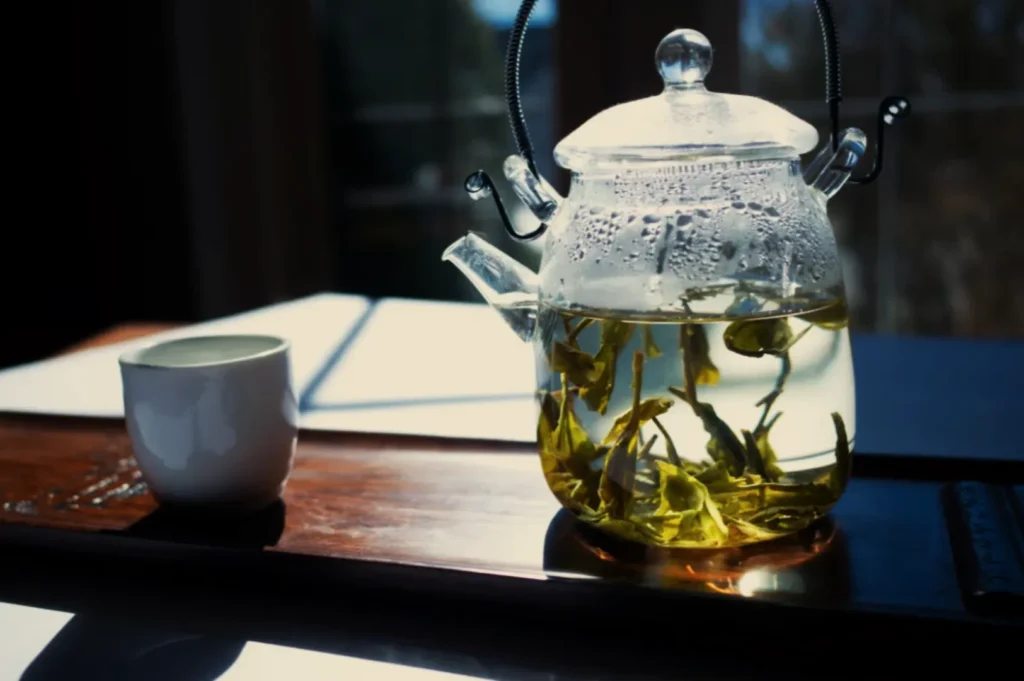
Longjing tea contains caffeine, but caffeine does not define it.
Its beauty lies in balance. The cup can feel alert without feeling aggressive, clear without feeling cold, and gentle without being weak.
Longjing offers energy with composure. That is why it remains such a thoughtful daily tea.
For those beginning their journey into Chinese green tea, Dragon Well tea offers a quieter way to understand alertness. Not as a push, but as a steady return to attention.