Anhui is easy to associate with famous green and black teas.
Huoshan Huangya belongs to another part of the map.
It comes from Huoshan County and is one of China’s recognised yellow-tea traditions.
Huoshan Huangya reminds us that regional tea identity is rarely one category deep.
Our Chinese yellow tea guide for regional varieties provides the wider framework.
Huoshan Has a Long Tea History
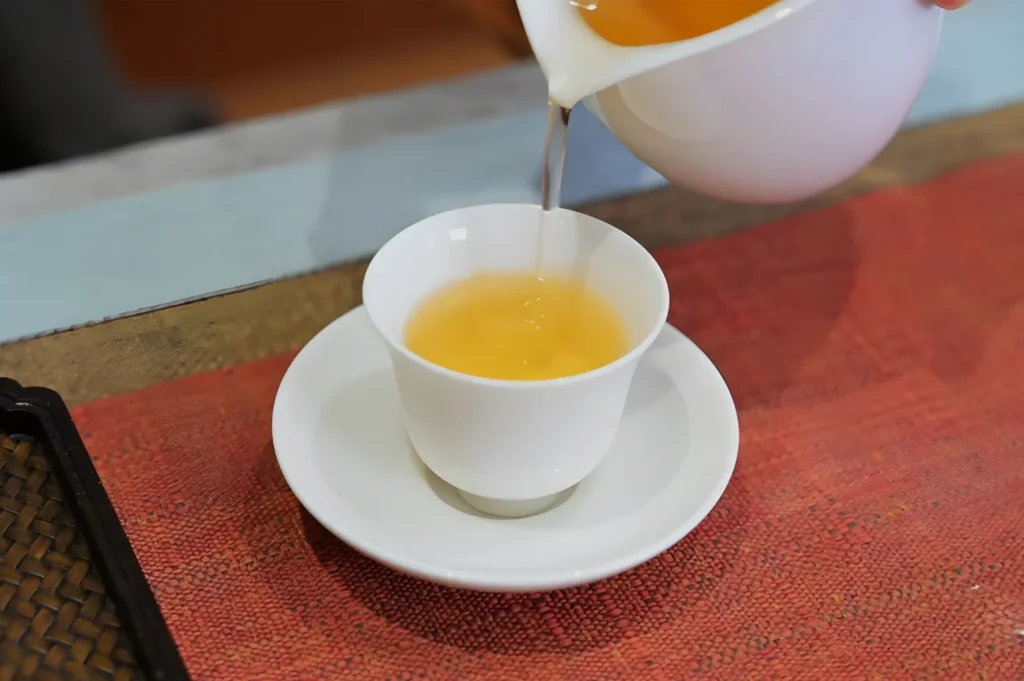
Huoshan County’s government traces the region’s tea history through centuries of tribute-tea culture and identifies Huoshan Huangya as a major local tea.
The county also identifies Huoshan yellow tea as a representative of China’s yellow-tea category and notes Huoshan Huangya’s geographical-indication protections.
This is useful context.
A tea name should point somewhere.
Why It Is Easy to Mistake for Green Tea
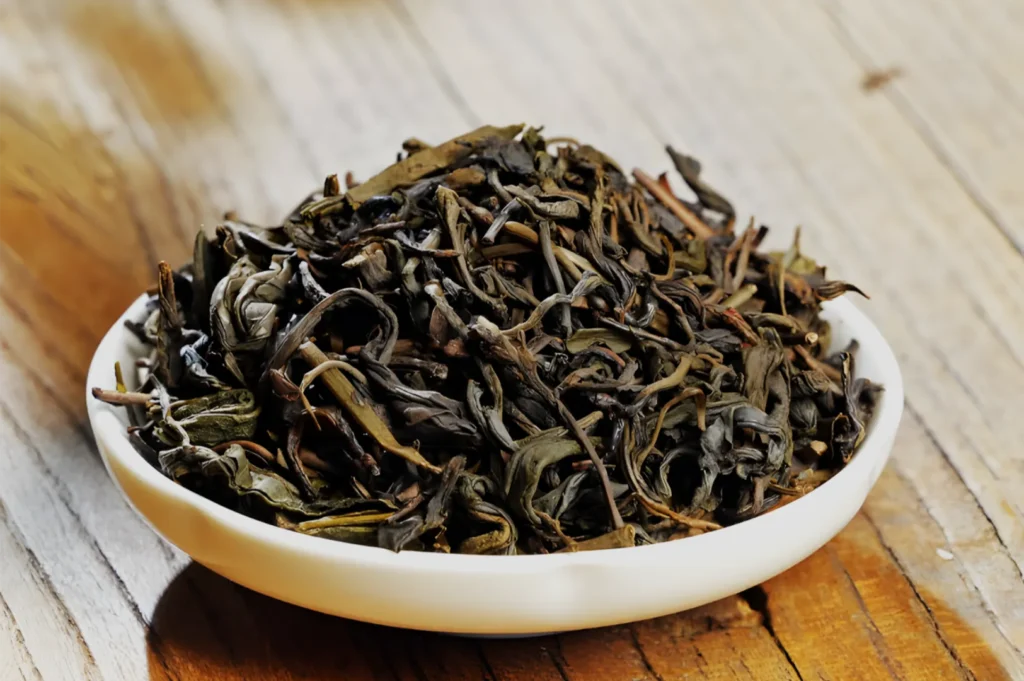
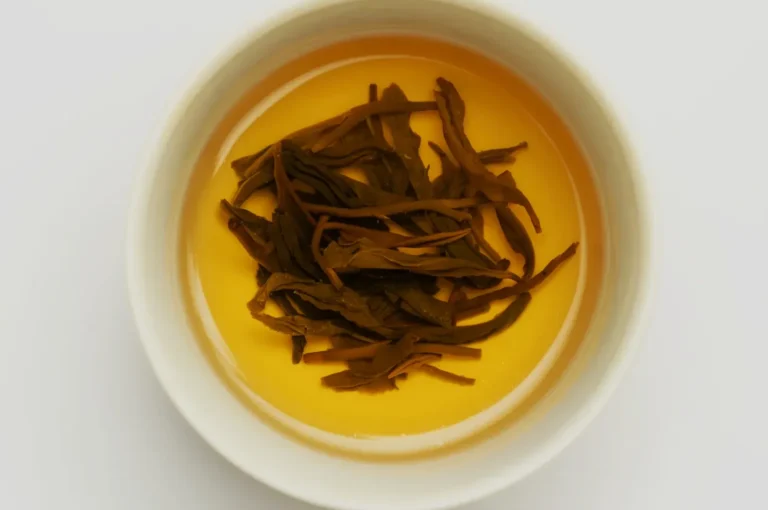
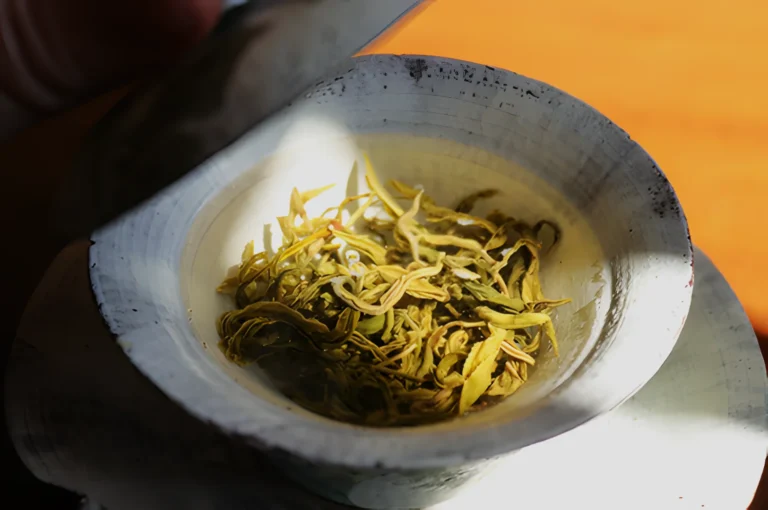
Huoshan Huangya uses tender material and can retain fresh qualities.
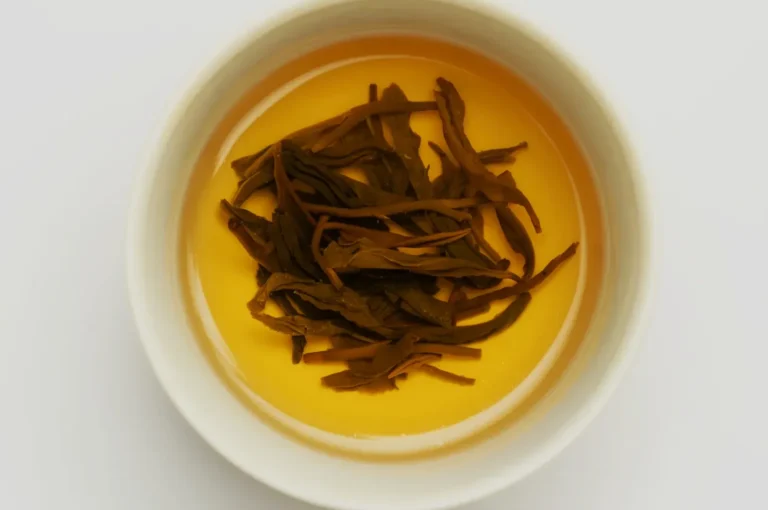
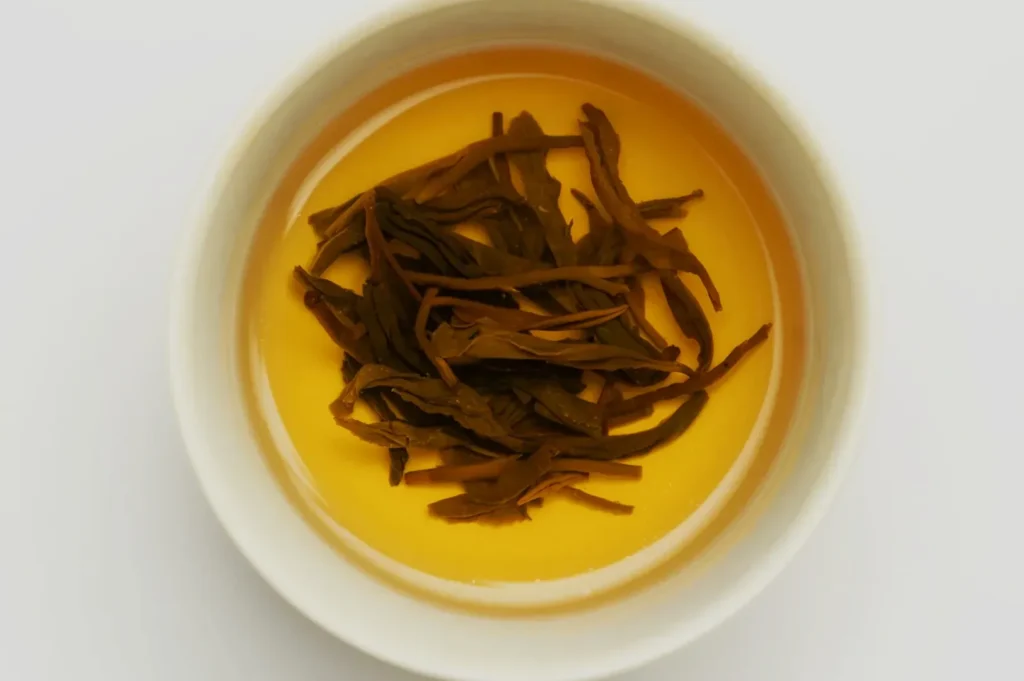
To someone unfamiliar with menhuang, it may simply look like a pale, delicate Chinese tea.
But yellow tea is defined by its additional yellowing process.
A scientific review identifies sealed yellowing as the key step separating yellow tea from green tea and helping reduce greener, grassier character.
What Does Huoshan Huangya Taste Like?
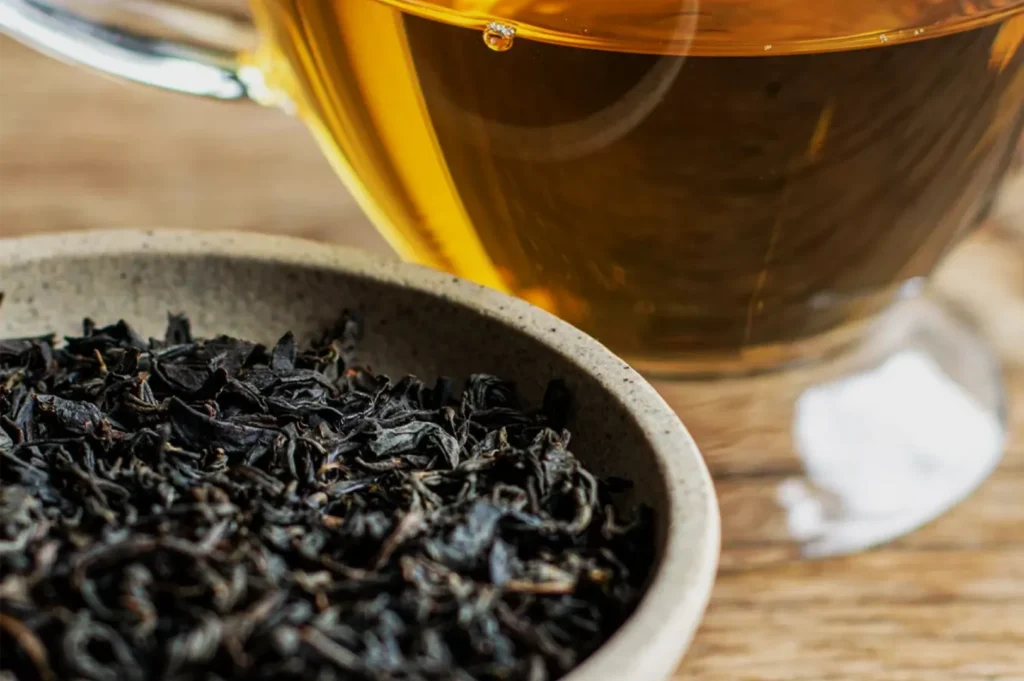
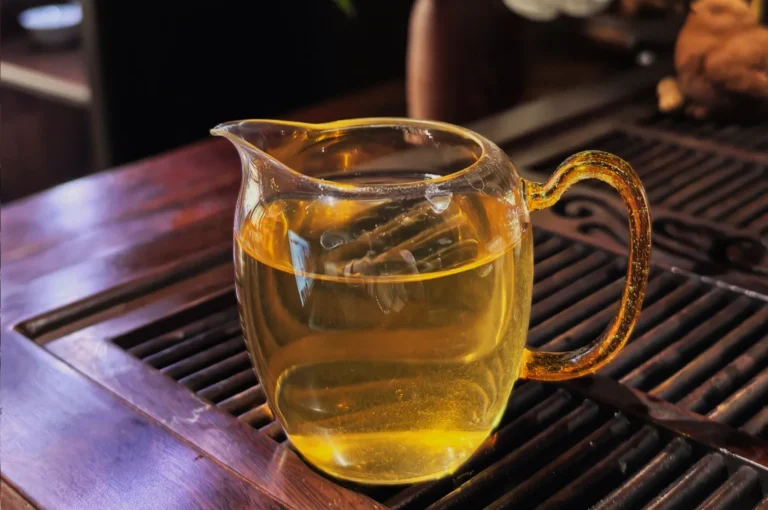
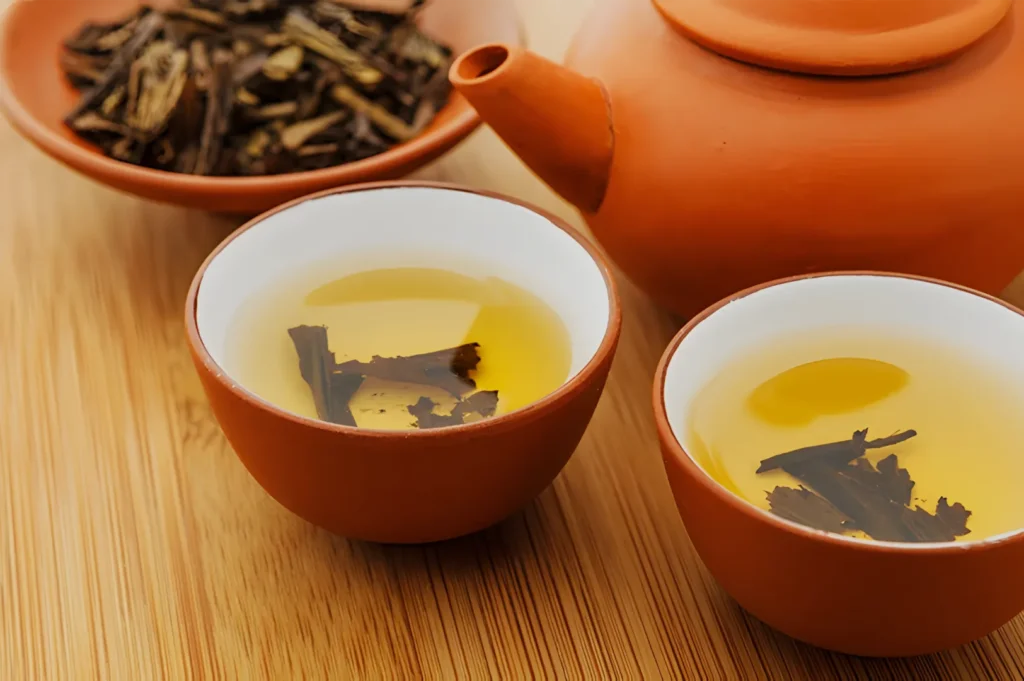
Expect a refined rather than dramatic cup.
Freshness remains, but the edges are often softer.
Sweetness and a mellow finish matter more than aggressive fragrance.
As always, individual examples vary by harvest, producer and processing.
Regional identity tells us where to begin looking. It does not remove the need to taste.
Why Huoshan Matters
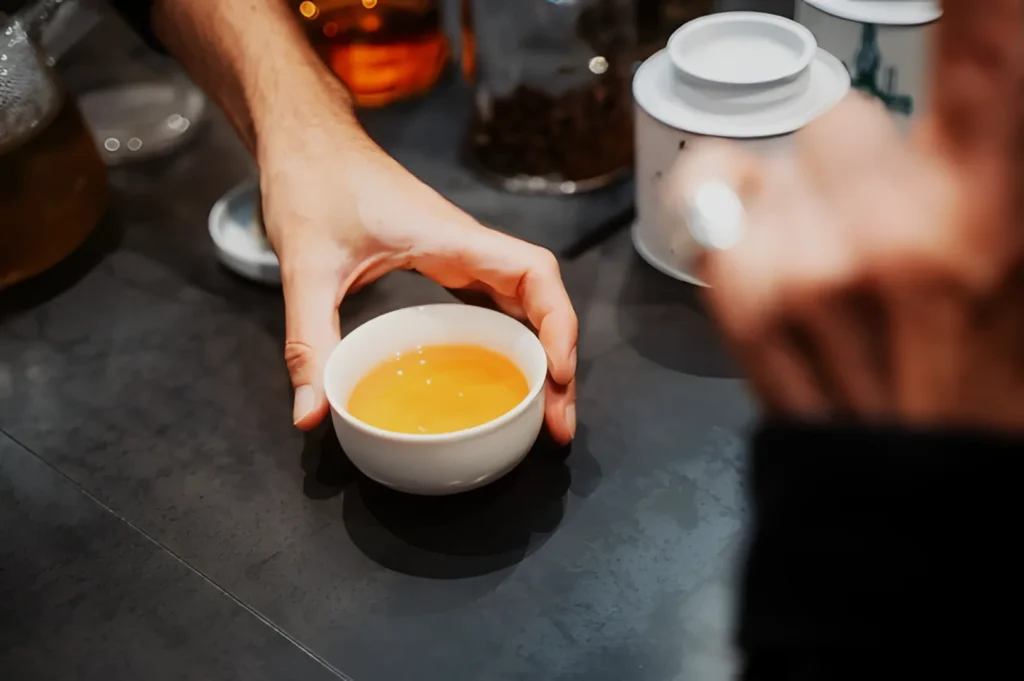
Yellow tea becomes more understandable once we stop treating it as one rare novelty.
Junshan gives us Hunan.
Mengding gives us Sichuan.
Huoshan gives us Anhui.
Each origin brings its own material and craft into the category.
At a Chinese tea house in Singapore focused on private premium tea appreciation, this regional way of reading tea is central to how we approach the leaves we actually serve as well.
Understanding tea means understanding that category and place work together.
Final Thought
Huoshan Huangya does not need the visibility of Anhui’s more internationally familiar teas to matter.
Its importance is quieter.
It keeps alive another expression of yellow tea: fresh but softened, regional but connected to a much larger Chinese tea tradition.
Sometimes a category becomes clearer when we learn its places one by one.