Yellow tea is close enough to green tea that health claims often spill from one category into the other.
That is not careful enough.
Yellow tea contains polyphenols, catechins, caffeine and other tea compounds. Researchers have studied its antioxidant activity and other possible biological effects.
But yellow tea remains far less researched than green tea.
A smaller evidence base should make our language more precise, not more imaginative.
Our guide to China’s mellow huangcha tradition gives the complete category introduction.
Yellow Tea Contains Polyphenols
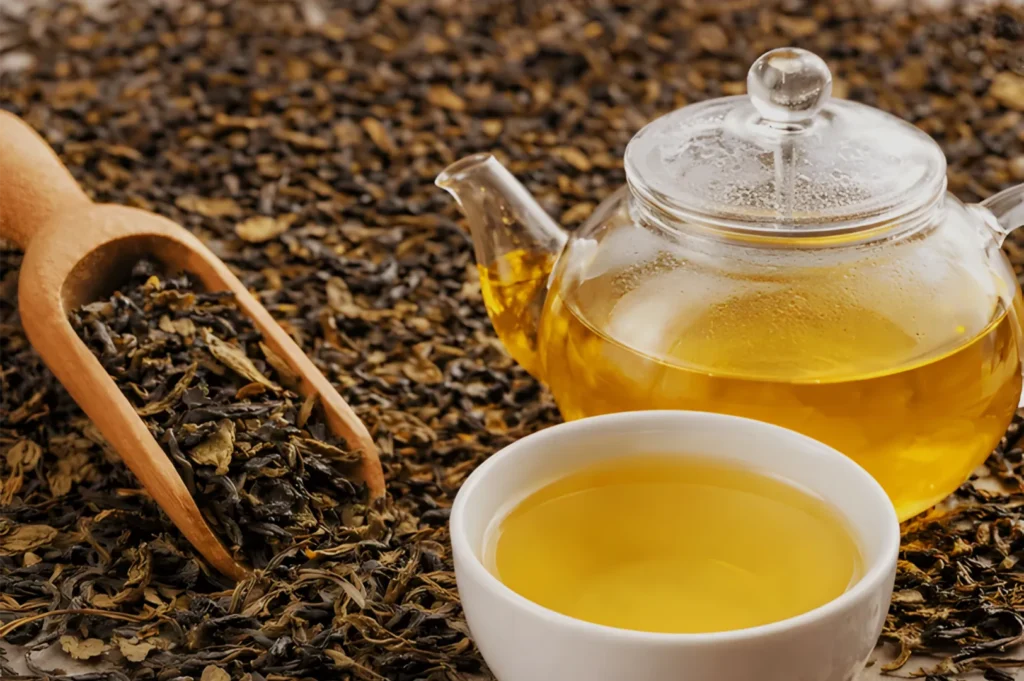
Yellow tea comes from Camellia sinensis.
Studies of Chinese tea infusions have found polyphenols and antioxidant activity across yellow, green, white, oolong, black and dark teas.
Another large comparison found yellow tea among the tea categories with relatively high antioxidant indicators.
These are useful findings.
They are not proof that drinking yellow tea treats disease.
Yellowing Changes the Compounds
Menhuang affects the chemical profile.
Research tracking yellowing time found changes in amino acids, soluble sugars, catechins, polyphenols and caffeine, alongside measurable antioxidant activity in laboratory testing.
The study also used cell models.
That distinction matters.
Laboratory extracts and everyday tea drinking are not the same intervention.
An Unsweetened Drink Still Has Practical Value
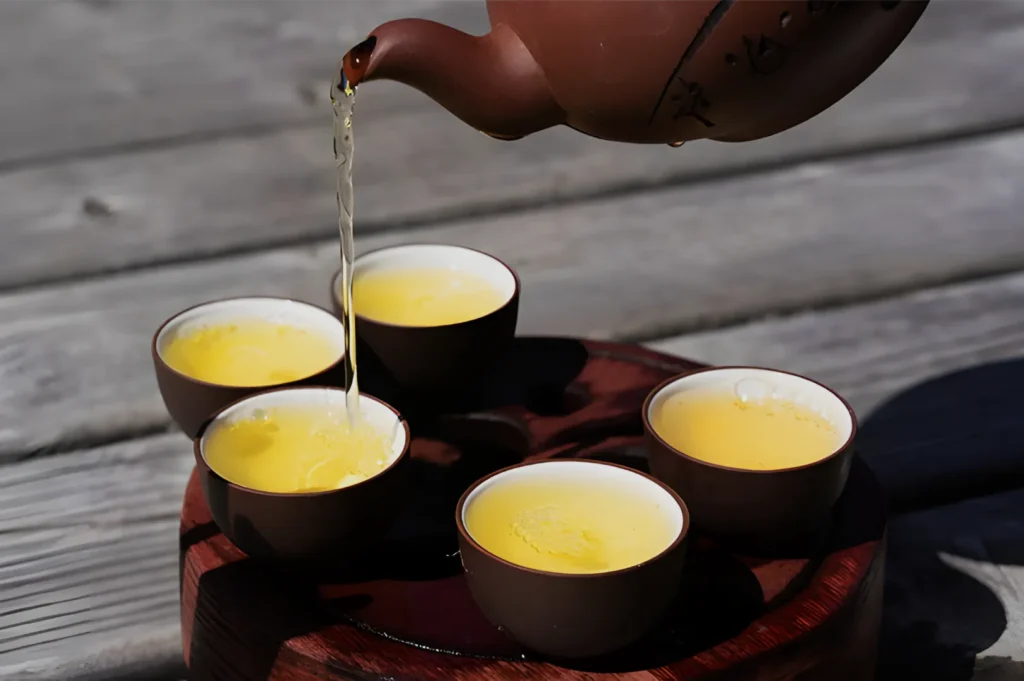
Yellow tea’s mellow character means it usually needs very little help.
No syrup.
No sweetened creamer.
No flavour powder.
For many drinkers, that is the more useful wellness story.
A tea does not need a medical claim to be a thoughtful daily drink.
Ritual Matters Too
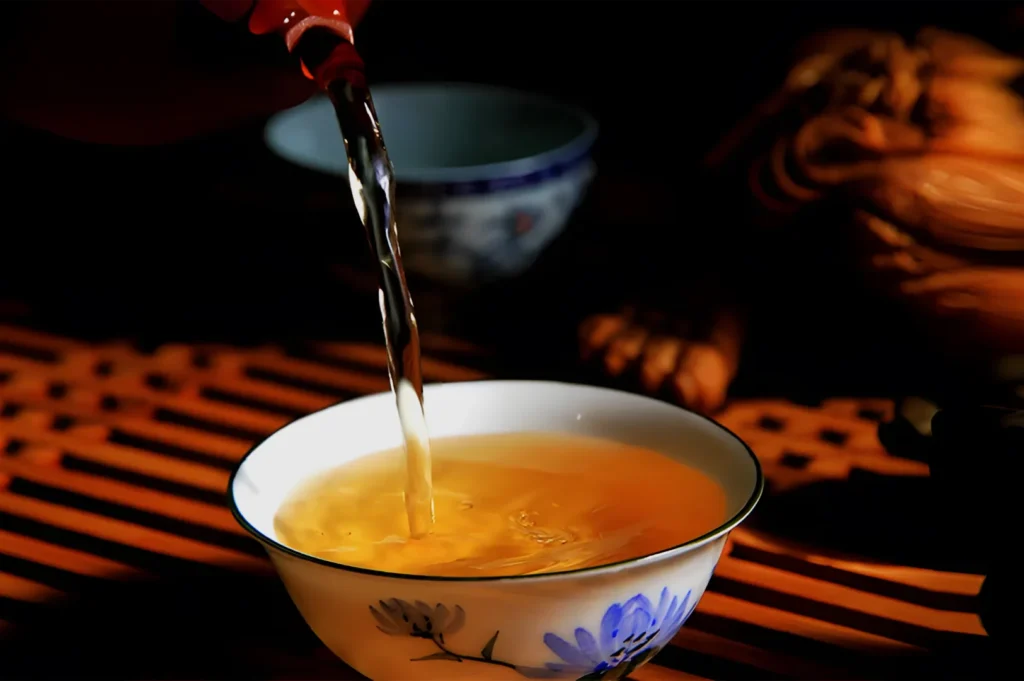
Yellow tea rewards gentle brewing and attention to texture.
Those few minutes can create a deliberate pause.
At our private tea room in Singapore, the teas we serve come from different premium traditions, but the underlying practice is similar: slow the session enough to notice origin, aroma, body and finish.
Tea can support a quieter rhythm without pretending that quiet is a clinical treatment.
Final Thought
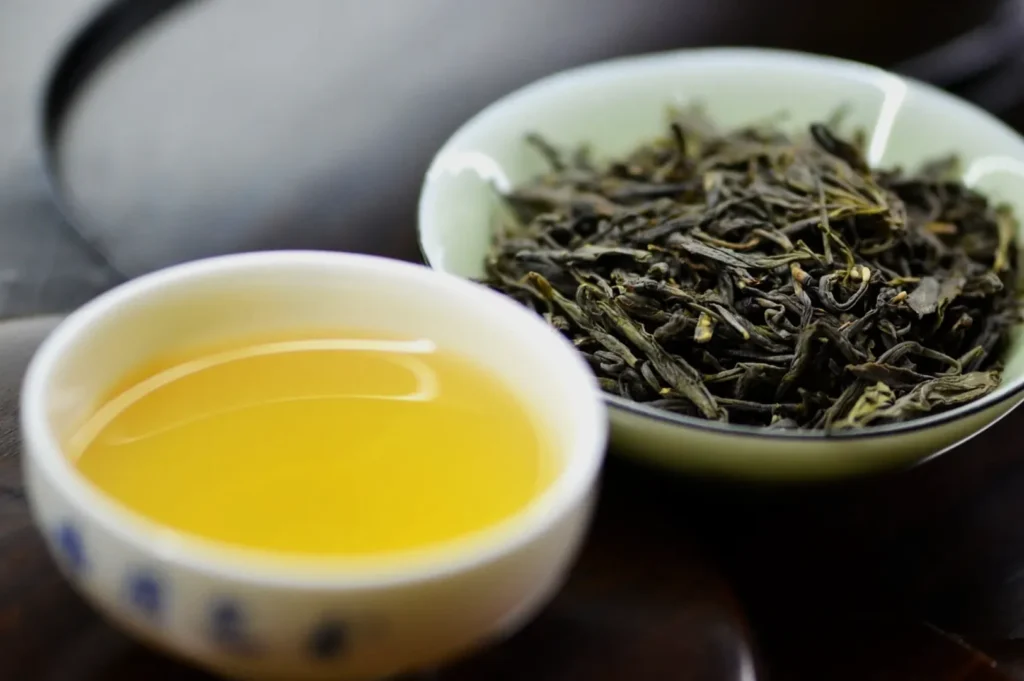
Yellow tea benefits are worth studying.
Its polyphenols and other compounds are real. Its laboratory antioxidant activity is measurable.
What we should avoid is turning early research into certainty.
Good tea culture includes restraint, including restraint in the claims we make about tea.