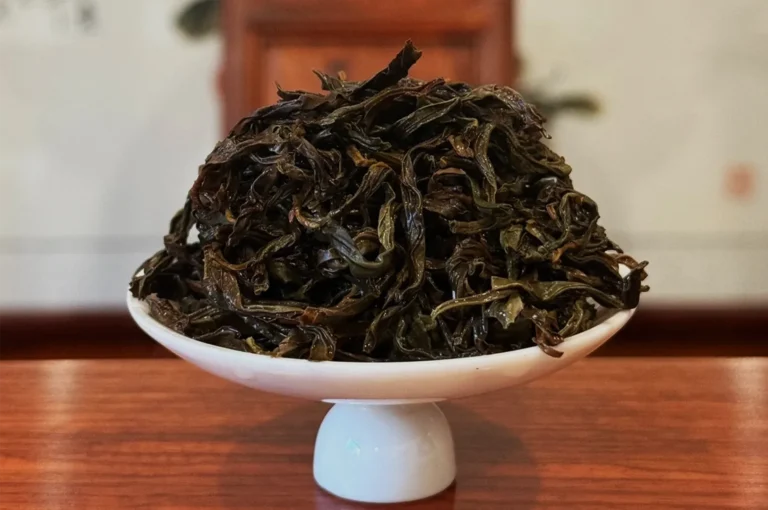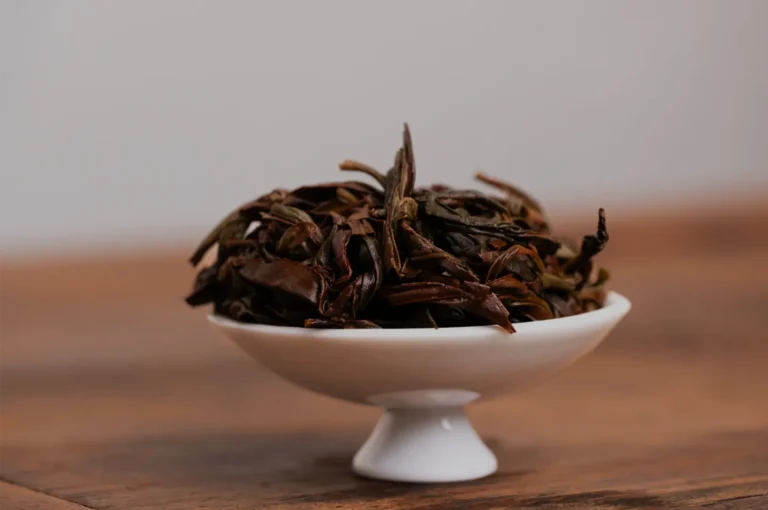
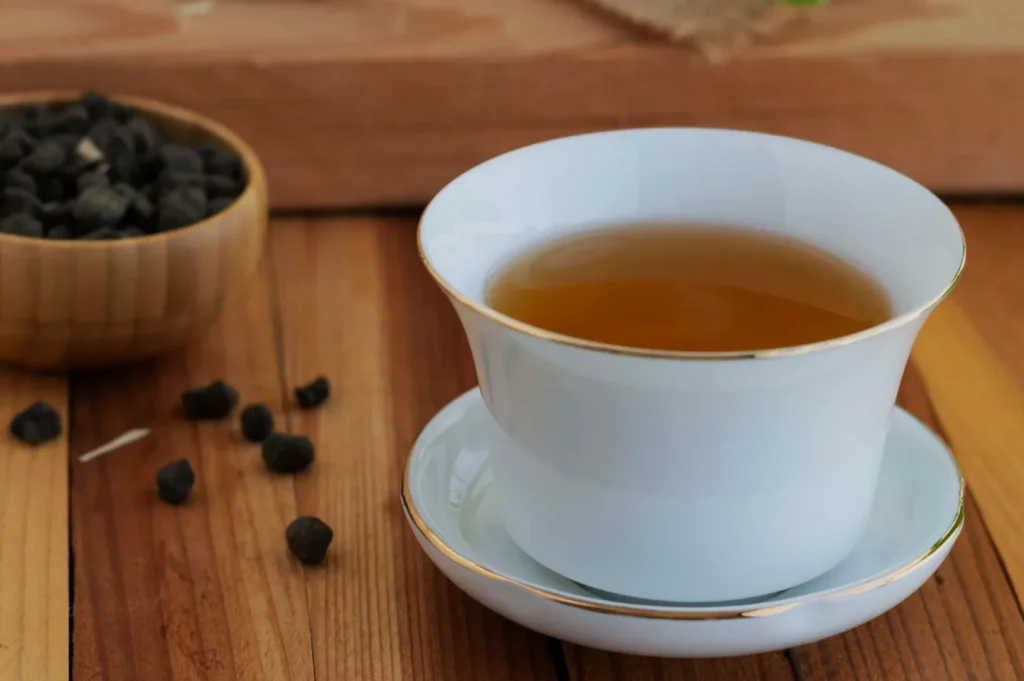
Oolong tea is often introduced as the tea between green and black.
It is a convenient explanation. It is also incomplete.
Yes, oolong sits between green tea and black tea in terms of oxidation. But if we stop there, we miss the beauty of the category. Oolong is not simply a middle child. It is one of the most expressive forms of Chinese tea, capable of being floral, roasted, creamy, mineral, fruity, woody, or quietly sweet.
Oolong tea refuses easy labels because its identity is shaped by range.
For readers who want a broader foundation, we have written our complete oolong tea guide. This article begins with the simplest question: what is oolong tea, really?
Oolong Tea Meaning
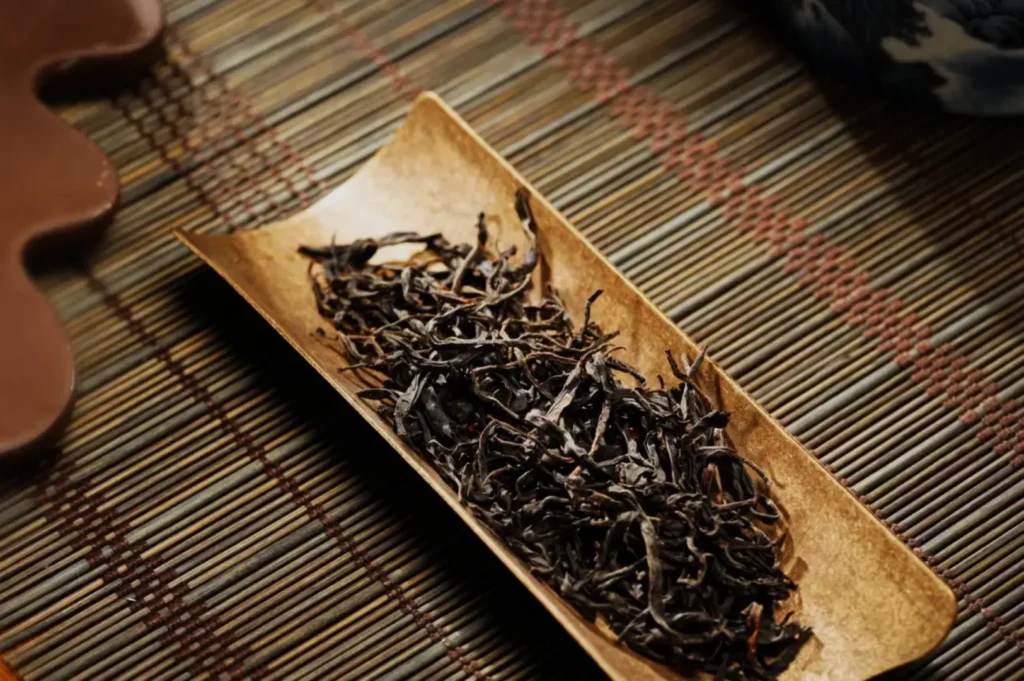
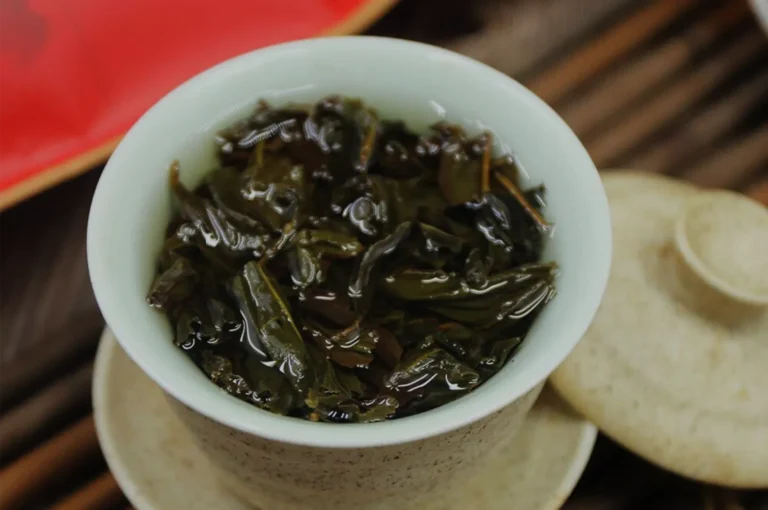
Oolong tea, sometimes written as wulong tea, is a partially oxidised tea made from the Camellia sinensis plant.
That means it belongs to the same plant family as green tea, black tea, white tea, and Pu-erh. The difference is not the plant alone. The difference is how the leaf is handled after harvest.
The Tea and Herbal Association of Canada describes oolong teas as partly oxidised leaves that combine taste and colour qualities of black and green tea. That explanation is useful because it shows why oolong can feel familiar and surprising at the same time.
Some oolongs carry the freshness of green tea. Some carry the depth of black tea. Many sit somewhere more interesting than either comparison.
What Does Partially Oxidised Mean?
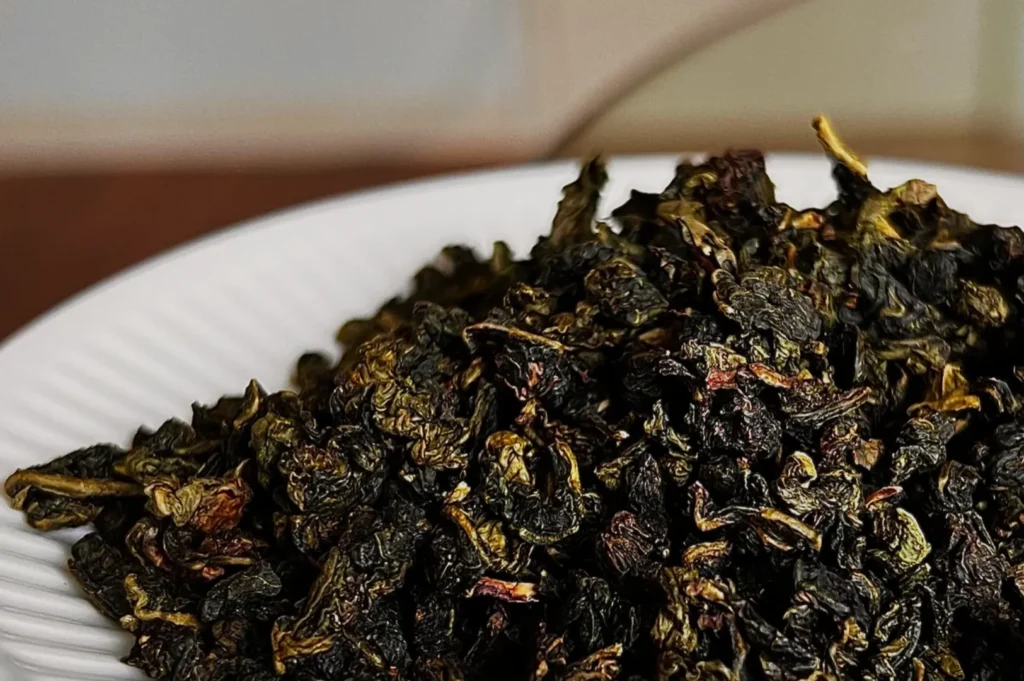
Oxidation is one of the most important processes in tea making.
When tea leaves are bruised, rolled, shaken, or exposed to air, natural chemical changes begin. The colour, aroma, flavour, and structure of the leaf start to shift. Green tea is usually heated early to stop much of this process. Black tea is allowed to oxidise much more fully.
Oolong sits between those two points.
A helpful Wired article on tea oxidation explains that oxidation is different from fermentation, even though the two words are often confused in tea language. This matters because oolong is often casually called “semi-fermented,” but oxidation is the more accurate process to understand for most oolong production.
Partial oxidation is what gives oolong its wide emotional range in the cup.
A lightly oxidised oolong may feel green, floral, and lifted. A more oxidised oolong may feel honeyed, fruity, roasted, or darker in tone.
How Oolong Tea Is Made
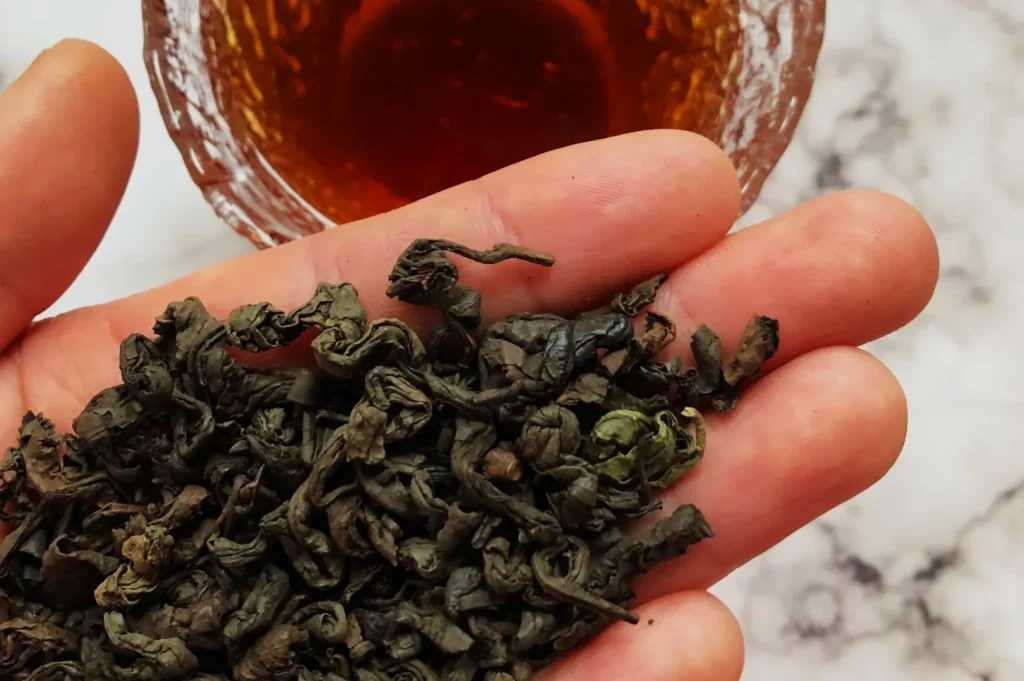
Oolong tea production is not one fixed recipe, but most oolongs involve careful stages of withering, bruising or shaking, partial oxidation, heating, rolling, drying, and sometimes roasting.
A ScienceDirect paper on oolong tea processing describes traditional oolong manufacturing as involving plucking, solar withering, indoor withering with repeated shaking and setting, panning, rolling, and drying.
This repeated handling is part of the craft.
Tea makers do not simply leave the leaves alone and wait. They watch. They smell. They judge texture, moisture, aroma, and timing. The difference between a delicate floral oolong and a deeper roasted oolong may come from small decisions made across the process.
At Tea Room by Ki-setsu, we often see oolong as a tea category where craftsmanship becomes especially visible. The leaf does not hide the maker’s choices.
Why Oolong Tea Tastes So Different
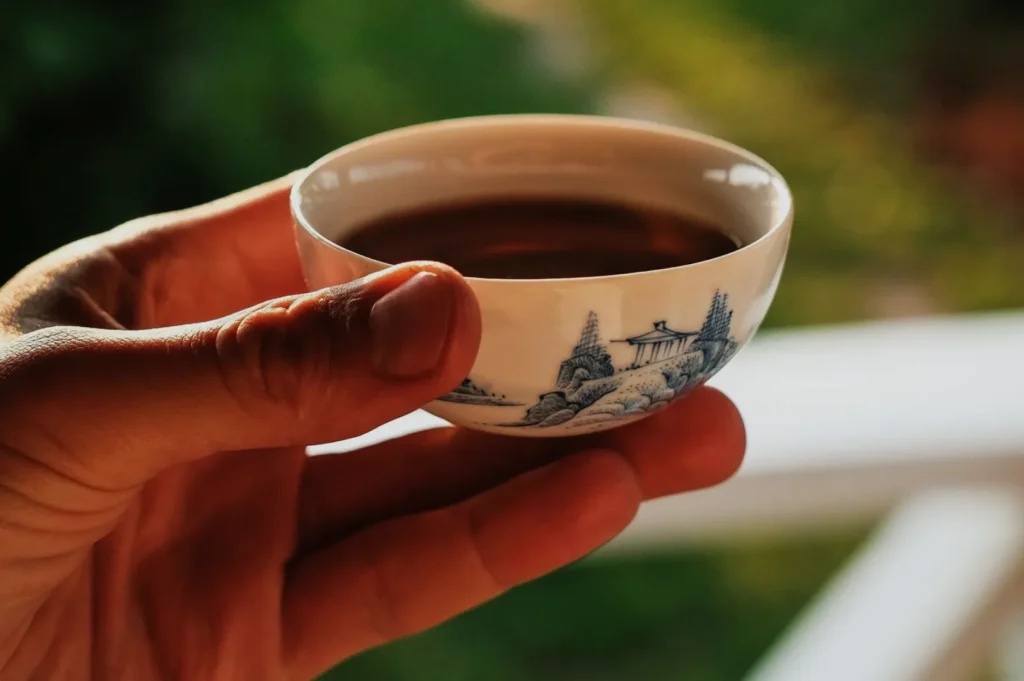
The taste of oolong tea can vary dramatically.
This is why first-time drinkers sometimes feel confused. One oolong may taste like orchids and fresh cream. Another may taste like roasted nuts, warm stone, dried fruit, or charcoal.
Both can be oolong.
The difference may come from oxidation level, roast, cultivar, region, altitude, season, age, and brewing style.
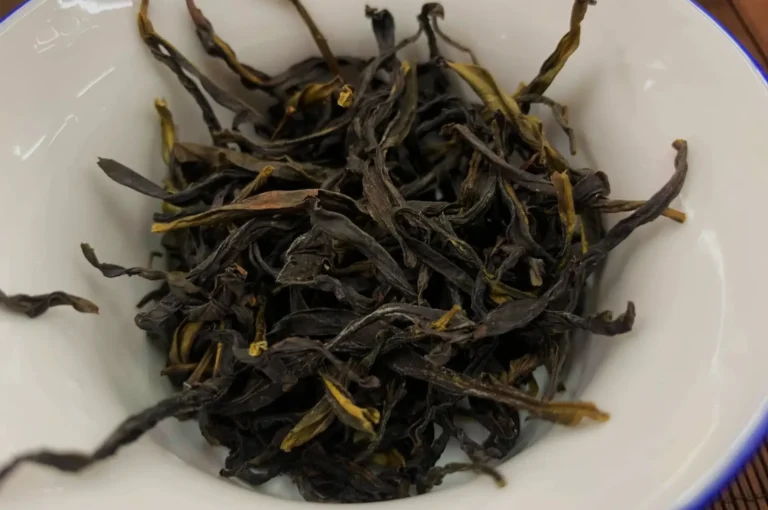
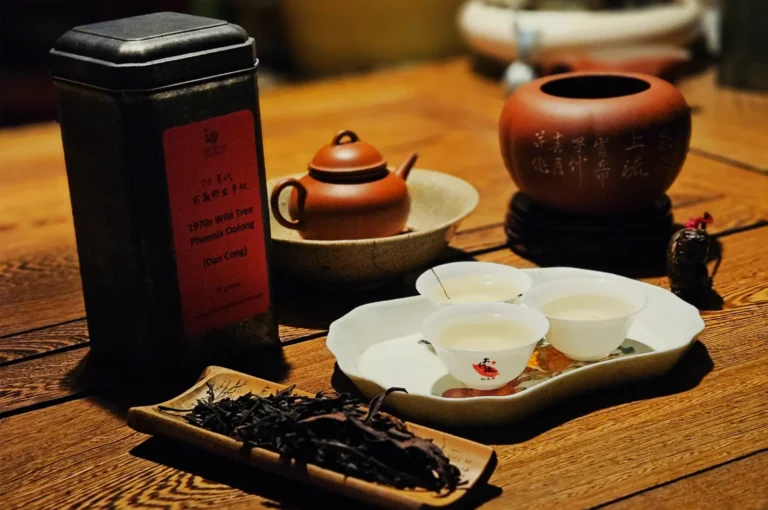
A light Tie Guan Yin may feel fragrant and smooth. A Wuyi rock tea may feel mineral and roasted. A Phoenix Dan Cong may feel aromatic, sharp, and almost fruit-like. A Taiwanese high mountain oolong may feel creamy, clean, and lifted.
To ask what oolong tea tastes like is really to ask which oolong is in front of you.
That is not a problem. That is the pleasure of the category.
Is Oolong Tea Chinese Tea?
Oolong tea is strongly associated with Chinese tea culture, especially Fujian, Guangdong, and Taiwan tea traditions.
Some of the world’s most famous oolongs come from these regions. Tie Guan Yin is linked to Anxi in Fujian. Wuyi rock teas come from the Wuyi Mountains. Phoenix Dan Cong comes from Guangdong. Taiwanese oolongs have their own rich identity and are deeply respected for fragrance, texture, and mountain character.
This regional variety is one reason oolong cannot be understood through one flavour note.
Chinese tea is rarely just about taste. It is also about land, processing, vessel, water, and the way a tea changes across infusions.
Is Oolong Tea Good for Beginners?
Yes, but with one condition: beginners should not assume all oolong tastes the same.
Oolong can be one of the best starting points for Chinese tea because it offers so many entryways. If you like floral teas, there is an oolong for that. If you prefer roasted depth, there is an oolong for that too. If you enjoy texture more than sweetness, oolong has something to show you.
The challenge is choice.
A beginner may feel lost if presented with too many names. Tie Guan Yin. Da Hong Pao. Shui Xian. Rou Gui. Dan Cong. Dong Ding. Alishan. The names can sound like a locked room.
But the first step is simpler.
Ask what you want to feel in the cup.
Do you want something bright? Something warm? Something fragrant? Something deep? Something gentle after a meal?
Oolong begins there.
Why Oolong Rewards Attention
Oolong tea is not usually a tea to rush.
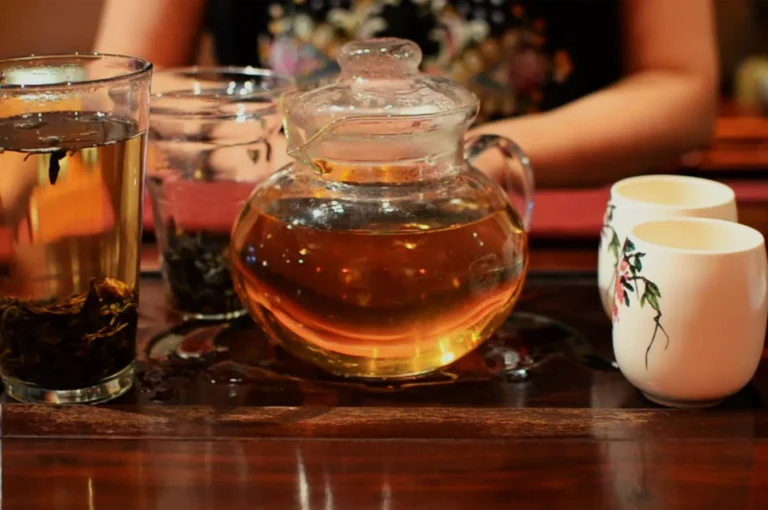
It often performs beautifully across multiple infusions. The first cup may carry fragrance. The second may show body. Later cups may reveal sweetness, roast, minerality, or a quieter finish.
This is where oolong becomes more than a category. It becomes a conversation.
At Tea Room by Ki-setsu, we believe oolong is especially suited to guided tasting because it helps drinkers understand change. The same leaves can shift from cup to cup. What seemed floral at first may become creamy. What seemed roasted may soften. What seemed simple may deepen.
Oolong teaches that tea does not have to reveal itself all at once.
Final Thought
So, what is oolong tea?
It is partially oxidised tea, yes. It sits between green and black tea, yes. But it is also much more than a technical middle ground.
Oolong is a category of movement. It changes by region, roast, oxidation, cultivar, and hand. It can be graceful or bold, light or deep, fragrant or mineral.
To understand oolong, we should begin with definition, but not end there.
The real meaning of oolong tea is found in the cup, across several infusions, when the leaf has been given enough time to speak.