Longjing is not a tea that enjoys competition.
Its fragrance rises softly. Its chestnut warmth does not arrive with force. Its sweetness appears in a clear, measured way, often after the first sip rather than before it. This is why pairing food with Longjing asks for more restraint than theatre. The point is not to create contrast at all costs, nor to build a table so elaborate that the tea disappears beneath it. The point is to protect what the leaf is already trying to say.
At Tea Room by Ki-setsu, we often find that people are surprised by how little a good Dragon Well needs beside it. A few gentle textures. A mild sweetness. Something clean enough to let the tea remain central. Pairing, in this context, is not about making the tea louder. It is about helping the palate arrive with greater calm.
For readers who would like the fuller background to the tea itself, our guide to Longjing tea in Singapore offers that wider view. Here, we stay with the table and the cup, and with the small decisions that allow the tea to feel more complete.
Begin With the Tea, Not the Menu
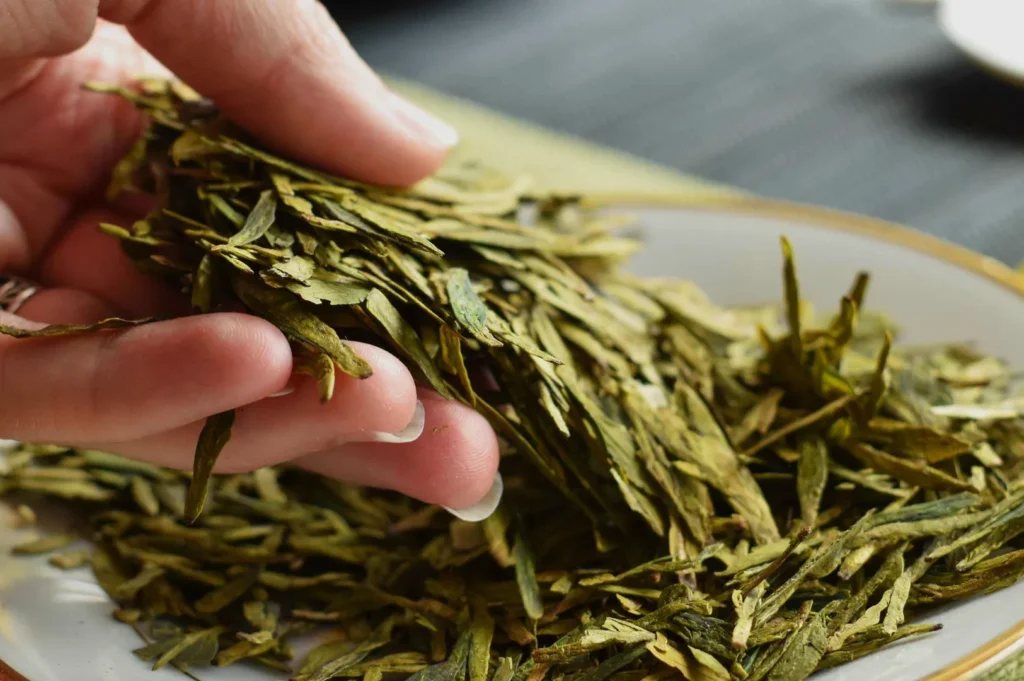
A common mistake in pairing is to begin with appetite.
That is natural enough. We often choose food by mood and only later ask what tea might fit it. With Longjing, the gentler path is to begin the other way around. Ask first what the tea feels like when it is brewed well. Then choose food that either supports that feeling or clears space around it.
A good Longjing usually carries:
- chestnut warmth
- soft bean-like sweetness
- fresh green lift
- a clean, pale finish
- a body that feels smooth rather than heavy
These qualities suggest a pairing philosophy of lightness, quiet texture, and measured flavour. Longjing does not need a dramatic partner. It needs a respectful one.
What Longjing Generally Likes
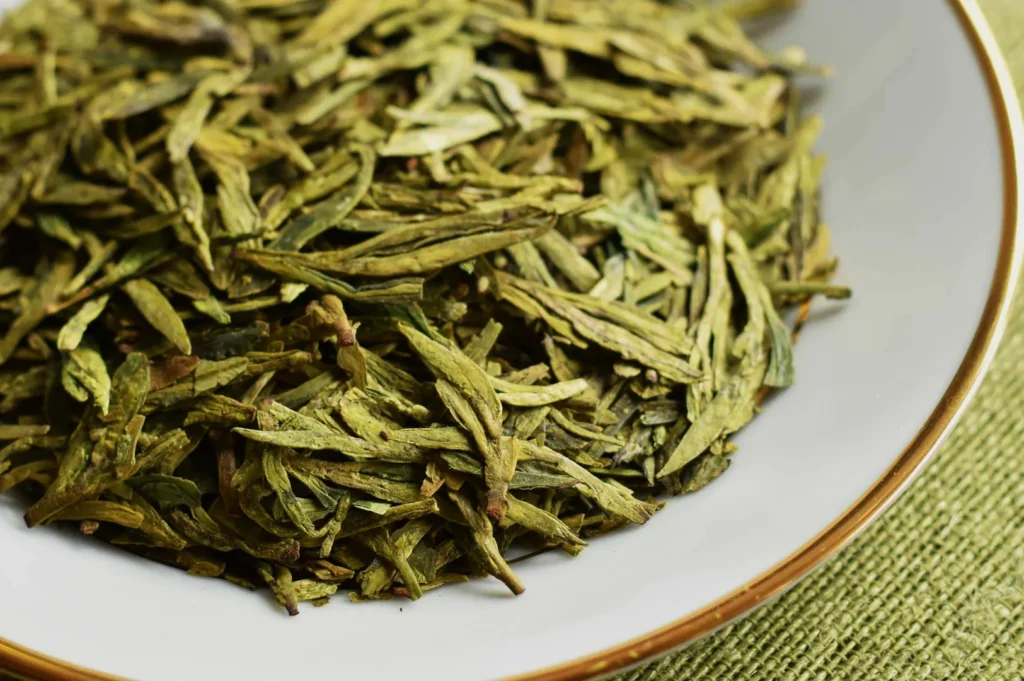
Longjing tends to pair well with foods that are:
- softly textured
- lightly seasoned
- low in oil
- low in sharp acidity
- subtle in sweetness
- clean on the finish
This makes it especially suited to a table built around modest elegance rather than abundance. The tea likes foods that echo its calmness: steamed textures, fresh spring vegetables, light pastry, simple bean sweets, mild fruit, and dry savoury snacks that do not coat the palate too heavily.
It also responds well to foods that share something of its own character. A tea with chestnut notes often sits comfortably beside ingredients with nutty warmth, grain softness, or green freshness. When the food and tea meet on that level, the pairing feels natural rather than engineered.
What Usually Overpowers It
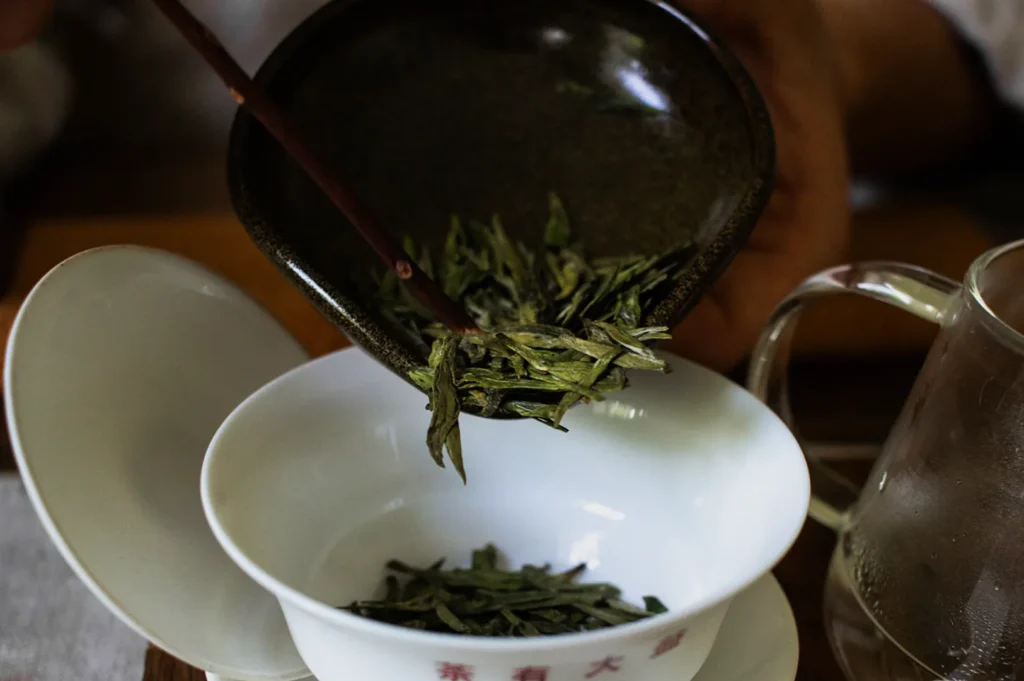
Just as important as knowing what to serve is knowing what to avoid.
Longjing is quickly flattened by:
- chilli heat
- strong garlic
- heavy soy sauces
- sharp vinegars
- highly aromatic herbs
- smoked meats
- rich cream sauces
- dark chocolate
- sugary desserts with strong vanilla or caramel
These are not “bad” foods. They are simply louder than the tea. Once the palate is coated by oil, spice or sugar, the tea’s finer signals are much harder to hear. The chestnut note becomes vague. The freshness seems thinner. The finish disappears.
If the food leaves a long and forceful impression, Longjing rarely improves in response. It recedes.
The Best Pairings Often Feel Spring-Like
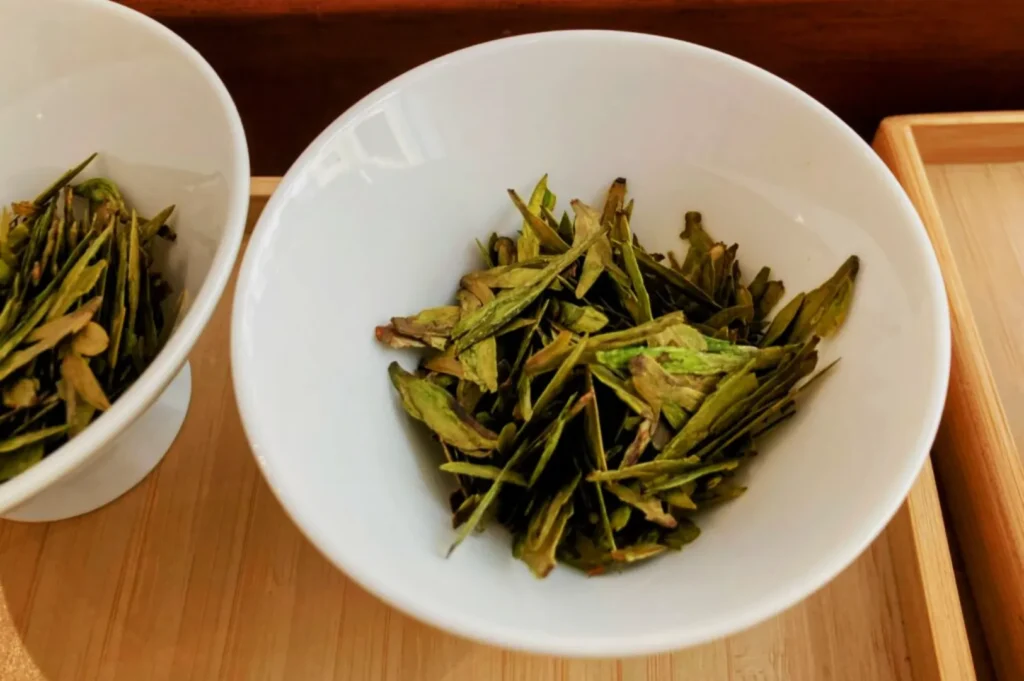
Longjing belongs naturally to spring, and many of its most graceful pairings do too.
Think of foods that are young, clean, and only lightly transformed:
- tender peas
- fresh tofu
- steamed greens
- soft white bean sweets
- lightly toasted rice crackers
- mild pear or melon
- plain chestnut or lotus pastries
These foods do not imitate the tea. They simply live in the same season as it.
A simple plate of blanched greens with almost no dressing can be more beautiful beside Dragon Well than a complicated dish built to impress. The tea appreciates a palate that remains receptive.
Savoury Pairings That Work Quietly
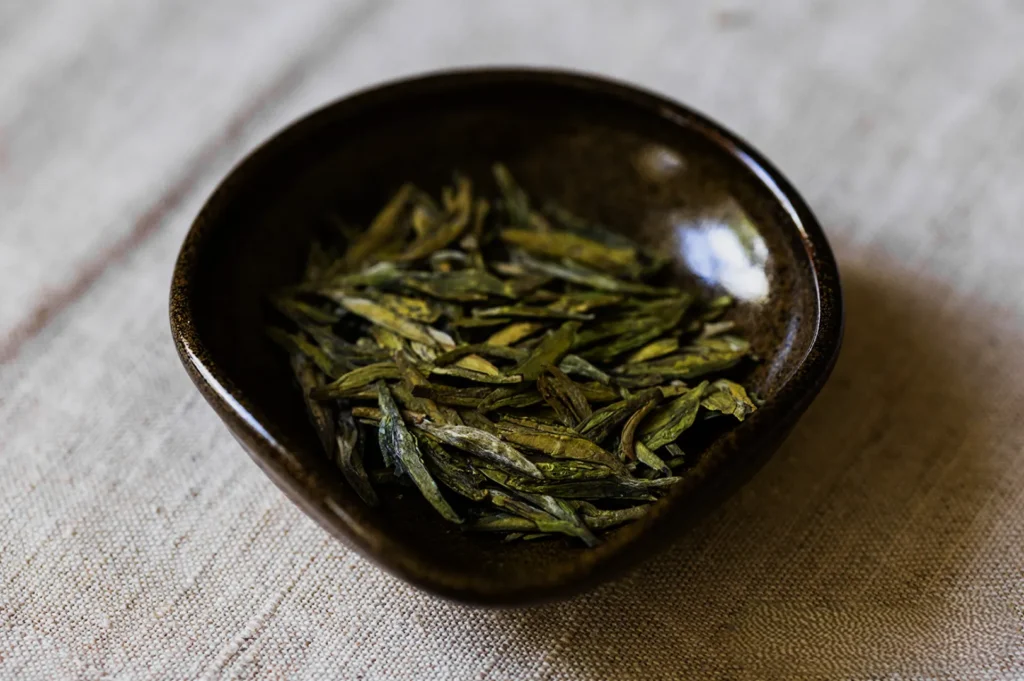
Longjing can be deeply satisfying with savoury food, as long as the savoury side remains measured.
Some of the most reliable pairings include:
Light Tofu and Soy-Based Foods
Fresh tofu, yuba or very lightly seasoned soy preparations work beautifully because they echo the tea’s bean-like warmth without overwhelming it. The texture is soft, the flavour neutral enough, and the tea can move through the palate without obstruction.
Plain or Lightly Salted Rice Crackers
A crisp rice cracker with minimal seasoning gives the palate a mild savoury structure and a little texture between infusions. The key is restraint. Too much salt, seaweed, or oil quickly becomes distracting.
Steamed Dumplings With Delicate Fillings
If the filling is mild, such as vegetable, tofu, or very lightly seasoned chicken, the pairing can work well. The tea cleanses gently and keeps the meal from feeling heavy. This is not the place for chilli oil or aggressive dipping sauces.
Simple Egg Dishes
A plain steamed egg custard or a very soft omelette with almost no added spice can pair surprisingly well. The tea lifts the softness of the dish and adds freshness around it.
Longjing is at its best with savoury foods that feel composed rather than assertive.
Sweet Pairings That Respect the Leaf
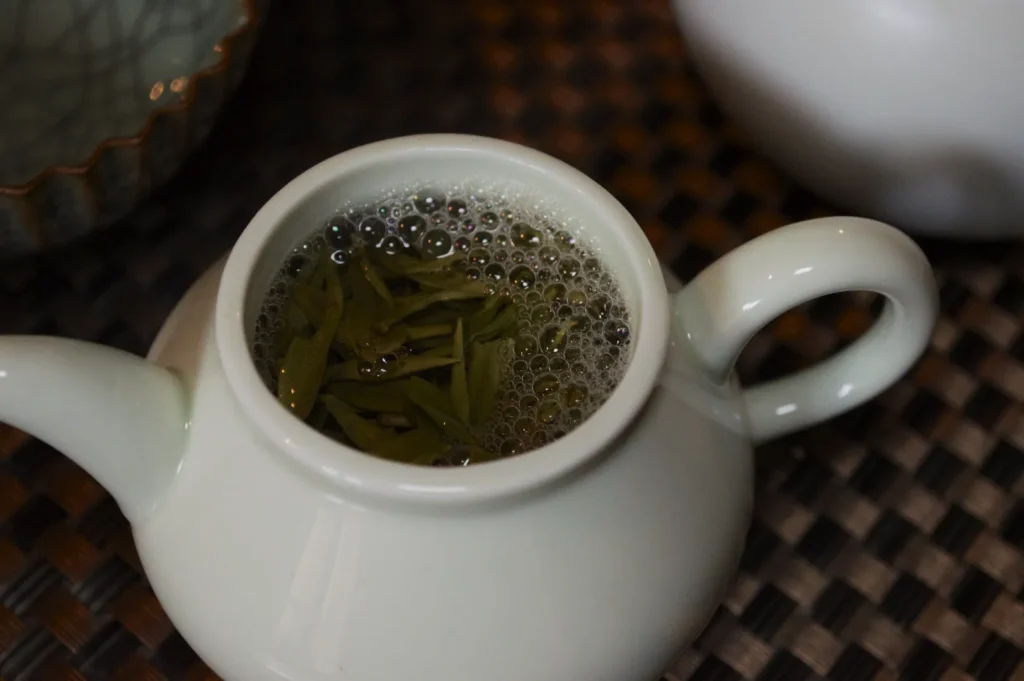
Sweetness is more difficult than many people assume.
A dessert does not need to be intense to interfere with tea. Often even mild pastries become too sugary once they meet the subtler register of Longjing. The better path is to choose sweets that are dry, lightly sweetened, and built more on texture than on sugar weight.
Mung Bean Cakes
These are one of the most natural companions. Their soft texture and restrained sweetness sit gently beside the tea, and the pairing feels especially graceful in the afternoon.
Lotus Seed Pastry
A lightly sweet lotus pastry can work well if it is not heavily perfumed or overly rich. The smoothness of the filling gives warmth to the tea without pulling it too far into dessert territory.
Chestnut Sweets
This is one of the clearest pairings when done carefully. A plain chestnut cake or chestnut paste sweet that is not overly sugary can mirror the tea’s own chestnut note without becoming redundant. It feels like an echo, not a repetition.
Pear or White-Fleshed Fruit
Fresh pear, mild melon, or very soft apple can work better than pastry on a warm day. The fruit should be ripe but not aggressively fragrant. The tea benefits from the light moisture and natural sweetness.
Pairings for Different Times of Day
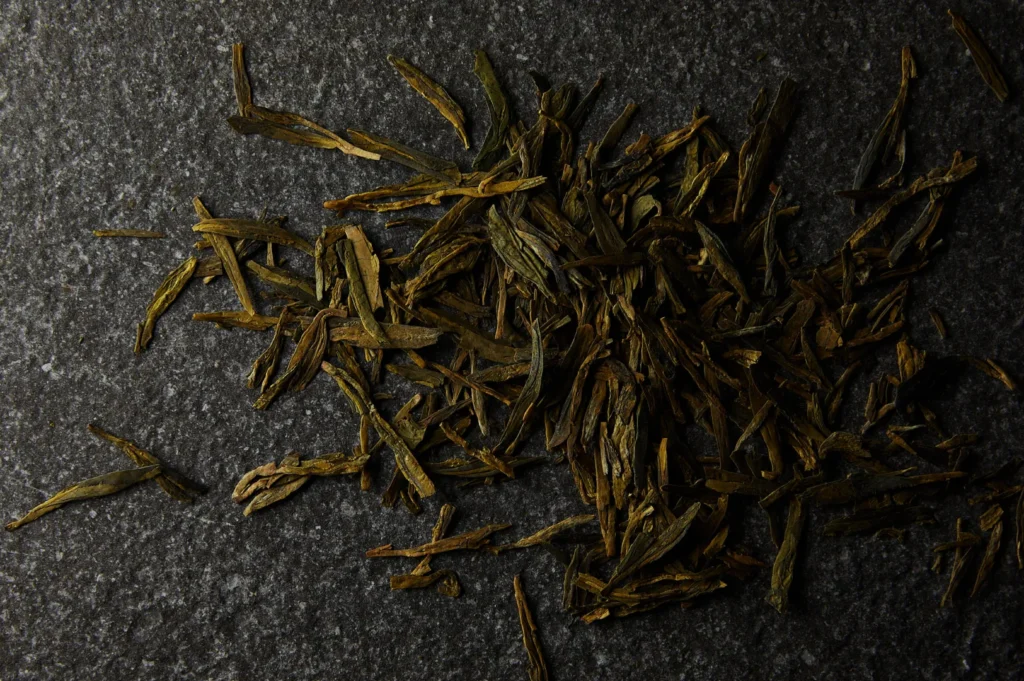
Longjing does not feel the same at every hour, and this affects what suits it.
Mid-Morning
This is one of Longjing’s most natural times. The palate is still relatively clear, and the tea can sit beside something simple such as a steamed bun, a rice cracker, or a small bean sweet. Nothing complicated is needed.
Afternoon
For afternoon tea, Longjing pairs well with lighter sweets and quiet savouries. This is often where the pairing should feel most delicate. Avoid rich cakes, dense biscuits, or creamy pastries. The tea wants air around it.
Early Evening
If you are serving Longjing later in the day, the food should become even simpler. A small bowl of warm tofu, very plain dumplings, or a few slices of mild fruit are often enough. The tea can then act less like a pairing beverage and more like a clearing presence at the table.
How Temperature Changes the Pairing
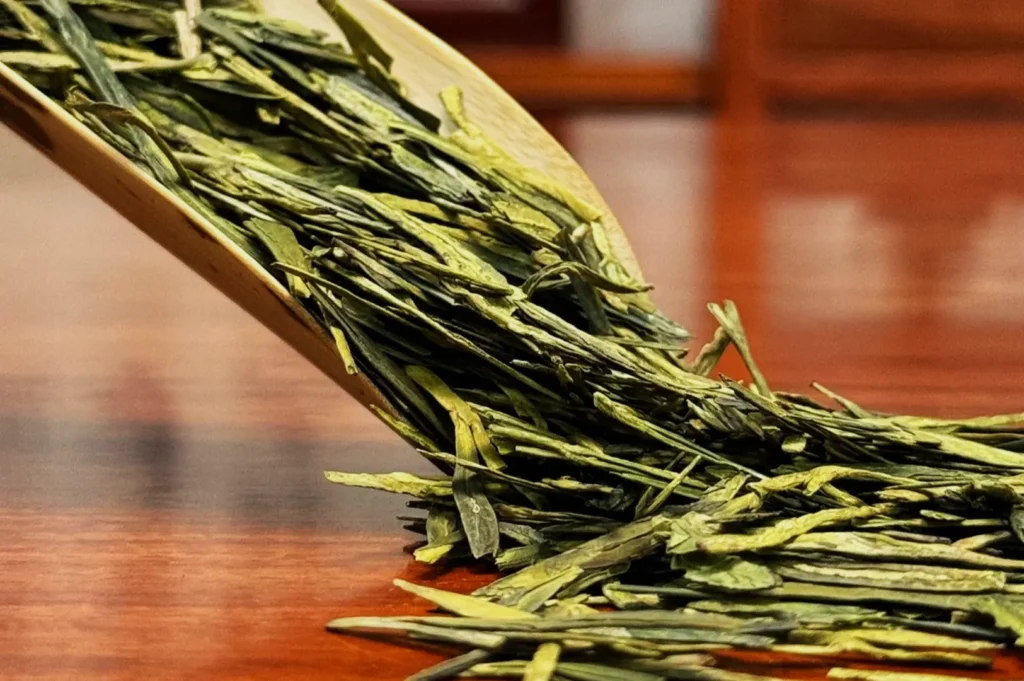
The temperature of the tea also shapes what feels harmonious.
A hotter, more aromatic cup will often stand up slightly better to gentle savoury food. A cooler cup, especially in later infusions, tends to pair more naturally with softer sweets or fruit. This is one reason Longjing pairings should not be thought of too rigidly. The tea itself changes as you drink it.
The first infusion may feel more lifted and green. The second may show more chestnut warmth. The third may become softer and sweeter. If the food remains very simple, it can move with those changes rather than interrupt them.
Pairing in a Guided Session
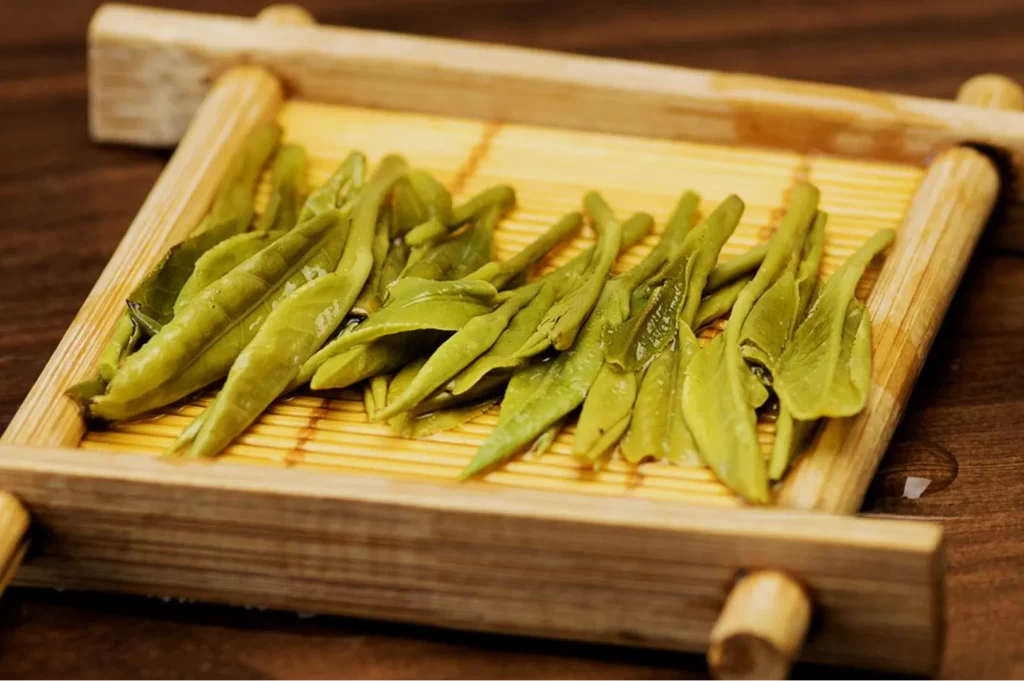
At Tea Room by Ki-setsu, we often think of pairing less as “matching” and more as “making room.”
The right accompaniment should allow the tea to reveal its texture, aroma, and finish more clearly. It should not become the main event. This is why the pairings we favour are usually modest in scale and quiet in flavour. A guest may remember the tea first and the food second, but still recognise that the food helped the tea arrive more fully.
This is also why Longjing can feel so different when tasted in stillness. In a louder setting, food often dominates simply because the palate has less room to notice fine differences. In a calmer room, the pairing can be much more subtle, and therefore much more satisfying.
A Few Pairing Combinations We Trust
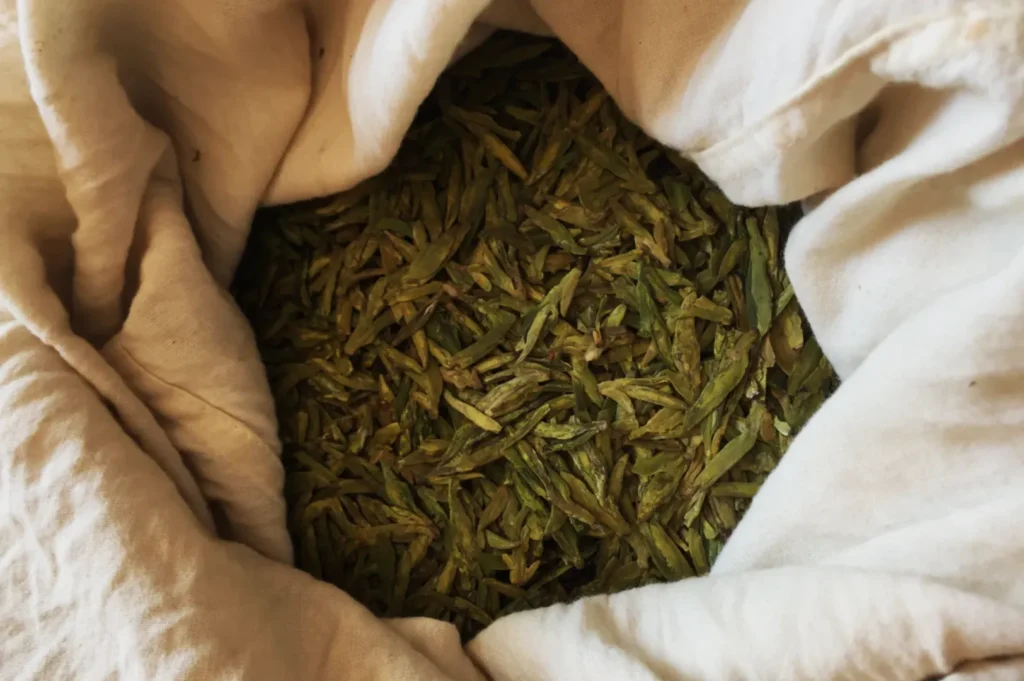
If you want a place to begin, these combinations are usually gentle and reliable:
- Longjing with plain chestnut pastry
- Longjing with mung bean cake
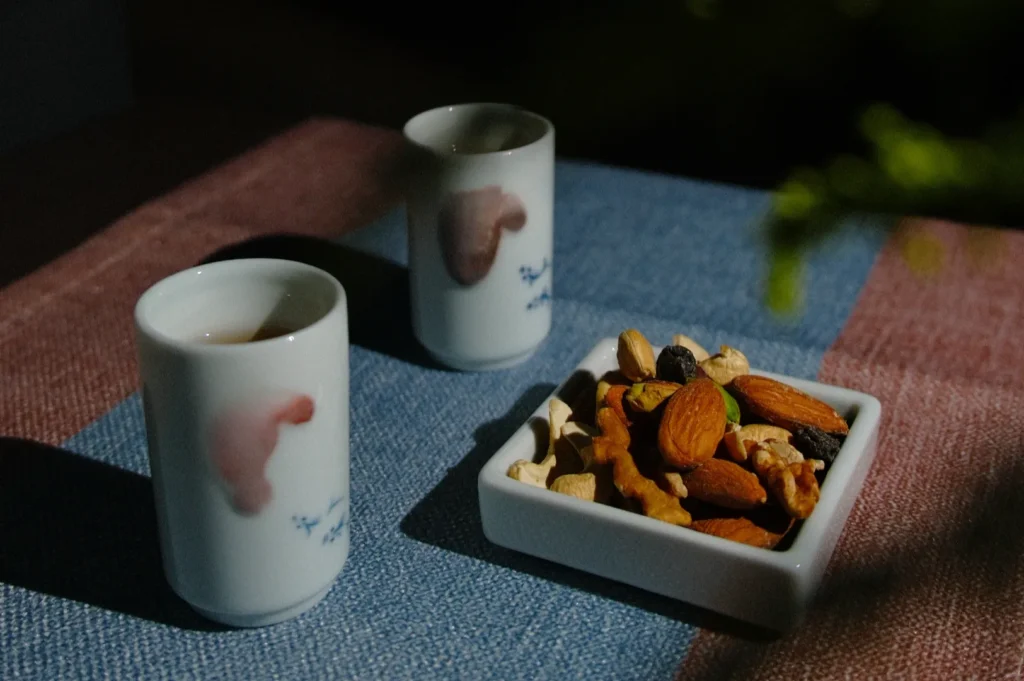
- Longjing with lightly salted rice crackers
- Longjing with soft tofu and a touch of sea salt
- Longjing with fresh pear slices
Each of these keeps the palate relatively clear and allows the tea’s chestnut, green, and sweet notes to remain legible.
What to Do if the Pairing Feels Wrong
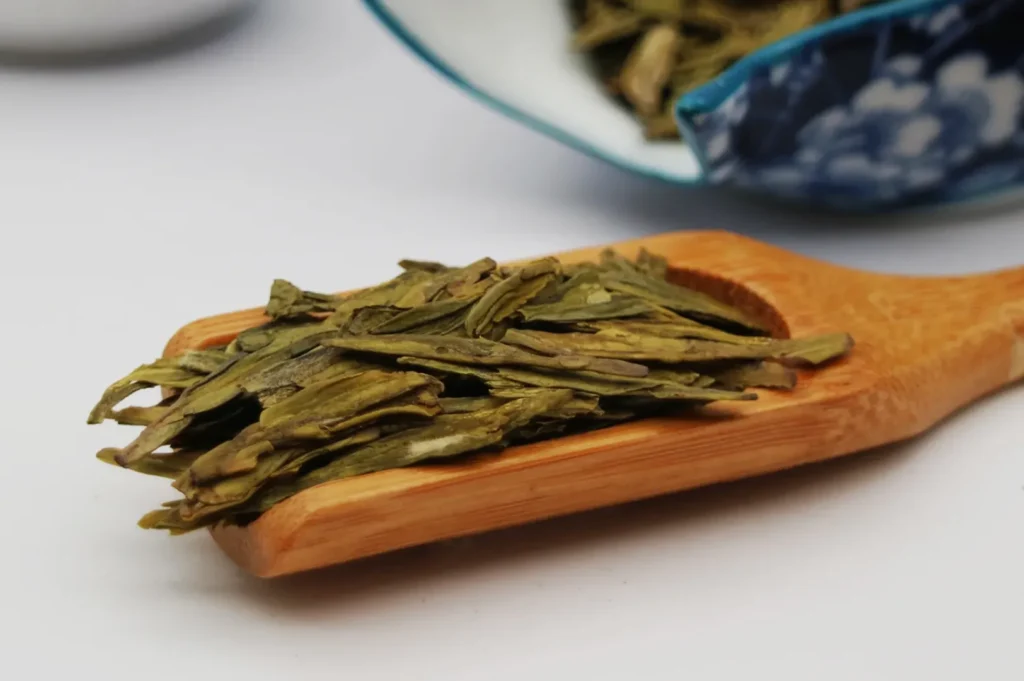
Sometimes the tea simply feels quieter than it should once food arrives. This usually means the pairing is too strong, too sweet, or too textured in the wrong way.
A few signs:
- the tea tastes suddenly thin
- the chestnut note disappears
- the finish shortens
- the cup feels more bitter than before
- the food lingers longer than the tea
If this happens, the easiest correction is not to change the tea. It is to simplify the food. A milder accompaniment, or simply a pause before the next sip, usually restores the balance.
Longjing does not like to be rescued with stronger flavours. It prefers to be given more space.
A Quieter Way to Build the Table
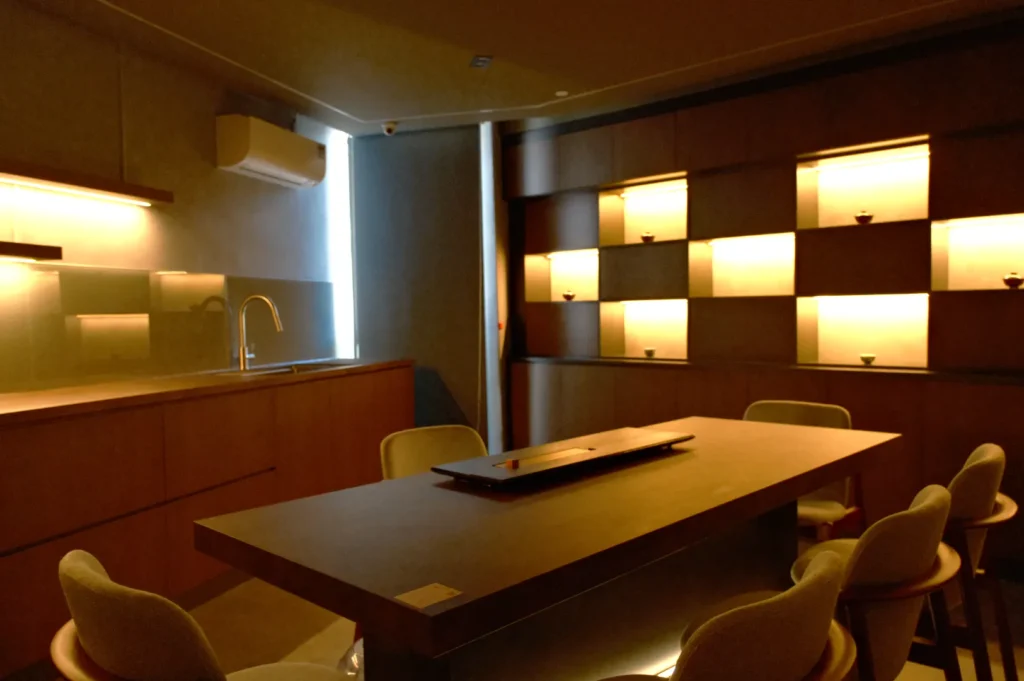
One of the reasons Longjing remains so beloved is that it teaches restraint without making restraint feel austere.
A good table for Dragon Well does not need abundance. It needs one or two things chosen with enough care that the tea remains the centre of gravity. A little texture, a little warmth, a little sweetness, and then room for the leaf to continue speaking.
At Tea Room by Ki-setsu, this is often what we are really curating when we pair food with tea: not a menu, but a condition. One in which the tea remains itself from the first cup to the last.
That is where Longjing feels most alive.