Yan yun is one of the most repeated phrases in Wuyi tea, and one of the least clearly understood.
It is often translated as “rock rhyme,” and while that translation is useful, it can also feel frustratingly incomplete. A drinker hears the phrase and assumes it must refer to a flavour note, perhaps something mineral, stony, or mountain-like. Yet yan yun is not just a flavour. It is not even only an aftertaste. It is closer to an overall resonance in the cup, a quality that seems to gather terrain, texture, aroma, and return into one expression that is difficult to isolate but easy to remember once truly felt.
At Tea Room by Ki-setsu, we think yan yun matters because it helps explain why Da Hong Pao can feel so different from other oolongs, even when roast and oxidation alone do not seem enough to account for that difference. For the broader introduction to Big Red Robe itself, our guide on Big Red Robe tea offers the wider context. Here, the focus is more specific: what yan yun really means, and why the phrase points to more than simple minerality.
Rock Rhyme Is Not Just a Flavour Note
The difficulty with yan yun begins because English often wants tea to become descriptive too quickly.
If something is called rock rhyme, many drinkers naturally expect a singular taste. But yan yun is usually felt as a relationship among several things at once. There may be mineral depth, yes. There may be a cooling trace, a returning sweetness, a certain grounded steadiness, a dryness that never becomes harsh, or a finish that feels as though it has settled into the palate rather than vanished from it. None of these alone is yan yun. Together, in the right cup, they begin to suggest it.
At Tea Room by Ki-setsu, we think this is why the phrase remains useful despite being difficult. It names an effect that is larger than one flavour and more precise than vague admiration.
Why Wuyi Matters So Much
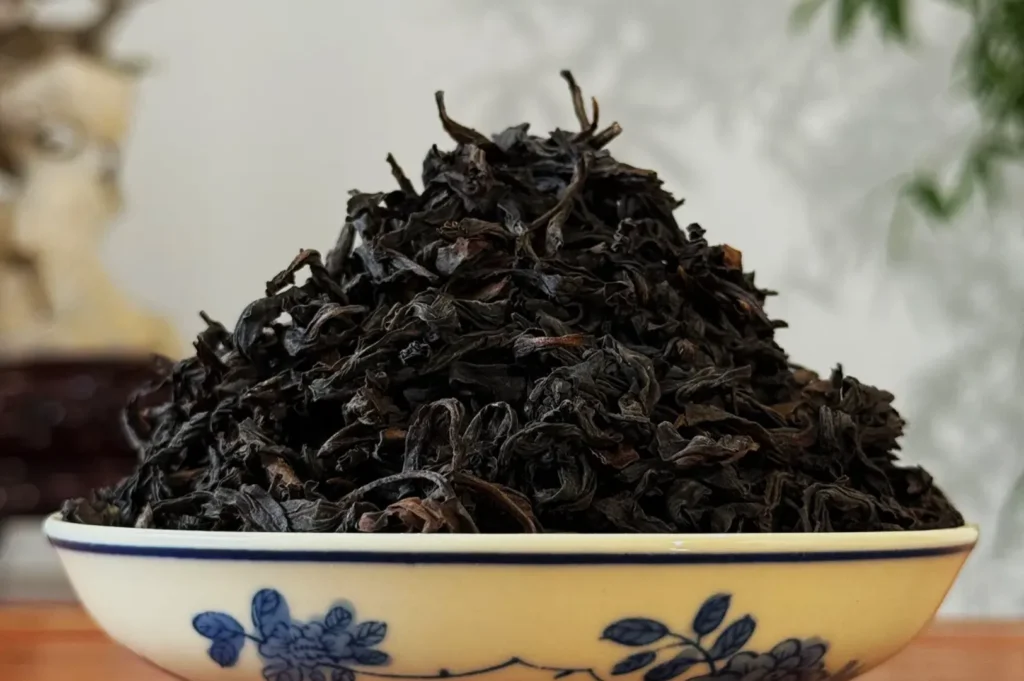
Yan yun is inseparable from the wider world of Wuyi tea, or yancha, the so-called rock teas of the Wuyi Mountains.
The phrase carries geographic meaning because the tea itself is shaped by place. When drinkers speak about rock rhyme, they are speaking not only about roasting or cultivar, but about the way Wuyi’s rocky terrain, mineral-rich soils, and tea-making traditions combine to produce a particular kind of depth. This is why yan yun is associated with Wuyi yancha as a category rather than applied broadly to all roasted oolongs.
That does not mean place alone creates it. Processing matters. Roast matters. Material matters. But place remains central because yan yun is part of the way Wuyi tea expresses origin in sensory form. General background on the Wuyi Mountains UNESCO site is useful here because it reminds us that this is not an imaginary landscape built only for tea language. It is a real terrain with a highly specific ecological and cultural identity.
Yan yun is not scenery turned into marketing. It is one of the ways terrain becomes perceptible in the cup.
What Yan Yun Feels Like in Da Hong Pao
Da Hong Pao is one of the teas through which many drinkers first encounter yan yun in a meaningful way.
This is not because the phrase belongs to Da Hong Pao alone, but because the tea often carries enough balance for the effect to become legible. Roast may give warmth. Orchid lift may give breath. Mineral depth may give backbone. Then the finish arrives and does something difficult to describe cleanly: it lingers with a kind of grounded resonance that feels less like a flavour remaining on the tongue and more like the tea continuing through the whole palate.
There may be a slight cooling trace. There may be returning sweetness. There may be a sensation of rock, dryness, and depth that never hardens into roughness. At Tea Room by Ki-setsu, we find that when Da Hong Pao is brewed well, yan yun often appears not as a dramatic moment, but as a quiet conviction.
The tea begins to feel anchored in a way that goes beyond roast or aroma alone.
Why Roast Can Reveal or Hide It
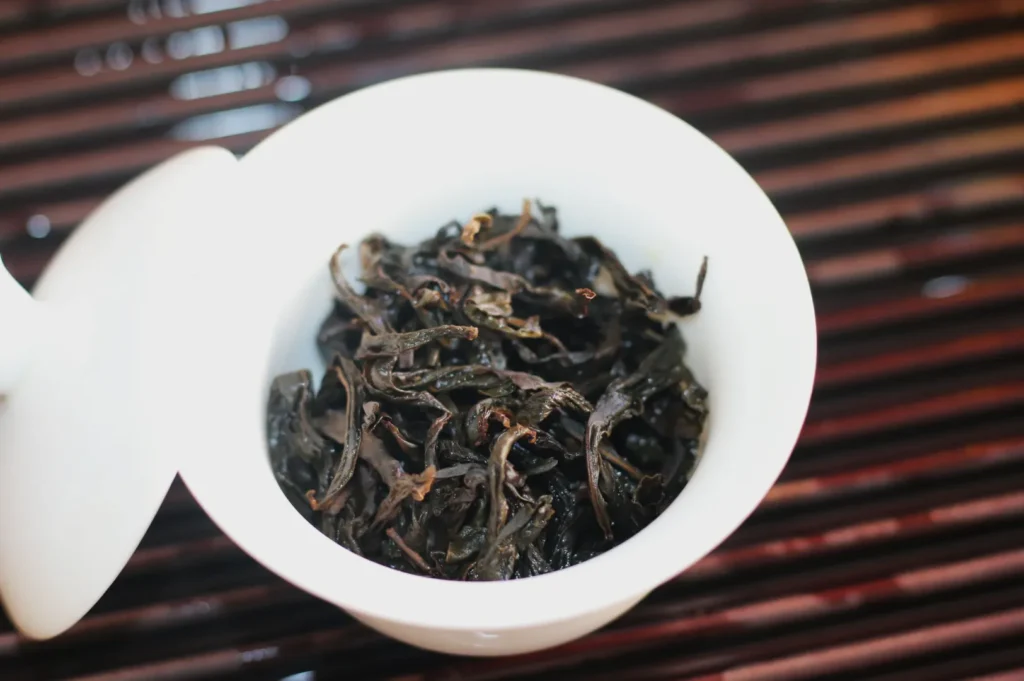
Roast is one of the most important and most misunderstood factors here.
A good roast can help reveal yan yun by giving the tea enough structure and warmth for its deeper qualities to gather. A poor roast can bury it completely. If the fire sits too heavily on the leaf, the drinker tastes only roast. If the tea is too shallow in source material, the roast may create surface drama without the deeper resonance needed for yan yun to form.
This is one reason Da Hong Pao can be called rock tea and still fail to feel convincingly like rock tea in the cup. The phrase alone is not enough. The making has to preserve the possibility of depth. Roast should behave like architecture, not disguise. Background reading on oolong processing helps show why roast and oxidation must work together rather than fight for dominance.
At Tea Room by Ki-setsu, we often return to this distinction because it explains why some Da Hong Pao feels merely roasted while another feels truly settled into place.
Why the Finish Matters More Than the Opening
Yan yun is rarely proven in the first seconds.
The opening aroma may be beautiful. The roast may be inviting. But rock rhyme usually becomes clearer later, especially in the finish. It appears when the tea remains after the swallow with a sense of mineral return, structure, and resonance. This is why hasty tasting often misses it. The drinker catches the front of the tea and leaves before the deeper impression has had time to form.
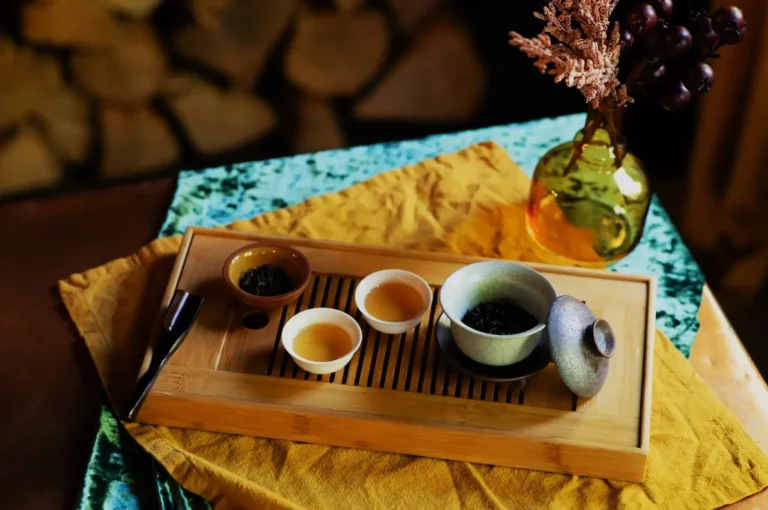
At Tea Room by Ki-setsu, we think this is one reason gongfu tea remains so useful for yancha. Multiple smaller infusions allow the tea’s structure to become more visible, and they make it easier to notice when the cup begins to speak beyond flavour notes alone.
Yan yun is often less about what arrives first than about what remains with unusual conviction.
Why the Phrase Still Matters
Some people find “rock rhyme” too poetic. Others find it too vague. Yet the phrase remains because ordinary tasting language does not fully capture what it points to.
To call Da Hong Pao roasted is true, but incomplete. To call it mineral is helpful, but still partial. To call it floral ignores its gravity. Yan yun persists because it names the way these elements can combine into something more integrated and more rooted than a checklist of notes can convey.
At Tea Room by Ki-setsu, we keep returning to the phrase not out of habit, but because it remains one of the best ways to speak about a quality that is both sensory and structural. It is not a myth. It is not a flourish when used carefully. It is a way of pointing toward the tea’s deeper form.
How To Taste for It More Honestly
If you want to understand yan yun more clearly, do not chase it too directly.
Notice the roast, then move beyond it. Notice whether the tea has lift as well as depth. Pay attention to how the finish settles. Ask whether the cup feels anchored, not only flavourful. Compare a more convincing Da Hong Pao with a simpler roasted oolong and notice what remains after swallowing. The difference often reveals itself more quietly than expected.
At Tea Room by Ki-setsu, we think the clearest approach is patient tasting rather than conceptual ambition. Yan yun does not usually reward forcing. It rewards enough stillness for the tea’s deeper structure to become visible on its own.
Suggested URL Slug: /what-yan-yun-really-means/