A fast city teaches people to consume quickly.
Meals shorten. Messages fragment. Attention is divided before it has even properly arrived. In a place shaped by movement, efficiency, and constant response, tea can easily be reduced to function. It becomes caffeine, refreshment, a pause measured only by how briefly it interrupts the rest of the day. Yet some teas resist that reduction more than others. Da Hong Pao is one of them.
At Tea Room by Ki-setsu, we have often felt that this tea does not reveal itself properly under pressure. It can be admired in haste, certainly, but it is rarely understood that way. For readers who want the broader cultural and historical frame first, this guide offers that foundation. This reflection is simpler. It asks why a tea shaped by rock, roast, and patience still matters in a city that often asks for speed before anything else.
A Tea That Refuses to Perform Too Quickly
Some teas charm immediately.
They rise through fragrance, sweetness, or brightness and make themselves easy to admire in a short window. Da Hong Pao usually does something else. Its opening may give warmth and roast, but that is rarely the whole story. The more persuasive qualities often arrive later. The mineral depth becomes clearer after the first few sips. The floral restraint begins to open only once the palate settles. The finish says more than the opening seemed to promise.
This is one reason the tea feels so rooted in the broader world of Wuyi tea. The category itself is often built around patience, structure, and what drinkers of yancha describe as a mineral or rocky persistence rather than immediate sweetness alone. Da Hong Pao does not usually ask to be adored at once. It asks to be followed.
In a hurried environment, that can feel almost radical.
The tea is not difficult in the hostile sense. It is simply unwilling to become background too easily.
Why Slowness Matters More Than Ever
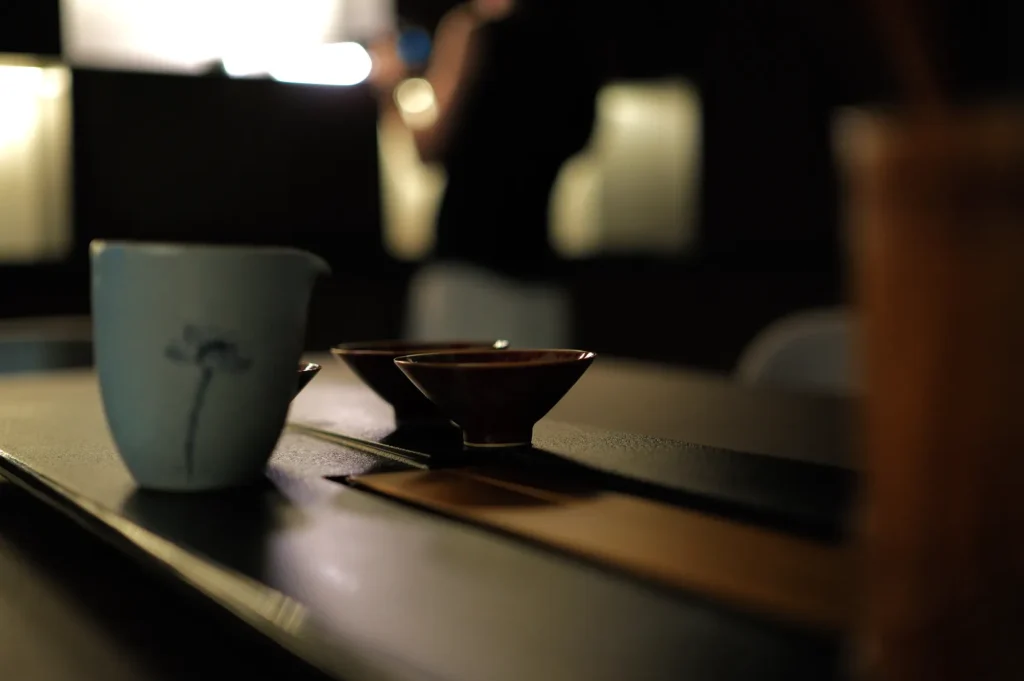
Modern life has not made ritual impossible. It has made it easier to neglect.
This is not only about time. It is about tone. A hurried life teaches people to compress experience. To decide quickly. To name quickly. To move on before anything has had the chance to deepen. Tea, especially in the wider tradition of Chinese tea culture, asks for a different kind of relationship. It asks that smelling come before judging. That waiting come before declaring. That the second infusion be allowed to exist as something more than an extension of the first.
At Tea Room by Ki-setsu, we do not think of this as nostalgia. We think of it as usefulness. A tea that restores sequence can feel profoundly contemporary in a life where sequence has been worn thin. Da Hong Pao does not solve the city. It simply creates a small structure within it. Smell first. Sip second. Wait. Return.
Da Hong Pao and the Architecture of Attention
What makes Da Hong Pao so suited to this role is not only its prestige. It is its internal architecture.
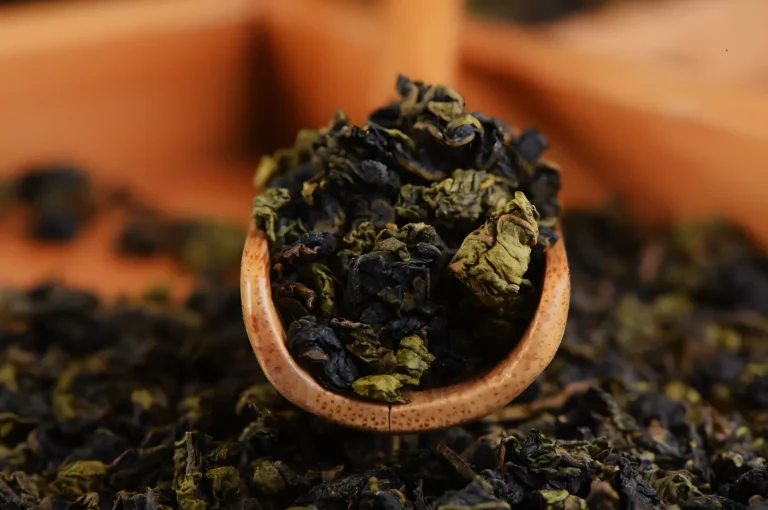
The tea does not depend on a single dramatic note. Roast may come first, but then there is often dry wood, spice, mineral steadiness, orchid lift, and a finish that returns with more clarity than the beginning suggested. This layered unfolding is part of what makes the tea memorable. It is also part of what makes the tea resistant to distraction.
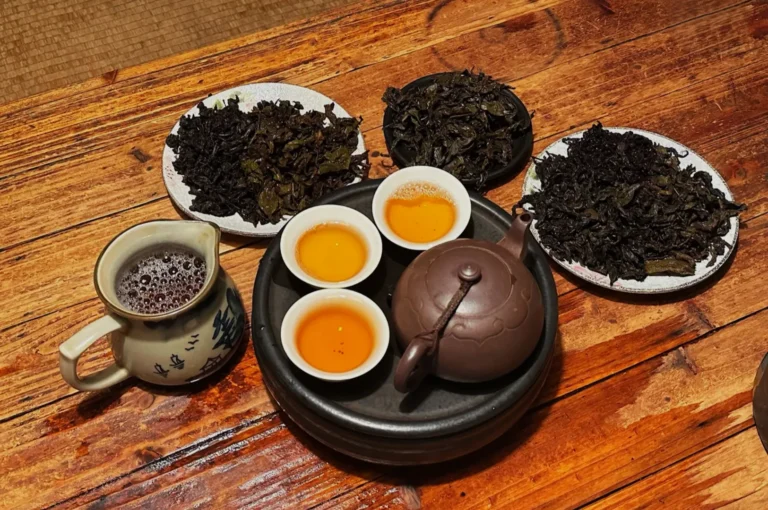
A simpler tea can survive divided attention because it gives almost everything immediately. Da Hong Pao often becomes more itself only after the room has become quieter. This is why the tea feels especially at home in a setting shaped by gongfu tea, where small infusions and deliberate pacing allow the leaf to change in view rather than all at once.
At Tea Room by Ki-setsu, we have often noticed that guests do not always respond first to Da Hong Pao because it is the loudest tea on the table. They respond because it becomes more persuasive the longer it is allowed to continue.
It rewards attention not by demanding it, but by proving that attention was worthwhile.
What a Fast City Quietly Takes Away
A fast city does not only exhaust the body. It can flatten perception.
When days are built around response, it becomes harder to remain with subtler forms of experience. Aroma is noticed less fully. Texture is passed over more quickly. Finishes are cut short by the next demand on the senses. This is true at the tea table as much as anywhere else. The tea may still be drunk, but it is no longer really being received.
In a city like Singapore, where speed and refinement often live side by side, this tension becomes especially visible. The weather itself encourages quick relief, quick cooling, quick refreshment. The wider climate of Singapore teaches its own pace. Yet tea of a deeper kind often asks for something different. Not escape from the city, but a brief refusal of its tempo.
At Tea Room by Ki-setsu, we think this is one reason Da Hong Pao still matters here. It is not trying to compete with speed. It is offering a more measured counterweight to it.
Roast, Rock, and the Feeling of Return
There is something deeply reassuring in a tea that does not scatter.
Da Hong Pao often begins with warmth, but good warmth, the kind that steadies rather than overwhelms. Then the tea settles into a more mineral centre. Then, if brewed and received with patience, it returns. Not with force, but with quiet insistence. This returning quality matters. It gives the tea emotional shape, not only sensory shape.
At Tea Room by Ki-setsu, we often think of this as one of the reasons Da Hong Pao feels so relevant in contemporary life. It reminds the drinker that not all value appears instantly. Some value returns. Some deepens. Some becomes visible only after enough stillness has been restored for it to register.
That is also why the tea fits so naturally beside the idea of quiet luxury. Not because it is rare alone, though rarity surrounds its name. But because it protects a different tempo. It makes room for a slower kind of clarity.
Luxury, in this sense, is not display. It is protected attention.
Why This Tea Still Belongs
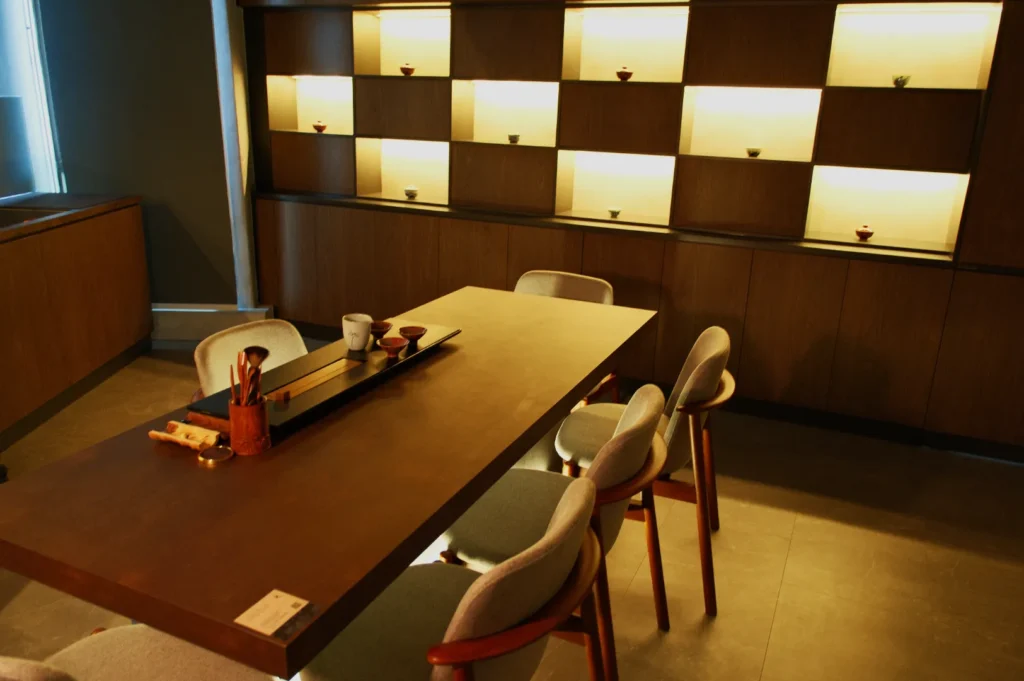
A tea survives not only because of history, but because it continues to answer something human.
Da Hong Pao carries history, certainly. It carries legend, origin, and a place within the larger imagination of Wuyi rock tea. But its continued relevance does not come from story alone. It comes from the fact that the tea still offers a useful experience. It can still gather a fragmented hour. It can still restore shape to a distracted palate. It can still make a rushed mind feel slightly more sequential, slightly less scattered, slightly more able to remain.
At Tea Room by Ki-setsu, this is why Da Hong Pao still belongs in a fast city. Not despite the city, but because of it. A life of speed creates the conditions in which a tea of depth, patience, and return becomes even more necessary.
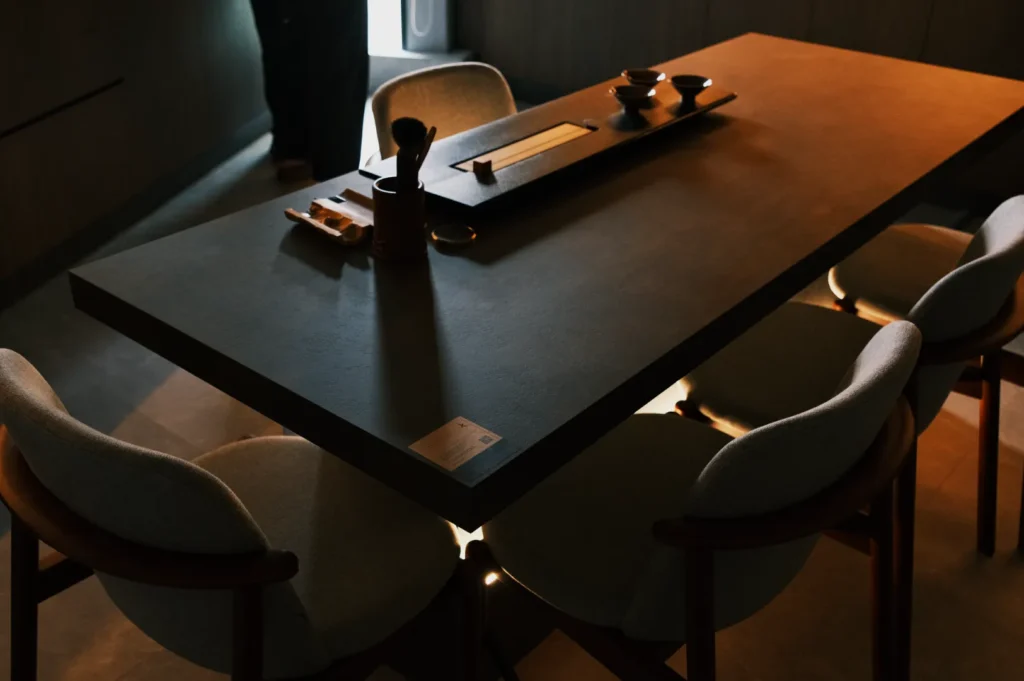
The city does not need to slow down completely for the tea to matter. It only needs one table, one kettle, one measured session, one moment in which the leaf is not asked to become immediate.
Da Hong Pao still belongs because it gives back structure where speed has taken too much of it away.