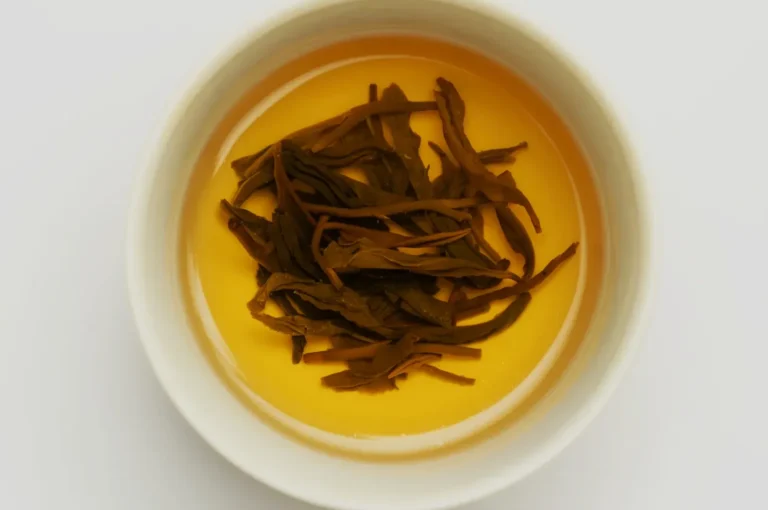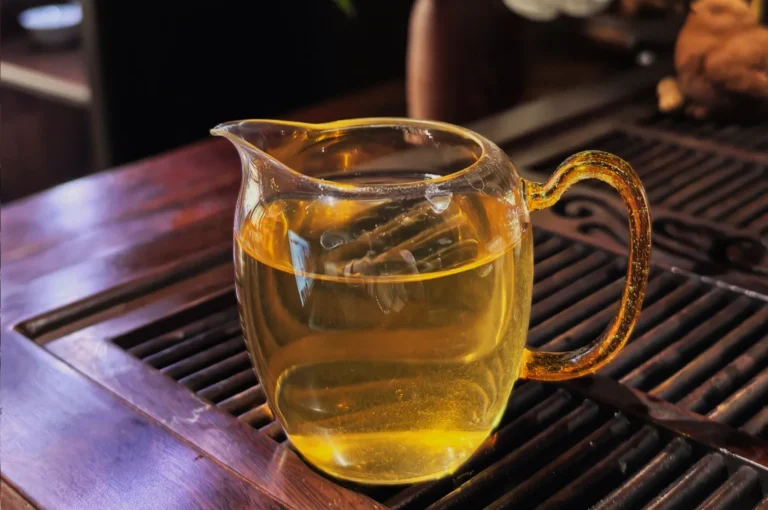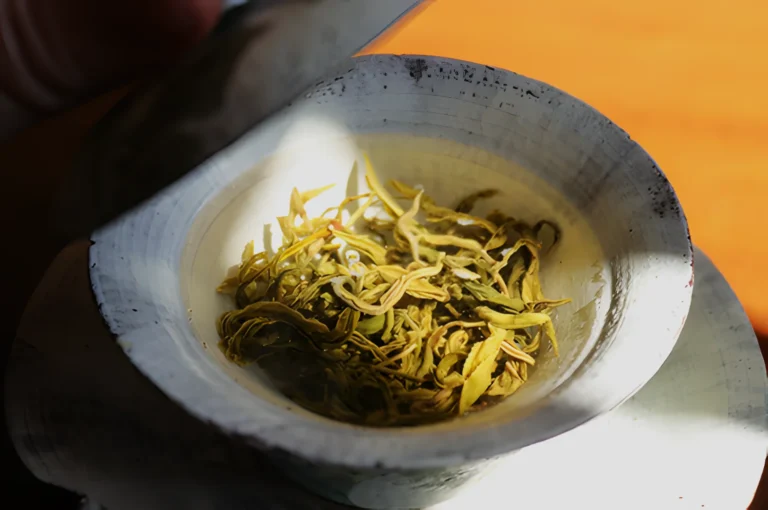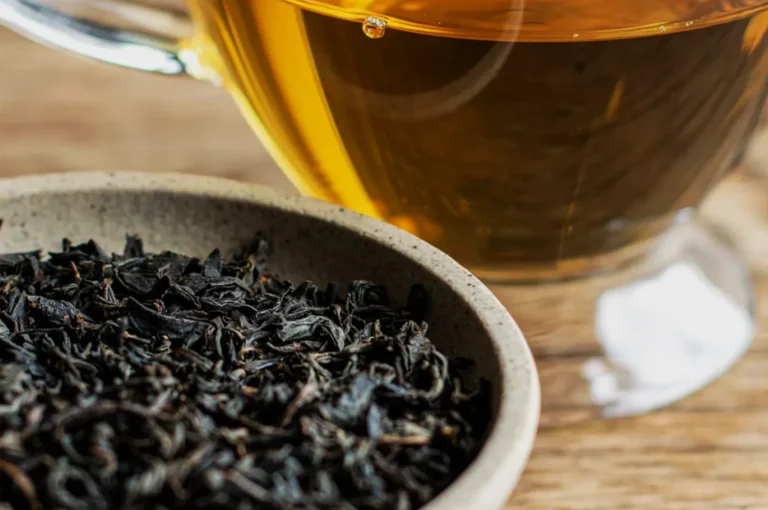
Yellow tea occupies a curious place in Chinese tea.
It is one of China’s six recognised tea categories, yet many drinkers can name several green teas, oolongs and Pu-erhs before they can name a single yellow tea.
Perhaps that is because yellow tea does not announce itself dramatically.
Its character is often softer: mellow sweetness, restrained freshness, a rounded body, and fewer of the grassy edges associated with some green teas.
Yellow tea is not faded green tea. Its quietness is created deliberately.
At Tea Room by Ki-setsu, our private approach to Chinese tea begins with precisely this distinction. The current collection focuses on rare premium teas from other traditions, but understanding categories like yellow tea deepens the way we read processing, provenance and craft across Chinese tea.
What Is Yellow Tea?
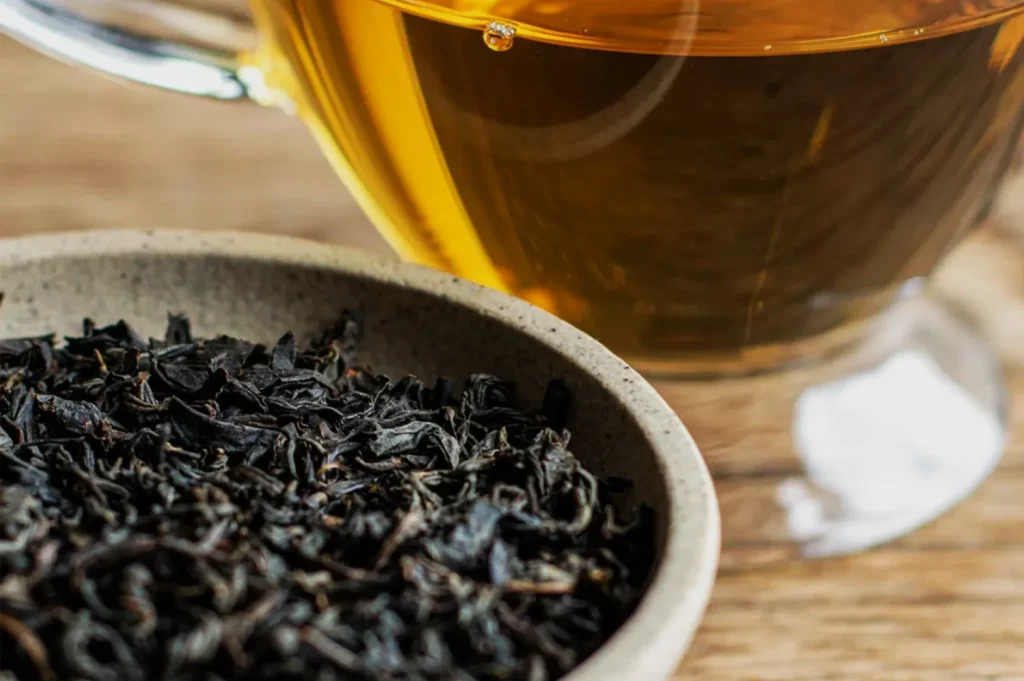
Yellow tea, or huang cha, is one of China’s six basic tea categories.
UNESCO lists green, yellow, dark, white, oolong and black tea among the categories created through China’s traditional tea-processing practices.
Yellow tea begins somewhat like green tea, but receives an additional processing stage generally known as menhuang, often translated as sealed yellowing or heaping for yellowing.
A major scientific review describes yellow tea as a Chinese tea distinguished by this extra stage, which changes colour, aroma and flavour.
What Is Menhuang?
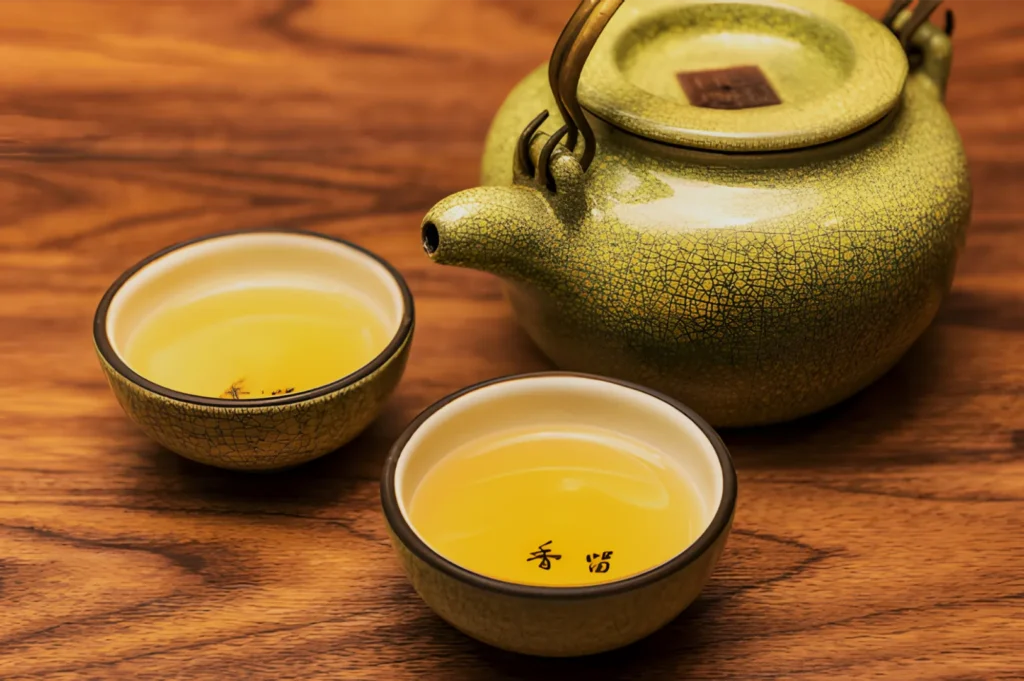
Menhuang is the defining step.
Depending on the tea, partially processed leaves are held under controlled warmth and moisture, sometimes wrapped or piled, allowing chemical changes to continue.
The purpose is not simply to make the leaves yellow.
Research comparing green and yellow tea processing found that yellowing played a particularly important role in increasing sweetness and reducing some bitterness and astringency.
Menhuang changes the personality of the leaf, not only its colour.
What Does Yellow Tea Taste Like?
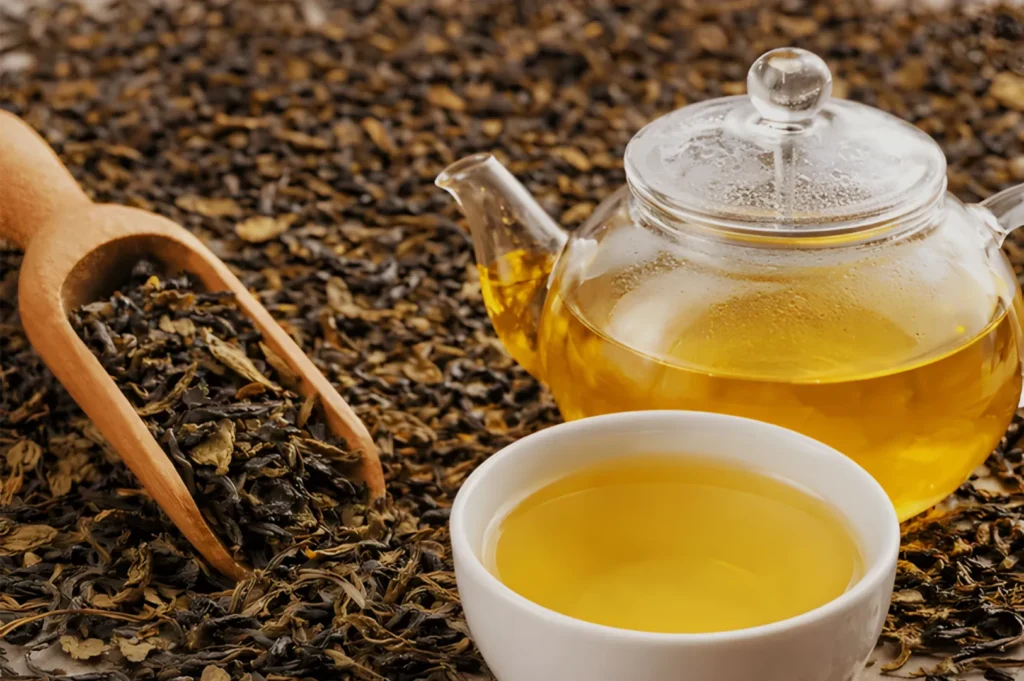
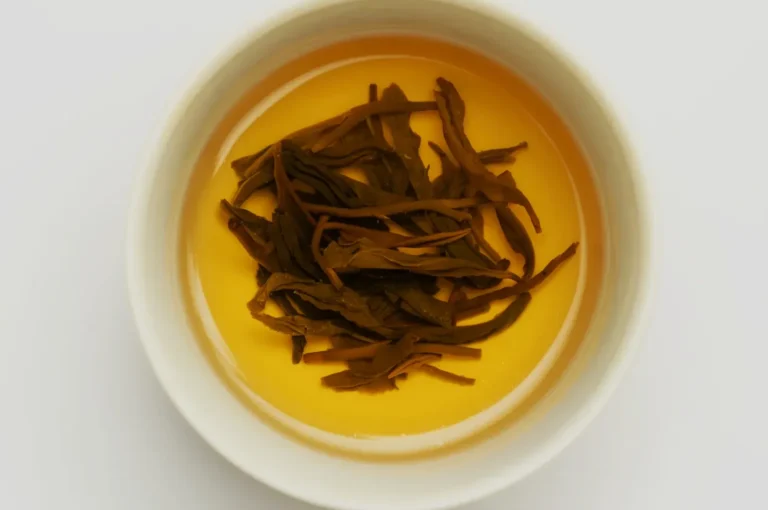
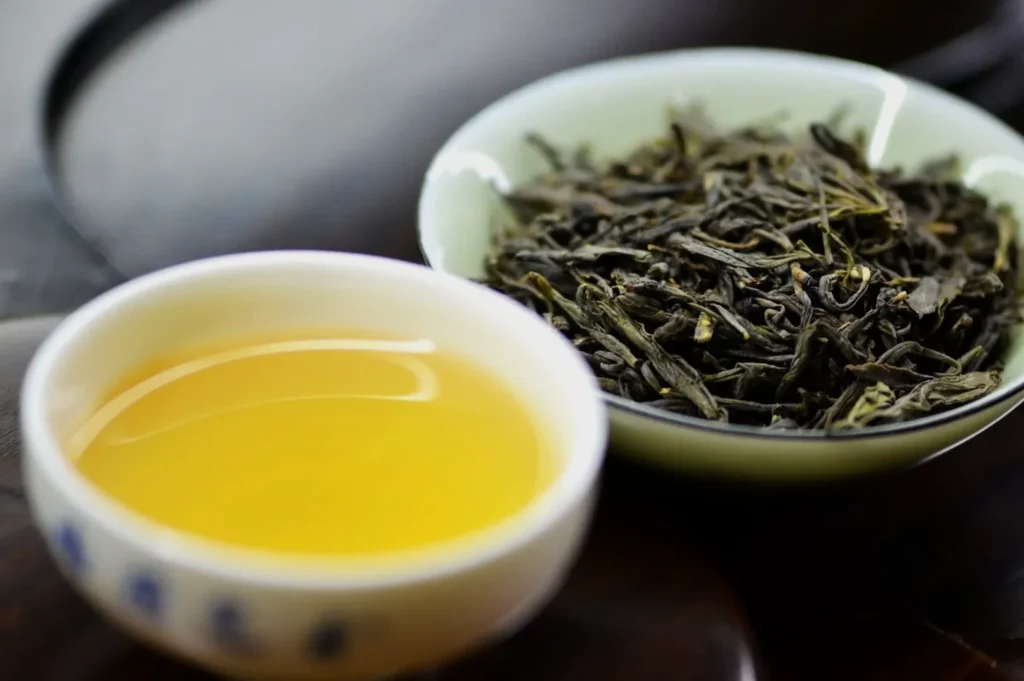
Yellow tea is often described as mellow, sweet and soft.
Some styles can suggest:
- sweet grain
- chestnut
- corn
- gentle florals
- soft vegetal notes
- a clean, lingering sweetness
Bud-heavy yellow teas may feel delicate and refined.
Larger-leaf yellow teas can become fuller, toastier and more assertive, especially when roasting plays a larger role.
There is no single yellow-tea flavour.
Famous Types of Yellow Tea
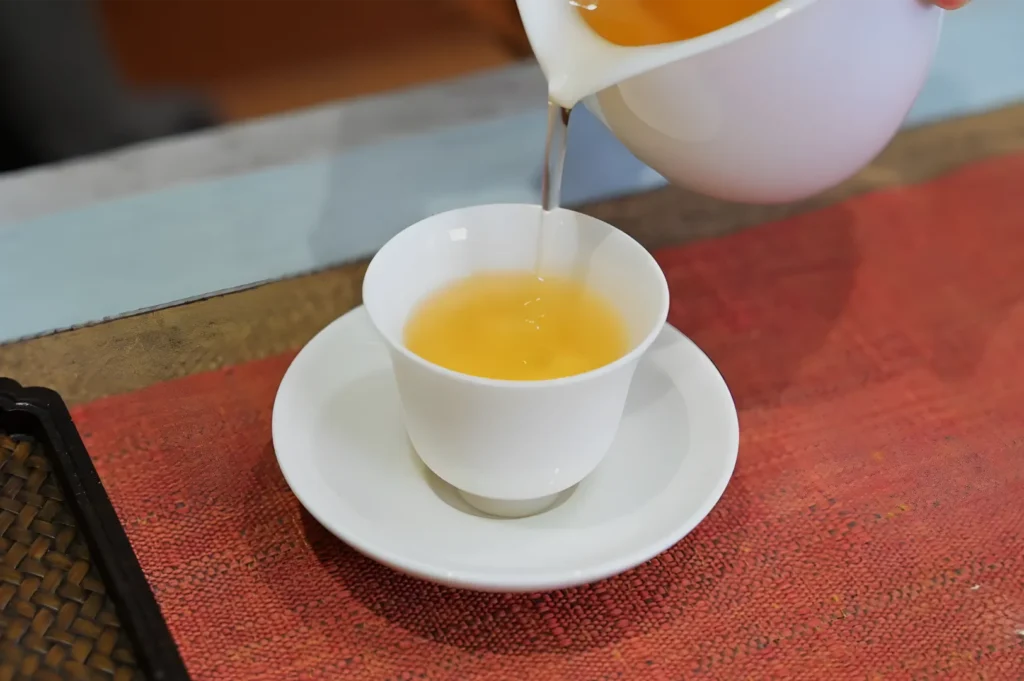
Three names appear frequently when exploring the category.
Junshan Yinzhen comes from Hunan and is made from tender buds. Its name means Junshan Silver Needle, but it belongs to yellow tea rather than white tea.
Mengding Huangya comes from Mengding Mountain in Sichuan. “Huangya” means yellow bud, reflecting its tender material and yellow-tea processing.
Huoshan Huangya comes from Huoshan in Anhui and carries a long regional history.
These teas show why yellow tea deserves to be treated as a category rather than one flavour profile.
Yellow Tea vs Green Tea
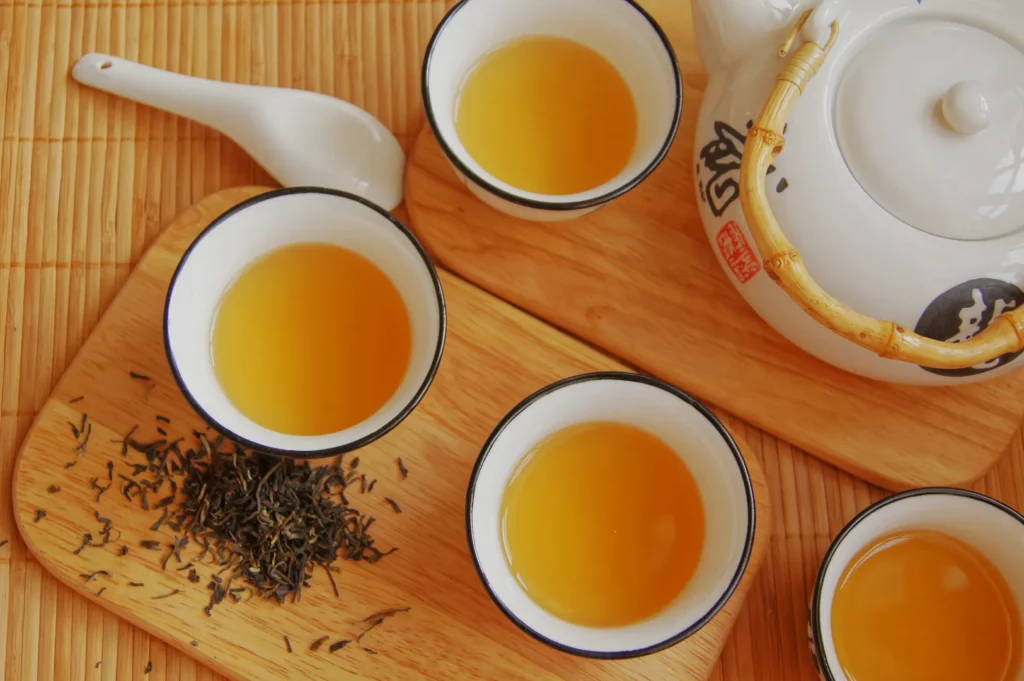
Green and yellow tea can begin with similar processing.
The difference comes from yellowing.
Green tea usually aims to preserve freshness, clarity and greener aromatics. Yellow tea allows an additional controlled transformation.
The result often feels softer and sweeter.
Green tea can feel like spring light. Yellow tea often feels like that light passing through silk.
Neither is superior. They simply pursue different expressions.
Does Yellow Tea Have Caffeine?
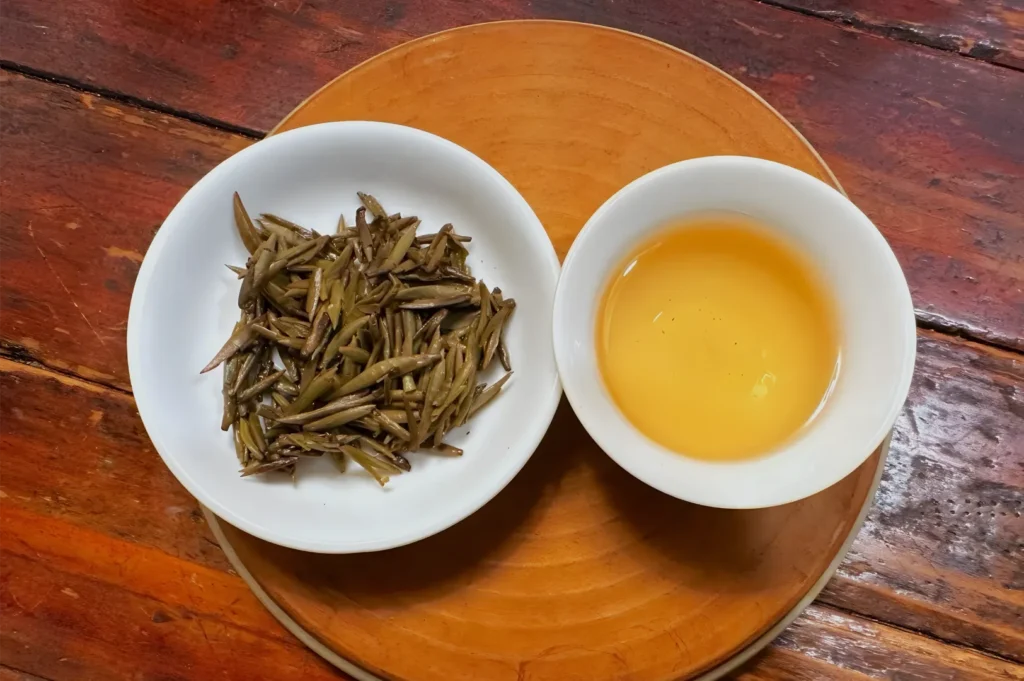
Yes.
Yellow tea comes from Camellia sinensis, so it naturally contains caffeine.
A study comparing six tea categories found measurable caffeine in yellow tea and showed that longer infusion times increased caffeine extraction considerably.
The exact amount in your cup depends on cultivar, leaf material, quantity, temperature and brewing time.
Mellow taste does not mean low caffeine.
What About Yellow Tea Benefits?
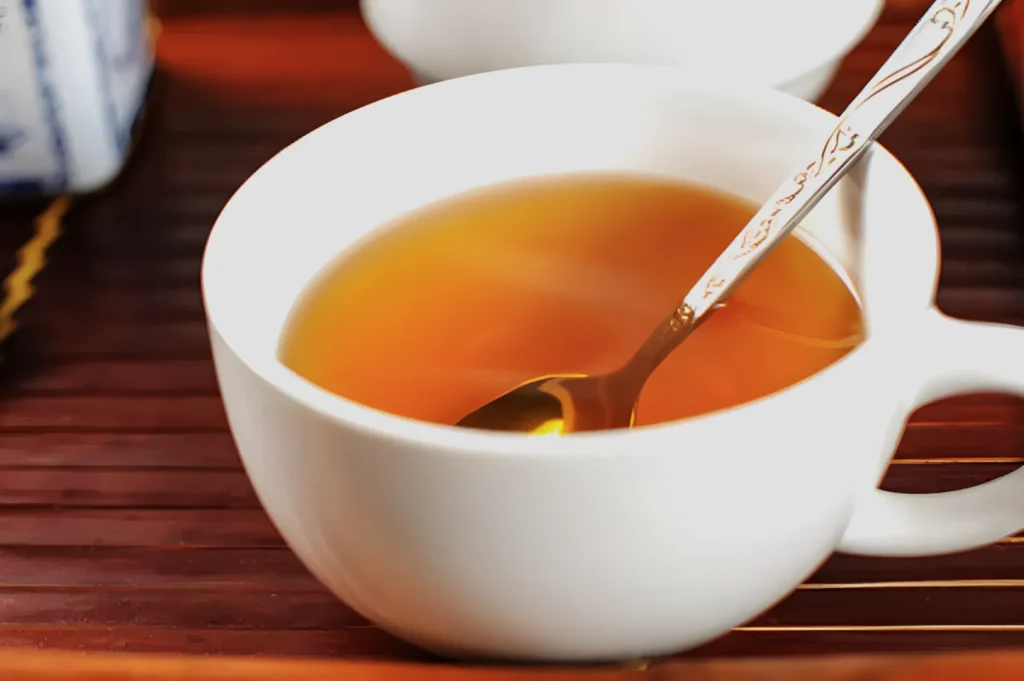
Yellow tea contains tea polyphenols, catechins, caffeine and other naturally occurring compounds.
Laboratory research has investigated its antioxidant activity and other possible biological effects, but the evidence should be interpreted carefully.
A cup of yellow tea is not medicine.
Its more practical pleasures are easier to defend: an unsweetened drink, gentle sensory complexity and a tea ritual that rewards slower attention.
How to Brew Yellow Tea
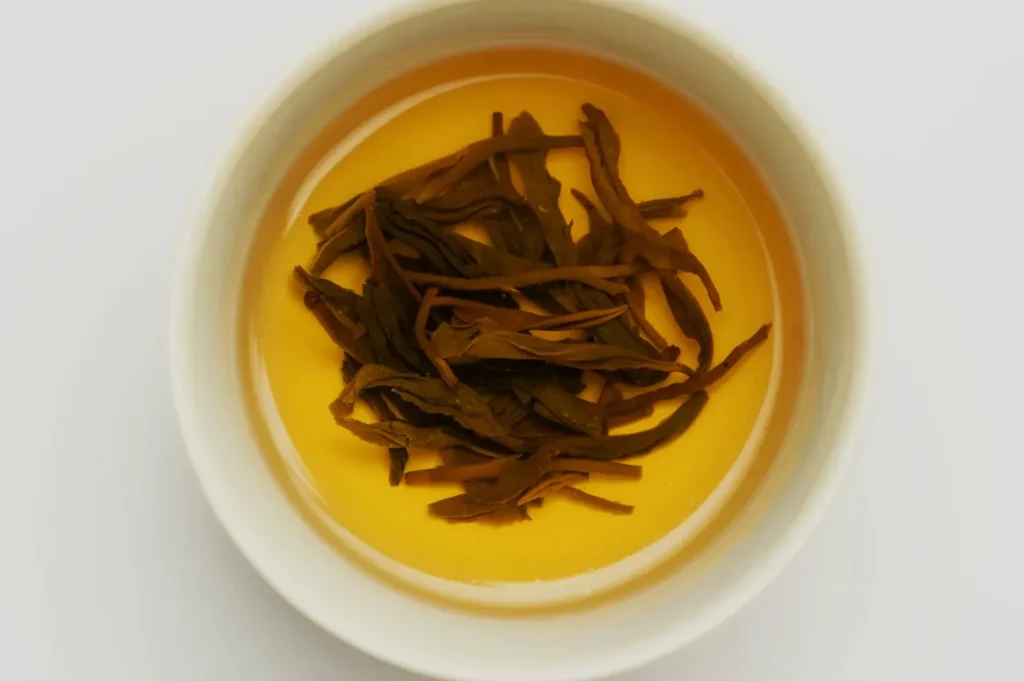
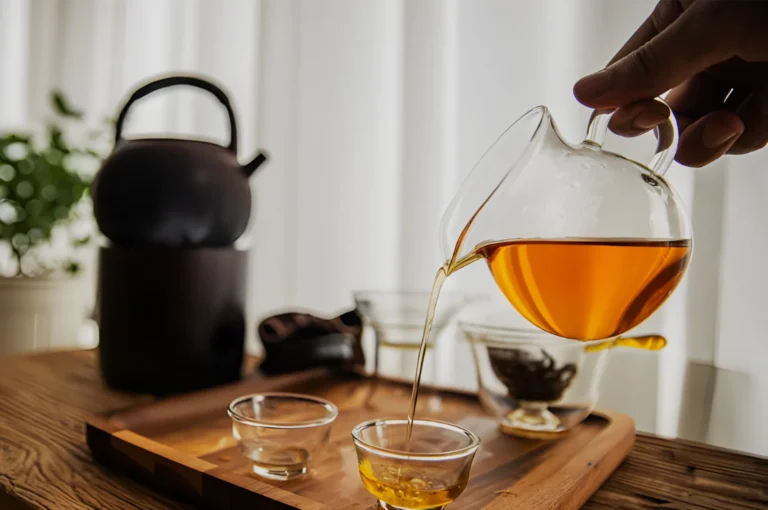
Delicate bud-style yellow teas are a good place to begin with water around 80°C to 85°C.
Use approximately 2 to 3 grams per 250 ml for simple brewing, or a higher leaf ratio with shorter infusions in a smaller vessel.
Do not oversteep.
Larger-leaf styles may tolerate hotter water, so adjust to the leaf rather than treating all yellow tea identically.
Final Thought
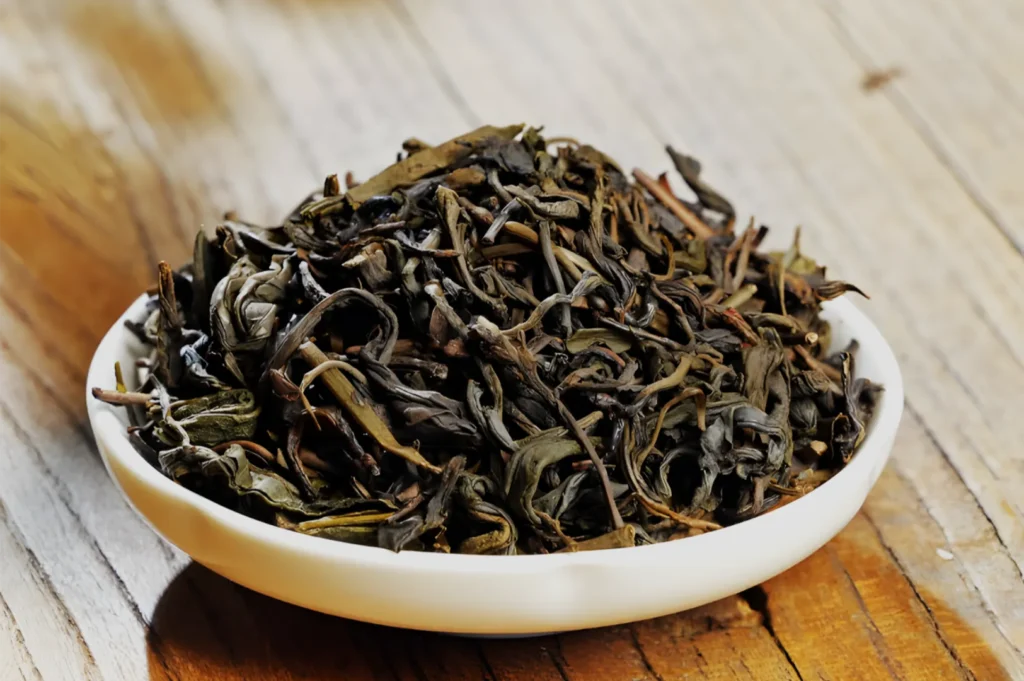
Yellow tea is rare not because it needs mystery, but because fewer drinkers have learned its language.
Its defining quality is restraint.
The leaf begins close to green tea, then menhuang changes its direction: less raw freshness, more mellow sweetness, a quieter aromatic line.
Subtle does not mean weak. Quiet does not mean plain.
Yellow tea may be one of the clearest examples.