Two drinks can smell of jasmine and still be fundamentally different.
One begins with tea leaves.
The other can begin and end with flowers.
This is the distinction between traditional jasmine tea and a jasmine flower infusion.
Sharing a fragrance does not make them the same drink.
Our jasmine tea guide to leaves, blossoms and infusions covers jasmine tea in full. Here, we separate two names that are often used too loosely.
Traditional Jasmine Tea Contains Tea Leaves
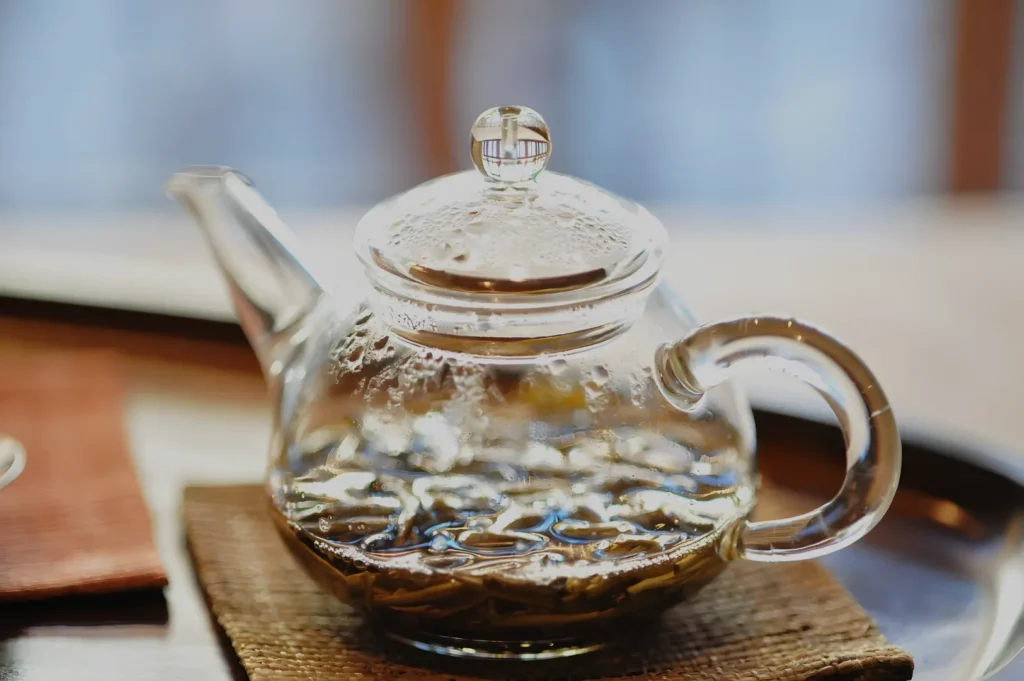
Chinese jasmine tea is usually produced by scenting finished tea with fresh jasmine flowers.
The base is commonly green tea, although other true teas may be used.
China’s current national jasmine tea standard defines jasmine tea as a tea product made through jasmine scenting, and scientific reviews likewise describe the category as tea further processed with jasmine flowers.
Because the base is Camellia sinensis, it normally contains caffeine.
Jasmine Flower Tea Can Mean an Herbal Infusion
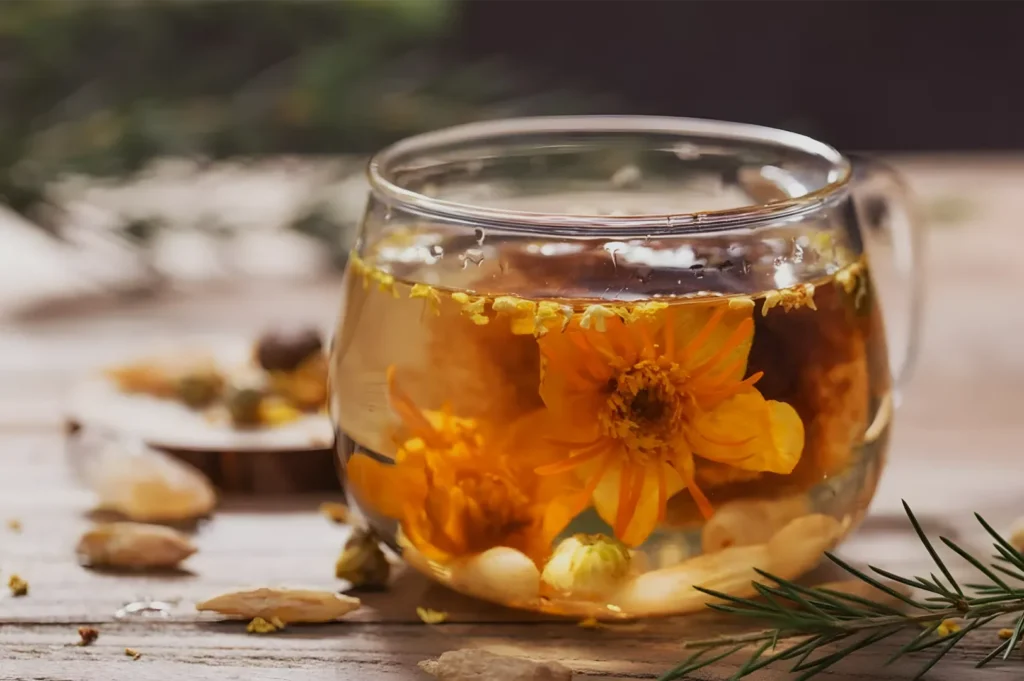
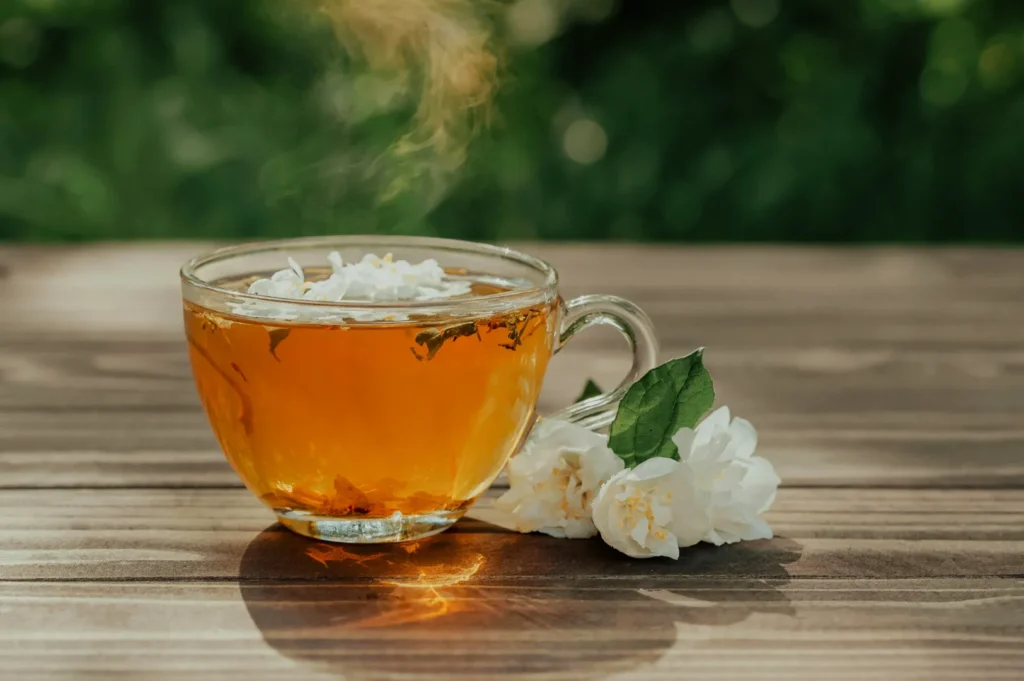
If the drink contains only jasmine flowers and no true tea leaf, it is better understood as a flower or herbal infusion.
The flowers commonly associated with Chinese jasmine scenting are Jasminum sambac. Kew Science recognises this as a distinct species within the olive family, Oleaceae.
The flower does not become Camellia sinensis simply because we steep it.
Does Jasmine Tea Always Contain Visible Flowers?
No.
This is another source of confusion.
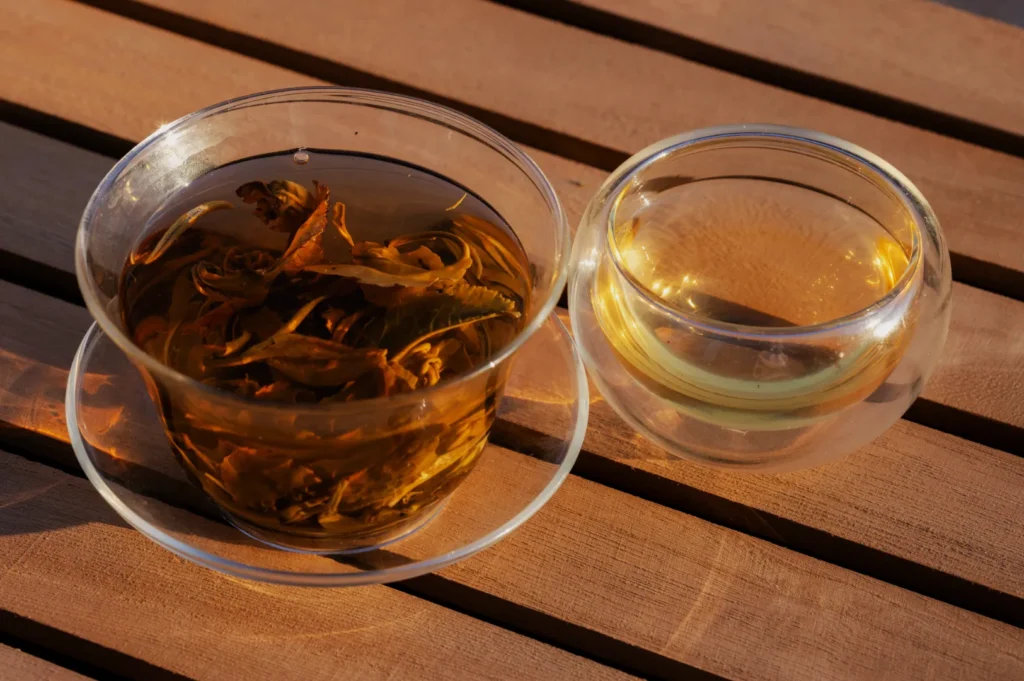
Traditional scenting relies on contact between flowers and tea, but spent blossoms may be separated later.
Research describes jasmine tea as tea that absorbs floral aroma during scenting.
The fragrance can remain even when the flowers do not.
Petals show you petals. They do not tell you the whole production story.
Which One Contains Caffeine?
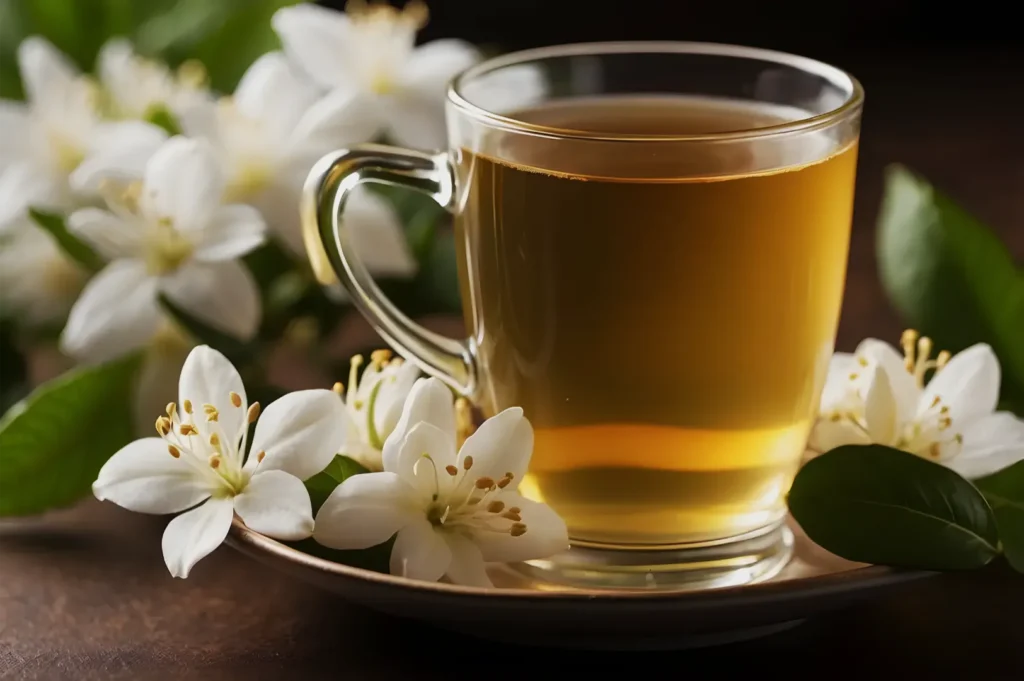
Traditional jasmine tea usually does.
A flower-only jasmine infusion generally does not contain tea-leaf caffeine.
This is one reason labels matter.
If caffeine is important to you, check the ingredient list rather than assuming “jasmine” answers the question.
Which One Tastes More Complex?
They are designed to offer different experiences.
Flower-only infusions centre the blossom itself.
Traditional jasmine tea gives the fragrance a tea structure underneath it: body, sweetness, astringency, umami or roasted character depending on the base.
This is why tea appreciation benefits from precise language.
At Tea Room by Ki-setsu, our private sessions focus on rare premium Chinese teas and the details that distinguish one leaf from another. That same precision is useful even when discussing teas outside our present collection.
Knowing what is in the cup makes appreciation easier, not less romantic.
Final Thought
Jasmine tea and jasmine flower tea share an aromatic reference.
One is typically true tea transformed through scenting.
The other may be an infusion of flowers alone.
Neither needs to imitate the other.
The important thing is to know which one you are drinking.