There is a moment, usually after the first sip, when someone looks down into the cup and says it.
Chestnut.
Not sweet chestnut in syrup, and not the smoky nuttiness of roasted snacks from a street stall. Something quieter than that. Warm. Dry. Soft at the edges. A note that seems to arrive together with the tea’s fresh green lift, as though spring and fire had met briefly in the leaf and agreed to stay in balance.
This is one of the reasons Longjing remains so loved. For many drinkers, the question is simple: what does Longjing tea taste like, and why does it so often suggest chestnut? The answer lives partly in the leaf, partly in the hand of the tea maker, and partly in the way the tea is brewed and received.
At Tea Room by Ki-setsu, we often find that this single tasting note becomes a doorway. Once a guest begins to recognise Longjing’s chestnut warmth, they also begin to hear the rest of the tea more clearly: the bean-like sweetness, the quiet vegetal lift, the clean finish that lingers without force. This article is a guide to that recognition.
For readers seeking the wider context of place, history and sourcing, this Dragon Well guide for first-time drinkers offers a fuller introduction. Here, we stay close to the cup itself.
Chestnut Is a Signature, Not a Flavouring
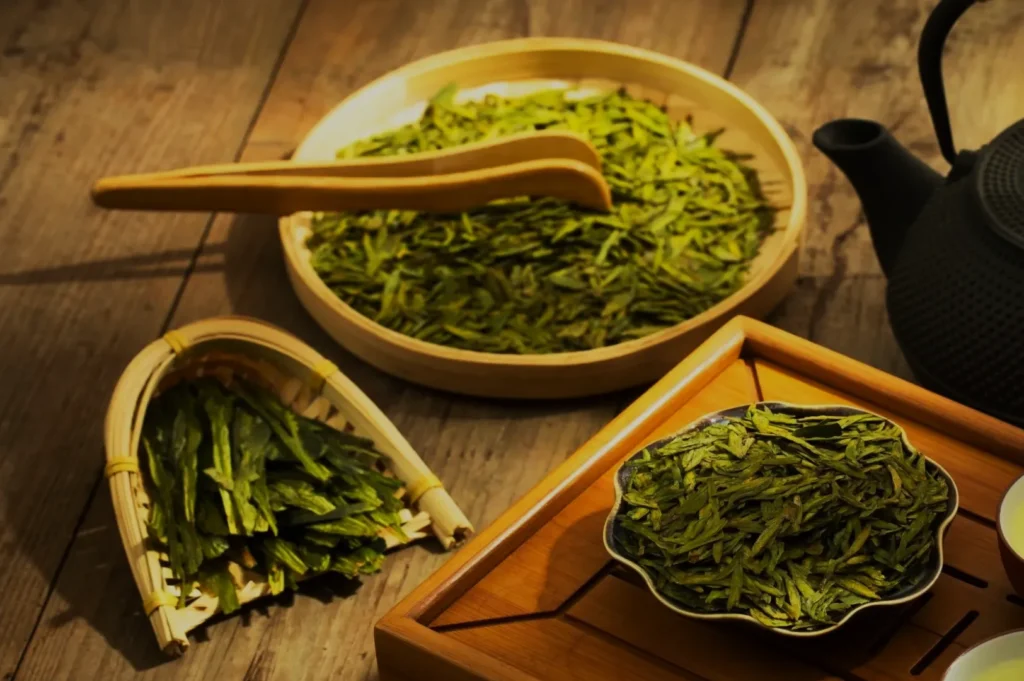
The first thing worth clarifying is this: Longjing does not taste like chestnut because anything chestnut-like has been added to it.
This note is part of the tea’s natural expression when the leaf is well grown, carefully harvested, and properly fired. It is not a separate flavour sitting on top of the tea. It is woven through the tea’s own identity.
That distinction matters because chestnut in Longjing should never feel loud or artificial. It does not behave like flavouring in a confection or a scented blend. Instead, it appears as warmth within freshness. It usually sits beside notes that may remind you of toasted soybean, spring greens, young beans, or a faintly buttery grain. Good Dragon Well rarely tastes like only one thing. Its chestnut character is convincing precisely because it is integrated.
The chestnut note in Longjing is not an effect layered onto the leaf. It is one of the leaf’s most recognisable native gestures.
The Taste Begins in the Leaf
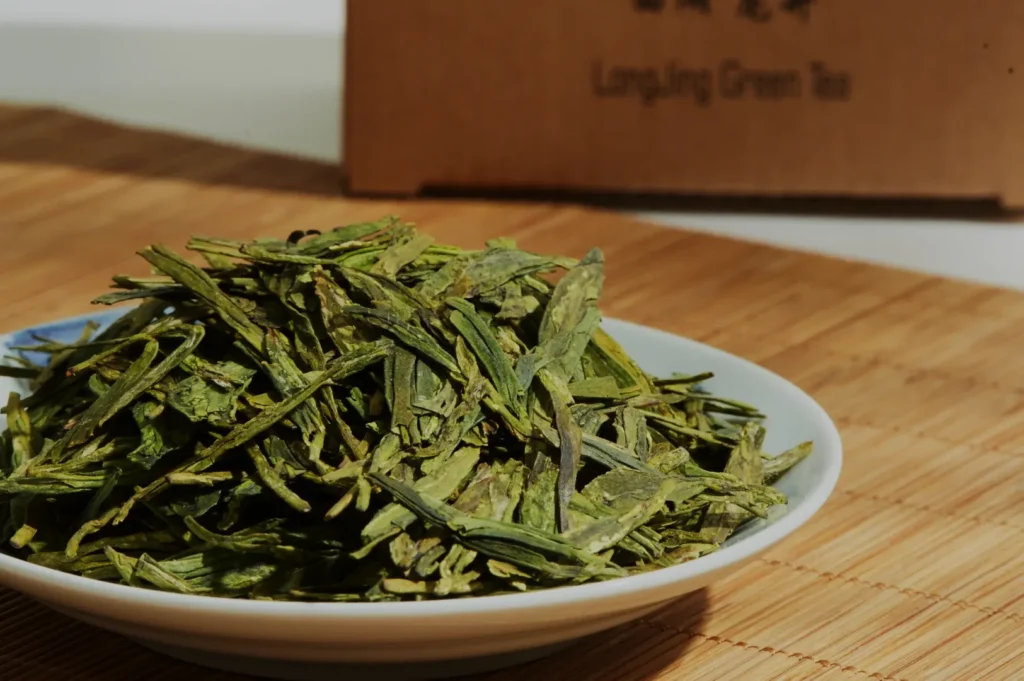
Longjing’s flavour begins with the shape of the spring itself.
The tea is often made from tender early leaves and buds, gathered when the plant’s stored winter energy is still concentrated in small, delicate growth. These young leaves carry a natural sweetness and freshness that later harvests express differently. They are also shaped by the conditions of the place itself: light, soil, altitude, moisture, and the measured pace of early spring.
When we speak of Longjing tea taste, we are really speaking about a conversation between season and craft. The raw leaf contains the potential. The tea maker decides how gently or fully that potential is brought forward.
This is part of why one Longjing may feel more lifted and green, while another leans more noticeably into warm chestnut and toasted grain. The tea has not changed species. It has been guided into a slightly different register.
Why Pan-Firing Matters So Much
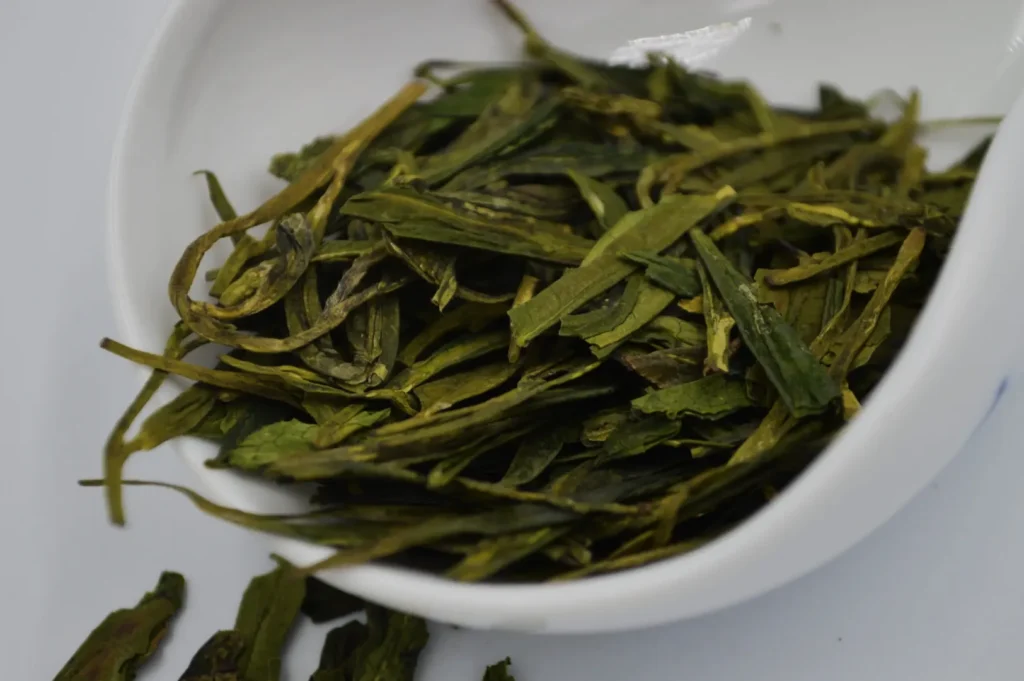
The chestnut note is inseparable from Longjing’s method of making.
Unlike steamed green teas, Longjing is pan-fired. The leaves are worked by hand against the heat of the wok, pressed and turned in a sequence that is both technical and sensory. This handling stops oxidation, shapes the leaf into its familiar flat form, and develops the tea’s characteristic aromatic warmth.
Without this step, Dragon Well would not taste like itself.
The pan-fire does something very specific. It takes the fresh, green, sweet potential of the leaf and gives it tone. It introduces a dry roasted warmth without pushing the tea into smoke or heavy toast. The chestnut note emerges from this point of contact between leaf and heat.
Too little firing, and the tea may feel greener, thinner, or less settled. Too much, and the chestnut note can become less elegant, moving toward burnt grain or an overly cooked impression. Good Longjing sits in the middle. The roast is present, but light enough that the tea still feels alive.
Chestnut, Bean, and Sweet Grain
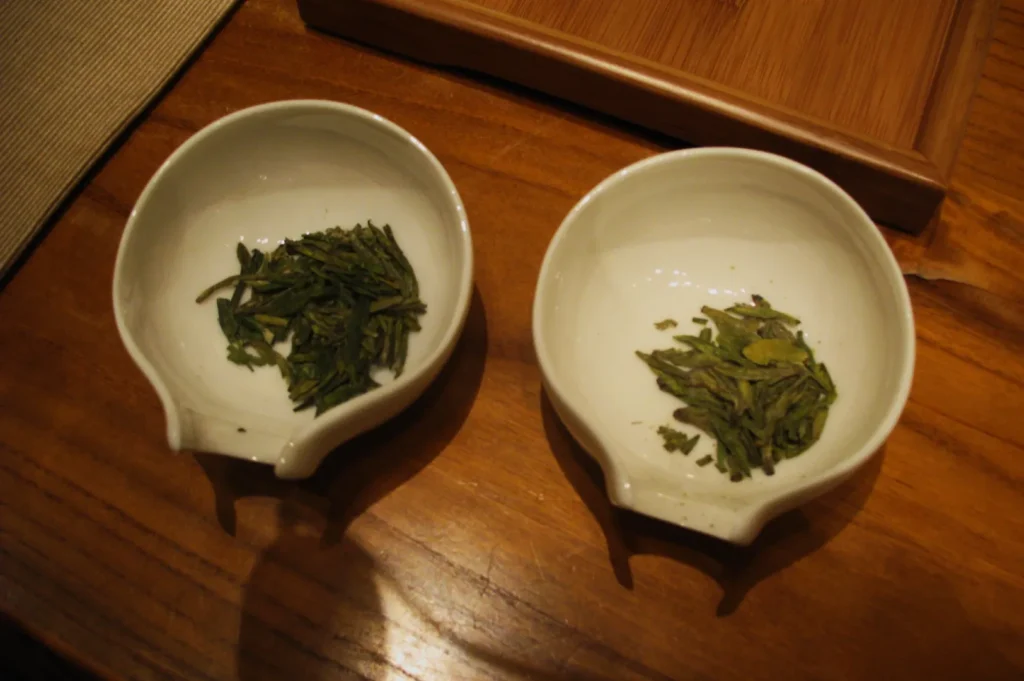
One reason Longjing can be hard to describe is that its signature notes are close to one another.
A good tea may suggest chestnut, but also fresh bean, edamame, young soy, toasted cereal, or sweet grain. These notes live in the same family, and different palates will emphasise different parts of that family.
This does not mean one person is right and another is wrong. It means the tea is layered.
If chestnut feels too specific, you can think of it as the warmest part of a broader flavour arc:
- fresh bean or soy note at the greener end
- chestnut and warm grain in the middle
- gentle roast at the deeper edge
The skill is not in naming a single correct descriptor. It is in recognising where the tea sits within that arc.
Dragon Well’s identity often lies in the tension between fresh green life and a softly toasted centre.
Early Harvest and Later Harvest Taste Different
Not all Longjing expresses the chestnut note in the same way.
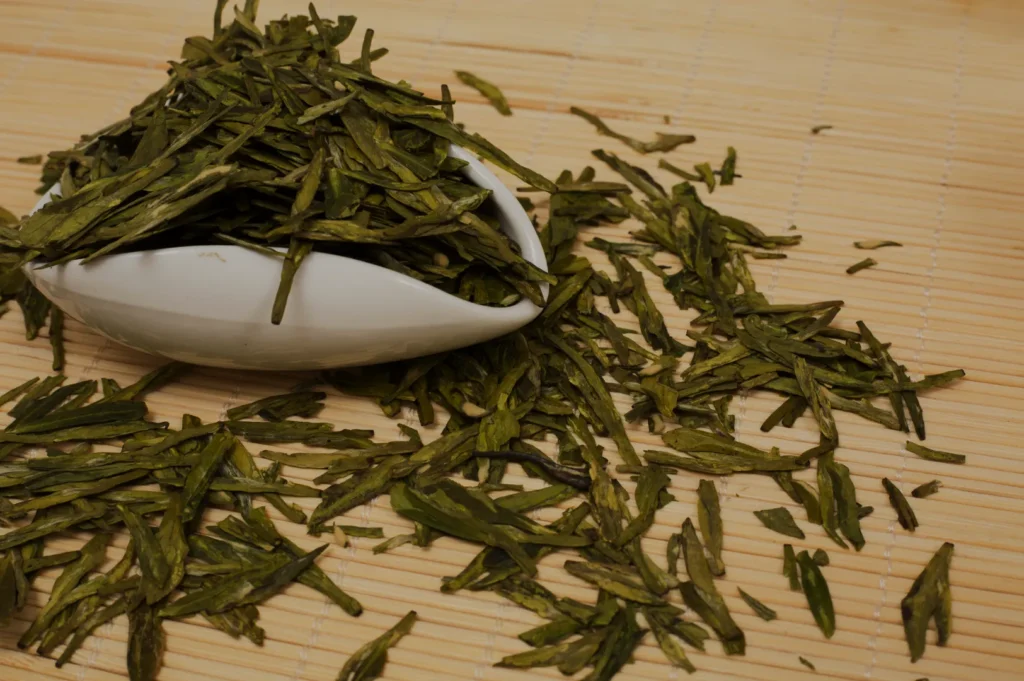
Earlier harvests, especially very tender spring material, often carry the note more delicately. The chestnut character may appear lighter, wrapped in more floral lift and cool sweetness. The overall tea can feel finer, more restrained, and slightly more transparent.
Later spring harvests may lean more readily into warm chestnut and grain. The cup can feel broader and easier to read. This is one reason some drinkers, while fully respecting the prestige of early lots, still find themselves returning to later harvest Longjing for everyday drinking.
The chestnut note in those teas is not necessarily “better,” but it may be more immediately apparent.
At Tea Room by Ki-setsu, we often see how this changes a guest’s first impression. Someone new to Longjing may understand the tea more quickly through a slightly later lot, while someone more accustomed to green tea subtlety may prefer the gentler line of earlier spring material.
What a Good Chestnut Note Feels Like
A good chestnut note should feel warm, dry, and composed.
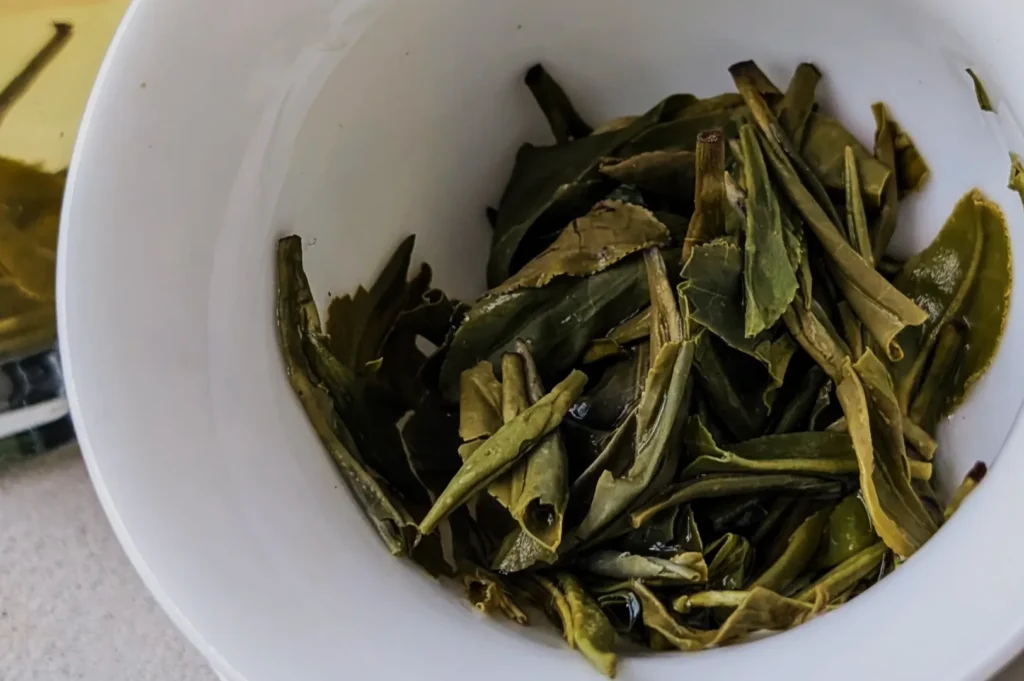
It should not feel oily, sugary, or heavy. It should not taste like a flavoured nut tea or a dessert. Instead, it should arrive as a soft roasted warmth within the tea’s freshness. The cup should still feel clean. The liquor should still feel light enough to move easily, even when the note itself is comforting.
This is why “chestnut” in Longjing is often as much about texture and aftertaste as direct flavour. The warmth settles in the mouth. The sweetness lingers quietly. The vegetal freshness prevents the tea from becoming dull.
A poor imitation of this note often feels clumsy. It may become too roasted, too cereal-like, or too cooked. A finer expression feels woven through the cup rather than laid on top of it.
What Chestnut Is Not
It helps to define the note by contrast.
Longjing’s chestnut character is not:
- smoky
- bitter in a roasted way
- burnt
- sugary like confectionery
- savoury in a heavy broth-like sense
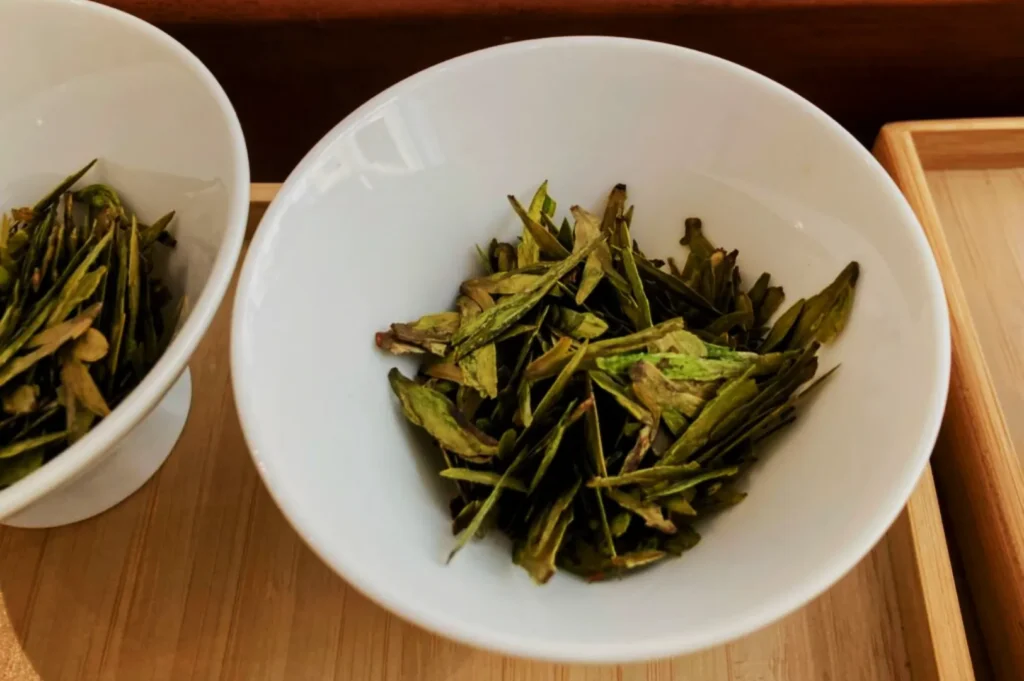
If the tea smells sharply burnt, the firing may have been too aggressive. If it tastes more like stale grain than warm chestnut, the leaf may be tired or poorly handled. If the cup feels harsh and dry, brewing may be amplifying the wrong part of the tea.
Chestnut should bring comfort, not bluntness.
Brewing Changes What You Taste
A tea can contain a beautiful chestnut note and still fail to show it if the brewing is careless.
Water that is too hot often pulls bitterness and rough greenness forward too quickly, making the cup feel harder than it should. Water that is too cool may leave the tea muted and under-expressed, with the warm grain and chestnut tones never quite gathering. The right temperature allows both freshness and warmth to remain in balance.
The vessel matters too.
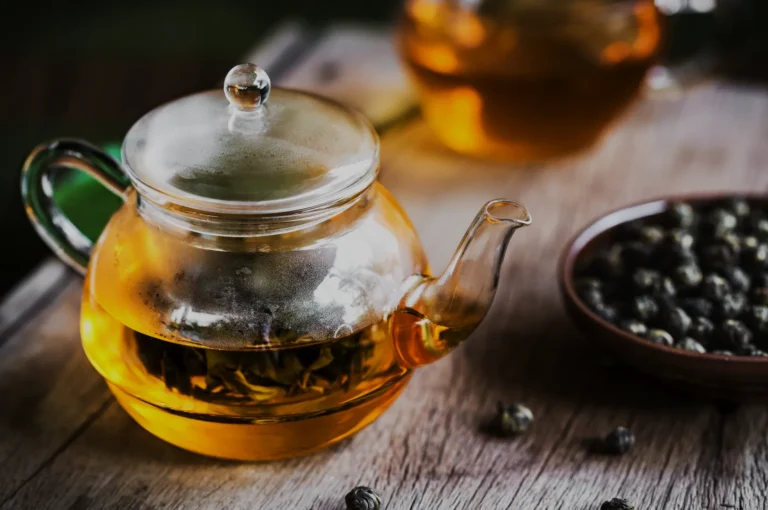
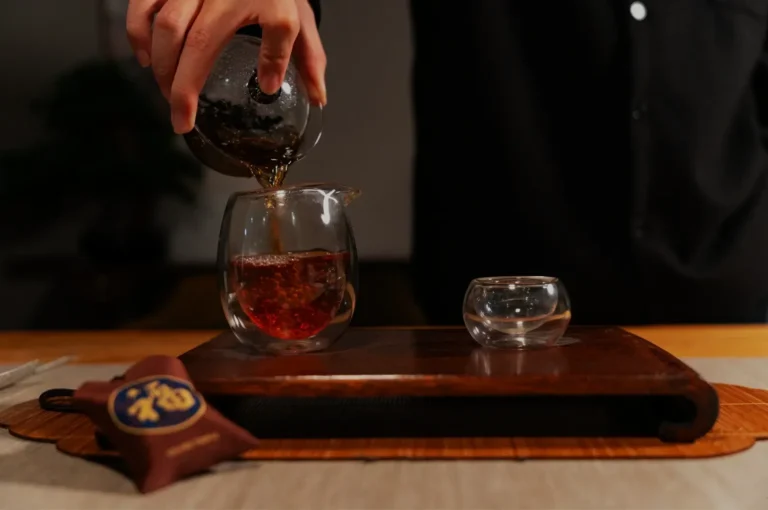
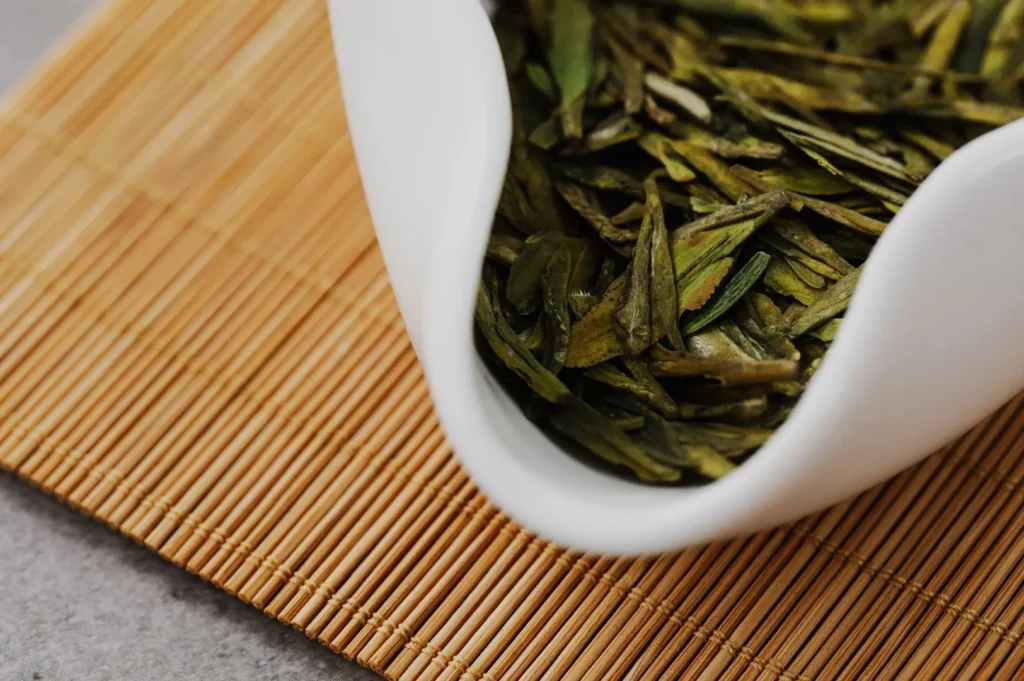
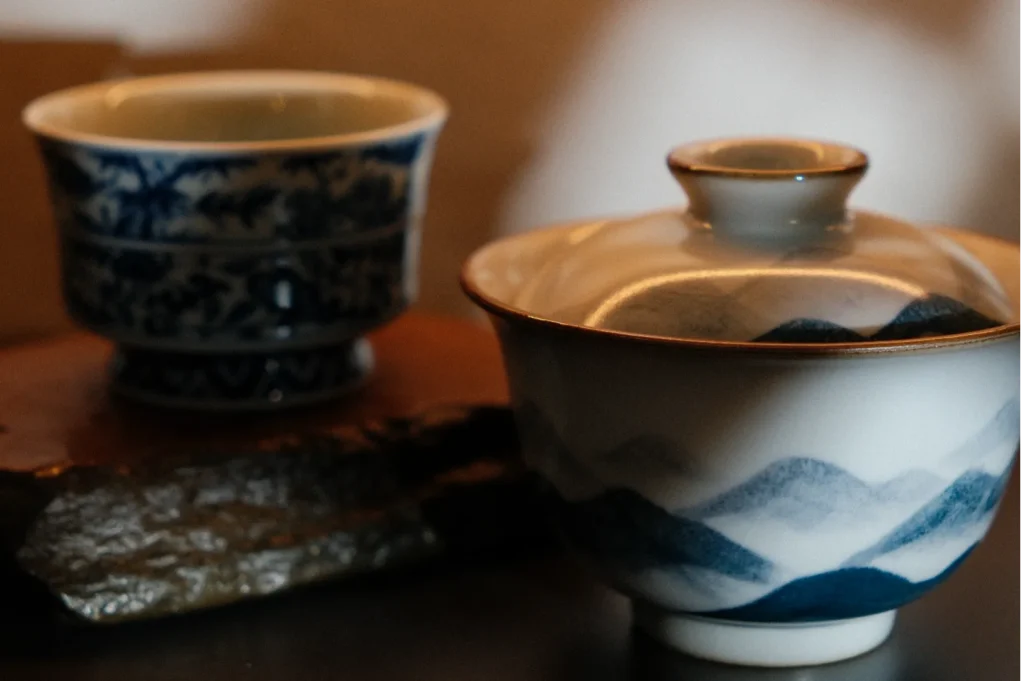
In a clear glass, the tea often feels more transparent, and the visual unfolding of the leaf helps slow the drinker into attention. In porcelain, the aroma may feel more contained and the cup more focused. Neither is inherently right or wrong, but both change the way the chestnut note arrives.
This is why two people can drink the same Longjing and describe it differently. The tea is not only what was harvested. It is also how it was invited into the cup.
The Finish Is Part of the Note
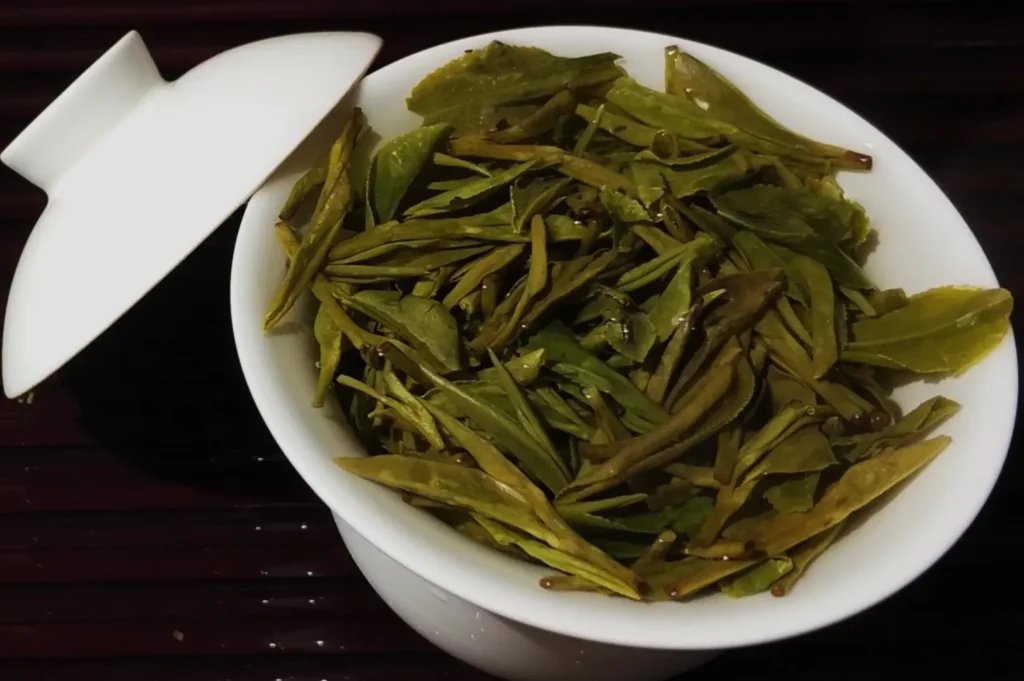
One of the easiest ways to recognise good Longjing is to watch what happens after you swallow.
If the tea is well made, the chestnut warmth usually does not vanish immediately. It leaves behind a soft, sweet finish that may feel almost powder-fine in texture, accompanied by a clean freshness at the back of the mouth. This aftertaste is part of why the tea feels so composed.
Poorer Dragon Well often fails here.
It may begin nicely enough, with a passable chestnut aroma, but the finish falls away too quickly or leaves only rough dryness behind. The first sip may seem convincing. The second and third reveal the truth. This is one reason we often say that Longjing should not be judged only by its first impression.
Learning to Taste Longjing More Clearly
You do not need a long list of tasting terms to begin.
A simpler practice is usually better. Smell the dry leaf. Smell the warmed leaf. Take one sip and ask:
- does the tea feel fresh or merely green?
- is there warmth beneath the freshness?
- does that warmth feel like chestnut, bean, or toasted grain?
- what remains in the finish?
If you repeat this gently over several sessions, the note becomes easier to recognise. Not because you are forcing the tea into a category, but because you are giving yourself enough stillness to hear what the leaf has been saying all along.
At Tea Room by Ki-setsu, this is often how the conversation around Longjing begins. Not with prestige. Not with theory. Simply with a cup, a pause, and the quiet surprise of discovering that the tea really does carry the chestnut warmth people speak of, but only when approached with enough care to let it appear naturally.
That is part of Dragon Well’s enduring grace. It does not insist on itself. It rewards attention.