Wuyi rock tea is not one voice.
Da Hong Pao, Shui Xian, and Rou Gui belong to the same broad yancha family, yet they rarely express themselves in the same way. For newer drinkers, these distinctions can blur because all three may carry roast, mineral depth, and the unmistakable calm of Wuyi tea. But once tasted with attention, their personalities begin to separate with surprising clarity. One may feel architectural and balanced. Another may feel woodier and more mellow. Another may arrive with spice and greater aromatic insistence.
At Tea Room by Ki-setsu, we think this comparison becomes useful not when it turns into ranking, but when it helps the drinker recognise what kind of yancha voice they return to most naturally. For the broader introduction to Big Red Robe itself, our Big Red Robe tea explainer offers the foundation. Here, the focus is narrower: how Da Hong Pao, Shui Xian, and Rou Gui differ in the cup, and why those differences matter.
Da Hong Pao: Balance, Structure, and Rock
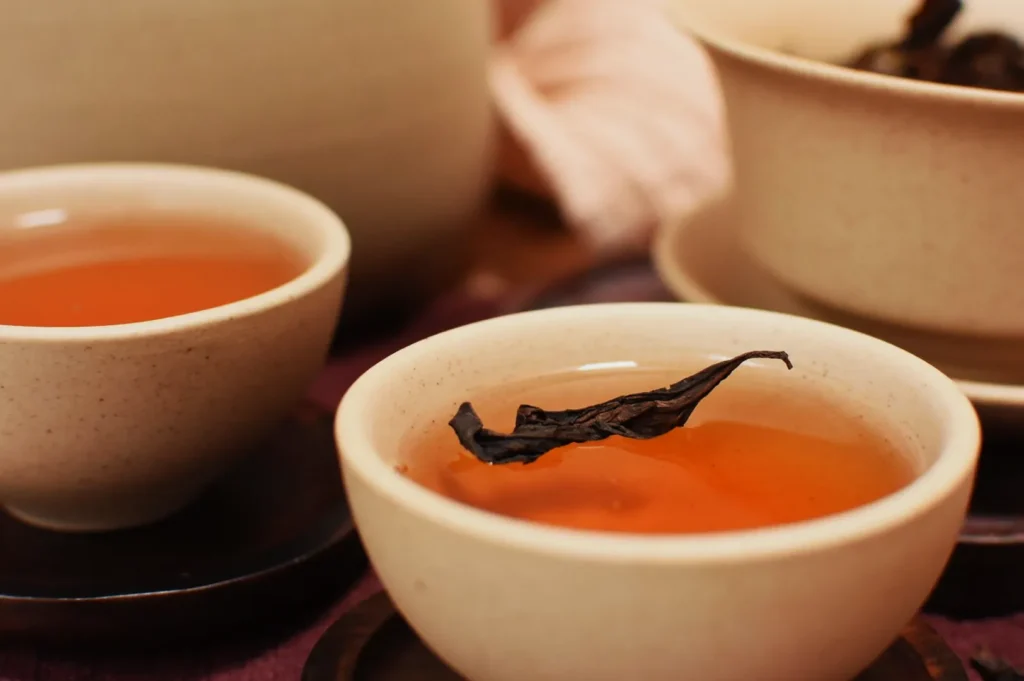
Da Hong Pao often feels the most complete in architecture.
Even when it shows roast first, it usually holds several directions together at once. There may be warmth, mineral steadiness, orchid lift, dry spice, and a finish that seems to return with more shape than the opening suggested. The tea often feels composed rather than dramatic. It does not usually depend on one dominant note to make its point.
This is one reason Da Hong Pao is so often treated as a benchmark within yancha. Not because it is always the loudest or most forceful, but because a strong Da Hong Pao often gives the impression that all its parts are already in conversation. Roast does not erase lift. Mineral depth does not flatten the aroma. The finish often feels gathered rather than fragmented.
At Tea Room by Ki-setsu, we often think of Da Hong Pao as the tea in this trio that most clearly suggests internal balance. It is usually less about one signature note than about the poise between several of them.
Shui Xian: Wood, Body, and a More Mellow Gravity
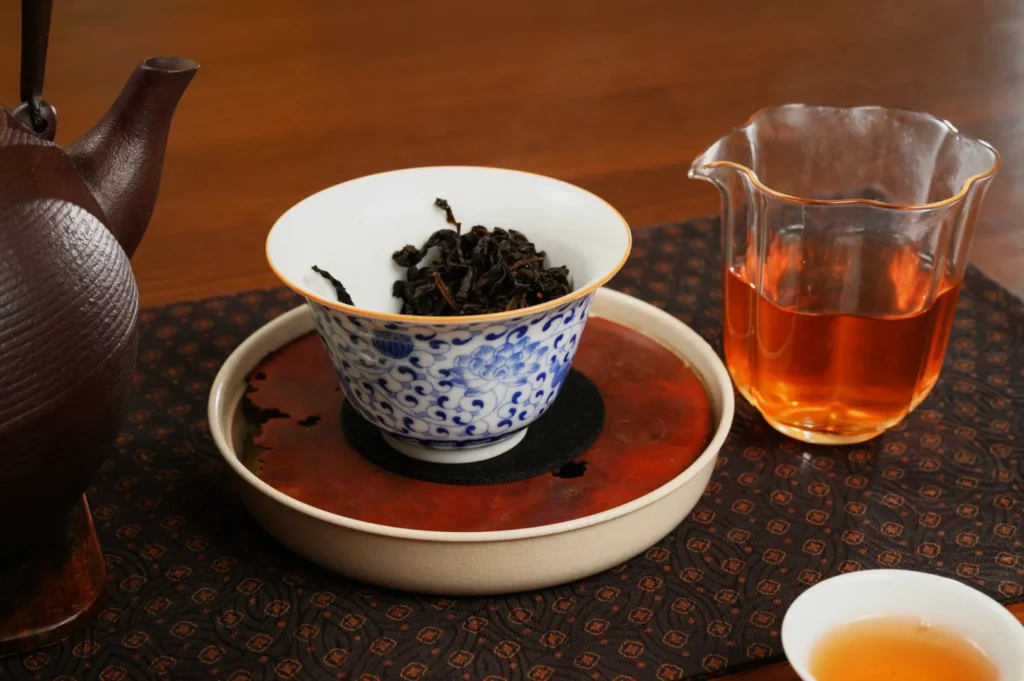
Shui Xian often feels broader and woodier.
Within the wider world of yancha, Shui Xian has long been recognised for a fuller body and a darker, more settled character. Tea references such as Tea Guardian’s discussions of Wuyi cultivars often point toward the cultivar’s deeper register, and that general impression usually carries into the cup. Compared with Da Hong Pao, Shui Xian can feel less lifted and more grounded through the centre of the sip.
This does not make it simpler. In a well-made Shui Xian, the broader body can be very beautiful. The tea may suggest wood, dark grain, older bark, or a more mellow floral warmth rather than obvious orchid lift. It often feels less architectural than Da Hong Pao and more generous through the middle.
At Tea Room by Ki-setsu, we find that drinkers who love depth without too much aromatic brightness often respond strongly to Shui Xian. It tends to feel less sculpted than Da Hong Pao, but more expansive in body and more relaxed in its authority.
Rou Gui: Spice, Energy, and Greater Aromatic Force
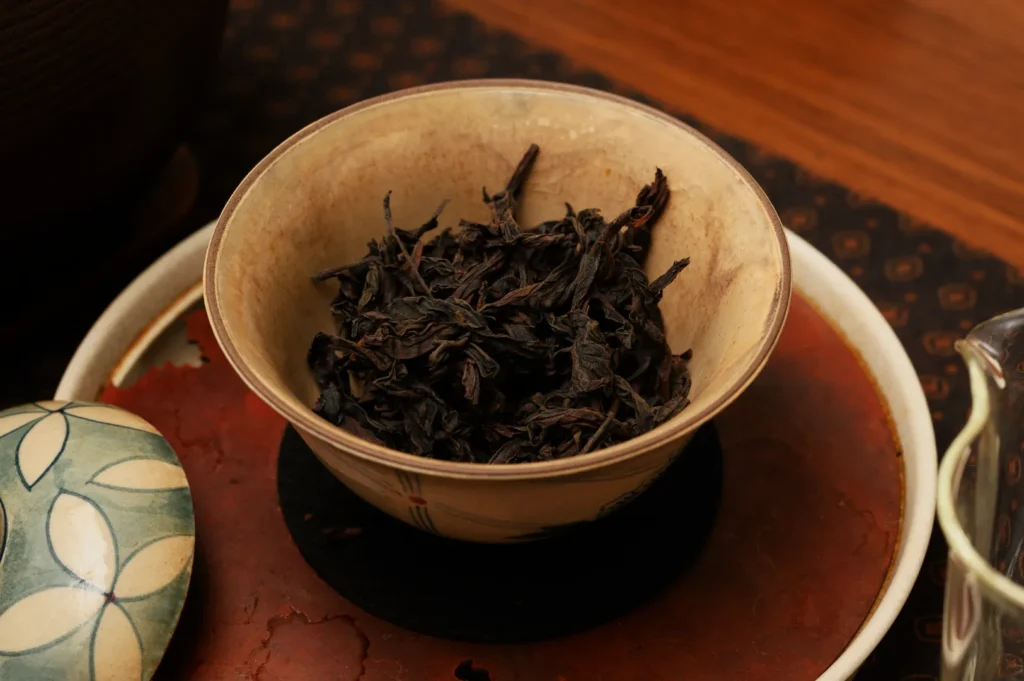
Rou Gui is often the easiest to recognise quickly.
Its defining feature is usually spice, often compared with cassia or cinnamon, which is why the name itself is frequently translated in that direction. The broader Rou Gui tea references reflect this as well, but in the cup the effect can be more nuanced than a simple spice label suggests. Rou Gui may feel sharper, more aromatic, and more immediately assertive than both Da Hong Pao and Shui Xian.
This is part of Rou Gui’s appeal. It often does not require the same patience before its identity becomes visible. The spice rises early, and with it comes a more active aromatic edge. A younger Rou Gui may also show more energy and a touch more angularity, something also reflected in Tea Guardian’s notes on Rou Gui, where maturity and handling are shown to matter greatly.
At Tea Room by Ki-setsu, we often think Rou Gui suits drinkers who want yancha with a stronger aromatic signature. If Da Hong Pao feels composed and Shui Xian feels mellow, Rou Gui often feels vivid and direct.
The Difference Is Not Only Flavour, but Movement
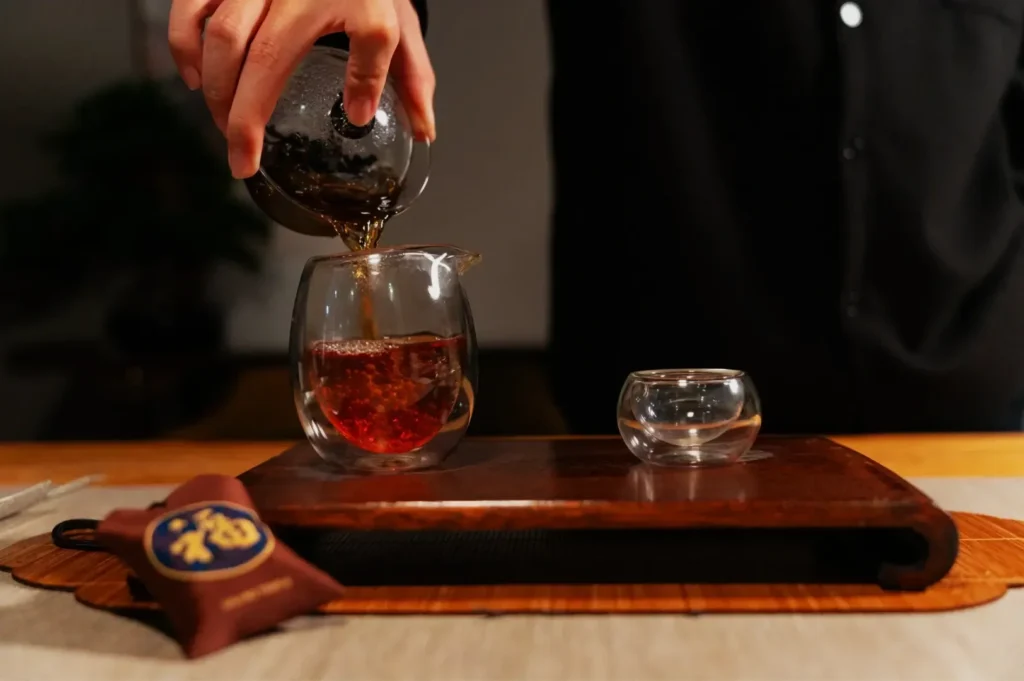
The three teas do not differ only by note. They differ by how they move.
Da Hong Pao usually gathers itself gradually. Its interest often lies in unfolding. Shui Xian tends to spread more broadly through the body of the sip, giving a sense of depth and continuity rather than lift. Rou Gui often rises more quickly and declares itself earlier through spice and aromatic edge.
This difference in movement matters because drinkers often choose tea by flavour notes alone and then wonder why one tea stays with them more convincingly than another. The answer is often structural rather than descriptive. Some teas rise. Some settle. Some stretch outward. Some narrow into precision.
At Tea Room by Ki-setsu, we find that movement is often the clearest way to explain the contrast. A tea’s temperament is not only what it tastes like. It is how it enters, expands, and remains.
Which Tea Feels Most Mineral?
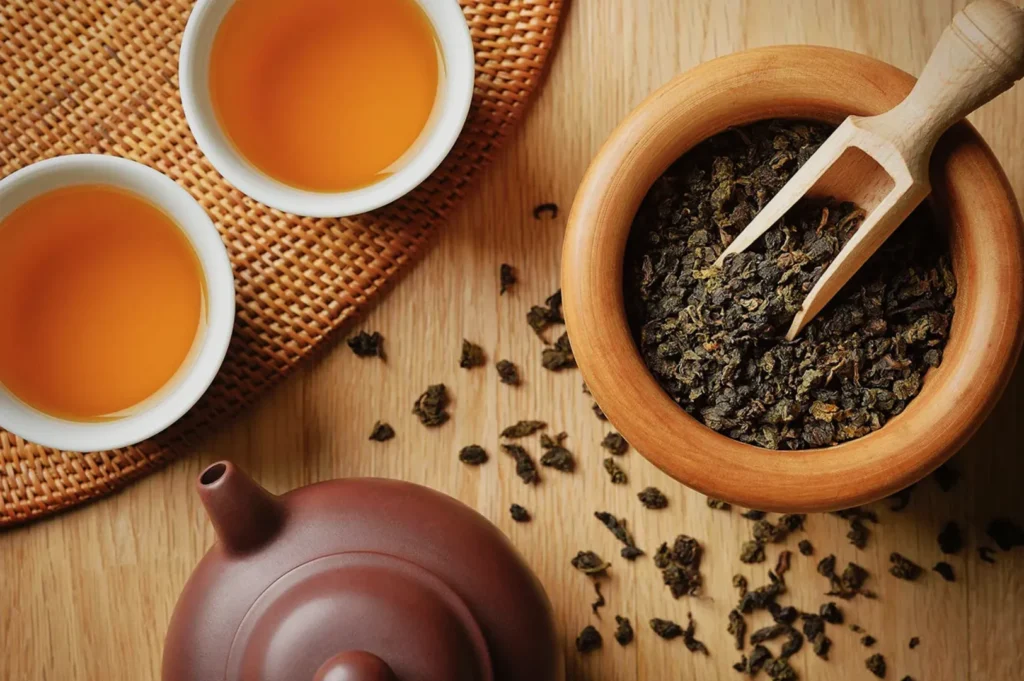
All three belong to the wider yancha tradition, so all three may carry some degree of mineral depth.
But Da Hong Pao often feels the most balanced in how that mineral quality is woven through the cup. In Shui Xian, the earthier and woodier body may make the tea feel darker and fuller before the mineral note becomes obvious. In Rou Gui, the spice can sometimes stand at the front, leaving the rock character to show itself later.
This is why Da Hong Pao is often the easiest of the three to read as a “classic” rock tea for those trying to understand the broader category. Its mineral quality is often integrated into a more complete whole. Shui Xian may feel more rooted. Rou Gui may feel more animated. Da Hong Pao often feels more proportioned.
Which One Is Best for Different Drinkers?
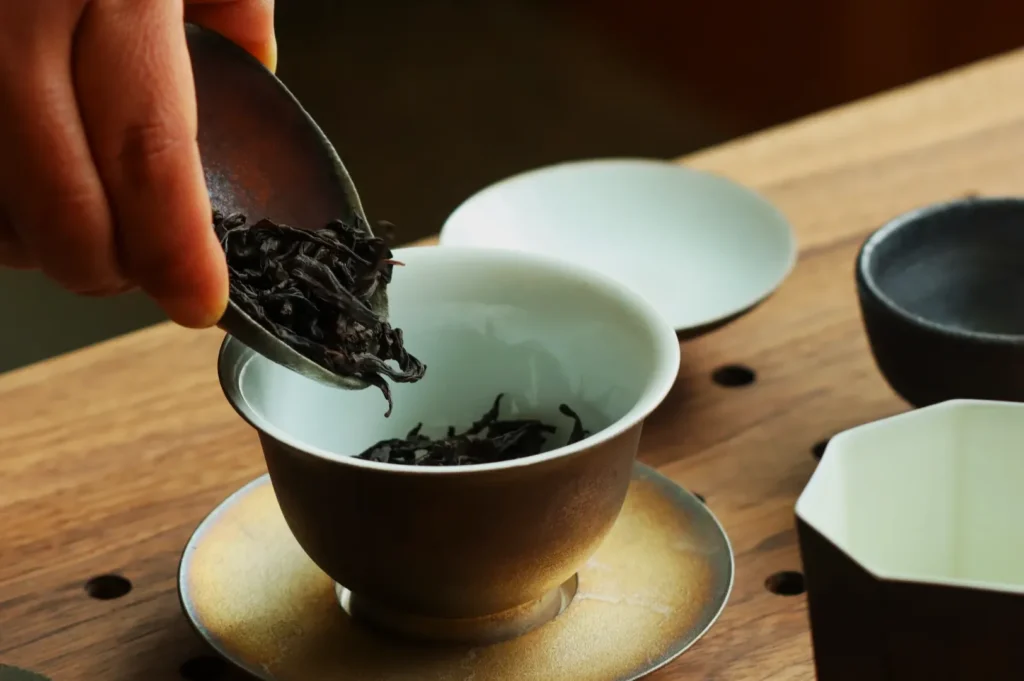
If you want yancha that feels balanced, layered, and composed, Da Hong Pao is often the strongest place to begin.
If you want a tea with deeper body, woodier warmth, and a more mellow centre, Shui Xian may suit you better. If you want stronger spice, more aromatic force, and a tea that announces itself quickly, Rou Gui may feel more compelling.
At Tea Room by Ki-setsu, we rarely think of this comparison in terms of superiority. It is more revealing to ask what kind of cup your palate trusts. Do you want a tea that unfolds through proportion, one that settles through body, or one that arrives through spice?
All three belong to the same mountain family, but they do not ask for the same kind of attention.
A Useful Way to Taste Them Side by Side
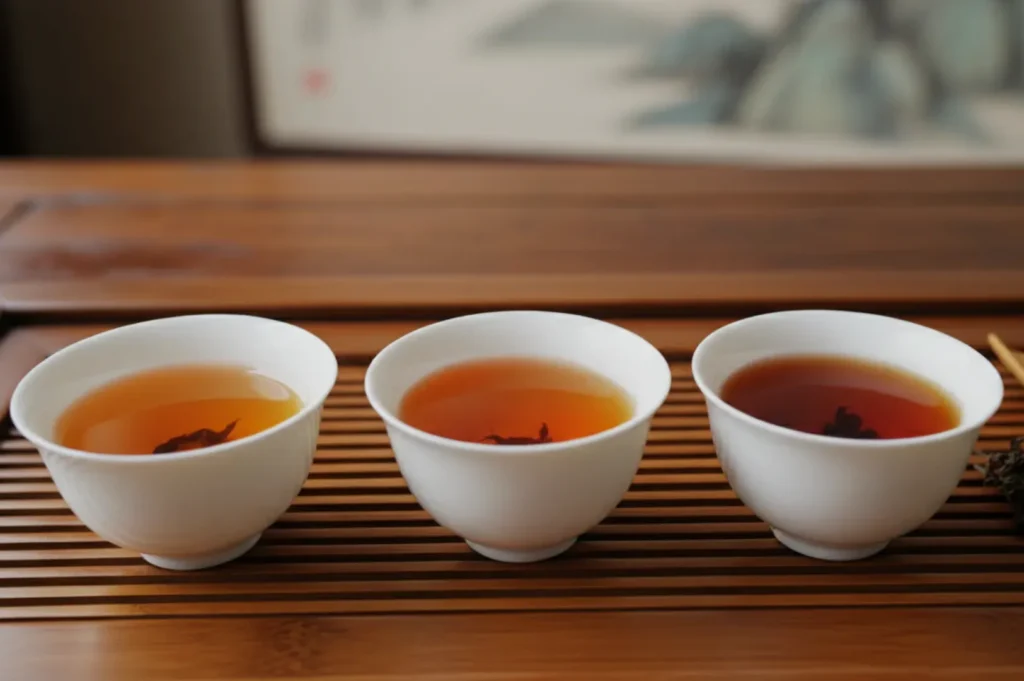
If you ever have the chance to taste these teas together, keep the brewing calm and the comparison simple.
Notice which tea feels most immediately legible. Notice which one deepens most over time. Notice which one leaves the longest return. The first answer may not be the same as the final answer. Rou Gui may announce itself early. Shui Xian may broaden quietly. Da Hong Pao may gather more authority as the infusions continue.
At Tea Room by Ki-setsu, we think side-by-side tasting is one of the clearest ways to understand Wuyi tea properly. The comparison becomes most useful when it teaches you how each tea carries its own version of rock, roast, and restraint.
Why This Comparison Matters
A great deal of tea appreciation begins not with mastery, but with contrast.
When Da Hong Pao, Shui Xian, and Rou Gui are understood only as “roasted Wuyi oolongs,” the category remains too broad to be useful. Once their distinctions become visible, the drinker begins to understand not only each tea, but the wider world that shaped them. The mountain becomes less abstract. The leaf becomes more personal.
At Tea Room by Ki-setsu, we think that is where real curiosity begins. Not in memorising famous names, but in noticing how one voice differs from another, even when all three are speaking the language of rock tea.
Suggested URL Slug: /da-hong-pao-vs-shui-xian-vs-rou-gui/