Rooibos is often treated as though all of it tastes more or less the same.
Because it is gentle, naturally caffeine-free, and easy to drink, many people assume quality matters less here than it does with other teas. In practice, the difference between ordinary rooibos and very good rooibos is not difficult to feel. One cup may seem dusty, flat, and vaguely woody. Another may feel sweet, clean, warm, and quietly complete. The distance between them is not dramatic in the theatrical sense, but it is very real.
At Tea Room by Ki-setsu, we think good rooibos is easiest to recognise when you stop asking whether it tastes “nice” and begin asking whether it feels composed. For the broader cultural and sensory background, our red bush tea guide offers the wider introduction. Here, the focus is more practical: how to judge rooibos by cut, colour, aroma, and the cup itself.
Start With the Cut
Before the water ever touches the leaf, rooibos already tells you something.
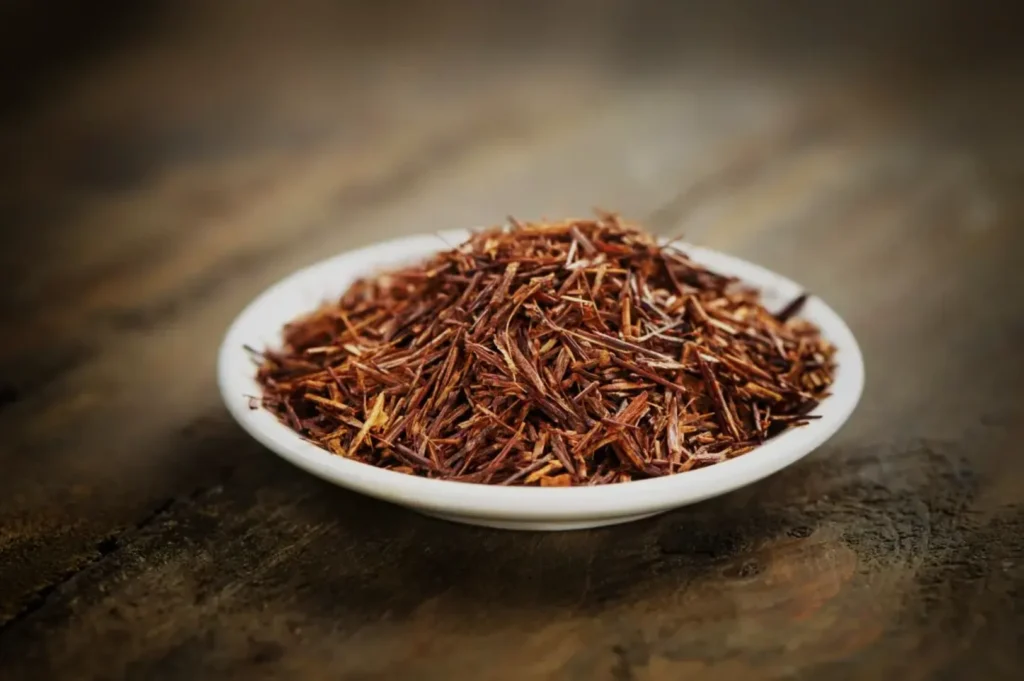
A better rooibos usually shows a finer, cleaner cut with a more even distribution of needle-like leaf material. It should not look excessively stemmy, powdery, or messy in a way that suggests poor sorting. The South African Rooibos Council’s buyer guidance notes that fine, uniform needle-like cut is one of the clearest signs of careful processing, while too much stem can dilute flavour and create a rougher cup.
This does not mean the leaf must look unnaturally perfect. Rooibos is not a polished decorative tea. But the material should still look intentional. When the cut is careless, the cup often confirms it later through weaker flavour and a duller finish.
A good rooibos should look cleanly prepared, not simply bagged and forgotten.
Colour Should Look Alive, Not Tired
Colour is another useful clue, though not on its own.
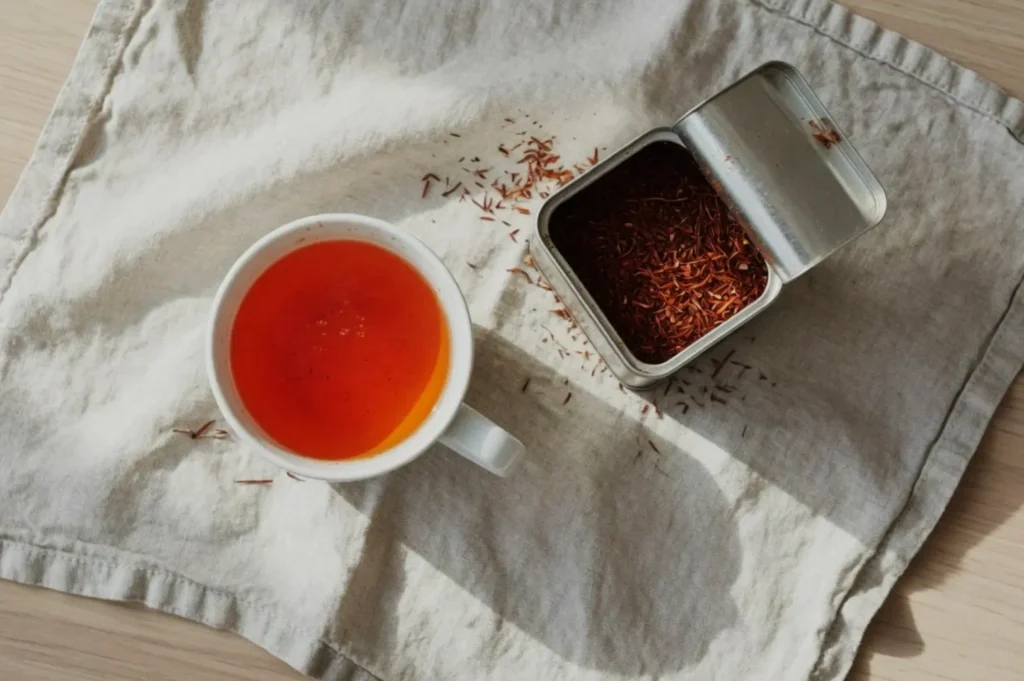
Red rooibos should usually show a lively reddish-brown tone rather than a lifeless brown-grey. Green rooibos, if you are tasting that style, should look lighter and more olive-gold rather than dull or faded. General rooibos references explain that oxidation changes both colour and flavour, which is why red rooibos appears deeper and warmer while green rooibos stays brighter and fresher.
What matters most is whether the leaf looks as though it still has life in it. Rooibos that appears overly dry, pale in the wrong way, or visually tired often tastes tired too.
Aroma Should Be Sweet, Warm, and Clean
Aroma is where rooibos quality begins to separate more clearly.
Good rooibos often carries a natural sweetness that feels dry and warm rather than sugary. There may be honey, cedar, baked grain, sun-dried grass, or a soft spice note. What should not be there is staleness, sharpness, or a papery flatness that makes the leaf seem old before it is brewed.
The South African Rooibos Council’s guidance and flavour notes are especially useful here because they consistently point back to rooibos’s naturally sweet and smooth aromatic profile, rather than anything harsh or aggressively herbal. That warmth should already be visible in the dry leaf and become clearer once the infusion begins.
If the rooibos smells tired before brewing, the cup will rarely become more convincing later.
The Liquor Should Have Clarity
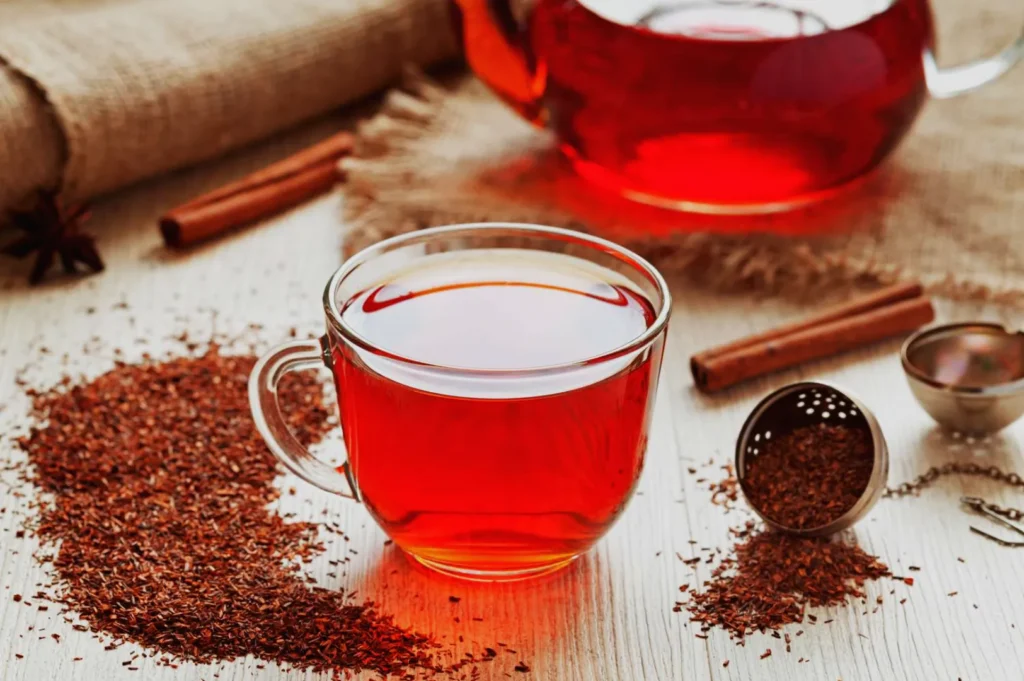
Once brewed, the liquor tells you a great deal.
A good red rooibos usually gives a warm, clear amber to reddish-brown cup. It should not look muddy, cloudy, or strangely flat. Green rooibos will be lighter in colour, but it should still carry brightness and visual clarity. Cup clarity matters because it often mirrors flavour clarity. When the liquor looks composed, the taste often feels more articulate too.
This does not mean every cup must look thin and jewel-like. Rooibos can brew full. But fullness should not become murkiness. At Tea Room by Ki-setsu, we look for a cup that feels clean in its appearance, because that visual cleanliness often predicts a more settled flavour.
Taste Should Be Full Without Becoming Dusty
The best rooibos usually feels rounded and complete.
There should be sweetness, but not syrupy heaviness. There should be earthiness, but not muddiness. There may be wood, hay, cedar, spice, or a nut-like warmth, but these should feel integrated rather than scattered. The cup should not become harsh or overly astringent, something the South African Rooibos Council also notes when describing good rooibos as naturally low in tannin and smooth in profile.
A lower-grade rooibos often loses shape quickly. It may begin sweet enough, then collapse into a dusty dryness or a vague herbal flatness that leaves very little behind. A stronger rooibos stays composed through the middle and into the finish.
Good rooibos should feel full, but never rough.
The Finish Matters More Than People Think
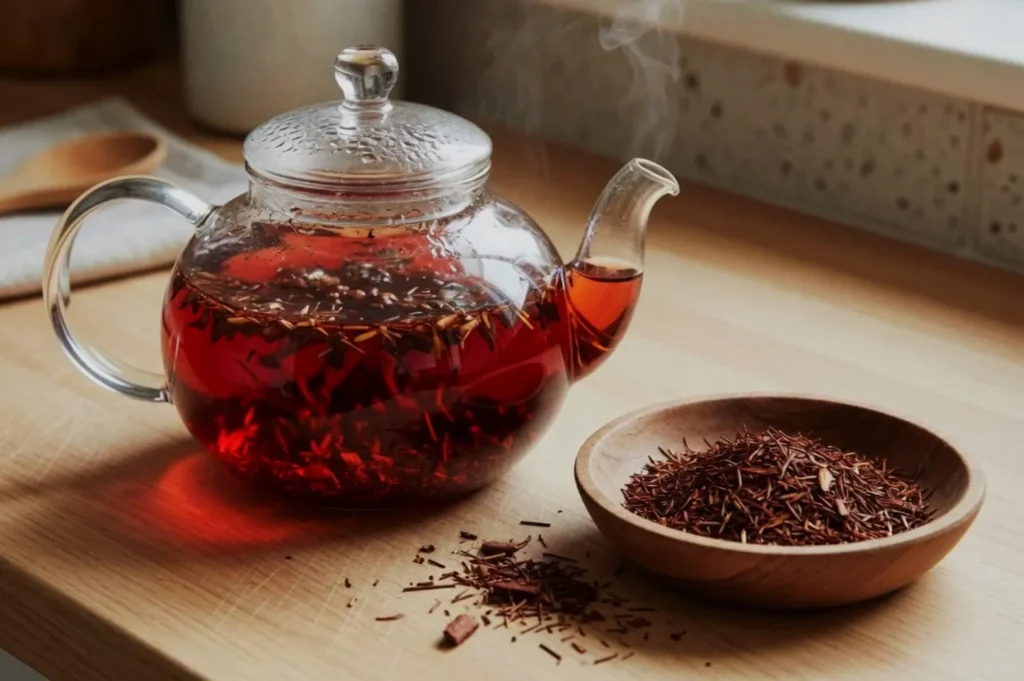
Because rooibos is such an easy drink, people do not always think to judge its finish carefully.
They should. A better rooibos usually leaves a soft, warm, gently sweet aftertaste. It may not have the dramatic return of a fine oolong or yancha, but it should still settle well. A weaker rooibos often finishes in a papery, dry, or dusty way that makes the cup feel less cared for.
Quality Also Means Origin and Handling
Rooibos quality is not only sensory. It also begins with origin and handling.
Authentic rooibos is grown in South Africa, and genuine rooibos should clearly state its South African origin. That matters because origin is part of the tea’s identity, not just its marketing. A more transparent producer usually gives you more confidence that the leaf has been grown, processed, and packed with some care.
A Better Way to Judge Rooibos
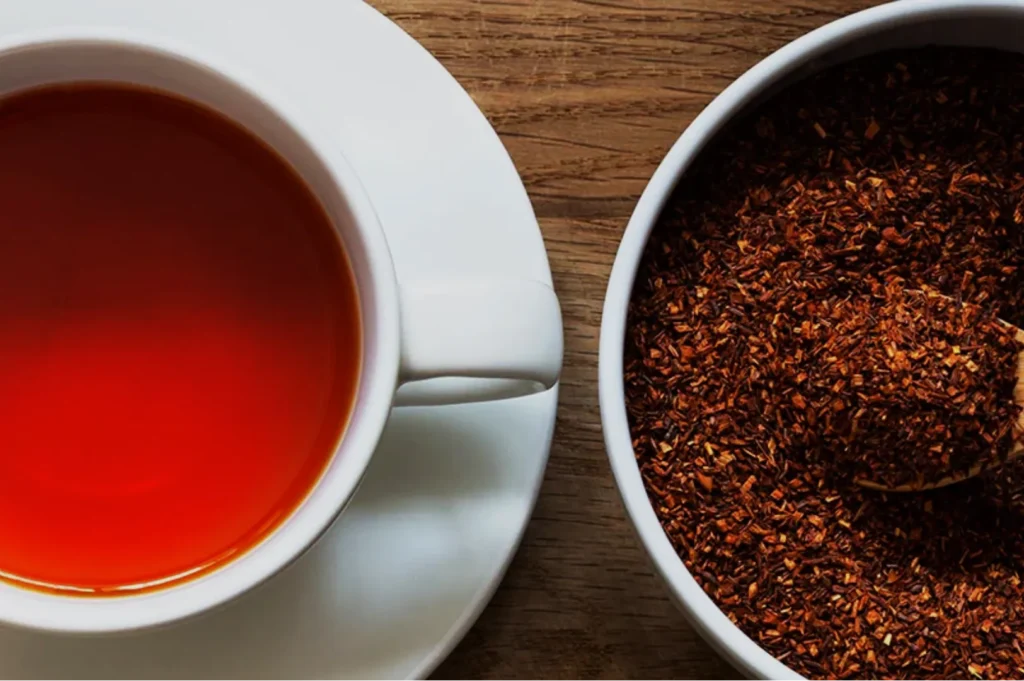
If you want to tell whether rooibos is good, begin with four questions.
Does the cut look clean and even?
Does the colour look alive within its style?
Does the aroma feel sweet, warm, and clean?
Does the cup finish softly rather than dustily?
These questions usually tell you more than price alone. Rooibos does not need to become rare or dramatic to feel high quality. It only needs to feel well made, well handled, and quietly complete.
At its best, rooibos tastes simple only because its balance has been achieved so well.