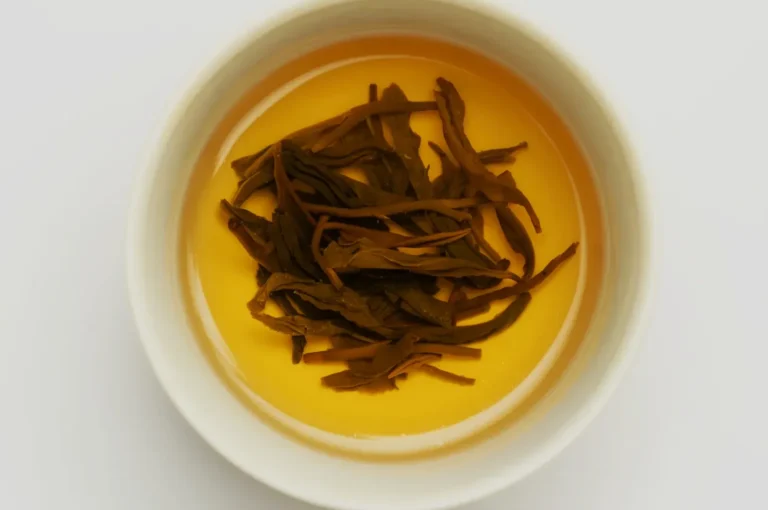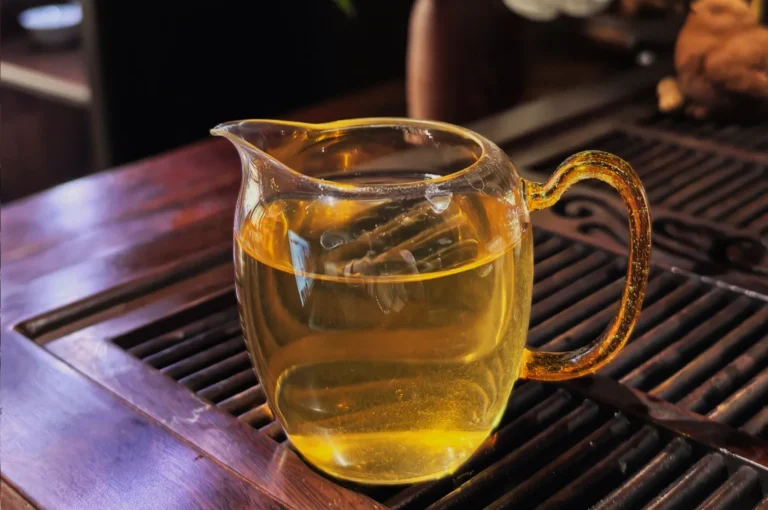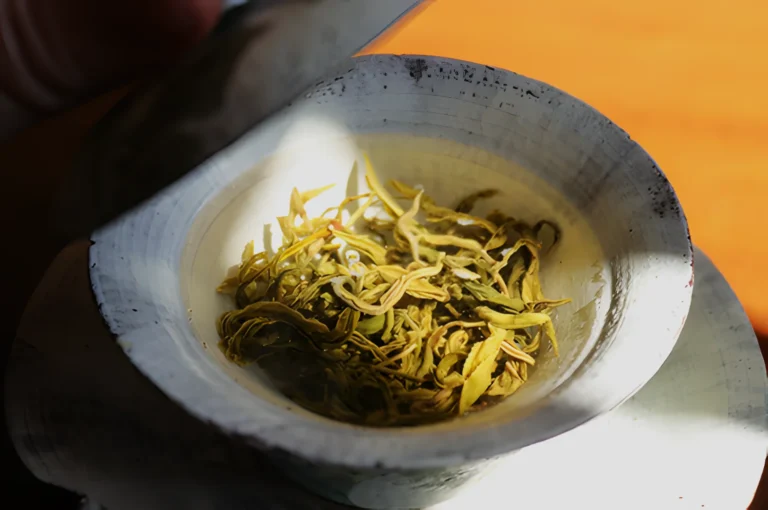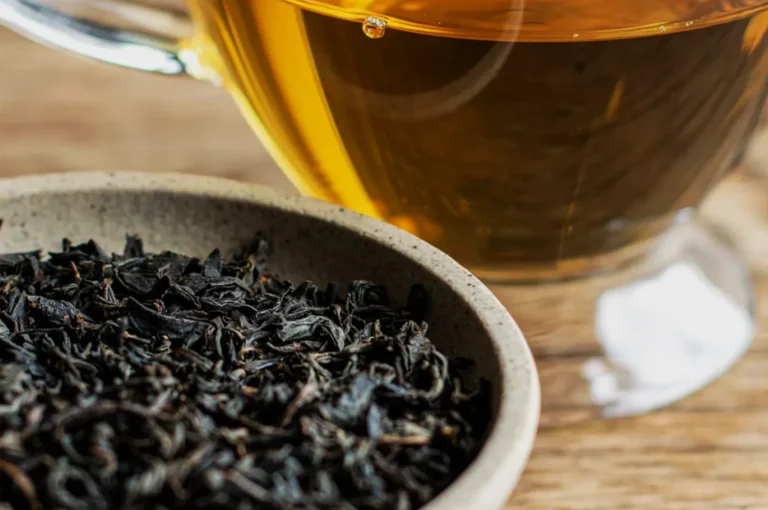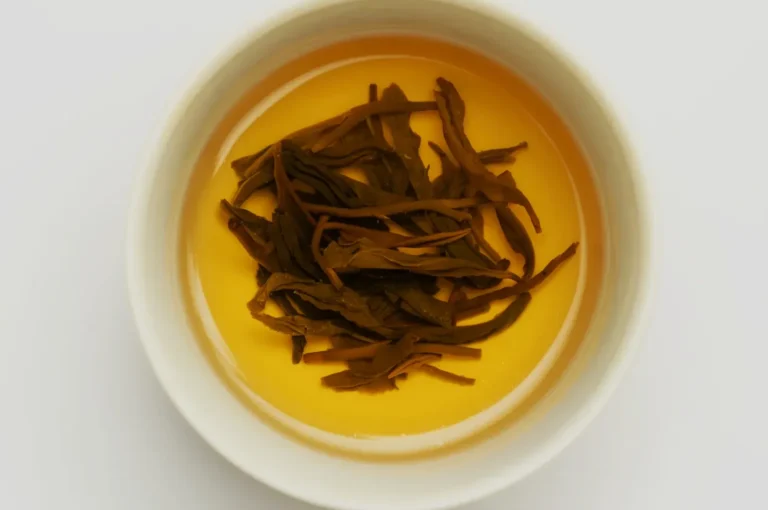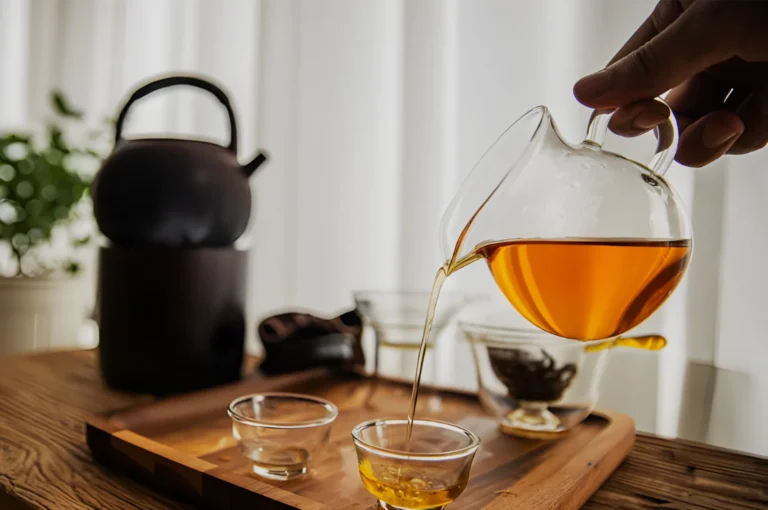
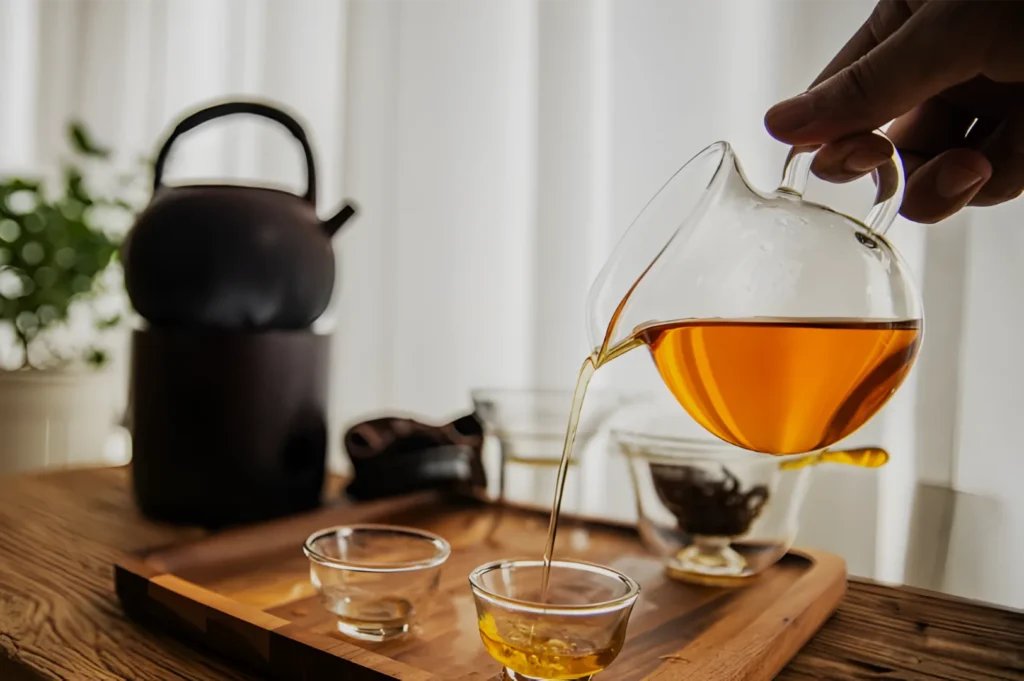
Yellow tea and green tea can begin almost identically.
Fresh leaves. Heat. Reduced enzyme activity.
Then yellow tea takes one extra turn.
That turn is menhuang.
One added processing stage can move a tea from green freshness toward something softer, sweeter and more settled.
Our complete guide to yellow tea and its processing gives the full background.
Green Tea Stops Earlier
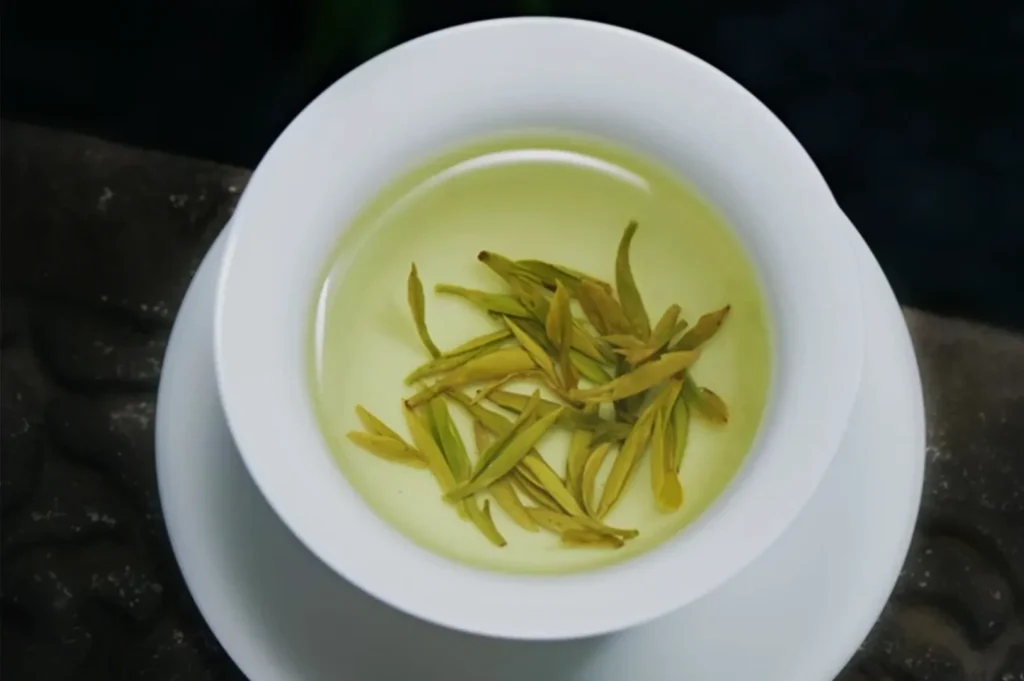
Green tea is generally fixed and dried in a way that preserves fresh characteristics.
Depending on the tea, that may mean grass, chestnut, beans, marine notes or florals.
Yellow tea goes through further controlled yellowing.
UNESCO recognises both as separate categories within China’s six traditional tea types.
So yellow tea is not a subcategory of green tea.
Menhuang Changes Taste
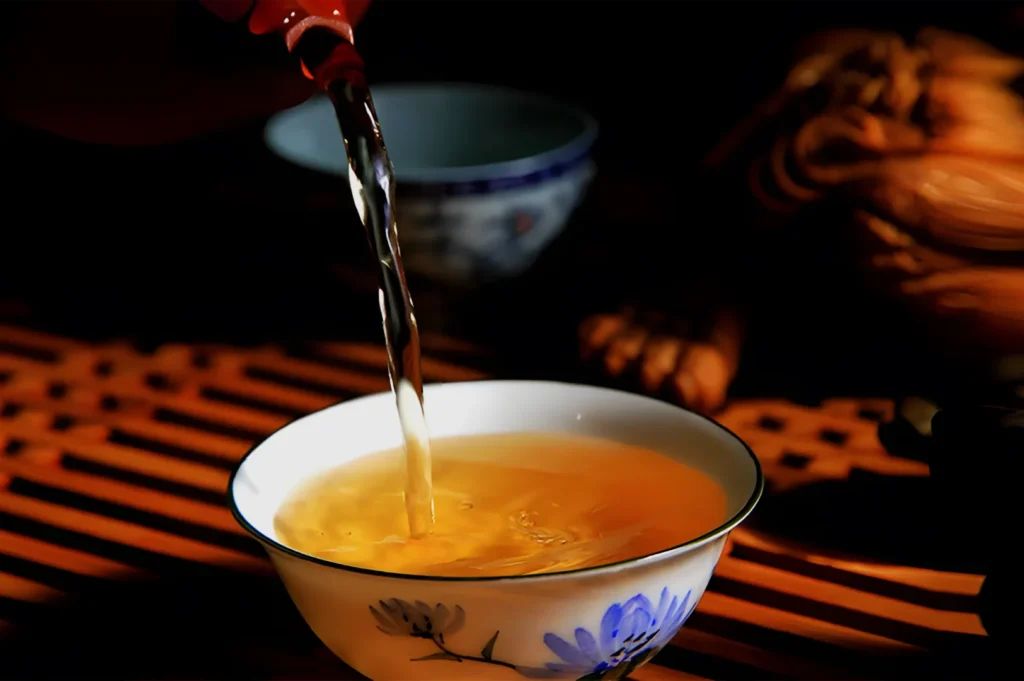
A direct comparison found that yellow tea’s extra yellowing stage increased sweetness and reduced aspects of bitterness and astringency compared with green tea.
Earlier research found similar effects when yellowing was applied to summer green tea: sweetness and overall acceptability increased while bitterness and astringency decreased.
The difference is not theoretical. The palate can feel it.
Aroma Changes Too
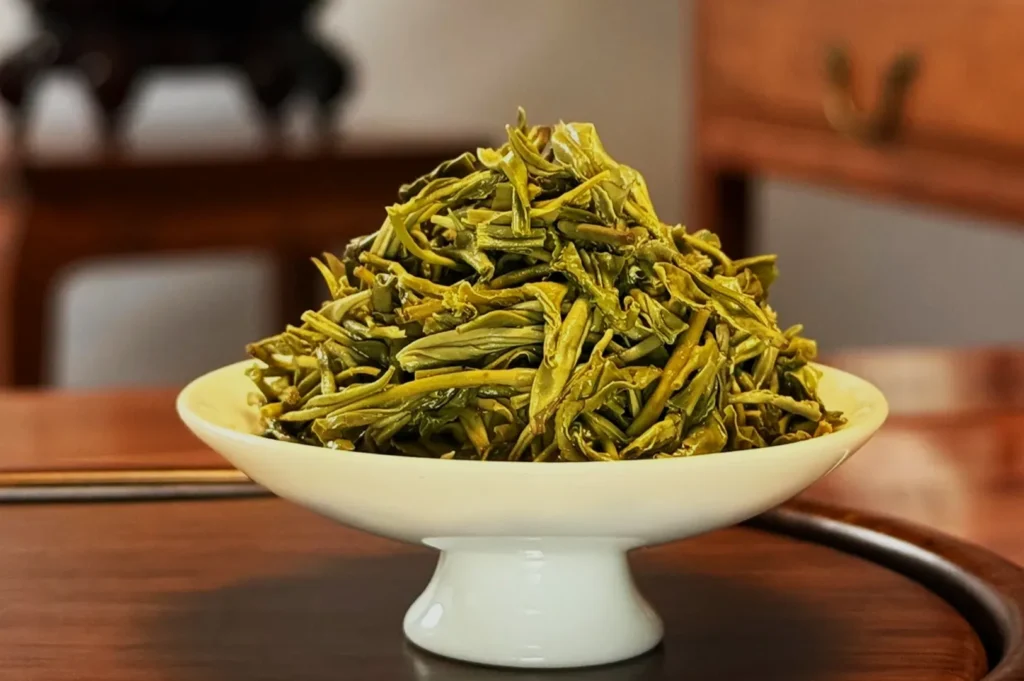
Green tea often emphasises freshness.
Yellow tea may become softer, sweeter and less grassy.
Research on sealed yellowing found yellow tea moving toward sweet, fruity and floral aromas while the green-tea comparison remained more chestnut-like and refreshing.
Does Yellow Tea Have Fewer Catechins?
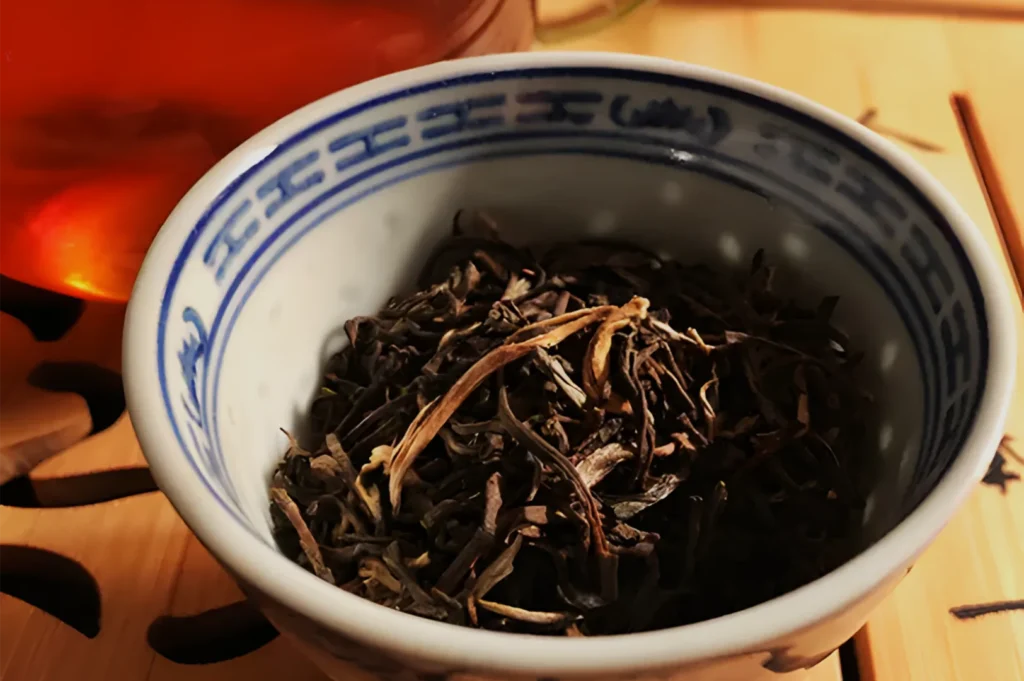
Processing can alter catechin profiles, but there is no useful rule that every yellow tea contains a fixed amount.
A comparative study of seven processed tea types found substantial differences in major constituents across categories.
Cultivar, harvest and processing all matter.
Which Should You Choose?
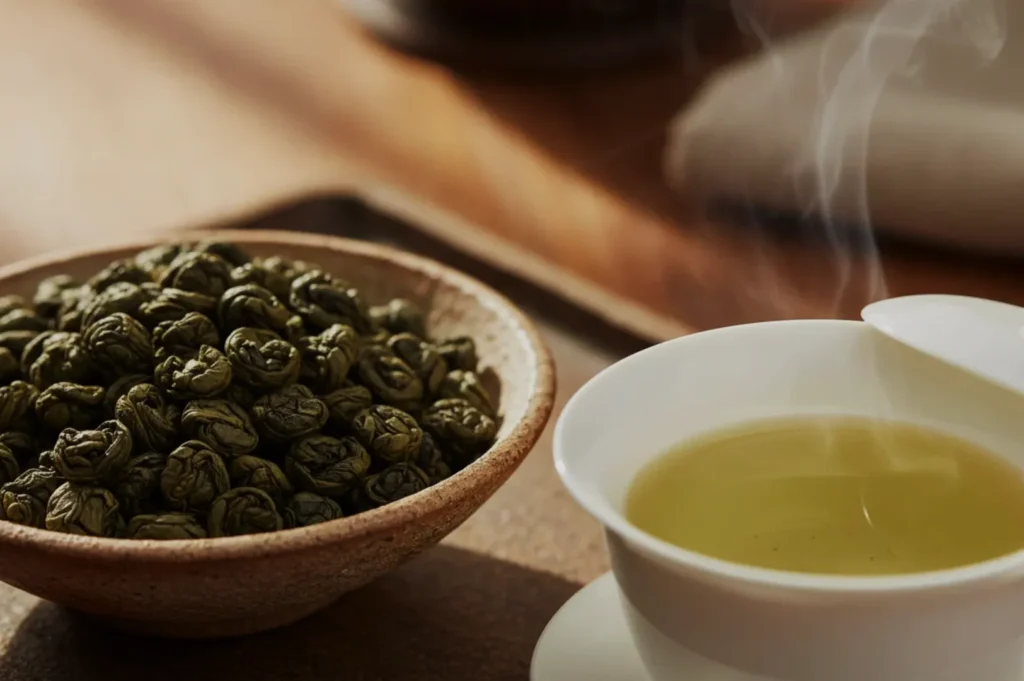
Choose green tea when you want clarity, brightness and direct freshness.
Choose yellow tea when you want that freshness softened by additional processing.
At Tea Room by Ki-setsu, we see comparison as one of the most useful ways to learn premium Chinese tea. The purpose is not to decide which category “wins.”
It is to understand what craft changed.
Final Thought
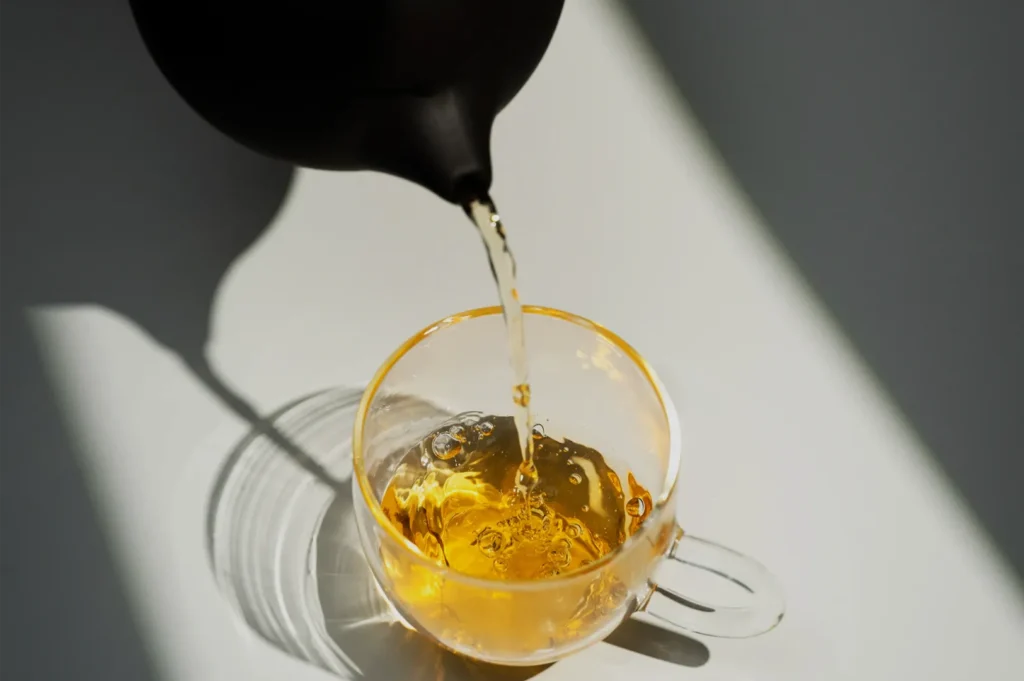
Yellow tea vs green tea comes down to one processing divergence with large sensory consequences.
Both can be elegant.
Both can be fresh.
Green tea preserves. Yellow tea gently transforms.
That difference is enough to give each its own category.