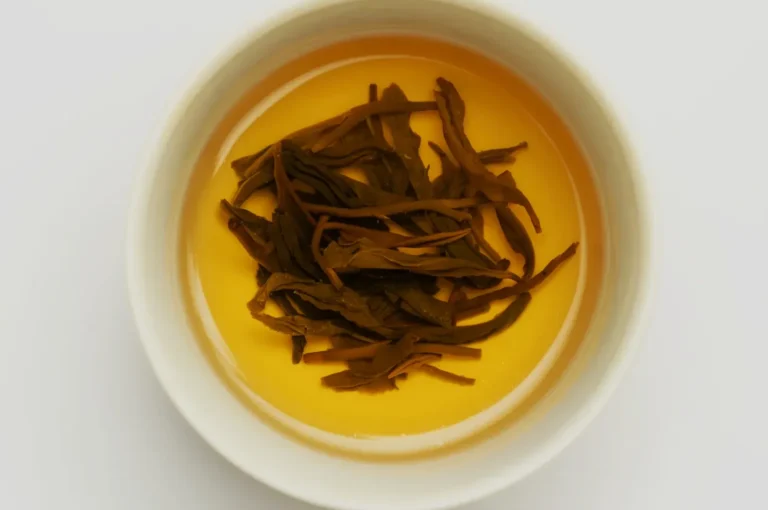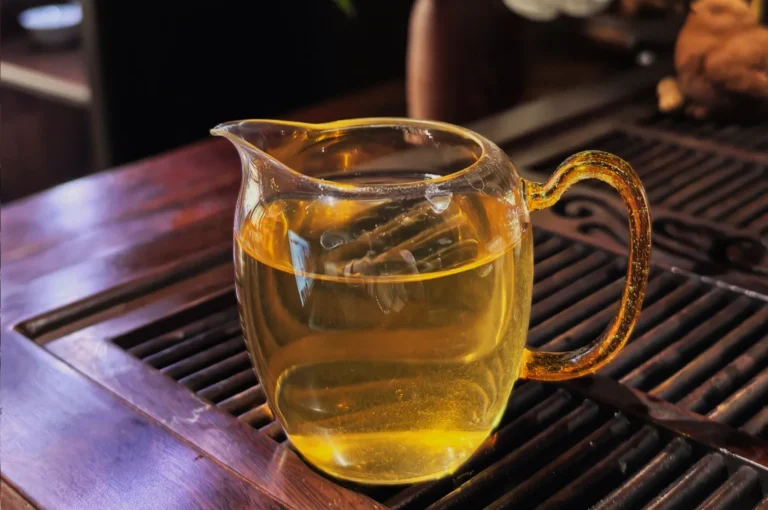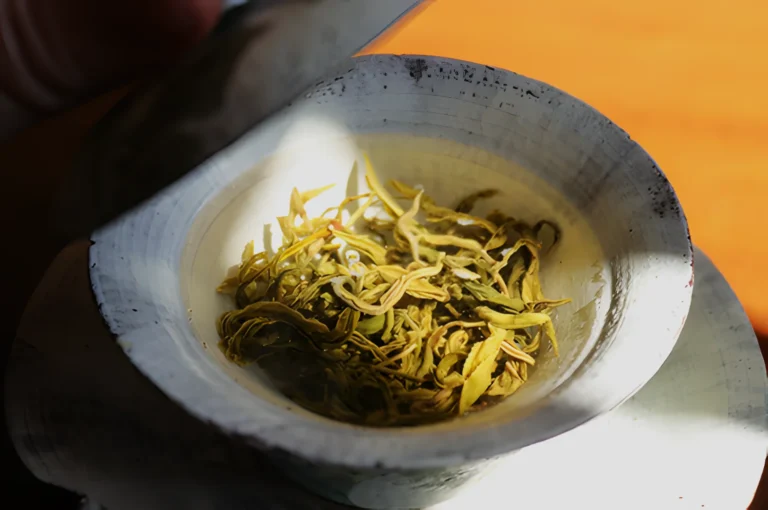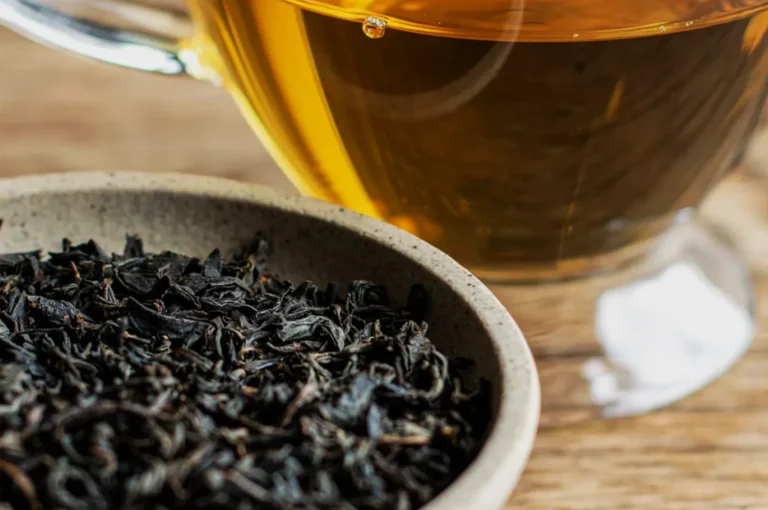
Yellow tea can taste soft enough to suggest that it must also be low in caffeine.
That assumption is unreliable.
Mellow is a flavour description, not a caffeine measurement.
Our yellow tea guide for daily drinking explains the wider category.
Does Yellow Tea Have Caffeine?
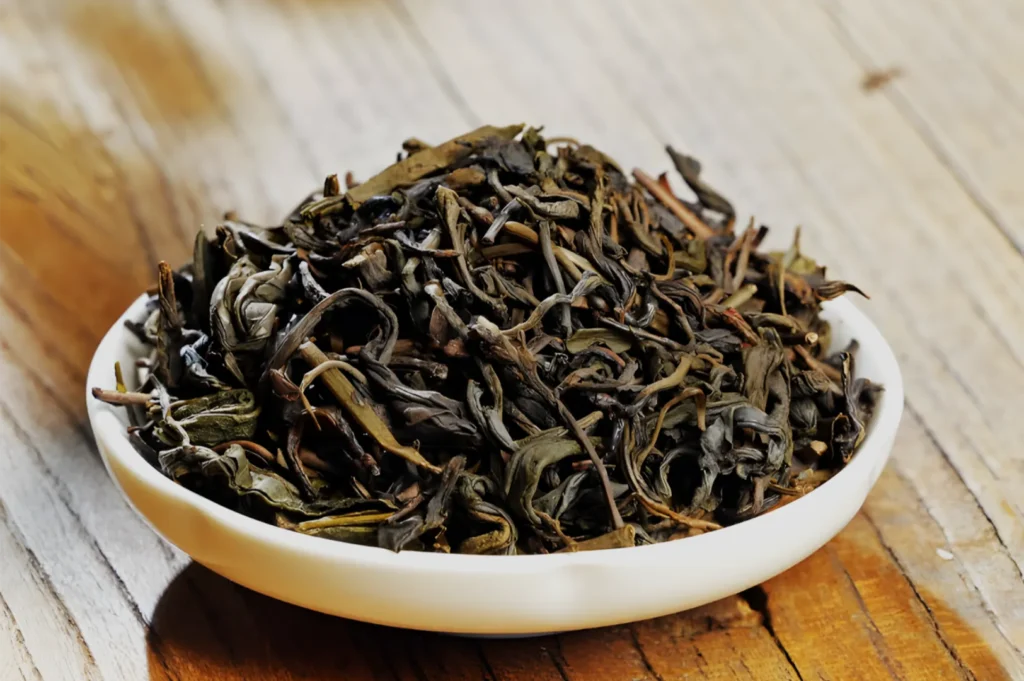
Yes.
Yellow tea is made from Camellia sinensis, so caffeine occurs naturally in the leaf.
The amount varies considerably.
Cultivar, harvest material, processing, leaf quantity, temperature and steeping time all matter.
Yellow Tea Is Not Automatically Low Caffeine
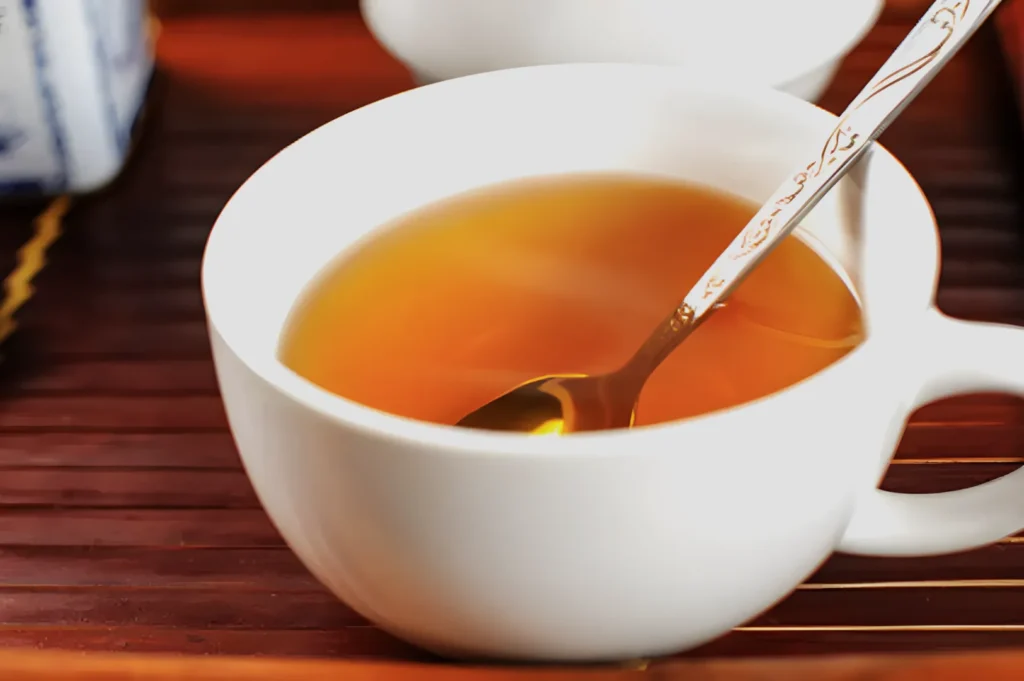
A study comparing six tea categories found yellow tea among the higher-caffeine samples under the researchers’ specific brewing conditions.
More importantly, yellow tea caffeine rose substantially with longer infusion times.
One tea sample cannot define an entire category, but the study makes one point clearly:
you cannot judge caffeine by colour or softness.
Does Menhuang Remove Caffeine?
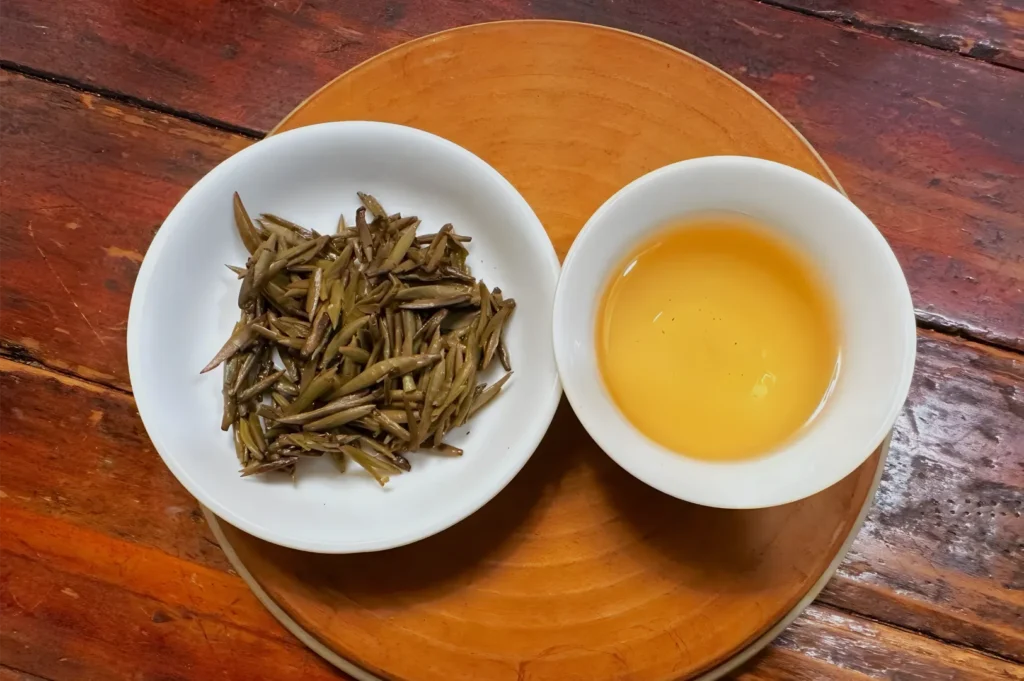
Yellowing may change caffeine content during processing, but not enough to make yellow tea caffeine-free.
Research on different yellowing durations has observed declines in caffeine under certain conditions.
Actual brewed amounts still depend heavily on the specific tea and how you prepare it.
Brewing Matters
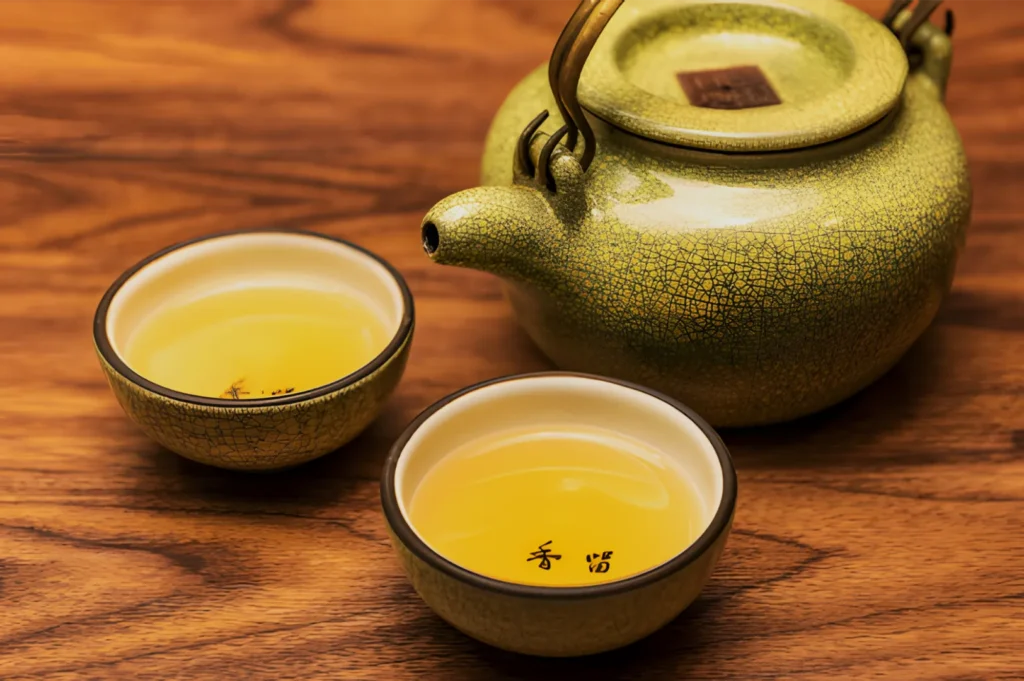
Longer brewing generally extracts more caffeine.
The recent six-category infusion study found this directly in yellow tea.
If caffeine affects you strongly, use a sensible amount of leaf, avoid very long steeps and keep the tea earlier in the day.
Health Canada notes that caffeine naturally occurs in tea and that excess intake can contribute to insomnia, nervousness, irritability and headaches in sensitive individuals.
When Should You Drink Yellow Tea?
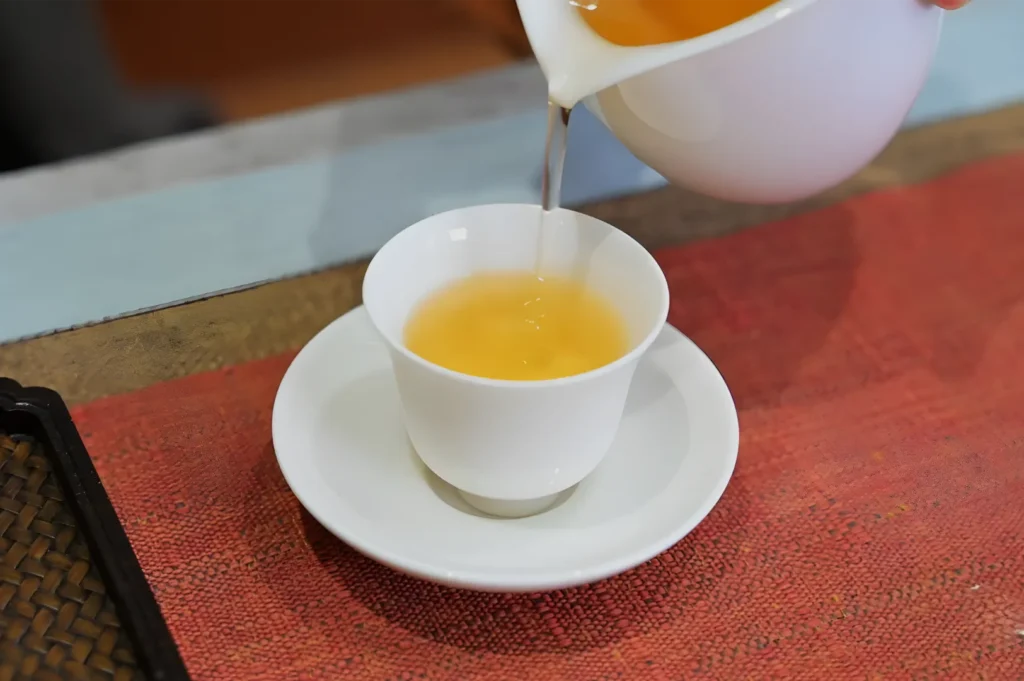
Morning or afternoon is a sensible starting point.
If you are sensitive to caffeine, late evening may be less suitable.
NIH guidance notes that caffeine can interfere with sleep and its effects may persist for hours.
At Tea Room by Ki-setsu, we think awareness after the cup matters as much as appreciation during it.
The body is part of the tasting.
Final Thought
Does yellow tea have caffeine?
Yes.
How much? That depends.
Do not let a mellow cup persuade you that it is physiologically silent.
Drink according to the tea, the brew and your own response.